What is Beryllium Copper?
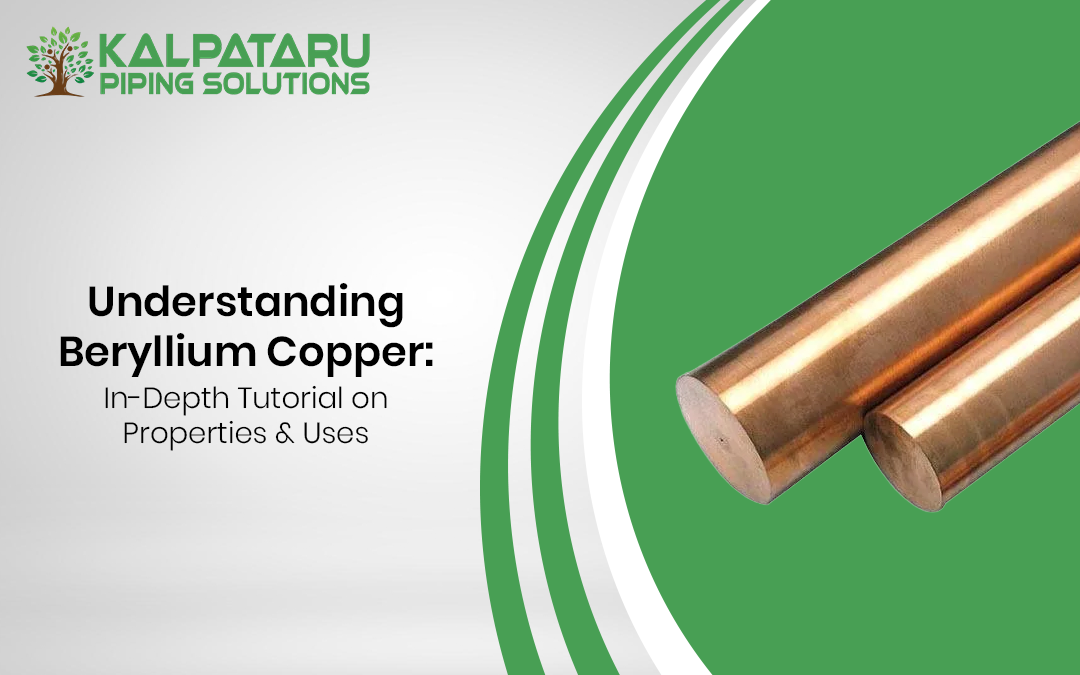
Beryllium copper (BeCu) is a high performance copper alloy which is a combination of copper and 0.5 to 3 percent beryllium forming a material that is characterized by high level of strength, non-magnetic and non-sparking. The specific grade depends on the amount of beryllium, which affects its mechanical strength and conductivity to electricity, and thus, it is a practical option in all industries.
Invented in the early 20th century, BeCu was initially used in telephone switchboard relays in conductive springs. Gradually, it was used in other fields of automotive parts, telecommunication, and energy. It is now common in electronics (connectors and relays), cryogenics, oil and gas equipment, and automotive equipment (valve seats and brake-lock prevention parts). Its anti-corrosion and marine properties also enable it to be used in harsh conditions, and its tonal quality enables its application in musical instruments such as trumpets, bells and triangles.
Beryllium copper is still a significant component in high-tech engineering, such as Formula one, aerospace and medical applications such as MRI machines where its non-magnetic characteristics are essential. Although pure beryllium is difficult to make, BeCu alloys are currently produced in sheets, rods, tubes, and wires and provide a combination of strength, conductivity, and durability never before available in other engineering materials.
Differences between Beryllium Copper, Brass & Bronze
Copper-based alloys are widely used in industrial, electrical, and decorative applications. Among these alloys, Beryllium Copper (BeCu), Brass, and Bronze each have unique characteristics that make them suitable for specific environments and applications.
Comparative Table: Beryllium Copper vs Brass vs Bronze
| Property / Alloy | Beryllium Copper (BeCu) | Brass (Copper + Zinc) | Bronze (Copper + Tin) |
| Composition | Cu + 0.5–3% Be (sometimes Ni/Co) | Cu + Zn | Cu + Sn (sometimes P, Mn, Ni) |
| Tensile Strength | Very High (up to ~1400 MPa) | Moderate (~300–500 MPa) | High (~400–700 MPa) |
| Hardness | Very High | Moderate | High |
| Electrical Conductivity | Good | Moderate | Moderate |
| Corrosion Resistance | Excellent, non-sparking, marine-ready | Good, marine applications possible | Very Good, seawater-resistant |
| Machinability | Good, requires care | Excellent | Moderate |
| Non-Magnetic | Yes | No | No |
| Common Applications | Springs, switches, tooling, aerospace, oil & gas | Musical instruments, plumbing, electrical terminals, decorative hardware | Bearings, gears, bushings, marine hardware, sculptures |
For more detailed insights, you can read our full guide on Brass vs Bronze to choose the right material for your project.
Types of Beryllium Copper Alloys
Beryllium Copper (BeCu) alloys vary based on beryllium content and heat treatment, offering different combinations of strength, hardness, conductivity, and corrosion resistance. Common types include high-strength BeCu (C17200) for springs and aerospace parts, soft/machinable BeCu (C17300) for electrical connectors, and specialty grades with nickel or cobalt for enhanced performance in demanding applications.
For a detailed guide on all Beryllium Copper alloys and their uses, check out our full blog on types of Beryllium Copper.
Characteristics of Beryllium Copper
Beryllium copper (BeCu alloy) is a high-strength beryllium copper alloy, which is characterized by great thermal and electrical conductivity, as well as high durability. Precipitation hardened high-strength grades can have tensile strength of more than 200 ksi (1,400 MPa), and are therefore stronger than most copper alloys. The major characteristics of BeCu alloy are:- Non-sparking: Suited to tools that are used in unsafe areas such as oil rigs and coal mines.
- Galling and abrasion resistance: works well with friction and heavy loads.
- Non-magnetic: Can be used on sensitive electronic and medical equipment.
- Temperature resistance: Retains strength at cryogenic and high temperature.
- Corrosion resistance: Resists severe chemicals, saline, and biofouling.
- Good machinability: May be shaped and fashioned prior to hardening to custom parts.
For a detailed overview of all properties of beryllium copper, check our dedicated blog on BeCu alloys.
Heat Treatment of Beryllium Copper.
The age precipitation process increases hardness and strength of beryllium copper which is very stable during stamping, cutting or machining. This heat treatment removes internal stresses, and the components do not lose their shape and precision.
Heat Treatment Process:Beryllium copper passes through two principal processes which include solution annealing and age hardening.
Solution Annealing: The alloy is heated to slightly below the solidus temperature, whereby beryllium dissolves in a supersaturated solution. When it is quenched in water, it forms a soft, ductile metal that is available to be formed, drawn, or rolled.
Age Hardening: This is also known as precipitation hardening, and it is the process where the annealed alloy is heated to a temperature that is lower than the solvus point then left to cool slowly. Beryllide phases that are precipitated enhance the strength of the metal making beryllium copper hard and strong. Common conditions include:
- Under Aging: Makes ductile and tough, medium hard.
- Peak Aging: Maximizes hardness, strength and electrical/thermal conductivity.
- Over Aging: It results in thermally stable, ductile and strong components.
This alloy is the best to use in industry due to its combination of superior beryllium copper hardness, strength and machinability.
Beryllium Copper Uses
Beryllium copper (BeCu), also referred to as beryllium copper alloy, is prized due to its high strength, conductivity and resistance to corrosion. These special characteristics precondition its use in a broad variety of industrial and engineering purposes:
- Electrical Contacts and Connectors: Beryllium copper has a high electrical and thermal conductivity which has made it popular in electrical contacts, connectors, relays and switches that require high performance and long life.
- Springs and Fasteners: Beryllium copper is the best material due to its high strength, fatigue resistance and elasticity in making of precise springs, clips, washers, and fasteners in mechanical assemblies.
- Non-Sparking Tools: Beryllium copper is used to produce tools that are explosive or flammable like oil rigs, mines, and chemical plants because of its non-sparking and non-magnetic nature.
- Aerospace Components: It is ideal to use in aerospace components such as bushings, bearings, landing gear components, and electrical connectors due to its wear resistance, extreme temperature endurance, and durability.
- Oil and Gas Applications: Due to the strength and resistance to corrosion, beryllium copper alloy is the best solution in downhole drilling tools, valve components and other parts that are subjected to high pressure and corrosive conditions.
Beryllium Copper Price Overview
The price of beryllium copper (BeCu alloy) varies based on factors like grade, form, and market demand. As a high-performance copper alloy known for its strength, conductivity, and corrosion resistance, it is priced higher than standard copper materials.
Key factors influencing price:
- Alloy grade: High-strength (C17200) and high-conductivity (C17510) grades differ in beryllium content, affecting cost.
- Form & fabrication: Sheets, rods, wires, and custom-fabricated parts have varying prices.
- Market trends: Demand, supply, and raw material availability impact pricing.
- Order volume: Bulk orders usually lower the per-unit cost.
- Material rarity: Beryllium’s scarcity adds to the overall value of the alloy.
Overall, beryllium copper’s premium price reflects its superior strength, durability, and reliability across aerospace, electrical, and industrial applications.
Get premium Beryllium Copper C17200 products from Kalpataru Piping Solutions, a trusted supplier and exporter. Request your quote today to know pricing and availability.
Frequently Asked Questions About Beryllium Copper
How resistant is beryllium copper to corrosion compared to steel?
Beryllium copper offers superior corrosion resistance, especially in saline, chemical, and marine environments, outperforming most steels.
Why is beryllium copper used for non-sparking tools?
Its non-sparking property makes it ideal for hazardous environments like oil rigs, coal mines, and explosive areas, reducing fire risks.
What is the hardness of beryllium copper?
High-strength alloys like C17200 can reach tensile strengths around 200 ksi and a Rockwell hardness of RC45 in peak (aged) condition, comparable to steel.