SMO 254 Products (UNS S31254)
Home > Material of Construction > SMO 254 Products
Manufacturer, Stockist & Exporter of 254 SMO pipes, tubes, sheets, bars, fittings & flanges — PREN 43+, ready stock, and certified to ASTM, ASME & EN standards.
- Mill Test Certificates (EN 10204 3.1) with every dispatch
- Ready stock in India · export to 40+ countries
- Same-day quotations · custom sizes & cutting
254 SMO Products Manufacturer & Supplier in India
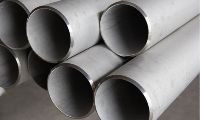
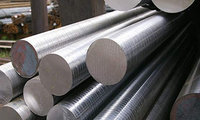
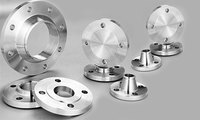
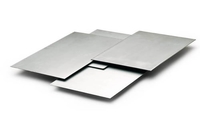
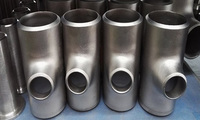
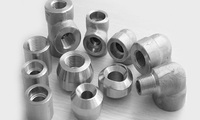
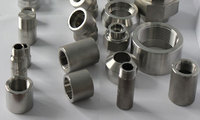
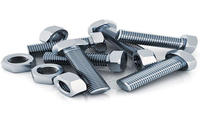
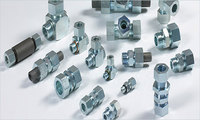
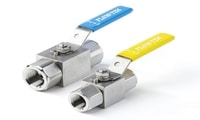
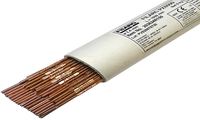
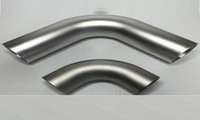
Kalpataru Piping produces, stocks, and exports the full range of SMO 254 products suitable for the harshest chloride and acidic environments in the world. This high-alloy super austenitic stainless steel is also known as 254 SMO or 254 S31254 / EN 1.4547 and has a molybdenum content of approximately 6.1%, which is nearly three times the amount found in standard 316L. That chemistry, along with a controlled addition of copper, raises its Pitting Resistance Equivalent Number (PREN) past 43, making 254 SMO an effective replacement for much more expensive nickel and titanium alloys. We carry seamless and welded pipes, tubes and heat exchanger tubes, heat exchanger plates, sheets, coils, round bars, forged fittings, butt-weld fittings, flanges, and fasteners all in a solution-annealed condition and with complete traceability. From desalination lines to flue-gas scrubbers to offshore risers, our metallurgists help you ensure the correct shape, size, and standard for the job. All orders come with mill test certificates and dimensional inspection reports.
Table of Contents
- Our SMO 254 Product List
- 254 SMO Chemical Composition
- 254 SMO Mechanical Properties
- Pitting Resistance Equivalent (PREN)
- 254 SMO Equivalent Grades
- Melting Point & Heat Treatment
- 254 SMO vs 316L vs Duplex 2205
- SMO 254 Product Applications
- Quality, Testing & Certifications
- SMO 254 Products Price
- FAQs About SMO 254 Products
Our SMO 254 Product List


254 SMO Chemical Composition
The performance of 254 SMO is driven by a precisely balanced chemistry (weight %):
| Element | Content (%) |
|---|---|
| Carbon (C) | ≤ 0.020 |
| Chromium (Cr) | 19.5 – 20.5 |
| Nickel (Ni) | 17.5 – 18.5 |
| Molybdenum (Mo) | 6.0 – 6.5 |
| Nitrogen (N) | 0.18 – 0.22 |
| Copper (Cu) | 0.50 – 1.00 |
| Manganese (Mn) | ≤ 1.00 |
| Silicon (Si) | ≤ 0.80 |
| Phosphorus (P) | ≤ 0.030 |
| Sulfur (S) | ≤ 0.010 |
| Iron (Fe) | Balance |
254 SMO Mechanical Properties
|
Property |
Metric |
Imperial |
|---|---|---|
|
Tensile Strength |
650 – 700 MPa |
94,000 – 101,500 psi |
|
Yield Strength (0.2% offset) |
≥ 300 MPa |
≥ 43,500 psi |
|
Elongation at Break |
≥ 35% (typ. 40–50%) |
≥ 35% |
|
Hardness (Brinell) |
≤ 210 HB |
≤ 96 HRB |
|
Modulus of Elasticity |
≈ 195 GPa |
≈ 28,300 ksi |
|
Density |
8.0 g/cm³ |
0.289 lb/in³ |
|
Melting Range |
1320 – 1390 °C |
2408 – 2534 °F |
254 SMO Equivalent Grades
|
Standard |
Grade / Designation |
|---|---|
|
UNS |
S31254 |
|
EN / Werkstoff |
1.4547 |
|
ASTM |
A240, A276, A312, A269, A182 |
|
AFNOR |
Z1 CNDU 20.18.06AZ |
|
SS (Sweden) |
2378 |
|
BS |
2562 |
|
GOST |
07Ch25N6M2T |
|
JIS |
Comparable (custom spec) |
Comparison: 254 SMO vs 316L vs Duplex 2205
A three-way comparison helps buyers position 254 SMO between standard and duplex grades:
|
Parameter |
254 SMO (S31254) |
316L (S31603) |
Duplex 2205 (S32205) |
|---|---|---|---|
|
Molybdenum |
6.0 – 6.5% |
2.0 – 3.0% |
3.0 – 3.5% |
|
PREN (approx.) |
43 |
24 |
35 |
|
Yield Strength |
≥ 300 MPa |
≥ 170 MPa |
≥ 450 MPa |
|
Chloride pitting resistance |
Excellent |
Moderate |
Very good |
|
SCC resistance |
Very high |
Low |
High |
|
Structure |
Austenitic |
Austenitic |
Austenitic-ferritic |
|
Best for |
Seawater / brine |
General service |
Moderate chloride + strength |
|
Engineer’s note — Pitting Resistance Equivalent (PREN) PREN = %Cr + 3.3 × %Mo + 16 × %N ≈ 20 + (3.3 × 6.1) + (16 × 0.20) ≈ 43.3 A PREN above 40 classifies 254 SMO as a genuine seawater-resistant super austenitic grade — a key reason it is specified where 316L (PREN ≈ 24) fails. |
Melting Point & Heat Treatment
- Solution Annealing: 1149 – 1204 °C (2100 – 2200 °F) followed by rapid water quench to lock in corrosion resistance.
- Hot Working: 982 – 1149 °C (1800 – 2100 °F); anneal after hot forming.
- Hardening: Not hardenable by heat treatment — strengthened only by cold working.
Where 254 SMO Is Used
The grade’s corrosion resistance makes it a first choice across chloride-heavy and acidic processes:
- Seawater handling systems & desalination (RO / MSF) plants
- Flue-gas desulfurization (FGD) scrubbers in power generation
- Pulp & paper bleaching plants and tall-oil distillation columns
- Chemical & petrochemical process equipment
- Offshore oil & gas — risers, umbilicals, topside piping
- Heat exchangers, condensers & cooling-water systems
- Food, beverage & pharmaceutical processing equipment
Quality, Testing & Certifications
Every batch of 254 SMO is verified before dispatch. Typical documentation and tests include:
- Chemical analysis (spectro / PMI) confirming UNS S31254 composition
- Mechanical testing — tensile, hardness, and impact where required
- Intergranular corrosion (IGC) test per ASTM A262 Practice E
- Hydrostatic / eddy-current testing for pipes and tubes
- Dimensional and visual inspection to ASME B36.19 / relevant standard
- Documentation: MTC (EN 10204 3.1), IGC report, PMI report, packaging list
SMO 254 Products Price
The price of SMO 254 products varies depending on the product type, dimensions, grade certification, quantity, and current nickel and molybdenum market prices. Since SMO 254 is a premium 6% molybdenum stainless steel, it is generally more expensive than conventional stainless steel grades due to its superior corrosion resistance and alloy content.
The final cost also depends on factors such as product form (pipes, tubes, flanges, fittings, sheets, bars, or fasteners), manufacturing process, pressure rating, testing requirements, surface finish, and order volume. For the most accurate and competitive pricing, request a customized quotation based on your specifications.
FAQ’s About SMO 254 Products
What is 254 SMO material?
254 SMO is a high-alloy austenitic stainless steel with high chromium, molybdenum, and nitrogen content. It offers excellent resistance to pitting, crevice corrosion, and chloride stress corrosion cracking, making it ideal for marine and chemical processing applications.
What is the difference between 6MO and 254 SMO?
6Mo refers to a family of stainless steels containing about 6% molybdenum, while 254 SMO is a specific 6Mo grade. It is known for its superior corrosion resistance and high performance in chloride-rich environments.
What is material 254 SMO equivalent to?
254 SMO is equivalent to UNS S31254, EN 1.4547, and DIN 1.4547. It is produced according to ASTM and ASME standards for various industrial products.
What is the difference between SMO 254 and duplex?
SMO 254 provides better corrosion resistance in highly aggressive chloride environments, while duplex stainless steel offers higher strength with good corrosion resistance. The choice depends on the application’s corrosion and mechanical requirements.
What is the difference between Hastelloy and SMO 254?
Hastelloy is a nickel-based alloy with excellent resistance to strong acids and harsh chemicals. SMO 254 is a high-alloy stainless steel that provides excellent chloride corrosion resistance and is generally more economical for marine and chemical service.