Alloy Steel Products — Pipes, Tubes, Plates, Bars & Fittings
Home > Material of Construction > Alloy Steel Products
A trusted Indian alloy steel manufacturer and supplier serving oil & gas, power, automotive and heavy-engineering projects across 40+ countries.
100+ grades in stock • ASTM / ASME / DIN / EN standards • EN 10204 3.1 mill test reports • Custom sizes on request.
Kalpataru Piping is an India-based alloy steel manufacturer and supplier that supplies a complete range of alloy steel products made and designed for the most challenging and high-performance environments. Our products, ranging from seamless pipes and precision tubes to plates, forged fittings and flanges, and round bars, are all manufactured to high international standards and come with complete material traceability. Engineers and procurement groups have depended on alloy steel for decades for one reason: alloying it with elements like chromium, molybdenum, nickel, and manganese imparts strength, heat resistance, and durability that simple carbon steel can’t achieve. We bring a wealth of metallurgical expertise, a comprehensive stock selection, and fast service to help you find the right grade, form, dimension, and more without the long lead time or compromise on quality. Whether you are creating a high-pressure boiler line, fabricating critical automotive components, or constructing structures that need to withstand harsh wear and temperatures—our alloy steel products are on hand to deliver. Get a quote today and see how Kalpataru Piping supplies alloy steel to oil & gas, power, automotive and construction projects across 40+ countries to customers in all sectors of oil & gas, power generation, automotive, and construction.
Table of Contents
- What Is Alloy Steel?
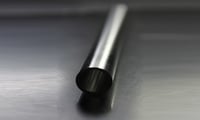
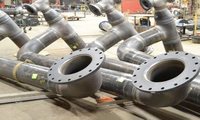
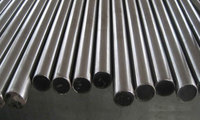
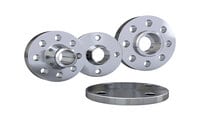
- Alloy Steel Products List
- Alloy Steel Specifications
- Types of Alloy Steel
- Alloy Steel Chemical Composition
- Alloy Steel Grades Chart
- Alloy Steel Applications & Industries
- Alloy Steel vs Carbon Steel vs Stainless Steel
- Manufacturing, Quality & Certifications
- FAQs About Alloy Steel Products
What Is Alloy Steel?
Alloy steel is a category of steel that is deliberately combined with one or more alloying elements — beyond the carbon found in ordinary steel — to enhance specific mechanical and chemical properties. Common additions include chromium, molybdenum, nickel, manganese, vanadium, silicon and tungsten. Each element changes how the metal behaves: chromium boosts hardness and corrosion resistance, molybdenum improves high-temperature strength, nickel adds toughness, and vanadium refines grain structure for greater fatigue life.
The result is a family of materials that can be precisely tuned to an application. High-strength low-alloy (HSLA) grades are popular in structural and pressure applications, while chromium-molybdenum “chrome moly” grades dominate boiler and refinery service where heat and creep resistance are critical. Because composition drives performance, choosing the right alloy steel grade is the difference between a component that lasts decades and one that fails early.
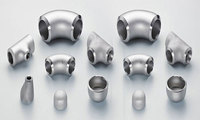
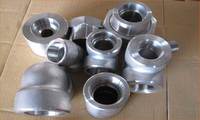
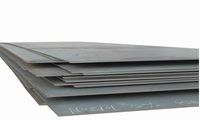
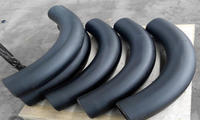
Alloy Steel Products List
Specifications of Nickel Alloy Pipes And Tubes
| Parameter | Specification Details |
| Standard Specifications | ASTM B161, B163, B725, B730 / ASME SB161, SB163, SB725, SB730 |
| Dimensional Standards | ASME B36.19M (Stainless/Non-Ferrous Alloys) & ASME B36.10M (Wrought Steel Standards) |
| Available Grades | Nickel 200 (UNS N02200), Nickel 201 (UNS N02201), Nickel 205 (UNS N02205) |
| Pipe Size Range | 1/2″ to 6″ (OD & Nominal Bore) in various SWG & Schedules (SCH) |
| Tube Size Range | 1 mm OD up to 254 mm OD (0.2 mm to 20 mm wall thickness) |
| Standard Schedules (SCH) | SCH 5, SCH 10, SCH 40, SCH 80, SCH 160, XXS |
| Manufacturing Types | Seamless, ERW (Electric Resistance Welded), Welded, Fabricated, CDW (Cold Drawn Welded) |
| End Connections | Plain End, Beveled End, Threaded |
| Lengths Available | Single Random, Double Random, Cut Lengths, Coiled |
Alloy Steel Chemical Composition
Chemical composition is what gives each alloy steel grade its signature properties. The typical composition ranges for our most requested grades are shown below (values in %).
|
Grade |
Carbon (C) |
Manganese (Mn) |
Chromium (Cr) |
Molybdenum (Mo) |
Silicon (Si) |
|---|---|---|---|---|---|
|
ASTM A335 P11 |
0.05–0.15 |
0.30–0.60 |
1.00–1.50 |
0.44–0.65 |
0.50–1.00 |
|
ASTM A335 P22 |
0.05–0.15 |
0.30–0.60 |
1.90–2.60 |
0.87–1.13 |
0.50 max |
|
SAE 4140 |
0.38–0.43 |
0.75–1.00 |
0.80–1.10 |
0.15–0.25 |
0.15–0.35 |
|
SAE 4340 |
0.38–0.43 |
0.60–0.80 |
0.70–0.90 |
0.20–0.30 |
0.15–0.35 |
Alloy Steel Grades Chart
Use this cross-reference chart to match grades across ASTM, DIN and BS standards and understand each grade’s key characteristics at a glance.
|
Grade |
ASTM |
DIN Equivalent |
BS Equivalent |
Key Characteristics |
|---|---|---|---|---|
|
AS 4140 |
4140 |
1.7225 (42CrMo4) |
709M40 |
High strength, good toughness, excellent wear resistance |
|
AS 4340 |
4340 |
1.6582 (34CrNiMo6) |
817M40 |
High hardenability and impact strength for heavy-duty parts |
|
AS T22 |
A213 T22 |
10CrMo9-10 |
629 |
Excellent high-temperature and creep resistance |
|
AS P11 |
A335 P11 |
13CrMo4-5 |
620 |
Good weldability and strength at elevated temperatures |
Alloy Steel vs Carbon Steel vs Stainless Steel
Not sure which material suits your project? This side-by-side comparison highlights where alloy steel wins.
|
Property |
Carbon Steel |
Alloy Steel |
Stainless Steel |
|---|---|---|---|
|
Strength |
Moderate |
High (tuneable) |
Moderate–High |
|
Corrosion resistance |
Low |
Moderate |
Excellent |
|
Heat / creep resistance |
Low |
Excellent (Cr-Mo) |
Good |
|
Cost |
Lowest |
Mid-range |
Highest |
|
Best suited for |
General structures |
Pressure, wear & heat parts |
Hygienic / corrosive service |
Types of Alloy Steel
Alloy steels are grouped by how much alloying content they contain and the role they are engineered to play. Understanding these categories helps you specify the right material with confidence.
- Low-Alloy Steel: Contains under 5% total alloying elements. Prized for enhanced strength and toughness in pipes, fittings and structural components.
- High-Alloy Steel: Contains more than 5% alloying elements. Includes stainless and tool steels used where high corrosion, heat or wear resistance is essential.
- Structural Alloy Steel: Balances high strength, ductility and weldability for construction and heavy machinery.
- Tool Steel: Delivers exceptional hardness and edge retention for cutting tools, dies and molds.
- Chrome-Moly (Cr-Mo) Steel: Chromium-molybdenum grades built for creep and high-temperature service in boilers, refineries and power plants.
Alloy Steel Applications & Industries
The tuneable properties of alloy steel make it indispensable across the most demanding industries.
| Industry | Typical Applications |
|---|---|
| Oil & Gas | Pipes, fittings, flanges and valves for high-pressure, high-temperature service |
| Power Generation | Boiler tubes, turbine components and heat exchangers requiring creep resistance |
| Automotive | Crankshafts, gears, axles and transmission parts needing strength and fatigue life |
| Aerospace | Landing gear, engine mounts and structural parts with high strength-to-weight demands |
| Heavy Machinery | Construction equipment, mining tools and industrial gears exposed to extreme wear |
| Petrochemical & Refining | Reactor internals, piping and pressure vessels handling heat and corrosive media |
Manufacturing, Quality & Certifications
Our Quality-First Process
- Raw material selection — verified melt sources with certified chemistry.
- Precision manufacturing — controlled hot working, seamless piercing and heat treatment.
- Heat treatment — normalising, quenching and tempering to hit target mechanicals.
- Testing & inspection — chemical analysis, tensile, hardness, hydro, ultrasonic and PMI testing.
- Documentation & dispatch — EN 10204 3.1 certificates, marking and secure packaging.
Standards & Certifications We Adhere To
ASTM • ASME • DIN • EN • JIS • AISI • ANSI / ASME B16.5 • API • EN 10204 3.1 mill test reports • ISO-aligned quality management. Third-party inspection (BV, SGS, Lloyd’s, TÜV) available on request.
FAQ’s About Alloy Steel Products
What is the main difference between carbon steel and alloy steel?
Carbon steel is primarily iron and carbon, while alloy steel adds elements such as chromium, molybdenum, nickel and manganese. Those additions give alloy steel higher strength, better heat and corrosion resistance, and greater wear resistance, making it suited to demanding pressure, temperature and load applications.
What are the different types of alloy steel?
The main types are low-alloy steel (under 5% alloying elements), high-alloy steel (over 5%, including stainless and tool steels), structural alloy steel and chrome-moly (Cr-Mo) grades engineered for high-temperature and creep resistance.
How do I choose the right alloy steel grade for my project?
Start with your operating conditions — temperature, pressure, load, corrosion exposure and wear. Chrome-moly grades like P11/P22 suit high-temperature piping; 4140 and 4340 suit high-strength machined parts. Our technical team can recommend the exact grade and form based on your specifications.
Do you provide test certificates for your products?
Yes. Every order ships with EN 10204 3.1 mill test certificates covering chemical composition and mechanical properties. Third-party inspection by agencies such as SGS, BV, Lloyd’s and TÜV can also be arranged on request.