Incoloy Products Manufacturer, Supplier & Exporter in India
Engineered to resist corrosion, oxidation, and extreme heat — trusted across oil & gas, petrochemical, and power industries worldwide.
|
Why buyers choose Kalpaturu Piping ✔ Full range: Incoloy 800, 800H, 800HT & 825 in pipes, tubes, plates, coils, sheets, bars & fittings ✔ Mill Test Certificates (EN 10204 3.1 / 3.2) with every consignment ✔ Ready stock + custom sizes | Exported to 40+ countries ✔ Competitive Incoloy price in India with on-time delivery |
Table of Contents
What Are Incoloy Products?
Incoloy is a family of nickel-iron-chromium superalloys built for the toughest service environments on earth. When ordinary stainless steel begins to scale, pit, or crack, Incoloy keeps performing — resisting oxidation, carburization, chloride stress-corrosion cracking, and sulphuric or phosphoric acid attack at temperatures that would compromise most other metals. That combination of high-temperature strength and broad corrosion resistance is exactly why engineers specify Incoloy for heat exchangers, acid gas piping, furnace components, and pressure vessels.
At Kalpaturu Piping, we manufacture, stock, and export a complete range of Incoloy products — including Incoloy 800, 800H, 800HT, and the versatile Incoloy 825 — in pipes, tubes, plates, sheets, coils, round bars, and fittings. Every product is produced to international standards (ASTM, ASME, DIN, and equivalent GOST/JIS/AFNOR designations) and shipped with full material traceability. Whether you need a single tested coil or a bulk export order, our metallurgists and sales engineers help you match the right grade, temper, and size to your application — delivered on time, at a competitive Incoloy price. Request a quote today and put decades of nickel-alloy sourcing expertise to work for your project.
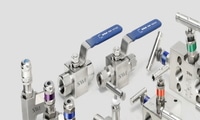
Incoloy Product We Supply
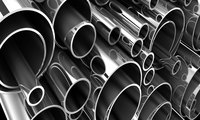
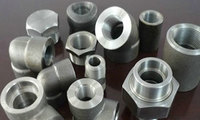
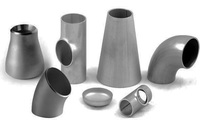
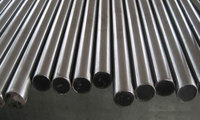
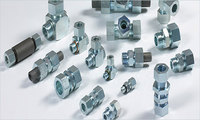
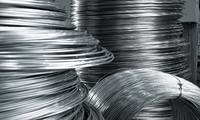


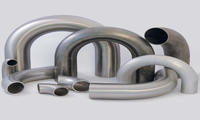
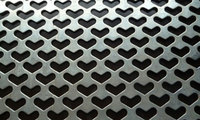
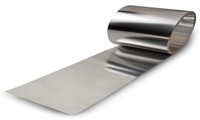
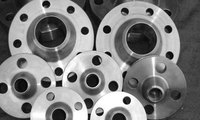
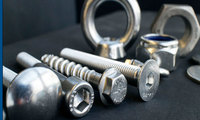
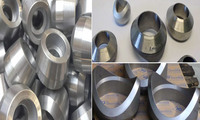
Incoloy Chemical Composition
The chemistry of each grade is precisely balanced to deliver its target performance. The table below shows typical composition ranges for Incoloy 825 and Incoloy 800 (weight %):
|
Element |
Incoloy 825 (%) |
Incoloy 800 (%) |
|---|---|---|
|
Nickel (Ni) |
38.0 – 46.0 |
30.0 – 35.0 |
|
Iron (Fe) |
≥ 22.0 |
Balance (≥ 39.5) |
|
Chromium (Cr) |
19.5 – 23.5 |
19.0 – 23.0 |
|
Molybdenum (Mo) |
2.5 – 3.5 |
— |
|
Copper (Cu) |
1.5 – 3.0 |
≤ 0.75 |
|
Titanium (Ti) |
0.6 – 1.2 |
0.15 – 0.60 |
|
Aluminium (Al) |
≤ 0.2 |
0.15 – 0.60 |
|
Carbon (C) |
≤ 0.05 |
≤ 0.10 |
|
Manganese (Mn) |
≤ 1.0 |
≤ 1.5 |
Incoloy Mechanical Properties
Incoloy alloys combine strength with ductility, making them ideal for demanding structural and pressure-containing applications. Typical minimum room-temperature values:
|
Property |
Incoloy 825 |
Incoloy 800 |
|---|---|---|
|
Tensile Strength (min) |
586 MPa |
550 MPa |
|
Yield Strength (0.2%, min) |
241 MPa |
220 MPa |
|
Elongation (min) |
30 % |
30 % |
|
Hardness (approx.) |
≤ 92 HRB |
≤ 92 HRB |
Incoloy Material Equivalent Grades
Cross-reference Incoloy across international standards to ensure specification consistency and interchangeability:
|
Standard |
Werkstoff Nr. |
UNS |
GOST |
JIS |
AFNOR |
|---|---|---|---|---|---|
|
Incoloy 825 |
2.4858 |
N08825 |
ЭП703 |
NCF 825 |
NFE30C20DUM |
|
Incoloy 800 |
1.4876 |
N08800 |
— |
NCF 800 |
— |
|
Incoloy 800H |
1.4958 |
N08810 |
— |
NCF 800H |
— |
|
Incoloy 800HT |
1.4959 |
N08811 |
— |
NCF 800HT |
— |
Incoloy Physical Properties
Melting Range
|
Alloy |
Melting Range |
|---|---|
|
Incoloy 825 |
1370 – 1400 °C (2500 – 2550 °F) |
|
Incoloy 800 |
1357 – 1385 °C (2475 – 2525 °F) |
Density
|
Alloy |
Density |
|---|---|
|
Incoloy 825 |
8.14 g/cm³ (0.294 lb/in³) |
|
Incoloy 800 |
7.94 g/cm³ (0.287 lb/in³) |
Incoloy vs Inconel vs Stainless Steel — Quick Comparison
A frequent buyer question is how Incoloy differs from Inconel and stainless steel. This at-a-glance comparison clarifies where each material fits:
|
Attribute |
Incoloy 800H/800HT |
Inconel (600/625) |
Stainless Steel (316L) |
|---|---|---|---|
|
Base matrix |
Ni-Fe-Cr |
Ni-Cr (high Ni) |
Fe-Cr-Ni |
|
Max service temp |
up to ~1100 °C |
Up to ~1150 °C |
Up to ~870 °C |
|
Acid resistance |
Excellent |
Excellent |
Moderate |
|
Cost |
Moderate–High |
High |
Low |
|
Best use |
High-heat + acid service |
Extreme heat/oxidation |
General corrosion service |
Applications & Industries Served
Incoloy products are specified across industries where corrosion and heat push materials to their limits:
- Chemical & Petrochemical Processing — heat exchangers, piping, and vessels handling corrosive and hot acids.
- Oil & Gas — downhole equipment and components exposed to sour, acidic gas.
- Power Generation — superheater and reheater tubing in fossil-fired and nuclear power plants.
- Pulp & Paper — equipment handling bleaching agents and corrosive process fluids.
- Nuclear & Aerospace — components demanding both high strength and corrosion resistance at temperature.
- Pollution Control & Marine — evaporators, scrubbers, and acid-service piping.
Manufacturing, Quality & Certifications
Our Incoloy products are produced under strict process controls and tested to recognised international codes. Standard conformance includes:
| Category | Applicable Standards |
|---|---|
| Pipes & Tubes | ASTM B407, B423, B704, B705 / ASME SB407, SB423 |
| Plates, Sheets & Coils | ASTM B409, B424 / ASME SB409, SB424 |
| Bars & Rods | ASTM B408, B425 / ASME SB408 |
| Fittings & Flanges | ASTM B366, B564 / ASME SB366 |
| Quality Systems | ISO 9001, PED 2014/68/EU, NACE MR0175 (on request) |
Available testing on request: chemical (spectro) analysis, tensile & hardness testing, hydrostatic & eddy-current testing, IGC (ASTM A262), PMI, and dye-penetrant inspection.
Frequently Asked Questions (FAQ)
What is Incoloy used for?
Incoloy is used wherever high temperature meets aggressive corrosion — heat exchangers, acid-gas and process piping, furnace components, superheater tubes, and pressure vessels across chemical, petrochemical, oil & gas, and power industries.
What is the difference between Incoloy and Inconel?
Both are nickel-based superalloys, but Incoloy has a nickel-iron-chromium matrix optimized for high-temperature acid and corrosion service at a lower cost, while Inconel is higher in nickel and excels in the most extreme oxidation and heat conditions.
What are the main Incoloy grades?
The most common grades are Incoloy 800 (general purpose), 800H (improved creep strength), 800HT (superior high-temperature stability), and 825 (versatile acid and sour-gas resistance).
Is Incoloy more expensive than stainless steel?
Yes. Because of its high nickel content and superior performance, Incoloy costs more than standard stainless steels — but it delivers longer service life and lower failure risk in severe environments, often reducing total cost of ownership.