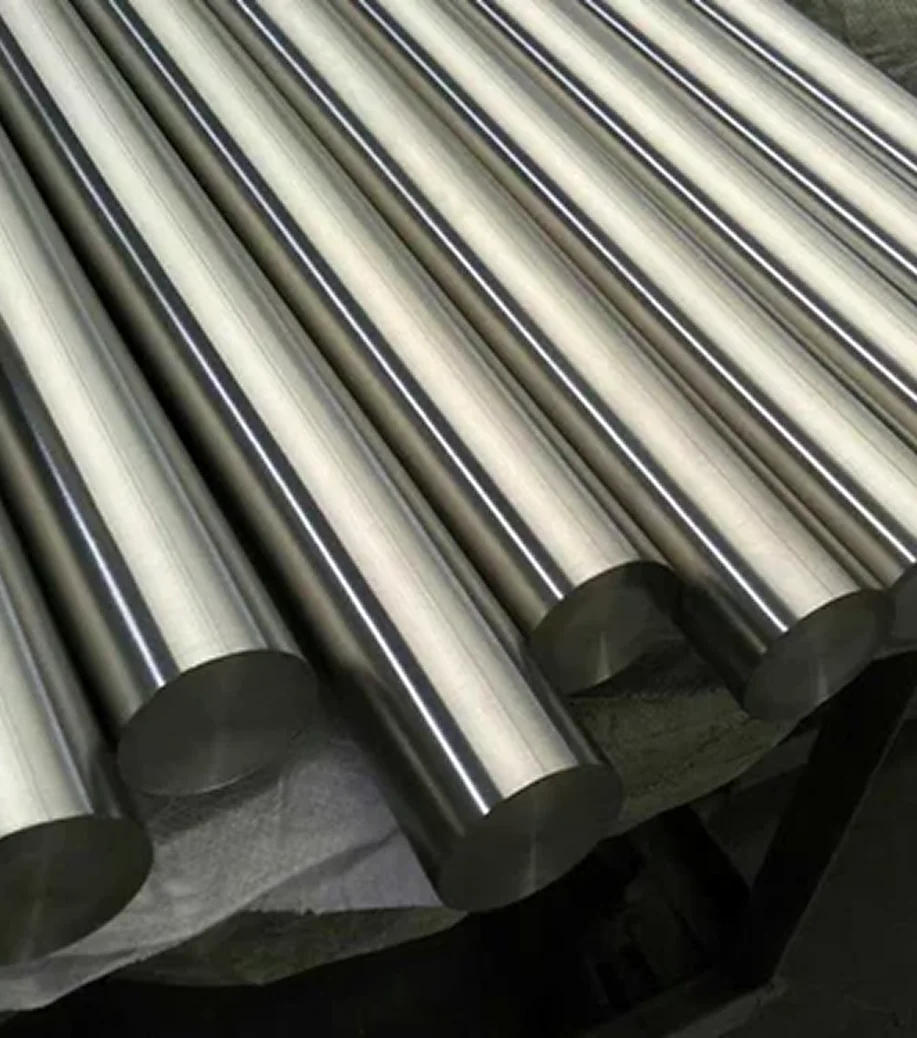
Inconel 625 Flanges Supplier ASTM B564 UNS N06625

Table of Content
- Inconel 625 Flanges Specifications
- Inconel 625 Flanges Standard Sizes
- EN 2.4856 Flange Face
- Nickel 625 Flanges Thread
- Inconel 625 Weld Neck Flanges Process
- UNS N06625 Slip On Flanges Surface Finish
- Alloy 625 Flange Types
- ASTM B564 N06625 Flange Documentation
- Inconel 2.4856 Flanges Dimensional Standards
- Nickel Alloy 625 Flanges Application
- NiCr22Mo9Nb Inconel 625 Pipe Flange Packaging
- Types of Inconel 625 Flanges
- Related Products
- Frequently Asked Questions
- Request a Quote for Inconel 625 Flanges
Kalpataru Piping Solutions offers Inconel 625 Flanges, which comply with the standards of ASTM B564 and UNS N06625 / W.Nr. 2.4856 for usage in chemical processing plants, marine industries, offshore operations, aerospace sector, and high temperature piping systems. Inconel 625 Flanges are made using nickel chromium molybdenum alloy with nickel content around 58 percent and chromium content of about 20-23%. It exhibits great properties such as resistance to oxidation, pitting, crevice corrosion, and aggressive chemicals. Its tensile strength is at least 930 MPa and the yield strength is 517 MPa. Our company is a leading Inconel 625 Flanges Supplier in India. We provide a wide range of different kinds of flanges, like Weld Neck, Slip On, Blind, Socket Weld, Threaded, Lap Joint, Long Weld Neck, Orifice, and Reducing Flanges. To get the accurate material for your structure, contact us.
For grade-matched supply, explore our Inconel Products and Inconel 625 Pipe Fittings range. As experienced Inconel 625 Flange Manufacturers, Inconel 625 Flange Manufacturers in India, and stockholders of ASTM B564 UNS N06625 flanges, we support domestic and export projects with complete material traceability.
Inconel 625 Flange Specifications – ASTM B564 UNS N06625, ASME B16.5 / B16.47
The following specifications cover ASTM B564 UNS N06625 / W.Nr. 2.4856 flanges supplied in ASME B16.5 and ASME B16.47 dimensions for industrial piping systems.
Inconel 625 Flanges Standard Sizes
- Schedule : Sch 5 to XXS
- NPS: 1/2″ to 48″
- Class: 150 to 2500#
EN 2.4856 Flange Face
- FF (Flat Face)
- RF (Raised Face)
- RTJ (Ring Type Joint)
Nickel 625 Flanges Thread
- FNPT, NPT
- BSPT, BSPP
- MNPT
Inconel 625 Flanges Testing
- Pressure & Tensile Testing
- PMI (Positive Material ID)
- Hardness Test
EN 2.4856 Physical Properties
- Density: 8.44 g/cm³
- Melting Point: 1290-1350°C
- Temp Range: 2000°F (1093°C)
Global Standards
ASTM: B564 | ASME: SB 564
UNS: N06625 | WNR: 2.4856
UNS N06625 Surface Finish
- Spiral / Concentric
- Mirror, Serrated
- Smooth Finish
ASTM B564 Documentation
- MTC (Mill Test Certificate)
- 100% Radiography Report
- Third Party Inspection
Dimensional Standards
- ASME B16.5 & B16.47
- Series A & B
- MSS SP44
Nickel Alloy 625 Applications
- Aerospace & Marine
- Chemical Processing
- Nuclear Industry
Inconel 625 Packaging
- Bubble Wrap & Plastic Bags
- Anti-tarnish Paper
- Plastic Wrap Sealing
Supporting Material
- Gaskets & Ring Joints
- High Strength Flange Bolts
Types of Inconel 625 Flanges, Alloy 625 Flanges & Nickel Alloy 625 Pipe Flanges


Inconel 625 Flange Composition – ASTM B564 UNS N06625
Chemical composition applies to Alloy 625 Flanges supplied with EN 10204 3.1 MTC and full material traceability documentation.
| Element | Symbol | Content (% by weight) | Role in Alloy |
| Nickel | Ni | 58.0% min | Base element — corrosion and oxidation resistance |
| Chromium | Cr | 20.0 – 23.0% | High-temperature oxidation and corrosion resistance |
| Molybdenum | Mo | 8.0 – 10.0% | Pitting and crevice corrosion resistance; solid solution hardening |
| Niobium + Tantalum | Nb + Ta | 3.15 – 4.15% | Weld stabilisation; prevents sensitisation; matrix strengthening |
| Iron | Fe | 5.0% max | Residual — kept low for corrosion performance |
| Cobalt | Co | 1.0% max | Residual |
| Manganese | Mn | 0.50% max | Residual |
| Silicon | Si | 0.50% max | Residual |
| Carbon | C | 0.10% max | Low carbon — minimises carbide precipitation |
| Titanium | Ti | 0.40% max | Residual |
| Aluminum | Al | 0.40% max | Residual |
Mechanical & Physical Properties of ASTM B564 UNS N06625 Inconel 625 Flanges
Inconel 625 flanges supplied by Kalpataru Piping consistently exceed ASTM B564 minimum requirements — tensile strength typically reaches 930 MPa against the 827 MPa code minimum, and elongation averages 42.5 % against a 30 % requirement.
| Property | Value | Unit |
| Tensile Strength (min) | 930 MPa (135,000 psi) | ASTM B564 requirement: 827 MPa (120 ksi) min |
| Yield Strength 0.2% offset (min) | 517 MPa (75,000 psi) | ASTM B564 requirement: 414 MPa (60 ksi) min |
| Elongation (min) | 42.5% | In 50mm gauge length (ASTM B564 min: 30%) |
| Hardness (max) | 241 HB / 100 HRB | As-forged and heat-treated condition |
| Density | 8.44 g/cm³ (0.305 lb/in³) | — |
| Melting Range | 1290 – 1350°C (2350 – 2460°F) | — |
| Elastic Modulus | 207 GPa (30.1 × 10³ ksi) | At room temperature |
| Poisson’s Ratio | 0.278 | — |
| Max. Continuous Service Temperature | 982°C (1800°F) | Oxidising atmosphere |
| Min. Service Temperature (Cryogenic) | -196°C (-320°F) | No ductile-to-brittle transition |
Physical Properties of Inconel 625 Flanges
| Property | Value at 21°C (70°F) | Value at 204°C (400°F) | Value at 538°C (1000°F) |
| Density (lb/in³ / g/cm³) | 0.305 / 8.44 | 0.305 / 8.44 | 0.305 / 8.44 |
| Thermal Conductivity (Btu·in/h·ft²·°F) | 68 | 87 | 139 |
| Specific Heat (Btu/lb·°F) | 0.098 | 0.109 | 0.118 |
| Thermal Expansion (×10⁻⁶/°F) | — | 7.3 | 7.7 |
| Elastic Modulus (×10³ ksi) | 30.1 | 28.7 | 25.7 |
| Magnetic Permeability at 200 Oe (15.9 kA/m) | 1.0006 | — | — |
Inconel 625 Flange Dimensions – ASME B16.5 Class 150 to 2500
For other Inconel flange grades, see our Inconel Flanges hub.

| Nominal Size |
Outside Diameter (OD) |
Min. Thickness (T) |
RF Dia. (R) |
No. of Bolt Holes | Diameter of Holes |
Bolt Circle (BC) |
SO Bore ID (SB) |
Dia. Hub Base (HB) |
Dia. Hub Top (HT) |
SO LTH (SL) |
WN LTH (WL) |
* WN Bore ID (WB) |
| 1⁄2 | 3.75 | 0.56 | 1.38 | 4 | 0.63 | 2.62 | 0.88 | 1.5 | 0.84 | 0.88 | 2.06 | * |
| 3⁄4 | 4.62 | 0.62 | 1.69 | 4 | 0.75 | 3.25 | 1.09 | 1.88 | 1.05 | 1.00 | 2.25 | * |
| 1 | 4.88 | 0.69 | 2.00 | 4 | 0.75 | 3.50 | 1.36 | 2.12 | 1.32 | 1.06 | 2.44 | * |
| 11⁄4 | 5.25 | 0.81 | 2.50 | 4 | 0.75 | 3.88 | 1.70 | 2.50 | 1.66 | 1.12 | 2.62 | * |
| 11⁄2 | 6.12 | 0.88 | 2.88 | 4 | 0.88 | 4.50 | 1.95 | 2.75 | 1.90 | 1.25 | 2.75 | * |
| 2 | 6.50 | 1.00 | 3.62 | 8 | 0.75 | 5.00 | 2.44 | 3.31 | 2.38 | 1.44 | 2.88 | * |
| 21⁄2 | 7.50 | 1.12 | 4.12 | 8 | 0.88 | 5.88 | 2.94 | 3.94 | 2.88 | 1.62 | 3.12 | * |
| 3 | 8.25 | 1.25 | 5.00 | 8 | 0.88 | 6.62 | 3.57 | 4.62 | 3.50 | 1.81 | 3.25 | * |
| 31⁄2 | 9.00 | 1.38 | 5.50 | 8 | 1.00 | 7.25 | 4.07 | 5.25 | 4.00 | 1.94 | 3.38 | * |
| 4 | 10.00 | 1.38 | 6.19 | 8 | 1.00 | 7.88 | 4.57 | 5.75 | 4.50 | 2.00 | 3.50 | * |
| 5 | 11.00 | 1.50 | 7.31 | 8 | 1.00 | 9.25 | 5.66 | 7.00 | 5.56 | 2.12 | 4.00 | * |
| 6 | 12.50 | 1.62 | 8.50 | 12 | 1.00 | 10.62 | 6.72 | 8.12 | 6.63 | 2.25 | 4.06 | * |
| 8 | 15.00 | 1.88 | 10.62 | 12 | 1.12 | 13.00 | 8.72 | 10.25 | 8.63 | 2.69 | 4.62 | * |
| 10 | 17.50 | 2.12 | 12.75 | 16 | 1.25 | 15.25 | 10.88 | 12.62 | 10.75 | 2.88 | 4.88 | * |
| 12 | 20.50 | 2.25 | 15.00 | 16 | 1.38 | 17.75 | 12.88 | 14.75 | 12.75 | 3.12 | 5.38 | * |
| 14 | 23.00 | 2.38 | 16.25 | 20 | 1.38 | 20.25 | 14.14 | 16.75 | 14.00 | 3.31 | 5.88 | * |
| 16 | 25.50 | 2.50 | 18.50 | 20 | 1.50 | 22.50 | 16.16 | 19.00 | 16.00 | 3.69 | 6.00 | * |
| 18 | 28.00 | 2.62 | 21.00 | 24 | 1.50 | 24.75 | 18.18 | 21.00 | 18.00 | 3.88 | 6.50 | * |
| 20 | 30.50 | 2.75 | 23.12 | 24 | 1.62 | 27.00 | 20.20 | 23.12 | 20.00 | 4.00 | 6.62 | * |
| 22 | 33.00 | 2.88 | 25.25 | 24 | 1.75 | 29.25 | 22.22 | 25.25 | 22.00 | 4.25 | 6.75 | * |
| 24 | 36.00 | 3.00 | 27.25 | 24 | 1.88 | 32.00 | 24.25 | 27.62 | 24.00 | 4.50 | 6.88 | * |
International Standards for Inconel 625 Flanges – ASTM B564 UNS N06625 / W.Nr 2.4856
The following international specifications and material designations are commonly referenced for ASTM B564 UNS N06625 flange manufacturing and procurement.
| UNS: | N06625 |
| International Specifications: | WERKSTOFF Nr 2.4856 |
| Specifications: | ASTM B564/ASME SB564 |
Gasket Size Of Inconel 625 Flanges
| Normal Pipe Size | Gasket I.D. | Gasket O.D. | ||||
| 150 LB | 300 LB | 400 LB | 600 LB | 900 LB | ||
| 1/2 | 0.84 | 1.875 | 2.125 | 2.125 | 2.125 | 2.50 |
| 1 1/4 | 1.66 | 3 | 3.25 | 3.25 | 3.25 | 3.50 |
| 2 1/2 | 2.88 | 4.875 | 5.125 | 5.125 | 5.125 | 6.50 |
| 3/4 | 1.06 | 2.25 | 2.625 | 2.625 | 2.625 | 2.75 |
| 1 1/2 | 1.91 | 3.375 | 3.75 | 3.75 | 3.75 | 3.875 |
| 2 | 2.38 | 4.125 | 4.375 | 4.375 | 4.375 | 5.625 |
| 1 | 1.31 | 2.625 | 2.875 | 2.875 | 2.875 | 3.125 |
| 3 | 3.50 | 5.375 | 5.875 | 5.875 | 5.875 | 6.625 |
| 4 | 4.50 | 6.875 | 7.125 | 7.00 | 7.625 | 8.125 |
| 5 | 5.56 | 7.75 | 8.50 | 8.375 | 9.50 | 9.75 |
| 6 | 6.62 | 8.75 | 9.875 | 9.75 | 10.50 | 11.375 |
| 8 | 8.62 | 11 | 12.125 | 12.00 | 12.625 | 14.125 |
| 10 | 10.75 | 13.375 | 14.25 | 14.125 | 15.75 | 17.125 |
| 12 | 12.75 | 16.125 | 16.625 | 16.50 | 18.00 | 19.625 |
Inconel 625 Flanges Pressure Rating / Gasket Tables
| Temp., °C | Working Pressures by Classes, bar | ||||||
| – | 150 | 300 | 400 | 600 | 900 | 1500 | 2500 |
| -29 ~ 38 | 20.0 | 51.7 | 68.9 | 103.4 | 155.1 | 258.6 | 430.9 |
| 50 | 19.5 | 51.7 | 68.9 | 103.4 | 155.1 | 258.6 | 430.9 |
| 100 | 17.7 | 51.5 | 68.7 | 103.0 | 154.6 | 257.6 | 429.4 |
| 150 | 15.8 | 50.3 | 66.8 | 100.3 | 150.6 | 250.8 | 418.2 |
| 200 | 13.8 | 48.6 | 64.8 | 97.2 | 145.8 | 243.4 | 405.4 |
| 250 | 12.1 | 46.30 | 61.7 | 92.7 | 139.0 | 231.8 | 386.2 |
| 300 | 10.2 | 42.9 | 57.0 | 85.7 | 128.6 | 214.4 | 357.1 |
| 325 | 9.3 | 41.4 | 55.0 | 82.6 | 124.0 | 206.6 | 344.3 |
| 350 | 8.4 | 40.3 | 53.6 | 80.4 | 120.7 | 201.1 | 335.3 |
| 475 | 3.7 | 31.7 | 42.3 | 63.4 | 95.1 | 158.2 | 263.9 |
| 500 | 2.8 | 28.2 | 37.6 | 56.5 | 84.7 | 140.9 | 235.0 |
| 538 | 1.4 | 16.5 | 22.1 | 33.1 | 49.6 | 82.7 | 137.9 |
| 550 | – | 13.9 | 18.6 | 27.9 | 41.8 | 69.7 | 116.2 |
| 375 | 7.4 | 38.9 | 51.6 | 77.6 | 116.5 | 194.1 | 323.2 |
| 600 | – | 6.6 | 8.9 | 13.3 | 19.9 | 33.2 | 55.3 |
| 625 | – | 5.1 | 6.8 | 10.3 | 15.4 | 25.7 | 42.8 |
| 650 | – | 4.7 | 6.3 | 9.5 | 14.2 | 23.6 | 39.4 |
| 400 | 6.5 | 36.5 | 48.9 | 73.3 | 109.8 | 183.1 | 304.9 |
| 425 | 5.5 | 35.2 | 46.5 | 70.0 | 105.1 | 175.1 | 291.6 |
| 450 | 4.6 | 33.7 | 45.1 | 67.7 | 101.4 | 169.0 | 281.8 |
| 575 | – | 9.4 | 12.6 | 18.9 | 28.3 | 47.2 | 78.6 |
Common Flange Face Types for Inconel 625 Flanges
|
Face Type |
Typical Application |
|
Flat Face (FF) |
Low-pressure systems |
|
Raised Face (RF) |
General industrial piping |
|
Ring Type Joint (RTJ) |
High-pressure and high-temperature service |
|
Lap Joint Face |
Stub-end piping systems |
|
Tongue & Groove (T&G) |
Precise gasket alignment |
|
Male & Female (M&F) |
Improved sealing integrity |
Related Products
- Inconel 625 Perforated Sheets
- Inconel 625 Forged Fittings
- Inconel 625 Fasteners
- Inconel 625 Compression Tube Fittings
- Inconel 625 Pipes and Tubes
- Inconel 625 Flanges
- Inconel 625 Plates and Sheets
- Inconel 625 Buttweld Fittings
- Inconel 625 Shims
- Inconel 625 Filler Wire
- Inconel 625 Perforated Sheets
- Inconel 625 Forged Fittings
- Inconel 625 Fasteners
- Inconel 625 Compression Tube Fittings
- Inconel 625 Pipes & Tubes
- Inconel 625 Flanges
- Inconel 625 Round Bars & Wires
- Inconel 625 Plates & Sheets
- Inconel 625 Buttweld Fittings
- Inconel 625 Shims
Frequently Asked Questions
What is the maximum service temperature of Inconel 625 flanges?
Continuous service up to 982°C (1800°F) at oxidising atmospheres is possible using Inconel 625 flanges. Exposure to 1093°C (2000°F) is tolerable in the case of intermittent or short-duration service. The table above (per ASME B16.5) is the pressure-temperature ratings that specifies the way high pressure can be operated at each operating temperature, however, the lower the temperature, the lower the allowable pressure is – above 500°C the allowable pressure drops considerably.
What is the difference between Inconel 625 and Hastelloy C276 flanges?
Both alloys excel in corrosive environments, but they are specified for different threats. Inconel 625 has a higher niobium content for superior weld stability and performs better under cyclic thermal stress. Hastelloy C276 has a higher molybdenum content (15–17%) and is preferred where reducing acids (HCl, H₂SO₄) are the primary corrosive agent. For mixed or oxidising acid environments, Inconel 625 is typically the engineer’s first choice. Our technical team can advise on grade selection for your specific process stream. Contact us with your service conditions.
Are your Inconel 625 flanges dual-stamped or traceable to a specific heat?
Yes. Every Inconel 625 flange supplied by Kalpataru Piping carries a heat number stamped on the flange body and traceable to the original billet. The EN 10204 3.1 Mill Test Certificate links the heat number to the chemical analysis, mechanical test results, and PMI report for that specific heat. For projects requiring 3.2 certification, third-party inspection by Bureau Veritas, SGS, TÜV, or Intertek can be arranged at the enquiry stage.
What ASTM standard applies to Inconel 625 flanges?
Inconel 625 Flanges are manufactured to ASTM B564 UNS N06625 and supplied in accordance with ASME B16.5 and ASME B16.47 standards. Material is available with EN 10204 3.1 MTC, PMI reports, and third-party inspection documentation. See our Inconel Flanges page for additional grades and configurations.
Are Inconel 625 flanges available in weld neck, slip on and blind types?
Yes. Inconel 625 Flanges are available in Weld Neck, Slip On, Blind, Socket Weld, Threaded, Lap Joint, Orifice, and Reducing types. Nickel Alloy 625 Pipe Flanges can be supplied in various pressure classes, sizes, and facing configurations.
Who are Inconel 625 flange manufacturers in India?
Kalpataru Piping is a Mumbai-based Inconel 625 Flange Supplier and Manufacturer in India. We supply ASTM B564 UNS N06625 flanges with EN 10204 3.1 MTC, PMI reports, third-party inspection, export packing, and complete material traceability.
What is the difference between Inconel 625 and Inconel 718 flanges?
Inconel 625 Flanges are preferred for corrosion resistance in marine, offshore, and chemical environments. Inconel 718 Flanges offer higher strength through precipitation hardening and are commonly used in aerospace and high-stress applications. See our Inconel 718 Flanges page for comparison.
Request a Quote for Inconel 625 Flanges
Kalpataru Piping maintains ready stock of ASTM B564 / UNS N06625 Inconel 625 Flanges in all standard and custom sizes, including slip-on, weld neck, blind, socket weld, threaded, lap joint, and spectacle blind flanges.
Get an immediate price for your Inconel 625 flange requirement. Our technical team will review your specifications and respond within 24 hours with the best pricing and delivery options.
Explore Stock of Our Inconel Products