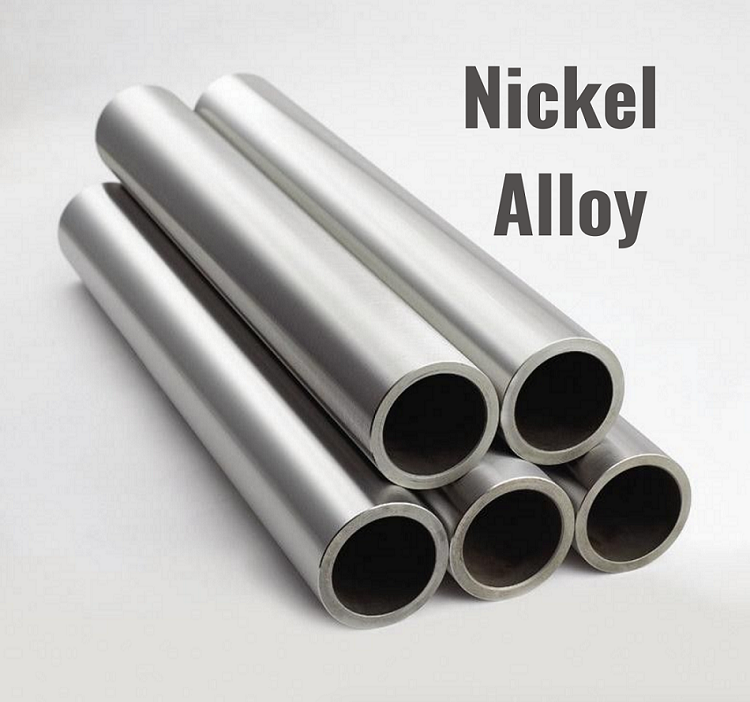
Nickel compounds spread a wide scope of synthetic arrangements, microstructures, and mechanical properties. All in all, they have higher consumption opposition than the treated steels. The Table presents some regularly utilized nickel composites.
| Alloy | Composition | ||||
| Ni | C | Fe | Mn | Others | |
| Nickel 200™ | 99.5 | 0.08 | 0.2 | 0.18 | |
| Nickel 270™ | 99.98 | 0.01 | |||
| Monel 400™ | 66.5 | 1.0 | 1.25 | 1.0 | Cu 31.5 |
| Hastelloy B™ | 63.5 | 5.0 | Co 2.5, Cr 1.0. Mo 28.0 | ||
| Incoloy 901™ | 42.7 | 0.05 | 34.8 | Cr 13.5, Ti 2.5, Mo 6.2, Al 0.25 |
Most Ni amalgams are not heat-treatable however can be reinforced by cool work. The nickel compounds may have non-metallic incorporations (chiefly oxides) and various optional stages including Niγ, Niη, Niγ’, Niμ, and Niσ, carbide, and carbon-nitride. A few periods of nickel compounds are too little to even think about observing utilizing the light optical magnifying lens and are perceptible just utilizing TEM.
Nickel itself has just moderate protection from consumption, yet its opposition increments while alloying components, for example, copper, molybdenum, chromium, iron, and tungsten are included. Nickel amalgams are safer than tempered steels in numerous conditions including diminishing situations and chloride-prompted pitting
Nickel-alloys are the most generally utilized superalloys. Inconel 718 is the most normally utilized nickel-based amalgam and regularly makes up half of the heaviness of a stream motor. Aviation parts, for example, motor cases, blisks, and blings, combustors, cutting edges and seals are basic models. Nickel-based superalloys (particularly Inconel 718 representing as much as 45% of fashioned nickel-based amalgams) are commonly known to be probably the hardest material to the machine on account of their high hardness, high quality at high temperature, solid liking to respond with apparatus materials, and low warm conductivity. Their articulated propensity to BUE arrangement and strain solidifying, and the grating impact of carbides and intermetallic stages, results in particularly high mechanical and warm weights on the forefront during machining. The arrangement of depressions on the major and minor bleeding edges because of indent wear is commonplace for turning tasks with earthenware and CBN cutting additions. The typical scope of turning speeds for uncoated K10/K20 carbides is 20–50 m/min. PVD and CVD-covered fine-grain carbides permit speed up to around 80 and 120 m/min, separately. Options in contrast to carbides for turning apparatuses are wicker pottery, α/β-SIALONs, and PCBN. Oxide earthenware production is unacceptable for machining nickel-based composites attributable to concentrated indent wear. Sialon materials are suggested for roughing activities with cutting velocities of 100–200 m/min. In turning activities utilizing stubble strengthened alumina earthenware production (Al2O3+SiCw) apparatuses the cutting velocity is over 200 m/min. Then again, PCBN instruments are fundamentally reasonable for completing procedures on Inconel 718 at particularly higher cutting paces of 250–350 m/min. Fine-grained PCBN grades with a TiC-or TIN-based cover and a fastener division of 30–50 vol. % were discovered to be the best option. Also, instrument wear can be decreased or adjusted and apparatus life can be expanded by utilizing fitting cutting techniques, concerning the occurrence of trochoidal processing and sloping with persistently changing the profundity of cut. During the first and second passes, the profundity of cut reductions and increments individually and the last impact is the indent wear is essentially dodged.
Just nickel-based composites have the essential quality and erosion protection from work over 680 °C (1250 °F)4 and they are not yet completely produced for business A-USC heater applications, albeit a few are accessible as tubing. Perceiving the producing