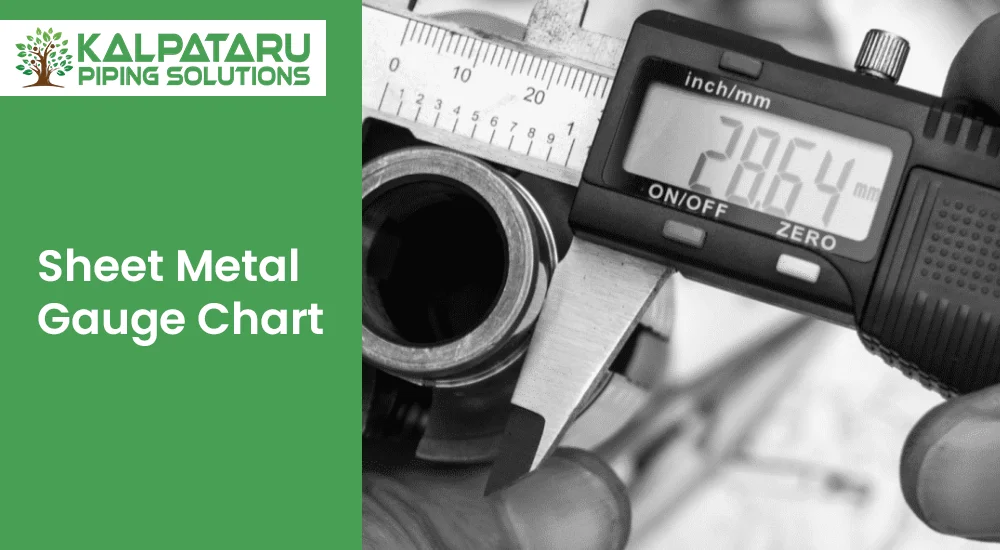
When dealing with sheet metal the term used is the gauge which means the thickness of it. The gauge system is a standardized method of measuring and categorizing sheet metal thickness with the highest gauge number corresponding to a thinner sheet. An example of this is that 18 8 gauge steel is heavier than 22 gauge steel.
The sheet metal gauge system requires understanding in the fabrication, manufacturing and design. The thickness of 18 gauge in mm gives an accurate reference when calculating between various units of measurement, so that no mistakes are made in the production of instruments.
Our Sheet Metal Gauge Chart makes this process simpler because it shows the numbers of the gauge together with numbers of their corresponding thickness in both inches and millimeters. This can enable the engineers, fabricators and designers to interpret and choose suitable metal thickness used by them in a short time. The Browne & Sharpe system of measurement, which gave rise to the gauge (Ga.) unit, was first applied to medicine and jewelry, as the measurement of wire or tube diameter. It has come to signify the thickness of sheets in metalworking. Importantly, no direct equation exists to change between the gauge and the inches because the values of the thickness can be different based on the type of non-ferrous metal and steel sheets are characterized by different gauge-to-thickness relations.
Knowing the sheet metal gauge chart, you are able to determine the material thickness correctly, profile the fabrication processes and achieve cost-effective and quality results in construction, manufacturing and metal fabrication industries.
How Are Sheet Metal Gauges Used?
The gauges of sheet metals play a crucial role in the measurement of thickness of metal sheets that are utilized in different fabrication works. The gauge system offers a simple reference scale that is applicable to determine the thickness of metal in a short period of time instead of using a standard measurement or imperial system. Nevertheless, gauge values do not have a direct relationship with millimeter or inch measurements and therefore a gauge conversion chart is required to obtain precise readings. Every kind of metal, e.g. steel, aluminum, brass, or copper, is subject to its gauge scale, i.e. two sheets of the same gauge number may vary in thickness. An example is 18 gauge steel is about 1.21 mm and 18 gauge aluminum is a little bit smaller. This variation necessitated the need to check the precise size during manufacture or design. Gauge charts are essential material selection tools in such industries as automotive, aerospace, construction, manufacturing, and others. They guarantee that the metal has the right thickness to meet the mechanical strength, formability and weight requirements needed. Knowledge about sheet metal gauges guides engineers and fabricators in selecting materials that would balance both strength and flexibility along with affordability. Though less value of the gauge describes the thickness and strength of the sheet intended to use, higher values of the gauge depict the thinness of the metals intended to use in light tasks or decorations. With the effective application of gauge charts, professionals would be able to maximize their designs, make them compatible with production tools and keep all the stages of metal fabrication precise.History and Importance of Sheet Metal Gauge
The concept of sheet metal gauge has deep historical origins going back to the British wire industry where it was initially used to measure the diameter of drawn wire. Over time this measurement system was selected to indicate the thickness of metal sheets as well. Different from metric units where thickness is calculated in millimeters the gauge in sheet metal is an irregular scale meaning a lower gauge number means a thicker sheet and a higher number shows a thinner sheet.
The gauge of metal sheet you select can significantly affect your project’s strength, longevity and application. For instance a 10-gauge sheet is generally utilized for constructional parts, while a 22-gauge sheet is perfect for lighter operations like ductwork. Actually any sheet metal above 6 mm thick is no longer called sheet—it’s classified as plate.
To simplify selection, fabricators often refer to a sheet metal gauge chart or sheet gauge chart, which lists the corresponding thickness in inches or millimeters for each gauge number. This is specifically useful for ensuring compatibility with design requirements and manufacturing standards.
Despite the global push towards the metric system, gauge measurement remains widely used in the sheet metal industry, helping craftsmen, engineers, and manufacturers maintain consistency and precision in their work.
Sheet Metal Gauge Charts
In Kalpataru Piping Solutions, we are distributors of high end sheet metals of diverse thickness and sizes to meet all the needs of a project. Produced using material like stainless steel sheets, copper sheets, brass sheets and aluminium sheets among others. In order to choose the appropriate thickness to use in your application, check our sheet metal gauge charts to make the correct conversions.
Mild Steel Gauge Chart* |
||
|
Gauge Number |
Inches |
MM |
|
7 |
.1793 |
4.554 |
|
8 |
.1644 |
4.175 |
|
9 |
.1495 |
3.797 |
|
10 |
.1345 |
3.416 |
|
11 |
.1196 |
3.038 |
|
12 |
.1046 |
2.656 |
|
14 |
.0747 |
1.897 |
|
16 |
.0598 |
1.518 |
|
18 |
.0478 |
1.214 |
|
20 |
.0359 |
.911 |
|
22 |
.0299 |
.759 |
|
24 |
.0239 |
.607 |
|
26 |
.0179 |
.454 |
|
28 |
.0149 |
.378 |
Aluminum Gauge Chart* |
||
|
Gauge Number |
Inches |
MM |
|
7 |
.1443 |
3.665 |
|
8 |
.1285 |
3.264 |
|
9 |
.1144 |
2.906 |
|
10 |
.1019 |
2.588 |
|
11 |
.09074 |
2.305 |
|
12 |
.08081 |
2.053 |
|
14 |
.06408 |
1.628 |
|
16 |
.05082 |
1.291 |
|
18 |
.04030 |
1.024 |
|
20 |
.03196 |
.812 |
|
22 |
.02535 |
.644 |
|
24 |
.02010 |
.511 |
|
26 |
.01594 |
.405 |
|
28 |
.01264 |
.321 |
|
30 |
.01003 |
.255 |
|
Gauge Number |
Inches |
MM |
|
8 |
.17187 |
4.365 |
|
9 |
.15625 |
3.968 |
|
10 |
.14062 |
3.571 |
|
11 |
.125 |
3.175 |
|
12 |
.10937 |
2.778 |
|
14 |
.07812 |
1.984 |
|
16 |
.0625 |
1.587 |
|
18 |
.050 |
1.270 |
|
20 |
.0375 |
.9525 |
|
22 |
.03125 |
.7937 |
|
24 |
.025 |
.635 |
|
26 |
.01875 |
.476 |
|
28 |
.01562 |
.396 |
|
30 |
.0125 |
.3175 |
Galvanized Steel Gauge Chart* |
||
|
Gauge Number |
Inches |
MM |
|
8 |
.1681 |
4.269 |
|
9 |
.1532 |
3.891 |
|
10 |
.1382 |
3.510 |
|
11 |
.1233 |
3.1318 |
|
12 |
.1084 |
2.753 |
|
14 |
.0785 |
1.9939 |
|
16 |
.0635 |
1.6129 |
|
18 |
.0516 |
1.310 |
|
20 |
.0396 |
1.005 |
|
22 |
.0336 |
.853 |
|
24 |
.0276 |
.701 |
|
26 |
.0217 |
.551 |
|
28 |
.0187 |
.474 |
|
30 |
.0157 |
.398 |
Brass Gauge Chart* |
||
|
Gauge Number |
Inches |
MM |
|
7 |
.1443 |
3.665 |
|
8 |
.1285 |
3.264 |
|
9 |
.1144 |
2.906 |
|
10 |
.1019 |
2.588 |
|
11 |
.09074 |
2.305 |
|
12 |
.08081 |
2.053 |
|
14 |
.06408 |
1.628 |
|
16 |
.05082 |
1.291 |
|
18 |
.04030 |
1.024 |
|
20 |
.03196 |
.812 |
|
22 |
.02535 |
.644 |
|
24 |
.02010 |
.511 |
|
26 |
.01594 |
.405 |
|
28 |
.01264 |
.321 |
|
30 |
.01003 |
.255 |
Copper Gauge Chart* |
||
|
Gauge Number |
Inches |
MM |
|
7 |
.180 |
4.572 |
|
8 |
.165 |
4.191 |
|
9 |
.148 |
3.759 |
|
10 |
.134 |
3.404 |
|
11 |
.120 |
3.048 |
|
12 |
.109 |
2.769 |
|
14 |
.083 |
2.108 |
|
16 |
.065 |
1.651 |
|
18 |
.049 |
1.245 |
|
20 |
.035 |
.889 |
|
22 |
.028 |
.711 |
|
24 |
.022 |
.559 |
|
26 |
.018 |
.457 |
|
28 |
.014 |
.356 |
|
30 |
.012 |
.305 |
Common Types of Sheet Metal
Selecting the right sheet metal type is the first in finding the correct gauge and guaranteeing project success. Let’s explore at common sheet metals in industry, architecture and production:
Steel: An iron-carbon alloy essential for strength, endurance and cost effectiveness. Perfect for structures, vehicles, tools, tools.
Zinc-plated steel: Zinc-coated for corrosion protection. Perfect for outdoor/moist environments (agriculture, solar mounts, auto parts, construction frames).
Stainless Steel: Contains at least 10.5% chromium for excellent corrosion resistance. Used in sanitary, medical, architectural, food-grade applications.
Aluminum: Lightweight, corrosion-resistant. Common in aerospace, automotive, facades, food packaging.
Brass: Copper-zinc alloy, known for decorative finish and acoustic properties. Used in instruments, architecture, plumbing, electrical connectors.
Copper: Highly conductive, malleable. Used in electrical systems, plumbing, roofing, industrial machinery.
Sheet Metal Gauge Size Chart
Knowing a sheet metal gauge size chart is necessary for identifying thickness, which directly affects strength, weight and usability. Gauge numbers are standardized to help accurately measure and choose materials. Remember, different metals use different gauge systems, so knowing the right sheet metal gauge chart of sizes for your material is crucial.
Below is a guide to common sheet metal gauge charts stainless steel, aluminum etc offering thickness in inches/mm and weight per unit area.
|
Thickness |
Weight Per Area |
|
|||
|
Gauge |
in |
mm |
lb/ft² |
kg/m² |
|
|
3 |
0.2391 |
6.073 |
9.754 |
47.624 |
|
|
4 |
0.2242 |
5.695 |
9.146 |
44.656 |
|
|
5 |
0.2092 |
5.314 |
8.534 |
41.668 |
|
|
6 |
0.1943 |
4.935 |
7.927 |
38.701 |
|
|
7 |
0.1793 |
4.554 |
7.315 |
35.713 |
|
|
8 |
0.1644 |
4.176 |
6.707 |
32.745 |
|
|
9 |
0.1495 |
3.797 |
6.099 |
29.777 |
|
|
10 |
0.1345 |
3.416 |
5.487 |
26.790 |
|
|
11 |
0.1196 |
3.038 |
4.879 |
23.822 |
|
|
12 |
0.1046 |
2.657 |
4.267 |
20.834 |
|
|
13 |
0.0897 |
2.278 |
3.659 |
17.866 |
|
|
14 |
0.0747 |
1.897 |
3.047 |
14.879 |
|
|
15 |
0.0673 |
1.709 |
2.746 |
13.405 |
|
|
16 |
0.0598 |
1.519 |
2.440 |
11.911 |
|
|
17 |
0.0538 |
1.367 |
2.195 |
10.716 |
|
|
18 |
0.0478 |
1.214 |
1.950 |
9.521 |
|
|
19 |
0.0418 |
1.062 |
1.705 |
8.326 |
|
|
20 |
0.0359 |
0.912 |
1.465 |
7.151 |
|
|
21 |
0.0329 |
0.836 |
1.342 |
6.553 |
|
|
22 |
0.0299 |
0.759 |
1.220 |
5.955 |
|
|
23 |
0.0269 |
0.683 |
1.097 |
5.358 |
|
|
24 |
0.0239 |
0.607 |
0.975 |
4.760 |
|
|
25 |
0.0209 |
0.531 |
0.853 |
4.163 |
|
|
26 |
0.0179 |
0.455 |
0.730 |
3.565 |
|
|
27 |
0.0164 |
0.417 |
0.669 |
3.267 |
|
|
28 |
0.0149 |
0.378 |
0.608 |
2.968 |
|
|
29 |
0.0135 |
0.343 |
0.551 |
2.689 |
|
|
30 |
0.0120 |
0.305 |
0.490 |
2.390 |
|
|
31 |
0.0105 |
0.267 |
0.428 |
2.091 |
|
|
32 |
0.0097 |
0.246 |
0.396 |
1.932 |
|
|
33 |
0.0090 |
0.229 |
0.367 |
1.793 |
|
|
34 |
0.0082 |
0.208 |
0.335 |
1.633 |
|
|
35 |
0.0075 |
0.191 |
0.306 |
1.494 |
|
|
36 |
0.0067 |
0.170 |
0.273 |
1.335 |
|
|
37 |
0.0064 |
0.163 |
0.261 |
1.275 |
|
|
38 |
0.0060 |
0.152 |
0.245 |
1.195 |
|
Gauge Sheet Metal Thickness Chart
In fabrication, thickness is specified by precise measurement (mm/inches) or the gauge system. Sheet metal gauge thickness refers to this measurement, following a non-linear scale – thickness doesn’t increase linearly as gauge numbers rise.
Sheet steel gauge thickness is usually in inches or millimeters, depending on material and standards. The system evolved by relating thickness to weight per square foot, aiding standardization in metalworking.
Sheet Metal Gauge to mm
|
Gauge Number |
Standard Steel (mm) |
Galvanized Steel (mm) |
Stainless Steel (mm) |
Aluminum, Brass, Copper (mm) |
|
3 |
6.073 |
5.827 |
||
|
4 |
5.095 |
5.954 |
5.189 |
|
|
5 |
5.314 |
5.555 |
4.62 |
|
|
6 |
4.935 |
5.159 |
4.115 |
|
|
7 |
4.554 |
4.763 |
3.665 |
|
|
8 |
4.176 |
4.191 |
3.264 |
|
|
9 |
3.797 |
3.891 |
3.967 |
2.906 |
|
10 |
3.416 |
3.51 |
3.571 |
2.588 |
|
11 |
3.038 |
3.132 |
3.175 |
2.304 |
|
12 |
2.657 |
2.753 |
2.779 |
2.052 |
|
13 |
2.278 |
2.372 |
2.38 |
1.829 |
|
14 |
1.897 |
1.994 |
1.984 |
1.628 |
|
15 |
1.709 |
1.803 |
1.786 |
1.45 |
|
16 |
1.519 |
1.613 |
1.588 |
1.29 |
|
17 |
1.367 |
1.461 |
1.427 |
1.151 |
|
18 |
1.214 |
1.311 |
1.27 |
1.024 |
|
19 |
1.062 |
1.158 |
1.11 |
0.912 |
|
20 |
0.912 |
1.006 |
0.953 |
0.813 |
|
21 |
0.836 |
0.93 |
0.874 |
0.724 |
|
22 |
0.759 |
0.853 |
0.792 |
0.643 |
|
23 |
0.683 |
0.777 |
0.714 |
0.574 |
|
24 |
0.607 |
0.701 |
0.635 |
0.536 |
|
25 |
0.531 |
0.627 |
0.556 |
0.455 |
|
26 |
0.455 |
0.551 |
0.475 |
0.404 |
|
27 |
0.417 |
0.513 |
0.437 |
0.361 |
|
28 |
0.378 |
0.475 |
0.396 |
0.32 |
|
29 |
0.343 |
0.437 |
0.358 |
0.287 |
|
30 |
0.305 |
0.399 |
0.318 |
0.254 |
|
31 |
0.267 |
0.361 |
0.277 |
0.226 |
|
32 |
0.246 |
0.34 |
0.259 |
0.203 |
|
33 |
0.229 |
0.239 |
0.18 |
|
|
34 |
0.208 |
0.218 |
0.16 |
|
|
35 |
0.191 |
0.198 |
0.142 |
|
|
36 |
0.17 |
0.178 |
0.127 |
|
|
37 |
0.163 |
0.168 |
0.113 |
|
|
38 |
0.17 |
0.157 |
0.101 |
Gauge Sheet Metal to Inches
|
Gauge Number |
Standard Steel (in) |
Galvanized Steel (in) |
Stainless Steel (in) |
Aluminum, Brass, Copper (in) |
|
3 |
0.2391 |
0.2294 |
||
|
4 |
0.2242 |
0.2344 |
0.2043 |
|
|
5 |
0.2092 |
0.2187 |
0.1819 |
|
|
6 |
0.1943 |
0.2031 |
0.162 |
|
|
7 |
0.1793 |
0.1875 |
0.1443 |
|
|
8 |
0.1644 |
0.165 |
0.1285 |
|
|
9 |
0.1495 |
0.1532 |
0.1562 |
0.1144 |
|
10 |
0.1345 |
0.1382 |
0.1406 |
0.1019 |
|
11 |
0.1196 |
0.1233 |
0.125 |
0.0907 |
|
12 |
0.1046 |
0.1084 |
0.1094 |
0.0808 |
|
13 |
0.0897 |
0.0934 |
0.0937 |
0.072 |
|
14 |
0.0747 |
0.0785 |
0.0781 |
0.0641 |
|
15 |
0.0673 |
0.071 |
0.0703 |
0.0571 |
|
16 |
0.0598 |
0.0635 |
0.0625 |
0.0508 |
|
17 |
0.0538 |
0.0575 |
0.0562 |
0.0453 |
|
18 |
0.0478 |
0.0516 |
0.05 |
0.0403 |
|
19 |
0.0418 |
0.0456 |
0.0437 |
0.0359 |
|
20 |
0.0359 |
0.0396 |
0.0375 |
0.032 |
|
21 |
0.0329 |
0.0366 |
0.0344 |
0.0285 |
|
22 |
0.0299 |
0.0336 |
0.0312 |
0.0253 |
|
23 |
0.0269 |
0.0306 |
0.0281 |
0.0226 |
|
24 |
0.0239 |
0.0276 |
0.025 |
0.0211 |
|
25 |
0.0209 |
0.0247 |
0.0219 |
0.0179 |
|
26 |
0.0179 |
0.0217 |
0.0187 |
0.0159 |
|
27 |
0.0164 |
0.0202 |
0.0172 |
0.0142 |
|
28 |
0.0149 |
0.0187 |
0.0156 |
0.0126 |
|
29 |
0.0135 |
0.0172 |
0.0141 |
0.0113 |
|
30 |
0.012 |
0.0157 |
0.0125 |
0.01 |
|
31 |
0.0105 |
0.0142 |
0.0109 |
0.0089 |
|
32 |
0.0097 |
0.0134 |
0.0102 |
0.008 |
|
33 |
0.009 |
0.0094 |
0.0071 |
|
|
34 |
0.0082 |
0.0086 |
0.0063 |
|
|
35 |
0.0075 |
0.0078 |
0.0056 |
|
|
36 |
0.0067 |
0.007 |
0.005 |
|
|
37 |
0.0064 |
0.0066 |
0.00445 |
|
|
38 |
0.0067 |
0.0062 |
0.00396 |
Understanding Sheet Metal Gauge Conversion
Working with sheet metal demands understanding different measurement systems, especially with international standards. Sheet metal gauge conversion, particularly SWG (Standard Wire Gauge) to metric/imperial, is key. A sheet metal gauge conversion chart helps accurately determine thickness, ensuring right material selection.
Sheet Metal Gauge Conversion Chart
A sheet metal gauge conversion chart is invaluable, showing equivalent thicknesses in different units. It helps fabricators/engineers quickly convert gauge to mm/inches, ensuring accuracy.
|
SWG |
Thickness (mm) |
Thickness (inches) |
|
7 |
4.6213 mm |
0.1819 inches |
|
10 |
3.2510 mm |
0.1276 inches |
|
12 |
2.6410 mm |
0.1040 inches |
|
14 |
2.0320 mm |
0.0799 inches |
|
16 |
1.6268 mm |
0.0641 inches |
|
18 |
1.2192 mm |
0.0479 inches |
|
20 |
0.9144 mm |
0.0360 inches |
|
22 |
0.7112 mm |
0.0280 inches |
|
24 |
0.5590 mm |
0.0220 inches |
|
26 |
0.4572 mm |
0.0180 inches |
|
28 |
0.3760 mm |
0.0148 inches |
|
30 |
0.3150 mm |
0.0124 inches |
|
32 |
0.2743 mm |
0.0108 inches |
Conclusion
The sheet metal gauge system has been used in the metal industry for many years and originally came from the British wire trade, where it helped measure wire thickness. Over time, this system was adapted to define the thickness of sheet metals as well.
Even with the rise of metric and imperial measurement systems, gauges are still commonly used because they provide an easy and familiar way to describe metal thickness. This makes communication simple across industries that work with different metals.
A gauge conversion chart is used to match gauge numbers with actual thickness values in millimeters or inches. Since gauge numbers don’t follow a direct mathematical formula, these charts help professionals ensure the right dimensions for materials like steel, aluminum, brass, and copper.
Today, the gauge system remains important in manufacturing, fabrication, and construction because it combines tradition with practicality. It allows engineers, fabricators, and builders to choose the right material thickness for strength, cost, and performance—keeping production accurate and consistent across various projects.
Frequently Asked Questions About Sheet Metal Gauge Chart
What is 16 gauge thickness in mm?
Standard Steel: 16 Gauge = 1.519 mm
Galvanized Steel: 16 Gauge = 1.613 mm
Stainless Steel: 16 Gauge = 1.588 mm
Aluminum, Brass, Copper: 16 Gauge = 1.29 mm