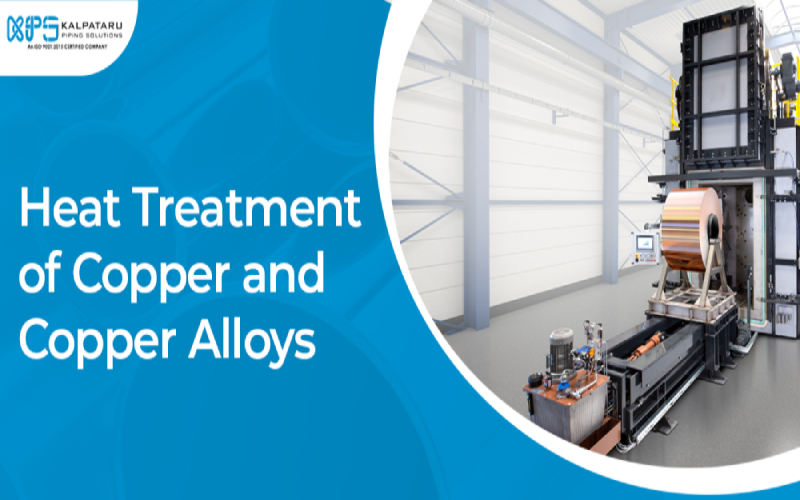
Heat treatment of copper alloys is performed to enhance the mechanical & physical properties of copper alloys. These materials are good at conducting electricity, resist corrosion and easy to shape to use in many industrial applications. The strength, hardness & durability of copper alloys can be improved by heating copper.
Here in this blog, we will discuss the heat treatment of copper alloys with essential techniques like homogenizing, annealing, stress relieving, & precipitation hardening. Each process involves controlled temperatures to suit different copper grades for high-performance alloys.
Properly heating copper allows manufacturers to alter its internal structure, boosting performance without losing its core properties. The guide also explains how various heat treatment methods influence copper behavior for use in applications.
Types of Copper Alloys
Copper alloys are made by mixing components to copper in order to improve its characteristics for different applications. Here are some common types:
Brass is made from copper mixed with zinc. It offers good strength with corrosion resistance & is used in plumbing parts & musical instruments.
Bronze is a combination of copper & tin. It is stronger with excellent resistance to wear. You will find bronze in things like bearings, sculptures & parts used in marine environments.
Cupronickel is designed by combining copper with nickel. This alloy acts as a strong resistance against seawater making it ideal for ship hulls, underwater piping and heat transfer units.
Heat Treatment Techniques for Copper and Copper Alloys
To use properties of copper alloys just right for various industrial applications often comes from heat treatment. By carefully heating these materials, manufacturing companies can boost their strength, make them more flexible – or ductile, as engineers say – and improve corrosion resistance. This applies to copper in all sorts of shapes, from wires and sheets to rods, forgings, and castings. Each specific heat treatment method has its own recipe, if you will, with precise temperatures and steps tailored to what the alloy is made of and what you need it to do.
Copper Annealing
Copper annealing is a really common heat treatment. What’s included is heating the copper up generally to somewhere between 300°C and 500°C, and then letting it cool down properly and slowly. This whole process helps to get rid of internal stresses, brings back its ductility which is its ability to bend and stretch and makes the copper a lot easier to work with, especially if it’s been through some cold working. You’ll find annealed copper in everyday things like electrical wiring, plumbing pipes, and various decorative bits and pieces.
Stress Relief Annealing
Then there’s stress relief annealing, which is also a big deal. This one’s done at lower temperatures, making sure to stay below the point where the copper’s internal structure starts to change its recrystallization point. The main aim here is to dial back those built up internal problems caused due to welding, machining or bending the copper into shape when it’s cold. Doing this helps to prevent problems caused on the road like cracking, warping or a part just giving up when it’s being used. For this process the copper annealing temperature usually sits between 200°C and 400°C though the specific alloy can tweak that range. It’s a really smart shortcut for materials like brasses, aluminum bronzes and silicon bronzes.
Homogenizing
Homogenizing is all about getting a nice, even chemical mix throughout cast or hot-worked copper alloys, especially if they’ve got tin or nickel in them. For alloys like tin bronze or copper-nickel, where some of the added elements can be a bit stubborn about spreading out evenly (that’s diffusion), this step is really important. By heating the material up to around 760°C, it gives those elements a chance to spread out more uniformly. And the upshot is, the alloy becomes easier to shape and more flexible for whatever you need to do with it next.
Solution Annealing
Solution annealing is a technique used for copper alloys that have other elements added to them – elements that are designed to completely dissolve into the main copper structure. The basic idea is you heat the alloy up hot enough so these elements fully dissolve, mixing right into the copper. Then, you quench it, which means cooling it down super fast, to trap those elements where they are, all nicely dissolved. This whole thing gives a good boost to the alloy’s strength and how well it fights off corrosion, and it’s especially key for types of copper that can be precipitation-hardened.
Hardening Copper
To make copper harder, manufacturers use some techniques. One of the main ways is called precipitation hardening – you might also hear it called aging or age hardening. It generally kicks off with that solution treatment we just talked about, followed by a quick quench. After that, there’s an ‘aging’ step where the copper is held at lower temperatures for a while. It’s during this aging time that tiny particles, called precipitates, actually form inside the metal. And it’s these little guys that really crank up the copper’s strength and hardness.
Another way to harden copper is through quenching itself. For this, you heat the alloy up to a really specific, critical temperature and then cool it down in a hurry – often by dunking it in water or oil, or sometimes just with fast-moving air. This rapid cool down makes a big difference remarkably improving its ability to resist wear and tear, along with its overall strength and toughness. That’s why it’s a top choice for really demanding jobs you’ll find in places like aerospace, the car industry, and lots of other industrial fields.
Hardening Mechanisms for Copper Alloys
Low-Temperature Hardening – Cold Working
At low temperatures, copper & its alloys are generally reinforced through cold working. It is also known as strain hardening or work hardening. This method involves plastically distorting the metal below its crystal refinement temperature. The process creates dislocations within the crystal structure which obstruct the movement of other dislocations. As a result the strength & hardness of the material increase significantly. Cold working is largely used to produce high strength copper elements such as wires, tubes & sheets.
High Temperature Hardening – Precipitation Hardening
At high temperature, precipitation hardening or age hardening becomes the preferred method for enhancing copper alloys. The process begins with solution heat treatment, where the material is heated to dissolve alloying elements uniformly into the copper matrix. It is then rapidly quenched to retain a supersaturated solution. At a specific temperature, fine precipitates form which obstruct dislocation movement and significantly increase the alloy strength & hardness. This technique is commonly used in aerospace and high-performance applications due to its ability to deliver excellent strength and thermal stability.
Key Precipitation-Hardening Copper Alloys
Beryllium Copper Alloys
Beryllium Copper BeCu is a high efficient copper alloy consisting between 0.5% & 2.7% beryllium substances. This alloy is popular for its strength, heat conductivity, rust resistance & non sparking properties. Due to these unique features this type of alloy is used in operations like precision springs, electrical connectors, switches & tools.
Special Application – Shape Memory Alloys (SMAs)
Shape Memory Alloys SMAs are a class of copper-based materials known for their ability to return to a pre-defined shape after distortion when exposed to heat. The best example is copper-aluminum-nickel & Nitinol Nickel Titanium. These alloys are used in advanced operations like medical implants, actuators, robotics & flexible eyeglass frames. Their shape memory effect opens new frontiers in precision engineering and smart materials.
Factors Influencing Heat Treatment of Copper Alloys
The success of heat treatment of copper alloys depends on several key variables:
Temperature: The selected temperature must be high enough to enable the desired metallurgical changes but controlled to prevent over-aging or melting.
Time: Holding time at the target temperature affects grain growth, diffusion rates, and precipitation behavior. Overheating or underheating may lead to undesired microstructures.
Cooling Rate: It is the rate at which the material is cooled by using methods like air cooling, water quenching , ductility and internal stresses.
Each copper alloy reacts differently to heat treatment due to its unique composition. So precise control & alloy-specific parameters are essential to achieve optimal results.
Heating Copper Alloys Challenges
Heat treatment may not be effective for all copper alloys. Some alloys have limited response to thermal processes & others may face distortion, grain growth or unwanted softening. To avoid these limitations, techniques like alloy modification or surface treatments may be used to enhance material performance.
Future Trends in Heating Copper Alloys
Innovations in heating copper alloys including methods like precision temperature control, advanced quenching methods and computer-aided process designs. These trends promise better property control, energy efficiency, and broader application potential.
Real World Examples of Copper Heat Treatment
- Automotive Industry: In the automotive industry, precipitation hardening of beryllium copper connectors led to a 50% increase in tensile strength & enhanced fatigue resistance, extending the durability of electrical systems.
- Aerospace Components: Copper-nickel alloys after solution annealing and aging, showed enhanced corrosion resistance and high-temperature strength—essential for use in fuel systems and hydraulic lines.
- Electronics and PCB Manufacturing: In PCB connectors, annealing of oxygen-free copper improved ductility and reduced cracking during stamping, enabling higher production yields and reliable signal transmission.
Conclusion: Heating Copper Alloys
The heat treatment of copper alloys follows the process of copper hardening or copper annealing—plays to optimize the material properties of copper-based alloys for demanding industrial applications. These processes will help copper alloys to perform efficiently in various industries from electrical systems to high-temperature applications.
By using the correct heating method, manufacturers can shape copper materials to meet industry standards & performance needs. Whether it’s the high strength gained from C17200 beryllium copper heat treatment or the increased flexibility from annealing using the right heat treatment is key to getting the best results for copper alloys.
Frequently Asked Questions About Heat Treatment for Copper Alloys
What is the heat treatment for copper alloys?
Heat treatment for copper and its alloys includes various processes designed to improve their mechanical properties. Common techniques are:
- Homogenization: A process to reduce segregation in the alloy.
- Soft Annealing: Increases ductility and softens the material.
- Stress-Relief Annealing: Reduces internal stresses without changing the material microstructure.
- Precipitation Hardening: Includes solution annealing, quenching & tempering to increase strength.
What is annealing of copper alloys?
Copper alloy annealing involves heating the material to a high temperature & cool it slowly. It will help to improve ductility, reduce hardness & relief internal stresses. Copper typically undergoes annealing at temperatures above 400°C but not exceeding its melting point of 1357k.
What is the maximum temperature for copper alloy?
Copper alloys, such as GRCop-84, maintain good strength at temperatures above 700°C (1292°F), which is higher than most copper-based alloys, which lose strength between 300°C (572°F) and 450°C (842°F). GRCop-84’s high-temperature performance makes it suitable for aerospace applications.