What Is 18-8 Stainless Steel?
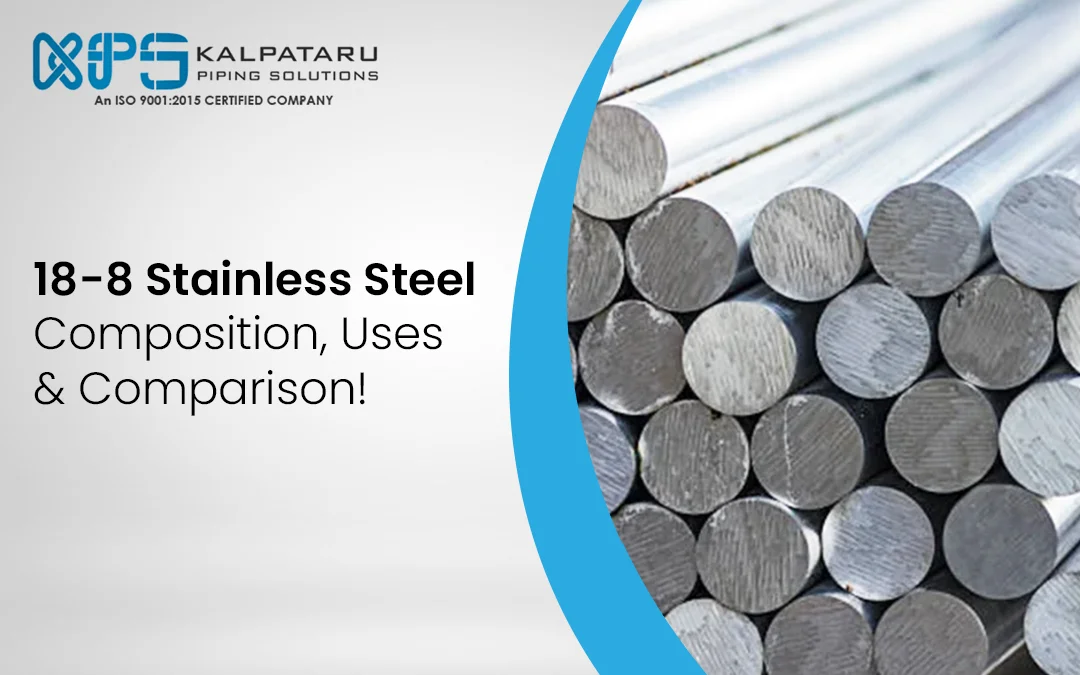
18-8 stainless steel is one of the most widely used types of ss steel in industrial and commercial applications. The name comes from its composition of18% chromium and 8% nickel which gives it strong corrosion resistance and durability. It belongs to the austenitic family of stainless steels known for being easy to fabricate and resistant to rust. Whether you’re sourcing materials for food processing, construction or manufacturing, 18-8 offers a solid balance of strength, workability and long term performance. Kalpaturu piping solutions is the immediate supplier of 18-8 Stainless Steel across the globe with high quality and best prices for 18-8 Stainless Steel.
18-8 Stainless Steel Composition Explained
So what does the 18 8 steel contain? It’s mostly iron but the magic composition are:
- Chromium (Cr): Around 18%. This is the hero that fights off rust and corrosion. Think of it as a shield.
- Nickel (Ni): About 8%. Nickel adds strength makes the steel less brittle and helps it keep its properties even when things get hot or cold. It also helps with shaping.
- Iron (Fe): This is the main ingredient of the base that holds everything together.
- Carbon Manganese Silicon: You’ll find tiny amounts of these too. They help make the steel stronger and easier to work with.
This special mix means 18-8 stainless steel isn’t magnetic when it’s in its softest state (annealed). It’s also great for bending, shaping and welding which is why so many industries love it.
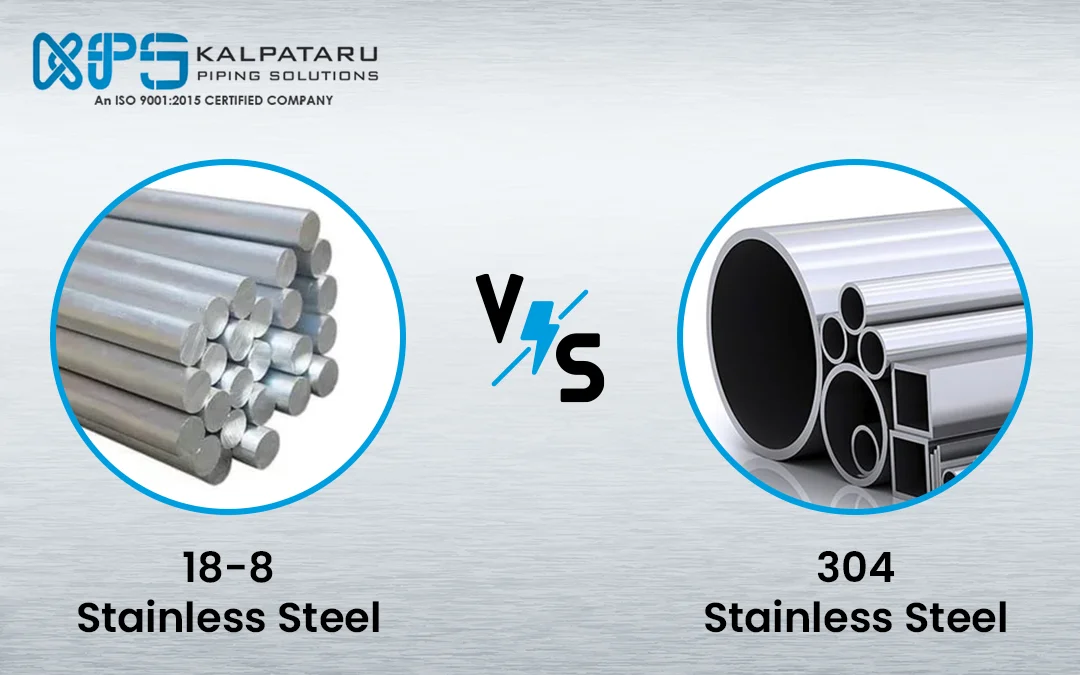
18-8 Stainless Steel vs 304 – What’s the Difference?
People often use the terms 18-8 stainless steel and 304 stainless steel like they’re the same thing. And they are very very similar. But there are tiny differences between 18 8 stainless steel vs 304 that are good to know.
|
Feature |
18-8 Stainless Steel |
304 Stainless Steel |
|
Composition |
Generally 18% Cr, 8% Ni |
Typically 18-20% Cr, 8-10.5% Ni |
|
Standards |
A common or generic term |
An official ASTM standard grade (like A240) |
|
Application Labeling |
More of a commercial or informal label |
Used for industrial and standardized specs |
|
Interchangeability |
Often used interchangeably with 304 |
Commonly replaces 18-8 due to its standard |
Key Insight: Think of it this way: 304 stainless steel is a type of 18-8 stainless steel. But 304 has to meet very specific rules set by organizations like ASTM (American Society for Testing and Materials). So all 304 is 18-8 but not all steel simply called “18-8” has gone through the strict certification to be officially labeled “304”. For most everyday uses they perform almost identically. Understanding what is 18-8 Stainless steel helps clarify this.
Uses and Applications of 18-8 Stainless Steel
Because 18-8 Stainless steel is so good at fighting rust and stays strong even when it’s hot you’ll find it in a huge range of products and places:
- Food Processing Equipment: Think kitchen sinks pots pans and commercial kitchen gear. It doesn’t react with food and is easy to clean.
- Medical Instruments: Surgical tools and hospital equipment need to be sterile and resist corrosion.
- Marine Environments: Fittings and parts on boats. While good for many marine uses for constant saltwater exposure, 316 grade is often preferred.
- Fasteners: Nuts bolts screws and washers benefit from its strength and rust resistance.
- Automotive Exhaust Systems: These parts get hot and face corrosive gases.
- Architectural Structures: Railings decorative panels and building supports look good and last long.
18-8 Stainless Steel – Key Properties at a Glance
Here’s a quick rundown of what makes 18-8 stainless steel tick:
|
Property |
Value |
|
Tensile Strength |
~75,000 psi |
|
Yield Strength |
~30,000 psi |
|
Elongation |
40% in 2 inches |
|
Density |
7.9 g/cm³ |
|
Melting Point |
1400–1450°C (2550-2650°F) |
|
Magnetic Response |
Non-magnetic (annealed) |
These numbers show it’s strong, flexible and can handle high temperatures.
Common Misconceptions About 18-8 Stainless Steel Is 18-8 the Same as 304?
Technically yes and no. As we said 304 is a specific grade of 18-8 that meets strict industry standards. So 304 is 18-8. But if something is just labeled “18-8” it might not have the official 304 certification even if its chemical makeup is very similar. For most practical purposes they behave the same.
Does 18-8 Rust?
18-8 stainless steel is very good at resisting rust. That’s one of its main jobs. However no stainless steel is completely “rust-proof” forever in all conditions. If you expose it to very harsh chemicals like strong acids or lots of chloride (like in some de-icing salts or constant heavy seawater spray) for a long time it might eventually show some signs of pitting or corrosion. But for normal use it’s excellent.
Conclusion: Is 18-8 Stainless Steel Right for You?
If you’re on the hunt for a stainless steel that’s dependable, fights off rust well and doesn’t break the bank 18-8 stainless steel is a fantastic choice. Its blend of 18% chromium and 8% nickel gives it the strength and corrosion resistance needed for countless jobs. Knowing it’s practically the same as the well-known 304 grade for many applications makes it an easy pick. From kitchenware to car parts and building components 18-8 stainless steel is a trusted material across many industries.
Frequently Asked Questions About 18-8 Stainless Steel
What is the full form of 18-8 stainless steel?
It’s not really a “full form” like an acronym. The “18-8” directly refers to its main alloying elements: approximately 18% chromium and 8% nickel.