What is SAE 8620 Alloy Steel?
SAE 8620 is low-alloy case hardening steel used at Kalpataru Piping Solutions; yet, to really value its performance, one must know what that means.
- With a complete mix of nickel, chromium, and molybdenum, the “low-alloy” classification emphasizes its well balanced chemical composition. This strong alloying mix improves wear resistance, hardenability and strength. Actually, the “86” in its classification designates it especially as part of the nickel-chromium-molybdenum steel family, designed for uses where surface durability and interior toughness are non-negotiable. Without the great cost of high-alloy grades, this mixture provides remarkable qualities.
- Case-Hardening: The defining quality of SAE 8620 steel is case-hardening. Given a low carbon concentration of about 0.20%, the steel is naturally strong and easy to manufacture. But this low carbon means it can’t be hardened significantly on its own. It happens during case hardening (carburizing) where the part is heated in a carbon-rich atmosphere. Carbon seeps into the surface creating a high-carbon “case.” When quenched this case becomes incredibly hard and wear-resistant while the low-carbon core remains tough and ductile.
This delivers an optimal balance of performance and durability: a hard outer shell that can withstand erosion and a tough flexible center that can absorb shock and stress without cracking. Designed to withstand both abrasive wear and dynamic shocks, it meets the demands of critical components.
SAE 8620 Chemical Composition & Key Alloying Elements
At its core, high performance depends on well-engineered materials; SAE 8620 is unique for sectors that need dependability, strength and longevity. Its chemical composition is more than just a list of elements; it’s a complete mix in which every alloying element has a particular function. From improved wear resistance to outstanding toughness, every component is chosen to maximize the performance of the material over severe industrial uses. Manufacturers are able to provide components that satisfy operational and safety-critical criteria thanks in large part to this designed balance.
| Element | Percentage (%) |
| Carbon (C) | 0.18 – 0.23 |
| Manganese (Mn) | 0.70 – 0.90 |
| Chromium (Cr) | 0.40 – 0.60 |
| Nickel (Ni) | 0.40 – 0.70 |
| Molybdenum (Mo) | 0.15 – 0.25 |
| Phosphorus (P) | Max 0.035 |
| Sulfur (S) | Max 0.040 |
Influence of Elements:
- Carbon (C): The low starting carbon is key to the core’s toughness. During carburizing the surface absorbs more carbon which allows the case to achieve extreme hardness while the core stays ductile.
- Nickel (Ni): Nickel is the main source of the steel’s toughness and impact resistance. It ensures the core won’t get brittle even at low temperatures making it resilient to shock loads.
- Chromium (Cr): Chromium is a wear-resistance powerhouse. It forms ultra-hard chromium carbides in the case which creates a surface that stands up to friction and abrasion and it also boosts hardenability.
- Molybdenum (Mo): Molybdenum is a key performance-enhancing element for hardenability and strength. It ensures the steel hardens effectively and consistently even in thicker sections and adds strength at higher temperatures.
- Phosphorus (P) & Sulfur (S): These elements are treated as impurities and kept to very low levels to maintain the steel’s strength and integrity.
SAE 8620 Mechanical Properties: Strength, Toughness & Performance
The true strength of SAE 8620 alloy steel is revealed after heat treatment. The values listed below reflect a carburized, quenched, and tempered state. But remember they will vary based on the part’s size and the exact heat treat cycle used.
|
Property |
Value (Typical) |
|
Tensile Strength |
885 MPa (128,000 psi) |
|
Yield Strength |
585 MPa (85,000 psi) |
|
Elongation (in 50mm) |
20% |
|
Reduction in Area |
45% |
|
Impact Toughness (Charpy) |
> 30J @ -20°C |
What These Properties Mean ?
- Tensile & Yield Strength: These high values mean SAE 8620 can handle immense loads and stress without bending or breaking a critical factor for components like shafts and gears.
- Elongation & Reduction in Area: Think of these as the steel’s “stretchability.” A 20% elongation shows the core can deform significantly before failing which serves as a safeguard against sudden brittle fractures.
- Impact Toughness: This is one of the most crucial SAE 8620 properties. The impact test proves it can absorb significant energy from a sudden effect even in cold weather making it reliable for applications that experience shock loading.
Hardness Ratings & SAE 8620 Material Density
SAE 8620 Hardness Levels:
- As-rolled / Annealed: ~ 217 HB (Brinell Hardness)
In its “soft” state the steel is easy to machine cut and form into a final part. - After Carburizing & Quenching: 55–60 HRC (Rockwell Hardness)
The surface becomes extremely hard ready to resist wear and tear. This is the SAE 8620 hardness in HRC that designers look for in wear-facing applications. The core however remains much softer and tougher around 30-40 HRC.
SAE 8620 Density:
Like most steels the density is consistent and reliable for weight calculations.
- Approx. 7.85 g/cm³ or 7850
SAE 8620 Material Specification: Forms & Standards
To guarantee consistency and quality SAE 8620 steel is produced in various forms and must meet global standards.
Available Product Forms:
-
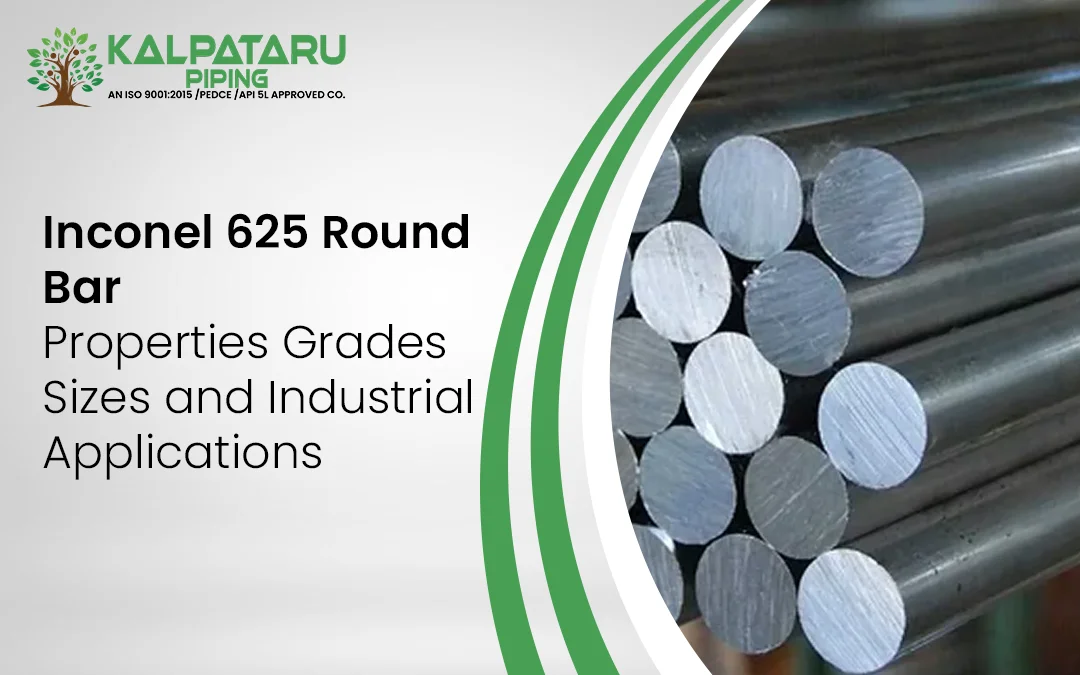
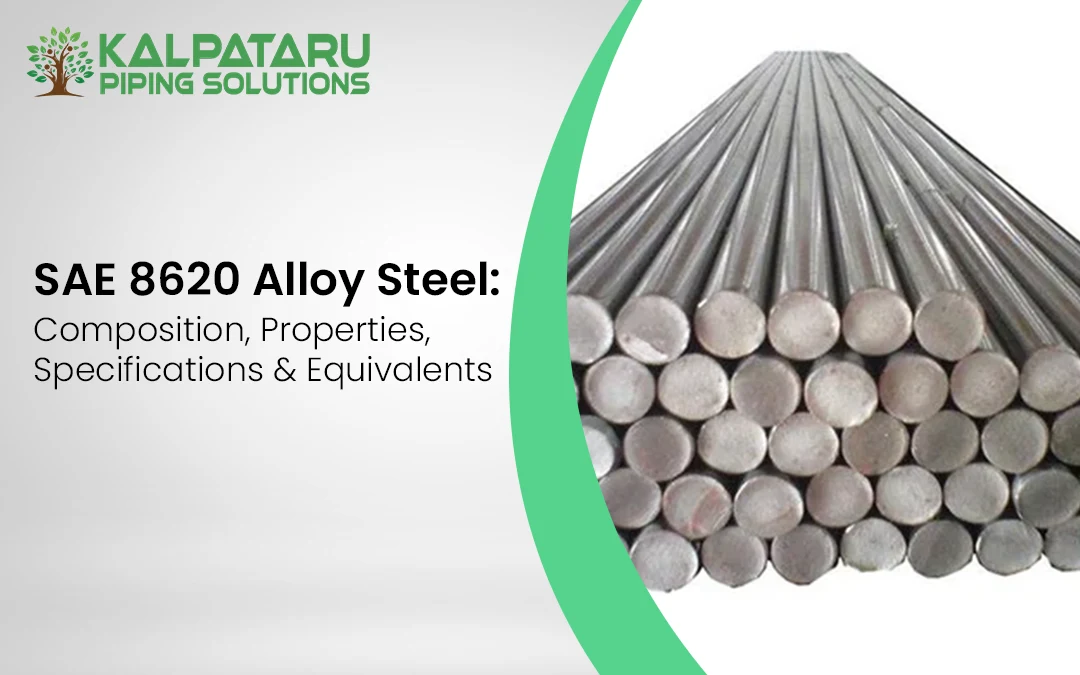
Round Bars – Often utilized in making shafts, gears, crankshafts, and pins, SAE 8620 round bars are one of the most often occurring product shapes. Depending on the application needs, these bars which are either cold drawn or hot rolled are sold in different widths. In the annealed state, they are quite machinable; they also respond well to carburizing, producing a hard, wear-resistant surface with a robust core.
-
Forged Blocks – For heavy-duty components needing outstanding internal soundness and grain refinement, forged blocks of SAE 8620 are perfect. The forging process improves the mechanical qualities of the material, therefore qualifying these blocks for important load-bearing uses including mold bases, industrial gears and custom-machined parts in heavy machinery.
-
Billets – Usually used as feed for rolling into bars or forging into more intricate forms, SAE 8620 billets are semi-finished goods. Consistent heat treatment and mechanical performance depend on good structural integrity and homogeneous composition, which these provide. Mass production settings where scalability and repeatability are paramount call for billets.
-
Flats and Hex Bars – Often selected for precision components including fasteners, bushings, sprockets, and couplings, flats and hex bars give flexibility in machining. While hex bars are widely utilized in CNC operations for manufacturing items with higher grip and geometric accuracy, SAE 8620 flat bars provide a broad surface area appropriate for structural uses.
Applicable Standards:
When you source SAE 8620 look for materials certified to these key specifications:
- ASTM A322
- AISI SAE J404
- ISO 683-11
Following the SAE 8620 material specification ensures to get the performance that is expected.
SAE 8620 Equivalent Materials
Materials might not always be labeled clearly as “SAE 8620” in the linked industrial scene of today. Ensuring seamless procurement, global compatibility and material consistency across worldwide projects depends on an awareness of the corresponding grades of SAE 8620.
|
Country/Standard |
Equivalent Grade |
|
DIN (Germany) |
20NiCrMo2 (1.6523) |
|
EN (Europe) |
17NiCrMo6 |
|
BS (UK) |
805M20 |
|
IS (India) |
20NiCrMo2 |
|
JIS (Japan) |
SNCM220 |
Although these equivalents show close alignment, before starting material replacement it is important to confirm the particular criteria for any minor variations in mechanical qualities or chemical composition. This guarantees alignment with project criteria, performance dependability and compliance. The SAE 8620 material equivalent grade 20NiCrMo2 is one of the most common cross-references.
SAE 8620 vs. SAE 8620H
The key difference is one word: predictability.
- SAE 8620: Ensures compliance with a defined chemical composition range. Its response to heat treatment is reliable but can have some variation from batch to batch. It’s great for most general applications.
- SAE 8620H: Ensures a significantly more uniform and controlled hardening response. The final hardness at specific depths is guaranteed to fall within a narrow band.
Applications:
- SAE 8620H is the choice for mission-critical parts like aerospace gears or high-performance turbine shafts where every bit of performance must be predictable and repeatable.
- SAE 8620 is the workhorse for automotive components and general machinery where standard high performance is required.
Applications of SAE 8620 Alloy Steel
The ability to provide a tough core and a wear-resistant surface makes SAE 8620 a problem-solver across many industries.
- Automotive Sector: It’s used for gears, crankshafts and camshafts that need to withstand constant friction and torque without failing.
- Oil & Gas: Components like tool joints and valve stems are made from SAE 8620 because they need to endure abrasion from drilling while handling immense mechanical stress.
- Machinery: It’s the backbone of countless industrial machines in the form of bushings, couplings, fasteners and high-stress shafts.
- Power Plants & Mining: Used for turbine components and high-stress rods that demand long-term reliability and fatigue resistance.
Conclusion
Regarding specialized engineering materials, SAE 8620 alloy steel has become rather famous for dependability and efficiency than of originality. Designed to withstand rigorous operating circumstances, this steel is the recommended choice for important parts like high-load bearings and gearboxes since it especially strikes mechanical strength against surface hardness. Key considerations for design and procurement experts looking for dependable materials include performance, lifetime, and cost-effectiveness qualities SAE 8620 constantly delivers on. Working with a respected supplier such as Kalpataru Piping Solutions guarantees access to precision-engineered steel products, supported by verified specs and complete compliance, for projects requiring uncompromising quality and adherence to industry standards.
Frequently Asked Questions
For what purposes does SAE 8620 steel find application?
Gears crankshafts, other automotive and machinery parts, are made from SAE 8620 most often. Its great wear resistance and ability to be case-hardened for outstanding shock-absorbing core make it rather popular.
What is the chemical composition of SAE 8620?
SAE 8620 is a nickel-chromium-molybdenum alloy. It typically contains 0.18–0.23% Carbon 0.40–0.70% Nickel 0.40–0.60% Chromium and 0.15–0.25% Molybdenum which together provide its excellent properties.
What is the hardness of SAE 8620 after carburizing?
After it’s carburized and quenched the surface of SAE 8620 can reach a hardness of 55–60 HRC making it extremely resistant to wear.
SAE 8620 is equivalent to 20NiCrMo2?
Under European (EN) and German (DIN) standards notably, Yes 20NiCrMo2 is the most often used international counterpart for SAE 8620. Most applications find it to be a direct functional replacement.