What is a Weldolet?
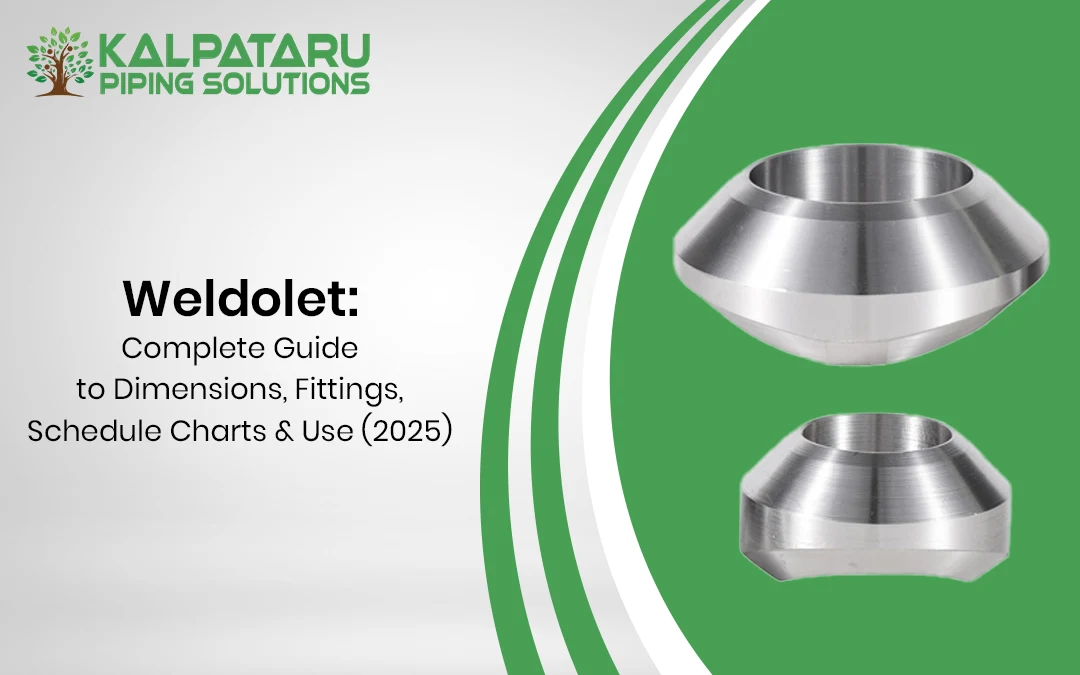
A Weldolet is a specialized branch connection fitting used in piping systems to create a reliable outlet from a larger run pipe to a smaller-diameter branch pipe. This fitting enables a smooth transition that helps maintain consistent flow while reducing turbulence and stress at the joint. Designed for high-pressure and high-temperature applications, Weldolet fittings are widely adopted across industries where safe and efficient fluid or gas transport is essential.
Unlike conventional reducing tees which are limited in availability for certain Weldolet size ranges, Weldolets offer more flexibility. For example, if the main pipe is 16 inches in diameter, reducing tees are typically available only for branches down to 6 inches. However, Weldolet on pipe can accommodate much smaller branches even as small as 1/2 inch making them a preferred solution when custom sizing is required or when standard tees are unavailable.
Weldolet Dimensions
- Schedule STD Weldolet
- Schedule XS Weldolet
- Schedule 160 Weldolet
- Schedule XXS Weldolet
Each schedule refers to the pipe wall thickness it’s compatible with, making selection critical based on system pressure and temperature. A detailed Weldolet size chart is typically used by engineers and procurement teams to match the right fitting to the correct main and branch pipe configuration. The Weldolet schedule chart helps in ensuring the correct fit for both standard and custom piping layouts.
Schedule STD Weldolet Dimensions
|
Size |
Size in mm |
Height A (mm) |
OD – B (mm) |
Hole Dia C (mm) |
Weight in KG |
|
1/4 |
8 |
14.3 |
25.4 |
15.9 |
0.04 |
|
3/8 |
10 |
19.05 |
31.75 |
19.05 |
0.07 |
|
1/2 |
15 |
19.05 |
34.93 |
23.81 |
0.08 |
|
3/4 |
20 |
22.23 |
44.45 |
30.16 |
0.11 |
|
1 |
25 |
26.99 |
53.98 |
36.51 |
0.23 |
|
1 1/4 |
32 |
31.75 |
65.09 |
44.45 |
0.36 |
|
1 1/2 |
40 |
33.34 |
73.03 |
50.8 |
0.45 |
|
2 |
50 |
38.1 |
88.9 |
65.09 |
0.79 |
|
2 1/2 |
65 |
41.28 |
103.19 |
76.2 |
1.13 |
|
3 |
80 |
44.45 |
122.24 |
93.66 |
1.81 |
|
3 1/2 |
90 |
47.63 |
142.88 |
112.71 |
2.5 |
|
4 |
100 |
50.8 |
152.4 |
120.65 |
2.86 |
|
5 |
130 |
57.15 |
179.3 |
141.96 |
4.65 |
|
6 |
150 |
60.33 |
215.9 |
169.86 |
6.44 |
|
8 |
200 |
69.85 |
263.53 |
220.66 |
10.66 |
|
10 |
250 |
77.79 |
322.26 |
274.64 |
17.69 |
|
12 |
300 |
85.73 |
377.83 |
325.44 |
26.76 |
|
14 |
350 |
88.9 |
409.58 |
357.19 |
29.94 |
|
16 |
400 |
96.34 |
463.55 |
407.99 |
34.02 |
|
18 |
450 |
96.34 |
520.7 |
458.79 |
37.46 |
|
20 |
500 |
101.6 |
571.5 |
508 |
53.52 |
|
24 |
600 |
144.5 |
717.5 |
609.6 |
101 |
|
26 |
650 |
155.6 |
778 |
660.4 |
120 |
|
30 |
750 |
174.6 |
893.6 |
762 |
190 |
|
36 |
900 |
206.4 |
1070 |
914.4 |
310 |
|
40 |
1000 |
225.4 |
1187.6 |
1016 |
435 |
|
42 |
1050 |
235 |
1244.6 |
1066.8 |
540 |
|
48 |
1200 |
241.3 |
1404 |
1219.2 |
750 |
Schedule XS Weldolet Dimensions
|
Size |
Size in mm |
Height A (mm) |
OD – B (mm) |
Hole Dia C (mm) |
Weight in KG |
|
1/4 |
8 |
N/A |
25.4 |
15.88 |
0.05 |
|
3/8 |
10 |
N/A |
31.75 |
19.05 |
0.07 |
|
1/2 |
15 |
19.05 |
34.93 |
23.81 |
0.09 |
|
3/4 |
20 |
22.23 |
44.45 |
30.16 |
0.11 |
|
1 |
25 |
26.99 |
53.98 |
36.51 |
0.21 |
|
1 1/4 |
32 |
31.75 |
65.09 |
44.45 |
0.41 |
|
1 1/2 |
40 |
33.34 |
73.03 |
50.8 |
0.5 |
|
2 |
50 |
38.1 |
88.9 |
65.09 |
0.79 |
|
2 1/2 |
65 |
41.28 |
103.19 |
76.2 |
1.18 |
|
3 |
80 |
44.45 |
122.24 |
93.66 |
1.86 |
|
3 1/2 |
90 |
47.63 |
136.53 |
112.71 |
2.54 |
|
4 |
100 |
50.8 |
152.4 |
120.65 |
2.9 |
|
6 |
150 |
77.79 |
225.43 |
169.86 |
10.43 |
|
8 |
200 |
94.43 |
292.1 |
220.66 |
16.78 |
|
10 |
250 |
93.66 |
323.85 |
265.11 |
20.87 |
|
12 |
300 |
103.14 |
379.41 |
317.5 |
27.67 |
|
14 |
350 |
106.36 |
431.8 |
365.41 |
31.75 |
|
16 |
400 |
106.36 |
466.73 |
403.23 |
43.23 |
|
18 |
450 |
111.13 |
523.88 |
455.61 |
58.97 |
|
20 |
500 |
119.06 |
582.61 |
509.59 |
71.67 |
|
24 |
600 |
139.5 |
722.2 |
609.6 |
142 |
|
26 |
650 |
165.1 |
782.6 |
660.4 |
168 |
|
30 |
750 |
181 |
896.8 |
762 |
218 |
|
36 |
900 |
212.7 |
1074.1 |
914.4 |
304 |
|
40 |
1000 |
235 |
1194 |
1016 |
582 |
|
42 |
1050 |
244.5 |
1258 |
1066.8 |
590 |
|
48 |
1200 |
273 |
1456.6 |
1219.2 |
910 |
Schedule XXS and Sch 160 Weldolet Dimensions
|
Outlet Size (NPS) |
Height A (mm) |
OD – B (in) |
Hole Dia C (in) |
Weight (LB) |
Outlet Size (mm) |
Height A (mm) |
OD – B (mm) |
Hole Dia C (mm) |
Weight (KG) |
|
1/2 |
1 1/8 |
3/4 |
9/16 |
0.25 |
15 |
28.58 |
34.93 |
14.29 |
0.11 |
|
3/4 |
1 1/4 |
1 |
3/4 |
0.7 |
20 |
31.75 |
44.45 |
19.05 |
0.32 |
|
1 |
1 1/2 |
1 3/8 |
1 |
0.85 |
25 |
38.1 |
50.8 |
25.4 |
0.38 |
|
1 1/4 |
1 3/4 |
1 5/8 |
1 5/16 |
1.25 |
32 |
44.45 |
61.91 |
33.34 |
0.57 |
|
1 1/2 |
2 |
2 |
1 1/2 |
1.45 |
40 |
50.8 |
69.85 |
38.1 |
0.79 |
|
2 |
2 3/16 |
2 5/16 |
1 15/16 |
2.15 |
50 |
55.56 |
88.9 |
49.21 |
0.97 |
|
2 1/2 |
2 7/16 |
2 13/16 |
2 1/4 |
3.25 |
65 |
61.91 |
95.25 |
57.15 |
1.53 |
|
3 |
2 7/8 |
3 1/2 |
2 5/8 |
4.75 |
80 |
73.03 |
114.3 |
66.68 |
2.87 |
|
4 |
3 5/16 |
4 3/8 |
3 7/8 |
10.0 |
100 |
84.14 |
123.8 |
98.43 |
4.6 |
|
5 |
3 11/16 |
5 1/2 |
4 15/16 |
13.5 |
130 |
93.66 |
137.8 |
122.44 |
6.13 |
|
6 |
4 1/8 |
6 5/8 |
5 3/4 |
28.0 |
150 |
104.78 |
220.7 |
146.05 |
12.7 |
Sockolet vs Weldolet: Understanding the Key Differences
When designing a piping system, choosing the right branch connection fitting is crucial. Two commonly used fittings are sockolets and Weldolets, each with its own structural and functional advantages. A sockolet is a socket weld branch fitting typically used for small-diameter branch connections. It is installed by socket welding onto the run pipe and connects the branch pipe via a socket weld joint. Due to its construction, the sockolet is considered a forged fitting and is widely used in low-pressure applications where socket welding is suitable. However, the transition between the main pipe and branch pipe in a sockolet can create a higher stress concentration, potentially causing turbulence and a slight pressure drop in the flow.
On the other hand, a Weldolet is a butt-weld branch connection that allows for a smoother and more gradual transition from the main pipe to the branch. This design significantly reduces stress concentration and minimizes flow turbulence, making it ideal for high-pressure systems and applications requiring greater strength and reliability. Weldolet fittings are available in forged or wrought forms and can accommodate a broader Weldolet size range compared to sockolets. Moreover, Weldolet on pipe is more versatile, as it supports both butt welding and socket welding configurations, whereas sockolets are restricted to socket weld setups.
When comparing sockolet vs Weldolet, the choice depends largely on the application’s pressure requirements, installation preferences and fluid dynamics. Sockolets generally follow ASME B16.11 standards, while Weldolets typically comply with ASME B16.9 or MSS SP-97. Both fittings are available in materials such as carbon steel, stainless steel and alloy steel. However, for systems requiring superior fluid flow with minimal disruptions and enhanced safety, Weldolet joints are often preferred.
In summary, sockolets are ideal for compact, low-pressure piping designs, while Weldolets offer a more robust solution for larger and more demanding pipeline systems. Understanding their differences helps engineers make the right selection based on application needs, material compatibility and Weldolet dimensions.