Pipe connections are mainly classified into four types: threaded, socket weld, butt weld, and flanged. The choice of the kind of connection should be determined by such factors as pipe size, working pressure, operating conditions, and frequency of disconnections. It means that these methods can be used both for connecting fittings to pipes or for connecting valves to pipes. If the method is not chosen properly, there may be problems like leaking threads, rusted sockets, or valves that cannot be repaired due to being stuck. In this regard, Kalpataru Piping Solution provides piping products and often receives inquiries about the differences between these joints.
What Are Pipe and Valve End Connections?
The end connection is referred to as the way in which the fitting or valve connects to the pipe. It concerns the last few millimeters of the component, which, in turn, determines how the connection will be made, how the load will be transferred, and whether the connection can be disassembled in the future. These pipe joining methods work the same way on both sides. A pipe elbow and a ball valve can each have threaded, socket weld, butt weld or flanged ends, so the pipe connection types in this guide apply to both.
A joint is either permanent or removable. Welded joints, socket weld and butt weld, are permanent. Threaded and flanged joints can be undone without cutting the pipe. For a full list of fittings, read our guide to types of pipe fittings, and for valve bodies see industrial valves, types and applications. The diagram below shows the four joints in cross section.
Pipe and Valve Connection Types Compared at a Glance
The table compares the four pipe connection types side by side, which is the quickest way to see threaded vs socket weld vs butt weld and how a flanged connection differs. Size and class limits come from the project piping class, not from a universal rule, so read the size column as typical use only.
|
Type |
How it joins |
Removable |
Typical size use |
Typical service |
|
Threaded |
Tapered or parallel threads screwed together and sealed with tape, sealant or a gasket |
Yes |
Small bore |
Utilities, instrument and lower risk lines |
|
Socket weld |
Pipe seated in a socket and sealed with one external fillet weld |
No, needs cutting |
Small bore |
Steam, oil and high pressure small lines |
|
Butt weld |
Bevelled ends joined by a full penetration weld |
No, needs cutting |
Small to large |
Process, high pressure and high temperature lines |
|
Flanged |
Two flanges bolted together with a gasket between them |
Yes |
Small to large, most common on larger sizes |
Process lines, equipment and valves that need removal |
Threaded Connections
Threaded connections join parts by screwing a male thread into a female thread. Most pipe threads are tapered, so they wedge tight and seal with tape or sealant. They need no welding, so they suit small bore, utility and instrument lines. The thread root is the weak point under vibration, and the thread itself is a leak path, so the piping class limits size and service. NPT and BSPT do not mix. Our guide on NPT vs BSPT thread dimensions and selection has the detail, and the table gives the basics.
|
Thread |
Standard |
Thread angle |
Thread form |
How it seals |
|
NPT |
ASME B1.20.1 |
60 degree |
Tapered |
Tape or sealant on the thread |
|
BSPT |
ISO 7 or EN 10226 |
55 degree |
Tapered |
Tape or sealant on the thread |
|
BSPP |
ISO 228 |
55 degree |
Parallel |
Gasket or O ring, not the thread |
Socket Weld Connections
In a socket weld joint the pipe slides into a socket and one fillet weld seals the outside edge. The pipe is pulled back about 1.6 mm, one sixteenth of an inch, from the socket bottom so the weld can shrink. Confirm the gap against ASME B31.3. → Forged socket weld fittings follow ASME B16.11, in classes 3000, 6000 and 9000, and suit small bore steam and high pressure lines. Valves with socket weld ends are covered by ASME B16.34. Size limits come from the piping class. In socket weld vs butt weld, the gap leaves a crevice that can corrode in corrosive service. Never bottom the pipe out.
Butt Weld Connections
A butt weld joint joins bevelled ends with a full penetration weld, leaving a smooth bore that can be radiographed. It is generally the strongest and most leak tight joint, so it suits process and high pressure lines in all sizes. Weld ends follow ASME B16.25 and butt weld fittings follow ASME B16.9. See our guide on butt weld fittings, features and applications. Of the three, it gives the cleanest bore. Valve end connections of this type need care, because welding heat can damage soft seats, so follow the manufacturer procedure.
Flanged Connections
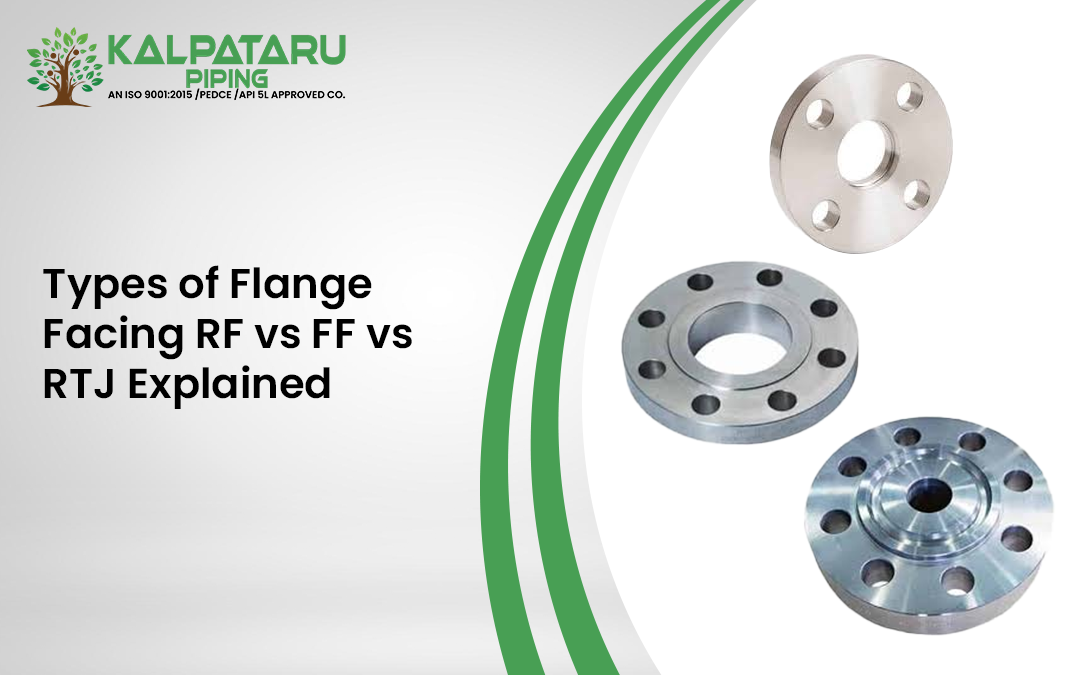
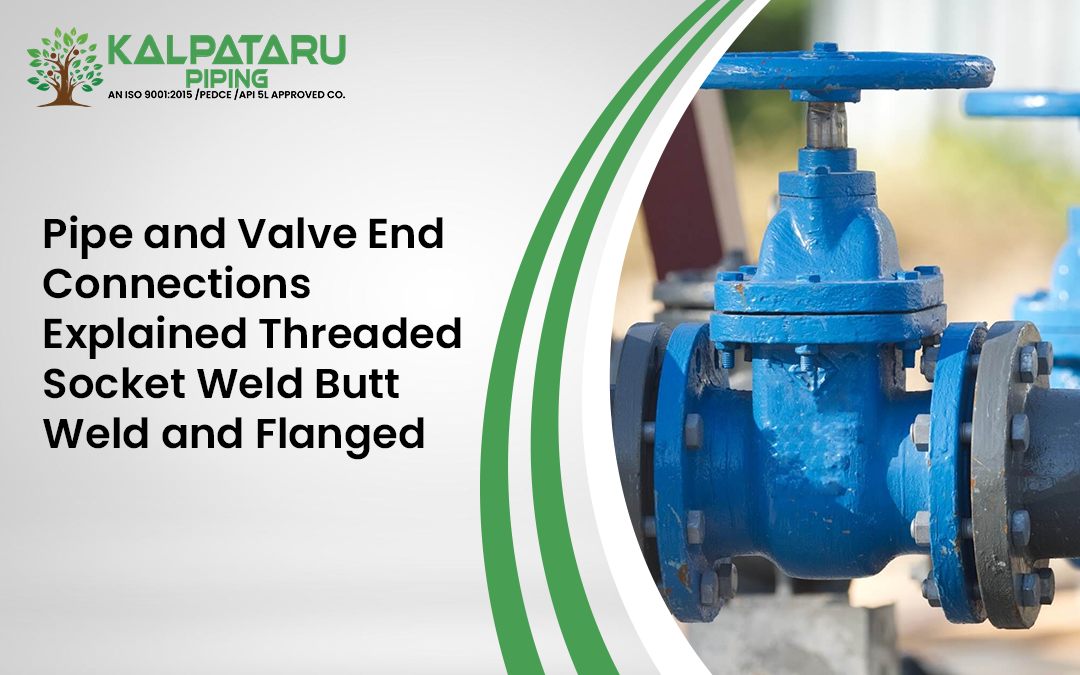
A flanged connection bolts two matching flanges together with a gasket between them, so the joint opens without cutting the pipe. That makes it the usual choice for valve end connections that need removal for repair or cleaning. The gasket is the managed leak path and bolt load controls the seal. The costs are weight and more leak paths. Flanges follow ASME B16.5 and ASME B16.10 sets valve face to face length. For faces, read types of flange facing, and for bodies see types of flanges, uses, materials and standards.
Special and Other End Connections
Beyond the main pipe connection types, other pipe joining methods suit specialist work. Hub and clamp connectors serve high pressure and subsea lines. Compression ends grip tubing with a ferrule and nut, as our guide to types of compression fittings explains. A union lets a section of line come out quickly, and tri clamp ends suit sanitary lines that are cleaned often. For the tube and pipe difference, read tube fittings vs pipe fittings. To pick between all of these, follow the steps on how to choose valve end connection below.
Standards Behind the Connections
Standards tell you what each joint controls, so a part from one maker fits a part from another. The table gives the scope of the ones you will meet most. If you want to know how the two main bodies differ, read our guide to ASTM vs ASME standards for pipes, tubes and fittings. Check the scope and edition in the standard itself before quoting it.
|
Connection |
Standard |
What it controls |
|
NPT thread |
ASME B1.20.1 |
Tapered 60 degree pipe thread |
|
BSPT thread |
ISO 7 or EN 10226 |
Tapered 55 degree pipe thread |
|
BSPP thread |
ISO 228 |
Parallel 55 degree pipe thread sealed by gasket or O ring |
|
Socket weld and threaded fittings |
ASME B16.11 |
Forged fitting dimensions and pressure classes |
|
Weld ends |
ASME B16.25 |
Butt welding end preparation |
|
Butt weld fittings |
ASME B16.9 |
Factory made wrought butt welding fittings |
|
Flanges |
ASME B16.5 |
Pipe flanges up to NPS 24 |
|
Valve face to face length |
ASME B16.10 |
Face to face and end to end dimensions of valves |
|
Metal ball valves |
ISO 17292 |
Design and dimensions of metal ball valves |
How to Choose the Right Valve End Connection
Use this checklist for how to choose valve end connection and pipe joint together. The first three points settle most choices.
- Size of the line.
- Pressure class.
- Operating temperature.
- Vibration and pressure cycling.
- Fluid hazard and purity.
- Need to remove the part.
- Weld inspection needed.
- Cost of fitting and labour.
- Project specification, which overrides everything else.
Take three lines. A small bore steam line usually takes socket weld, and a low risk instrument line often takes threaded or compression ends, because the sizes are small. A large process line carrying hot hydrocarbon takes butt weld pipe and fittings, since the joint must be strong, smooth and radiographed. A skid with valves that must come out for service takes flanged valves, so each one can be unbolted without cutting. For valve options, see our stainless steel valves.
Frequently Asked Questions
What are the types of pipe connections?
The main types of pipe connections are threaded, socket weld, butt weld and flanged. The same four methods join fittings and valves to pipe. Welded joints are permanent, while threaded and flanged joints can be removed. Special ends include hub and clamp, compression, union and tri clamp. The right choice depends on size, pressure, service and maintenance.
What is the difference between socket weld and butt weld?
In a socket weld the pipe slides into a socket and is sealed with one fillet weld, leaving a small gap and crevice. In a butt weld the bevelled ends are joined with a full penetration weld, giving a smooth bore that can be radiographed. Socket weld suits small bore lines, while butt weld suits all sizes and demanding service.
Which pipe connection is least likely to leak?
A butt weld has the fewest leak paths, since the joint is continuous and can be fully radiographed. Threaded and flanged joints have more leak paths, and a socket weld has a crevice. Even so, a well made joint of any type can be leak free, so installation quality and the correct standard matter as much as the type.
Are threaded connections suitable for high pressure?
Threaded connections are mostly used on small bore lines and lower risk service. The thread root is a weak point under vibration and pressure cycling, and the thread is a leak path. Some high pressure small lines do use threaded fittings, but limits come from the piping class and code, not a universal rule.
What is the difference between NPT and BSPT?
Both are tapered pipe threads that seal with tape or sealant, but they are different standards. NPT follows ASME B1.20.1 with a 60 degree thread angle. BSPT follows ISO 7 or EN 10226 with a 55 degree angle. The two do not mix, so match the thread system on both parts.
Can a welded valve be removed for maintenance?
A welded valve is permanent, so removing it means cutting it out and welding in a new one. Some welded valves are designed so the internals can be serviced in the line, which avoids cutting. If the valve must come out often, flanged or threaded ends are the better choice at the design stage.
Choosing the Right Connection for Your Line
Every connection in this guide solves a different problem. Threaded is quick and removable, socket weld is strong on small bore, butt weld is the most leak tight and suits every size, and flanged lets you remove a part without cutting. Match the connection to size, pressure, service and maintenance, then check it against the project specification. If you are planning a project, explore our full product range of pipes, fittings, flanges and valves, or get in touch with our team with your size, class and service, and we will help you plan the joint.