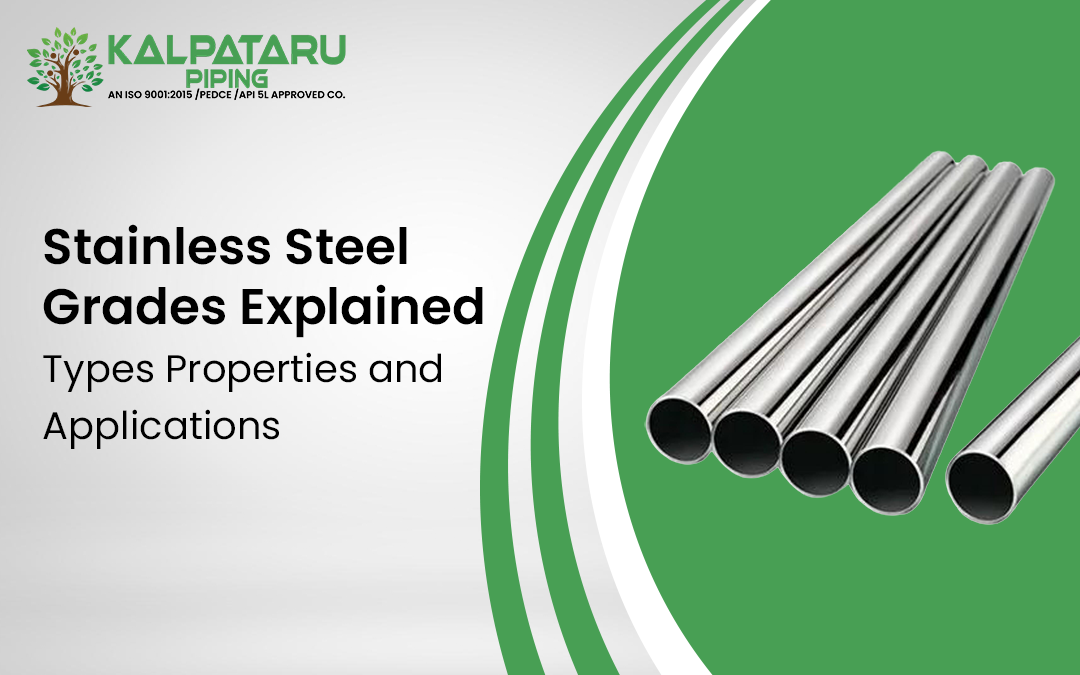
Stainless steel is a versatile and durable alloy known for its strength, corrosion resistance, and low maintenance requirements. These qualities make it ideal for use across various industries, from construction to automotive etc. Stainless steel is available in forms such as sheets, plates, bars, coils, and tubing, etc to both industrial and domestic applications, having a long life span and being 100% recyclable. Its unique properties, such as corrosion resistance and ease of sterilization, make it indispensable in applications requiring durability and hygiene.
What is Stainless Steel?
Stainless steel is a corrosion-resistant, iron-based alloy that has high durability, aesthetic appeal, and ability to withstand extreme environments. Its defining feature is the addition of chromium, which enhances its resistance to rust and corrosion. Containing a minimum of 10.5% chromium, stainless steel forms a passive oxide layer when exposed to air, acting as a protective shield against further oxidation.
Read More: Guide on Stainless Steel
Composition of Stainless Steel
The composition of stainless steel varies depending on its application but typically includes iron, chromium (10-30%), and other elements such as nickel, molybdenum, nitrogen, and titanium. Chromium provides corrosion resistance, while nickel and molybdenum enhance strength and resistance to extreme conditions. Stainless steel has a chromium oxide layer that forms on its surface upon exposure to oxygen.
Read More: How Stainless Steel Made?
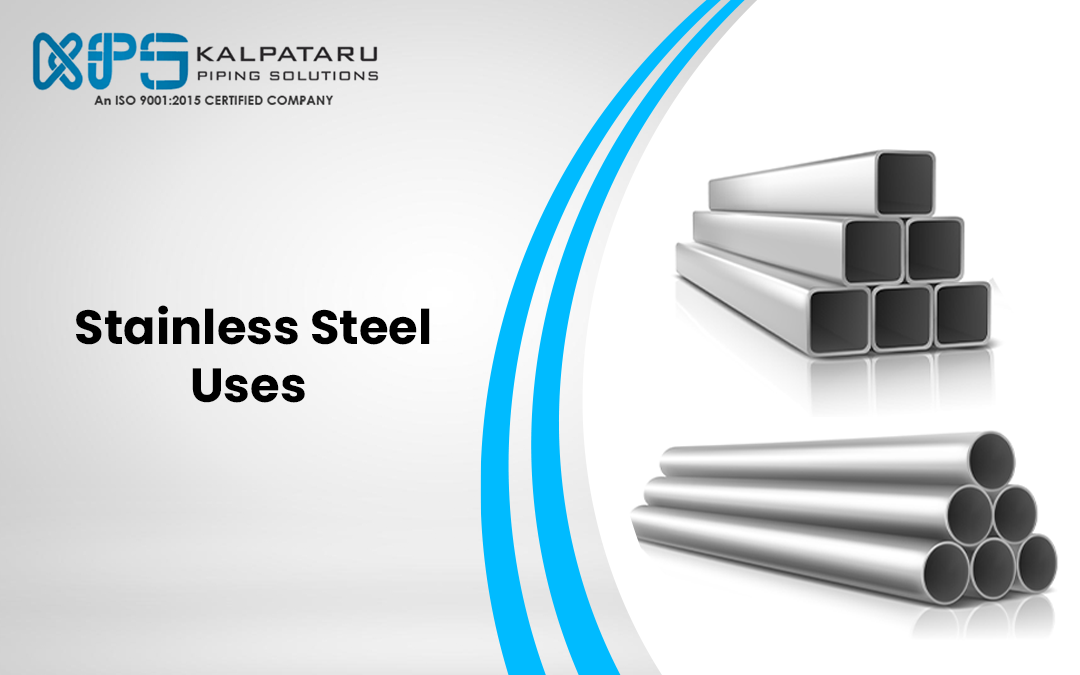
Stainless Steel Uses
Stainless steel material is mainly known for its strength, durability, and resistance to corrosion, making it indispensable across various industries. Here are list of stainless steel applications:
Architecture and Construction
Stainless steel is used in modern architecture and construction, due to its strength, flexibility, and resistance to corrosion. Stainless steel is widely used for exterior cladding on high-impact buildings and interior applications such as handrails, countertops, and backsplashes. Its aesthetic appeal, low maintenance, and sustainable properties—being up to 90% recycled—make it ideal for contemporary and eco-friendly designs.
Automotive and Transportation
Stainless steel plays a vital role in the automotive and transportation sectors, offering durability, strength, and corrosion resistance. It has become integral in car exhaust systems, trim, grills, and structural components, aligning with emission standards. Beyond automobiles, stainless steel is widely used in ship containers, road tankers, and refuse vehicles, especially for transporting chemicals, food, and liquids. Its lightweight, fuel-saving properties, reduced maintenance costs.
Medical Industry
The medical industry relies heavily on stainless steel for its hygienic and corrosion-resistant properties. It is used in surgical instruments, operating tables, dental tools, and advanced medical equipment like MRI scanners and steam sterilizers. Stainless steel is also a critical component in surgical implants, artificial joints, and bone fixation devices. Its ability to withstand sterilization processes ensures safety and reliability in medical environments.
Energy and Heavy Industries
Stainless steel is indispensable in the energy and heavy industries due to its exceptional durability and corrosion resistance in extreme conditions. It is extensively used in storage tanks, pipelines, valves, and structural components in the chemical, oil, and gas sectors. Offshore oil rigs and renewable energy systems, including solar, hydro, and wind power, also utilize high-grade stainless steel for its ability to withstand corrosive environments.
Food and Catering
In the food and catering industry, stainless steel is essential for its non-reactive and corrosion-resistant nature. It is used in kitchenware, cutlery, cookware, and industrial food production equipment. Stainless steel’s easy-to-clean surface ensures hygiene, while its resistance to acidic foods preserves flavor and quality. From knife blades to ice cream production systems, it supports strong antibacterial cleaning, making it ideal for maintaining food safety and cleanliness across various culinary applications.
Types of Stainless Steel
Stainless steel is categorized into various types based on its microstructure and alloy composition. Each type is tailored for specific applications, offering unique properties such as corrosion resistance, strength, and durability. The main types of stainless steel are as follows:
Austenitic Stainless Steel
Austenitic stainless steel is the most widely used type, accounting for about 70% of all stainless steel production. Its primary microstructure is austenite, a solid solution of iron and carbon formed above 723°C. This steel contains at least 16% chromium and 6% nickel, with optional additions like nitrogen or manganese to enhance its properties. Austenitic steel is non-magnetic, corrosion-resistant, and cannot be hardened through heat treatment.
Austenitic stainless steel uses: Chemical plants, power plants, food processing equipment, and dairy machinery.
Ferritic Stainless Steel
Ferritic stainless steel primarily consists of iron and chromium, with chromium content ranging between 10.5% and 18%. This type is magnetic, more cost-effective than austenitic steel, and highly resistant to stress corrosion. While it offers good formability and flexibility, it is not suitable for high-temperature applications and has average corrosion resistance.
Ferritic stainless steel uses: Car exhausts, kitchen sinks, and industrial equipment.
Martensitic Stainless Steel
Martensitic stainless steel is composed of iron, carbon, and chromium. It features high strength, durability, and moderate corrosion resistance. This steel is magnetic and can be hardened by heat treatment but has poor weldability compared to other grades. Untempered martensite is brittle, while tempered martensite is tough and corrosion-resistant.
Applications: Medical equipment, aerospace components (drive shafts, landing gear), and cutlery.
Duplex Stainless Steel
Duplex stainless steel combines the properties of austenitic and ferritic grades, typically consisting of a 50/50 mix. It contains high chromium and low nickel, offering superior tensile strength, good weldability, and excellent resistance to stress corrosion. Duplex stainless steel is stronger than austenitic grades and highly durable, though slightly less resistant to stress corrosion than ferritic grades.
Applications: Piping, manifolds, pressure vessels, and pipelines in petrochemical and oil and gas industries.
FAQs
What are the advantages of stainless steel?
Stainless steel offers corrosion resistance, strength, durability, heat resistance, easy maintenance, and aesthetic appeal. It is also environmentally friendly due to its recyclability.
What type of welding is used for stainless steel?
TIG (Tungsten Inert Gas) welding and MIG (Metal Inert Gas) welding are commonly used for stainless steel, providing precision and strong welds.
Which metal is used in stainless steel?
Stainless steel is made from iron, carbon, chromium (10-30%), nickel, molybdenum, titanium, and other trace elements.
What is stainless steel used for?
Stainless steel is used in kitchenware, medical instruments, construction, automotive parts, chemical processing, and marine environments due to its durability and corrosion resistance.
What is the difference between steel and stainless steel?
Steel is prone to rust and corrosion, while stainless steel resists rust due to added chromium, nickel, and other elements. Steel is magnetic; most stainless steels are not.
Is stainless steel an alloy?
Yes, stainless steel is an alloy made primarily of iron, carbon, and 10-30% chromium, with additional elements like nickel, molybdenum, and titanium for enhanced corrosion resistance.
Is stainless steel corrosion-resistant?
Yes, stainless steel is resistant to corrosion, especially in mild environments. However, exposure to strong bases like sodium hydroxide can cause etching, and it may experience galvanic corrosion in certain conditions.