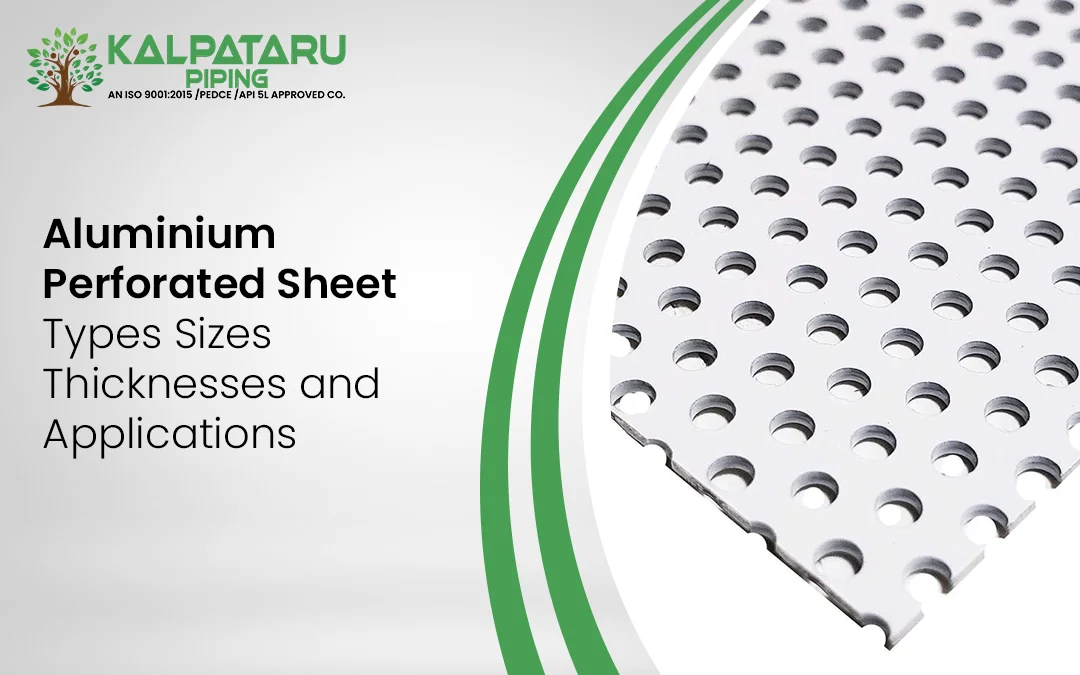
Aluminium perforated sheets are flat sheets of aluminium with a specific arrangement of holes. The holes can be geometric shapes such as circular, square, rectangular, and hexagonal, or can be customized according to the needs of the users. The combination of aluminium and regulated perforation makes these sheets useful for construction, ventilation, machine protection, screening, ceiling, shading, and other practical purposes.
Kalpataru Piping Solutions was founded in 2015 and is a certified ISO 9001:2015 manufacturer, producer, distributor, and exporter of metal products. The company offers its clients a wide array of piping products, both metallic and non-metallic, for various industrial and engineering applications.
This article aims to inform readers about the types, sizes, thicknesses, and functionalities of aluminium perforated sheets. It also explains the meaning of terms such as perforation size and pitch and their impact on the area of a particular project.
What Is Aluminium Perforated Sheet?
Aluminium perforated sheet is a flat aluminium sheet containing a regular arrangement of holes or openings. The openings are created by punching, stamping, or controlled cutting according to a specified hole shape, size and spacing.
Round holes are widely used for general ventilation, screening, and architectural applications. Square, slotted, hexagonal and decorative patterns can be selected when the project requires a different airflow characteristic, appearance or screening effect.
The manufacturing process also affects the final specification. Mechanical punching is commonly used for standard patterns and production quantities, while CNC or laser cutting can be considered for special shapes, decorative designs and customised layouts.
A perforated aluminium sheet is normally specified using the aluminium grade, temper where required, thickness, hole shape, hole diameter, pitch, pattern arrangement, open area, sheet dimensions and surface finish.
Sizing and Standard Dimensions
The available size of an aluminium perforated sheet depends on the base sheet, perforation pattern, thickness, production equipment and project requirement. Common sheet dimensions used in the market include both metric and imperial formats.
| Common Sheet Size | Approximate Imperial Size | Typical Consideration |
| 1000 x 2000 mm | Approximately 3.3 x 6.6 ft | General fabrication and industrial panels |
| 1220 x 2440 mm | 4 x 8 ft | Common architectural and industrial size |
| 1250 x 2500 mm | Approximately 4.1 x 8.2 ft | Larger panel applications |
| 1500 x 3000 mm | Approximately 5 x 9.8 ft | Larger architectural and industrial panels |
| Custom size | According to the requirement | Projects requiring reduced fabrication waste |
For buyers who need general aluminium sheet information, Kalpataru also provides information onAluminium Plates and Sheets. The present guide focuses specifically on perforated aluminium sheet selection.
Types of Aluminium Perforated Sheet
Aluminium perforated sheet is available in different patterns based on the shape and arrangement of the openings. The selected pattern depends on open area, airflow, visibility, appearance and application requirements.
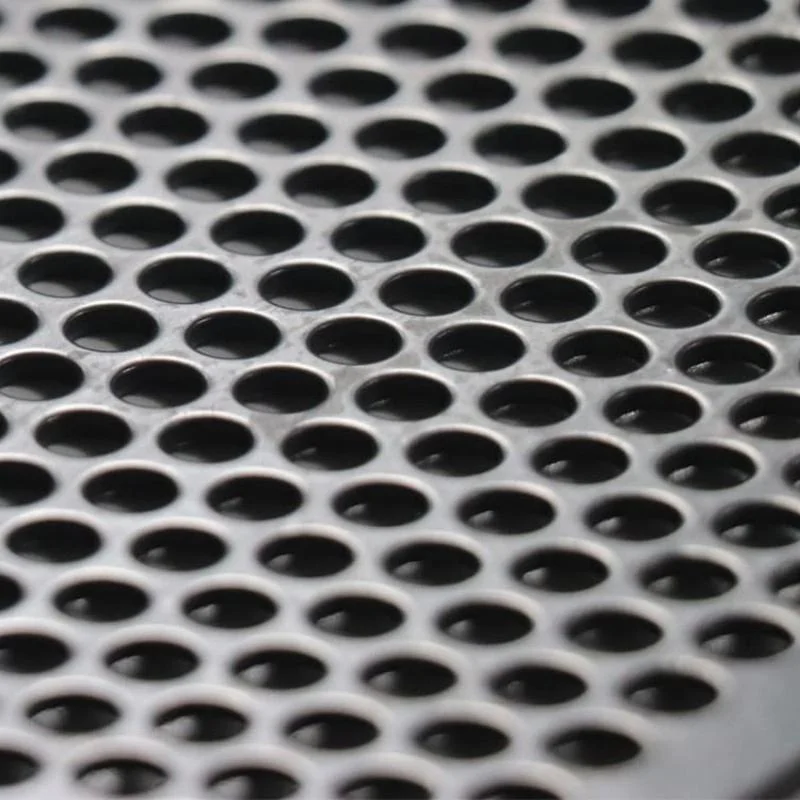
Round Hole Aluminium Perforated Sheet
Round holes are widely used and can be arranged in straight or staggered patterns. They are specified by hole diameter and pitch and are suitable for ventilation panels, machine guards, screens, equipment covers and architectural applications.
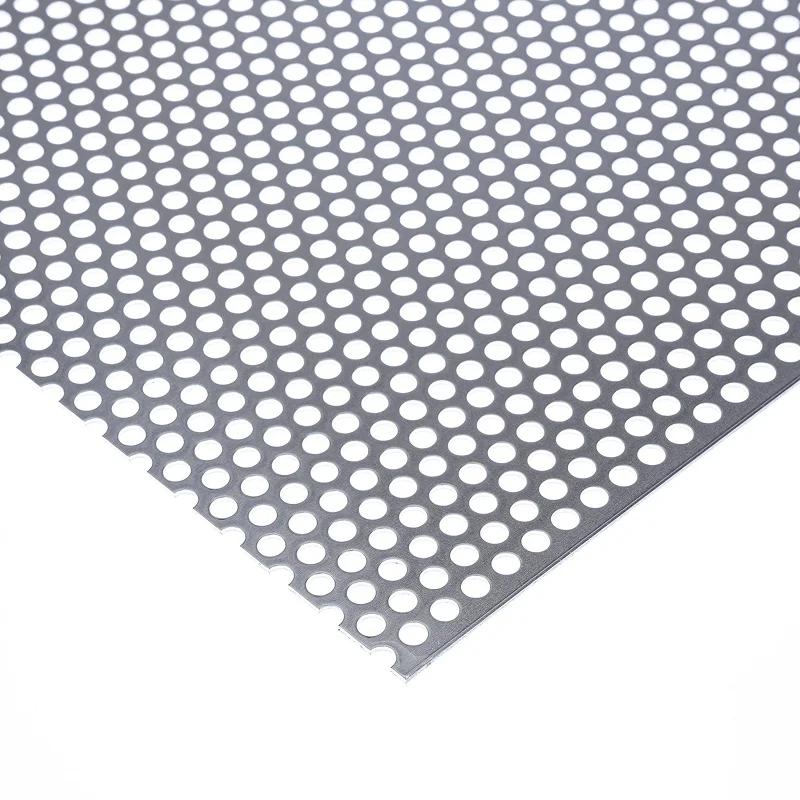
Square Hole Aluminium Perforated Sheet
Square openings provide a uniform geometric appearance and can be selected for equipment panels, screens, guards and decorative applications where pattern consistency is important.
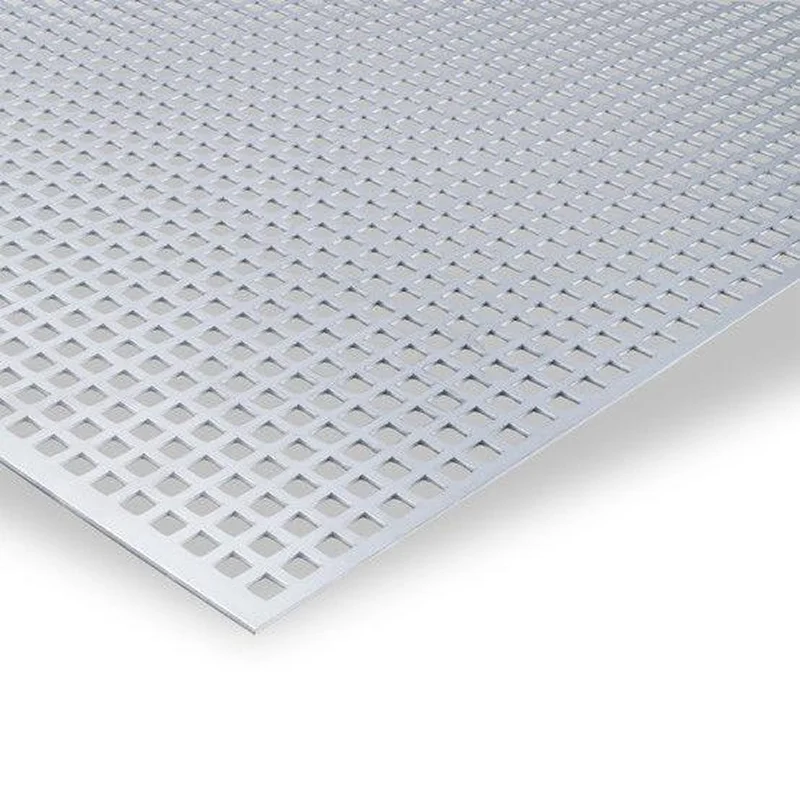
Slotted Aluminium Perforated Sheet
Slotted sheets use elongated openings with defined slot length, width and spacing. They are commonly considered for ventilation panels, grilles, screens and architectural features.
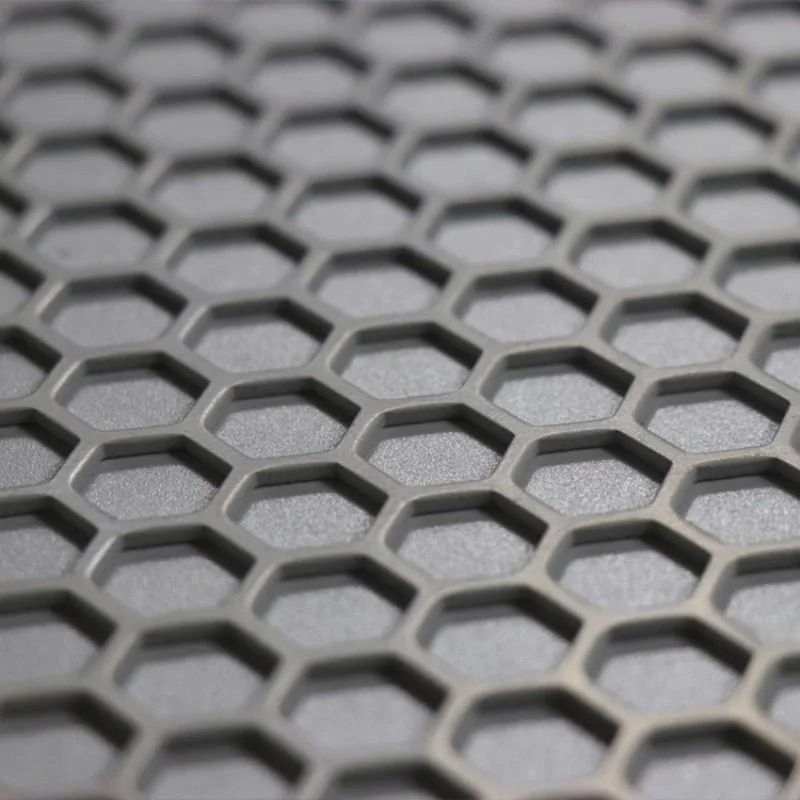
Hexagonal Aluminium Perforated Sheet
Hexagonal openings create a distinctive repeating pattern and can provide a relatively high open area. They are used for ventilation panels, equipment covers, decorative screens and architectural applications.
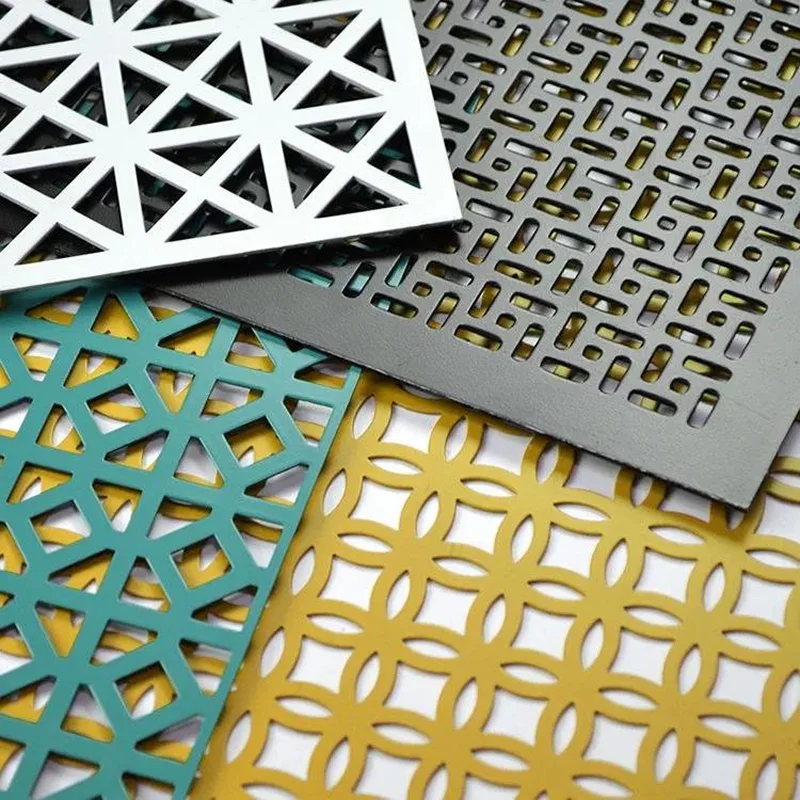
Custom Aluminium Perforated Sheet
Custom patterns can be specified for particular project requirements. The enquiry should include aluminium grade, temper, thickness, sheet size, hole shape, opening dimensions, pitch, pattern, and finish.
Aluminium Perforated Sheet Thickness and Classification
Thickness is one of the most important factors when selecting aluminium perforated sheet. A thinner sheet can reduce weight and may be suitable for decorative applications, while a thicker sheet can provide greater rigidity for equipment covers, industrial screens and fabricated panels.
A useful general classification is shown below.
|
Thickness Range |
General Classification |
Typical Consideration |
|
0.15 to 2.0 mm |
Thin sheet |
Decorative panels, interior screens, acoustic applications and lightweight covers |
|
2.0 to 6.0 mm |
Conventional sheet |
Facades, ceilings, ventilation panels and general industrial applications |
|
6.0 to 25 mm |
Medium thickness |
Heavy duty screening and fabricated industrial components |
|
Above 25 mm |
Thick material |
Special engineering requirements subject to material and fabrication capability |
These categories are general selection guidelines rather than universal industry classifications. The actual thickness should be selected according to the required load, span, support arrangement, fabrication method, hole pattern and application.
Understanding Open Area Percentage
Open area percentage is the proportion of the total aluminium perforated sheet surface occupied by holes. It is mainly determined by the hole size, pitch and perforation pattern. A higher open area generally allows greater airflow and light transmission, while a lower open area leaves more metal between the openings and can provide greater screening or privacy.
As a general selection guide:
|
Open Area |
General Consideration |
Typical Applications |
|
Below 25% |
Lower airflow and visibility with more solid sheet area |
Structural screening, privacy panels and decorative applications |
|
25% to 50% |
Balanced airflow, visibility and screening |
General ventilation, equipment screens and architectural panels |
|
Above 50% |
Higher airflow and light transmission |
Acoustic applications, ventilation and filtration related uses |
These ranges are general guidelines rather than universal classifications. The required open area should be selected according to airflow, visibility, light transmission, acoustic requirements, structural considerations and the specified hole pattern.
Common Aluminium Grades Used for Perforated Sheet
Common grades considered for aluminium sheet applications include 1100, 3003, 5052 and 6061.
|
Aluminium Grade |
General Characteristics |
Typical Considerations |
|
1100 |
High aluminium content and good formability |
General sheet applications and applications where forming is important |
|
3003 |
Aluminium manganese alloy with good formability |
General engineering, architectural and fabricated panels |
|
5052 |
Aluminium magnesium alloy with good corrosion resistance |
Marine, outdoor and fabricated applications |
|
6061 |
Aluminium magnesium silicon alloy with higher strength |
Structural and engineering applications where greater strength is required |
The exact grade and temper should be confirmed against the applicable material specification and project requirements.
Chemical Composition of Common Aluminium Grades
|
Element |
Aluminium 1100 |
Aluminium 3003 |
Aluminium 5052 |
Aluminium 6061 |
|
Silicon, Si |
0.95 max* |
0.60 max |
0.25 max |
0.40 to 0.80 |
|
Iron, Fe |
0.95 max* |
0.70 max |
0.40 max |
0.70 max |
|
Copper, Cu |
0.05 to 0.20 |
0.05 to 0.20 |
0.10 max |
0.15 to 0.40 |
|
Manganese, Mn |
0.05 max |
1.00 to 1.50 |
0.10 max |
0.15 max |
|
Magnesium, Mg |
0.05 max |
0.05 max |
2.20 to 2.80 |
0.80 to 1.20 |
|
Chromium, Cr |
0.05 max |
0.05 max |
0.15 to 0.35 |
0.04 to 0.35 |
|
Zinc, Zn |
0.10 max |
0.10 max |
0.10 max |
0.25 max |
|
Titanium, Ti |
0.05 max |
0.05 max |
0.15 max |
0.15 max |
|
Aluminium, Al |
99.00 min |
Remainder |
Remainder |
Remainder |
For Aluminium 1100, silicon and iron are commonly controlled together with a combined maximum limit of 0.95% rather than being treated as two independent maximum values.
Mechanical Properties of Common Aluminium Grades
|
Grade and Temper |
Tensile Strength, MPa |
Yield Strength, MPa |
Elongation, % |
Typical Use in Perforated Sheet |
|
1100 O |
90 |
35 |
35 |
Formable panels and general applications |
|
1100 H14 |
125 |
115 |
9 |
General fabricated and architectural panels |
|
3003 O |
110 |
40 |
30 |
Formed panels and general applications |
|
3003 H14 |
150 |
145 |
8 |
Ventilation panels, screens and fabricated panels |
|
5052 O |
195 |
90 |
25 |
Formed panels and corrosion exposed applications |
|
5052 H32 |
260 |
215 |
10 |
Outdoor panels, screens and equipment covers |
|
6061 O |
125 |
55 |
25 |
Formable engineering applications |
|
6061 T6 |
310 |
275 |
12 |
Higher strength engineering panels |
Manufacturing Process and Surface Finishes
Aluminium perforated sheet is produced using mechanical punching, stamping, CNC or laser cutting. Mechanical punching suits standard patterns and higher production volumes, while CNC or laser cutting supports decorative, complex and customised designs. The selected process depends on hole geometry, sheet thickness, quantity and dimensional accuracy.
Common finishes include mill, anodized, powder coated and painted finishes. Anodizing improves surface durability and appearance, while powder coating provides colour options and additional surface protection. The finish should be selected based on the installation environment, appearance requirements and fabrication process.
Does Aluminium Perforated Sheet Have a Working Pressure Rating?
Aluminium perforated sheet should not automatically be treated as a pressure rated component.
The presence of holes changes the effective section of the material and the structural behaviour of the panel. A pressure-containing application therefore requires a separate engineering assessment based on the material, thickness, perforation pattern, dimensions, support arrangement, temperature, and design pressure.
For pressure containing equipment, the applicable equipment design code and project specification should take precedence over a general perforated sheet specification.
Standards, Inspection, and Material Documentation
Aluminum perforated sheets are normally defined in regard to their standards, the standards referring to compositions, mechanical features and the dimensions of the aluminum. ASTM B209 determines aluminum and aluminum alloy sheet and plate while EN 485 contains specifications regarding aluminum and aluminum alloy sheets, strips and plates. EN 573 provides the definition of the chemical composition and designation of wrought aluminum and aluminum alloys while JIS H4000 treats aluminum and alloyed aluminum sheets, plates and strips used for industrial purposes.
A typical material verification process may include:
|
Inspection Item |
Purpose |
|
Chemical composition |
Confirms the supplied aluminium grade |
|
Mechanical testing |
Confirms specified mechanical properties |
|
Thickness measurement |
Confirms sheet thickness |
|
Sheet dimensions |
Confirms width and length |
|
Hole diameter |
Confirms perforation size |
|
Pitch measurement |
Confirms opening spacing |
|
Visual inspection |
Checks surface and manufacturing condition |
|
Material traceability |
Connects the material to the relevant heat or batch documentation |
How to Select the Right Aluminium Perforated Sheet
Selecting the right aluminium perforated sheet starts with defining the application. First, identify whether it is required for ventilation, screening, privacy, decoration, filtration, acoustic treatment or equipment protection. Next, determine the required open area for airflow, visibility and light transmission. Choose the hole pattern based on functional and visual requirements. Select the aluminium grade according to the service environment and corrosion exposure. Finally, specify the sheet thickness, dimensions, hole diameter, pitch, pattern arrangement, surface finish and fixing method. This ensures the sheet is selected for performance rather than appearance alone.
Frequently Asked Questions
What is aluminium perforated sheet used for?
Which aluminium grade is commonly used for perforated sheet?
Grades such as 1100, 3003, 5052 and 6061 can be considered for aluminium sheet applications. The correct grade depends on strength, formability, corrosion exposure, fabrication requirements and the project specification.
What thickness is available in aluminium perforated sheet?
What are the common aluminium perforated sheet hole patterns?
Common patterns include round, square, slotted and hexagonal openings. Custom patterns can also be specified when a project requires a particular appearance, open area or functional requirement.