The chemical processing plants are used in one of the most challenging environments within any industry. They have to regularly deal with concentrated acids, caustic alkalis, wet chlorine and solvents among other hostile media at high temperatures and pressures. Under such circumstances, the choice of the right valve material cannot be just an issue of plant performance preference, but rather a question of plant safety, reliability in operations, and cost-effectiveness in the long term.
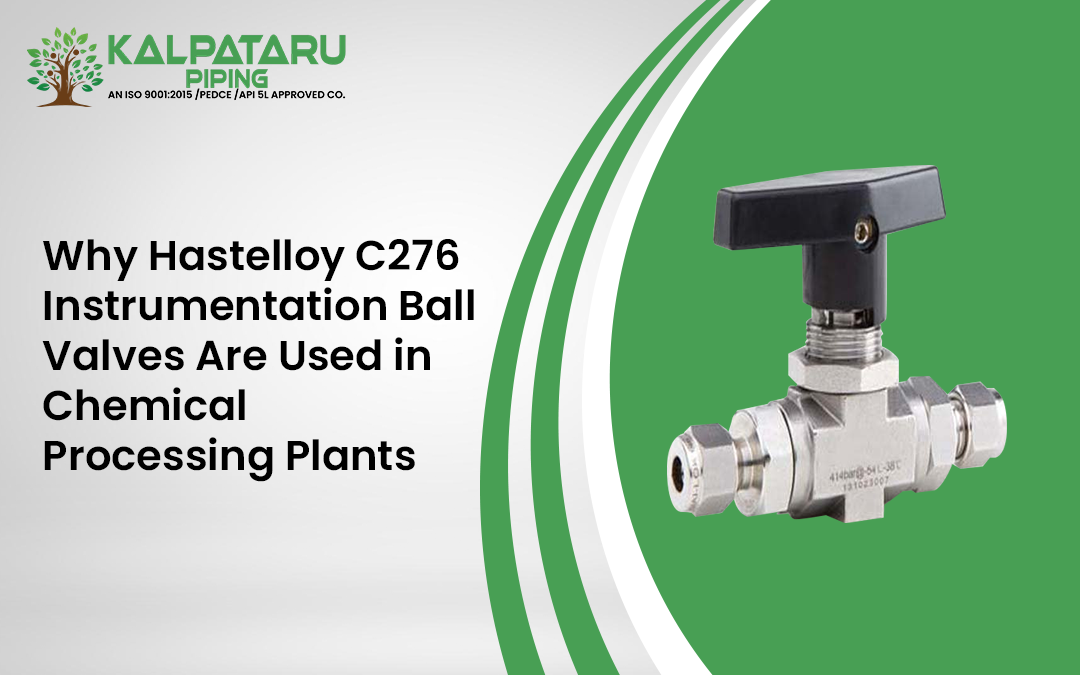
Hastelloy C276 valves have become one of the most reliable valves in these conditions. These valves are made of a nickel-molybdenum-chromium superalloy with the UNS designation of N10276 and the DIN equivalent, 2.4819, which provides a combination of corrosion resistance, mechanical strength, and temperature capability that is hard to access using traditional stainless steel or carbon steel valves. This guide will answer the question of why process engineers and procurement managers are extremely particular when they want to specify Hastelloy C276 valves to operate in their most challenging service conditions.
What Is Hastelloy C276 and Why Does the Alloy Composition Matter?
Hastelloy C276 is a nickel-based super alloy that was created with a special purpose of application in the highly corrosive chemical environments. The alloy consists of nickel, but includes large amounts of molybdenum and chromium with minor amounts of tungsten, iron, cobalt, manganese, vanadium, silicon and carbon. It is this exact combination of elements which endow the alloy with its remarkable performance qualities.
Hastelloy C276 Chemical Composition
| Element | Symbol | Approximate Content (%) |
| Nickel | Ni | Balance (approx. 57%) |
| Molybdenum | Mo | 15 to 17 |
| Chromium | Cr | 14.5 to 16.5 |
| Iron | Fe | 4 to 7 |
| Tungsten | W | 3 to 4.5 |
| Cobalt | Co | 2.5 max |
The high molybdenum content (approximately 16%) is the primary reason this alloy performs so well against reducing acids and chloride-containing media. Molybdenum strengthens the passive film that forms on the alloy surface and makes it far more resistant to pitting and crevice corrosion. The chromium content provides resistance in oxidizing environments. The presence of tungsten further enhances pitting resistance, making this alloy one of the most versatile corrosion-resistant materials available today. To understand the broader context of alloy grades and compositions, you can refer to our detailed resource on Hastelloy alloy properties, grades, and composition.
Key Properties That Make Hastelloy C276 Valves Ideal for Chemical Plants
The widespread adoption of Hastelloy C276 instrumentation ball valves in chemical processing environments is driven by a specific set of material properties. Each of these properties addresses a critical engineering challenge that plant operators face in day-to-day operations.
Exceptional Resistance to a Broad Range of Corrosive Media
Hastelloy C276 instrumentation ball valves exhibit superior resistance to virtually all classes of corrosive chemicals. These valves perform reliably in environments containing sulfuric acid, hydrochloric acid, hydrofluoric acid, nitric acid, chromic acid, acetic acid, and formic acid. They are also highly resistant to phosphoric acid at all concentrations below 65%. This breadth of chemical resistance is rare among metallic alloys and is one of the primary reasons the material is specified so widely across the chemical industry.
H3: Outstanding Resistance to Pitting, Crevice Corrosion, and Stress Corrosion Cracking
Localized forms of corrosion such as pitting and crevice corrosion are among the most insidious failure modes in process equipment. Standard grades like 304 or 316 stainless steel are notoriously susceptible to these attack mechanisms, particularly in chloride-containing environments. Hastelloy C276 valves, by contrast, show exceptional resistance to these forms of localized corrosion. The alloy is also resistant to stress corrosion cracking, a failure mode that can cause sudden and catastrophic fracture in sensitized stainless steels operating in chloride-rich environments.
High Temperature Performance and Scaling Resistance
Hastelloy C276 instrumentation ball valves maintain their structural integrity and corrosion resistance at elevated temperatures. The alloy resists oxidation and scaling up to approximately 1038 degrees Celsius (1900 degrees Fahrenheit) in intermittent service and demonstrates good performance even in continuous high-temperature service. This thermal stability makes these valves suitable for high-temperature chemical reactors, heat exchanger circuits, and similar equipment where thermal cycling is common.
Excellent Mechanical Strength and Fabricability
Despite its outstanding corrosion resistance, Hastelloy C276 is also a highly workable material. It can be cold worked, drawn, roll formed, and stamped. The material is readily weldable and can be fabricated into instrumentation ball valves with complex configurations. The alloy maintains good ductility in its annealed condition, and annealing after hot working operations (carried out between 1121 degrees Celsius and 1177 degrees Celsius, followed by rapid water quenching) restores ductility and reduces hardness, forming a protective passivation layer on the valve surface.
Industrial Applications of Hastelloy C276 Valves in Chemical Processing
The question of why Hastelloy C276 instrumentation ball valves are used in chemical processing plants is best answered by looking at the specific applications where no other material can reliably perform. The following areas represent the most common and critical deployments of these valves.
Acid Handling and Mineral Acid Processing
Plants that produce, concentrate, or process hydrochloric acid, sulfuric acid, hydrofluoric acid, and phosphoric acid represent one of the most demanding valve service environments in the chemical industry. Conventional stainless steels fail rapidly in these media through general corrosion and pitting. Hastelloy C276 valves, with their high molybdenum content, resist reducing acids at a level that is simply unattainable with standard grades. This makes them the de facto standard for acid handling piping and instrumentation in mineral acid plants.
Flue Gas Desulfurization Systems
Flue gas desulfurization (FGD) systems used in power plants and chemical facilities to control sulfur dioxide emissions expose valves to a combination of wet sulfuric acid, chlorides, and abrasive slurries. This environment is particularly aggressive because it combines both reducing and oxidizing corrosive attack mechanisms. Hastelloy C276 is one of the very few alloys that can withstand this combined chemical environment reliably. Its use in FGD scrubber systems, chimney linings, and washing towers is well established in global industry practice.
Chlorine and Chloride-Rich Process Streams
Wet chlorine gas, hypochlorite solutions, and high-concentration chloride brines are among the most corrosive environments encountered in the chemical industry. Hastelloy C276 exhibits resistance to wet chlorine and to solutions containing chlorine dioxide and hypochlorites at levels that make it one of only a handful of practical material choices for this service. Valves handling these streams must maintain tight shut-off performance while resisting accelerated surface degradation, both of which Hastelloy C276 instrumentation ball valves are engineered to deliver.
Pharmaceutical and Biotech Manufacturing
The pharmaceutical industry uses aggressive solvents, strong acids for pH control, and specialized cleaning and sterilization agents. Hastelloy C276 valves are used in these environments because they offer corrosion resistance without contaminating the process stream, a critical requirement in high-purity pharmaceutical manufacturing. The alloy’s resistance to a broad spectrum of organic and inorganic chemicals makes it ideal for both API (active pharmaceutical ingredient) synthesis reactors and cleaning-in-place (CIP) systems.
Petrochemical Refining and Oil and Gas Processing
In sour gas wells and petrochemical refining environments, process streams may contain hydrogen sulfide, carbon dioxide, and chlorides simultaneously. This combination can trigger rapid sulfide stress cracking in conventional alloys. Hastelloy C276 instrumentation ball valves are widely specified for sour gas service because they maintain corrosion resistance even in these mixed-media environments. Waste treatment plants and pollution control equipment similarly rely on these valves for long-term reliability.
Fertilizer and Chemical Synthesis Plants
Chemical plants producing fertilizers and bulk chemicals use large quantities of nitric acid, sulfuric acid, and phosphoric acid in their process streams. Sugar mills, distilleries, and paper mills similarly expose their valve systems to highly corrosive solutions. Hastelloy C276 ball valves provide the durability and corrosion resistance necessary to maintain continuous process operation in these facilities without frequent valve replacement or maintenance shutdowns.
Standards and Specifications for Hastelloy C276 Instrumentation Ball Valves
Hastelloy C276 instrumentation ball valves manufactured for chemical processing service must comply with internationally recognized standards. These standards govern material quality, dimensional accuracy, and pressure ratings. The following specifications are most commonly applicable.
| Standard | Scope |
| ASTM A494 / SA494 | Material specification for nickel alloy castings, covering CW12MW grade corresponding to C276 |
| ASME B16.10 | Face-to-face and end-to-end dimensions of valves |
| ASME B16.5 | Pipe flanges and flanged fittings for pressure-temperature ratings |
| ASME B16.25 | Butt-welding ends for valves and fittings |
| ASME B16.34 | Valves: flanged, threaded, and welding end pressure-temperature ratings |
| DIN 2.4819 | European equivalent material designation for Hastelloy C276 |
| MSS / EN / WERKSTOFFE | Additional international standards governing dimensional and testing requirements |
At Kalpataru Piping, all Hastelloy C276 instrumentation ball valves are manufactured and controlled to these international standards. Each batch undergoes rigorous quality inspection including hardness testing, positive material identification (PMI) testing, mechanical testing, pitting resistance testing, chemical analysis, burst testing, ultrasonic testing, cryogenic and high-temperature testing, and high-pressure gas testing. Third-party inspection is also available on request, and mill test certificates are provided with every order.
Hastelloy C276 Pipes and Tubes: Completing the Corrosion-Resistant System
For process engineers specifying Hastelloy C276 instrumentation ball valves, it is important to consider the complete piping system. A corrosion-resistant valve connected to incompatible piping material creates a weak link in the overall system. Kalpataru Piping supplies a complete range of Hastelloy C276 products including seamless and welded pipes, tubes, plates, sheets, round bars, wires, olets, and spools. You can explore our full range of Hastelloy C276 pipes, tubes, and related products to ensure complete system compatibility when designing your chemical plant piping circuits.
This full-system approach ensures that every wetted component from the valve body to the connecting pipework is manufactured from the same high-performance alloy, eliminating galvanic incompatibility and ensuring uniform corrosion resistance across the entire instrumentation loop.
Source Hastelloy C276 Valves from Kalpataru Piping
Hastelloy C276 instrumentation ball valves are used in chemical processing plants for a clear and well-established set of reasons. The alloy’s unmatched resistance to a wide range of corrosive acids, chlorides, and aggressive solvents, combined with excellent mechanical strength, temperature performance, and weldability, makes it the material of choice for the most demanding process environments. From acid handling and FGD systems to pharmaceutical reactors and sour gas service, these valves consistently deliver long service life, operational reliability, and low total cost of ownership.
For process engineers and procurement professionals seeking a trusted source, Kalpataru Piping provides a comprehensive range of Hastelloy C276 products. Whether you need instrumentation ball valves, pipes, tubes, or other forms of this critical superalloy, our team is equipped to support your project from specification through delivery. Explore our Hastelloy alloy properties and grades resource to deepen your understanding of this material family, or contact us directly for a tailored product recommendation for your specific chemical processing application.
For technical enquiries, specifications, or pricing for Hastelloy C276 instrumentation ball valves, contact our sales team or visit our product page for the complete specifications of our Hastelloy C276 instrumentation ball valves range.
Related Internal Resources:
Hastelloy C276 Instrumentation Ball Valves | Hastelloy C276 Pipes and Tubes Supplier