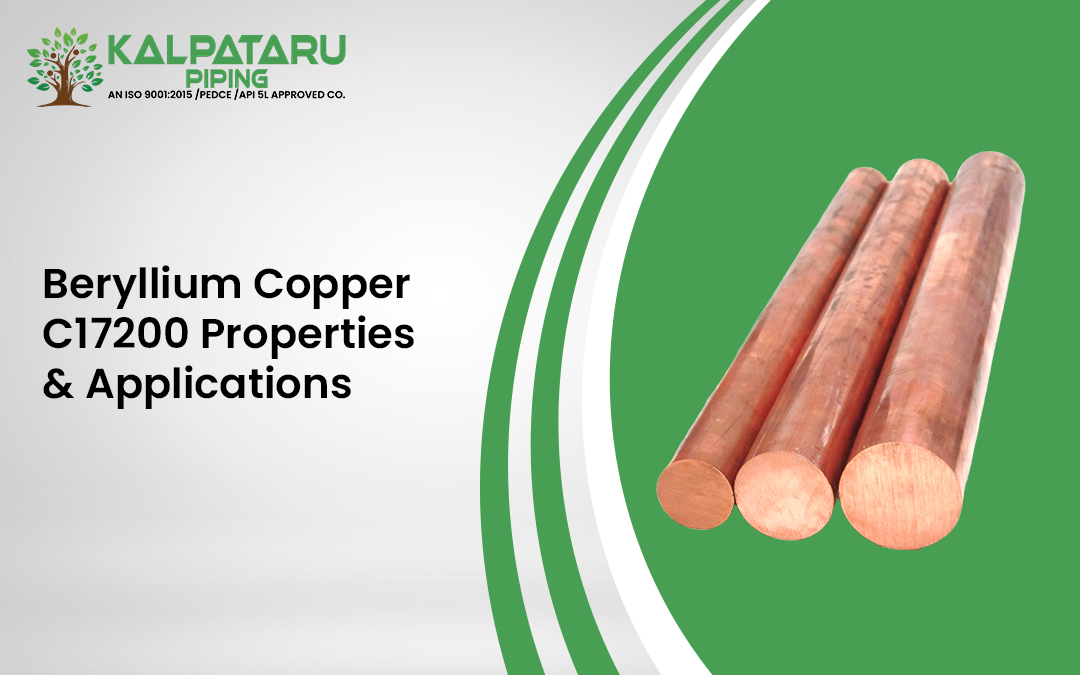
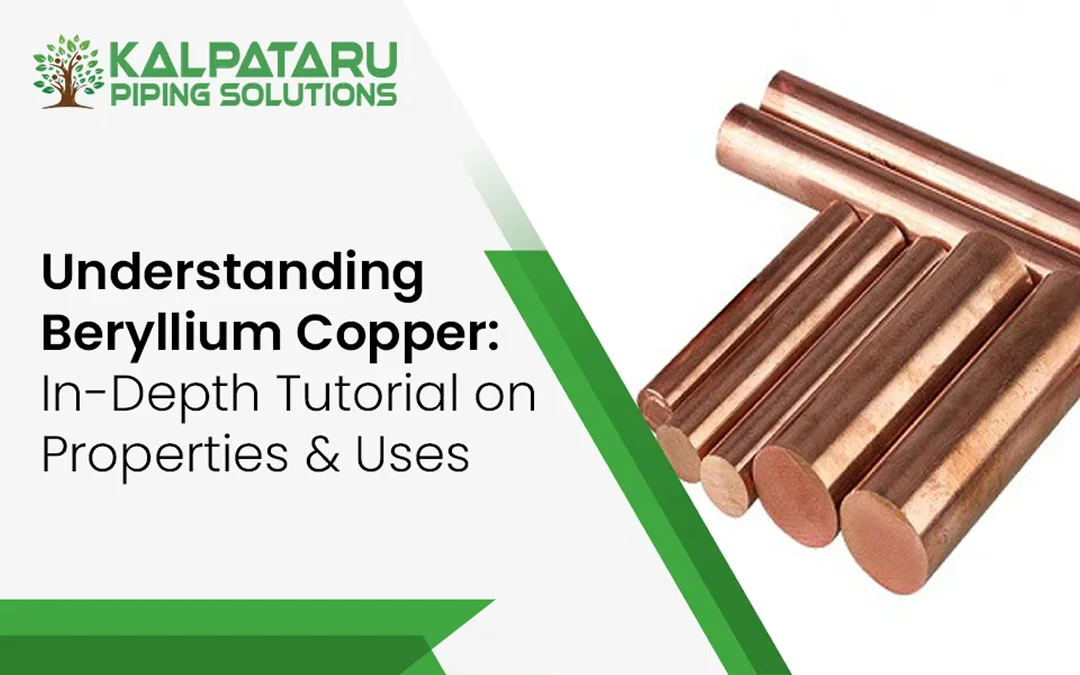
Imagine a material that offers the resilience of a high-strength alloy while maintaining the conductivity and workability of copper, that’s precisely what beryllium copper delivers. Beryllium copper also known as BeCu, spring copper, copper beryllium or beryllium bronze is a high performance copper alloy that contains 0.4–3% beryllium. This small addition of beryllium gives the alloy remarkable strength while retaining copper’s excellent electrical and thermal conductivity. Learn more about BeCu material and why it’s preferred in critical applications.
For engineers and manufacturers looking for premium copper-based solutions, you can explore a variety of copper products here.
In this article, we’ll break down the key physical and mechanical properties of beryllium copper in detail to make an informed decision.
Properties of Beryllium Copper
In this article, we’ll take a closer look at the key beryllium copper properties, including its hardness, electrical and thermal conductivity, and corrosion resistance. We’ll also explore why this alloy is widely used in industrial, electrical, and precision engineering applications, and how its unique beryllium characteristics make it a preferred choice for manufacturers.
- Hardness: The beryllium copper hardness is one of its most notable properties. Through specialized heat treatments, BeCu can achieve tensile strengths exceeding 200,000 psi, making it one of the strongest copper-based alloys available. Its hardness can be tailored during processing, allowing manufacturers to create components that are either highly resilient or moderately soft, depending on the application.
- Electrical and Thermal Conductivity: Beryllium copper retains excellent electrical conductivity and thermal conductivity, comparable to pure copper. These properties make it ideal for electronic connectors, computer components, and telecommunications equipment. BeCu’s combination of conductivity and durability ensures reliable performance even under mechanical stress and high temperatures. Its exceptional beryllium conductivity and beryllium thermal conductivity make it a top choice for critical applications that demand efficient heat and current flow.
- Non-Sparking and Non-Magnetic: Beryllium copper is non-sparking, making it suitable for use in explosive or flammable environments such as oil refineries and chemical plants. Additionally, its non-magnetic nature ensures components operate without interference in sensitive electronic and aerospace applications.
- Corrosion Resistance and Fatigue Strength: The alloy demonstrates outstanding resistance to corrosion and fatigue, ensuring a long service life even in harsh industrial environments.
- Formability and Machinability: Beryllium copper alloy properties also include superior formability and excellent machinability. It can be easily shaped, machined, or formed into complex components while maintaining its mechanical integrity, making it ideal for precision parts and industrial tooling.
Beryllium Copper Mechanical Properties
Below are some of the key beryllium copper mechanical properties that make it highly reliable for precision components and demanding applications.
-
High Ductility and Elongation: Beryllium copper alloys exhibit impressive ductility, with elongation at break ranging from 15% to 30%, depending on the specific alloy and temper. This characteristic allows for significant deformation before failure, making the material suitable for applications requiring complex shapes and intricate designs.
-
Modulus of Elasticity: The modulus of elasticity for beryllium copper alloys typically falls between 125 and 130 GPa (18,100 to 18,900 ksi). This indicates a high resistance to elastic deformation under stress, contributing to the material’s overall strength and stability in structural applications.
-
Shear Modulus: The shear modulus of beryllium copper alloys is approximately 50 GPa (7,250 ksi). This property is crucial for understanding how the material deforms under shear stress, which is essential for designing components subjected to torsional forces.
-
High Wear Resistance: Beryllium copper alloys demonstrate exceptional wear resistance, making them ideal for components subjected to friction and abrasion. This property ensures longevity and reliability in applications such as bearings, bushings, and other moving parts.
-
Stress Relaxation Resistance: These alloys exhibit low stress relaxation rates, maintaining their mechanical properties over time even under constant strain. This makes beryllium copper suitable for applications like springs and connectors, where maintaining force over extended periods is critical.
-
High-Temperature Strength: Beryllium copper alloys retain their strength at elevated temperatures, with ultimate tensile strength (UTS) values remaining high even at temperatures up to 350°C. This thermal stability is beneficial for components exposed to heat in industrial processes.
-
Low Creep Rate: The low creep rate of beryllium copper alloys indicates minimal deformation under constant stress over time, even at elevated temperatures. This property is essential for ensuring dimensional stability in precision components.
Conclusion
Beryllium copper’s exceptional combination of strength, conductivity, corrosion resistance, and versatility makes it a preferred choice across electrical, industrial, and precision engineering applications. At Kalpataru Piping Solutions, we offer high-quality C17200 beryllium copper products, including plates, rods, sheets, and tubes, designed to perform reliably even in harsh environments such as seawater, down-hole operations, and corrosive industrial conditions.
Explore our wide range of C17200 beryllium copper products today to find the ideal solution for your industrial or engineering needs. Contact us for expert guidance or request a free quote to get started.