ASTM A36 is often used mild and hot rolled steel with great welding and fabrication qualities. It is flexible and supports drilling, grinding, punching, tapping and machining among other operations. These qualities provide dependability and simplicity of usage hence fitting for structural and industrial uses. It’s a common one because it’s strong, you can count on it and it won’t cost you expensive. You’ll find it in everything from building skeletons to kilometres of pipes in factories. It’s a solid, all around choice because it’s tough but still easy to shape and weld.
Here at Kalpataru Piping Solutions, we know ASTM A36 steel like the back of our hand. We get it, we supply it and we can even craft it into custom piping parts for those really demanding industrial jobs. This guide is here to give you the plain version of A36 material: what it is, where you can use it (especially for piping solutions) and all the good things about it. We’ll explain why folks in energy, chemicals and manufacturing really rely on it and how we at Kalpataru Piping make sure you get the best quality A36 stuff for your project.
What is ASTM A36 Steel?
ASTM A36 steel is a standard everyday type of carbon steel used for building things. The “ASTM” bit just means it follows rules set by a group called ASTM International – they make sure steel is what it says it is. The “A36” part tells you how strong it is, which means it can take at least 36,000 psi (pounds per square inch) of stress before it starts to permanently bend.
It’s what we call a “low-carbon” steel. That just means it doesn’t have a ton of carbon in it. That’s a good thing because it makes the steel easier to bend, cut, and weld – super handy for building things and, of course, for all sorts of piping applications.
When you get ASTM A36 steel from Kalpataru Piping, it’s fully certified. That means you get all the important papers, like mill test reports (MTRs) and chemical details. This way, you know you’re getting exactly what you paid for. If you need extra checks by an independent inspector, we can sort that out too.
ASTM A36 Steel Chemical Composition (What’s Actually In It?)
The recipe for A36 steel is key to how it acts. Here’s a simple look at the main ingredients:
| Element | How Much? (%) | What It Does for A36 Properties |
| Carbon (C) | 0.26 max | This is what makes steel hard and strong. We keep it low so it’s easy to bend and weld. |
| Manganese (Mn) | 0.60 – 0.90 | Gives it a bit more strength and makes it tougher. |
| Phosphorus (P) | 0.04 max | Too much of this can make steel brittle, so there’s not much. |
| Sulfur (S) | 0.05 max | Same as phosphorus – keep it low to stop it from breaking easily. |
| Silicon (Si) | 0.15 – 0.40 | Adds a little strength and helps it resist rust a bit. |
How These Ingredients Affect A36 Properties:
- Carbon: Think of this as the main muscle. But not too much, or it gets stiff and hard to work with.
- Manganese: Adds extra oomph for strength and toughness.
- Silicon: Gives it a bit more strength and helps fight off rust.
- Phosphorus & Sulfur: These are like unwanted guests – you want as few as possible, or the steel can get cranky and brittle.
At Kalpataru Piping, we’re careful. We use special tools to check the chemical mix of every A36 steel batch to make sure it’s just right.
ASTM A36 Steel Mechanical Properties (How Does It Behave?)
This is all about how the steel holds up when you push it, pull it, or bend it.
| Property | Value | What This Means For You |
| Yield Strength | 250 MPa (36,000 psi) | How much force it takes before it starts to permanently bend. |
| Tensile Strength | 400 – 550 MPa | The most stress it can take before it snaps. |
| Elongation (200 mm) | 20% min | How much it can stretch before breaking. More stretch = less likely to crack. |
| Elongation (50 mm) | 21% min | Same idea, just measured over a shorter piece. |
| Modulus of Elasticity | 200 GPa | How stiff it is. It bends predictably. |
| Hardness (Brinell) | 119 – 162 HB | How well it resists dents and scratches. |
Why These A36 Mechanical Properties Are Good News:
- High Yield Strength: It can handle heavy loads without deforming, which is great for pipes that carry stuff or support structures.
- Good Elongation: It’s got some give. It can stretch a bit if overloaded, rather than just snapping. That’s good for safety and when you’re shaping it.
- Reliable Modulus of Elasticity: It behaves consistently when under pressure.
These A36 mechanical properties make it a dependable choice for pipes that are under pressure or are part of a support structure.
Advantages of ASTM A36 Steel for Piping (Why Pick It?)
- Super Weldable: You can weld it easily with most common methods (MIG, TIG, Stick). Often, you don’t even need to heat it up first. That makes pipe jobs quicker and easier.
- Easy to Machine: Cutting, drilling and shaping it is not difficult for machines. If you require customizedcomponents like flanges or customized fittings, this is ideal.
- Tough and Durable: It does a good job in normal pressure and temperature situations.
- Saves You Money: It’s a lot cheaper than fancy alloy steels or stainless steels. This can make a big difference in your project budget.
- Can Fight Rust (with a little help): On its own, it can rust. But if you galvanize it (coat it with zinc) or give it a good paint job, it’ll last much longer.
- Quick Tip: Use an excellent zinc-rich primer or epoxy coating if your A36 pipes are entering an area where rust is a concern. That will keep them safe.
Common Applications of ASTM A36 Steel in Piping (Where You’ll Find It Used)
Because it’s so versatile and performs well, you’ll see A36 steel used for pipes and supports in lots of places:
- Oil & Gas (for less critical pipes and supports)
- Chemical Plants (for things like cooling water or air lines)
- City Water Systems
- Making Pipe Supports, Flanges and parts for Valves
- Building Frames (skids) that hold equipment
Kalpataru Piping’s ASTM A36 Steel Products (What We Can Get You)
At Kalpataru Piping, we stock a whole range of ASTM A36 steel piping parts, like:
- A36 pipes (both seamless and welded types)
- A36 steel flanges and all sorts of fittings
- Custom-made pipe sections (spools) and equipment skids
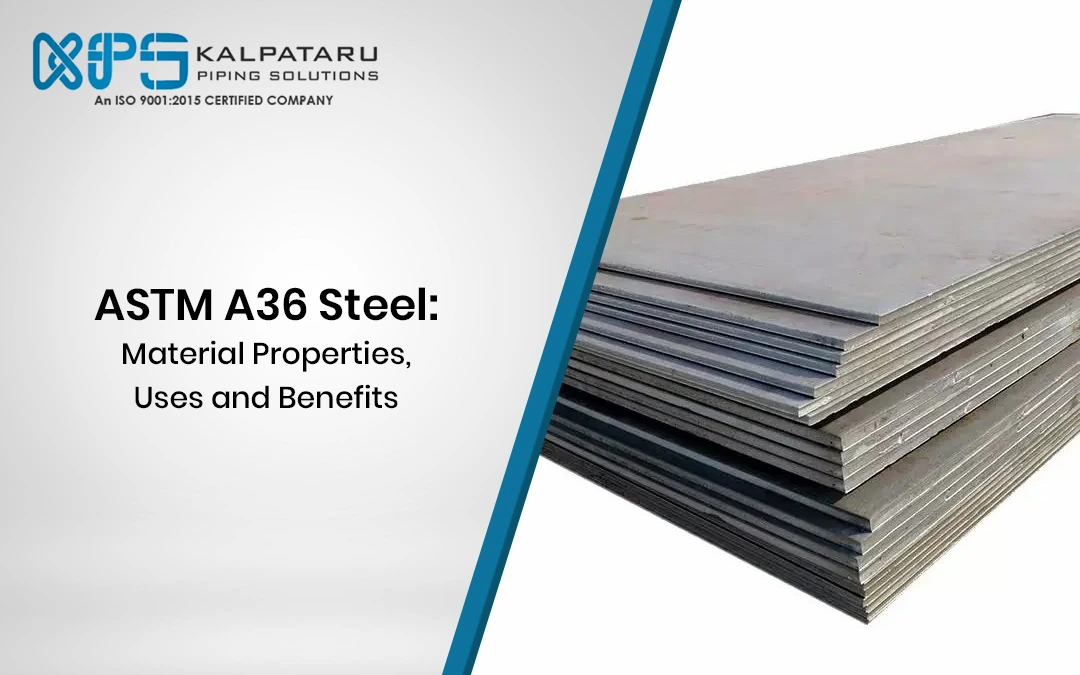
We also supply high-quality ASTM A36 Plates for structural and industrial applications.
Our Promise on Quality (Making Sure It’s Top-Notch):
- We follow strict ISO-certified inspection rules.
- We use tests like ultrasound and X-rays to look for any hidden problems.
- Need something custom? We can make parts exactly to your drawings and industry standards.
Fabrication and Welding Techniques for ASTM A36 Steel Pipes (How It’s Put Together)
The good news about A36 material properties is that welding it is pretty straightforward. Common ways to weld it include:
- Shielded Metal Arc Welding (SMAW – often called “Stick” welding)
- Gas Tungsten Arc Welding (GTAW – or “TIG” welding)
- Flux Cored Arc Welding (FCAW)
How Kalpataru Makes Sure Welds Are Solid:
- We have official, written plans for how we weld (these are called PQRs).
- Our welders are properly tested and qualified (WQT).
- We follow the rulebooks, like ASME Section IX and AWS D1.1.
Tips for Installing in the Field:
- If you’re welding thicker pieces of A36, make sure to preheat them.
- Try not to let the welds cool down too quickly, especially in the cold, as this can make them brittle.
- Once everything’s installed, get those protective coatings on quickly.
How to Choose the Right ASTM A36 Steel Pipe for Your Project (Making the Smart Choice)
When you’re picking A36 steel for your pipes, think about these things:
- How much pressure and heat will it face?
- Does it need to resist rust? If so, how much?
- How strong do the welded joints need to be?
- What’s the best way to make the parts, and how soon do you need them?
The team here at Kalpataru has engineers who can chat with you about your project and help you pick the A36 steel material properties that will work best. Don’t hesitate to ask!
Sustainability and Environmental Responsibility (Thinking Green)
We all want to do our part for the planet. Here’s how ASTM A36 steel and Kalpataru Piping fit in:
- A lot of A36 steel is made from recycled steel – which is great!
- At our workshops, we focus on using energy efficiently.
- We work hard to reduce waste and recycle any leftover steel.
Plus, the fact that A36 steel is so easy to recycle makes it a good environmental choice for any building project.
Current Market Price of ASTM A36 Steel (A Rough Idea of Cost)
The price of ASTM A36 steel does move around a bit. It usually sits somewhere between INR 58 to INR 75 per kg (that was a general idea around Q2 2025 – always best to check current prices). What makes it change?
- How much steel is in demand worldwide.
- The cost of the raw stuff needed to make it (like iron ore).
- Shipping costs.
- Changes in money exchange rates.
At Kalpataru Piping, we work to get you competitive prices. We can also offer discounts if you’re buying in bulk and we’re pretty good at getting things to you on time.
Conclusion (So, What’s the Bottom Line?)
To sum it up, ASTM A36 steel is a real workhorse. It gives you a great mix of strength, it’s easy to work with, and it’s good value for money. That’s why it’s a trusted choice for so many different piping and structural jobs in all sorts of industries. When it’s chosen right and handled properly, it just performs.
Kalpataru Piping is proud to be a supplier you can trust for quality-checked, certified A36 steel products. We’re not just about selling steel; we’re here to offer our know-how and make sure your projects get the best material solutions.
Give us a call or drop us a line today! We’re here to help with expert advice, technical details, and custom ASTM A36 piping solutions for your job.