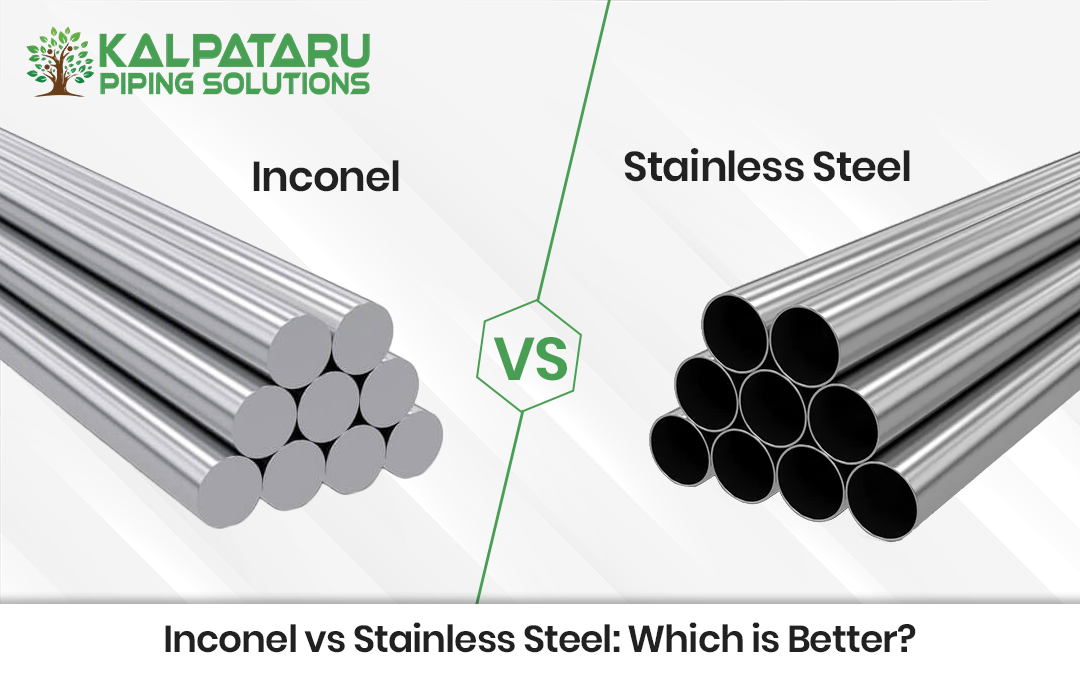
One of the most crucial decisions to make is the choice of the metal when it comes to the production of high-performance parts. Carbon steel could be used in low cost applications and more demanding environment needs metals that can withstand extreme conditions. With such reasons in mind, one will find the comparison of stainless steel vs Inconel to be the most significant. Both alloys are characterized by their durability, strength and resistance to corrosion, however, they are applicable in various applications. The knowledge on the distinction between Inconel and stainless steel will assist the engineers to choose the appropriate material depending on the project requirements.
In this article, we will explore the key properties, applications & advantages of Inconel Products & Stainless Steel Products for helping you determine which alloy is best suited for your specific industrial needs.
Why Comparing Inconel vs Stainless Steel Can Be Difficult?
The comparison between stainless steel and Inconel is largely relied on its composition since both alloys are available in various grades and formulations. There are many types of stainless steel which differ in tensile strength, corrosion resistance and the recommended operating temperatures. An example is SS 316 which is more resistant to chlorides than SS 304 but tends to be more expensive.
Likewise, the behavior of Inconel alloys may vary in relation to its grade and processing. As an illustration, an as-rolled bar of Inconel 625 120160 ksi (8271103 Mpa) has a tensile strength, as compared to a solution-treated bar with an 103130 ksi (714896 Mpa) tensile strength. These ranges are possible since even a slight variation in composition such as nickel, carbon or iron content can have a great influence on strength.
Difference Between Inconel & Stainless Steel
Here’s a comparison of two popular grades of Inconel and stainless steel materials to learn more about which one is more stronger?
| Property | Inconel 625® | 304 Stainless Steel |
| Tensile Strength | 103–160 ksi (714–1,103 MPa) | 73.2 ksi (505 MPa) |
| Melting Point | 2,350–2,460°F (1,290–1,350°C) | 2,550–2,650°F (1,400–1,455°C) |
| Maximum Operating Temperature | 1,800°F (982°C) | 1,697°F (952°C) |
| Corrosion Resistance | Excellent against high-temperature oxidation and many acids | Excellent all-around, but weaker against chlorides and high-temp oxidation |
From this comparison, it’s clear that Inconel 625 maintains higher strength at elevated temperatures and offers superior oxidation resistance. While its melting point is slightly lower than that of 304 stainless steel, its high-temperature performance is stronger due to its structural stability and resistance to scaling.
For assistance in selecting the right metal alloy for your project, including Inconel products, stainless steel prodcuts, contact us for complete guidance and technical support.
Inconel vs Stainless Steel: Comparing Key Properties
Inconel and stainless steel are two widely used metals, each offering unique advantages and limitations. This comparison below will highlight how each alloy performs in terms of high-temperature strength, corrosion resistance, machinability, cost, and common grades, making it easier to choose the right material for your application.
| Property | Inconel | Stainless Steel | Key Takeaway |
| High-Temp Strength | Excellent, maintains integrity up to 1093°C (2000°F) | Good, but strength drops significantly above 870°C (1600°F) | Inconel is the clear choice for extreme heat applications. |
| Corrosion Resistance | Superior, especially against acids, saltwater, and chlorides | Good general resistance, but vulnerable to specific corrosives | Inconel excels in harsh chemical and marine environments. |
| Machinability | Difficult; work-hardens quickly, requires specialized tooling | Generally easy to machine, especially austenitic grades | Stainless steel is far more fabrication-friendly. |
| Common Grades | 625, 718, 600 | 304, 316, 410 | Grade selection depends on the specific performance requirements. |
Inconel vs Stainless Steel Cost: Understanding the Difference
When it comes to cost, a noticeable distinction exists between Inconel and stainless steel. Inconel is a premium alloy that typically requires a higher investment due to its superior strength, corrosion resistance & performance in extreme conditions. In contrast, stainless steel provides a more affordable option for applications where such high-performance properties are not essential.
Understanding the Applications: Stainless Steel vs Inconel
It is made of stainless steel alloy and is resistant to corrosion, easy to maintain and is therefore suitable in construction projects like structural frameworks, roofing, bridges, and architectural facades. It is commonly applied in the medical sector in surgical tools, implants and medical devices because it is biocompatible and can be sterilized. Moreover, stainless steel has wide use in food and beverage sector in tanks, pipelines, and utensils; in automotive and transportation industries such as exhaust systems, engine parts, and structural components.
Conversely, Inconel alloys are designed to withstand high temperatures, are more heat-resistant, corrosive, and oxidative. This renders them essential in the aerospace industry in gas turbine blades, jet engines parts, exhaust systems and combustion chambers. Inconel is applied in the oil and gas industry in downhole tools, oil and gas wellhead components, and oil and gas offshore drilling equipment that are required to withstand harsh and corrosive conditions. It is also used in chemical processes, nuclear reactor, and also in the marine setting where the ability to withstand high temperature and corrosive conditions is of paramount importance.
Frequently Asked Questions About Inconel Vs Stainless Steel
How does Inconel 718 compare to 316 stainless steel?
Inconel 718 performs better than 316 stainless steel due to high-temperature strength and corrosion resistance. It also offers superior resistance to oxidation and scaling.
Should I choose Inconel 600 or stainless steel 304?
Stainless steel 304 is a versatile, cost-effective choice for general applications, while Inconel 600 excels in harsh conditions involving high heat, chemicals, or corrosive environments.
Is Inconel more expensive than stainless steel?
Yes, Inconel is significantly more expensive than stainless steel due to its high nickel content and complex manufacturing processes.
What makes Inconel better than stainless steel?
Inconel offers superior corrosion resistance and strength at high temperatures compared to stainless steel. However, at lower temperatures, certain steels like 17-4PH stainless may provide higher strength.