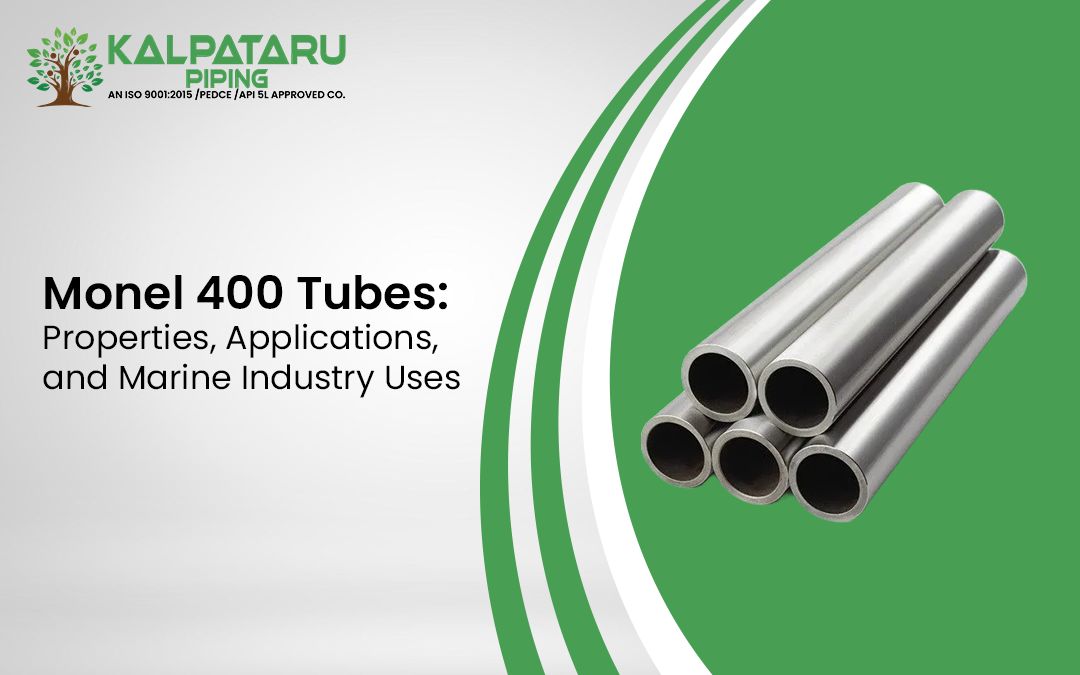
Even in cases where engineers and purchasing departments are in need of tubing materials that can endure the worst corrosive conditions on the planet, there is always one alloy that will be at the top of the list, that is Monel 400 tubes. A solid-solution-strengthened nickel-copper alloy made by mixing about 63 to 67 percent nickel with about 28 to 34 percent copper, Monel 400 (UNS N04400, DIN 2.4360) has been in service in industry with demanding applications since its commercial availability in 1905. Its long-term success is not by chance. The alloy provides an outstanding combination of corrosion, high mechanical strength, and temperature stability which few engineering materials are capable of.
Monel 400 is used in tubular shape in heat exchangers, offshore pipelines, chemical processing and in a variety of marine structures where it is an invaluable part of the construction. Whether you are getting tubing to a desalination facility, a subsea umbilical or a hydrofluoric acid processing unit, it is necessary to learn the Monel 400 tube properties and Monel 400 tube applications before making a material selection choice.
This guide brings together the key technical data, standard specifications, application insights, and industry-specific guidance you need. For a broader overview of available product forms, visit our dedicated page on Monel 400 Pipes and Tubes, or explore the full Monel Alloy Properties, Grades, and Composition guide.
What Is Monel 400?
Monel 400 is a binary-dominant nickel-copper alloy that is only strengthened by solid-solution strengthening and cold working. It does not harden to a heat treatment like the more difficult to fabricate, heat-treated Monel K-500, making it easier to fabricate and to weld. The alloy was first invented by the International Nickel Company (INCO) and was named after the name of the then president of the company, Ambrose Monell, who commercialised it.
Monel 400 being a single-phase alloy has a uniform microstructure throughout its composition range, providing a uniform corrosion resistance across the entire cross-section of a tube. This feature is especially valuable in tubing applications where uniformity of the wall is directly proportional to the service life.
Chemical Composition of Monel 400 Tubes
The table below details the nominal chemical composition per ASTM B165 / UNS N04400 for Monel 400 seamless tubing:
| Element | Min (%) | Max (%) | Typical (%) |
| Nickel (Ni) | 63.0 | 70.0 | 65.0 |
| Copper (Cu) | 28.0 | 34.0 | 31.5 |
| Iron (Fe) | 0 | 2.5 | 1.2 |
| Manganese (Mn) | 0 | 2.0 | 1.0 |
| Silicon (Si) | 0 | 0.5 | 0.15 |
| Carbon (C) | 0 | 0.3 | 0.12 |
| Sulfur (S) | 0 | 0.024 | 0.005 |
The high nickel fraction (minimum 63 percent) imparts outstanding resistance to reducing media and to seawater across a broad range of flow velocities. Copper enhances performance against non-oxidising acids and plays a critical role in hydrofluoric acid resistance. Small additions of iron and manganese contribute to overall solid-solution strengthening without compromising corrosion performance.
Monel 400 Tube Properties
Mechanical Properties
The mechanical properties of Monel 400 tubes vary depending on the condition of supply (annealed or cold-drawn). The values below are representative for annealed seamless tubing per ASTM B165:
| Mechanical Property | Typical Value (Annealed) |
| Tensile Strength (UTS) | 480 MPa (70 ksi) min |
| Yield Strength (0.2% Offset) | 170 MPa (25 ksi) min |
| Elongation at Break | 35% min |
| Hardness (Brinell) | 110 to 150 HB |
| Modulus of Elasticity | 179 GPa (26 x 10^6 psi) |
Cold-drawn or pilger-worked tubing achieves significantly higher tensile and yield strengths, making it the preferred choice where pressure ratings or thinner walls are required.
Physical Properties
| Physical Property | Value |
| Density | 8.83 g/cm3 (0.319 lb/in3) |
| Melting Range | 1300 to 1350 degrees C (2370 to 2460 F) |
| Thermal Conductivity | 21.8 W/m.K at 100 degrees C |
| Specific Heat Capacity | 427 J/kg.K |
| Coefficient of Thermal Expansion | 13.9 x 10^-6 /K (20 to 100 C) |
| Electrical Resistivity | 547 nOhm.m at 20 degrees C |
| Magnetic Permeability | Essentially non-magnetic (annealed) |
Temperature Performance
One of the defining strengths of Monel 400 in tubular applications is its extraordinary service temperature range. The alloy retains excellent toughness at cryogenic temperatures down to -196 degrees C (-321 degrees F), making it suitable for LNG and liquid nitrogen service where many common alloys undergo a ductile-to-brittle transition. At the upper end, Monel 400 tubes can be used continuously up to approximately 538 degrees C (1000 degrees F) before oxidation and sulphidation resistance become limiting factors. This wide operating window means that a single alloy can serve both cryogenic and elevated temperature duties within the same plant.
Standards and Specifications for Monel 400 Tubes
Monel 400 tubes are manufactured and tested to a range of international standards. Engineers and procurement teams should always request mill test reports (MTRs) confirming the relevant standard, UNS number, heat number, actual chemical analysis, and mechanical test results.
| Standard / Code | Designation | Scope |
| ASTM B165 | UNS N04400 | Seamless Ni-Cu alloy pipe and tube |
| ASME SB165 | UNS N04400 | Boiler and pressure vessel code equivalent |
| ASTM B725 | UNS N04400 | Welded Monel alloy pipe |
| ASTM B829 | UNS N04400 | General requirements for Ni-Fe-Cr alloy tubes |
| AMS 4674 | N04400 | Aerospace tubing specification |
| DIN 2.4360 / 2.4361 | WNR | European material designation |
| NACE MR0175 / ISO 15156 | Sour Service | H2S environment qualification |
At Kalpataru Piping, every Monel 400 tube supplied is traceable to the relevant ASTM, ASME, or DIN standard. We offer third-party inspection and full material certification on request. Learn more about the full range of available forms on our Monel 400 Pipes and Tubes Supplier page.
Types of Monel 400 Tubes Available
Seamless Monel 400 Tubes
Produced without a welded seam, seamless tubes offer the highest integrity for pressure-critical and corrosion-critical service. They are the preferred choice for heat exchanger tubing, chemical reactor circuits, and marine seawater lines. Seamless tubes are manufactured by hot extrusion followed by cold drawing or pilgering to achieve final dimensions and mechanical properties.
Welded Monel 400 Tubes
Welded tubes are formed from strip or plate and seam-welded using inert-gas welding processes. They are generally more economical and are suitable for lower-pressure applications, venting lines, and instrumentation service. Weld quality must be verified by hydrostatic or eddy-current testing before despatch.
Instrumentation and Capillary Tubes
Tight-tolerance instrumentation tubing is available in small outside diameters and precisely controlled wall thicknesses for hydraulic control lines, chemical injection lines, and subsea umbilical systems. The non-magnetic nature of Monel 400 makes it particularly attractive for instrument tube applications where magnetic interference must be avoided.
U-Bend and Custom-Fabricated Tubes
For shell-and-tube heat exchanger construction, U-bend tubes in Monel 400 are supplied pre-bent to the customer’s radius specifications. Custom fabricated tubes in cut-to-length, coiled, or special section formats are also available to project drawings.
Corrosion Resistance of Monel 400 Tubes
The corrosion resistance profile of Monel 400 is one of the most comprehensive of any commercial engineering alloy. Key performance characteristics include:
- Seawater and Brine: Monel 400 resists pitting, crevice corrosion, and biofouling in both flowing and stagnant seawater. In flowing seawater conditions up to approximately 30 m/s, corrosion rates are negligible, making it ideal for offshore and marine tubing systems.
- Hydrofluoric Acid: Monel 400 is one of only a small number of engineering alloys that can handle unaerated hydrofluoric acid (HF) across all concentrations and up to boiling point. This makes Monel 400 tubes essential in alkylation and HF processing plants.
- Non-Oxidising Acids: Good resistance to dilute sulphuric acid and hydrochloric acid under reducing conditions. Performance drops significantly in oxidising acid environments.
- Alkalis and Caustic Solutions: Excellent resistance to concentrated and dilute sodium hydroxide and potassium hydroxide over a broad temperature range.
- Chloride Stress Corrosion Cracking (SCC): Monel 400 is essentially immune to chloride-induced SCC that frequently attacks austenitic stainless steels, making it a preferred substitute in high-chloride service.
- Limitation: Monel 400 is susceptible to SCC in moist aerated hydrofluoric acid and in the presence of mercury. These media require additional engineering controls or alternative alloy selection.
For a deep-dive into alloy chemistry and corrosion mechanisms, refer to our comprehensive resource on
Monel Alloy Properties, Grades, and Composition.
Monel 400 Tube Applications Across Industries
Here is the condensed version with all six points matching the shorter paragraph format:
Monel 400 Tube Applications Across Industries
1. Marine and Offshore Industry
Marine environments combine seawater corrosion, mechanical loading, biofouling, and temperature cycling, making material selection critical. Monel 400 tubes are widely specified in seawater cooling circuits, condenser and heat exchanger tubing, desalination plant tubing, subsea chemical injection lines, and saltwater piping on FPSOs and offshore platforms. Unlike stainless steels, which are prone to crevice attack and biofouling in slow-moving seawater, Monel 400 resists both, reducing maintenance intervals and extending service life.
2. Chemical and Petrochemical Processing
Chemical plants handling aggressive acids, alkalis, and solvents rely on Monel 400 tubes for their resistance to multi-phase corrosive attack. The alloy is commonly used in heat exchangers for hydrofluoric acid alkylation units, distillation column condensers and reboilers, sulphuric acid reactor tubing, chlorine gas and chlorinated solvent piping, and chemical injection and sampling lines in refineries.
3. Oil and Gas Industry
Monel 400 tubes are valued in oil and gas service for their sour service capability and resistance to chloride stress corrosion cracking across upstream, midstream, and downstream operations. Typical applications include downhole and wellhead tubing, subsea umbilical tubes, chemical injection lines, and heat exchanger tubing in gas processing and cryogenic LNG facilities. Note: Use in H2S environments requires qualification to NACE MR0175/ISO 15156. For complementary machined components such as valve stems and pump shafts, explore our range of Monel 400 Round Bars.
4. Power Generation
Power plants, both thermal and nuclear, use Monel 400 tubes in boiler feedwater heaters, steam generators, and condenser tubing where prolonged exposure to hot water, steam, and treatment chemicals demands a corrosion-resistant material that is also workable and weldable.
5. Aerospace and Defence
The combination of high strength-to-weight performance, non-magnetic character, and resistance to aviation fuels and hydraulic fluids makes Monel 400 tubes a specified material in aerospace fuel systems, hydraulic lines, and structural components in naval and defence platforms.
6. Food Processing and Pharmaceutical
Monel 400 resists organic acids and caustic cleaning solutions encountered in food and beverage processing. Its surface finish and corrosion resistance ensure product purity in heat exchangers and transfer lines handling food-grade materials.
Marine Industry Uses
The marine industry is arguably the sector where Monel 400 tubes deliver their most compelling value proposition. Seawater is one of the most corrosive natural environments known to engineers, combining high chloride concentration, dissolved oxygen, biological activity, and variable flow velocities. A material that performs reliably in this environment across a 25 to 30 year asset life significantly reduces total cost of ownership compared with alternatives that require frequent replacement or coating maintenance.
Desalination Plants
Multi-stage flash (MSF) and reverse osmosis (RO) desalination plants handle vast volumes of seawater at temperatures up to 120 degrees C. The heat exchanger tube bundles within MSF evaporators are among the most corrosion-challenged components in industrial service. Monel 400 tubes are routinely specified for this duty because they resist both the bulk seawater corrosion and the localised pitting that can occur at tube sheet crevices. Their resistance to biofouling further reduces the need for biocide dosing or mechanical cleaning.
Naval Vessel Cooling Systems
Surface combatants, submarines, and support vessels rely on continuous seawater cooling to maintain machinery temperatures within operating limits. The cooling water circuits pass seawater through heat exchangers in contact with engine cooling jackets, hydraulic oil coolers, and air conditioning chillers. Monel 400 tubes, used in these heat exchangers, eliminate the localised corrosion failures that occur with copper-nickel or aluminium-brass alternatives when seawater velocities or temperatures exceed those materials’ limits.
Offshore Platform Seawater Lift and Injection Systems
Offshore oil and gas platforms lift large volumes of seawater for firewater, cooling, and waterflooding injection. The seawater lift pumps, strainers, and distribution piping operate in one of the most aggressive environments imaginable: warm, biologically active seawater under continuous flow. Monel 400 tube-and-shell heat exchangers cool process streams using this seawater, and the tubing must resist both erosion-corrosion under high flow and under-deposit corrosion at low-flow regions during start-up and shutdown.
Propulsion and Shaft Systems
Propeller shaft tubing, seal housing, and stern tube liners in marine propulsion systems are exposed to both external seawater and lubricating oil on the internal bore. Monel 400 provides the corrosion resistance required on the outer wetted surface while maintaining adequate strength and dimensional stability for the tight tolerances demanded by shaft sealing systems.
Subsea Umbilicals and Control Systems
Modern subsea production systems use hydraulic control lines and chemical injection lines bundled into umbilicals that may run for tens of kilometres from a floating production unit to a seabed manifold. These lines, typically in small-bore instrumentation tube format, must resist external seawater at high pressure and internal chemical attack from hydrate inhibitors, corrosion inhibitors, and scale inhibitors. Monel 400 capillary and instrumentation tubes are a proven solution for this demanding service.
How to Select the Right Monel 400 Tube for Your Application
Making the right tube specification decision requires consideration of several factors:
- Service Environment: Define the corrosive media (seawater, acid type, alkali, gas), concentration, temperature, and flow velocity. This determines whether the standard annealed grade or a cold-worked variant is required.
- Pressure Rating: Select wall thickness based on the maximum allowable working pressure (MAWP) per ASME B31.3 or applicable code. Thicker-wall or cold-drawn tubes will be required for high-pressure service.
- Tube Form: Seamless tubes for pressure-critical and corrosion-critical service; welded tubes for lower-pressure and instrumentation applications.
- Standards Compliance: Specify ASTM B165 for seamless tubes, ASTM B725 for welded tubes, or AMS 4674 for aerospace service. Confirm material certification requirements.
- Finish Requirements: Heat exchanger tubing often requires a bright annealed finish for optimum surface quality and fouling resistance. Instrumentation tubes may require pickled or mechanically polished finishes.
- Third-Party Inspection: For safety-critical service, specify independent inspection to API, ASME, or Lloyd’s Register requirements.
Our technical team at Kalpataru Piping is available to assist with material selection, specification review, and sourcing across our full range of Monel products. For structural components to complement your tube procurement, our Monel 400 Round Bars page details available sizes and forms for machined components.
Explore our complete Monel product range including Monel 400 Pipes and Tubes, Monel 400 Round Bars, and detailed alloy information on the Monel Alloy Properties, Grades, and Composition page.
Trust Kalpataru Piping for your Monel 400 Tubes Requirement
Monel 400 tubes represent one of the most proven and reliable material choices for corrosion-resistant tubing service across marine, chemical, oil and gas, and power generation industries. Their unique combination of seawater corrosion resistance, HF acid immunity, chloride SCC resistance, wide service temperature range, and excellent weldability positions them as the preferred tubing material wherever standard alloys fall short.
Whether your application demands seamless heat exchanger tubing for a naval vessel cooling system, instrumentation-grade capillary tubes for a subsea umbilical, or large-bore welded tubes for an offshore seawater lift system, Kalpataru Piping has the stock, the certification capability, and the technical expertise to support your project.
Contact us today for a competitive quote or to discuss your specific requirements. You can also explore our full range of Monel 400 products including Monel 400 Pipes and Tubes, Monel 400 Round Bars, and our in-depth guide to Monel Alloy Properties, Grades, and Composition.
Frequently Asked Questions About Monel 400 Tubes
What is Monel 400 tube used for?
Monel 400 tubes are used primarily in heat exchangers, seawater cooling circuits, desalination plants, chemical processing lines handling HF acid and other aggressive media, oil and gas chemical injection systems, subsea umbilicals, and a broad range of marine structural applications. Their outstanding corrosion resistance and wide operating temperature range make them a versatile solution for demanding service.
What are the key Monel 400 tube properties?
The defining properties are: excellent corrosion resistance in seawater and reducing acids; immunity to chloride stress corrosion cracking; operating range from cryogenic (-196 degrees C) to elevated temperature (538 degrees C); high tensile strength; good ductility and weldability; and essentially non-magnetic behaviour in the annealed condition.
What is the difference between Monel 400 and Monel K-500 tubes?
Monel K-500 is a precipitation-hardened variant of Monel 400 that achieves significantly higher tensile and yield strengths through the addition of aluminium and titanium and a controlled age-hardening heat treatment. For applications requiring higher strength, such as pump shafts or drill collars, Monel K-500 is preferred. For standard corrosion-resistant tubing service, Monel 400 is the economical and practical choice.
What standard covers Monel 400 seamless tubes?
The primary standard for Monel 400 seamless tubes and pipe is ASTM B165 (and its ASME equivalent SB165). Other relevant standards include ASTM B725 for welded pipe and AMS 4674 for aerospace tubing.
Is Monel 400 magnetic?
Monel 400 is essentially non-magnetic in the annealed condition. Cold working can introduce a minor magnetic response, but this is generally not a concern for standard industrial applications. Its non-magnetic nature is an advantage in sensitive instrumentation and certain defence applications.
Can Monel 400 tubes be welded?
Yes. Monel 400 tubes can be welded using TIG (GTAW), MIG (GMAW), and stick (SMAW) welding processes. The use of matching Ni-Cu filler metal, inert gas shielding, and controlled heat input is essential to achieve sound, corrosion-resistant welds. Pre-heating is generally not required in the standard annealed condition.
How does Monel 400 compare to 316L stainless steel in seawater service?
Monel 400 substantially outperforms 316L stainless steel in seawater and chloride-containing environments. While 316L can suffer pitting, crevice corrosion, and chloride SCC in marine service, Monel 400 is essentially immune to these failure modes, providing a much longer and more predictable service life.
Is Beryllium Copper C17200 the Right Alloy for Your Application?
Beryllium copper C17200, also known as UNS C17200, Alloy 25, and BeCu 25, stands unchallenged as the highest strength available of all the most common commercially available precipitation-hardenable copper alloys. Its tensile strength up to 212 ksi in the form of wire, beryllium copper hardness of up to RC 45, beryllium copper conductivity of 22% IACS in the peak-aged condition, excellent fatigue life, and excellent corrosion resistance all add up to a material that engineers turn to when nothing else will do.
The list of applications of the C17200 is immense starting with electrical connectors, current carrying springs, non-sparking oilfield tools, precision plastic injection molds, aerospace firing pins and the list goes on and on as engineers find more ways of using this special alloy. Knowing the material property of C17200, composition to temper and fabrication practice – helps procurement teams and design engineers to confidently specify C17200 and achieve its maximum performance potential.
Sourcing C17200 from Kalpataru Piping
If this guide has helped clarify the properties and potential of Alloy 25, Kalpataru Piping’s dedicated C17200 page covers available forms, tempers, and applicable specifications in one place.
Explore the full range: Beryllium Copper C17200 — Forms & Specifications.
Further Reading from Kalpataru Piping