
Latest Blogs
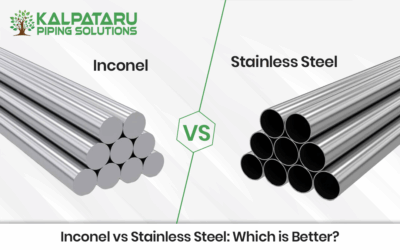
Inconel vs Stainless Steel: Which is Better?
One of the most crucial decisions to make is the choice of the metal when it comes to the production of high-performance parts. Carbon steel could be used in low cost applications and more demanding environment needs metals that can withstand extreme conditions. With...
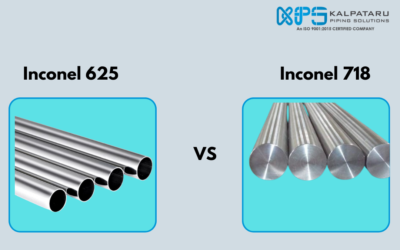
Inconel Alloy 625 Vs Inconel Alloy 718
Among nickel-based superalloys, the decision between Inconel 625 and Inconel 718 may be the most crucial one that an engineer will have to make. Although they are members of the same family, the atomic structure and performance properties of the two are radically...
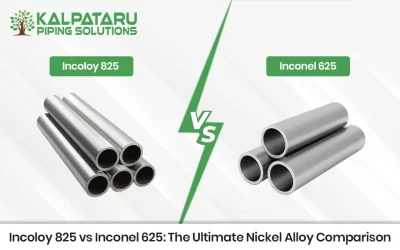
Incoloy 825 vs Inconel 625: The Ultimate Nickel Alloy Comparison
Incoloy 825 vs Inconel 625 is considered to be one of the most popular material selection choices in marine industry in oil and gas, chemical processing and engineering. They are both good corrosion alloys, both nickel-based, although they cannot be interchanged....
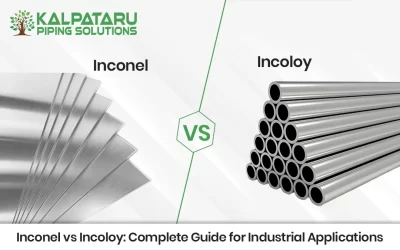
Inconel vs Incoloy – Comprehensive Guide for Engineers, Procurement, and Industrial Applications
One of the most frequent specification choices that engineers and procurement teams make when specifying nickel alloy bearings is between Inconel vs Incoloy. Both alloy families use nickel as a base element and that is as far as the similarities go. Inconel and...
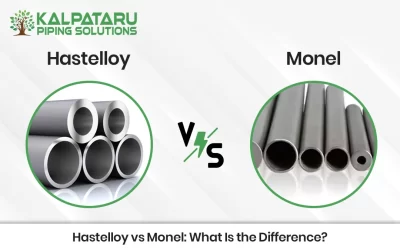
Hastelloy vs Monel: What Is the Difference?
Nickel-based alloys play a crucial role in industries that demand materials resistant to corrosion, oxidation, and extreme temperatures. Amongst these, Hastelloy and Monel stand out for their exceptional performance, yet they serve different purposes due to their...

Monel 400 Welding Guidelines: Wires, Processes & Best Practices
Monel 400 is a nickel copper alloy (UNS N04400) with roughly 63 % Ni and 28–34 % Cu, plus small amounts of iron, manganese, carbon & silicon. This chemistry gives it exceptional corrosion resistance, high strength across a wide temperature range and toughness even at...

Monel 400: Properties, Applications & Benefits
Since its commercial introduction in 1905, Monel 400 (UNS N04400, DIN 2.4360) is a nickel-copper binary alloy which has found applications in the most demanding industrial environments. Its nearly 70 percent nickel content and about 30 percent copper content provides...

Inconel Grades for Industrial Applications
Inconel products are made from nickel-chromium superalloys, designed for use in applications where ordinary steels would fail. When exposed to high temperatures, Inconel materials creates an oxide protective layer providing an increased level of resistance to...
Inconel Material: Grades, Properties, Composition & Applications
In industrial applications where components repeatedly experience extreme heat, strong corrosion & high mechanical stress. Inconel material is arguably the most reliable & best performing alloy available. Consisting mainly of nickel & chromium, Inconel is...
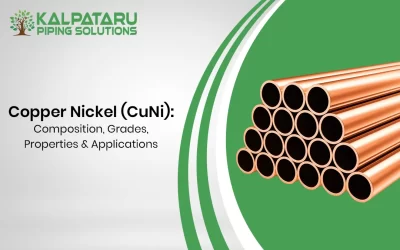
Copper Nickel (CuNi): Composition, Grades, Properties & Applications
Copper Nickel (CuNi) alloys are binary or modified alloys of copper and nickel that form a complete solid solution across the full composition range. Two grades dominate industrial use: Copper Nickel 90/10 (UNS C70600) and Copper Nickel 70/30 (UNS C71500). Both are...