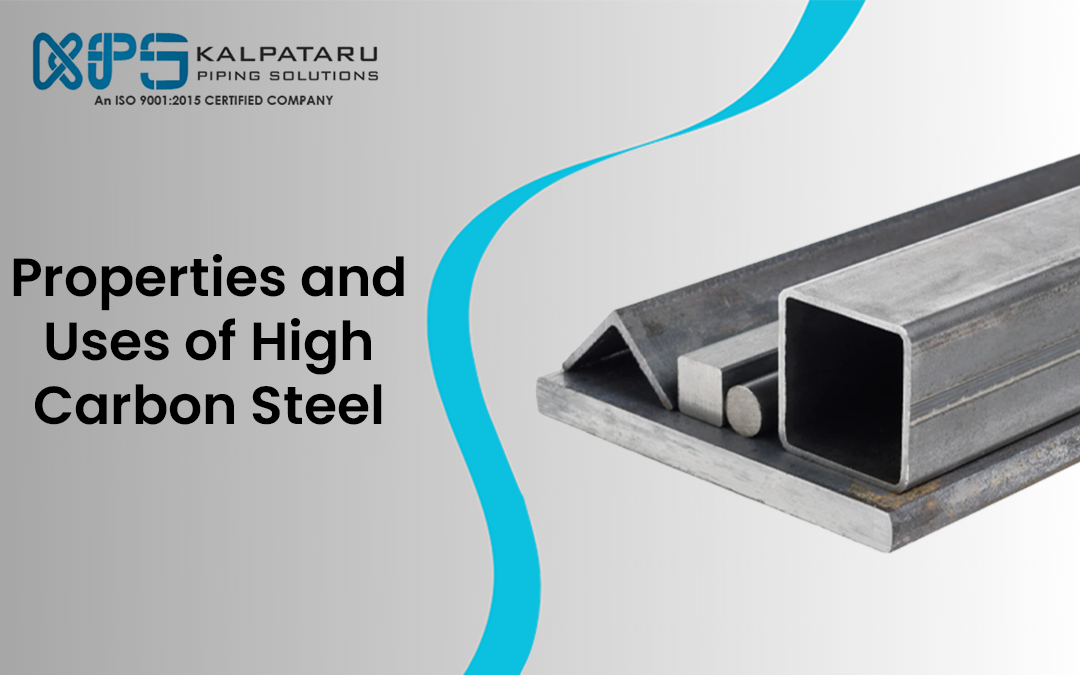
High-carbon steel is known for having a lot of carbon in its composition, which gives it impressive strength and hardness. This makes it tough and resistant to wear and corrosion, meaning it can handle a lot of pressure without breaking. Because of these qualities, high-carbon steel is often seen as a great value for its performance.
In this blog, we’ll explore the properties of high-carbon steel, how it’s produced, and the different ways it is used in various industries by designers and engineers. Let’s dive in!
What is High Carbon Steel?
High-carbon steel, also called carbon tool steel or M2, contains more than 0.6% carbon. If the carbon content is lower than this, it falls into the medium or low-carbon categories. If it exceeds 1.0%, it is classified as ultra-high-carbon steel. The composition of high-carbon steel is straightforward: it typically consists of 0.60–1.00% carbon, 98.1–99.1% iron, and 0.30–0.90% manganese.
Like other types of steel, high-carbon steel is produced by melting recycled steel or pig iron to eliminate impurities. Then, alloying elements are added before casting or extruding. When molten steel cools, it tends to release carbon. To prevent this, the steel is rapidly cooled, or quenched, to preserve the carbon within its structure. This process helps enhance the steel’s strength and hardness.
Types of High-Carbon Steel
There are four main categories of high-carbon steel:
- Alloyed High-Carbon Steel – This type includes additional elements like chromium, cobalt, manganese, molybdenum, nickel, tungsten, and vanadium. These elements enhance hardness, strength, toughness, and resistance to heat and corrosion. However, this also increases the cost. Stainless steel is a common example of alloyed high-carbon steel.
- Spring Steel – With a carbon content of 0.6–1.0%, spring steel often contains varying amounts of other alloying elements, particularly silicon. This composition gives it high yield strength and flexibility, making it ideal for applications where elasticity is essential.
- Plain Carbon Steel – Often considered the basic type, plain carbon steel contains no significant alloying elements. While it is the most affordable option, it is challenging to weld, has limited elongation, and is sensitive to heat treatments.
- Tool Steel – This type is alloyed with elements like tungsten, molybdenum, cobalt, and vanadium, making it very durable. Tool steel also offers excellent heat resistance, preventing it from tempering at high temperatures, which is essential for tools and cutting instruments.
High Carbon Steel Uses
High-carbon steel is widely used in everyday items and various industries due to its strength and durability.
- Household Items – You’ll find high-carbon steel in appliances like refrigerators and dishwashers as hidden fasteners, as well as in toys and lawn equipment.
- Automotive Industry – This steel is popular for vehicle components, including frames, chassis, and fuel rail clamps. High-carbon steel clips secure parts like car radios and backup sensors.
- Manufacturing and Construction – Essential for making cutting tools, springs, and fasteners, high-carbon steel is also used in medical equipment, ensuring durability in critical applications.
- Retail Applications – Look for high-carbon steel in pant hangers and clips used to hold bags of chips in stores.
Overall, high-carbon steel is an important material in various everyday products and industrial applications.
Chemical Composition of High-Carbon Steel
High-carbon steel has a straightforward chemical composition. It typically contains 0.60-1.00% carbon and 0.30-0.90% manganese, with the rest being iron, making up 98.1-99.1% of the composition. The table below provides a detailed breakdown
| Element | Content |
| Iron | 98.10 – 99.10% |
| Carbon | 0.60 – 1.00% |
| Manganese | 0.30 – 0.90% |
High Carbon Steel Properties
High carbon steel is often chosen for its outstanding strength and excellent resistance properties. It also has some ductility, meaning it can deform without breaking.
A distinctive feature of high carbon steel is its “memory.” This means that after being stretched, the material can return to its original shape once the force is released, reverting to its initial form.
| Property | AISI 1060 Values | AISI 52100 Values |
| Density | 7.85 g/cm² | 7.81 g/cm² |
| Yield Strength | 485 MPa | 2033 MPa |
| Hardness (Rockwell B) | 89 | 64 |
| Magnetism (Curie Point) | 770 ºC | 770 ºC |
Thermal Properties of High-Carbon Steel
| Thermal Property | Value |
| Melting Point | 1540 – 1590°C |
| Thermal Conductivity | 19.0 – 52.0 W/m·K |
| Coefficient of Thermal Expansion | 9.9 – 14.8 µm/m·°C |
| Specific Heat Capacity | 0.410 – 0.669 J/g·°C |
Advantage of High Carbon Steel
- High Hardness – The high carbon content makes high carbon steel very hard. The carbon forms strong bonds with iron, creating hard carbides that increase its hardness and strength.
- High Strength – When treated with heat processes like oil or water quenching, high carbon steel becomes even stronger and more durable.
- Good Toughness – While it is tougher than other hard steels, its toughness is not as high as that of low carbon steel.
- Wear Resistance – Due to its hardness, high carbon steel resists wear well. It’s often used for making items like hammers, blades, and needles.
- Brittleness – The high carbon content makes the steel more brittle, so it needs careful handling to avoid breaking.
How Kalpataru Piping Solution Can Help
We hope this article helped you understand high-carbon steel and its uses. For more information or assistance, feel free to contact us
Conclusion
High carbon steel stands out for its strength, hardness, and wear resistance, making it a valuable material in various industries. From household items and automotive components to manufacturing and construction applications, its unique properties make it ideal for products that require durability and strength. However, its brittleness due to high carbon content means it needs careful handling to prevent breakage. Understanding the differences between high carbon, low carbon, and stainless steel helps in choosing the right material for the right application. Whether for toughness, resistance, or flexibility, there’s a steel type suited to meet specific needs.
FAQs
What are the examples of high-carbon steels?
High carbon steels are commonly used in various applications, including forging grades, rail steels, spring steels (both flat rolled and round), pre-stressed concrete, wire rope, tire reinforcement, wear-resistant steels (such as plates and forgings), and high-strength bars.
Where is high-carbon steel used?
High-carbon steel is a versatile material that finds use in various applications, such as tools, springs, railway tracks, and wires. Although high-carbon steel is suitable for many uses, its high carbon content makes it susceptible to corrosion.
Does high-carbon steel rust?
Yes, high-carbon steel can rust. While it is more corrosion-resistant than low-carbon-content steels, it will still rust if exposed to moisture over time. Because carbon steels have a higher iron content than other types of steel, they are always at risk of oxidation and corrosion.
Can high-carbon steel melt?
Yes, high-carbon steel can melt. Its melting point ranges between 1425°C and 1540°C, which is higher than that of stainless steel.