Tantalum Products — High-Purity Sheets, Tubes, Rods & Fittings
Home > Material of Construction > Tantalum Products
India’s trusted manufacturer, supplier & exporter of ASTM-certified tantalum for chemical, aerospace, medical, and electronics industries.
✓ ASTM-certified grades ✓ Ready stock & custom sizes ✓ 100+ global clients ✓ 24-hour quote response
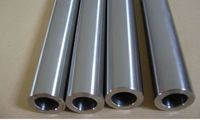
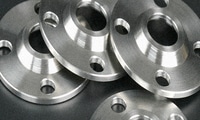
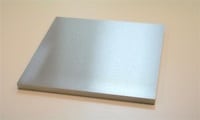
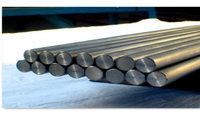
When process fluids, implants or high-temperature parts demand a metal that will not corrode, tantalum is the answer — and Kalpataru Piping supplies it certified and ready to ship. We are a specialized manufacturer and supplier of tantalum products in India and manufacture and stock high-purity tantalum sheets, plates, pipes, tubes, round bars and rods, tantalum foil, tantalum wire, and tantalum fittings for the world’s most demanding industries. Tantalum’s resistance to acids, high melting point of 3017 °C, and its ability to be biocompatible make it unreplaceable where stainless steel, titanium, and nickel alloys are not. All products are manufactured based on the international ASTM standard, using high-purity certified raw material, and subjected to independent tests for chemical composition, mechanical strength, and dimensions. Our range of heat-exchanger tubes is ready to roll, and we can also customize thicknesses and sizes and minimize upfront costs by delivering clear pricing models—plus packing them in export-grade packaging—so you can keep your project on track. Whether you’re using it in chemical processing, aerospace, medical implants, or electronics, Kalpataru Piping can provide you with tantalum that you can count on—on time—anywhere in the world.
Table of Contents
Tantalum Products We Supply
Explore our complete tantalum product portfolio. Each product is available in commercially pure and alloyed grades, in standard and custom dimensions.


Tantalum Technical Specifications
Key physical and mechanical properties of commercially pure tantalum (UNS R05200):
| Property | Value |
|---|---|
| Chemical symbol / atomic number | Ta / 73 |
| Density | 16.69 g/cm³ |
| Melting point | ≈ 3,017 °C (5,463 °F) |
| Boiling point | ≈ 5,458 °C |
| Tensile strength (annealed) | 170–330 MPa |
| Elongation | 20–40 % |
| Hardness (annealed) | 80–110 HV |
| Thermal conductivity | ≈ 57 W/m·K |
| Coefficient of thermal expansion | 6.3 µm/m·K |
| Corrosion resistance | Excellent vs most acids (except HF & oleum) |
Tantalum Products Grade & Standard Comparison
|
Grade (UNS) |
Composition |
Character |
Best for |
|---|---|---|---|
|
R05200 |
Pure Ta (EB/VAR melted) |
Ductile, weldable |
General chemical equipment |
|
R05400 |
Pure Ta (sintered) |
Fine grain |
Capacitor & electronics |
|
R05252 |
Ta-2.5% W |
Higher strength |
High-pressure vessels |
|
R05255 |
Ta-10% W |
Max strength & corrosion |
Aggressive service, aerospace |
Tantalum vs Other Corrosion-Resistant Metals
|
Property |
Tantalum |
Titanium |
Stainless Steel 316L |
|---|---|---|---|
|
Acid corrosion resistance |
Excellent (glass-like) |
Good |
Moderate |
|
Melting point |
≈ 3,017 °C |
≈ 1,668 °C |
≈ 1,400 °C |
|
Density (g/cm³) |
16.69 |
4.51 |
8.0 |
|
Biocompatibility |
Excellent |
Excellent |
Fair |
|
Relative cost |
High |
Medium |
Low |
|
Best use |
Aggressive acids, implants |
Marine, aerospace |
General industry |
Takeaway: where titanium or stainless steel corrode, tantalum survives — which is why it is the metal of choice for the harshest acid service and long-life medical implants.
Standards & Certifications
|
Standard |
Scope |
|---|---|
|
ASTM B708 |
Tantalum & tantalum-alloy plate, sheet & strip |
|
ASTM B521 |
Tantalum & tantalum-alloy seamless & welded tubes |
|
ASTM B365 |
Tantalum & tantalum-alloy rod & wire |
|
ASTM B364 |
Tantalum & tantalum-alloy ingots |
|
ASTM B560 |
Unalloyed tantalum for surgical implant applications |
|
EN 10204 3.1 |
Material Test Certificate supplied with every order |
Tantalum Products Applications & Industries Served
Tantalum’s unique property mix makes it indispensable across advanced sectors:
- Chemical Processing: Heat exchangers, condensers, reactor liners, and vessels resistant to hot acids.
- Electronics: Tantalum capacitors and foil for smartphones, computers, and gaming devices.
- Medical & Surgical: Orthopaedic implants, cranial plates, and bone repair due to biocompatibility.
- Aerospace & Defence: Jet-engine parts, missile components, and high-temperature superalloys.
- Nuclear Energy: Corrosion- and heat-resistant components for reactor environments.
- Cutting Tools & Superalloys: Improves strength and thermal stability of carbide tools.
- Optics & Coatings: Sputtering targets for lens coatings and thin-film displays.
- Renewable Energy: Specialised battery and solar-panel applications.
Manufacturing & Quality
- High-purity tantalum raw material verified on arrival for chemistry and traceability.
- Precision forming — rolling, drawing, or machining to your specification.
- In-process dimensional and surface inspection at each stage.
- Final testing: chemical composition, mechanical, hydrostatic (for tubes), and PMI.
- Export-grade marking, packing, and full documentation before dispatch.
Tantalum Products Price
The price of tantalum products depends on the product type, grade, purity, size, quantity, and current market conditions. Due to tantalum’s rarity and exceptional corrosion and heat resistance, prices are generally higher than those of stainless steel and other specialty alloys. Contact us with your required specifications to receive the latest and most competitive quotation.
FAQ’s About Tantalum Products
What products are made from tantalum?
Tantalum is manufactured into a wide range of industrial products, including pipes, tubes, sheets, plates, rods, bars, wires, fasteners, flanges, fittings, crucibles, and custom-fabricated components. These products are widely used in chemical processing, semiconductor, aerospace, medical, power generation, and electronics industries due to tantalum’s exceptional corrosion resistance and high-temperature performance.
Is tantalum resistant to all acids?
Tantalum resists almost all acids — including hydrochloric, nitric, and sulphuric — at temperatures below about 150 °C, giving it glass-like chemical inertness. The main exceptions are hydrofluoric acid, oleum (fuming sulphuric acid), and hot concentrated alkalis, which can attack it.
What is the difference between R05200 and R05252?
R05200 is commercially pure tantalum — highly ductile, easy to weld, and ideal for general chemical equipment. R05252 is a Ta-2.5% tungsten alloy that offers higher tensile strength and better performance under pressure and temperature, making it suited to more demanding structural applications.
Is tantalum stronger than steel?
Pure tantalum is not stronger than structural steel in raw tensile terms, but it dramatically outperforms steel in corrosion resistance and high-temperature stability. Its tungsten alloys (R05252, R05255) raise strength significantly while keeping tantalum’s chemical immunity.
How does tantalum compare with titanium?
Both resist corrosion, but tantalum handles far more aggressive acids and much higher temperatures (melting near 3,017 °C vs ~1,668 °C for titanium). Titanium is lighter and cheaper; tantalum is chosen when performance in harsh acids or long-term implantation is critical.