Alloy Steel Pipes and Tubes manufacturer and Supplier in India
Home > Alloy Steel Products > Alloy Steel Pipes & Tubes
Alloy steel pipes and tubes are made from a combination of iron and alloying elements like chromium, molybdenum, nickel, vanadium, etc. to enhance strength, resistance to heat, toughness and resistance to corrosion. They are made in seamless, welded, ERW and fabricated forms for high pressure and high temperature applications in demanding industrial environments. These all the materials are manufactured according to the user requirements in different grades such as P5, P9, P11, P12, P21, P22 and P91. They have excellent mechanical properties and long service life which makes them a preferred material choice for critical process systems. Kalpataru Piping is one of the reliable manufacturers and suppliers of Alloy Steel Pipes and Tubes in India and supplies the precision engineered product in various grades, size, schedule and custom specification with a tight quality control, quick delivery globally.
- Specifications
- Chemical Composition
- Mechanical Properties
- Equivalent Grades
- Heat Treatment Chart
- Wall Thickness Chart
Specifications of Alloy Steel Pipes and Tubes
|
Parameter / Feature |
Specification Details |
|
Material Specifications |
ASTM A335, ASME SA335 |
|
Dimensional Standards |
ASTM, ASME, and API |
|
Commonly Supplied Grades |
ASTM A335: Gr. P5, P9, P11, P12, P21, P22, P91 ASTM A213: T5, T9, T11, T12, T22, T91 |
|
Pipe Size Range |
1/8″ NB to 30″ NB |
|
Tubing Size Range |
1/2” OD up to 5” OD (Custom diameters also available) |
|
Outer Diameter (OD) |
6 mm – 2500 mm |
|
Wall Thickness (WT) |
1 mm – 200 mm |
|
Schedules |
SCH 20, SCH 30, SCH 40, STD, SCH 60, SCH 80, XS, SCH 120, SCH 140, SCH160, XXS |
|
Manufacturing Types |
Seamless / Fabricated |
|
Available Forms |
Round, Square, Rectangular, Hydraulic etc |
|
Standard Lengths |
Within 13500 mm (Single Random, Double Random & Cut Length) |
|
End Finishes |
Plain End, Beveled End, Threaded |
Chemical Composition of Alloy Steel Pipes and Tubes
|
Grade |
UNS Number |
Carbon (C) |
Manganese (Mn) |
Phosphorus (P) |
Sulfur (S) |
Silicon (Si) |
Chromium (Cr) |
Molybdenum (Mo) |
|
P1 |
K11522 |
0.10 ~ 0.20 |
0.30 ~ 0.80 |
0.025 max |
0.025 max |
0.10 ~ 0.50 |
— |
0.44 ~ 0.65 |
|
P2 |
K11547 |
0.10 ~ 0.20 |
0.30 ~ 0.61 |
0.025 max |
0.025 max |
0.10 ~ 0.30 |
0.50 ~ 0.81 |
0.44 ~ 0.65 |
|
P5 |
K41545 |
0.15 max |
0.30 ~ 0.60 |
0.025 max |
0.025 max |
0.50 max |
4.00 ~ 6.00 |
0.44 ~ 0.65 |
|
P5b |
K51545 |
0.15 max |
0.30 ~ 0.60 |
0.025 max |
0.025 max |
1.00 ~ 2.00 |
4.00 ~ 6.00 |
0.44 ~ 0.65 |
|
P5c |
K41245 |
0.12 max |
0.30 ~ 0.60 |
0.025 max |
0.025 max |
0.50 max |
4.00 ~ 6.00 |
0.44 ~ 0.65 |
|
P9 |
S50400 |
0.15 max |
0.30 ~ 0.60 |
0.025 max |
0.025 max |
0.50 ~ 1.00 |
8.00 ~ 10.00 |
0.44 ~ 0.65 |
|
P11 |
K11597 |
0.05 ~ 0.15 |
0.30 ~ 0.61 |
0.025 max |
0.025 max |
0.50 ~ 1.00 |
1.00 ~ 1.50 |
0.44 ~ 0.65 |
|
P12 |
K11562 |
0.05 ~ 0.15 |
0.30 ~ 0.60 |
0.025 max |
0.025 max |
0.50 max |
0.80 ~ 1.25 |
0.44 ~ 0.65 |
|
P15 |
K11578 |
0.05 ~ 0.15 |
0.30 ~ 0.60 |
0.025 max |
0.025 max |
1.15 ~ 1.65 |
— |
0.44 ~ 0.65 |
|
P21 |
K31545 |
0.05 ~ 0.15 |
0.30 ~ 0.60 |
0.025 max |
0.025 max |
0.50 max |
2.65 ~ 3.35 |
0.80 ~ 1.60 |
|
P22 |
K21590 |
0.05 ~ 0.15 |
0.30 ~ 0.60 |
0.025 max |
0.025 max |
0.50 max |
1.90 ~ 2.60 |
0.87 ~ 1.13 |
|
P91 |
K91560 |
0.08 ~ 0.12 |
0.30 ~ 0.60 |
0.020 max |
0.010 max |
0.20 ~ 0.50 |
8.00 ~ 9.50 |
0.85 ~ 1.05 |
|
P92 |
K92460 |
0.07 ~ 0.13 |
0.30 ~ 0.60 |
0.020 max |
0.010 max |
0.50 max |
8.50 ~ 9.50 |
0.30 ~ 0.60 |
Mechanical Properties of Alloy Steel Pipes and Tubes
|
Grade Class |
Tensile Strength (Min) |
Yield Strength (Min) |
Elongation (Min) |
|
P1 to P22 (Standard Ferritic) |
415 MPa |
205 MPa |
30% |
|
P91 (Creep-Resistant Class) |
585 MPa |
415 MPa |
20% |
|
P92 (High-Strength CSEF Class) |
620 MPa |
440 MPa |
20% |
Equivalent Grades of Alloy Steel Pipes and Tubes
|
ASTM / ASME Grade |
European (EN 10216-2) Equivalent |
German (DIN 17175) Equivalent |
Japanese (JIS G3462) Equivalent |
|
ASTM A335 P5 |
X11CrMo5 |
12CrMo195 |
STBA 25 |
|
ASTM A335 P11 |
13CrMo4-5 |
13CrMo44 |
STBA 23 |
|
ASTM A335 P22 |
10CrMo9-10 |
10CrMo910 |
STBA 24 |
|
ASTM A335 P91 |
X10CrMoVNb9-1 |
— |
STBA 26 |
|
ASTM A335 P92 |
X10CrMoVNb9-2 |
— (No direct equivalent) |
STBA 29 |
Heat Treatment Chart of Alloy Steel Pipes and Tubes
|
Grade |
Heat Treatment Type |
Normalizing Temperature Range °F [°C] |
Subcritical Annealing / Tempering Temperature Range °F [°C] |
|
P5 (b, c) |
Full or Isothermal Anneal |
— |
— |
|
Normalize and Temper |
— |
1250 [675] min |
|
|
Subcritical Anneal (P5c only) |
— |
1325 – 1375 [715 – 745] |
|
|
P9 |
Full or Isothermal Anneal |
— |
— |
|
Normalize and Temper |
— |
1250 [675] min |
|
|
P11 |
Full or Isothermal Anneal |
— |
— |
|
Normalize and Temper |
— |
1200 [650] min |
|
|
P22 |
Full or Isothermal Anneal |
— |
— |
|
Normalize and Temper |
— |
1250 [675] min |
|
|
P91 |
Normalize and Temper |
1900 – 1975 [1040 – 1080] |
1350 – 1470 [730 – 800] |
|
Quench and Temper |
1900 – 1975 [1040 – 1080] |
1350 – 1470 [730 – 800] |
Wall Thickness Chart of Alloy Steel Pipes and Tubes
|
OD to Wall Thickness Ratio |
Additional Permitted Ovality Tolerance |
|
OD / WT Ratio ≥ 250 |
4.0% of nominal OD |
|
OD / WT Ratio 100 to 250 |
3.0% of nominal OD |
|
OD / WT Ratio 50 to 100 |
2.0% of nominal OD |
|
OD / WT Ratio < 50 |
Under standard limits |
Types of Alloy Steel Pipes and Tubes
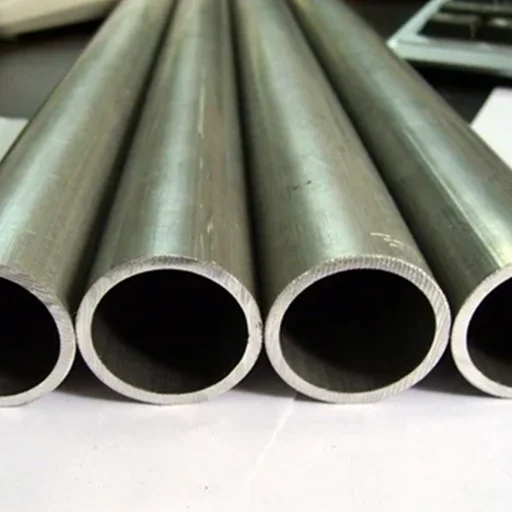
Alloy Steel P9 Pipes and Alloy Steel P9 Tubes
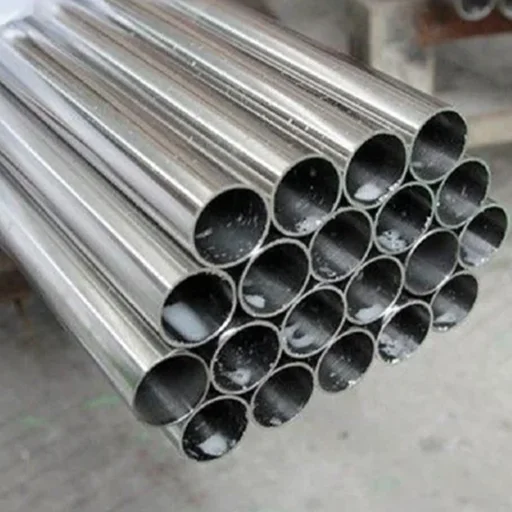
Alloy Steel P11 Pipes and Alloy Steel P11 Tubes
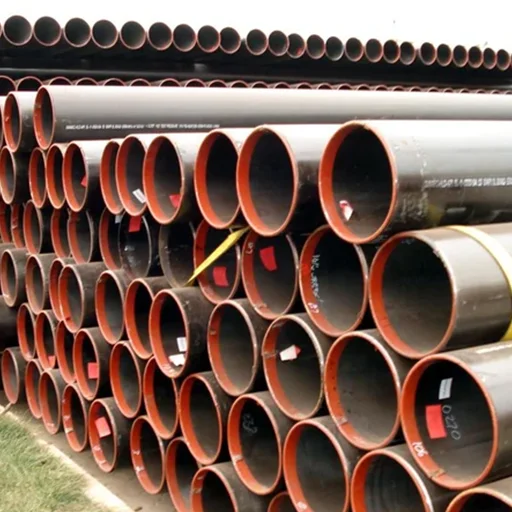
Alloy Steel P12 Pipes and Alloy Steel P22 Tubes
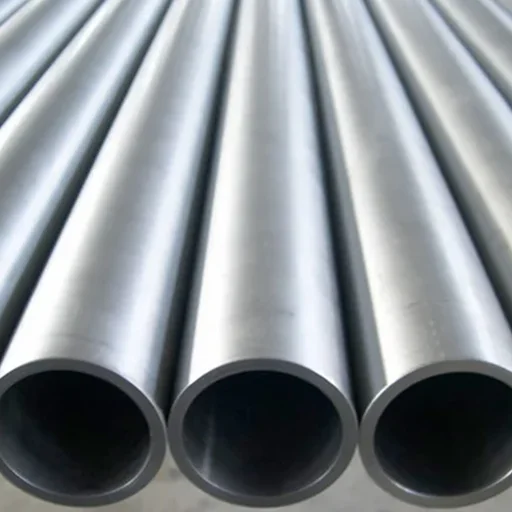
Alloy Steel P22 Pipes and Alloy Steel P22 Tubes
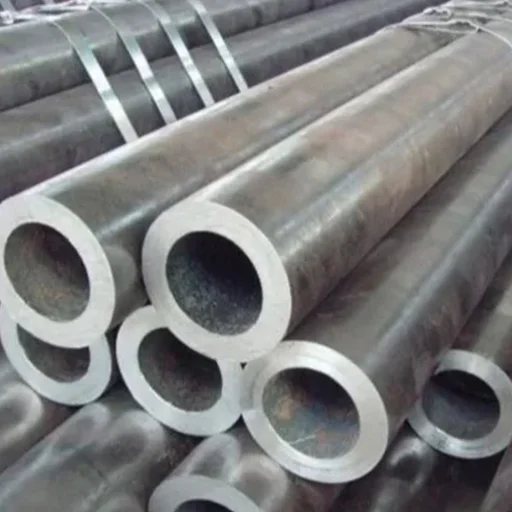
Alloy Steel P91 Pipes and Alloy Steel P91 Tubes
Quality Testing and Inspection of Alloy Steel Pipes and Tubes
Alloy Tubing and Piping produced by Kalpataru Piping go through rigorous metallurgical and mechanical verification processes:
- Positive Material Identification (PMI):
In-house results XRF test for chemical composition percentages prior to finishing. - Hydrostatic Pressure Testing:
Continuous water-pressure holds to confirm structural wall integrity. - Ultrasonic / Eddy Current Examinations:
Non-destructive high-resolution inspection of sub-surface cracking and/or micro-fissures. - Mechanical Proof Testing:
Coupon tests of tensile, yield, flattening and flaring. - Third-Party Witness:
Inspection services provided on request by global inspection/assessment organisations such as TUV, DNV, SGS, BV, Lloyds, etc.
Applications Uses of Alloy Steel Pipes and Tubes
- High-pressure piping systems
- Boiler tubes
- Superheater and reheater tubes
- Heat exchangers
- Steam pipelines
- Pressure vessels
- Process piping systems
- Oil and gas transmission lines
Different Usage of Alloy Steel Pipes and Tubes
|
Grade Group |
Primary Use Cases |
Peak Operating Temp |
|
P1, P2 |
General low-temperature process lines, mild-steam utility lines. |
Under 450 °C (840 °F) |
|
P5, P9 |
Petroleum refineries, catalytic crackers, sulfurous environments. |
Up to 600 °C (1110 °F) |
|
P11, P12 |
Superheaters, industrial boiler piping, chemical reactors. |
Up to 560 °C (1040 °F) |
|
P22 |
Main steam lines, power generation reheat systems. |
Up to 580 °C (1075 °F) |
|
P91, P92 |
Ultra-supercritical power plants, extreme high-pressure headers. |
Up to 650 °C (1200 °F) |
Frequently Asked Questions
What are alloy steel pipes and tubes?
Alloy steel pipes and tubes are steel products containing alloying elements like chromium, molybdenum, and nickel to improve strength, heat resistance, and corrosion resistance.
What are alloy steel pipes used for?
Alloy steel pipes are used in power plants, oil and gas, petrochemical, chemical processing, boilers, heat exchangers, and high-pressure piping systems.
What is the difference between alloy steel pipes and carbon steel pipes?
Alloy steel pipes contain additional alloying elements for better strength, heat resistance, and corrosion resistance, while carbon steel pipes mainly contain carbon and are used for general applications.
What are the advantages of alloy steel pipes and tubes?
Alloy steel pipes and tubes offer high strength, excellent heat resistance, good corrosion resistance, long service life, and reliable performance in demanding environments.
What is the difference between ASTM A335 and ASTM A213 alloy steel?
ASTM A335 covers seamless alloy steel pipes for high-temperature service, while ASTM A213 covers seamless alloy steel boiler, superheater, and heat exchanger tubes.
Are alloy steel pipes suitable for high-temperature applications?
Yes, alloy steel pipes are specifically designed to withstand high temperatures and pressures, making them ideal for boilers, power plants, and refineries.