Brass Instrumentation Valves
Brass Instrument Manifolds Valves, Brass Instrumentation Valves, CS Instrumentation Valves, Brass Instrument Monoflange Valves, Brass Instrumentation Ball Valves Suppliers in Mumbai, India.
Brass Manifolds Valve, Brass Cryogenic Globe Valves, Brass Relief Valve, Brass Double Block and Bleed (DBB) Valve, Brass Metering Valves, Brass Integral-Bonnet Instrument Needle Valves, Brass Monoflange Valves, Brass Industrial Instrumentation Valves Manufacturer in India.
Introduction
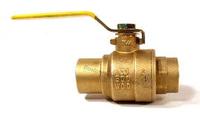 Kalpataru Piping is one of the leading manufacturer, supplier, exporter of brass Instrumentation Valves. Brass manifolds Valves are stronger and more corrosion-resistant. Brass also causes a highly beneficial hard layer of Brass oxide to be formed on the surface that is thin, transparent and self-healing. Tin has a similar effect and finds its use especially in seawater applications. Combinations of iron, aluminium, silicon and manganese make brass wear and tear resistant. Our variety of Brass Instrumentation Valves finds widespread application in distilleries & sugar mills, petrochemicals & pumps, construction industries, steel plants and cement. We also offer these Products are available in different size,grades, specification & thickness as per the clients requirements.
Brass Instrumentation Valves Specifications
| Specifications | : | ASTM B62 / ASTM SB62 |
| Dimensions | : | EN, DIN, JIS, ASTM, BS, ASME, AISI |
| Size | : | 5 mm To 500 mm |
| Diameter | : | 0.1 mm to 100 mm |
| Length | : | 100 mm To 3000 mm Long & Above |
| Finish | : | Black, Bright Polished, Rough Turned, NO.4 Finish, Matt Finish, BA Finish |
| Tolerance | : | H8, H9, H10, H11, H12, H13K9, K10, K11, K12 or as per clients’ requirements |
| Form | : | Round, Square, Hex (A/F), Rectangle, Billet, Ingot, Forging Etc. |
Brass Instrumentation Valves Chemical Composition
| Brass | Cu | Fe | Pb | Zn |
| Min./Max. | 60.0-63.0 | 0.35 | 2.5-3.0 | Rem. |
| Nominal | 61.5 | – | 2.7 | 35.4 |
Brass Instrumentation Valves Physical Properties
| Properties | US Customary |
| Melting Point -Liquidus | 1650 F |
| Melting Point -Solidus | 1630 F |
| Density | 0.307 lb/in3at 68 F |
| Electrical Resistivity | 39.90 ohms – |
| Electrical Conductivity | 26 %IACS @ 68 F |
| Thermal Conductivity | 67 Btu · ft/(hr · ft2·oF)at 68F |
| 14000 |
Related Products
- Duplex UNS S31803 Pipes & Tubes
- Duplex UNS S31803 Flanges
- Duplex UNS S31803 Round Bars & Wires
- Duplex UNS S31803 Plates & Sheets
- Duplex UNS S31803 Buttweld Fittings
- Duplex UNS S32205 Pipes & Tubes
- Duplex UNS S32205 Flanges
- Duplex UNS S32205 Round Bars & Wires
- Duplex UNS S32205 Plates & Sheets
- Duplex UNS S32205 Buttweld Fittings
- Duplex UNS S31803 Perforated Sheets
- Duplex UNS S31803 Forged Fittings
- Duplex UNS S31803 Olets
- Duplex UNS S31803 Fasteners
- Duplex UNS S31803 Compression Tube Fittings
- Duplex UNS S32205 Perforated Sheets
- Duplex UNS S32205 Forged Fittings
- Duplex UNS S32205 Olets
- Duplex UNS S32205 Fasteners
- Duplex UNS S32205 Compression Tube Fittings
- Duplex UNS S31803 Instrumentation Valves
- Duplex UNS S31803 Filler Wire
- Duplex UNS S31803 Long Radius Bends
- Duplex UNS S31803 Pipes Spools
- Duplex UNS S31803 Wiremesh
- Duplex UNS S32205 Instrumentation Valves
- Duplex UNS S32205 Filler Wire
- Duplex UNS S32205 Long Radius Bends
- Duplex UNS S32205 Pipes Spools
- Duplex UNS S32205 Wiremesh
FAQ’s About ASTM A106 Grade B Pipes
What is ASTM A106 Grade B pipe?
ASTM A106/A106M Grade B is a seamless carbon steel pipe specification intended for high-temperature service. The exact project suitability depends on the governing piping code, design conditions and purchase specification.
What is the difference between ASTM A106 Grade B and ASTM A53 Grade B?
ASTM A106 Grade B is a seamless high-temperature-service pipe specification. ASTM A53 Grade B covers welded and seamless pipe for mechanical and pressure applications and ordinary steam, water, gas and air service. Select the specification required by the project and design code.
What sizes does Kalpataru supply?
The current brief lists a Kalpataru supply range of 1/2 to 36 in NPS and Schedule 10 to XXS, subject to size and availability. ASTM A106/A106M itself has a wider standard scope.
What is the maximum temperature of ASTM A106 Grade B pipe?
Do not use one universal maximum temperature from the ASTM material specification. Allowable service depends on the design code, pressure, wall thickness, allowable stress and project conditions.
Is ASTM A106 Grade B seamless or welded?
ASTM A106/A106M is a seamless carbon steel pipe specification. Do not describe ERW, LSAW or other welded pipe as ASTM A106 product construction.
What tests are required for ASTM A106 Grade B pipe?
The specification includes mechanical testing and bend/flattening testing as applicable, together with hydrostatic and/or nondestructive electric testing requirements. The exact inspection package should match the current ASTM edition and purchase order.
What documents can be supplied?
Orders can be supplied with EN 10204 3.1 MTC and, where applicable and agreed, IBR documentation, third-party inspection and project-specific test reports.
How is ASTM A106 Grade B pipe priced?
Price depends on NPS, schedule or wall thickness, length, quantity, origin/mill, testing/certification, coating/end preparation and delivery destination. Send the full requirement for a size-wise quotation.
Need Monel 400 Wire Mesh You Can Actually Rely On?
Tell us your mesh count, weave, and quantity, and we'll get you a quote with a real lead time — not a generic price list. Specifying a full system? Run the numbers first with our pipe & tube weight calculator or plates & sheets weight calculator.