by kalpataru | Nov 26, 2022 | Blog
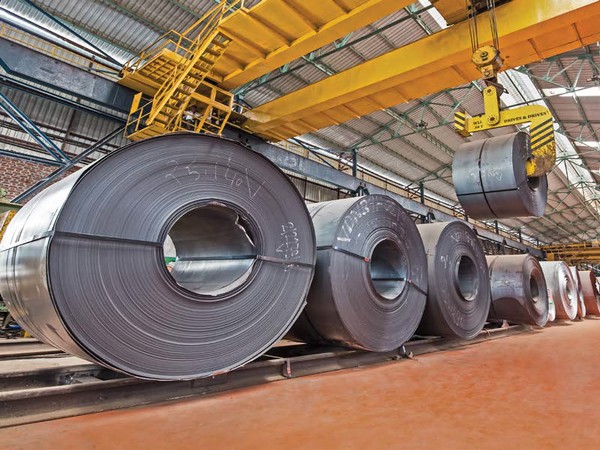
After a challenging September quarter, the profitability of domestic steel makers in the October-December quarter is expected to improve on the back of increased demand and lower input costs, analysts said.
Analysts see a ray of hope in the December quarter for Indian steel companies on better domestic demand conditions.
“The financial performance of Indian steel companies in the second quarter of the current fiscal has been adversely impacted by falling steel prices on one hand, and high raw material prices, especially coking coal, on the other.
“However, their profitability is expected to improve in the third quarter of FY2023, given lower coking coal costs, and an expected pick-up in capacity utilization rates on the back of better domestic demand conditions,” Roy added.
In the July-September 2022, the top five steel makers of India — which control about 60 percent market — have either reported loss or posted sharp falls in their net profits citing adverse market conditions
According to Kaustubh Chaubal, Senior Vice President, Corporate Finance at Moody’s Investors Service, leading steelmakers reported dampened earnings for a seasonally weak July-September period, amid elevated input and other costs and a steep decline in steel prices.
“Even so, India remains a bright spot in the region, with a high-single-digit percentage growth in steel consumption over the next 12 months supported by demand for autos and continued infrastructure spending by the government,” Chaubal said.
Suman Chowdhury, Chief Analytical Officer, Acute Ratings & Research said raw material prices that increased due to supply constraints are set to moderate in the second half of the current fiscal while steel prices are expected to witness a firmness due to a seasonal pickup in demand.
“We believe that the profitability scenario in the steel sector will improve moderately over the next two quarters,” Chowdhury added.
Echoing similar sentiments, Manish Gupta, Senior Director, CRISIL Ratings Limited said “Going forward, we see steel prices to remain range-bound in the second half as weak global steel demand gets offset by healthy domestic steel demand, which is expected to grow 6-8 percent this fiscal.”
In July-September, state-owned SAIL slipped into the red posting a consolidated loss of Rs 329 crore. It had clocked Rs 4,338.75 crore net profit during the same period of the preceding fiscal.
JSW Steel also reported a consolidated net loss of Rs 915 crore for the quarter that ended September 30, 2022. The company had clocked Rs 7,179-crore net profit in the year-ago period
Tata Steel’s consolidated net profit fell 90 percent to Rs 1,297 crore in the quarter, from Rs 12,547.70 crore in the corresponding period of the previous financial year.
ArcelorMittal Nippon Steel (AM/NS) India posted earnings before interest, taxes, depreciation, and amortization (EBITDA) of USD 204 million during the quarter under review against USD 551 million a year ago.
The net profit of Jindal Steel and Power Limited (JSPL) shrinked to Rs 219 crore as against Rs 2,678 crore.
Read More :
Padma Bridge in Bangladesh is the longest spanning the Ganges: The 6-kilometer-long, steel-constructed Padma Bridge is a game-changer for Bangladesh, as it connects 21 southwestern districts to the country’s capital and boosts the economy.
How is India planning to decarbonize the steel industry: As one of the most significant materials for engineering and construction, steel is used in many aspects of our life. Steel is one of the most important components of modern society.

by kalpataru | Nov 15, 2022 | Blog
What is Ductility?
The ductility of a material is its ability to permanently deform in response to stress (e.g., stretch, bend, or spread). For example, the majority of common steels are highly ductile and resistant to localized stress concentrations.
Due to their lack of ductility, brittle materials such as glass cannot withstand stress concentrations and break easily. Under pressure, a material specimen initially deforms elastically, but once it reaches a certain deformation (known as the elastic limit), the deformation becomes permanent.
In materials research, ductility is the degree to which a material can withstand plastic deformation under tensile stress before failing.
In engineering and manufacturing, ductility is essential for determining a material’s suitability for particular manufacturing processes (such as cold working) and its resistance to mechanical stress. Gold and copper are typical examples of ductile substances.
The malleability of a material, a related mechanical property, is determined by its ability to deform plastically without breaking under compressive force. In the past, materials were considered malleable if they could be hammered or rolled into desired shapes. Lead is a material that is somewhat malleable but not ductile.
Examples
The majority of metals, including gold, silver, copper, erbium, terbium, samarium, aluminum, and steel, are examples of ductile materials. The metals tungsten and high-carbon steel are examples of non-ductile materials. Generally speaking, nonmetals are not ductile.
How to Measure Ductility
The ductility of a metal is its ability to undergo deformation without cracking. Metals that are ductile are capable of being pushed or shaped without cracking. Metals that are brittle can break (essentially the opposite of ductile).
Formability is substantially affected by ductility. Extremely brittle metals may not be able to be manufactured satisfactorily. For instance, a metal must possess a certain degree of ductility in order to be stretched into a thin wire.
If the metal is too brittle, it will shatter as soon as it begins to expand. Ductility is another essential safety factor for structural formations. When structures are subjected to heavy stresses, ductility allows them to bend and deform without breaking.
There are two ways to evaluate ductility: percentage elongation and percentage reduction.
During a tensile test, when a metal is dragged until it breaks, its length deforms as a percentage of its original length and is measured as percentage elongation.
The percentage decrease of a specimen’s narrowest cross-section after a tensile test-induced rupture.
The temperature has an effect on plasticity. Consequently, it is crucial to consider the temperatures the metal will encounter in a given application. A chart depicting the transition temperature between ductile and brittle for the majority of metals is available and valuable.
Which Metals Are Ductile?
Aluminum, brass, copper, low-carbon steel, gold, silver, tin, and lead are examples of ductile metals. The metals wrought iron, chromium, and tungsten are examples of brittle materials. Cables, stampings, and structural beams are examples of applications that require high ductility.
Materials Science
Gold is exceptionally malleable. It can be stretched until it breaks and transforms into a single-strand wire.
Under stress, it is impossible to manipulate materials using metal-forming operations such as hammering, rolling, drawing, or extrusion with materials that crack, break or shatter. Materials that are brittle can be cast or thermoformed, whereas materials that are malleable can be formed by stamping or pressing.
Metallic bonds, which are predominant in metals and confer high degrees of ductility, lend metals their reputation for being generally ductile. In metallic bonds, valence shell electrons are delocalized and shared by multiple atoms.
Delocalized electrons allow metal atoms to slide past one another, preventing other materials from shattering due to strong repulsive interactions.
The ductility of steel varies depending on the alloying elements. As carbon content increases, ductility decreases. Many amorphous solids and polymers, such as Play-Doh, can be deformed. Gold is the most ductile metal, while platinum is the most malleable.
Through the formation, reorientation, and migration of dislocations and crystal twins, such metals deform under intense stretching without appreciable hardening.
Factors That Affect the Ductility of Metals:
Both internal and external factors, such as composition, grain size, cell structure, etc., and hydrostatic pressure, temperature, previously experienced plastic deformation, etc., influence ductility.
Below are a few crucial points regarding ductility:
Compared to metals with HCP crystal structures, those with FCC and BCC crystal structures exhibit superior high-temperature ductility.
The grain size has a significant effect on ductility. On a scale of a few microns, many alloys exhibit superplastic behavior when the grain size is excellent.
Higher oxygen content decreases the ductility of steel. Even relatively low levels of impurities have a significant impact on the ductility of some alloys. At approximately 1040°C, the ductility of carbon steels containing sulphur impurities as small as 0.018% decreases rapidly. However, if the Mn concentration is high, this can be corrected. At 1040 °C, the Mn/S ratio is what determines the ductility of carbon steels. When this ratio is 2, the elongation percentage at 1040 °C is only 12-15%, but when it is 14, it is 110 percent.
The temperature has a substantial effect on ductility and, by extension, formability. It promotes ductility in general, but at certain temperatures, it may decrease due to phase transition and microstructural changes induced by temperature rise. Temperature influences the ductility of stainless steel.
At 1050 °C, it is least ductile, and at 1350 °C, it is most ductile. Consequently, its hot operating range is quite constrained.
Hydrostatic pressure improves the ductility of a material. In torsion testing, the length of the specimen decreases as the strength of the torsion increases. In the torsion test, the specimen demonstrates greater ductility when subjected to axial compressive stress than when none is applied. The application of axial tension further diminishes ductility.
Read More :
Learn About The Applications Of Alloy 20 Pipes: Alloy 20 is one of the “Super” stainless steels with the highest acid attack resistance. The presence of nickel, chromium, molybdenum, and copper increases the material’s resistance to chloride stress corrosion, which can lead to cracking and general pitting. Columbium is added to the alloy to prevent carbide precipitation during welding.
Selecting Metals and Alloys for Medical Device Manufacturing: The work quality of metal component manufacturers who supply the medical device industry has recently improved significantly. The product quality of these alloys has never been better since the implementation of statistical process control, ISO 9000 certifications, and other initiatives.
by kalpataru | Nov 1, 2022 | Blog
Introduction
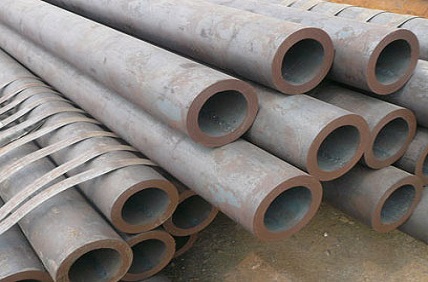
Alloy 20 is one of the “Super” stainless steels with the highest acid attack resistance. The presence of nickel, chromium, molybdenum, and copper increases the material’s resistance to chloride stress corrosion, which can lead to cracking and general pitting. Columbium is added to the alloy to prevent carbide precipitation during welding.
It is simple to manufacture and possesses robust mechanical properties. Although the alloy was designed for use in industries involving sulfuric acid, it is most commonly used in the chemical processing industry. In addition, pharmaceuticals, meats, oils, plastics, explosives, and synthetic fibers are utilized in manufacturing.
This superior alloy is also required for high-temperature exchangers, combining tanks, metal cleaning, pickling equipment, and pipe construction. Compared to higher nickel-based alloys, Alloy 20 Pipe may reduce production costs for standard stainless steel.
What distinguishing qualities do Alloy 20 pipes have?
You should be aware of the fact that pipes made from alloy 20 possess a number of exemplary qualities. These is what they consist of:
They are more resistant to stress-corrosion cracking in sulfuric acid (20–40%) at boiling temperatures.
The corrosion resistance of Alloy 20 pipes to sulfuric acid and chloride stress corrosion cracking is exceptional.
In addition, they have superior fabricability, mechanical properties, and low carbide precipitation during welding.
What is the use of Alloy 20 Pipes?
Common applications for Alloy 20 pipes include pickling racks, tanks, valves, SO2 scrubbers, food and dye production, chemical and related industries, heat exchangers, and other harsh environments.
Numerous industrial applications, such as food production, construction, chemistry, petrochemistry, pharmaceuticals, oil exploration, power generation, pulp, and paper industries, condensers, and heat exchangers, use alloy 20 pipes.
Alloy 20 pipes are utilized in numerous industries, including chemical manufacturing, petrochemical and refining, maritime, pharmaceutical, and food processing. Storage tanks, mixing tanks, agitators, pump and valve modules, food processing machinery, fasteners, and fittings are examples of end-use applications. Applications are limited to a maximum temperature of 1000 degrees Fahrenheit per ASME. It is essential to determine whether the required corrosion resistance can be achieved in the present environment.
Read More :
The Applications and Benefits of Using Stainless Steel 310 Pipes: Austenitic stainless steel in Grade 310 has outstanding high-temperature characteristics in addition to having strong ductility and weldability.
What is Scheduled 40 Steel Pipe?: The most common pipe schedule is Schedule 40 steel pipe. It can be galvanized but isn’t required, and it’s commonly used in water and gas lines. It can also show up in spots that require decoration or support.

by kalpataru | Oct 21, 2022 | Blog
The 6-kilometer-long, steel-constructed Padma Bridge is a game-changer for Bangladesh, as it connects 21 southwestern districts to the country’s capital and boosts the economy.
Padma River is a major Ganges tributary that originates in the Gangotri glacier in the Himalayas, flows through India and Bangladesh, and empties into the Bay of Bengal.
The Padma, one of the most traveled waterways in the world, has a broad riverbed that divides into numerous channels dotted with shifting islands and sandbanks. While navigable throughout the year, the rainy season makes river navigation increasingly difficult.
During heavy downpours, this could isolate the entire southwest of Bangladesh from the nearby capital and the rest of the country for all but the most courageous and skilled travelers.
With this in mind, the Bangladeshi government embarked on a massive infrastructure initiative to ensure a safe, year-round crossing of the Padma and to improve access to and from the southwest by connecting road and rail networks.
Making connections with steel
The Padma Bridge, constructed at a cost of $3.6 billion, is 22 meters wide and 6.15 kilometers long, making it the longest spanning the Ganges. It is a two-level steel truss bridge that carries a four-lane highway on its upper level and a single-track railroad on its lower level.
In addition to providing rail and road connections, the bridge also carries vital utilities, including telecommunications lines and stainless steel high-pressure gas pipes. There are plans to equip the bridge with seven 400kv steel-latticed interconnector towers so that it can transmit electricity.
Padma Bridge is a triumph of steel-built engineering that is expected to add between 1-2% to the country’s GDP
The bridge’s structure consists of 41 150-meter-long connecting spans. These are supported by 42 piers with 262 high-strength steel piles as foundations. These steel tubes with a 3m diameter are driven up to 100m into the earth to support the massive length of the bridge as well as the weight of road and rail traffic.
This steel core enables the piers and their foundations to withstand all conceivable stresses, ranging from liquefaction of the riverbed to impacts from river vessels to earthquakes – a crucial factor in seismically active Bangladesh, which sits at the intersection of multiple active tectonic plate boundaries.
The awe-inspiring Padma Bridge, which represents a sea change for Bangladesh’s infrastructure, is a triumph of steel-built engineering that is expected to add between 1% and 2% to the country’s GDP and establishes a benchmark for investment.
Read More :
What is Food-grade stainless steel and its benefits?: Steel is commonly used in Indian houses for cooking and eating since it is inexpensive, durable, and resistant to rust. Do we truly know whether the stainless steel we use is safe for our bodies, despite its widespread use in the home?
Selecting Metals and Alloys for Medical Device Manufacturing: The work quality of metal component manufacturers who supply the medical device industry has recently improved significantly.

by kalpataru | Oct 19, 2022 | Blog
Introduction
Steel is commonly used in Indian houses for cooking and eating since it is inexpensive, durable, and resistant to rust. Do we truly know whether the stainless steel we use is safe for our bodies, despite its widespread use in the home?
Types of Food Grade Stainless Steel
What is stainless steel exactly? It is a rust-resistant alloy of iron, chromium, and, in some cases, nickel and other metals. The best “green” material is stainless steel because it can be recycled eternally and entirely. When an alloy has 10.5% or more chromium, it is stainless steel. In general, if an alloy has 14–18% chromium or higher, it is food-safe or “food grade.” Stainless steel containing at least 10.5% chromium is constantly protected by a passive layer of chromium oxide that forms on the surface when the chromium reacts with oxygen from the air or water.
“Food-grade” refers to any form of stainless steel (SS) that is resistant to wear and tear and able to withstand heat in a manner that makes it safe for cooking various foods. Food-grade SS typically contains higher chromium, which reduces its susceptibility to rust.
There are currently numerous types of food-grade stainless steel on the market. Determine what will work best for your family.
SS 316 – When it comes to producing food-safe stainless steel containers, SS grade 316 is typically the best option for smaller households that cook frequently. 316 SS is more resistant to salt and stronger acids, such as tomato sauce and lemon juice. It is frequently utilized for numerous purposes. It contains 18% chromium and over 10% nickel, making it highly resistant to rust.
SS 304 – The most prevalent variety of stainless steel is SS grade 304. Typical applications include factories, hospitals, and kitchen equipment. It contains 18% chromium and 8% nickel and is extremely resistant to corrosion by a wide variety of substances.
SS 430 – Because it is affordable, has a great gloss, and is more resistant to certain types of corrosion, SS grade 430 is frequently used for cooking for big parties. Because it does not rust, SS grade 430 is frequently used in industrial kitchen and catering equipment. It has 18% chromium but no nickel, making it a more affordable food-grade stainless steel.
These are some of the most commonly utilized varieties of stainless steel in commercial kitchens. Their differing compositions make them appropriate for various settings and applications. Now that we are familiar with the many types of grades, we must also be aware of a number of other aspects. For instance, the operating environment (temperatures, humidity, harsh weather, etc.) and tensile strength influence the performance of stainless steel.
The benefits of using food-grade stainless-steel cookware:
It is essential to choose the appropriate grade of stainless steel, as low-grade stainless steel prevents food from cooking uniformly.
Non-leachable
Stainless steel is safe for cooking and does not alter the flavour or taste of food because it does not leak.
Non-reactive
Unlike other metals, stainless steel does not corrode when exposed to acidic foods. This means that there is no chance of chemical contamination during the preparation of highly acidic foods such as tomato sauces and curry dishes.
Environment friendly
Stainless steel is environmentally friendly since it can be recycled repeatedly. It is composed of iron, chromium, nickel, and a few other metals. These metals are derived from rocks and cannot be recreated. Because stainless steel is composed of these metals, it is environmentally friendly.
Versatile
The highest quality stainless steel can be utilized in the oven at the correct temperature. Stainless steel can also be cleaned in the dishwasher due to its durability. It is also easy to deal with because it is lighter than materials such as cast iron.
Durable and Robust
Stainless steel is superior to “non-stick” cookware, which can chip or discolor due to its coating. It is impervious to chipping and corrosion, thus it can persist for years or even decades.
Easy & Quick to Clean
It is simple to clean stainless steel cookware since its surface is flat and free of holes. Even though stainless steel is a durable material, abrasive sponges can occasionally create scratches. The most effective method for cleaning pots and pans is to soak them in warm detergent water before placing them in the dishwasher.
Stainless steel is a global phenomenon that is utilized in a variety of applications ranging from kitchenware to surgical instruments. Using high-quality, food-grade stainless steel in the kitchen helps ensure the safety and health of the food you and your family consume.
Read More :
Benefits of Stainless Steel 310 Sheets: Austenitic stainless steel in Grade 310 is easy to weld and bend, and it has great properties at high temperatures.
Selecting Metals and Alloys for Medical Device Manufacturing: The work quality of metal component manufacturers who supply the medical device industry has recently improved significantly.