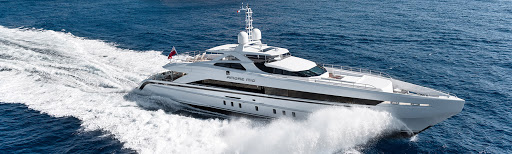
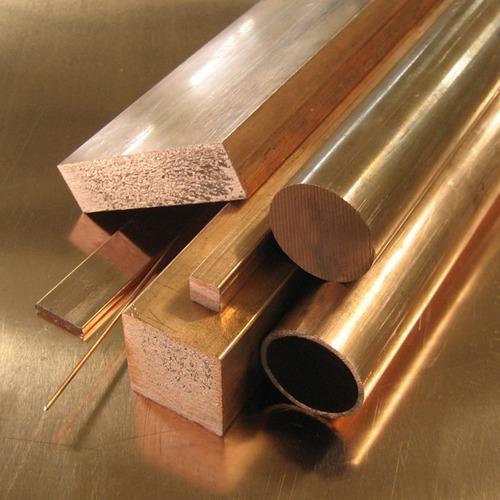
The corrosive idea of water and saltwater directs the utilization of uncommon materials for shipbuilding, seaward penetrating stages, and the sky’s the limit from there. Because of its numerous useful properties, marine grade aluminum alloy is prominently reasonable for building nautical vessels and structures, just as the apparatus and parts utilized inside them.
What is Marine Grade Aluminum?
Despite the fact that unadulterated aluminum has a high normal protection from consumption contrasted with numerous different metals, the consistent presentation to water and dampness in marine applications warrants extra insurance. At the point when alloyed with different metals like magnesium, aluminum builds up a much more significant level of consumption obstruction that can endure steady contact with water and saltwater. These extraordinarily treated aluminum composites are known as marine grade aluminum.
Marine evaluation metals are uniquely treated to withstand use in water or wet situations. Generally, this is finished by adding uncommon composites to the metal to make it consumption safe. Most metals, for example, aluminum, have marine evaluations.
Basic steel is the conventional material utilized in the shipbuilding business because of its brilliant mechanical properties and low assembling costs. Nonetheless, the expanding interest for bigger, yet light ships made creators look for elective materials. Aluminum composites were an incredible decision since they gave high erosion obstruction, weighed less, and were viewed as affordable over the long haul.
Sorts of Marine Grade Aluminum Alloys
Aluminum compounds are commonly grouped by the essential alloying component added to aluminum and the composites’ capacity to react to warm and mechanical treatment. Cast aluminum combinations are framed by emptying liquid fluid metal into molds of essential shapes and cooled; strong metal is precisely disfigured or fashioned or moved to the necessary shape to shape created aluminum composites.
Marine evaluation created aluminum amalgams generally include aluminum-magnesium (Al-Mg) combinations and aluminum-magnesium-silicon (Al-Mg-Si) compounds. They are commonly utilized in auxiliary shipbuilding, pontoon lifts, moors, and other seaward basic applications.
Cast aluminum compounds are utilized in various marine applications since projecting cycles can make generally complex shapes, including boats’ superstructures, auxiliary parts, inside installations and different backings. They are generally aluminum-silicon (Al-Si) or Al-Mg composites.
Attributes of Marine Grade Aluminum Alloys
The marine business utilizes aluminum composites for shipbuilding and creating segments in seaward stages since they are lightweight, erosion safe, and have predominant mechanical properties.
Coming up next are a few instances of cast aluminum combinations, their attributes and employments:
What are the Benefits of Using Aluminum in Marine Applications?
Marine grade aluminum sheets and marine grade aluminium pipes are explicitly evolved to make it ideal for use in marine conditions. All things considered, it has various properties required in these applications. A portion of these properties include:
Unrivaled consumption opposition
Lightweight with a high solidarity to-weight proportion
Similarity with an assortment of manufacture measures
Wide accessibility in sheets, expulsions, and plates
Properties of Aluminum for Marine Applications
There are numerous evaluations of marine aluminum, each varying somewhat in its properties because of the amalgam materials that are incorporated.
Mainland Steel supplies a few evaluations of marine aluminum in an assortment of stock structures, including plate, sheet, curl, pipe, cylinder, bars, and expulsions We can likewise give them shifting degrees of temper. The evaluations we can give include:
5083. 5083 marine grade aluminum is ideal for applications that need standout erosion obstruction in threatening conditions. 5083 is the most grounded non-heat treatable aluminum combination and keeps up its quality even in the wake of welding.
5086. This compound is profoundly conductive with prevalent erosion opposition. 5086 can be reinforced through strain solidifying and cold working until it is much more grounded than in 5083. Despite the fact that it is viable with various welding strategies, electric curve welding is favored for this compound.
5454. The valuable properties of 5454 incorporate high quality, unrivaled consumption opposition, and great formability and weldability.
5456. Generally utilized for auxiliary applications, 5456 is appropriate to the expulsion cycle. It is likewise manageable to framing activities like rolling and producing. 5456 can be made more grounded through virus working, however the cycle decreases its malleability.
5754. Its boss protection from consumption makes 5754 entirely reasonable for the marine business and other modern applications having destructive working conditions. It is additionally appropriate for ground surface applications because of its high quality.
Aluminum Products for Marine Applications
Marine aluminum is utilized to make a wide assortment of marine items. Two of these incorporate honeycomb boards and metal powder.
Honeycomb boards are composite items roused by the structure of honeycombs in honey bee provinces. A honeycomb board comprises a center layer of hexagonal honeycomb manufactured with aluminum. The center is sandwiched between two aluminum plates stuck to either side. This structure can be created with different thicknesses.
Honeycomb boards have the accompanying advantageous properties:
Low weight
High unbending nature, quality, and vibration damping
High protection from impacts
Great protection from warmth and sound
Great flexibility
Since the honeycomb board requires a littler amount of aluminum than a strong sheet of tantamount mechanical properties and thickness, it is more practical than aluminum boards. It’s lighter weight additionally saves money on delivery costs for mass requests. Like all aluminum, honeycomb boards can be interminably reused. Kalpataru Piping solutions has the best aluminium sheet prices.
Aluminum metal powders are utilized in an assortment of ventures, including the marine business. These fine particles of aluminum are utilized in many assembling strategies, for example, aluminum infusion forming, surface covering, and added substance producing.
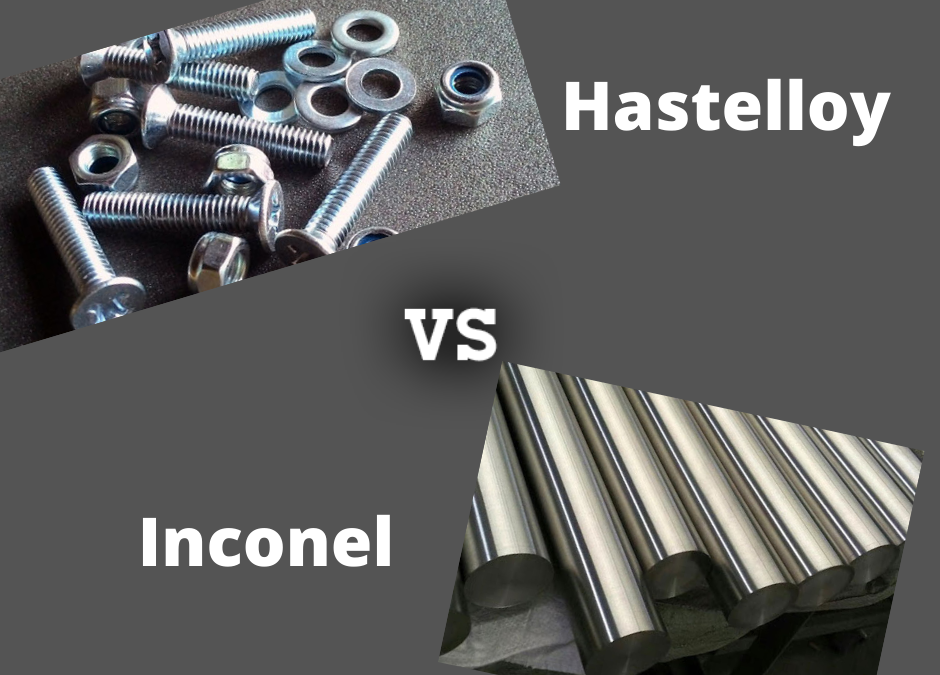
Hastelloy® and Incoloy® are the two individuals from the “superalloy” family, otherwise called superior amalgams. All things considered, they share a few key qualities for all intents and purposes. The two of them have incredible mechanical quality, particularly at high temperatures, and they are both profoundly impervious to erosion and oxidation. Notwithstanding, there are likewise a few significant contrasts to note between these two superalloys, including their compound creation, their weldability, and their reasonableness for various applications.
Hastelloy®
Hastelloy® (processed by Haynes) is a nickel-molybdenum compound. There is a wide range of evaluations of Hastelloy®, a considerable lot of which are nickel-chromium-molybdenum composites. Every one of these evaluations has been enhanced for a particular reason, however, every one of them is profoundly impervious to consumption. The incorporation of molybdenum makes Hastelloy® harder, more grounded at high temperatures, and furthermore makes it incredible for welding applications. These composites are effortlessly created and shaped. They have great malleability and can be produced and cold worked.
Hastelloy® has remarkable protection from exceptionally oxidizing and diminishing specialists, settling on it as an incredible decision for moderate to serious destructive situations. It is usually utilized for lines and valves in substance preparation and petrochemical enterprises. It is likewise utilized in atomic reactors and compound reactors and is amazing for pressure vessels and warmth exchangers.
The corrosion safe Hastelloy composites are broadly utilized by the concoction handling businesses. The requirement for dependable presentation prompts their acknowledgment and development in the territories of geothermal, sunlight based vitality, oil and gas, and drugs. The advantages of Hastelloy measure gear incorporate high protection from uniform assault, exceptionally limited consumption obstruction, astounding pressure erosion breaking opposition, and simplicity of welding and manufacture.
The B-3 amalgam has remarkable protection from non-oxidizing acids, for example, hydrochloric corrosive and sulfuric corrosive. The benefits of B-3 compounds over past B-family amalgams are upgraded warm soundness and improved manufacturing qualities. The as of late created Hastelloy Hybrid-BC1 will deal with more grounded non-oxidizing acids than C-type compounds and will endure oxidizing pollutions that B-type combinations won’t.
The most flexible of the Hastelloy combinations are the “C-type” compounds. The C-2000 compound consolidates extraordinary protection from oxidizing media with better opposition than non-oxidizing conditions and speaks to a genuine exhibition get through for concoction measure gear applications. There are different types of Hastelloy, Hastelloy C22, Hastelloy B2 & Hastelloy C276, and Kalpataru piping solutions are all about Hastelloy C276, Hastelloy C22 & Hastelloy B2.
C-22 compound is especially impervious to pitting and fissure consumption; it has been utilized broadly to ensure against the most destructive FGD frameworks and the most modern drug response vessels.
G-30 compound has been extremely effective as phosphoric corrosive warmth exchanger tubing and for different cycle parts in the compost business. G-35 composite was planned as an improved rendition of G-30 amalgam in these utilizations of Hastelloy. The high chromium substance of both of these composites settles on the head decisions for solid oxidizing arrangements and blended corrosive pickling administrations.
Incoloy
Incoloy® is a nickel-iron-chromium combination. There is additionally a wide range of evaluations of Incoloy® accessible. The greater part of these evaluations was planned explicitly for high-temperature applications. Incoloy® is moderately simple to manufacture and can be made utilizing similar machines and cycles used to make tempered steel. It’s high iron substance makes it a more practical answer for some applications. As a rule, Incoloy® isn’t reasonable for seriously destructive situations, yet a few evaluations have been intended for expanded erosion obstruction, even in unforgiving conditions.
Incoloy® high-temperature quality and protection from seawater, brackish water, sharp gas, and chloride make it ideal for use in the oil and gas enterprises. It is additionally utilized for propeller shafts, hot vessels for food and water, synthetic handling hardware, gas turbines, airplanes, and tank trucks. Alloying Incoloy® with different components can additionally build its protection from artificially destructive conditions, for example, sulfuric and phosphoric acids, and atomic fuel. Various types of Incoloy are Incoloy 800, Incoloy 825, etc.
Incoloy composites, including Incoloy 800 and Incoloy 825, are profoundly searched after because of their capacity to oppose both oxidation and carbonization in high-temperature settings. Most Incoloy composites make increases to a nickel-iron-chromium base. These augmentations permit the amalgam to adjust to the necessities of an assortment of enterprises and empower driving metal organizations to offer a scope of Incoloy shapes and plans.
Incoloy 800, in the same way as other Incoloy composites, will stay stable during the stretched-out introduction to high temperatures. It will likewise fight off disintegration in various watery climates. These highlights have made Incoloy 800 a powerful apparatus in the development of warmth exchangers, measure funneling, atomic steam-generator tubing, and applications where different metals and amalgams would essentially not face the warmth and dampness of the earth.
The augmentations of copper and molybdenum increment Incoloy 825’s protection from general pressure consumption and to explicit assaults, for example, hole erosion. The combination’s specific protection from both sulfuric and phosphoric acids has made it well known in the concoction handling industry, and has made it adaptable enough to work in both atomic fuel reprocessing and pickling hardware.
Incoloy 800
Incoloy 800 is a nickel-chromium amalgam that is most popular for its capacity to keep up a steady structure during a delayed presentation to high temperatures. Incoloy 800 has more than the solidarity to withstand the essential pressure brought about by heat, however. It has significant levels of protection from oxidation and carbonization, making it one of the best materials for use in carbonizing hardware and warming component sheathing.
Incoloy 800 is as powerful in numerous fluid conditions all things considered in high-temperature circumstances. It can withstand disintegration and other rot that is frequently connected with watery settings. Its quality and obstruction give Incoloy 800 a degree of adaptability that isn’t found in many amalgams. It has been utilized in an assortment of businesses and has become a pillar in high-temp, high-introduction applications.
Superior with Kalpataru piping solutions
Kalpataru solutions are glad to flexibly superior superalloys for your particular application. Reach us today to figure out how we can give you the arrangements you need.
Alloy 20, otherwise called Carpenter® 20 and Incoloy® 20, is an austenitic nickel-iron-chromium alloy. This super combination, which additionally incorporates copper and molybdenum, is well known in the creation of gas, solvents, explosives, synthetic substances, pharmaceuticals, and food and engineered materials. Alloy 20 is a nickel-iron-chromium based, austenitic combination with astounding consumption opposition in concoction situations containing sulfuric corrosive and numerous other forceful media. This alloy is settled with niobium to oppose intergranular consumption. Alloy 20 may give potential cost reserve funds when deliberately contrasted with higher nickel-based combinations while outperforming standard treated steels. Alloy 20, otherwise called Carpenter 20, is a nickel-iron-chromium austenitic alloy that was created for greatest protection from corrosive assault, explicitly sulfuric corrosive. This superalloy has brilliant protection from general consumption, pitting, and cleft erosion in synthetic substances containing chlorides and sulfuric, phosphoric, and nitric acids. It likewise contains niobium for adjustment against refinement and resultant intergranular erosion. Woodworker 20 joins incredible erosion obstruction with raised mechanical properties and generally simple manufacture. Albeit initially intended for use in sulfuric corrosive related ventures, Alloy 20 is presently a mainstream decision for a wide assortment of enterprises including the substance, food, pharmaceutical, and plastics businesses. What’s more, this superalloy is utilized in heat exchangers, blending tanks, metal cleaning and pickling gear, and funneling.
It offers clients a wide assortment of advantages including:
Fantastic protection from erosion, fissure consumption, and pitting
Ideal for use around sulfuric, phosphoric, and nitric acids
The Simplicity of manufacture and raised mechanical properties
Accessible in the level bar, manufacturing stock, hexagon, plate, pipe, sheet, strip, round bar, cylinder, and wire,
Alloy 20 can be created to deliver:
Blending Tanks
Warmth Exchangers
Cycle Piping
Pickling Equipment
Pumps, valves, clasp, and fittings
Combination 20 meets or surpasses distinctive industry guidelines including a large number of ASTM, ASME, ISO, and DIN principles. TIG, MIG, and SAW welding can be utilized on Alloy 20 and can be framed through hot and cold working.
Combination 20 has a novel synthetic creation:
Fe 31-44% equalization
Ni 32.5-35%
Cr 19-21%
Cu 3-4%
Mo 2-3%
Because of its high nickel content (32-38%), there is some difference whether Alloy 20 is a nickel or a treated steel amalgam. Regardless of what side of the conversation you fall on, unmistakably Alloy 20 is a magnificent decision for a wide assortment of enterprises and applications. At Continental Steel, we are pleased to stock and sell Nickel Alloy 20, Carpenter® 20, and Incoloy® 20 in the entirety of the famous sizes and structures.
Mechanical Properties:
Form
Tensile Min.
Yield Min. (.2% offset)
Elongation Min.
Reduction of Area Min.
Bar (hot or cold finished)
80 Ksi
35 Ksi
30%
50%
Sheet/Plate
80 Ksi
35 Ksi
30%
–
Industries and Applications
Alloy 20 is utilized in an assortment of ventures, including substance handling, petrochemical and refining, marine, pharmaceutical, and food preparation. End-use applications incorporate capacity tanks, blending tanks, agitators, pump and valve parts, food processing equipment, clasp, and fittings. Applications are restricted to the most extreme temperature of 1000°F per ASME. It is additionally imperative to decide whether the important erosion opposition can be accomplished inside the given condition.
Protection from Corrosion
Alloy 20 has awesome protection from sulfuric corrosive. This combination additionally shows appropriate obstruction in phosphoric corrosive, nitric corrosive, and fluid salt arrangements. Alloy 20 is a magnificent choice when chloride stress erosion splitting is an issue, as it opposes pitting and cleft consumption. Alert ought to be taken in chloride particles containing conditions in light of the fact that the erosion rate can increase fundamentally.
Fabrication and Heat Treatment
Alloy 20 can be formed by either hot-working or cold-work using traditional methods. Hot forged material should be heated between 2100°F and 2250°F with careful temperature control ensuring that the material does not fall below 1800°F prior to forging. After hot working, anneal the material by heating to 1725°F and 1850°F for a minimum of 30 minutes per inch of thickness followed by water quench.
When stress relieving is desired, heat to a temperature below 1000°F followed by water quench after the desired time at temperature has been established. Annealing Alloy 20 should be between 1725°F and 1850°F for 30 minutes at temperature per inch of thickness. A lower hardness can be obtained by heating to 2100°F but this may have a negative effect on the stabilization of the alloy.
Welding Alloy 20 is commonly performed via, TIG, MIG as well as submerged arc welding (SAW) using either the matching filler metal, ER320LR for TIG and MIG and E320LR for SAW. When welding to dissimilar alloys such as 316 or higher alloys such as C276 and Alloy 22, AWS ERNiCrMo-3 can be used for TIG and MIG while using ENiCrMo-3 for SAW.
Common Trade Names
INCOLOY® alloy 20, Carpenter® 20 alloys, 20CB-3®
INCOLOY® is a registered trademark of the Special Metals Corporation group of companies.
Carpenter® and 20CB-3® have registered trademarks of Carpenter.
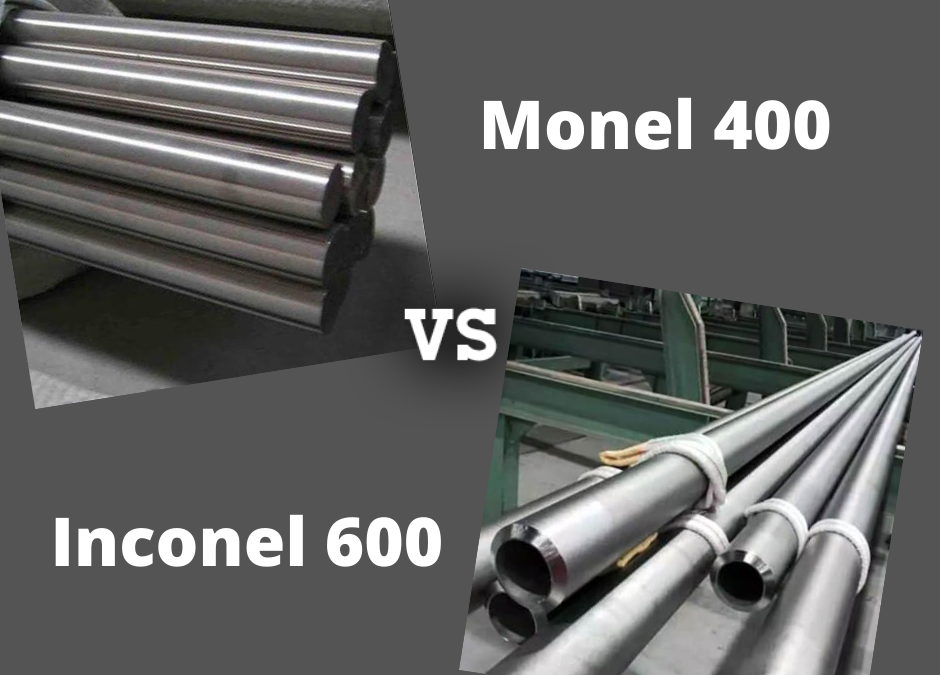
Have you at any point pondered what could be the distinction in the middle of two prevalently utilized alloys that is INCONEL and MONEL? Do you thoroughly understand what really are these combinations and for what are they utilized? To offer the response of your inquiry we are here with the post that will disclose to you the distinction in the middle of Inconel 600 Pipes and Monel 400 pipes. Both Monel and Inconel have nickel as their essential metal. In any case, Monel has copper and Inconel has Chromium.
To all the more likely recognize the contrast between these two, we have to address the quality of their double essential fixing.
So proceed on perusing the article.
Inconel 600-
Inconel combination is the enrolled brand name that is alluding to the austenitic chromium-nickel super composites family. Inconel compound is the material that is especially utilized for hardly any hardest usable conditions that are found in creating mechanical merchandise. Inconel 600 is a strong arrangement reinforced composite, is impervious to corrosive, has great weld-capacity, and resistivity in nature. It is precipitation hardenable chromium and nickel-based cast metal. Be that as it may, the expansion in the substance of aluminum in it is making it a very much improved break quality compound at a raised temperature. Likewise, it is being able to withstand the high-temperature environment and is having an acceptable consumption of obstruction properties.
Monel 400-
Monel 400 compound is the gathering of metals like nickel alloy and is principally having a nickel of about 67%, copper and manganese, iron, silicon, and carbon in a more grounded sum. It is more grounded than the unadulterated nickel. Monel 400 combination is being able to be completely impervious to erosion by a few specialists that incorporate quicker streaming seawater. They are promptly manufactured by cold and hot working, welding, and machining. Monel 400 combination is the compound that is really a nickel-based composite that is having copper in the middle of 29% to 33%. In the most essential terms, INCONEL 600 is a nickel-chromium alloy while MONEL 400 is a nickel-copper composite. The two metals are normally utilized in applications with outrageous warmth, high-temperature erosion, and for the most part extreme conditions. How about we investigate some particular combinations which Loos and Company make to show signs of improvement in their capacities.
Monel 400 is a “nickel-copper composite with high quality and great erosion opposition in the scope of media including ocean water, hydrofluoric corrosive, sulfuric corrosive, and alkalies,” as per Special Metals. These properties settle on MONEL® 400 a phenomenal decision for applications, for example, rough oil stills, synthetic handling hardware, and fuel and new water tanks, among different applications. You will see MONEL 400 frequently utilized in saltwater applications to its erosion obstruction in this condition.
The essential contrast in INCONEL and MONEL Pipes-
In the essential term, INCONEL 600 is the chromium and nickel alloy while discussing MONEL, it is a copper and nickel combination. Both of these metals are utilized normally in the applications in types of funnels with more noteworthy warmth and especially high temperature and in extreme conditions too.
On account of INCONEL 600 alloy, we realize that it is a nickel and chromium compound with the aluminum expansion for more prominent protection from oxidation and high-temperature consumption. These attributes according to Kalpataru are explicitly settling on the INCONEL 600 pipes, the most ideal decision for use in applications like gas and oil extraction. In any case, penetrating the oil is including cruel conditions and needs the item that can without much of a stretch withstand in these conditions.
Monel compound is not able to be a copper and nickel alloy with more noteworthy quality and great consumption obstruction in different media that incorporates hydrofluoric corrosive, seawater, soluble bases, and sulfuric corrosive. These properties as per Kalpataru are causing it to be an astounding determination for different purposes like synthetic handling gear, new water tanks, gas, and unrefined oil stills. You will see the Monel combination in the type of Monel pipes broadly utilized in saltwater applications as a result of consumption obstruction capacity in such a climate.
Copper-Nickel alloys are one of the most utilized combinations for different applications on account of their great protection from seawater consumption, compelling at macrofouling levels lowering and fantastic texture capacity. They additionally in view of high sturdiness, antimicrobial properties and appearance have gotten directly for different purposes. Kalpataru is the dependable makers, providers, and stockiest of the subjective scope of Copper Nickel 90/10 Pipes and Tubes all-inclusive. The item is all around planned by the global and national raw material quality principles. The item to the purchasers is furnished and customized with various particulars according to the interest of the customers and furthermore at competitive prices.
Copper and nickel are nearby each other in the occasional arrangement of elements, with atomic numbers 29 and 28 and atomic weight 63.54 and 68.71. The two components are firmly related and are totally miscible in both the fluid and strong state. Cu-Ni amalgams solidify over the entire focus run in a face-focused cubic grid. The grid dividing the face-focus cubic strong arrangement shifts directly with nuclear fixation between the qualities for copper (3.6153 . 10-8cm) and that for nickel (3.5238 . 10-8cm).
Cu-Ni combinations are composites of copper (base metal with the biggest individual substance) and nickel with or without different components, whereby the zinc substance may not be over 1%. At the point when different components are available, nickel has the biggest individual substance after copper, contrasted, and each other component.
Likewise, with other copper amalgams, it is important to recognize fashioned compounds, which are prepared to semi-completed items, and cast composites, from which castings are created by different casting processes.
Although basic nickel was just found moderately late on, its utilization in amalgams – without information on the combination synthesis – returns in any event 2,000 years. This is affirmed by finds of coins from olden times, which contain up to 10% nickel notwithstanding copper.
The most antiquated Cu-Ni coin that has been put aside for successors originates from the period around BC 235. It was found in Bactria and comprises a compound comparative for example to the previous German 50-Pfennig and 1 DM pieces (around 75% Cu and 25% Ni). These and numerous other old coins are remarkable models for the high erosion opposition of Cu-Ni composites.
In this way, a purchaser can without much of a stretch gather those at any particular and in mass according to needs.
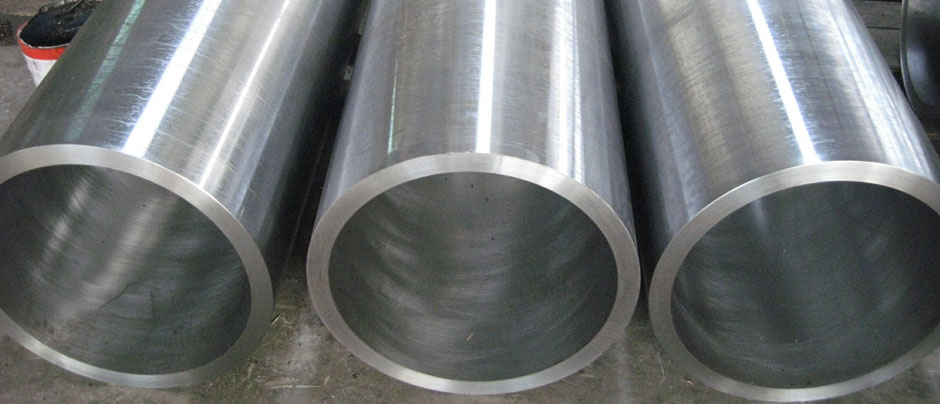
The Cu-Ni 90/10 pipes and tubes are utilized ordinarily in the seawater funneling on account of full protection from barnacles and marine life forms. Likewise, it is seen as effectively utilized in different applications like condenser cylinder or warmth exchanger in the evaporator of the desalination plant, warm force plant’s air cooling zone. It is likewise utilized in process industry plants, seawater funneling into the boats, and at the more prominent weight feedwater warmer. There are other Cu-Ni 90/10 items like Copper nickel 90/10 round bars and copper-nickel 90/10 flanges.
Advantages of using the Cu-Ni 90/10 Pipes and Tubes
On account of the viability in the creation of Cu-Ni pipes and tubes, it has become the best item that is having numerous acceptable focal points to offer. The high caliber of amalgam usage has driven it to offer brilliant characteristics including high elasticity, reusable, and amazing formability. Likewise, it is exceptionally impervious to mechanical burdens, more prominent protection from high temperatures, and high protection from the high weight.
Applications where Cu-Ni pipe and tubes are utilized
Shipbuilding and fix copper and nickel combination are utilized with the end goal of seawater cooling, firefighting, and pneumatic and chiller framework, bilge and balance, and clean. They are additionally seen as usable for the freight tank warming loops and feed line to the desalination plants.
Desalination plants–No uncertainty Cu-Ni is into the warm desalination plant is a very entrenched combination. In MSF desalination, Cu-Ni is utilized normally for the recuperation segment and warmth dismissal and in saltwater radiators. Presently, for MED, the Cu-Ni compound is utilized for tubing into the evaporator area.
Power Generation- Cu-Ni pipes and parts can be effortlessly utilized into the steam turbine condenser and oil coolers. Likewise, it is utilized at the more prominent weight-heaters at the non-renewable energy source power and atomic plants and in the helper cooling framework. They can likewise be utilized effectively in passing on the spotless seawater, and harsh water. Cu-Ni is additionally offering more noteworthy advantages in the marine sustainable power source that flowing gadgets, wind ranch, and wave.
Seawater framework Components–Cu-Ni condenser, tube sheets, heat exchangers, fittings, water boxes, channeling, and siphons are a couple of basic parts of the great quality seawater framework structure.
Antimicrobial–Cu-Ni compound is antimicrobial. Thus, the infections, growths, and microscopic organisms can’t endure effectively on the outside of Cu-Ni items like Copper Nickel 90/10 Flanges.