Nickel Alloy Flanges Manufacturer, Supplier & Exporter in India
Kalpataru Piping manufactures and supplies Nickel Alloy Flanges for piping systems exposed to corrosive media, elevated temperatures, and demanding industrial service conditions. These flanges are available in nickel grades such as Nickel 200 and Nickel 201, with material selection based on the operating environment and required corrosion resistance. Manufactured to applicable ASTM and ASME requirements, Nickel Alloy Flanges can be supplied in different dimensions, pressure classes, and facing configurations to suit specific piping designs.
Our range includes Nickel Weld Neck Flanges, Slip-On Flanges, Blind Flanges, Socket Weld Flanges, Threaded Flanges, Lap Joint Flanges, Orifice Flanges, and Ring Type Joint Flanges. Depending on the application, flange faces can include Raised Face (RF), Flat Face (FF), and Ring Type Joint (RTJ).
Nickel flanges are commonly used in chemical processing, petrochemical plants, power generation, marine systems, heat exchangers, and other applications where resistance to corrosion and temperature is important. Flanges can be supplied with dimensional inspection, material test certificates, PMI, and other documentation according to project requirements. Contact Kalpataru Piping with your required nickel grade, size, pressure class, and flange type for a suitable supply solution.
Table of Contents
- What are Nickel Alloy Flanges?
- Material Grades
- Nickel Alloy Flanges Specification
- Equivalent Grades of Nickel 200 / 201
- Nickel Alloy Flanges Chemical Composition (wt.%)
- Mechanical Properties (Nickel 200 / 201)
- Nickel Flange Working Pressure by Class and Temperature (bar)
- Nickel Alloy Flanges Applications
- Comparison Table: Nickel 200 vs Nickel 201 Flanges
- Certifications & Standards
- FAQ’s About Nickel Alloy Flanges
What Are Nickel Alloy Flanges?
Nickel alloy flanges are pipe connection components manufactured from high-nickel content alloys — typically containing 40–99% nickel — alloyed with elements such as copper, chromium, molybdenum, and iron. These flanges are engineered specifically for environments where carbon steel and stainless steel fail: high-temperature oxidation, reducing acids, seawater, and concentrated alkalis.
The superior corrosion resistance of nickel alloys stems from the metal’s inherent electrochemical stability. Nickel forms a dense, self-healing oxide layer that protects the base metal from attack by chlorides, sulfur compounds, and caustic media — making nickel alloy flanges indispensable in chemical plants, offshore platforms, and pharmaceutical facilities.
Key properties that set nickel alloy flanges apart:
- Exceptional corrosion resistance in both oxidizing and reducing environments
- High-temperature strength up to 1000°C without significant deformation
- Resistance to stress corrosion cracking (SCC) — the silent killer of stainless steel flanges
- Excellent weldability with matched nickel filler wires
- Low magnetic permeability — critical for sensitive instrumentation systems
- Superior performance in cryogenic service (Nickel 201 down to −196°C)
Kalpataru Piping supplies nickel alloy flanges alongside the full range of nickel alloy pipes and tubes, round bars and wires, and forged fittings — giving you a single-source solution for your nickel alloy piping system.
Material Grades
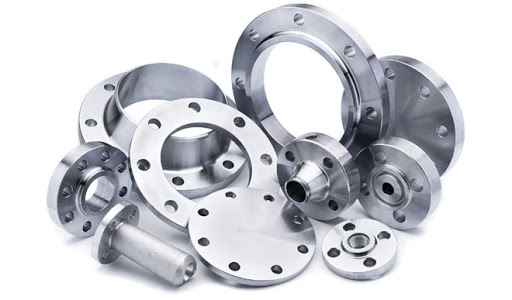
Nickel Alloy Flanges Specification
|
Parameter |
Details |
|---|---|
|
Material Standard |
ASTM B564 / ASME SB564 |
|
Size Range |
½" NB to 60" NB (½" to 60") |
|
Pressure Class |
150#, 300#, 400#, 600#, 900#, 1500#, 2500# |
|
Dimensional Standards |
ANSI/ASME B16.5, B16.47 Series A & B, B16.48, BS4504, BS10, EN-1092, DIN, GOST |
|
Face Types |
Raised Face (RF), Flat Face (FF), Ring Type Joint (RTJ), Tongue & Groove (T&G), Male & Female (M&F) |
|
Flange Types |
Weld Neck, Slip-On, Blind, Socket Weld, Threaded, Lap Joint, Long Weld Neck, Spectacle Blind, RTJ |
|
Test Certificates |
EN 10204 3.1 / 3.2, NACE MR0103, NACE MR0175 |
|
Inspection |
100% PMI, UT, Radiography, Hydrostatic, Third-Party Inspection (TPI) |
|
Surface Finish |
Smooth, Serrated, Mirror Finish (as required) |
|
DIN Flanges |
DIN 2527, 2566, 2573, 2576, 2641, 2642, 2655, 2656, 2627, 2628, 2629, 2632–2637, 2638, 2673 |
|
JIS Flanges |
JIS B2220 5K, 10K, 16K, 20K |
|
BS Flanges |
BS4504 PN 6, 10, 16, 25, 40, 64, 100, 160, 250; BS 10, Tables D, E, F, H |
|
API Flanges |
API 6A Type 6B / 6BX (2000–20000 PSI) |
|
Heat Treatment |
Annealed / Solution Annealed (as per grade requirement) |
|
Marking |
Grade, Heat No., Size, Pressure Class, Manufacturer's Mark |
Equivalent Grades of Nickel 200 / 201
| Standard | Nickel 200 | Nickel 201 |
|---|---|---|
| UNS | N02200 | N02201 |
| Werkstoff Nr. | 2.4066 | 2.4068 |
| JIS | NW 2200 | NW 2201 |
| BS | NA 11 | NA 12 |
| AFNOR | N-100M | — |
| EN | Ni 99.2 | LC-Ni 99 |
Nickel Alloy Flanges – Grades & Chemical Composition
Choosing the right nickel alloy grade is critical for service life and total cost of ownership. The table below covers all grades stocked and manufactured by Kalpataru Piping, with their UNS numbers, nominal composition, and key strengths.
|
Alloy Name |
UNS Number |
Nominal Composition |
Key Strength |
|---|---|---|---|
|
Nickel 200 |
N02200 |
Ni 99.6%, C 0.04 max |
Pure nickel; excellent caustic alkali resistance |
|
Nickel 201 |
N02201 |
Ni 99.6%, C 0.02 max |
Low-C variant; cryogenic & elevated temp service |
|
Monel 400 |
N04400 |
Ni 65%, Cu 32%, Fe 1.6% |
Seawater, HF acid, marine environments |
|
Monel K-500 |
N05500 |
Ni 64.7%, Cu 30.2%, Al 2.7%, Ti 0.6% |
Precipitation hardened; springs, shafts |
|
Inconel 600 |
N06600 |
Ni 76%, Cr 15%, Fe 8% |
Oxidation resistance, nuclear applications |
|
Inconel 601 |
N06601 |
Ni 60.5%, Cr 23%, Fe 14.4%, Al 1.4% |
High-temperature oxidation & carburization |
|
Inconel 625 |
N06625 |
Ni 58%, Cr 20%, Mo 16.3%, Nb 3.5% |
Fatigue & corrosion resistance; offshore, aerospace |
|
Inconel 718 |
N07718 |
Ni 54%, Cr 18.5%, Mo 3%, Nb 5% |
High strength to 700°C; turbines, fasteners |
|
Incoloy 825 |
N08825 |
Ni 44%, Fe 28%, Cr 21%, Mo 3%, Cu 2% |
Sulfuric & phosphoric acid; chemical processing |
|
Incoloy 800/800H/800HT |
N08800 / N08810 |
Fe 46%, Ni 32.5%, Cr 21% |
High-temperature creep; ethylene crackers |
|
Hastelloy C276 |
N10276 |
Ni 57%, Mo 16%, Cr 15.5% |
Most versatile — resists all wet corrosion |
|
Hastelloy C22 |
N06022 |
Ni 56%, Cr 22%, Mo 13%, W 3% |
Superior resistance to pitting & crevice corrosion |
|
Hastelloy B2 |
N10665 |
Ni 69%, Mo 28% |
HCl, H₂SO₄, H₃PO₄ resistance at all concentrations |
Related:Nickel Alloy Pipes & Tubes in India | Nickel Alloy Fasteners | Nickel Alloy Buttweld Fittings
Nickel Flange Working Pressure by Class and Temperature (bar)
| Temp. (°C) | Class 150 | Class 300 | Class 600 | Class 900 | Class 1500 |
|---|---|---|---|---|---|
| -29 to 38 | 20.0 | 51.7 | 103.4 | 155.1 | 258.6 |
| 100 | 17.7 | 51.5 | 103.0 | 154.6 | 257.6 |
| 200 | 13.8 | 48.6 | 97.2 | 145.8 | 243.4 |
| 300 | 10.2 | 42.9 | 85.7 | 128.6 | 214.4 |
| 400 | 5.5 | 35.2 | 70.5 | 105.1 | 175.1 |
| 500 | 2.8 | 28.2 | 37.6 | 56.5 | 84.7 |
Figures above are representative and should be confirmed against the current edition of ASME B16.5 for final design use.
Comparison Table: Nickel 200 vs Nickel 201 Flanges
| Property | Nickel 200 (N02200) | Nickel 201 (N02201) |
|---|---|---|
| Carbon content | 0.15% max | 0.02% max |
| Recommended service temperature | Up to roughly 315°C before graphitization risk | Suited to higher-temperature service |
| Typical use case | General corrosive service at moderate temperature | Applications involving welding or elevated heat |
| Weldability | Good | Better suited to welded high-temperature assemblies |
Nickel Alloy Flanges Types
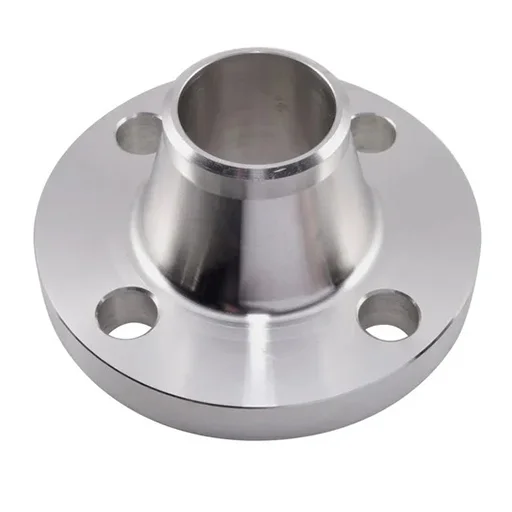
High nickel alloy forged flange
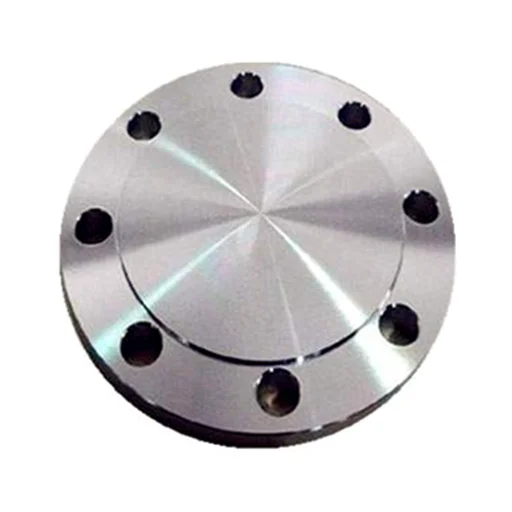
High nickel blind flange
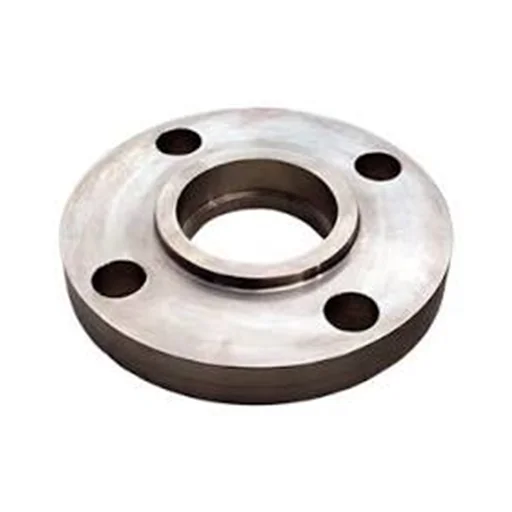
Ni socket weld flange
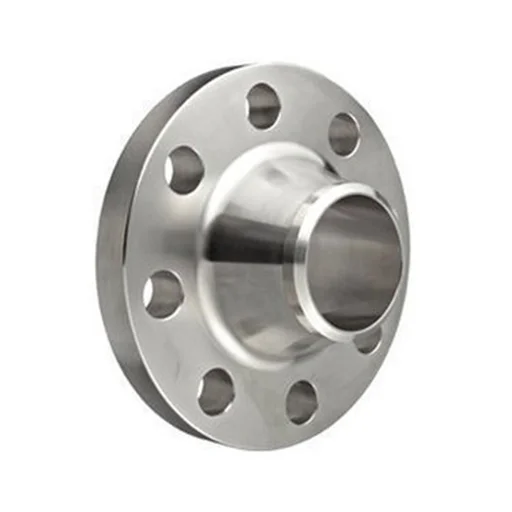
Nickel alloy weld neck flange
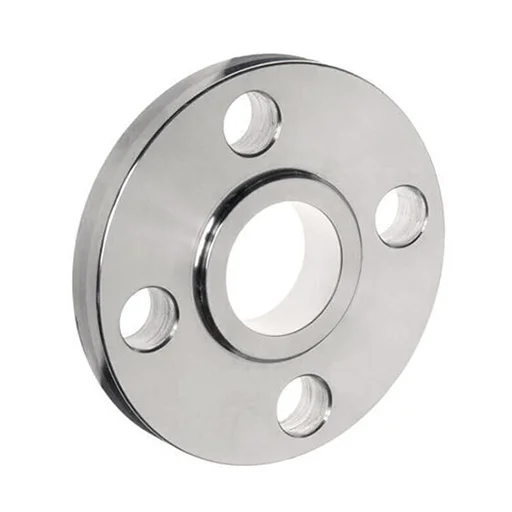
Nickel slip on flange
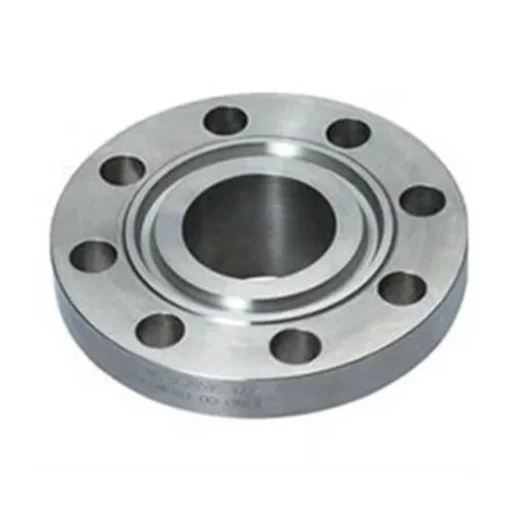
Pure nickel rtj flange
Applications of Nickel Alloy Flanges
Nickel alloy flanges from Kalpataru Piping are deployed across the most demanding industrial environments in the world. Their unique combination of corrosion resistance, high-temperature strength, and mechanical durability makes them the preferred choice for critical piping systems.
| Industry | Application | Recommended Nickel Grade |
|---|---|---|
| Oil & Gas / Offshore | Subsea pipelines, wellheads, risers, FPSO systems | Inconel 625, Monel 400, Hastelloy C276 |
| Chemical Processing | Reactors, heat exchangers, acid piping, caustic systems | Nickel 200/201, Hastelloy B2, Incoloy 825 |
| Pharmaceutical | Sterile process piping, CIP/SIP systems | Nickel 200, Inconel 625 |
| Power Generation | Steam lines, condensers, nuclear reactors | Incoloy 800H/HT, Inconel 600, Nickel 201 |
| Marine & Shipbuilding | Seawater cooling, desalination, ballast systems | Monel 400, Copper-Nickel 90/10 & 70/30 |
| Pulp & Paper | Bleach plant piping, chlorine dioxide systems | Hastelloy C276, Inconel 625 |
| Aerospace & Defence | Hydraulic lines, fuel systems, exhaust components | Inconel 718, Inconel 625 |
| Petrochemicals | Ethylene crackers, reformers, naphtha systems | Incoloy 800HT, Inconel 600 |
| Fertiliser Plants | Urea and ammonia process piping | Nickel 200, Monel 400, Incoloy 825 |
| Semiconductor / Electronics | Ultra-high-purity gas distribution systems | Nickel 200/201 (electropolished) |
Also see: Nickel Alloy Instrumentation Valves | Nickel Alloy Pipe Spools | Nickel Alloy Compression Tube Fittings
Comparison: Kalpataru Piping vs. Typical Market Suppliers
|
Criteria |
Kalpataru Piping |
Typical Market Traders |
|---|---|---|
|
Source |
Manufacturer + authorized stockist |
Re-seller / trader |
|
Price |
Mill-direct, no added margin |
Marked up 10–25% |
|
Material certificates |
Original mill TC (3.1/3.2) |
Often photocopied or unavailable |
|
Custom grades / sizes |
Yes — in-house machining |
No — limited to stock |
|
Third-party inspection |
Yes — all major TPIs welcomed |
Restricted or declined |
|
Delivery |
3–5 days ex-stock |
Uncertain, often delayed |
|
Export experience |
50+ countries, ISPM15 packing |
Limited or no export capability |
Our Full Nickel Alloy Product Range
Kalpataru Piping is not just a flange supplier — we are your complete nickel alloy piping solution partner:
- Nickel Alloy Pipes & Tubes
- Nickel Alloy Round Bars & Wires
- Nickel Alloy Buttweld Fittings
- Nickel Alloy Forged Fittings
- Nickel Alloy Fasteners
- Nickel Alloy Instrumentation Valves
- Nickel Alloy Wiremesh
- Nickel Alloy Perforated Sheet
- Nickel Alloy Long Radius Bends
- Nickel Alloy Filler Wire
- Nickel Alloy Pipe Spools
- Nickel Alloy Compression Tube Fittings
Manufacturing Standards & Quality Certifications
Kalpataru Piping’s nickel alloy flanges are manufactured and inspected in strict accordance with internationally recognized standards — the foundation of our EEAT (Experience, Expertise, Authoritativeness, Trustworthiness) position in the market.
Manufacturing Process
- Raw Material Sourcing — Mill-certified billets and plates sourced from approved global mills, with full heat traceability
- Hot Forging / Cold Forming — Flanges are hot-forged for grain refinement and superior mechanical properties
- Heat Treatment — Solution annealing / annealing per grade requirement to relieve stress and restore corrosion resistance
- Precision Machining — CNC machining to tight tolerances per ANSI B16.5 / B16.47 dimensional standards
- Marking & Identification — Each flange marked with heat number, grade, size, and pressure class for full traceability
- Third-Party Inspection — Available with SGS, Bureau Veritas, Lloyds, TOYO, and other TPIs
Quality Standards Compliance
|
Standard |
Scope |
|---|---|
|
ASTM B564 / ASME SB564 |
Material specification for nickel alloy forgings |
|
ANSI/ASME B16.5 |
Pipe flanges and flanged fittings NPS ½ through NPS 24 |
|
ANSI/ASME B16.47 |
Large diameter steel flanges NPS 26 through NPS 60 |
|
ASME B16.11 |
Forged fittings, socket welding and threaded |
|
ASME B31.3 |
Process piping |
|
ASME B31.1 |
Power piping |
|
EN 10204 3.1 / 3.2 |
Material test certificate requirements |
|
NACE MR0103 / MR0175 |
Sour service (H₂S) compliance |
|
ISO 9001:2015 |
Quality Management System certification |
|
PED 2014/68/EU |
Pressure Equipment Directive (for European export) |
Available Test Certificates
- Raw Material Certificate (Mill TC)
- Chemical Analysis Report
- Mechanical Properties Report (Tensile, Yield, Elongation, Hardness)
- 100% PMI (Positive Material Identification)
- Ultrasonic Test (UT) Report
- Radiography Test (RT) Report
- Hydrostatic Test Report
- NACE compliance certificate
- Third Party Inspection (TPI) report
Nickel Alloy Flanges Price
Nickel alloy flanges price is determined by several variables — primarily the alloy grade (nickel content), size, pressure class, flange type, and order quantity. At Kalpataru Piping, we offer mill-direct pricing with no hidden margins, backed by real-time LME nickel tracking.
Factors That Affect Nickel Alloy Flanges Price
- Alloy grade & nickel content — Nickel 200 (pure nickel) carries a premium over alloys diluted with iron/chromium
- Size & pressure class — Larger diameters and higher pressure classes (1500#, 2500#) cost significantly more
- Flange type — Weld neck flanges cost more than slip-on or blind due to machining complexity
- Quantity — Project-quantity orders receive volume discounts of 5–15%
- Certification requirements — NACE MR0175, PED, and Third-Party Inspection (TPI) add to the cost
- Lead time — Ex-stock items are priced lower than custom-manufactured pieces
Indicative Nickel Alloy Flanges Price List (USD per piece, Class 150, RF)
| Flange Type | Size | Material | Indicative Price (USD) |
|---|---|---|---|
| Slip-On | ½” | Nickel Alloy (Ni Alloy) | $49–65 each |
| Slip-On | 1″ | Nickel Alloy | $59–80 each |
| Slip-On | 2″ | Nickel Alloy | $118–163 each |
| Weld Neck | ½” | Forged Ni Alloy | $60–81 each |
| Weld Neck | 1″ | Forged Ni Alloy | $82–113 each |
| Weld Neck | 2″ | Forged Ni Alloy | $123–165 each |
| Weld Neck | 3″ | Forged Ni Alloy | $205–261 each |
| Weld Neck | 4″ | Forged Ni Alloy | $274–337 each |
| Threaded (FNPT) | ½” | Ni Alloy | $49–65 each |
| Threaded (FNPT) | 2″ | High Nickel | $196–248 each |
| Socket Weld | ½” | Forged Ni Alloy | $60–81 each |
Prices are indicative and subject to market fluctuation of LME nickel. Contact our sales team for a project-specific quotation with firm pricing.
Pro Tip: Order the full piping system together — nickel alloy pipes, fittings, and flanges — from Kalpataru Piping and save on freight, certification costs, and lead time.
Related Nickel Alloy Flanges Products
|
Material |
Link |
|---|---|
|
Stainless Steel Flanges |
|
|
Hastelloy Flanges |
|
|
Monel Flanges |
|
|
Inconel Flanges |
|
|
Duplex Steel Flanges |
|
|
Copper Nickel Flanges |
|
|
Carbon Steel Flanges |
|
|
Alloy Steel Flanges |
|
|
Titanium Flanges |
|
|
Aluminium Flanges |
FAQ’s About Nickel Alloy Flanges
What's the actual difference between Nickel 200 and Nickel 201 flanges?
Carbon content, mainly. Nickel 200 allows up to 0.15% carbon, which works fine at room and moderate temperatures. Nickel 201 caps carbon at 0.02%, which keeps it more stable at higher temperatures and makes it the better choice for welded assemblies that will see elevated heat in service.
What sizes and pressure classes do you manufacture?
From 1/2″ up to 24″ as standard, larger on request, in pressure classes 150 through 2500 (or PN6 to PN64 for DIN/EN specifications).
Which face type should I specify — FF, RF, or RTJ?
Flat Face suits low-pressure connections, typically against cast-iron mating flanges. Raised Face is the standard choice for most industrial service with a conventional gasket. Ring Type Joint is used where a high-pressure, metal-to-metal seal is required, common in upstream oil and gas applications.
Do you supply nickel flanges in other alloys besides pure nickel?
Yes — alongside Nickel 200/201, we manufacture flanges in Monel 400, Inconel, Incoloy, and Hastelloy, for applications that need a different balance of corrosion resistance and mechanical properties.
What certification do you provide with nickel flanges?
Material Test Certificates per EN 10204 3.1 are provided as standard, with 3.2 and third-party inspection reports available on request for critical applications.
Can nickel flanges handle high-temperature service?
Yes, within limits — Nickel 201 in particular is suited to elevated-temperature service because of its low carbon content. For very high-temperature applications, a nickel-chromium alloy like Inconel is often a better fit.
Do you supply matching fittings in the same nickel grade?
Yes — alongside flanges we also supply buttweld fittings, forged fittings, and compression tube fittings in Nickel 200/201, so a full assembly can come from one supplier.
Ready to Source Premium Nickel Alloy Flanges?
Kalpataru Piping is India’s most comprehensive nickel alloy flanges manufacturer and exporter. Whether you need 2 flanges for a repair or 2,000 flanges for a greenfield project, our team is ready to support you with:
- Instant availability check across 50+ nickel alloy grades
- Competitive, mill-direct nickel alloy flanges pricing
- Complete documentation — MTCs, PMI, NACE, TPI
- Worldwide shipping with safe export packing