Nickel Alloy Steel Products
Home > Material Of Construction > Nickel Alloy Steel Products
40+ nickel alloy grades. Pipes, plates, bars, flanges, fittings and fasteners — mill-certified to ASTM, ASME and DIN, dispatched from ready stock in Mumbai to 30+ countries.
- EN 10204 3.1 Mill Test Certificate with every consignment
- Ready stock — dispatch in 3–7 working days
- Third-party inspection welcome (Lloyd’s, BV, SGS, TÜV)
- Custom sizes, grades and finishes made to order
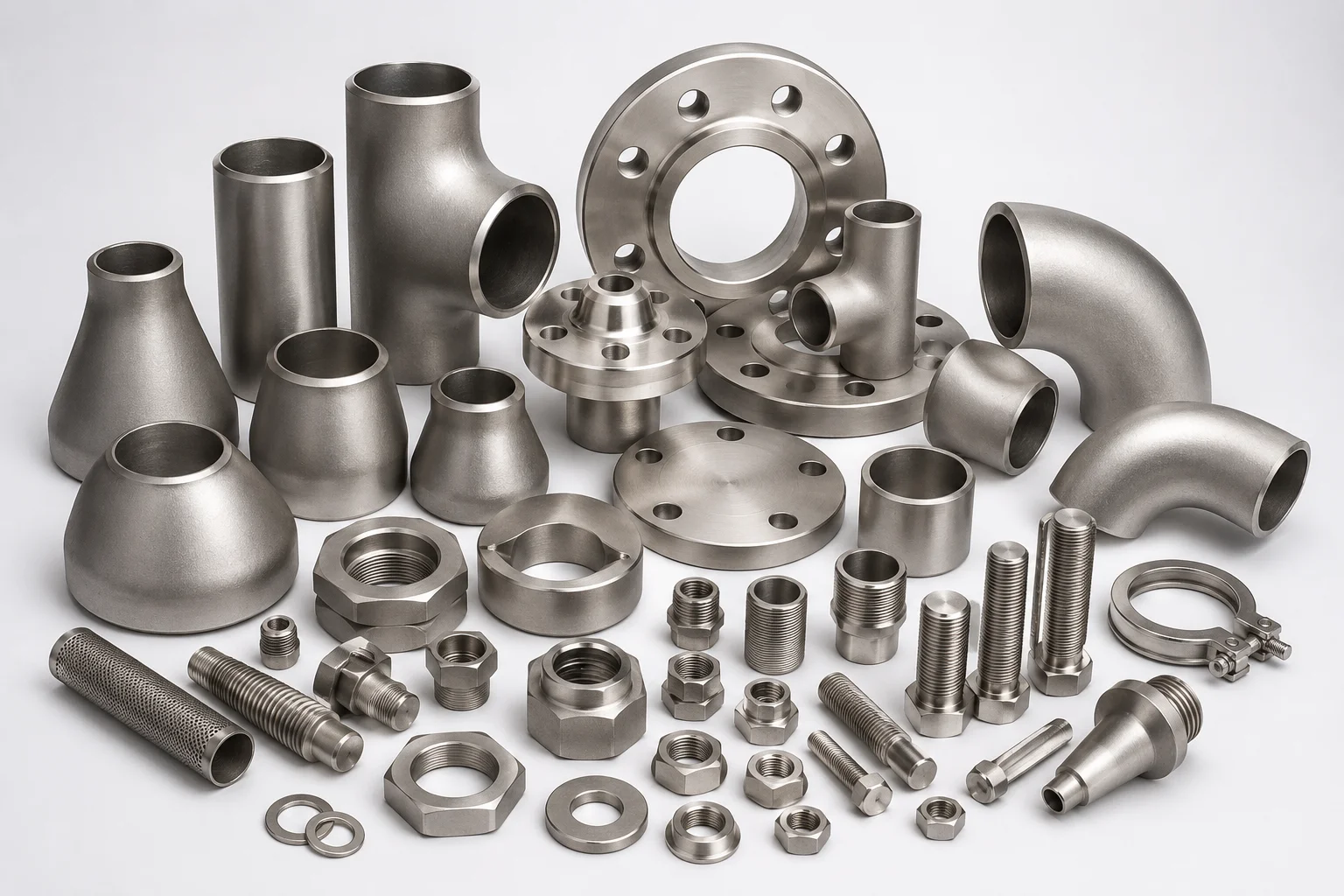
Table of Content
- Nickel Alloy Size & Dimension Range
- Standards Followed by Product Category
- Nickel Alloy Steel Products Chemical Composition
- Nickel Alloy Steel Products Mechanical Properties
- Nickel Alloy Steel Products Physical Properties
- Nickel Alloy Steel Products Equivalent Grades
- Which Nickel Alloy Grade Should You Choose?
- Where Nickel Alloy Steel Products Are Used
What Are Nickel Alloy Steel Products?
Nickel alloy steel is a family of high-performance materials in which nickel is combined with chromium, molybdenum, cobalt, copper or iron to produce metals that survive conditions ordinary steel simply cannot. The result is exceptional corrosion resistance, retained strength at red heat, and dependable performance under sustained pressure and cyclic load.At Kalpataru Piping, we manufacture, stock and export a complete range of nickel alloy steel products — seamless and welded pipes, plates, sheets, coils, round bars, wires, flanges, forged and buttweld fittings, and fasteners — across more than 40 grades including Nickel 200/201, Alloy 20, Alloy 330, Haynes 25, Haynes 188, Nimonic C263, Waspaloy, MP35N and MP159. Every item is produced to ASTM, ASME, DIN, EN and ISO specifications, backed by an EN 10204 3.1 mill test certificate, and available with third-party inspection on request. Whether you are lining a sulphuric acid reactor, tubing a refinery heat exchanger, or machining turbine hardware to a tight delivery window, our technical team helps you choose the right grade the first time — and ships it from ready stock.
Nickel Alloy Steel Products List

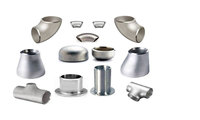
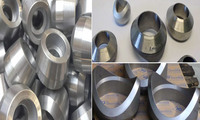

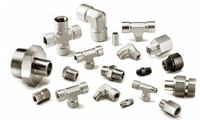
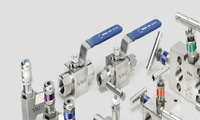


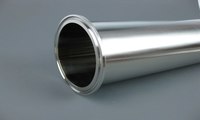


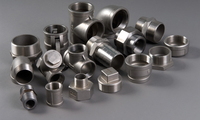
Nickel Alloy Size & Dimension Range
| Product | Size Range | Thickness / Schedule | Length |
|---|---|---|---|
| Seamless Pipes | 6 mm – 219 mm OD (1/8″ – 8″ NB) | SCH 5 – SCH XXS | Up to 6 m / random |
| Welded Pipes | 6 mm – 1219 mm OD (1/8″ – 48″ NB) | SCH 5 – SCH 80 | Up to 12 m |
| Plates & Sheets | 1000 × 2000 mm to 2500 × 6000 mm | 0.5 mm – 100 mm | Custom cut |
| Coils & Foils | Width 10 mm – 1250 mm | 0.05 mm – 3 mm | Coil form |
| Round Bars | 4 mm – 500 mm dia | — | 100 mm – 6000 mm |
| Flanges | 1/2″ – 48″ | Class 150 – 2500 | — |
| Fasteners | M3 – M100 / #4 – 4″ | — | 3 mm – 200 mm |
Standards Followed by Product Category
| Product Category | Grades Covered | Standards Followed |
|---|---|---|
| Pipes & Tubes | Nickel 200/201, Alloy 20, Alloy 330 | ASTM B161, B163, B165 / ASME SB / DIN |
| Plates, Sheets & Coils | Nickel 200/201, Haynes 188, Alloy 20 | ASTM B162, B463, B168 |
| Bars, Rods & Wires | Haynes 25, Nimonic C263, Waspaloy | ASTM B160, B637 / AMS |
| Forged & Buttweld Fittings | Nickel 200/201, Alloy 20 | ASME B16.11, B16.9 / ANSI |
| Flanges & Fasteners | MP35N, MP159, Alloy 330 | ASME B16.5 / ASTM F467, F468 / DIN / ISO |
Nickel Alloy Steel Products Chemical Composition (typical, % by weight)
| Alloy | Nickel (Ni) | Chromium (Cr) | Iron (Fe) | Other Key Elements |
|---|---|---|---|---|
| Nickel 200 / 201 | ≥ 99.0 | — | ≤ 0.40 | C, Mn, Cu (trace) |
| Alloy 20 | 32 – 38 | 19 – 21 | Balance | Cu 3–4, Mo 2–3, Nb |
| Alloy 330 | 34 – 37 | 17 – 20 | Balance | Si 0.75–1.5 |
| Haynes 25 (L-605) | 9 – 11 | 19 – 21 | ≤ 3 | Co Balance, W 14–16 |
| Haynes 188 | 20 – 24 | 20 – 24 | ≤ 3 | Co Balance, W 13–15, La |
| Nimonic C263 | Balance (≈ 50) | 19 – 21 | ≤ 0.7 | Co 19–21, Mo 5.6–6.1, Ti, Al |
| Waspaloy | Balance (≈ 58) | 18 – 21 | ≤ 2 | Co 12–15, Mo 3.5–5, Ti, Al |
Note: values are indicative. Heat-specific composition is stated on the mill test certificate supplied with every order.
Nickel Alloy Steel Products Mechanical Properties (room temperature, annealed)
| Alloy | Tensile Strength (MPa) | Yield Strength (MPa) | Elongation (%) | Hardness (HB) |
|---|---|---|---|---|
| Nickel 200 / 201 | 380 – 460 | 105 – 150 | 40 – 45 | ≤ 130 |
| Alloy 20 | 551 | 241 | 30 | ≤ 217 |
| Alloy 330 | 550 | 230 | 35 | ≤ 200 |
| Haynes 25 | 930 | 520 | 25 | ≈ 250 |
| Haynes 188 | 960 | 485 | 50 | ≈ 250 |
| Nimonic C263 | 950 | 520 | 20 | ≈ 300 |
| Waspaloy | 1275 | 795 | 25 | ≈ 350 |
Nickel Alloy Steel Products Physical Properties
| Alloy | Density (g/cm³) | Melting Range (°C) | Thermal Conductivity (W/m·K) | Max Service Temp (°C) |
|---|---|---|---|---|
| Nickel 200 / 201 | 8.9 | 1435 – 1446 | 60 – 70 | ≈ 315 (200) / 650 (201) |
| Alloy 20 | 8.1 | 1357 – 1430 | 10 – 12 | ≈ 500 |
| Alloy 330 | 8.0 | 1370 – 1400 | 12 | ≈ 1150 |
| Haynes 25 | 9.1 | 1330 – 1410 | 11 | ≈ 1000 |
| Nimonic C263 | 8.4 | 1300 – 1355 | 9 | ≈ 850 |
| Waspaloy | 8.2 | 1330 – 1360 | 11 | ≈ 870 |
Nickel Alloy Steel Products Equivalent Grades (UNS / Werkstoff / EN / DIN)
| Alloy | UNS No. | Werkstoff Nr. | EN / DIN Equivalent |
|---|---|---|---|
| Nickel 200 | N02200 | 2.4066 | Ni 99.2 |
| Nickel 201 | N02201 | 2.4068 | Ni 99.2 LC (LC-Ni 99) |
| Alloy 20 | N08020 | 2.4660 | X1NiCrMoCu 25-20-5 |
| Alloy 330 | N08330 | 1.4886 | X12NiCrSi 36-16 |
| Haynes 25 (L-605) | R30605 | 2.4964 | CoCr20W15Ni |
| Haynes 188 | R30188 | 2.4683 | CoCr22NiW |
| Nimonic C263 | N07263 | 2.4650 | NiCo20Cr20MoTi |
| Waspaloy | N07001 | 2.4654 | NiCr19Co14Mo4Ti3Al |
Which Nickel Alloy Grade Should You Choose?
| If Your Service Condition Is… | Recommended Grade | Why |
|---|---|---|
| Concentrated caustic soda / alkalis | Nickel 201 | Low carbon prevents graphitisation above 315 °C |
| Sulphuric acid, all concentrations | Alloy 20 | Copper + molybdenum resist acid attack |
| Chloride-rich seawater | Alloy 20 / Nickel-Cu family | Resists pitting and crevice corrosion |
| Cyclic heating above 1000 °C | Alloy 330 | Excellent carburisation & oxidation resistance |
| Gas turbine hot section (900–1000 °C) | Haynes 25 / Haynes 188 | Cobalt base retains creep strength |
| Turbine discs, rings, high creep load | Nimonic C263 / Waspaloy | Precipitation-hardened; high rupture strength |
| Ultra-high-strength fasteners, non-magnetic | MP35N / MP159 | Tensile up to 2000 MPa with corrosion resistance |
| Food, pharma, high-purity contact | Nickel 200 | Non-contaminating, hygienic surface |
Not sure? Send us your operating temperature, pressure, media and concentration. Our metallurgist will recommend a grade — and a second-choice grade at a lower cost — within one working day.
Nickel Alloy Steel vs Stainless Steel vs Carbon Steel
|
Parameter |
Nickel Alloy Steel |
Stainless Steel |
Carbon Steel |
|---|---|---|---|
|
Corrosion Resistance |
Excellent (acids, alkalis, chlorides) |
Good (mild to moderate media) |
Poor |
|
Max Service Temperature |
Up to ~1150 °C |
Up to ~870 °C |
Up to ~425 °C |
|
High-Temp Strength |
Retained (creep resistant) |
Drops sharply |
Drops sharply |
|
Oxidation Resistance |
Excellent |
Good |
Poor |
|
Relative Cost |
High |
Medium |
Low |
|
Weldability |
Good (needs matched filler) |
Excellent |
Excellent |
|
Service Life in Harsh Media |
Longest |
Moderate |
Shortest |
|
Typical Use |
Reactors, turbines, acid plants |
Food, architecture, general process |
Structural, water lines |
Total-cost insight: Nickel alloy carries a higher purchase price, but in acid or high-temperature service it routinely delivers 3–5× the life of stainless steel — which usually makes it the cheaper material per year of service. We are happy to run that comparison against your actual duty cycle.
Where Nickel Alloy Steel Products Are Used
| Industry | Typical Components | Why Nickel Alloy |
|---|---|---|
| Chemical & Petrochemical | Reactors, acid lines, pickling tanks, valves | Withstands sulphuric, hydrochloric & caustic attack |
| Oil & Gas / Refining | Offshore risers, flowlines, refinery piping | Resists sour service, chlorides & H₂S |
| Aerospace | Turbine discs, combustor liners, fasteners | Creep strength at 900 °C+ |
| Power Generation | Superheaters, boiler tubes, heat exchangers | Oxidation and thermal-fatigue resistance |
| Marine & Desalination | Seawater piping, condenser tubing, pumps | Immunity to seawater pitting |
| Pharmaceutical & Food | Process vessels, hygienic piping, mixers | Non-contaminating, easily cleaned |
| Nuclear | Steam generator tubing, core components | Radiation and corrosion stability |
| Heat Treatment & Furnaces | Retorts, muffles, radiant tubes, fixtures | Carburisation resistance at 1100 °C |
How We Manufacture and Test Every Consignment
This fold carries most of the EEAT weight. Be specific — vagueness here is what makes competitor pages feel thin.
|
Stage |
What Happens |
Evidence You Receive |
|---|---|---|
|
1. Raw Material Sourcing |
Ingots and billets procured only from approved, audited mills |
Mill name & heat number on MTC |
|
2. Melting & Refining |
VIM / VAR / ESR refining for critical superalloy grades |
Melt route stated on certificate |
|
3. Forming |
Hot rolling, cold drawing, forging, extrusion to spec |
Dimensional report |
|
4. Heat Treatment |
Solution annealing, ageing, stress relieving |
Heat-treatment chart |
|
5. Finishing |
Pickling, passivation, polishing, machining |
Surface finish record |
|
6. Testing |
Chemical, tensile, hardness, IGC, flaring, flattening |
Full test report |
|
7. NDT |
Ultrasonic, radiographic, dye penetrant, eddy current, hydro |
NDT report |
|
8. Inspection |
Internal QC + optional TPI (SGS, BV, Lloyd’s, TÜV) |
TPI release note |
|
9. Marking & Packing |
Heat-number marking, sea-worthy packing |
Packing list & photos |
Tests We Perform
- Chemical analysis (spectro / wet analysis) — verifies grade composition
- Mechanical testing — tensile, yield, elongation, hardness, impact
- Intergranular corrosion test (IGC) as per ASTM A262 / G28
- Positive Material Identification (PMI) — on request, on every piece
- Hydrostatic and pneumatic pressure testing
- Ultrasonic (UT), radiographic (RT), dye-penetrant (DP) and eddy-current testing
- Micro / macro examination and flattening, flaring, bending tests for tubes
Certified, Documented, Traceable
|
Document / Certification |
What It Covers |
|---|---|
|
EN 10204 Type 3.1 MTC |
Chemical + mechanical results certified by the manufacturer’s QA |
|
EN 10204 Type 3.2 (on request) |
Countersigned by an independent third-party inspector |
|
ISO 9001 Quality Management |
Documented process control across manufacturing and dispatch |
|
ASTM / ASME SB Compliance |
Product conforms to the cited material specification |
|
PED 97/23/EC (on request) |
For pressure equipment supplied into the EU |
|
NACE MR0175 / ISO 15156 |
For sour-service oil and gas applications |
|
Third-Party Inspection |
SGS, Bureau Veritas, Lloyd’s Register, TÜV, IRS, DNV |
|
Certificate of Origin |
Issued for all export consignments |
What Determines the Price of Nickel Alloy Steel Products?
Transparency here is a strong trust signal and captures the high-volume ‘price’ queries without publishing a fixed rate that will go stale.
|
Factor |
Effect on Price |
|---|---|
|
Grade & nickel content |
Higher Ni, Co and Mo content raises cost significantly |
|
LME nickel price |
Base metal is a commodity — quotes are validity-dated |
|
Form & manufacturing route |
Seamless costs more than welded; forged more than rolled |
|
Size & wall thickness |
Non-standard and heavy-wall sizes carry a premium |
|
Order quantity |
Volume orders attract better per-kg pricing |
|
Testing & certification level |
TPI, PMI, NACE and 3.2 certification add cost |
|
Finishing & machining |
Polishing, passivation and machining to drawing |
|
Delivery terms |
Ex-works vs FOB vs CIF vs DDP |
|
Order Type |
Typical Lead Time |
|
Standard grades & sizes from ready stock |
3 – 7 working days |
|
Cut-to-size / value-added finishing |
7 – 12 working days |
|
Custom grade or non-standard size (mill run) |
4 – 8 weeks |
|
Export consignment (incl. documentation) |
Add 5 – 10 days |
Nickel Alloy Steel Products Exported Worldwide
From our Mumbai facility we export nickel alloy steel products to buyers in the Middle East (UAE, Saudi Arabia, Qatar, Oman, Kuwait, Bahrain), Southeast Asia (Singapore, Malaysia, Indonesia, Vietnam, Thailand), Africa (Nigeria, Egypt, South Africa, Kenya), Europe (Germany, Italy, Netherlands, UK, Spain), the Americas (USA, Canada, Brazil, Mexico) and Oceania (Australia, New Zealand). All export shipments include a Certificate of Origin, full test documentation and sea-worthy packing, with Incoterms to suit your procurement policy.
FAQs — Nickel Alloy Steel Products
What is nickel alloy steel used for?
Nickel alloy steel is used wherever ordinary steel fails — chemical reactors and acid lines, refinery and offshore piping, gas-turbine hot sections, boiler superheaters, seawater and desalination systems, and hygienic pharmaceutical equipment. Its corrosion resistance and high-temperature strength make it the default choice in aggressive, high-value process environments.
Is nickel alloy stronger than stainless steel?
At room temperature some stainless grades match nickel alloys on tensile strength. The difference shows up under heat: above roughly 600 °C, stainless steel softens rapidly while nickel and cobalt superalloys such as Waspaloy and Haynes 25 retain most of their strength and creep resistance.
What is the difference between Nickel 200 and Nickel 201?
Both are commercially pure nickel. Nickel 201 has a lower carbon content (max 0.02% vs 0.15%), which prevents embrittlement from graphite precipitation. That makes Nickel 201 the correct choice for service above 315 °C, while Nickel 200 is fine for lower-temperature caustic and food-contact duty.
Which nickel alloy is best for high temperature?
For sustained service between 900 °C and 1000 °C, Haynes 25 and Haynes 188 are the strongest options. For furnace and heat-treatment hardware up to about 1150 °C, Alloy 330 offers excellent carburisation resistance at lower cost. Nimonic C263 and Waspaloy suit high-creep turbine components.
Which grade resists sulphuric acid best?
Alloy 20 (Carpenter 20) was developed specifically for sulphuric acid service. Its copper and molybdenum additions resist attack across the full concentration range, and its stabilised composition prevents intergranular corrosion in welded assemblies.