Carbon Steel Products
Home > Material Of Construction > Carbon Steel
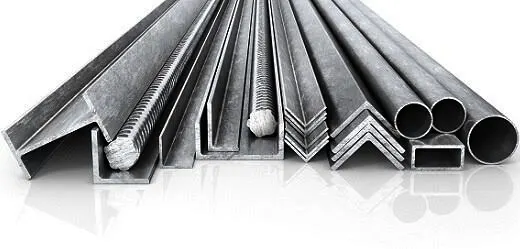
Kalpataru Piping Solutions is a carbon steel manufacturer and supplier in India, producing and stocking carbon steel pipes, fittings, flanges, valves and round bars in low, medium, high and ultra-high carbon grades. Carbon steel is an iron-carbon alloy in which carbon content — not alloying additions — sets the mechanical behaviour, and it remains the highest-tonnage material in process piping because it delivers usable strength at the lowest cost per tonne. We supply ASTM, ASME, DIN, JIS, BS and EN specifications, with an EN 10204 3.1 mill test certificate on every consignment. Each grade offers different uses depending on the required strength, hardness & ductility.
Low carbon steel contains 0.05–0.30% carbon and offers the best ductility and weldability of the family. Medium carbon steel, at 0.30–0.60% carbon, trades some weldability for higher strength and is the standard choice for shafts, gears and forged components. High carbon steel, at 0.60–1.00% carbon, is hardened and tempered for tools, blades and springs, while ultra-high carbon steel above 1.00% carbon is reserved for cutting edges and wear parts offering superior hardness & wear resistance to use for tools, cutting instruments & high strength wires.
Carbon steel tensile strength runs from roughly 325 MPa for hot-rolled 1010 to over 900 MPa for hardened 1080, depending on grade and heat-treatment condition. The melting range is approximately 1425–1540 °C, falling as carbon content rises. Melting range should not be confused with service limit: continuous service in air is limited to around 425–480 °C, above which carbon steel loses strength rapidly and creep becomes the governing design case.
Carbon Steel Manufacturer in India
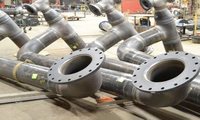
Kalpataru Piping Solutions manufactures and stocks carbon steel pipes, tubes, buttweld and forged fittings, flanges, valves and round bars at our Mumbai facility, with direct export dispatch through JNPT/Nhava Sheva. Billets and hot-rolled coil are sourced only from approved mills, and every heat is traceable by heat number on the mill test certificate.
Our carbon steel pipe range covers ASTM A106 Grade B (seamless, high-temperature service), ASTM A53 Grade B (welded and seamless) and API 5L Grade B (line pipe), in NB 1/2″ to 24″, schedules SCH 10 to SCH XXS. Each consignment is supplied with chemical and mechanical test reports, hydrostatic test results, and third-party inspection by SGS, Bureau Veritas, Lloyd’s or TÜV on request. Our products are available in various grades, sizes & specifications. Contact us today for competitive pricing and prompt delivery.
Carbon Steel Products We Supply
We manufacture and stock the full carbon steel product range in-house. Each product page below carries full dimensional data, schedule charts and weight tables.
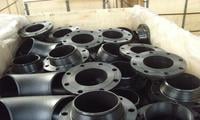
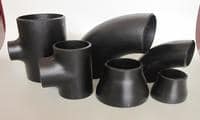
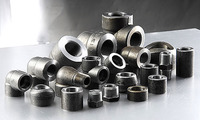
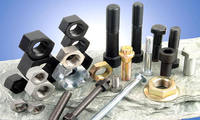


Types of Carbon Steel
Carbon steel is divided into four main types based on carbon content. Each & every type have distinct properties suitable for various applications.
- Low Carbon Steel: It contains up to 0.3% carbon content. It has excellent ductility, malleability or welding. This type is used in sheet metal, structural components & construction materials due to its flexibility.
- Medium Carbon Steel: Constructed with carbon content between 0.3% to 0.6%. It offers higher strength than low carbon steel and is used for mechanical parts such as gears, shafts, axles and crankshafts, which require both toughness and wear resistance..
- High Carbon Steel: Contain between 0.6% & 1.0% carbon for making them very strong, hard & wear resistant. Used for tools, blades, springs & other components that require good edge retention.
- Ultra High Carbon Steel: With carbon content exceeding 1.0%. It is extremely hard & wear-resistant. It is used for specialized tools, high wear components & cutting edge blades that require superior strength.
Carbon Steel Specification
Lets learn about the specification of our carbon steel products:
|
Carbon Steel |
Specification |
|
Standard |
ASTM, ASME, DIN, JIS, BS, EN |
|
Grade |
Low Carbon Steel (Mild Steel), Medium Carbon Steel, High Carbon Steel, Ultra-High Carbon Steel, A36 Steel (ASTM A36), 1018 Steel (UNS G10180), 1045 Steel (UNS G10450), 1095 Steel (UNS G10950) |
|
Types |
Carbon Steel Pipes, Pipe Fittings, Valves, Round Bar, Expansion Bellow, and Flanges |
Carbon Steel Chemical Composition
To choose the right material for your business needs, understanding the chemical composition of carbon steel is very important. Carbon steel products are designed with iron or carbon & small amounts of other elements like manganese, sulphur, phosphorus & silicon added to improve their properties.
Low Carbon Steel Chemical Composition
|
Low Carbon Steel grade Chemical Composition |
|||||||||
|
Grade |
UNS Number |
S (max) |
C (max) |
P (max) |
Mn (max) |
Si |
Cr |
Ni |
Mo |
|
1010 |
G10100 |
.05% |
.08-.13% |
.04% |
.30-.60% |
– |
– |
– |
– |
|
1018 |
G10180 |
.05% |
.14-.20% |
.04% |
.60-.90% |
– |
– |
– |
– |
|
1020 |
G10200 |
.05% |
.17-.23% |
.04% |
.30-.60% |
– |
– |
– |
– |
|
1022 |
G10220 |
.05% |
.17-.23% |
.04% |
.70-1.00% |
– |
– |
– |
– |
Easy to shape & weld. Commonly used in general construction or structural work.
Medium Carbon Steel Chemical Composition
|
Grade |
UNS |
C |
Mn |
P (max) |
S (max) |
Si |
|---|---|---|---|---|---|---|
|
1030 |
G10300 |
0.28–0.34% |
0.60–0.90% |
0.040% |
0.050% |
0.15–0.35% |
|
1040 |
G10400 |
0.37–0.44% |
0.60–0.90% |
0.040% |
0.050% |
0.15–0.35% |
|
1045 |
G10450 |
0.43–0.50% |
0.60–0.90% |
0.040% |
0.050% |
0.15–0.35% |
|
1050 |
G10500 |
0.48–0.55% |
0.60–0.90% |
0.040% |
0.050% |
0.15–0.35% |
Stronger and harder than low carbon steel, and responsive to quenching and tempering. Used for forged shafts, gears, axles, crankshafts and couplings where surface hardness and fatigue strength matter more than weldability.
High Carbon Steel Chemical Composition
|
Grade |
UNS Number |
Carbon (C) |
Manganese (Mn) |
Sulfur (S) |
Phosphorus (P) |
Silicon (Si) |
Chromium (Cr) |
Nickel (Ni) |
Molybdenum (Mo) |
|
1070 |
G10700 |
0.65–0.75% |
0.60–0.90% |
0.040% |
0.050% |
≤ 0.30% |
– |
– |
– |
|
1060 |
G10600 |
0.55–0.65% |
0.60–0.90% |
0.05% max |
0.04% max |
≤ 0.30% |
– |
– |
– |
|
1080 |
G10800 |
0.75–0.88% |
0.60–0.90% |
0.05% max |
0.04% max |
≤ 0.30% |
– |
– |
– |
|
1095 |
G10950 |
0.90–1.03% |
0.30–0.50% |
0.05% max |
0.04% max |
≤ 0.30% |
– |
– |
– |
Very hard or strong with great wear resistance. Best for tools, blades, springs & parts that need high strength.
Properties of Carbon Steel
The carbon steel material properties vary depending on the carbon content. As the carbon percentage increases, so does the hardness and strength—but ductility may decrease. Low-carbon steel is more ductile and easier to form, while high-carbon steel is harder and more wear-resistant.
|
Alloy Type |
AISI |
Carbon content (wt.%) |
Yield strength (MPa) |
Tensile strength (MPa) |
Elongation, % in 50 mm (2 in.) |
|
Low |
1010 |
.10 |
180 |
325 |
28 |
|
Low |
1020 |
.20 |
205 |
380 |
25 |
|
Low |
A36 |
.29 |
220 |
400 |
23 |
|
Low |
A516 Gr 70 |
.31 |
260 |
485 |
21 |
|
Medium |
1030 |
.27 – .34 |
325 |
460 |
12 |
|
Medium |
1040 |
.37 – .44 |
415 |
620 |
25 |
|
High |
1080 |
.75 – .88 |
440 |
924 |
12 |
|
High |
1095 |
.90 – 1.04 |
380 |
665 |
10 |
Thermal Properties of Carbon Steel
The carbon steel thermal properties are crucial for applications involving high temperatures. Typical thermal properties include:
|
Thermal Properties |
Metric |
English |
|
CTE, linear |
9.90 – 14.8 µm/m-°C |
5.50 – 8.22 µin/in-°F |
|
Specific Heat Capacity |
0.410 – 0.669 J/g-°C |
0.0980 – 0.160 BTU/lb-°F |
|
Thermal Conductivity |
19.0 – 52.0 W/m-K |
132 – 361 BTU-in/hr-ft²-°F |
|
Maximum Service Temperature, Air |
120 – 482 °C |
248 – 900 °F |
|
Transformation Temperature |
183 – 910 °C |
361 – 1670 °F |
Physical Properties of Carbon steel
|
Physical Properties |
Metric |
English |
|
Density |
7.75 – 7.89 g/cc |
0.280 – 0.285 lb/in³ |
|
Particle Size |
6.70 – 12.0 µm |
6.70 – 12.0 µm |
|
Reduction of Area |
20.0 – 71.4 % |
20.0 – 71.4 % |
|
Modulus of Elasticity |
187 – 213 GPa |
27100 – 30900 ksi |
|
Bulk Modulus |
152 – 163 GPa |
22000 – 23600 ksi |
|
Poissons Ratio |
0.280 – 0.300 |
0.280 – 0.300 |
|
Fatigue Strength |
138 – 614 MPa |
20000 – 89100 psi |
|
Fracture Toughness |
80.9 – 143 MPa-m½ |
73.7 – 130 ksi-in½ |
|
Machinability |
40.0 – 80.0 % |
40.0 – 80.0 % |
|
Shear Modulus |
72.0 – 82.0 GPa |
10400 – 11900 ksi |
|
Izod Impact |
9.00 – 135 J |
6.64 – 99.6 ft-lb |
|
Charpy Impact |
10.8 – 65.0 J |
8.00 – 47.9 ft-lb |
Carbon Steel Grades
Carbon steel grades are divided based on their carbon content, ranging from low to high. Low carbon steel grades are softer, more ductile & easy to weld to use for structural & automotive parts. High carbon steel grades are harder & stronger to use for tools, springs & wear-resistant applications. Each grade offers specific properties suited for different industrial uses.
|
Grade |
ASTM/ASME Standard |
Description |
|
A36 |
ASTM A36 |
Structural steel often used in general construction |
|
A572-50 |
ASTM A572 Grade 50 |
High-strength, low-alloy structural steel |
|
A514 |
ASTM A514 |
High-yield-strength, quenched, and tempered alloy steel |
|
A516 |
ASTM A516 |
Pressure vessel quality steel |
|
A106 |
ASTM A106 |
Seamless carbon steel pipe for high-temperature service |
|
A53 |
ASTM A53 |
Welded and seamless carbon steel pipe |
|
A500 |
ASTM A500 |
Cold-formed welded and seamless carbon steel structural tubing |
|
A105 |
ASTM A105 |
Forgings for piping applications |
|
1018 |
ASTM A108 |
Cold-drawn carbon steel, general-purpose |
|
1045 |
ASTM A108 |
Medium-carbon steel, general-purpose |
Carbon Steel Density
The density of carbon steel is approximately 7850 kg/m³ (7.85 g/cm³), varying between 7.75 and 7.89 g/cm³ with carbon content and residual elements. Density is used directly in pipe weight calculation: a 6″ NB SCH 40 A106 Gr B pipe weighs 28.26 kg/m, which is how shipping weight and support spacing are derived on a piping isometric.
Carbon Steel Uses & Applications
The wide range of carbon steel uses are available due to its different carbon content levels—low, medium, high which affect its hardness, ductility & strength.
Applications of Carbon Steel
Carbon steel is specified across construction, oil & gas, power generation, water treatment and general manufacturing. In piping specifically, A106 Gr B carries high-temperature service up to about 425 °C, A53 Gr B covers general utility and water lines, and API 5L Gr B is used for hydrocarbon transmission. Carbon steel is not suitable for corrosive or chloride-bearing media without lining or coating — for those duties see our stainless steel and nickel alloy ranges.
|
Carbon Steel Types |
Applications |
|
Low Carbon Steel |
Automotive body panels, Structural frameworks, Wire products & Fencing and tubing |
|
Medium Carbon Steel |
Building construction, HVAC ductwork, Sheet metal products & Appliances |
|
High Carbon Steel |
Cutting tools (knives, blades, saws), Springs and wires, Rail tracks & Dies and punches |