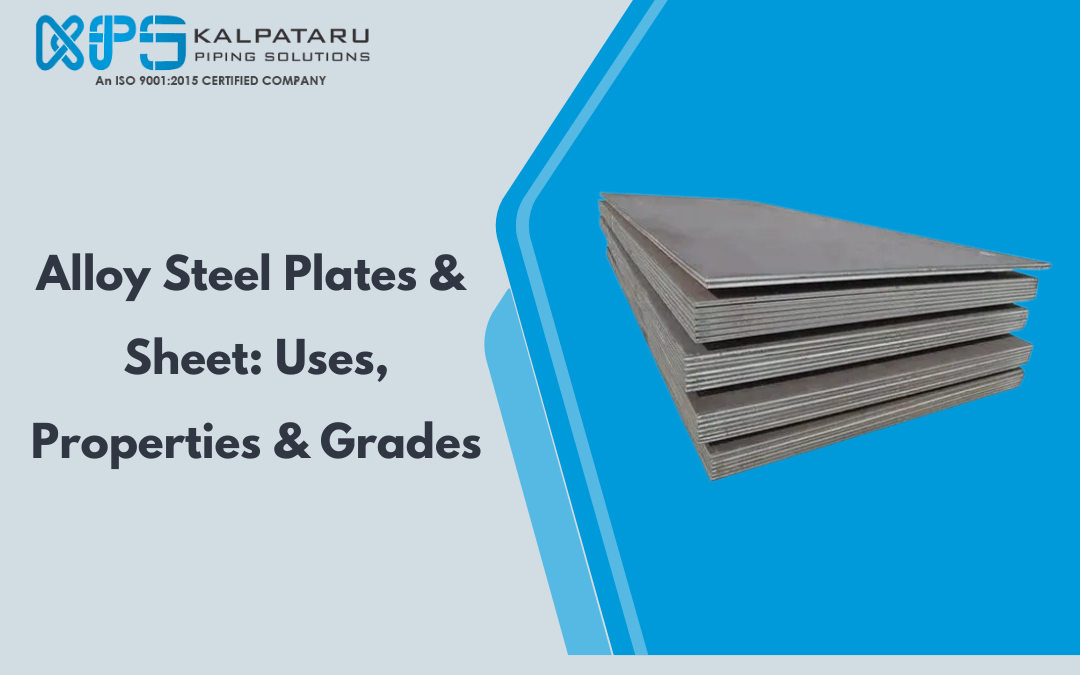
Alloy steel plates and sheets are essential in many industries like construction and aerospace. They’re special because they’re strong, durable, and come in different types. This article will explain what they are, how they’re used, and grades etc.
What is Alloy Steel Plate?
Alloy steel plate is composed of different elements such as iron, carbon, manganese, chromium, nickel, molybdenum, and vanadium. The specific combination of these elements gives the metal unique properties that make it incredibly useful in many industries. For example, some alloys have a higher resistance to corrosion than others. This makes them ideal for use in chemical and medical equipment where corrosive resistance is needed.
Why to choose Alloy Steel Plates?
Alloy steel plates, especially ASTM A204 Alloy Steel Plates, are preferred in many industries for their durability, strength, affordability, and corrosion resistance. They handle heavy loads and extreme conditions well, making them ideal for various industry applications. With excellent weldability and machinability, they are versatile and cost-effective compared to stainless steel. They also require minimal maintenance, are eco-friendly, and fully recyclable, making them sustainable choices for various applications.
Factors Affecting Alloying
Alloying for steel alloy plates and sheets is influenced by several factors, including desired properties, application requirements, and cost considerations. Manufacturers carefully select alloying elements such as manganese, chromium, nickel, and molybdenum to enhance specific characteristics such as strength, durability, corrosion resistance, and heat resistance. The proportions of alloy steel sheet metal are tailored to meet the performance demands of various industrial applications, ensuring that the resulting alloy steel exhibits optimal mechanical and physical properties. Additionally, factors like availability and market demand also play a role in determining the alloying process to strike a balance between performance and affordability, ultimately producing high-quality alloy steel plates and sheets suited for diverse applications.
How To Select the Right Alloy Steel Plate?
Selecting the right alloy steel plate and sheet involves considering several factors to ensure it meets the specific requirements of your application. Here’s a step-by-step guide to help you make the right choice:
1. Define Application Requirements: Understand the application’s demands, including mechanical properties, corrosion resistance, temperature resistance, and other environmental factors. 2. Thickness and Dimensional Requirements: Consider the thickness and dimensions of the plate or sheet needed for your project. Ensure the selected material is available in the required sizes. 3. Manufacturing Process: Consider the manufacturing processes involved, such as welding, machining, forming, and heat treatment. Choose a steel grade that is compatible with the intended fabrication methods. 4. Standards and Specifications: Check applicable industry standards and specifications to ensure compliance with quality and performance requirements. ASTM, AISI, SAE, and API standards are commonly used for alloy steel materials.
By carefully considering these factors, you can select the right alloy steel plate and sheet that best meets the requirements of your specific application.
Grades Of Alloy Steel Plate & Sheet
Alloy steel plates and sheets can be broadly categorized into two main types based on the amount of alloying elements they contain:
Low-alloy Steel Grades:
ASTM A36: Common construction steel with good strength and formability.
ASTM A572: High-strength, weldable steel for bridges and buildings.
ASTM A204: Versatile grade with good overall properties for various applications.
High-alloy Steel Grades:
Nickel Steel: High strength and toughness for demanding applications.
Chromium Steel: Excellent corrosion resistance for harsh environments.
Molybdenum Steel: Maintains strength at high temperatures, ideal for engines.
Stainless Steel: A high-alloy steel with superior corrosion resistance (contains a minimum of 10.5% chromium).
Properties of Alloy Steel Plate & Alloy Steel Sheet
Alloy steel plates and sheets are a type of metal known for their exceptional strength, durability, and versatility. Alloy steel sheet metal is made by combining steel with other elements, such as chromium, nickel, manganese, and molybdenum. This unique composition gives them several advantages over regular carbon steel, making them ideal for a wide range of demanding applications.
Here are some of the key properties of alloy steel plates and sheets:
High Strength: Alloy steel plates and sheets have a much higher strength than regular carbon steel. This is due to the presence of the additional elements, which help to strengthen the steel’s crystal structure.
Durability: Alloy steel plates and sheets are highly resistant to wear and tear. This makes them ideal for use in applications where the metal will be exposed to a lot of stress and strain, such as in bridges, buildings, and machinery.
Toughness: Alloy steel plates and sheets are also very tough. This means that they can absorb a lot of energy before breaking. This is important for applications where the metal may be subjected to impact forces, such as in vehicles and armor.
Corrosion Resistance: The addition of certain elements, such as chromium, can significantly improve the corrosion resistance of alloy steel plates and sheets. This makes them a good choice for use in applications where the metal will be exposed to moisture or chemicals, such as in ships and pipelines.
Weldability: Alloy steel plates and sheets can be welded relatively easily. This makes them a good choice for applications where the metal needs to be joined together, such as in bridges and buildings.
Machinability: The machinability of alloy steel plates and sheets varies depending on the specific alloy. However, in general, they can be machined into complex shapes.
Versatility: Alloy steel plates and sheets are available in a wide variety of grades, each with its own unique properties. This makes them a versatile material that can be used in a wide range of applications.
Overall, alloy steel plates and sheets are a valuable material for many industrial applications. Their combination of strength, durability, toughness, corrosion resistance, weldability, and machinability makes them a good choice for a wide variety of projects.
Uses of Alloy Steel Plate & Sheet
Alloy steel plates and sheets find extensive use across a wide range of industries due to their exceptional properties and versatility. Some common uses include:
Construction and Infrastructure: Alloy steel plates are utilized in the construction of bridges, buildings, and other infrastructure due to their high strength, durability, and ability to withstand heavy loads.
Automotive and Transportation: Alloy steel plates are employed in the automotive industry for manufacturing components such as chassis, axles, and engine parts, where strength and impact resistance are crucial.
Aerospace and Defense: In aerospace and defense applications, alloy steel plates are used for manufacturing aircraft structures, missile components, and armored vehicles due to their strength-to-weight ratio and ability to withstand extreme conditions.
Energy Sector: Alloy steel plates are essential in the energy sector for constructing pipelines, pressure vessels, and drilling equipment used in oil, gas, and renewable energy projects, where corrosion resistance and high-pressure tolerance are critical.
Machinery and Manufacturing: Alloy steel plates find use in machinery manufacturing for producing gears, shafts, and tooling equipment due to their machinability, weldability, and wear resistance.
Marine Industry: In the marine industry, alloy steel plates are employed for shipbuilding and offshore structures due to their corrosion resistance and ability to withstand harsh marine environments.
Mining and Heavy Equipment: Alloy steel plates are used in the mining industry for manufacturing heavy equipment and machinery components due to their toughness, durability, and resistance to abrasion and impact.
Infrastructure and Transportation: Alloy steel plates are also used in railroads and infrastructure projects for manufacturing rail tracks and structural components, where high strength and durability are required.
Overall, alloy steel plates and sheets serve a wide array of applications across various industries, contributing to the reliability, safety, and efficiency of numerous industrial processes and infrastructure projects.
Kalpataru Piping Solutions – Top Alloy Steel Plate Supplier
Kalpataru Piping Solutions stands as the leading source for alloy steel plate supplies, offering top-notch quality and a comprehensive range of products to meet diverse industrial needs. With a commitment to excellence and customer satisfaction, Kalpataru Piping Solutions provides reliable solutions for various applications across industries such as construction, automotive, aerospace, energy, and more. Leveraging extensive expertise and a robust supply chain, they ensure timely delivery and competitive pricing, making them the preferred choice for alloy steel plate sourcing. Trust Kalpataru Piping Solutions as your go-to supplier for high-quality alloy steel plates tailored to your specific requirements.
Connect with us now for your business needs & get the high quality products.
In the construction industry, stainless steel weight calculation plays a key role in accurate pricing. Stainless Steel, like other raw materials such as gravel, sand & concrete, is typically priced per unit weight. This standardized pricing method ensures market consistency, especially since steel is available in a wide range of types, shapes & sizes. Knowing the steel weight calculation formula is crucial for precise cost estimation and budgeting.
Calculating the total weight of steel is also essential for transportation and logistics. Bulk purchasing helps to reduce the costs and optimizes delivery schedules, avoiding multiple shipments of smaller loads. Since steel can be extremely heavy in large volumes, performing accurate stainless steel weight calculations is critical to ensure structural safety during design and construction.
For professionals in the metals and construction industries, understanding the weight of stainless steel bars and components is vital. Our blog explains how to use the unit weight calculator for steel and steel weight calculation formula. These tools are designed to help you determine the exact weight of steel elements by considering material composition, shape, and other important properties, leading to better planning and cost control.
Steel sheets & plates
mm
mm
mm
Single piece weight:15.7 kg
Total weight:15.7 kg
Formula: volume = t×W×L (mm³) → kg = volume×1e-9×7850
Seamless pipe - circular
mm
mm
mm
Single piece weight:70.29 kg
Total weight:70.29 kg
Formula: pipe area = π/4*(D² - (D-2t)²). Volume = area×L.
Hollow structural - square
mm
mm
mm
Single piece weight:89.49 kg
Total weight:89.49 kg
Formula: area = a² - (a-2t)². Volume = area×L.
Hollow structural - rectangular
mm
mm
mm
mm
Single piece weight:53.51 kg
Total weight:53.51 kg
Formula: area = A×B - (A-2t)×(B-2t). Volume = area×L.
Hollow structural - circular (tube)
mm
mm
mm
Single piece weight:50.31 kg
Total weight:50.31 kg
Formula: area = π/4*(D² - (D-2t)²). Volume = area×L.
Round steel bars
mm
mm
Single piece weight:2.47 kg
Total weight:2.47 kg
Formula: area = π/4*d². Volume = area×L.
Square steel bars
mm
mm
Single piece weight:4.91 kg
Total weight:4.91 kg
Formula: area = a². Volume = area×L.
Flat bars
mm
mm
mm
Single piece weight:14.13 kg
Total weight:14.13 kg
Formula: volume = t×W×L (mm³) → kg = volume×1e-9×7850
Equal angles (L)
mm
mm
mm
Single piece weight:11.19 kg
Total weight:11.19 kg
Approx area = 2×(a×t) - t² (overlap). Volume = area×L.
Area ≈ 2×(bf×tf) + (h - 2×tf)×tw. Volume = area×L.
I-Beam (approx)
mm
mm
mm
mm
mm
Single piece weight:254.34 kg
Total weight:254.34 kg
Area ≈ 2×(bf×tf) + hw×tw. (hw is web height between flanges). Volume = area×L.
Unit Weight of Steel
Unit weight of any substance is a ratio of mass or weight to unit volume of that substance expressed in pound/ft, gm/cm,kg/cm or kg/m. This value is dependent on the composition and properties of material which implies that it is heavy or light.
Unit weight ratio is the weight to volume which is usually expressed as kg/m 3. The average unit weight in the case of mild steel is 7850 kg/m 3. It can also be given in other standard measures, such as 7.85 g/cm 3, 78.5 kN/m 3, or 489.84 lb/ft 3.
Parameter
Value / Description
Material Type
Mild Steel
Unit Weight (kg/m³)
7850 kg/m³
Unit Weight (g/cm³)
7.85 g/cm³
Unit Weight (kN/m³)
78.5 kN/m³
Unit Weight (lb/ft³)
489.84 lb/ft³
Common Weight Units
Kilograms (kg), Tons (t), Pounds (lb)
Irrespective of the fact that these values indicate that in mild steel or carbon steel, the density of the steel can vary in accordance with the chemical composition. To get accurate results, make sure that the exact steel grade is applied before computing or approximating the weight of the material. Weight of steel can be measured as in tons (t), pounds (lb) or in kilograms (kg) as per use. The weight of the steel constituents to be calculated based on the shape and size of the material and the density of the material is estimated by a number of online applications such as the steel unit weight calculators and the stainless steel weight calculators.
Density of Stainless Steel Types
Understanding the density for the various types of steel is necessary when computing weight in engineering, construction and manufacturing. The real density may fluctuate based on the atomic composition of steel and alloying components. Steel is mostly made of carbon and iron although other elements are added in order to stimulate some mechanical or chemical aspects. Depending on these variations, there are three major categories of steel namely:
Carbon Steel: This is the most common form of steel with carbon as the most important alloying content. It is categorized into low, medium and high carbon steel.
Alloy Steel: Alloy steel is a mixture of alloys, composed of manganese, nickel, chromium, silicon and vanadium, to make it stronger, hard and corrosion resistant. The density may slightly depend on the content of alloying elements, and it is usually between 7750-8050 kg/m 3. To estimate the weight correctly, one has to always consult the material data sheet that is offered by the manufacturer.
Stainless Steel: Stainless steel is known to have corrosion resistance which is explained by a minimum of 10.5 percent composition with chromium. The standard grades are 304 and 316 austenitic stainless steel. It is typically slightly heavier than carbon steel, approximately 8000 kg/m 3.
A common density of 7850 kg/m 3(or 490 lb/ft 3) is a useful standard. Nevertheless, in cases of dealing with special alloy or stainless grades, verification of density values based on technical specification is necessary in order to make the right calculations.
For instance, if you have a steel plate that is 6″ x 8″ x 0.25″ thick, and the density of steel is 10.2 lb/in³, the weight can be calculated as:
Weight (lbs) = 6 × 8 × 0.25 × 10.2 = 97.6 lbs
This straightforward formula helps engineers, fabricators, and metal suppliers accurately estimate material weight, enabling better cost planning, inventory management, and handling across construction and manufacturing applications.
Stainless Steel Weight Calculation for Plates & Sheets
The weight of steel beams and structures can vary widely depending on their dimensions, type of steel used, and design specifications. Generally, the weight of a steel beam or structure is determined by its volume (length x width x height) multiplied by the density of steel, typically around 7.85 grams per cubic centimeter (g/cm³) or 7850 kilograms per cubic meter (kg/m³).
To calculate the weight of a steel beam or structure, you can use the following formula:
Weight (kg)=Volume (m³)×Density of Steel (kg/m³)
Weight (kg)=Volume (m³)×Density of Steel (kg/m³)
For example, if you have a steel beam with dimensions of 10 meters (length) x 0.3 meters (width) x 0.5 meters (height) and the density of steel is 7850 kg/m³, the weight can be calculated as follows:
This calculation provides an estimate of the weight of the steel beam or structure in kilograms. Keep in mind that for more complex structures or beams with varying dimensions, the calculation may require more detailed measurements and considerations.
Weight Formula for Steel Beams and Structures
There are different profiles of steel beam, including I-beam, H-beam, and channels, which are meant to give strength and stability in structural works. These weights depend on the cross-sectional geometry of beams and the density of steel as follows:
Weigh = Cross-Sectional Area/length Density.
In the case of standard Indian steel sections, the values of weight per meter of the standard are given in the ISMC (Indian Standard Medium Channel) chart. It may be illustrative examples:
ISMC 75: ~7.1 kg/m
ISMC 125: ~13.1 kg/m
ISMC 150: ~17.1 kg/m
Such steel profiles find extensive applications in the fabrication of structures, frames of buildings, machines, and massive machinery. They are commonly used together with stainless steel tubes, among others, for a better structural solution.
Steel Weight Calculation Formula for Pipes
The weight of a steel pipe can be calculated using the following formula:
W = 0.02466 × D² × L / 10202
Where:
W = Weight of the steel pipe (kg/m)
D = Outside diameter of the pipe (mm)
L = Length of the pipe (m)
How to Use the Formula
Measure the outside diameter (D) of the pipe in millimeters (mm).
Measure the length (L) of the pipe in meters (m).
Substitute both values into the formula to get the weight in kilograms per meter (kg/m).
Example of Steel Pipe Weight Calculation
Consider a steel pipe with an outside diameter (D) of 100 mm and a length (L) of 6 meters. Using the formula:
W = 0.02466 × D² × L / 10202
Substitute the values: W = 0.02466 × 100² × 6 / 10202 W = 0.02466 × 10,000 × 6 / 10202 W = 1480 / 10202 W ≈ 0.145 kg/m
Hence, the weight of the steel pipe is approximately 0.145 kilograms per meter.
Conclusion
The exact weight of steel may depend on the kind that we are dealing with- is it a plate or sheet metal, beams, bar or other types of structural shapes. Nevertheless, the calculation of weights of steel can be performed with the help of the correct formula and simplify the process significantly. Regardless of whether you are doing a small project involving sheets or a large construction involving bars and shapes, proper weight estimation is the main factor towards effective planning and budgeting.
An SS weight calculator can also assist you in saving time by rapidly scripting the weight of stainless steel components, and minimizing the number of errors. The right calculations do not only simplify your project but also result in the saving of money. Also, the use of smart planning techniques, such as an optimal use of steel and minimized material waste, can also increase the efficiency and sustainability.
Frequently Asked Questions on SS Weight Calculations
What is the formula to calculate steel weight?
The standard formula of steel weight calculation is: Weight = Width × Length × Thickness × 0.2836 (for dimensions in inches). You can also use an SS weight calculator for quick and accurate results.
How do I measure the dimensions for the steel weight calculation?
To apply the formula of steel weight calculation, measure the width, length, and thickness of the steel in inches or millimeters, depending on the unit system used in the formula. Using an SS weight calculator can simplify this process.
What is the formula for weight of steel in kg/m?
The steel weight formula in kg/m for rods or cylindrical shapes is: W = (π/4) × d² × ρ, where d is diameter (in meters) and ρ is steel density (7850 kg/m³). A simplified version is: W = d² / 162, where d is in mm. This is a widely used formula of steel weight calculation for quick estimates.
What is the weight of steel in 1 meter?
The steel weight per meter of round bar (in kg) can be calculated by using formule: Weight = d² / 162, with d in mm. This formula gives a quick estimate for 1-meter length steel rods or bars.
How to calculate the weight of steel in kg?
To calculate the weight of steel in kg, use the appropriate formula of steel weight calculation based on shape and size. For rods: Weight (kg) = (π/4) × d² × L × ρ or simply: Weight = d² × L / 162, where d is in mm and L is in meters. You can also use an SS weight calculator for quick, precise results.
If you’re in need of a reliable and long-lasting welding solution, look no further than Inconel 600 welding wire.Inconel welding will be a top choice across diverse industries, demanding exceptional heat and corrosion resistance, from aerospace to food processing. In this guide, we’ll learn more about theInconel welding wire, properties, and composition of Inconel 600 welding wire, providing insights into its exceptional qualities. Stay tuned to discover why it’s a top-choice product for various welding needs!
What Is Inconel 600 Welding Wire?
Inconel 600 Welding Wire isn’t just another wire; it’s a high-nickel powerhouse renowned for its exceptional weldability and resistance to corrosion. This remarkable alloy boasts superior metallurgical stability, making it highly resistant to stress cracking caused by chloride ions.
Inconel Welding Properties
Inconel 600 welding wire is designed for high-temperature environments, boasting excellent resistance to rust and heat. Made of Nickel, Chromium, iron, and additives like aluminum and titanium, it’s great for welding due to its high melting point. The wire form is flexible, so it won’t crack when bent.
What Rod Is Used To Weld Inconel 600 Filler Wire?
Inconel 600 welding wire thrives in diverse welding environments, showcasing compatibility with various techniques like TIG, MIG, and plasma arc welding. Despite this versatility, TIG welding often reigns supreme for joining Inconel alloys, including Inconel welding electrode 600.
TIG Welding
This process utilizes a non-consumable tungsten electrode, drawing its filler metal solely from the Inconel 600 welding wire. Its precise heat control and minimal spatter make it ideal for creating clean and high-quality welds.
MIG (Gas Metal Arc Welding)
In contrast, MIG welding employs a consumable electrode that doubles as the filler metal. While this method can be faster, it requires more attention due to potential spatter and the need for precise parameter control for optimal results.
Plasma Arc Welding (PAW)
This technique utilizes a constricted plasma arc to generate intense heat, enabling deep penetration and high travel speeds. While less common for Inconel welding, PAW can be suitable for specific applications requiring deep welds.
By carefully considering both the base metal properties and application requirements, one can ensure the chosen filler metal harmonizes seamlessly with Inconel 600 welding wire, leading to optimal weld fusion and structural integrity. Remember, consulting a qualified welder is crucial for selecting the most suitable filler metal and welding process to achieve a robust and successful weld for your specific application.
Common Mistakes to Avoid When Welding With Inconel 600 Welding Wire
Below are some common mistakes to avoid when working with Inconel 600 welding wire:
1. Improper Material Preparation
A common error encountered when using Inconel 600 welding wire is improper material preparation. This wire demands a clean surface to ensure top-notch welds. It’s imperative to thoroughly remove any oil, grease, rust, or other impurities from the material before welding. Neglecting this step can result in the formation of porosity, brittleness, and cracks in the weld. Thus, invest the necessary effort in cleaning the surface using tools like wire brushes, grinders, or appropriate chemicals prior to welding.
2. Incorrect Gas Mixture for Inconel 600 Welding
Another prevalent error welders often commit when utilizing Inconel 600 welding wire is choosing an inappropriate shielding gas. Inconel 600 necessitates a shielding gas rich in argon to avert oxidation and contamination during the welding process. Opting for the wrong gas type or maintaining an improper flow rate can result in subpar weld quality, porosity, or even fissures within the weld. It’s imperative to opt for a shielding gas with a high argon content and ensure an adequate flow rate to guarantee the attainment of high-quality welds.
3. Incorrect Welding Parameters
Improper welding technique is a frequent error encountered when using Inconel 600 welding wire. Given its low thermal conductivity and intense heat properties, welding demands considerable expertise. Mistakes such as excessive or insufficient welding, as well as incorrect travel speed, can lead to subpar weld quality, distortion, and cracking. Hence, it’s crucial to invest time in mastering correct welding methods before undertaking welding with Inconel 600 welding wire.
4. Using the Wrong Filler Metal
When choosing filler metals, it’s imperative to consider factors such as material composition, intended application, and strength needs. In the case of Inconel 600 welding wire, using a compatible filler metal is essential for achieving top-notch welds. Therefore, prioritizing safety measures and selecting the appropriate filler metal are paramount to preventing welding mishaps.
5. Ignoring Safety Protocols
It’s crucial for welders to prioritize safety when working with Inconel 600 welding wire. Welding generates hazardous fumes and radiation, posing risks to health. Neglecting to wear proper protective gear and provide adequate ventilation can lead to injuries and health issues. Prioritize safety protocols during welding operations to safeguard yourself and your colleagues from potential hazards.
Final Thoughts
Welding with Inconel 600 welding wire demands precise technique, skill, and expertise. Avoiding errors like inadequate material preparation, incorrect filler metal choice, and overlooking safety precautions is vital for achieving top-notch welds. Prioritize proper surface preparation, select suitable gas and filler metal, adhere to correct welding methods, and consistently follow safety guidelines. By adhering to these guidelines, you can enhance your welding proficiency and produce superior quality welds.
We are a premier brass pipe manufacturer, dedicated to providing high-quality products for a wide range of applications. With a focus on precision engineering and quality craftsmanship, we deliver different brass pipe sizes that meet the highest standards of durability, reliability, and performance. Our commitment to excellence ensures that our customers receive top-notch products that exceed expectations. Whether you need brass pipes for plumbing, industrial, or decorative purposes, we have the expertise and resources to meet your requirements.
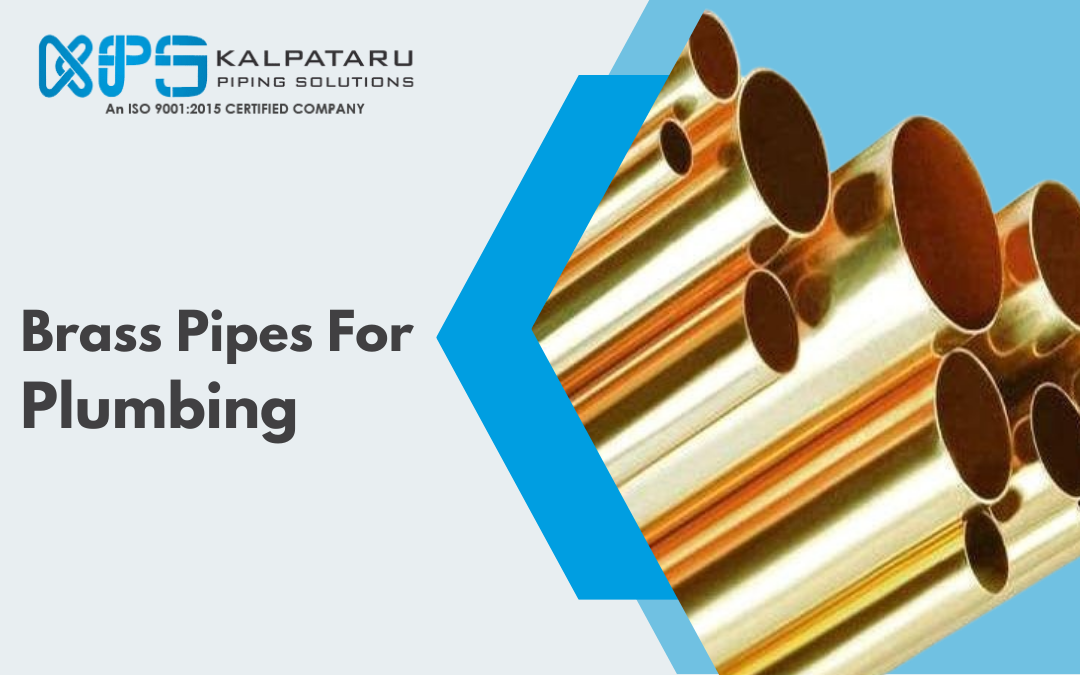
Brass pipe sizes in mm have long been a staple in plumbing systems, renowned for their durability, versatility, and corrosion resistance. From residential to industrial applications, brass pipes play a crucial role in ensuring efficient water distribution and drainage. In this blog post, we’ll delve into the various benefits and applications of brass pipes for plumbing systems.
Renowned for their exceptional durability, brass pipe fittingsmanufacturers in India offer a compelling solution for plumbing systems. These fittings are capable of withstanding high pressures and temperature fluctuations without compromising integrity, making them a reliable choice. Unlike other materials, brass resists corrosion, ensuring the longevity and reliability of your plumbing system. This translates to reduced maintenance costs and fewer instances of pipe failure over time, offering significant long-term benefits.
Corrosion Resistance
Brass pipe suppliers across India offer a robust solution that prioritizes longevity and reliability in plumbing systems thanks to their exceptional corrosion resistance. Unlike many other materials, brass remains unfazed by exposure to water, chemicals, and even harsh environments. This unwavering structural integrity minimizes the risk of leaks and deterioration, making brass pipes the ideal choice for applications where durability is paramount.
Flexibility and Ease of Installation
Brass piping offers excellent flexibility, allowing for easier installation in tight spaces and around obstacles. Their malleability simplifies the fitting process, reducing the need for complex joints and connectors. As a result, installation time and labor costs are minimized, making brass pipes an efficient choice for plumbing projects of all sizes.
Aesthetic Appeal
In addition to their functional benefits, brass piping adds a touch of elegance to plumbing systems. Their warm, golden hue adds visual interest and complements a variety of interior design styles. Brass pipe suppliers go beyond mere functionality, offering a product that elevates the aesthetics of any space.
Environmental Sustainability
Brass is a recyclable material, making brass pipes an environmentally sustainable choice for plumbing systems. By opting for brass pipes, homeowners and businesses can reduce their carbon footprint and contribute to a more eco-friendly plumbing infrastructure.
Drawbacks of Using Brass Pipe For Plumbing
1. Cost
Compared to plastic or PEX pipes, brass can be more expensive, especially for large-scale projects.
2. Corrosion
While resistant to moderate conditions, brass can corrode in acidic or hard water environments, leading to leaks and discoloration.
3. Limited applications
Their susceptibility to high temperatures makes them unsuitable for hot water lines or heating systems.
4. Installation complexity
Soldering skills are often required for proper installation, making them less DIY-friendly than other materials.
Applications in Brass Pipe Plumbing Systems
Water Supply Lines
Brass pipes are commonly used for water supply lines in both residential and commercial buildings due to their corrosion resistance and durability.
Drainage Systems
Brass pipes are also utilized in drainage systems to effectively remove wastewater from sinks, showers, and toilets. Their corrosion resistance ensures long-term reliability in these applications.
Plumbing Fixtures
Brass pipes are often used in plumbing fixtures such as faucets, valves, and fittings due to their excellent machinability and corrosion resistance. These components ensure seamless operation and minimal maintenance requirements.
Brass pipes continue to be a preferred choice in plumbing systems, thanks to their unmatched combination of durability, flexibility, and corrosion resistance. Whether for residential, commercial, or industrial applications, brass piping offers reliable performance and longevity, making them an indispensable component of modern plumbing systems.
As a leading brass pipe manufacturer, we take pride in delivering high-quality brass pipes that meet the diverse needs of our customers, ensuring efficient and reliable plumbing solutions. Contact Us now for your business needs.
Crafted with premium copper, these sheets offer exceptional electrical conductivity, making them ideal for various electrical applications, research and development projects, and more. Their smooth, commercial finish enhances their versatility and visual appeal.
Copper plate & copper sheets provided by Kalpataru Piping Solutions are extremely flexible and can be customized to suit customer specific requirements. We offer larger copper sheets, which can easily cover vast areas without any seams or creases. If you are facing any architectural challenge related to covering of large or small areas, then our hugely popular copper sheets can easily provide you with the best solutions. Our sheets can be cut into different widths and slits based on the requirements, offering you a practical and easy to follow construction mechanism. Understand more about how to buy copper sheets through our blog copper sheet buying guide.
Here, we will discuss the process of copper sheets & its various uses of copper sheets for industrial applications.
How Copper sheets are made?
Copper sheets, renowned for their conductivity and resilience, undergo a remarkable transformation from deep within the earth to versatile applications. Their journey begins in mines, where copper ore is meticulously extracted. This ore embarks on a multi-step refining journey, shedding impurities until only the purest copper remains.
Imagine this pure copper, molten and glowing, cast into massive slabs. These slabs are then meticulously rolled, both hot and cold, transforming them into sheets of desired thickness and boasting a smooth, polished finish. Each sheet is then precisely cut to size, rigorously inspected for quality, and carefully packaged for its journey to its destiny.
Copper Sheet Uses
Copper is incredibly flexible, able to be shaped into many forms, but copper sheet is the most common. It’s used in many ways, showing how important it is. People always need copper sheets, no matter how thick they are, because they’re so useful and versatile.
1. Welding Fixtures
Copper sheet is a popular material used in welding fixtures due to its many properties like high thermal conductivity, good electrical conductivity, ductility and malleability, corrosion resistance & non magnetic. It’s used in welding fixtures in the following ways:
Grounding Straps
Copper straps are used to connect the fixture to the ground, which helps to prevent electrical shock.
Heat Sinks
Copper sheets can be used to create heat sinks, which help to dissipate heat away from the weld zone.
Shielding
Copper sheets can be used to shield the workpiece from heat or radiation.
Clamping & Positioning
Copper sheets can be used to create clamps and positioners to hold the workpiece in place during welding.
2. Plumbing Fittings & Decorations
Copper sheet is commonly used in plumbing fittings due to its:
Durability
Copper is a strong and durable material that can withstand the high pressures and temperatures found in plumbing systems.
Corrosion resistance
Copper is naturally resistant to corrosion, which makes it ideal for use in plumbing systems where it will be exposed to water and other corrosive elements.
Malleability
Copper is a malleable material that can be easily shaped into different forms, which makes it ideal for creating custom plumbing fittings.
Solderability
Copper can be easily soldered, which makes it easy to create joints and connections in plumbing systems.
Decorations
Copper sheet is also a popular material for decorations due to its:
Aesthetic appeal
Copper has a warm, reddish-brown color that can add a touch of elegance to any space.
Malleability
Copper can be easily shaped into different forms, which makes it ideal for creating unique and decorative pieces.
Versatility
Copper can be used in a variety of decorative applications, from wall accents and furniture to lighting fixtures and jewelry.
3. Power Transmission
Copper sheet, while not directly used in power transmission lines, plays a crucial role in several supporting components of the power grid due to its excellent conductivity and resistance to corrosion. Here are some key applications:
Busbars
Used in substations and power plants for high-current, low-voltage distribution. Copper busbars are typically made from thick, flat strips or tubes of copper alloy with high conductivity and current-carrying capacity.
Grounding
Copper braids, straps, and plates are crucial for grounding electrical equipment, protecting personnel and preventing damage from lightning strikes and surges. Copper’s excellent conductivity and corrosion resistance make it ideal for this purpose.
Heat Exchangers
Power plants and substations utilize heat exchangers to manage heat generated during electricity production and transmission. Copper alloys are often used in these exchangers due to their high heat transfer efficiency and durability.
Connectors
Various types of connectors, including bolted, crimped, and welded, rely on copper components for their conductivity and ability to handle high currents. Copper alloys with specific strength and resistance properties are chosen depending on the application.
Shielding
In high-voltage transmission lines, copper wires or tapes are used to shield sensitive control cables from electromagnetic interference, ensuring reliable communication and system operation.
4. Automotive
In every vehicle, there are about 40 pounds of electrical components and 10 pounds of non-electrical parts. The motor and rotor make up most of this weight. With the increasing demand for electric and hybrid vehicles, the value of copper is expected to rise further. Its exceptional electrical conductivity makes it particularly beneficial for this application.
5. Electrical
Electrical appliances in both residential and commercial settings often contain traces of copper. Upon inspection, it’s common to discover various copper components such as high and ultra-high frequency tubes, printed circuits, and base brazing. Over time, copper has replaced aluminum and other metals as the preferred material for interconnections and lead frames in electronic circuits.
6. Energy and Petrochemical
Copper alloys find widespread use in the energy and petrochemical sectors, seen notably in condenser tubes, plates, and containers for corrosive fluids. These alloys are employed in pipelines, filters, pumps, valves, and various types of evaporators. Additionally, copper is preferred for desalination equipment, offshore platforms, and underwater infrastructure due to its exceptional resistance to saltwater corrosion compared to alternative metals.
7. Transportation
Copper plays a vital role in modern trains, where it is used in electrical cables powering the trains and in motors, rectifiers, controls, brakes, electrics, and signal systems. Additionally, copper alloys are utilized in shipbuilding, offering enhanced resistance to fouling, which can impact ship weight and buoyancy.
Final Thoughts
In conclusion, the copper sheet offers a multitude of advantages, rendering it a superior option for projects necessitating strength, longevity. Furthermore, its elevated density guarantees top-notch performance even in challenging environments, complemented by a range of finishes that safeguard against corrosion and if you seek a material that embodies all these attributes seamlessly, the copper sheet stands as an unrivaled choice.
Contact us for more high quality copper sheet products for any industrial applications.