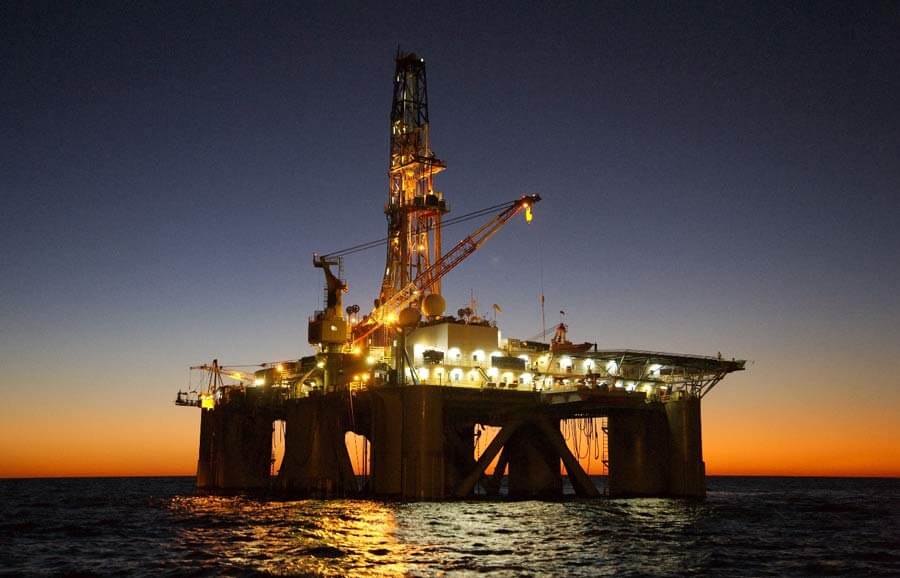
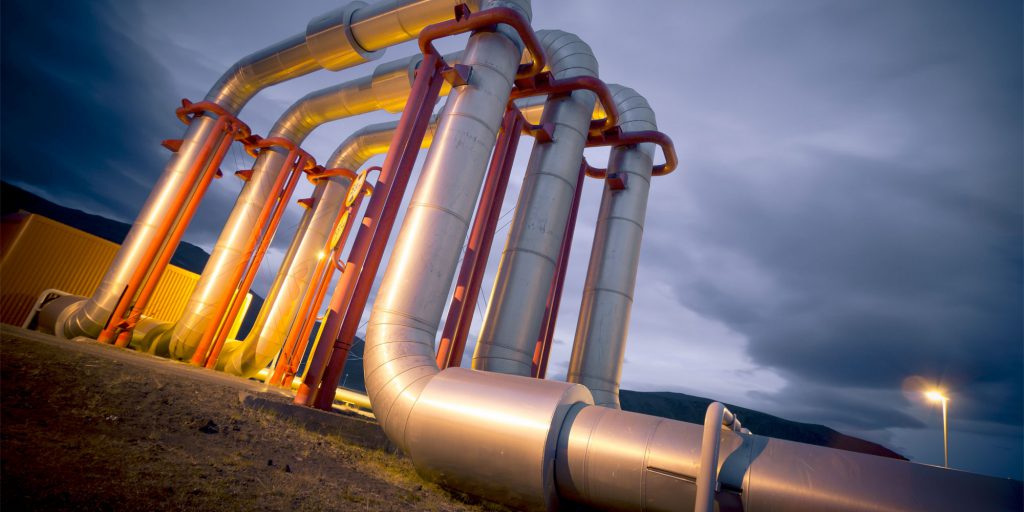
Seawater can be your greatest bad dream with regards to funneling frameworks in the oceanic business. What’s more, it’s an unavoidable competition that you’re compelled to confront over and over. Channeling that interacts with seawater goes through a compound response known as galvanic corrosion. The outcomes of galvanic erosion can be merciless. It can bring about supplanting whole frameworks of lines and fittings, which costs huge time, cash, and work. In any case, there is one guarded development, specifically, that sea experts can generally depend on – CuNi
The mix of copper and nickel, additionally alluded to by its substance recipe CuNi, makes a compound that is totally impervious to dampness, salt arrangements, basic arrangements, and non-oxidizing acids. Indeed, even dry gases like oxygen, hydrogen, chlorine, chloride, hydrogen fluoride, sulfur dioxide, and carbon dioxide end up being no match to CuNi. With this incredible opposition, copper nickel takes the triumph against the destructive properties of seawater every time. Also, it’s hence that sea businesses favor copper nickel, considering it an ideal material for oceanic hardware and gear.
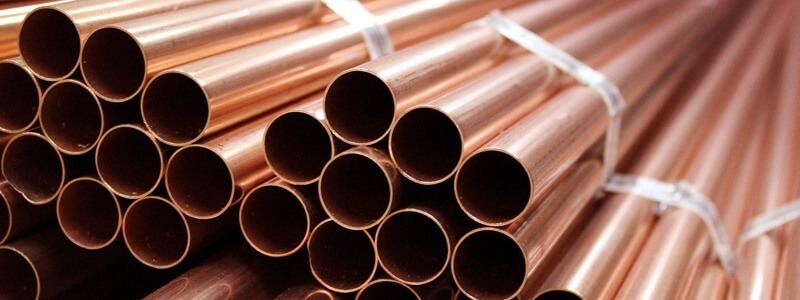
There are two unique sorts, or compounds, of specific copper-nickel pipes: Copper nickel 70/30 pipes and Copper nickel 90/10 pipes. The various rates relate to the distinctive combination creations. The 90/10 compound is marginally better looked at than the copper-nickel 70/30 amalgam. However, both the cupro-nickel 70/30 pipes and cupro-nickel 90/10 pipes offer exceptional obstruction against corrosion and will shield pipes from harm because of direct contact with seawater.
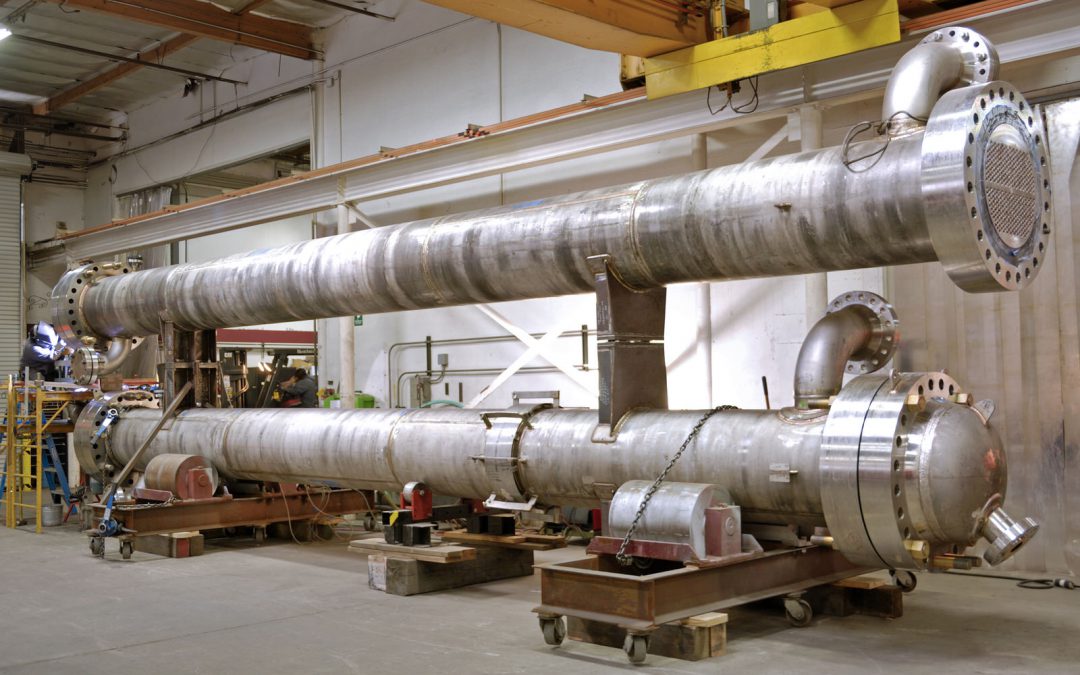
Notwithstanding transport building and fixes, copper nickel pipes are normally utilized for climate control systems, coolers, condensers, heat exchangers, oil and gas lines, plumbing, power plants, power directing, and numerous different bits of modern apparatus and gear.
Gaining practical experience in CuNi pipe items, Kalpataru Piping Solutions offers copper-nickel tubes in an assortment of choices including both round and hexagon pipes just as copper-nickel sheets, plates, pipe fittings, elbows, tees, reducers, and then some.
Impact of Velocity
Speed is the main single factor affecting plan and erosion in seawater frameworks. Speed of seawater through the framework impacts pressure misfortunes and hence siphoning costs.
The plan speed picked controls the elements of a huge number, for instance, funneling and valves. As the expenses of these parts increment quickly with pipe width, at that point siphoning expenses and segment costs must be streamlined. Be that as it may, speed likewise impacts the erosion conduct of the materials, and the plan esteem picked is regularly constrained by corrosion contemplations.
Corrosion of carbon steel in seawater is constrained by the accessibility of oxygen to the metal surface. In this way, under static conditions, carbon steel erodes at somewhere in the range of 0.1 and 0.2 mm/yr, mirroring the oxygen level and temperature varieties in various areas. Pitting likewise happens.
As speed makes a mass progression of oxygen to the surface, corrosion is reliant on-stream rate and can increment by a factor of 100 in moving from static (zero speed) to high speed (40 m/s) conditions. Kalpataru Piping Solutions is the leading supplier of Cu-NI 90/10 pipes.
Exciting presents just restricted advantage sub-current conditions, as corrosion of zinc additionally increments with speed. For the thicknesses ordinarily utilized in seawater channeling, it will broaden the life of the line for around a half year.
The copper base combinations are speed restricted as impingement assault happens when the hydrodynamic impact brought about via seawater flow across the outside of such composites surpasses the incentive at which defensive movies are eliminated and disintegration erosion happens. Accordingly, these compounds, on the off chance that they are to display high corrosion opposition should be utilized at plan speeds beneath this restricting worth.
Stainless steels are not dependent upon impingement assault, however are inclined to pitting and fissure erosion under low-speed conditions and this should be contemplated when these amalgams are utilized in seawater.
Impact of Temperature
Barely any information is accessible on the impact of the temperature inside the reach regularly experienced in seawater frameworks. It has been noted at LaQue Center of Corrosion Technology that erosion of carbon steel increments by roughly half between the colder time of year (normal temperature 7°C) and summer (27-29°C). Despite the fact that oxygen dissolvability will in general fall with ascend in temperature, the higher temperature will in general expand the response rate. Proof from work on steel in consumable waters recommends that the temperature impact is more significant and corrosion, for steel, will increment with temperature. Kalpataru Piping Solutionsis the leading supplier ofCu-Ni 70/30 pipes.
For copper compounds, increment in temperature quickens film development; this requires around 1 day at 15°C, while, it might require possibly more than seven days at 2°C. It is critical to proceed with an introductory flow of clean seawater long enough for beginning film arrangement for all copper composites. Additional time is required for winter than for summer new businesses.
For hardened steels and other composites inclined to pit and fissure erosion, an increment of temperature will in general encourage the commencement of these kinds of assault. Notwithstanding, information on proliferation rate proposes that this decays with ascend in temperature. The net impact of these clashing inclinations isn’t generally unsurprising. Temperature likewise impacts organic action which may, thusly, impact corrosion.
Duplex treated steel is an extremely valuable metal that is utilized the world over. It gets its name from the way that it comprises two unique evaluations of metal. Basically, Duplex is a Fe-Ni-Cr composite that has a two-stage ferritic-austenitic hardened steel microstructure when it is at room temperature.
Duplex preparations are portrayed by high chromium (19–28%) and molybdenum (up to 5%) and lower nickel substance than austenitic hardened steels. The most utilized duplex treated steels are the 2205 (22% Chromium, 5% Nickel) and the 2507 (25% Chromium, 7% Nickel); 2507 is known as “overly duplex” because of its higher protection from consumption.
The upside of joining ferritic and austenitic evaluations is that the resultant metal has a metallurgical structure that comprises two stages and thus profits by the properties of both microstructures. These properties make duplex steel exceptionally pursued in hefty ventures, similar to oil and gas atomic and compound preparing.
Very Duplex has all the advantages of other duplex preparations, explicitly the strength advantages of their biphasic underlying organization of a balance of austenitic and ferritic treated steel. This microstructure makes all duplex preparations around twice as solid as ordinary single structure ferritic or austenitic preparations, yet Super Duplex has a higher chromium and molybdenum content, giving it impressively expanded protection from erosion than its partners. Kalpataru is the leading supplier of Super Duplex Steel UNS S32760 Pipes.
Production of Duplex
The starting point of Duplex preparations can be followed back to the 1920s, with the principal cast being made in Sweden in 1930. Be that as it may, the prevalence of utilizing duplex possibly began to ascend around 30 years prior while steelmaking innovation turned out to be further developed.
The two kinds of metals used to make Duplex – austenitic and ferritic – are both fit for reason in numerous sorts of situations yet the two of them have shortcomings that keep them from being utilized all the more broadly.
Austenitic has low strength and low protection from stress consumption breaking, while ferritic additionally has a low strength, helpless weldability, and helpless low-temperature sturdiness.
Delivering a substance structure that consolidates austenitic and ferritic brings about a metal that has higher strength, great weldability, great sturdiness, and protection from stress consumption breaking.
The high strength of duplex hardened steel implies that The scope of 0.2% PS for current duplex evaluations is from 400 – 550 MPa. This can prompt diminished area thicknesses and, accordingly, decreased weight. This bit of leeway is especially huge for applications, for example, pressure vessels, stockpiling tanks, and primary Applications like extensions.
Nonetheless, one of the negatives is that Duplex is weak at extraordinary temperatures which implies that its utilization is ordinarily limited to the greatest temperature of 300 degrees and the least temperature of – 50 degrees.
When making duplex tempered steels, the point is to deliver a 50/50 blended microstructure of austenite and ferrite metals, albeit, in business amalgams, the blend might be 40/60 separately.
Strangely, it is viewed that we are still particularly in the improvement period of duplex preparations, as various proportions of austenitic versus ferritic metals are as yet being tried.
Focal points
Duplex hardened steel has a variety of different advantages, for example,
Strength: Duplex hardened steels have around twofold the strength of customary austenitic or ferritic treated steels.
Durability and Ductility: Duplex hardened steels surpass the strength and flexibility of ferritic grades despite the fact that they are not as contact as austenitic evaluations.
Erosion resistance: As with every treated steel, consumption opposition relies generally upon the piece of the hardened steel, with chromium, molybdenum, and nitrogen content is the most significant. Duplex hardened steels are incredibly consumption safe and even in chloride and sulfide conditions, duplex treated steels show exceptionally high protection from stress erosion breaking (SCC). SCC is a kind of consumption that happens when a specific arrangement of components is available: Tensile pressure, destructive climate, and an adequately high temperature.
Heat Resistance: Duplex hardened steel has higher warmth conductivity and lowers warm development than austenitic prepares. Duplex evaluations can undoubtedly be utilized down to temperatures of in any event – 50°C in light of the fact that at low temperatures they have better malleability than ferritic evaluations of steel.
Cost: Duplex tempered steels have lower nickel and molybdenum substances than their austenitic partners. This lower alloying content implies that duplex treated steels can be lower in expense. Further to this, it is likewise conceivable that the thickness of duplex hardened steel can be diminished as it has an expanded yield strength. More slender items imply that huge weight investment funds can be made.
Weldability: Duplex tempered steels will in general have great weldability and all standard welding cycles can be utilized despite the fact that they are not exactly as effortlessly welded as the austenitic evaluations. They are made into Super Duplex Steel UNS S32750 Pipes.
Applications of Super Duplex
Super duplex is particularly suited for the following applications:
Heat exchangers, tubes, and pipes for processing gas and oil
Pipes in processes containing chlorides
Cargo tanks – piping for chemical tankers
Shafts, rotors, and hydraulic lines
The high strength and low corrosion of super duplex means it is widely used in the following industries
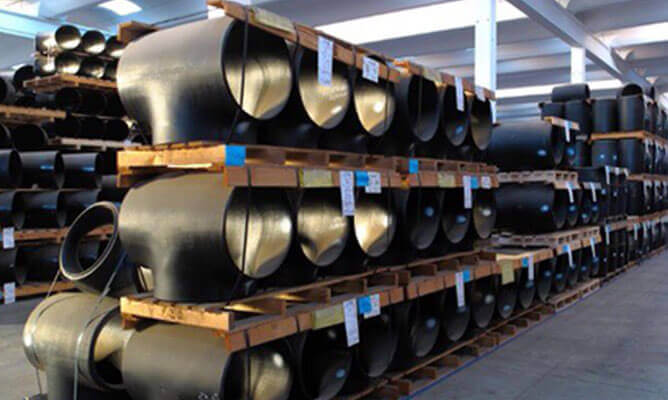
Carbon steel pipe fittings are generally utilized in various businesses over the globe. Carbon steel pipe fitting is the most generally utilized material for measuring piping. It has the benefit of wide accessibility, high strength, and a huge exhibit of association prospects, for instance, screwed, attachment welded, and butt-welded. Steel pipe fitting should be chosen for the necessary strength and sturdiness needed for the application and the flexibility and machinability needed to go along with it and structure it into piping spools. The pipe must withstand the weight, temperature, and erosion states of the application. These necessities are met by choosing a pipe made to a fitting ASTM or API standard. Kalpataru Piping Solutions is one of the leading suppliers of carbon steel pipe fittings.
Carbon steel pipe fittings are utilized for fluid, gas, and steam administrations both above-and subterranean administrations. It isn’t suggested for use in destructive administrations yet might be utilized in acidic administrations.
There are numerous evaluations or qualities of carbon steel pipe fittings and they are accessible in various divider thicknesses. We have seen that reasonable pressure is utilized to figure out what divider thickness is required. The suitable pressure is a component of both the metallurgy of the material and the technique for the maker.
The different piping particulars given by ASTM and API give rules to both the metallurgy and the strategy for fabricating. The most broadly channeling details for measure pipes are ASTM Specifications A-53 and A-106 and API Standard 5L. The chief divider thicknesses utilized are characterized by plans, for instance, Schedule 40, Schedule 80, and loads, for instance, STD, XS, and XXS. Both ASTM A53 and ASTM A106 pipes are created SMLS or seamed, by electric opposition welding, in Grades A and B. Evaluations B have higher rigidity. Three evaluations of ASTM A106 Pipe are accessible—Grades A, B, and C, arranged by expanding rigidity.
Carbon steel pipe fittings can be fabricated utilizing a few unique methods, every one of which creates a pipe with specific qualities. These qualities incorporate strength, divider thickness, consumption opposition, and temperature and weight impediments. For instance, pipes having a similar divider thickness yet produced by various techniques may fluctuate in strength and weight limits. The pipe fabricating techniques to be examined include: consistent, butt-welded, and winding welded. There are various types of pipe fittings like carbon steel buttweld fittings
A consistent pipe fitting is framed by piercing a strong, close liquid, steel pole, called a billet, with a mandrel to deliver a pipe that has no creases or joints. Here are a few reasons why:
Protected and Durable
Steel appreciates broad use due to its durability, safety, and minimal effort. Its toughness can be stretched out by adding coatings that will hinder rust and broadening the life of the pipe in the application.
Carbon steel pipe fittings are profoundly impervious to stun and vibration making it ideal to move water and different liquids under streets. The high-rigidity notwithstanding its flexibility and malleability permit carbon steel fittings like carbon steel forged fittings to be utilized securely under high-tension conditions. Under strange burdens, they will twist, not break.
Environment-Friendly Material
Carbon steel can be reused. Every year more steel is reused in North America than paper, aluminum, plastic, and glass consolidated. On a fundamental level, it doesn’t lose any strength on reusing, anyway in the re-dissolve measure steps must be taken to eliminate foreign substances taking it back to its unique science.
Financially savvy Solution
Carbon steel tubing and pipe have a long history going back to before the mechanical unrest as the favored material for its high strength and minimal effort. Steam Stream boilers that produce power are built of steel pipe; even the early train is just a progression of steel pipes and cylinders changing over steam into movement.
Versatile Material
Carbon steel pipe fittings can be made into numerous measurements, adapted to bend and fit anyplace they should be. Joints, valves, and other carbon steel pipe fittings are broadly accessible. Most professionals are acclimated to working with carbon steel pipe fittings. Joining strategies incorporate stringing, welding, flanging, and cutting. Longer lengths of these pipes empower snappier and minimal effort establishments in light of fewer joints.
Different Applications of Carbon Steel Fittings
Ventures over the range use carbon steel pipe fittings in different structures and sizes. Structures, framework, apparatuses, ships, vehicles, machines, and apparatuses are completely produced using steel. You can utilize these carbon steel fittings in numerous business applications, for example, Power age, gas handling, Specialty Chemicals, Seawater Equipment, Petrochemicals, Oil penetrating organizations, heat exchangers, and in the mash and paper industry. These are utilized for the association of pipe framework in high and moderate temperature for assembling, development, and other applications for these ventures. The carbon steel pipe fittings are having numerous qualities with which they are utilized in businesses. A portion of the attributes which are acquired in the pipe fittings is extraordinary pliability, sturdiness, high rigidity, and solidness in the raised temperature.
Duplex Alloys have consistently involved something of a specialty in treated steel creation, speaking to under 1% (around 200KT) of the market. The purpose behind this could be the subfamily’s similar adolescence contrasted with any semblance of austenitic and ferritic evaluations of tempered steel. Nonetheless, their double stage microstructure and moderately low thickness confer a wide scope of attractive properties. High erosion obstruction, great malleable and yield strength comparative with weight, respectable formability, and that is only the tip of the iceberg, make duplex amalgams like UNS S32205 ideal for different applications in the preparing and marine enterprises.
What is UNS S32205?
UNS S32205 is duplex hardened steel with a blended austenitic-ferritic microstructure, involving a granular structure normal for generally half every one of these unmistakable stages. It joins the high tractable (620 MPa) and yield (450N/mm2) qualities of ferritic grades with the outstanding erosion obstruction related to austenitic sorts. While it isn’t as effectively framed as full austenitic hardened steels, it flaunts a malleability and strength far better than ferritic prepares and can be promptly shaped into plates going from amazingly flimsy (6 – 50 mm) to genuinely thick (100 – 200 mm).
Duplex prepares like UNS S32205 additionally have a lower alloying content than numerous different hardened steel grades. Its head alloying components are chromium (22.0 – 23.0%), nickel (4.5 – 6.5%), and molybdenum (3.0 – 3.5%), which contribute towards the material’s remarkable enemy of destructive properties and stress consumption breaking (SSC) resistivity. This low composite substance and high formability make UNS S32205 the ideal material for cost and weight investment funds.
Why pick UNS32205 Duplex?
Duplex has more noteworthy yield strength when contrasted with standard austenitic steel evaluations, for example, Type 304, while as yet giving similar consumption safe execution. The steel likewise has a lower composite substance which majorly affects decreasing the creation expenses of the material. Cost is really the best advantage when considering Duplex Steel and this reality isn’t simply because of lower gracefully costs. Because of the material’s more noteworthy yield strength, Duplex offers the procurer the occasion to buy the material in diminished thicknesses without the need to settle on quality and execution. This makes steel an appealing suggestion surely.
This one of a kind blend of materials settles on Duplex 2205 as the correct decision for various diverse basic applications in the scope of ventures, including:
Substance handling, transport, and capacity
Marine and Land freight tanks
Biofuel creation
Food handling
Mash and Paper fabricating
Oil and gas investigation and handling
Squander the board
High chloride conditions
Kalpataru Piping Solution is a manufacturer & supplier of Duplex 2205 of every an assortment of shapes and sizes including sheet, loop, plate, plate curl, and the sky is the limit from there.
Key Features:
Offers comparable consumption protection from Type 304
More noteworthy pliable and yield strength
Great protection from stress erosion breaking (SSC)
Great flexibility and sturdiness (however not in the same class as austenitic evaluations)
Lower expenses of creation and can be utilized in more modest thicknesses
Applications of UNS S32205
The expense and weight reserve funds offered by UNS S32205 offer critical advantages for handling offices and seaward foundations battling with destructive components. UNS S32205 prepares are regularly used to create siphons and valves in seawater applications, furnishing an especially lightweight material with dependable protection from seawater consumption (chlorination, oxidation, and so forth)
It is additionally regularly endorsed for handling applications as differed mash plants, food preparing, oil and gas funneling, compound preparing, and that’s only the tip of the iceberg. A few UNS S32205 prepares have likewise been utilized in emanations control parts like pipe gas desulfurization scrubbers, inferable from the accessibility of slight plates with excellent mechanical and compound properties over broadened administration periods.
When manufacturing end-use applications that will be utilized in extraordinary conditions, for example, those which need to withstand outrageous temperatures, high weight, or amazingly destructive conditions, choosing a composite that is up to that errand is basic. Monel 400 is a Nickel-Copper composite that can be commonly portrayed as having great consumption obstruction, great weldability, and moderate to high quality. It is impervious to seawater and steam at high temperatures just as scathing arrangements and salt.
It is ideal for applications utilized in petroleum treatment facilities all through the world and it is generally utilized in the synthetic and marine businesses too. Before, the oil and gas industry depended on what is ordinarily viewed as low-end consumption safe compounds. In the course of the most recent decade or somewhere in the vicinity, this industry has received further developed materials to diminish disappointment experienced additional time in their hardware and parts. The cost effect of defeating the vacation initiating impacts of consumption, weight, and outrageous temperature, just as disappointment rate and wellbeing, provoked this industry to search for materials like Monel 400 which offered expanded unwavering quality in brutal conditions.
Monel combination’s acceptable consumption opposition and high-quality properties additionally make it an incredible choice in marine designing, channeling, cabling, compound preparing, just as an assortment of different applications relying on what structure it is utilized in. Being a safe compound, Monel 400 confronts high-temperature steam climates and quickly streaming harsh/seawater, while additionally keeping up magnificent protection from stress erosion breaking in many freshwaters. It is valuable in temperatures up to 1000°F (538°C) so with its enemy or destructive properties and durability, can be an ideal decision of combination for exceptionally novel requirements and applications.
What is Monel 400 made of?
As a Nickel-Copper combination, Monel 400 is a parallel compound, otherwise called a “puritan amalgam”. This means the extents of nickel and copper are equivalent to that of the regular metal separated from the Sudbury mines in Ontario, Canada. The amalgam was made by the International Nickel Company in 1901 and it was named after their organization president Ambrose Monell, but since brand names are not permitted to convey a family name, they made their own proviso by just eliminating the “L” toward the end. Presently, the Monel 400 brand name is possessed by Special Metals Corporation and it is basically made out of 52 – 67% nickel (Ni) and copper (Cu), with modest quantities of iron, manganese, carbon, and silicon. In contrast with steel, it is very hard to machine as it work solidifies rapidly.
Another substance piece of Monel 400 incorporates:
Element
Min
Max
Nickel
63%
–
Manganese
–
2.0%
Silicon
–
.50%
Iron
–
2.5%
Sulfur
–
.024%
Carbon
–
.30%
Copper
28%
34%
Types of Monel 400 Available
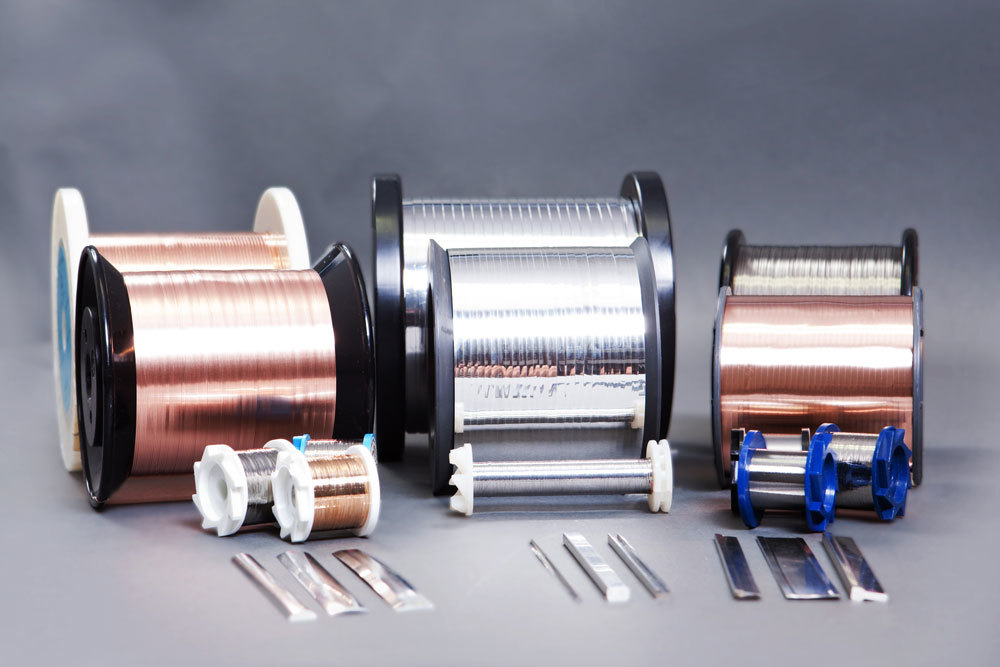
This compound arrives in an assortment of structures and product offerings, for example, pole and bar (some of the time known as 400 bar), yet Ulbrich principally supplies this amalgam in strip and wire structure. Because of its high quality, this Monel compound can be utilized at lighter checks and thicknesses for specific applications when contrasted with other nickel composites or treated steels. It very well may be created in a wide assortment of strip completes and tempers; Monel 400 is additionally accessible in various states of wire including level and round Monel wire.
Monel 400 Shaped Wire
There is incredible interest inside the business sectors and applications we’ve discussed so far for a consumption safe Nickel-Copper amalgam in an assortment of shapes and wire profiles. The cold-Rolled molded wire is invaluable contrasted with other forming techniques since complex close to net shapes, granular dimensional control, and demanding cross-sectional measurements are attainable with basically no yield deficit. These shapes are created utilizing a mix of rolling and attracting requests to deliver close to net shapes that can diminish exorbitant machining further down the assembling cycle. Monel 400 from Ulbrich can, in any case, be provided in molded wire yet in addition strip and round wire in persistent curl structure with close dimensional resistances and no burr permitting makers to run more loop, at quicker speeds without stress. Numerous makers working with Monel 400 molded wire profit by the way that it tends to be handily joined and created utilizing ordinary cycles and methods. Delivering Monel in formed wire profiles to explicit actual properties is additionally entirely feasible with the metallurgy staff accessible to prompt on your particular applications.
Monel 400 versus Equivalent Stainless Steel
Hardened Steel and this Monel amalgam can both be virus worked, however other than that a significant number of their properties vary. How about we take a gander at austenitic tempered steel with high consumption obstruction, 316 Stainless Steel. While their warm development and explicit warmth limit numbers are comparable, Monel 400 has a most extreme temperature of 1000 degrees Celsius, practically twofold that of 316 pure (590 degrees Celsius). Additionally, this spotless amalgam has exceptionally high erosion obstruction among the austenitic impeccable, yet the nickel composite enormously outperforms it in this class too. The blend of amazing opposition at high temperatures and incredible consumption obstruction makes the Monel amalgam an extraordinary determination for an assortment of uses.
Applications
Monel 400, is known for its high quality and consumption safe properties, works in a wide scope of temperatures, and is accessible for use in an assortment of items. Different Grades of Monel are utilized in a wide scope of ventures, from aerospace to marine applications. It is utilized widely for funneling as it is impervious to both steam and seawater environments. All the more explicitly, it’s durability and against destructive properties make it ideal for uncompromising applications like channeling in the oil business.
Other potential applications incorporate warmth exchangers, ocean water scrubbers in gas frameworks, cladding, siphons, and shafts in the compound business, and that’s just the beginning. Because of good mechanical properties from freezing temperatures to almost 1000°F, it very well may be utilized in an assortment of climates. Given that reality, Monel 400 is commonly a more costly compound than hardened steel.
What are the other best uses for Monel 400?
marine designing
substance gear
hydrocarbon handling
valves
siphons
fittings
latches
heat exchangers
adaptable metal hose
Following stages
Regardless of whether you have explicit inquiries concerning Monel 400 or some other composite, don’t hesitate to contact an Ulbrich master whenever. Ideally, this article had the option to build your insight about when to pick Monel 400 for your applications and all the benefits of the Nickel-Copper amalgam. Monel wire and strip are the two alternatives and can be offered in a wide assortment of surface completions, thicknesses, and widths.