Monel 400 is a nickel copper alloy (UNS N04400) with roughly 63 % Ni and 28–34 % Cu, plus small amounts of iron, manganese, carbon & silicon. This chemistry gives it exceptional corrosion resistance, high strength across a wide temperature range and toughness even at subzero temperatures, but the alloy’s low fluidity and the slight difference between nickel and copper melting points mean welds can be prone to cracking and lack of fusion. Choosing the right consumables, following clean welding procedures and adhering to a qualified WPS are therefore essential. This guide outlines what makes Monel 400 special, explains how to select welding wire and filler metals, and offers process and technique guidance for fabricators, QC engineers and procurement specialists joining Monel 400 to itself and to dissimilar alloys (carbon steel or stainless steel) while maintaining corrosion resistance and mechanical integrity.
Monel 400 is engineered for demanding applications where corrosion resistance and strength are critical. Understanding its composition, physical properties & the impact of alloy chemistry on performance is essential for choosing the right welding practices. This section briefly outlines what makes this Ni Cu alloy unique and how its properties affect fabrication.
Monel Alloy 400 Chemical Composition & Physical Properties
Monel 400 is a nickel-copper (Ni–Cu) alloy known for strong corrosion resistance and stable mechanical properties. Below are quick tables showing its chemical composition, key physical and mechanical values, and common product forms and sizes. These figures help with material selection and welding setup.
Chemical Composition (wt%)
| Element |
Ni |
Cu |
Fe |
Mn |
Si |
C |
| Limit / Range |
≥ 63 |
28–34 |
≤ 2.5 |
≤ 2.0 |
≤ 0.5 |
≤ 0.3 |
Note: exact mechanicals vary by product form and condition (bar/rod vs. sheet/strip, annealed vs. cold-worked). Always use mill test certificates (MTCs) for design/welding documents.
Physical & Mechanical Properties
| Property |
Value |
Notes / Units |
| Density |
~ 8.8 |
g cm⁻³ |
| Melting range |
1300–1350 |
°C (2370–2460 °F) |
| Thermal conductivity |
~ 21.8 |
W m⁻¹ K⁻¹ at 20 °C |
| Tensile strength |
~ 80,000 |
psi |
| Elongation |
~ 40 |
% |
Monel 400: Forms, Sizes & Standards
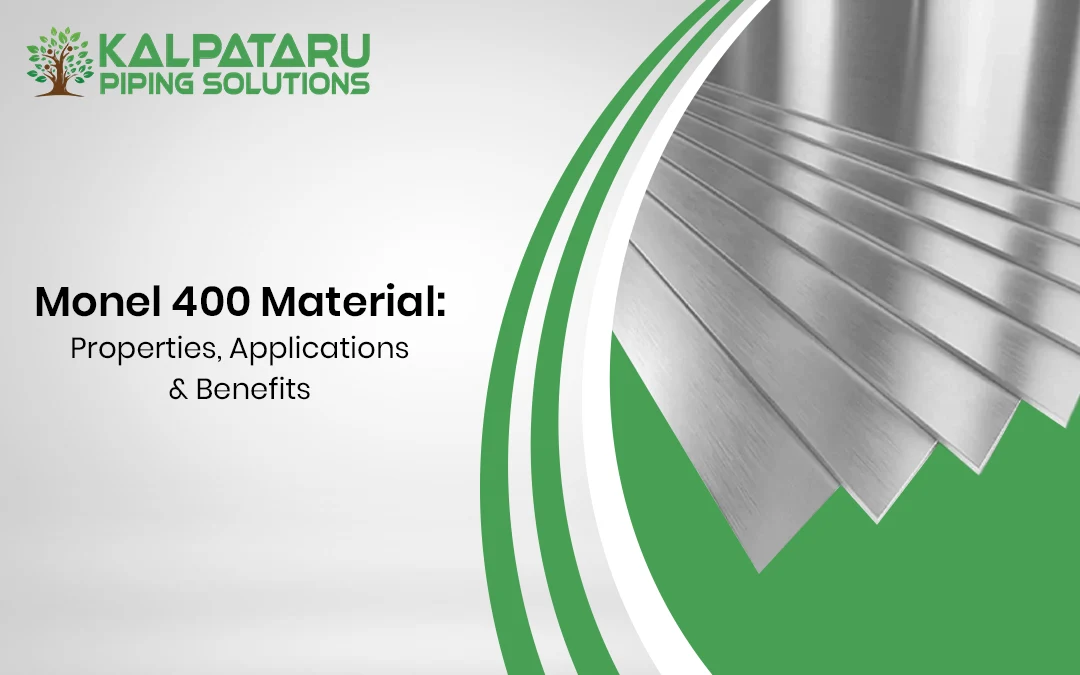
Monel 400 is supplied as round bars with various other shapes such as hex, flat & square along with wire with diameters from 6–120 mm. Stock meets ASTM B164 / ASME SB 164 and is available hot-rolled or cold-drawn, delivered in random, fixed or cut-to-length options used for corrosion-resistant components in marine, chemical and industrial applications.
Why Alloy Chemistry Matters for Monel 400 Welding?
The nickel‑rich balance imparts excellent resistance to seawater, acids and alkalis, but nickel’s affinity for oxygen and nitrogen means welding requires inert gas shielding to avoid porosity. Slight differences between Ni and Cu melting points and the alloy’s low fluidity produce a “sticky” weld pool, so proper filler selection is crucial. Matching the filler to the base alloy preserves corrosion resistance and avoids brittle intermetallic in dissimilar metal welds.
Overview of Monel 400 Welding Consumables
Before you strike an arc on Monel 400, get the consumables right. This section explains what Monel 400 welding wire is, how to choose fillers for Monel-to-Monel and for welding Monel 400 to carbon steel or stainless steel, and which shielding gases/fluxes to use in your WPS/PQR.
What is Monel 400 Welding Wire?
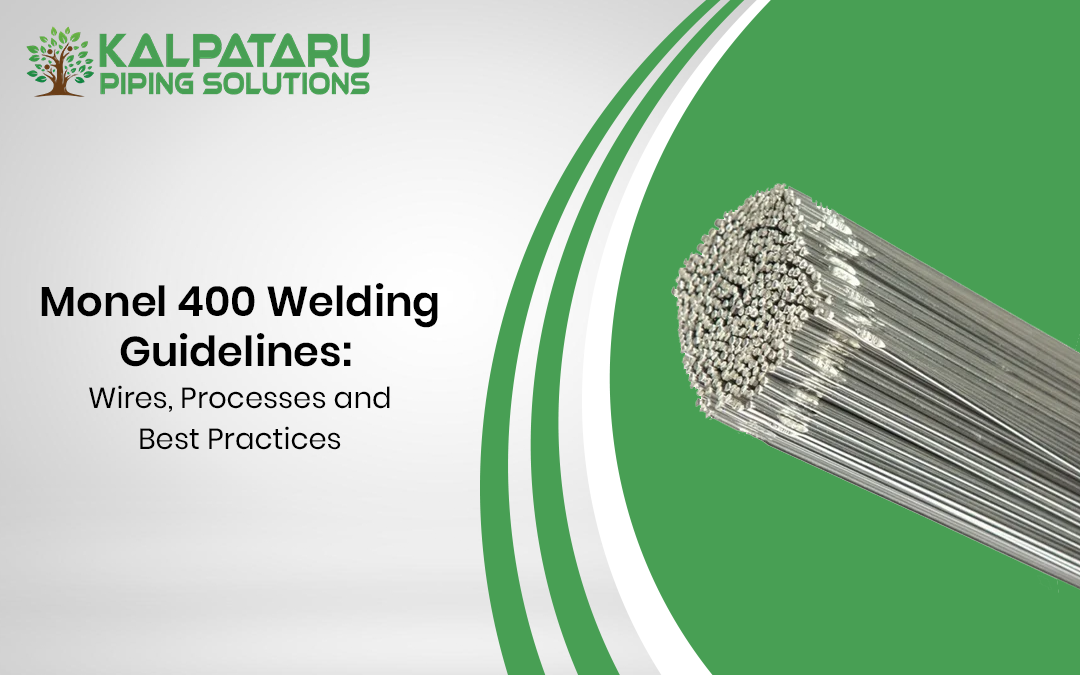
Monel 400 welding wire is the filler used to weld Monel 400. It matches the alloy’s Ni–Cu makeup, so the weld keeps similar strength and corrosion resistance. For Monel-to-Monel jobs, use Monel filler metal 60 (ERNiCu-7); Monel 67 is another option, and Monel 190 is the stick electrode for SMAW. This wire or rod can be used with TIG/GTAW, MIG/GMAW, and SAW. For joining Monel 400 to carbon steel or stainless steel, use a nickel-chromium filler such as ERNiCr-3 (Inconel 82) or ERNiCrMo-3/ERNiCrFe-2 (Inconel 625/182) to bridge the metals and reduce cracking or corrosion.
Filler Selection Principles
Choose a filler that matches the corrosion and mechanical properties of Monel 400, typically a Ni–Cu filler like ERNiCu‑7. When a matching filler isn’t available, opt for a nickel‑based alloy richer in Ni, Co, Cr or Mo. For carbon steel or stainless steel joints, nickel‑chromium fillers (ERNiCr‑3 or ERNiCrMo‑3) reduce dilution and avoid brittle intermetallics. Always verify that consumables meet AWS A5.14 and consult manufacturer data or ASME Section IX when qualifying your WPS.
Shielding Gas & Flux Considerations
Arc welding Monel demands an inert atmosphere—gas‑shielded methods (TIG or MIG) are preferred to avoid porosity from oxygen or nitrogen. Use pure argon, or argon‑helium/hydrogen blends to control heat input. In submerged‑arc welding, pair the wire with a neutral flux such as INCOFLUX 5. SMAW electrodes must stay dry and be re‑baked at roughly 600 °F if they absorb moisture.
Which Welding Process is Right for Monel 400?
For Monel 400, selecting the right welding process is crucial to achieving clean, reliable joints. The following section compares GTAW/TIG, GMAW/MIG and SMAW, outlining when each is best used and how to manage heat input and dilution for high‑quality welds.
Gas‑Tungsten ARC Welding (GTAW/TIG)
Arc Machines explains that GTAW is widely regarded as the best way to weld Monel because it allows very short arc lengths, precise control of the puddle and minimal heat buildup. TIG is especially suitable for thin sections, pipe welds and applications where clean, high‑quality welds are required. DC straight polarity (electrode negative) is recommended; maintain a short arc and keep the filler wire tip within the inert gas envelope.
Gas‑Metal ARC Welding (GMAW/MIG)
Gas‑metal arc welding offers higher deposition rates. According to the Sunmach weldability guide, reverse‑polarity DC should be used and the gun held roughly perpendicular to the joint. Short‑circuit transfer (19–25 V and 100–175 A) suits thin sections, while spray transfer (26–33 V and 200–350 A) is used for thicker plates. Argon‑rich shielding gas is typical; small percentages of helium or hydrogen improve penetration.
Shielded‑Metal ARC Welding (SMAW)
SMAW is often used for field repairs and heavy‑section welds. The Arc Machines article notes that Monel welds are vulnerable to cracking and lack of fusion when using SMAW due to higher heat input and limited shielding. Electrodes must be thoroughly dried and slag removed between passe. Use high‑nickel electrodes (e.g., Monel 190) and keep the weaving motion narrow to minimise heat.
Flux‑Cored and Submerged‑ARC Processes
Flux‑cored arc welding (FCAW) and submerged‑arc welding (SAW) can be used for large fabrication or cladding. These processes require matching Monel filler wire and neutral flux; convex beads are preferred. FCAW wires for Monel are less common but may offer productivity advantages in automated cladding.
Monel 400 Welding Parameters & Technique Guidance
For reliable Monel 400 welds, precise control of welding parameters and technique is critical. This section introduces key practices like managing heat input, interpass temperatures, joint preparation and multipass methods and highlights considerations when joining Monel 400 to carbon or stainless steels.
- General principles: Control heat input because Monel 400 has a wide freezing range and low fluidity, which raises hot-cracking risk. Favor short arc lengths for GMAW where suitable, steady travel, and modest wire feed to avoid lack of fusion. Keep interpass temperature on the low side and allow brief air cooling between passes.
- Gun/torch angles, travel speed, root gaps, bead technique: Hold a stable torch or gun angle and keep the filler tip inside the shielding envelope to prevent porosity. Use smooth, consistent travel rather than heavy weaving, maintain a uniform root gap, and avoid pushing heat into thin edges that can undercut. Prioritize gas coverage and cleanliness over aggressive manipulation.
- Multipass practice, peening, interpass cleaning: Use multiple narrow passes to control dilution and residual stress. If peening is permitted by procedure, keep it light because Monel work-hardens. After each pass, remove oxide or slag with stainless brushes or light grinding before depositing the next pass.
Welding Monel 400 to Carbon Steel
Joining Monel 400 to carbon steel requires careful design and execution. Because Monel (a nickel-copper alloy) and carbon steel have very different chemistries and electrochemical behaviour, uncontrolled dilution, carbon pickup or improper heat input can create brittle phases and galvanic cells that reduce joint strength and corrosion resistance. Successful joints use a nickel-based transition (buttering/overlay or compatible filler), strict control of heat input and dilution, qualified welding procedures & post-weld inspection to ensure long-term performance.
Welding Monel 400 to carbon steel brings metallurgical and corrosion risks, so dilution, heat input and joint chemistry must be tightly controlled.
- Metallurgical incompatibility & dilution: Iron pickup into Monel 400 promotes hard, brittle phases and cracking; dilution must be tightly controlled.
- Galvanic corrosion: Ni–Cu vs. steel potential difference can drive attack at the interface in conductive media.
- Hot-cracking tendency: Monel’s wide freezing range and low fluidity increase crack sensitivity under high heat input.
Effective Strategies for Welding Monel 400 to Carbon Steel
Use a nickel-based butter layer, choose nickel-chromium dissimilar fillers and apply clean, multi-pass techniques with controlled heat to produce sound joints.
- Butter / transition layer: Apply a nickel-based buffer to the carbon-steel side (e.g., two layers) before making the final Monel-to-buffer weld; this reduces Fe dilution and creates a compatible surface.
- Filler choice (dissimilar): Use nickel-chromium fillers such as ERNiCr-3 (INCONEL® 82) or ENiCrFe-2/ERNiCrFe-2 (INCONEL® 182/82) for Monel 400 → carbon steel; they are specifically recommended for these dissimilar joints.
- Joint design & technique: Prefer stepped/double-V butt designs; ensure rigorous pre-cleaning and use controlled, multi-pass GTAW/GMAW to limit heat input and manage dilution.
After welding, check the interface for defects and manage corrosion with isolation, coatings or cathodic protection, while keeping surfaces clean and stresses low.
- Defects at the interface: Check for porosity, lack of fusion and hot cracking in the Monel 400 HAZ and in the butter layer on the carbon steel. Start with VT, then use PT for surface-breaking flaws and RT or UT for volumetric/subsurface issues.
- Corrosion risks: Galvanic attack can initiate where Monel 400 meets carbon steel in conductive media. Isolate dissimilar metals where possible, seal crevices, and use non-conductive gaskets, sleeves or isolating kits on flanged joints.
- Protection strategy: In aggressive service, add a corrosion-resistant coating or cladding on the steel side or HAZ. In immersion or splash zones, consider cathodic protection and verify potentials so you do not over-polarise adjacent components.
- Cleanliness & finish: Remove all slag and oxide films; for stainless components adjoining the joint, consider pickling or passivation. Record final surface condition if the service medium is critical.
- Distortion & residual stress: Measure distortion after cooling and correct as needed. Global PWHT is usually avoided for these dissimilar joints; any local thermal treatment must be qualified on the PQR.
Testing of Welding Monel 400 to Carbon Steel
Qualify the weld with a WPS and PQR, verify performance by mechanical, NDT and corrosion tests, and keep full traceability for base metals and consumables.
- Make it a qualified procedure: Write a WPS for Monel 400-to-carbon-steel with process, joint prep, butter sequence, filler class, gas and interpass limits. Support it with a PQR using production-like parameters.
- Mechanical tests: Perform tensile and bend tests appropriate to the product form and thickness. Add hardness mapping across weld metal, butter, and both HAZs to check for locally hard, brittle zones from iron dilution.
- Metallography/macros: Do a macroetch on the PQR coupon to confirm fusion lines, butter layer thickness and dilution control. Micro checks can document grain structure and any interdendritic cracking.
- NDT plan: VT and PT on all surface-critical areas. RT for butt welds where code permits; UT for thicker sections and critical joints. MT may be used on the carbon-steel side only; Monel 400 is weakly magnetic.
- Corrosion qualification: For critical service, test welded coupons in representative media. Typical approaches include immersion testing for mass loss, galvanic couple testing for dissimilar interfaces and pitting/crevice screening if the environment is chloride-bearing.
- Pressure/leak testing (when applicable): Hydrostatic or pneumatic tests per the governing code. For tightness-critical equipment, consider helium leak testing.
- Records & traceability: Keep WPS, PQR, welder qualifications, NDT reports and test data. Record filler metal heat/lot numbers, shielding gas certificates and oven logs for SMAW electrodes. Use MTCs for base metals and butter consumables to tie chemistry back to the weld documentation.
Welding Monel 400 to Stainless Steel
Monel 400 can be joined successfully to austenitic stainless steels (304/316) when dilution, filler choice and cleanliness are tightly controlled to protect corrosion resistance.
Application of Welding Monel 400 to Stainless Steel
The application of welding Monel 400 to stainless steel is common across industries that demand both nickel–copper alloy performance and stainless steel durability. Typical uses include mixed-alloy piping spools, nozzles, valves & heat-exchanger attachments, where different alloys are required in a single assembly. It is also widely used for repair welds, particularly when Monel 400 components must be joined to existing 304 or 316 stainless steel parts. In marine and chemical processing environments, such transitions are critical where Ni–Cu alloy corrosion resistance is needed on one side, while the stainless side maintains structural or process compatibility.
Compatibility of Monel 400 & Austenitic Stainless Steels
When welding Monel 400 to austenitic stainless steels such as 304 and 316, compatibility is generally better than with carbon steels, but challenges remain. The galvanic potential between the two alloys can still promote localized corrosion in conductive or chloride-rich media. Additionally, excess dilution during welding may result in the formation of Ni–Fe or Ni–Cr intermetallic phases, which reduce corrosion resistance and compromise mechanical properties. To ensure reliable joints, the key objective is to preserve Monel 400’s Ni–Cu corrosion-resistant characteristics, while also avoiding sensitization or heat-tint effects on the stainless steel. This requires careful control of filler metal selection, welding parameters, and post-weld cleaning.
- Direct weld (per spec): Use compatible nickel-chromium fillers such as ERNiCr-3 (Inconel 82) or ERNiCrMo-3 / ERNiCrFe-2 (Inconel 625/182). Favor GTAW for root control and gas shielding; GMAW may be used for fill/cap with controlled heat input.
- Transition/buffer layer: Where maximum corrosion resistance is required, deposit a thin nickel-chromium buffer on the stainless steel (or on the Monel side per procedure) to control dilution before completing the joint.
- Specify filler classification, process sequence (e.g., GTAW root with argon backing), interpass limits (kept low), and cleaning steps before/after welding
- Define joint prep (root gap, bevel style), shielding/back-purge gas requirements, and acceptance criteria for bead shape and surface condition (remove stainless heat tint).
- Note any buttering sequence and required surface finishing (e.g., pickling/passivation of stainless if specified).
- NDT: VT for bead profile; PT for surface cracks/porosity; RT for volumetric flaws where code allows; UT for thicker sections/critical joints.
- Corrosion checks: Where service is aggressive, run corrosion testing on welded coupons in representative media and consider galvanic couple evaluations for the dissimilar interface.
- Document results in the PQR and keep full traceability to consumable heats and base-metal MTCs.
Pre-weld Prep, Contamination Control & Fit-up
Proper Monel 400 welds start long before the arc—clean metal, clean tools, and precise fit-up are non-negotiable. Below we outline how to remove oil/oxides, prevent cross-contamination (especially from carbon steel), and set consistent root gaps and fixturing to control distortion.
- Cleaning: Degrease Monel 400 and the mating alloy to remove oil, grease and shop soils (e.g., acetone or IPA), then mechanically clean with stainless-steel wire brushes or fresh flap wheels to strip oxides and any plating. Extend cleaning well beyond the joint (≈ 50 mm/2 in), and brush/grind tack welds back to bright metal before welding.
- Avoiding contamination: Use dedicated tools and ground clamps for Monel 400 (no carbon-steel brushes, discs or files). Avoid sulfur/halogen markers and graphite pencils; use low-chloride scribe/paint pens. Keep filler wire and SMAW electrodes clean and dry; if moisture is suspected, rebake per supplier guidance. Maintain shielding/purge integrity from root to cap.
- Fit-up & fixturing: Hold a consistent root gap and alignment to control dilution and penetration. Fixture parts to minimize distortion but allow thermal expansion; balance tacks and use a symmetrical weld sequence. For open-root joints without internal purge, consider copper/ceramic backing bars; protect clamped areas with non-contaminating pads.
Post‑Weld Treatment, Finishing & Corrosion Considerations
After welding Monel 400, careful post‑weld treatment and finishing are essential to maintain the alloy’s corrosion resistance and structural integrity. Here are the best practices for controlled cooling, thorough cleaning, protective coatings and heat‑affected zone inspection to ensure long‑term weld durability.
- Cooling: Allow Monel weldments to cool slowly in air; rapid quenching can lead to distortion or stress. Since Monel 400 is tough at low temperatures, controlled cooling is usually sufficient.
- Post‑weld cleaning: For SMAW and FCAW, remove all slag with a stainless‑steel wire brush. For GTAW and GMAW, wipe the weld with a clean cloth and solvent. If the component will operate in aggressive environments, consider pickling or passivation to remove oxides.
- Coatings and protection: When Monel is welded to carbon or stainless steels in corrosive service, cathodic protection or corrosion‑resistant cladding may be required to avoid galvanic attack. Regular inspection of the weld zone is recommended.
- Inspection of HAZ: Hot cracking and segregation are common issues in Monel welds. Inspect the heat‑affected zone (HAZ) with dye‑penetrant and, for critical joints, ultrasonics.
Inspection, Testing & Acceptance Criteria
A robust inspection programme ensures weld integrity:
- Visual inspection: Check for uniform bead profile, absence of undercut, porosity or surface cracks. Convex beads are typical for Monel welding.
- Non‑destructive testing (NDT): Use dye‑penetrant (PT) to reveal surface cracks and porosity; radiographic testing (RT) for volumetric defects; ultrasonic testing (UT) for subsurface flaws. Magnetic‑particle testing is not suitable because Monel 400 is only slightly magnetic.
- Mechanical testing: Qualify procedures with tensile, bend and impact tests (as required by ASME Section IX). For dissimilar joints, evaluate hardness across the weld and HAZ to ensure there are no brittle zones.
- Corrosion testing: In critical services (marine, chemical), perform immersion or pitting tests on welded coupons to confirm corrosion resistance. Compare results to base metal performance.
- Documentation: Maintain WPS, PQR, welder qualifications and inspection records for traceability. Keep records of filler metal heat/lot numbers and certificates from suppliers.
Common Welding Challenges & Troubleshooting
This table highlights the most common Monel 400 welding defects like porosity, lack of fusion, undercut, hot cracking and galvanic corrosion along with their causes and preventive measures for quick troubleshooting.
| Issue |
Causes |
Preventive measures |
| Porosity |
Contamination by oxygen, nitrogen or moisture; inadequate shielding gas |
Clean surfaces thoroughly; use inert gas backing and maintain gas coverage; dry electrodes. |
| Lack of fusion / lack of penetration |
Low fluidity of Monel 400; insufficient heat or travel speed |
Use GTAW or controlled GMAW; maintain short arc length; multi‑pass technique; ensure proper joint preparation. |
| Undercut |
Excessive current or travel speed; incorrect torch angle |
Reduce current; adjust torch angle; fill edges adequately. |
| Hot cracking |
Large liquidus–solidus temperature range; segregation of constituents; high restraint |
Control heat input; use appropriate nickel‑based filler; deposit buffer layers in dissimilar welds; avoid excessive dilution. |
| Galvanic corrosion (dissimilar joints) |
Contact between Monel and carbon/stainless steel in a conductive environment |
Use nickel‑chromium filler; deposit buffer layer; apply cathodic protection or protective coating; design joints to minimise exposure. |
Contact to Monel 400 Welding Rod/Wire Supplier
Kalpataru Piping Solutions is a leading supplier and exporter of
Monel 400 round bars and wires. The company supplies ASTM B164/ASME SB 164 compliant bars in round, hex, flat and square forms and also as black or bright wire. Diameters range from 6 mm to 120 mm with options for random, fixed or cut lengths. Mechanical property tables on their site list a tensile strength around 80 000 psi, yield strength ~35 000 psi and elongation ~40 %. They emphasise corrosion resistance, durability and dimensional accuracy and maintain ready inventory with customized solutions for marine, chemical, petroleum and engineering applications. When sourcing Monel 400 welding wire or rod, request:
- Chemical analysis and mechanical test certificates (MTC). Ensure the wire conforms to ASTM B164 (N04400) chemistry and AWS A5.14 filler specifications.
- Recommended consumables. Ask for filler wire suggestions for your application (monel‑to‑monel or dissimilar joints) and compatibility with GTAW/GMAW/SMAW.
- Heat and lot traceability. Request lot numbers and certificates to maintain quality records.
- Lead times and minimum order quantities (MOQ). Standard stock sizes may be available for immediate shipment, whereas made‑to‑order diameters or spool sizes may require longer lead times.
Kalpataru Piping Solution’s technical team can assist with material selection, provide test reports and coordinate export documentation. Contact them via their website for pricing and technical queries.
Monel 400’s nickel‑copper chemistry gives exceptional corrosion resistance and mechanical strength but presents unique welding challenges. Successful fabrication hinges on proper consumable selection, clean joint preparation, controlled heat input and qualified procedures. Use Monel 60 (ERNiCu‑7) filler wire for monel‑to‑monel welds and nickel‑chromium fillers such as Inconel 82 or 625 when welding Monel 400 to carbon or stainless steels. Choose GTAW for precision and thin sections, employ GMAW for higher productivity, and reserve SMAW or SAW for heavy sections or field repairs. Thorough cleaning, proper fit‑up, multi‑pass techniques and post‑weld inspection are non‑negotiable. Always validate a WPS through a PQR and consult supplier recommendations and applicable codes.
Need high‑quality monel 400 welding wire or monel 400 welding rod for your project?
Contact Kalpataru Piping Solutions for certified material, technical support and prompt delivery. Their stock of bars and wires in multiple forms and sizes, backed by mechanical and chemical test reports, makes them a reliable partner for fabricators, QC engineers and procurement teams.
Frequently Asked Questions (FAQ)
What is the best Monel 400 welding wire for corrosion service?
Use Monel filler metal 60 (ERNiCu‑7) to match Monel 400’s Ni‑Cu base. For dissimilar welds, choose nickel‑chromium fillers like ERNiCr‑3 (Inconel 82) or ERNiCrMo‑3 (Inconel 625/182) to preserve corrosion resistance.
Can you weld Monel 400 to carbon steel?
Yes. Because of thermal and galvanic differences, weld Monel 400 to carbon steel cautiously. Use a nickel‑based butter layer, ERNiCr‑3 (Inconel 82) filler and multi‑pass TIG/MIG to control dilution.
How do you weld Monel 400 to stainless steel?
Use nickel‑chromium filler such as ERNiCr‑3 (Inconel 82) or ERNiCrMo‑3 (Inconel 625) for Monel 400 to stainless steel. Thorough cleaning and low heat input are critical; a buffer layer boosts corrosion resistance. Inspect for cracking; test corrosion.
Is preheat required for Monel 400 welding?
Preheating isn’t needed for Monel 400. Weld at room temperature, keeping workpieces dry, interpass temperatures low and electrodes baked if damp.
Where can I buy Monel 400 welding wire or rod?
Kalpataru Piping Solutions offers certified Monel 400 welding wire and rod in multiple forms and sizes; contact them for material specs, recommended consumables, traceability details, lead times and minimum order quantities.