by kalpataru | Mar 8, 2021 | Blog
What is Hastelloy Steel?
Many nickel-based steel composites display high protection from consumption, and Hastelloy is truly outstanding. As well as remarkable protection from all ways of pitting and breaking, parts produced using Hastelloy metal mixes will, in general, discover great use across a wide scope of substance applications that may somehow or another oxidize the metal. Extra components, for example, molybdenum and chromium balance the profile of a compound that is generally viewed as one of the world’s hardest. Kalpataru Piping has got all your Hastelloy needs covered!
What is a Butt Weld (Buttweld) Fitting?
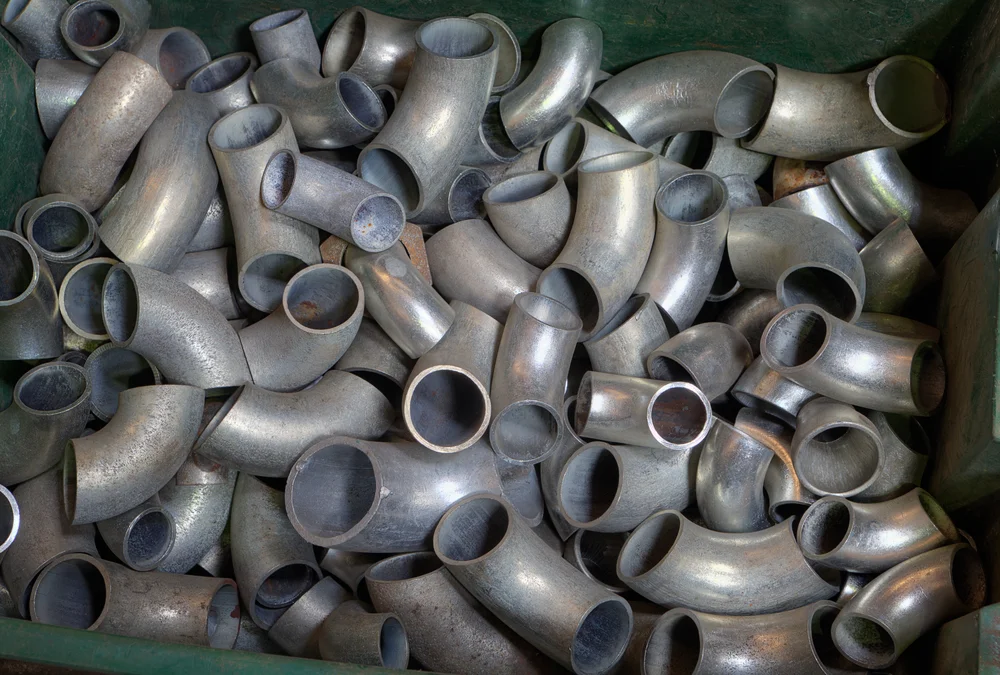
A buttweld fitting is a weldable Hastelloy C22 pipe fitting that takes into consideration the altar of the course of the stream, to expand, decrease pipe measure or connect assistant gear. Fashioned Steel buttweld fittings are made as per ANSI/ASME B16.9.
Buttweld fittings are accessible as elbows, tees, covers, decreases, and outlets. These fittings are the most well-known sort of welded pipe fitting and are indicated by ostensible pipe size and pipe plan. Buttweld fittings utilize consistent or welded pipe as the beginning material and are framed (through numerous cycles) to get the state of elbows, tees, and reducers, and so forth Similarly as the pipe is sold from Schedule 10 to Schedule 160, butt weld pipe fittings are sold a similar way. Welded butt weld fittings are more normal in hardened steel because of cost advantage. Sch 10 fittings are additionally more normal in hardened steel butt weld fitting.
The erosion-safe Hastelloy combinations are generally utilized by substance preparing enterprises. The requirement for solid execution prompts their acknowledgment and development in the territories of geothermal, sunlight-based energy, oil and gas, and drugs. The advantages of Hastelloy measure hardware incorporate high protection from uniform assault, extraordinarily limited erosion opposition, phenomenal pressure consumption breaking obstruction, and simplicity of welding and creation.
The B-3 combination has extraordinary protection from non-oxidizing acids, for example, hydrochloric corrosive and sulfuric corrosive. The benefits of B-3 compounds over past B-family composites are upgraded warm strength and improved manufacturing qualities. The as of late created Hastelloy Hybrid-BC1 will deal with more grounded non-oxidizing acids than C-type combinations and will endure oxidizing contaminations that B-type amalgams won’t.
The most adaptable of the Hastelloy amalgams are the “C-type” compounds. The C-2000 compound joins remarkable protection from oxidizing media with better obstruction than non-oxidizing conditions and addresses a genuine exhibition get through for substance measure hardware applications.
C-22 combination is especially impervious to pitting and fissure erosion; it has been utilized broadly to ensure against the most destructive FGD frameworks and the most refined drug response vessels.
Hastelloy Applications
Hastelloy serves a wide range of uses in these industry classes:
Synthetic Process
Petrochemical
Oil and Gas
Drug
Geothermal
Ocean Water
Water Desalination
LNG (Liquefied Natural Gas)
Biomass
Mining
Utilities
Atomic Power
Sun based Power
Hastelloy C22 buttweld fittings are produced using the Hastelloy C22, which has metals including chromium, molybdenum, tungsten, and so on The lightweight fittings produced using this amalgam offer superb protection from a wide range of consumption and are reasonable for opposing both limited and uniform erosion. That is the reason they are utilized in various modern cycles. They likewise offer better and unrivaled weldability. Subsequently, the compound is additionally utilized as filler wires and consumables of weld overlays so their protection from consumption can be improved.
Remarkable Resistance To Corrosion
Hastelloy C22 buttweld fittings and other hardware that are framed from the amalgam are more impervious to erosion than different sorts of Chromium, Nickel, and Molybdenum-based compounds like the Hastelloy C276, C4, and 625.
Protection from Localized Corrosion
The amalgams offer improved protection from a wide range of erosion like fissure consumption, pitting, and breaking brought about by stress consumption. The combination can likewise oppose the watery oxidizing media. Consequently, it can oppose the wet chlorine, nitric corrosive, chloride particles containing oxidizing acids, and other comparative arrangements easily.
Protection from Reducing And Oxidizing Industrial Environments
The Hastelloy tubes and other hardware are likewise productive in mechanical conditions where there are oxidizing and diminishing conditions in the modern cycle streams. Multi-reason plants regularly experience the ill effects of “upset” conditions. In these spots, the amalgam performs quite well and accommodates toughness as it is exceptionally flexible.
Employability In Chemical Processing Industry
At the point when utilized in synthetic handling ventures, the Hastelloy tubes oppose various types of interaction weakening substances effortlessly. These incorporate the solid oxidizing specialists like cupric/ferric chloride, hot and sullied inorganic and natural arrangements, ocean water, saline solution arrangements, formic/acetic acids, and so on
Grain Boundary Precipitation
The composite can oppose the encouraging arrangement in the grain limit weld zone when it is welded. Subsequently, the compounds are exceptionally worthwhile for joining mechanical cycles and conveying fluids and substances starting with one plant then onto the next.
Premium Alloy
Hastelloy is viewed as the most premium of combinations of compounds. Aside from offering upgraded and chief consumption obstruction, likewise offers one-of-a-kind characteristics of opposing warmth.
by kalpataru | Mar 8, 2021 | Blog
Pipe Flanges Information
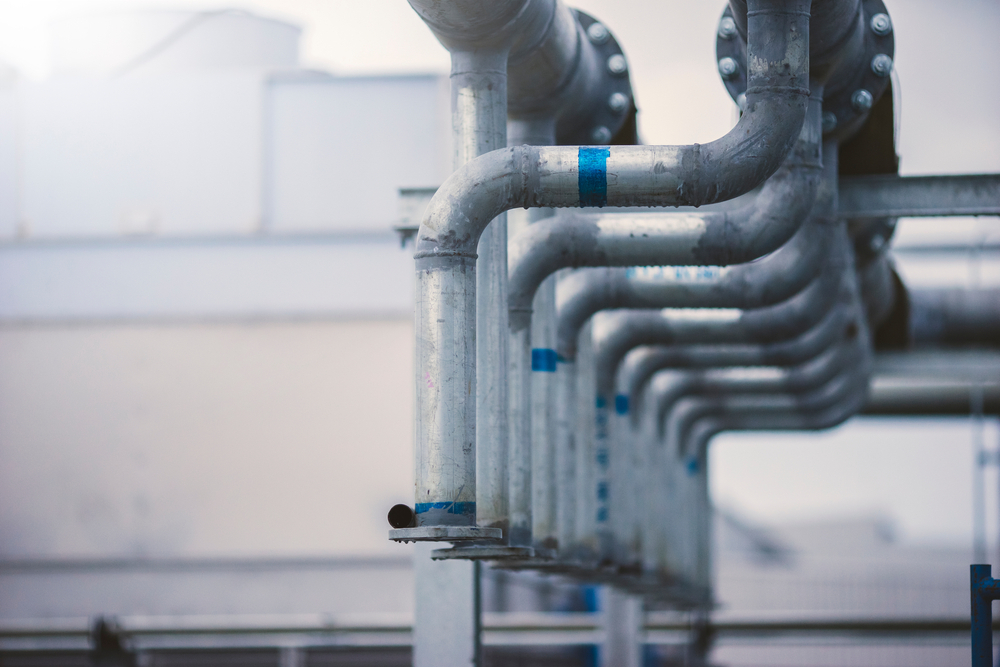
Pipe Flanges are jutting edges, edges, flanges, or collars used to make an association between two pipes or between a pipe and any sort of fitting or gear part. Pipe flanges are utilized for destroying funneling frameworks, brief or portable establishments, advances between divergent materials, and associations in conditions not helpful for dissolvable solidifying.
Flanges are generally straightforward mechanical connectors that have been utilized effectively for high-pressure funneling applications. They are surely known, dependable, practical, and promptly accessible from a wide scope of providers. Furthermore, the occasion conveying the limit of flanges is critically contrasted with other mechanical connectors. This is a significant component for frameworks that experience pipe-strolling or parallel clasping from temperature and pressing factor varieties (for example profound water pipes). flanges can be intended to meet a wide scope of utilization necessities like high-temperature and consumption opposition.
Activity
Pipe spines have flush or level surfaces that are opposite to the pipe to which they connect. Two of these surfaces are precisely joined through jolts, collars, glues, or welds.
Normally, flanges are joined to pipes by means of welding, brazing, or stringing.
Welding joins materials by dissolving the workpieces and adding filler material. For solid, high pressing factor associations of comparative materials, welding will in general be the best technique for flange association. Most pipe spines are intended to be welded to pipes.
Brazing is utilized to join materials by softening a filler metal which sets to go about as the connector. This strategy doesn’t liquefy the workpieces or actuate warm mutilation, taking into consideration more tight resiliency and clean joints. It additionally can be utilized to associate extremely different materials like metals and metalized ceramics.
Stringing is applied to spines and pipes to permit the associations to be sunk together in a way like nuts or fasteners.
While the strategy for connection can be a distinctive component, there are different contemplations more imperative to pipe flange determination. Elements a modern purchaser ought to consider first are the spine’s actual details, type, material, and execution, generally reasonable for the application.
Physical Specifications
Most importantly, a flange should fit the pipe or hardware for which it is planned. Actual details for pipe flanges incorporate measurements and configuration shapes.
Flange Dimensions
Actual measurements ought to be determined to estimate flanges effectively.
Outside breadth (OD) is the distance between two contradicting edges of a spine’s face. This can Thickness alludes to the thickness of the joining external edge and does exclude the piece of the flange that holds the pipe.
Jolt circle breadth is the length from the focal point of a jolt opening to the focal point of the restricting opening.
Pipe size is a pipe flange’s related pipe size, for the most part, made by acknowledged principles. It is normally determined by two non-dimensional numbers, ostensible pipe size (NPS) and timetable (SCH).
Ostensible bore size is the inward width of the flange connector. When assembling and requesting any sort of pipe connector, it is essential to coordinate the drag size of the piece with the drag size of the mating pipe.
Flange Faces
Flange appearances can be made to countless custom shapes based plan prerequisites. A few models include:
Level
Raised face (RF)
Ring type joint (RTJ)
O-ring groove
Pipe spines are a significant piece of any handyman’s stockpile of devices. They are utilized to associate areas of pipe to one another, or to different parts or bits of hardware. In the event that you intend to deal with any pipes occupations yourself, odds are you will require a pipe rib for some DIY plumbing occupations around your home or business property in San Jose, CA.
What you probably won’t understand in case you’re new to DIY plumbing is that there are a wide range of sorts of pipe spines available. How would you realize you have the right one for your requirements? Here’s a speedy outpipe of the different sorts of pipe spines and what you should think about them to help you settle on the legitimate choice:
Threaded: Threaded ribs are intended for low-pressure channeling frameworks and are oftentimes utilized in electrified steel pipe or in conditions where it isn’t appropriate to have welding temperature changes of in excess of 260 degrees Celsius, and underneath – 45 degrees Celsius. Try not to utilize threaded ribs for any pipe that could cause serious disintegration, cyclic stacking, or cleft consumption.
Lapped: Lapped ribs don’t come into contact with the media, and the material of the pipe spine can’t be equivalent to that of the pipe. All things considered, there should be a stub end or welding ring to make it appropriate for destructive medium pipe pipes.
Socket weld: Socket weld spines are most appropriate for more modest, high-pressure funneling. They are utilized in comparative conditions as slip-on spines, yet have an interior pocket plan that makes better liquid stream and a smoother bore. They additionally have the advantage of altogether more prominent strength than twofold welded slip-on spines when they are inside welded.
Slip-on: Speaking of slip-on ribs, these ribs are useful in light of the fact that they are not difficult to adjust and for the most part come in at a lower cost than a portion of different alternatives on this rundown. They’re bound to be utilized in low-pressure conditions, for example, non-sanitizing packed air and low-pressure water flow.
Welding neck: Welding neck spines are known for a higher strength and firmness. They are regularly utilized in conditions that have an enormous temperature pressure change range or in high-temperature, high-pressure conditions, however they can likewise be valuable for low-temperature pipe pipes.
Blind: Blind spine is most generally utilized for fixing pipe closes. Dazzle pipe spine will for the most part be introduced toward the finish of a header or in an area where there are probably going to be extra future connections.
by kalpataru | Feb 26, 2021 | Blog
Perhaps the best metal utilized in both the mechanical and modern areas is the Nickel 200. It is professed to be financially unadulterated nickel that has around 99.6 percent fashioned nickel that has incredible consumption obstruction and great mechanical properties. It has the properties of Nickel 200 that make its items in pretty much every area of the world profoundly popular.
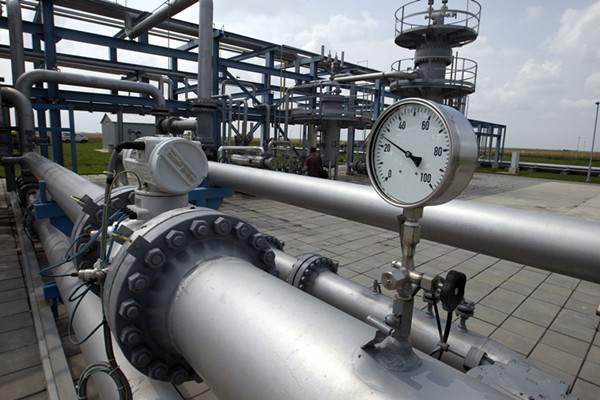
One of the items that have high electrical and warm conductivity with low fume pressing factor and gas content is nickel 200 pipes. These pipes are significantly utilized in the territories where less destructive metal is required. These pipes are typically round in frame and can be normal or sliced long as indicated by the determinations of the clients. They are essentially utilized in warmth treatment, machining, machining and extension, and so forth. Kalpataru Piping Solutions is one of the leading suppliers of nickel 200 pipes
Since they are incredibly adaptable, these pipes can be applied to an assortment of ventures. Aviation, the engine business, medication, development and plan, manures, atomic force, the vehicle, and transport industry, siphons and valves, the synthetic business, the oil business, and numerous others are a portion of the areas wherein these pipes can be utilized.
As a result of its phenomenal properties, you can utilize consistent tubing much of the time. It has high electrical conductivity, fantastic dry fluorine opposition, and very solid electrical, warm and magnetostrictive properties, valuable for burning pop, protection from erosion, and protection from a few unique synthetic compounds that diminish it. You presently know why they have a particularly expansive reach subsequent to learning every one of these favorable circumstances of Nickel 200 pipes.
Nickel 200 is an unadulterated nickel combination of 99.6 percent and is probably the hardest metal in nature. Incredible mechanical properties and high warm and electrical conductivity are displayed. What’s more, the useful properties of Nickel 200 and its synthetic construction simplify it to deliver and exceptionally impervious to destructive conditions.
Advantages of Nickel 200 pipes
One of the items that have high electrical and warm conductivity with low fume pressing factor and gas content is nickel 200 pipes. Such pipes are utilized basically in zones where less destructive metal is required. These pipes are ordinarily round in frame and can be ordinary or sliced long as per the determinations of the clients. They are significantly utilized in warm medicines, machining, development and machining, and so on.
Extraordinary mechanical qualities
Low gas content
Low pressing factor of fume
Attractive properties
High conductivity of warmth and power
Utilizations of Nickel 200 Pipes
There are a few distinctive modern utilizations of nickel compound 200 pipes, some of which incorporate Electronic components, Electronic parts, Wires for segments of warming, Connections/terminals of batteries, Chemical assembling, Aircraft parts, Manufacturing of food, and Processing Synthetic Fiber.
Nickel 200 Pipes are broadly used to ship liquids and gases in numerous modern applications. These pipes are consistently accessible and fit as a fiddle that makes it effective to deal with the pressing factor of the fluid. Nickel 200 bars and nickel 200 flanges are broadly utilized in applications that require exact external breadths. These cylinders are accessible in numerous shapes like square, round, and rectangular. These items are accessible in numerous kinds like Seamless, created, welded, ERW, and so on according to the business requests. Nickel 200 Pipes has industrially unadulterated fashioned materials that offer great substance, mechanical highlights, and consumption obstruction. These pipes can be formed with uncommon gear.
A few Advantages of Nickel 200 Pipes and Tubes:
Nickel 200 Pipes offer amazing protection from the forceful environments containing acidic salts at different temperatures. Nickel 200 bars have incredible warm and electrical conductivity. These pipes have a low fume pressing factor and gas content that makes them appropriate for some enterprises. Nickel 200 Pipes have extraordinary toughness, weldability, attractive and magnetostrictive highlights. These cylinders offer magnificent mechanical strength and resistivity in any diminishing, oxidizing, and antagonistic conditions. In chloride-containing conditions, Nickel 200 Pipes are exceptionally impervious to hole and stress erosion. These highlights make these pipes an ideal answer for the applications that handle engineered strands, acidic soluble bases, and food preparation. These pipes and cylinders have broad properties like higher malleability, simple fabricability, great completion, and cost viability.
Employments of Nickel 200 Pipes and Tubes dependent on highlights:
Nickel 200 Pipes are especially valuable in the primary enterprises where fantastic erosion obstruction is required. Nickel 200 bars proficiently work in clinical applications where exact external measurements are prime contemplations. The external measurement of cylinders makes it simple to demonstrate the amount it can hold. These pipes are additionally utilized in the delivery drums, electronic enterprises, where uncommon conductivity highlights are required. Because of higher mechanical strength and great malleability, Nickel 200 pipes are entirely found a way into applications like aviation, compound gear, rocket engines, safeguard, rocket parts, and some more. These cylinders are appropriate for channeling frameworks utilized related to the salts. Nickel 200 bars show a higher resistivity to any acidic media and this makes them the totally dependable item in the food preparing industry.
by kalpataru | Feb 20, 2021 | Blog
People have been occupied with disclosures and advancements since the most seasoned days and even preceding human progress. The goal has been to work on an everyday routine and experiencing and improving the quality, strength, and solidness credits. In our long excursion of development tillage, there were unquestionably some achievement accomplishments and iron and steel could be considered as a part of this fragment. In spite of the fact that the advancement of iron and steel are isolated by hundreds of years of a hole, these two items have changed the scene; particularly if they discuss their utilization in the development area. Steel has now become the crucial segment in the creation of durable and glorious constructions that could be truly bragged. Stainless steel bars and different items are effectively used to guarantee high strength and flexibility of the structure against a wide range of fiascos including the characteristic catastrophes. It will not be inaccurate to say that tempered steel assists with withstanding the unfriendly effects and misfortunes brought about by catastrophic events! We should perceive how steel has gotten so significant in invalidating the effects of characteristic disasters.
Counteraction is superior to fixing…
There are just a couple of organizations that exhort project supervisors on the best materials to use for design and designing activities. Material determination is a definitive factor for the sturdiness of infrastructural structures and establishments, especially for those underground. These may pass submerged or through mountains where they are seldom seen or checked once introduced.
This wide scope of conditions implies that every treated steel pipe is remarkable and should uphold its own weight, in a real sense and allegorically. The material should have the option to meet the rules in a climate that has forceful air conditions and is dependent upon solid vibrations.
The city of Tokyo, for example, has figured out how to endure solid seismic tremors for as long as thirty years. Particular thanks have been produced using stainless steel since the 1970s. The flexibility and pliability of the material assimilate stun without breaking or breaking. Because of this foreknowledge, even in disastrous circumstances, drinking water keeps on being accessible.
In addition, treated steel lines and cylinders — Types 316 and duplex — require no additional insurance for consumption obstruction, and its high strength and imperviousness to fire properties give a long and solid assistance life, with practically zero upkeep. These properties, along with stainless steels’ mechanical conduct, are of prime significance to guarantee people are secured and underground offices are introduced with minimal concern for architects and catastrophe chiefs.
Obviously, likewise, with cost control, the main choices in regards to the nature of a finished office are made during the planning and arranging stages as opposed to during development. It is during these fundamental stages that segment arrangements, material details, and useful execution are chosen. Kalpataru Piping Solutions has got all your stainless steel needs covered!
1. HIGH STRENGTH AND RESILIENCE
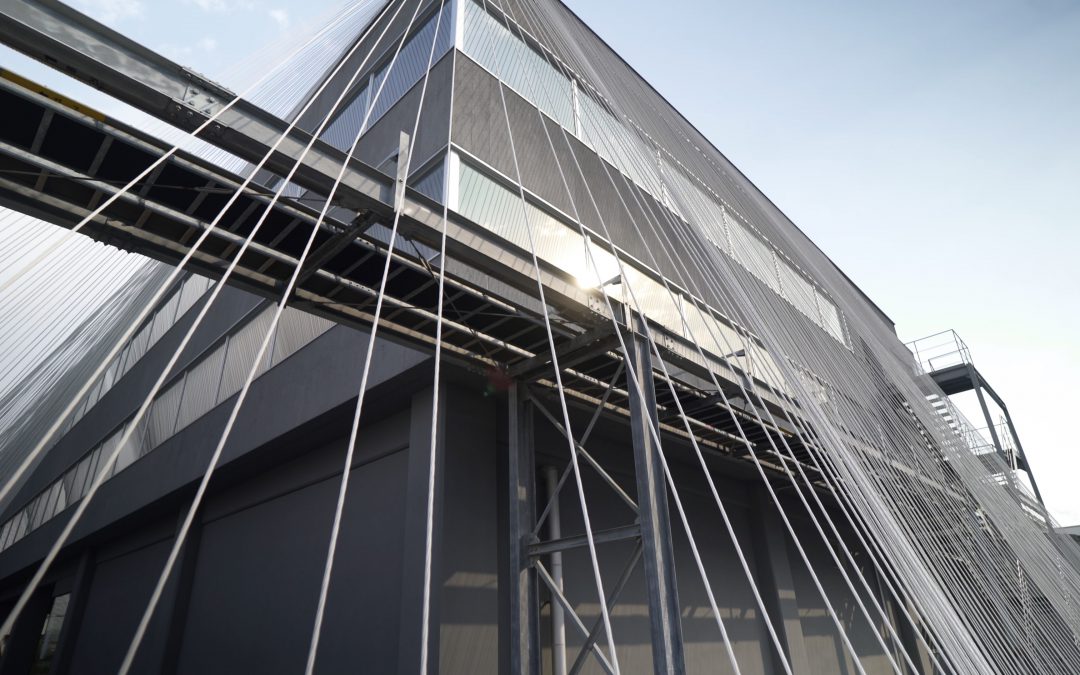
Stainless steel is a composite of iron that is delivered by adding minor amounts of components like chromium, carbon, and others. Different kinds of steel like 304, 316 have a contrasting alloying synthesis. Nonetheless, every sort of SS is perpetually known for the amazingly high strength and flexibility against stresses. Tempered steel lines and tubes and furthermore wires are along these lines utilized in structures, spans, and different constructions to convey high strength and in this manner guarantee long existence with no issues. High effect storms can’t influence SS structures accordingly forestalling the misfortunes.
2. Consumption AND RUST RESISTANCE
Another notable quality of SS is its imperviousness to rust. Steel is practically unaffected by rusting specialists like water/dampness, saltiness, and oxygen. The stainless steel lines and cylinders that are utilized to cause scaffolds have demonstrated exceptionally flexibility and grown the least indications of erosion even after many years and hundreds of years in various pieces of the world. At the point when the cataclysmic event like a tornado, storm, and so forth strikes then these SS structures stand tall with no misfortunes; since rust can’t obliterate the base material that stays unblemished.
3. Flexibility QUOTIENT IS VERY HIGH FOR STAINLESS STEEL
Stainless steel is a composite with one of the most elevated versatility remains among the entire scope of items. This implies that the impact of vibration during seismic tremors is least on the structures and constructions that are worked with treated steel poles and braces. The steel bars that are utilized as fortifications in the solid columns forestall the imploding of the construction accordingly deflecting tremendous misfortunes.
4. TEMPERATURE TOLERANCE
SS is extremely open-minded to temperature-instigated changes. This implies that the outrageous temperatures can’t viably denature the steel and the properties of versatility and strength are held. Low temperatures don’t make steel weak while high temperatures don’t dissolve it. In this way, SS is a wonderful development alternative in high-temperature changeability environments.
5. Very LONG LIFE AND LEAST METAL FATIGUE!
Stainless steel bars and wires don’t grow a lot of metal weakness when under persistent pressure. In this way, these are utilized in making mammoth size engineered overpasses that support the ocean storms without getting broken.
These characteristics of stainless steel make it a fine development and fortification material and furthermore keeps the misfortunes from the catastrophic events of variety.
by kalpataru | Jan 30, 2021 | Blog
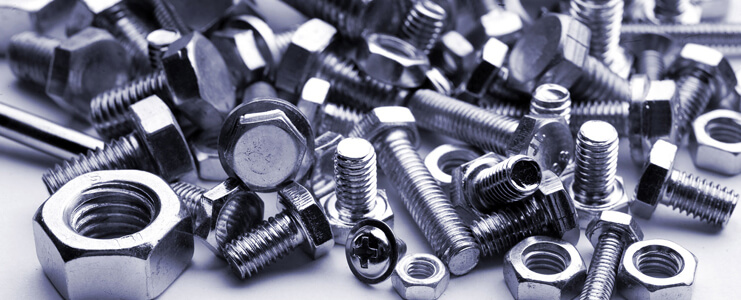
Fasteners can arrive in a wide scope of various sizes and shapes, however the fundamental creation is measured by and large remaining parts as before. It begins with cold manufacturing steel wire into the correct shape, trailed by heat treating to improve strength and surface treating to improve solidness, prior to being stuffed for shipment. Notwithstanding, for further developed bolt plans, the creation cycle can grow by some extra advances.
Cold production begins with huge steel wire poles, which are uncoiled and sliced to length. The evaluation of steel is normalized across the business, as per the necessities of ISO 898‑1. Utilizing extraordinary tooling, the wire is then virus manufactured into the correct shape. This is fundamentally where the steel is formed, while at room temperature, by constraining it through a progression of passes on at high pressing factor. The tooling itself can be very mind boggling, containing up to 200 distinct parts with resistances of hundredths of a millimeter. When idealized, cold fashioning guarantees fasteners can be created rapidly, in enormous volumes, and with high consistency. Kalpataru Piping Solutions has got all your fastener needs covered!
For more intricate bolt plans, which can’t be shaped through virus production alone, some extra turning or boring might be required. Turning includes turning the nut at rapid, while steel is removed to accomplish the ideal shape and plan. Penetrating can be utilized to make openings through the bolt. Whenever required, a few fasteners may likewise have washers connected at this phase of the cycle.
Heat treatment is a standard cycle for all fasteners, which includes presenting the bolt to extraordinary temperatures to solidify the steel. Stringing is generally applied before heat treatment, either by rolling or cutting when the steel is gentler. Moving works similar to cool manufacturing, and includes running the screw through a bite of dust to shape and form the steel into strings. Cutting includes shaping strings by cutting and eliminating steel.
Since heat treatment will change the properties of the steel to make it harder, it is simpler and more savvy to apply stringing heretofore. Notwithstanding, stringing after heat treatment will mean better weakness execution.
“The heat treatment can cause heat imprints and minor harm to the bolt or the washer,” clarifies Henrik Oscarson. “Hence, a few clients request stringing after heat treatment, particularly for applications like motor and chamber head fasteners. It’s a more costly cycle since you need to frame solidified steel, yet the strings will keep up their shape better.”
For long fasteners, where the length is in excess of multiple times the bolt’s breadth, the heat treatment can have the impact of causing the steel to return to the round state of the first steel wire. Thus, a cycle of fixing frequently should be applied.
The decision of surface treatment is dictated by the bolt’s application and the prerequisites of the client. Regularly, the principal worry for latches is consumption obstruction, and accordingly a zinc-plated covering applied through electrolytic treatment is a typical arrangement. This is a cycle whereby the bolt is lowered in a fluid containing zinc, and an electric flow is applied with the goal that the zinc frames a covering over the bolt. In any case, electrolytic treatment accompanies an expanded danger of hydrogen embrittlement. Another alternative is zinc chips, which offer significantly higher consumption opposition, yet at a more exorbitant cost.
At the point when consumption opposition isn’t an issue –, for example, inside a motor or an application that is routinely presented to oil – utilizing phosphate is a more financially savvy alternative. When the surface treatment has been applied, standard fasteners are commonly fit to be bundled. Be that as it may, further developed plans may require some extra gathering, for example, sections. Different fasteners will likewise require some type of fixing, either a locking patch or a fluid fix. A locking patch comprises a thick nylon layer over the strings, which improves hold. A fluid fix will help improve string framing force.
When these means are finished, the bolt is done. Presently all that remains is some type of value control to guarantee consistency and consistency before the fasteners can be bundled and sent.
1. Heat Treatment: This cycle is performed to expand the general toughness of the screw or fastener. There are two tasks inside heat treatment:
- Solidifying: Here, the clasp is warmed to a high temperature (about 1652oF), and afterward plunged into a cooling medium (generally water). This unexpected change in temperature solidifies the fastener or screw material.
- Treating: This activity is performed to lessen a portion of the abundance hardness/fragility of the clasp. The metal is warmed to a temperature level underneath its basic point after which the screw is left to air cool
2. Surface Finishing: This cycle incorporates activities that are performed to modify the outside of the fastener or screw. It is done to improve its capacity and stylish allure. Surface completing can include:
- Knurling: A machine is utilized to make crossed, calculated, or straight lines into the metal.
- Polishing/Reaming: An apparatus is passed along the body of the latch in a sliding movement. This movement helps upgrade the style of the latch’s surface completion.
- Grinding: A processor is utilized to eliminate any blemishes from the screw to make the surface level, smooth or even intelligent.
3. Thread Forming and Rolling: Fasteners and screws should be strung for some applications. String shaping or slicing is performed to make strings within or outside of the clasp. String moving activities are performed utilizing string moving passes on, which structure different string sizes on a section without eliminating material. The kick the bucket is put against the region where the stringing should be made. The clasp is moved in a round movement, permitting the pass on to make ideal strings around the body at exact areas.
4. Protective Coating: The last advance includes covering the screws and fasteners with a defensive covering. This keeps the latches from rust or consumption, and can change the appearance by adding shading.