Properties of High Carbon Steel

Properties of High Carbon Steel

High-carbon steel is known for having a lot of carbon in its composition, which gives it impressive strength and hardness. This makes it tough and resistant to wear and corrosion, meaning it can handle a lot of pressure without breaking. Because of these qualities, high-carbon steel is often seen as a great value for its performance. 

In this blog, we’ll explore the properties of high-carbon steel, how it’s produced, and the different ways it is used in various industries by designers and engineers. Let’s dive in!

What is High Carbon Steel?

High-carbon steel, also called carbon tool steel or M2, contains more than 0.6% carbon. If the carbon content is lower than this, it falls into the medium or low-carbon categories. If it exceeds 1.0%, it is classified as ultra-high-carbon steel. The composition of high-carbon steel is straightforward: it typically consists of 0.60–1.00% carbon, 98.1–99.1% iron, and 0.30–0.90% manganese.

Like other types of steel, high-carbon steel is produced by melting recycled steel or pig iron to eliminate impurities. Then, alloying elements are added before casting or extruding. When molten steel cools, it tends to release carbon. To prevent this, the steel is rapidly cooled, or quenched, to preserve the carbon within its structure. This process helps enhance the steel’s strength and hardness.

Types of High-Carbon Steel

There are four main categories of high-carbon steel:

  • Alloyed High-Carbon Steel – This type includes additional elements like chromium, cobalt, manganese, molybdenum, nickel, tungsten, and vanadium. These elements enhance hardness, strength, toughness, and resistance to heat and corrosion. However, this also increases the cost. Stainless steel is a common example of alloyed high-carbon steel.
  • Spring Steel – With a carbon content of 0.6–1.0%, spring steel often contains varying amounts of other alloying elements, particularly silicon. This composition gives it high yield strength and flexibility, making it ideal for applications where elasticity is essential.
  • Plain Carbon Steel –  Often considered the basic type, plain carbon steel contains no significant alloying elements. While it is the most affordable option, it is challenging to weld, has limited elongation, and is sensitive to heat treatments.
  • Tool Steel –  This type is alloyed with elements like tungsten, molybdenum, cobalt, and vanadium, making it very durable. Tool steel also offers excellent heat resistance, preventing it from tempering at high temperatures, which is essential for tools and cutting instruments.

High Carbon Steel Uses

High-carbon steel is widely used in everyday items and various industries due to its strength and durability.

  • Household Items – You’ll find high-carbon steel in appliances like refrigerators and dishwashers as hidden fasteners, as well as in toys and lawn equipment.
  • Automotive Industry – This steel is popular for vehicle components, including frames, chassis, and fuel rail clamps. High-carbon steel clips secure parts like car radios and backup sensors.
  • Manufacturing and Construction – Essential for making cutting tools, springs, and fasteners, high-carbon steel is also used in medical equipment, ensuring durability in critical applications.
  • Retail Applications – Look for high-carbon steel in pant hangers and clips used to hold bags of chips in stores.

Overall, high-carbon steel is an important material in various everyday products and industrial applications.

Chemical Composition of High-Carbon Steel

High-carbon steel has a straightforward chemical composition. It typically contains 0.60-1.00% carbon and 0.30-0.90% manganese, with the rest being iron, making up 98.1-99.1% of the composition. The table below provides a detailed breakdown

Element Content
Iron 98.10 – 99.10%
Carbon 0.60 – 1.00%
Manganese 0.30 – 0.90%

High Carbon Steel Properties

High carbon steel is often chosen for its outstanding strength and excellent resistance properties. It also has some ductility, meaning it can deform without breaking.

A distinctive feature of high carbon steel is its “memory.” This means that after being stretched, the material can return to its original shape once the force is released, reverting to its initial form.

Property AISI 1060 Values AISI 52100 Values
Density 7.85 g/cm² 7.81 g/cm²
Yield Strength 485 MPa 2033 MPa
Hardness (Rockwell B) 89 64
Magnetism (Curie Point) 770 ºC 770 ºC

Thermal Properties of High-Carbon Steel

Thermal Property Value
Melting Point 1540 – 1590°C
Thermal Conductivity 19.0 – 52.0 W/m·K
Coefficient of Thermal Expansion 9.9 – 14.8 µm/m·°C
Specific Heat Capacity 0.410 – 0.669 J/g·°C

Advantage  of High Carbon Steel

    • High Hardness – The high carbon content makes high carbon steel very hard. The carbon forms strong bonds with iron, creating hard carbides that increase its hardness and strength.
    • High Strength – When treated with heat processes like oil or water quenching, high carbon steel becomes even stronger and more durable.
    • Good Toughness – While it is tougher than other hard steels, its toughness is not as high as that of low carbon steel.
    • Wear Resistance – Due to its hardness, high carbon steel resists wear well. It’s often used for making items like hammers, blades, and needles.
    • Brittleness – The high carbon content makes the steel more brittle, so it needs careful handling to avoid breaking.

How Kalpataru Piping Solution Can Help

We hope this article helped you understand high-carbon steel and its uses. For more information or assistance, feel free to contact us

Conclusion

High carbon steel stands out for its strength, hardness, and wear resistance, making it a valuable material in various industries. From household items and automotive components to manufacturing and construction applications, its unique properties make it ideal for products that require durability and strength. However, its brittleness due to high carbon content means it needs careful handling to prevent breakage. Understanding the differences between high carbon, low carbon, and stainless steel helps in choosing the right material for the right application. Whether for toughness, resistance, or flexibility, there’s a steel type suited to meet specific needs.

FAQs

What are the examples of high-carbon steels?

High carbon steels are commonly used in various applications, including forging grades, rail steels, spring steels (both flat rolled and round), pre-stressed concrete, wire rope, tire reinforcement, wear-resistant steels (such as plates and forgings), and high-strength bars.

Where is high-carbon steel used?

High-carbon steel is a versatile material that finds use in various applications, such as tools, springs, railway tracks, and wires. Although high-carbon steel is suitable for many uses, its high carbon content makes it susceptible to corrosion.

Does high-carbon steel rust?

Yes, high-carbon steel can rust. While it is more corrosion-resistant than low-carbon-content steels, it will still rust if exposed to moisture over time. Because carbon steels have a higher iron content than other types of steel, they are always at risk of oxidation and corrosion.

Can high-carbon steel melt?

Yes, high-carbon steel can melt. Its melting point ranges between 1425°C and 1540°C, which is higher than that of stainless steel.

What is Carbon Steel?

What is Carbon Steel?

Carbon steel is basically iron mixed with carbon, and sometimes other elements are added to make it stronger and more useful. It’s used in everything from tall buildings to everyday tools, making it a key part of many things we use. Let’s look at what carbon steel is, the different kinds, and why it’s so important.

In this article, we’ll explain carbon steel, a common material used in many industries, from construction to manufacturing. 

Carbon steel, primarily composed of iron with a carbon content of up to 2.5%, is a critical material in various industries, particularly in oil and gas. In fact, over 80% of components used in the oil and gas sector are made from carbon steel. 

As an iron-carbon alloy, carbon steel can include small amounts of other elements such as manganese, silicon, sulfur, and phosphorus, which are typically present due to the steel-making process. These incidental elements do not significantly alter the mechanical properties of the steel. Instead, the primary characteristics of carbon steel are derived from its carbon content. By adding a small amount of carbon to iron, the material trades off some ductility for increased strength.

Carbon steel is known for its remarkable strength and toughness, making it one of the most versatile ferrous alloys available today. Its mechanical properties are highly sensitive to carbon levels, which usually remain below 1.0 wt%. With thousands of alloys available, each with varying compositions and heat treatments, carbon steel continues to be a cornerstone material for a wide range of applications.

Types of Carbon Steels

Carbon steel is divided into three main types based on its carbon content: low carbon steel (0.05–0.26% carbon), medium carbon steel (0.29–0.55% carbon), high carbon steel (0.55–1% carbon), and very high carbon steel (1–2.10% carbon). As the percentage of carbon increases, the toughness of the steel also improves.

1. Low Carbon Steel (Mild Steel) :-

Low-carbon steel, or mild steel, contains 0.05% to 0.26% carbon. It is one of the largest categories of carbon steel, encompassing various shapes, from flat sheets to structural beams. Other elements may be added to enhance specific properties, such as aluminum for drawing quality steel and manganese for structural steel.

2. Medium-Carbon Steels :-

Medium carbon steel has a carbon content of 0.29% to 0.55% and manganese levels of 0.060% to 1.65%. Stronger than low-carbon steel, it is more difficult to shape, weld, and cut. This steel is often hardened and tempered through heat treatment, making it ideal for large metal structures and automotive parts.

3. High-Carbon Steels :-

High-carbon steel, known as carbon tool steel, has a carbon content between 0.55% and 1.0%. It is hard to cut and shape, becoming very hard and brittle after heat treatment. This type of steel is commonly used for high-strength springs and wires.

Carbon Steel Properties

Carbon steel is categorized into three types based on its carbon content: low-carbon steel (or mild steel), medium-carbon steel, and high-carbon steel. Each type differs in carbon content, microstructure, and properties, as outlined below.

Carbon content (wt.%) Microstructure Properties Examples
Low-carbon steel < 0.25 Ferrite, pearlite Low hardness and cost. High ductility, toughness, machinability and weldability AISI 304, ASTM A815, AISI 316L
Medium-carbon steel 0.25 – 0.60 Martensite Low hardenability, medium strength, ductility and toughness AISI 409, ASTM A29, SCM435
High-carbon steel 0.60 – 1.25 Pearlite High hardness, strength, low ductility AISI 440C, EN 10088-3

Advantages of Carbon Steel

  • Strength and Durability – Carbon steel is known for its high strength and durability.
  • Corrosion Resistance – Offers properties that resist corrosion, especially with protective coatings.
  • Temperature Resistance – Functions effectively in both high and low temperatures.
  • Variety of Types – Available in numerous types to suit different applications.
  • Cost-Effective- Provides long-lasting performance at a reasonable cost.
  • Eco-Friendly – Fully recyclable and environmentally friendly.
  • Low Maintenance – Requires minimal upkeep and is easy to clean.
  • Attractive Finishes – Can be finished for a pleasing appearance that resists tarnishing.

Get in touch with us for more details.

    Fill the Captcha:
    [hidden post-url default:shortcode[_post_url]]

    Chemical  Composition of Carbon Steel

    Carbon steel is primarily an alloy of iron and carbon, with carbon content ranging from 0.05% to 2.1% by weight. The American Iron and Steel Institute (AISI) specifies limits for other elements in carbon steel as well.

    Element Typical Range Purpose
    Carbon (C) < 2% Increases strength and hardness
    Iron (Fe) Balance Primary component of carbon steel
    Silicon (Si) 0.05% – 0.30% Enhances strength and flexibility
    Manganese (Mn) 0.30% – 1.70% Improves toughness and wear resistance
    Phosphorus (P) < 0.04% Adds strength but can reduce ductility
    Sulfur (S) < 0.05% Improves machinability (in controlled amounts)

    Mechanical Properties of Carbon Steel

    MECHANICAL PROPERTIES METRIC ENGLISH COMMENTS
    Hardness, Brinell 163 163  
    Hardness, Knoop 184 184 Converted from Brinell hardness
    Hardness, Rockwell B 84 84 Converted from Brinell hardness
    Hardness, Vickers 170 170 Converted from Brinell hardness
    Tensile Strength, Ultimate 540 MPa 78300 psi  
    Tensile Strength, Yield 415 MPa 60200 psi  
    Elongation at Break 10% 10%  
    Reduction of Area 35% 35%  
    Modulus of Elasticity 200 GPa 29000 ksi Typical for Steel
    Bulk Modulus 140 GPa 20300 ksi Typical for Steel
    Poisson’s Ratio 0.29 0.29 Typical for Steel
    Machinability 160% 160% Based on 100% machinability for
    AISI 1212 steel
    Shear Modulus 80 GPa 11600 ksi Typical for Steel

    Strength of Carbon Steel

    In the mechanics of materials, the strength of carbon steel refers to its ability to withstand applied loads without failure or plastic deformation. It involves examining the relationship between external loads on the material and the resulting changes in dimensions or deformation. Essentially, strength indicates how well carbon steel can endure these loads without compromising its integrity.

    Annealing of Carbon Steel

    Process annealing is a method used to relieve stress in cold-worked carbon steel with less than 0.3% carbon content. During this process, the steel is typically heated to a temperature range of 550 to 650 °C (1,000 to 1,200 °F) for about one hour. In some cases, temperatures may reach up to 700 °C (1,300 °F). This treatment helps restore ductility and reduce internal stresses caused by cold working.

    The Production Process of Carbon Steel

    Carbon steel can be made from recycled steel, new steel, or a mix of both.

    The process starts by mixing iron ore, coke (a material made by heating coal without air), and lime in a blast furnace at around 1650°C. The coke adds carbon to the molten iron, while the lime helps remove impurities, which form a layer of slag on top.

    The molten steel initially has about 4% carbon. To get the right carbon level, a process called decarburization is used. Oxygen is blown through the steel to burn off the extra carbon, turning it into carbon monoxide and carbon dioxide.

    Hardness of Carbon Steel

    The Brinell hardness of low-carbon steel is about 120 MPa.

    In materials science, hardness measures a material’s resistance to surface indentation, scratching, and other forms of localized plastic deformation. Hardness is important for engineering because materials that are harder usually resist wear, abrasion, and erosion better.

    The Brinell hardness test is commonly used to measure this property. It involves pressing a hard, spherical indenter into the surface of the material under a specific load. For low-carbon steel, a 10 mm diameter steel ball is typically used with a force of 3,000 kgf. The size of the indentation is then measured, and the hardness is expressed as a Brinell hardness number (HB). This number is calculated by dividing the load by the surface area of the indentation.

    Thermal Properties of Carbon Steel

    Thermal properties describe how materials respond to changes in temperature and heat. As a material absorbs heat, its temperature increases and its dimensions may expand. Different materials react to heat in various ways, affecting their performance in different conditions.

    Explore our carbon steel products to find what suits you best. Kalpataru Piping Solution is here to offer expert advice and support for your needs.

    Why choose carbon steel?

    • Strong and durable
    • High pressure resistance
    • Corrosion and temperature resistant
    • Available in various types
    • Affordable and long-lasting
    • Recyclable and eco-friendly
    • Low maintenance and easy to clean
    • Customizable, attractive finish
    Check out our related blog to learn more about – Carbon Steel Uses 

    Conclusion

    Carbon steel, made from iron and carbon, is a versatile material known for its strength, hardness, and adaptability. Its various types and properties, such as those measured by the Brinell test and its response to temperature changes, make it essential in construction, manufacturing, and tool-making. Knowing these aspects helps in selecting the right carbon steel for your needs, underscoring its significance in engineering and industry. For more information on carbon steel price, contact us.

    FAQ

    What is the difference between cs and ms?

    Carbon steel has a higher carbon content than mild steel, making it stronger, harder, and more brittle. Mild steel, with lower carbon content, is more ductile and easier to shape and weld, making it suitable for applications where flexibility and malleability are required.

    Duplex 2205 Vs 316 Stainless Steel

    Duplex 2205 Vs 316 Stainless Steel

    2205 duplex & 316 stainless steel are mainly referred to as marine grade of stainless steel material, making them suitable for casting components used in areas with high chloride exposure. However, 2205 duplex stainless steel contains higher levels of chromium, nickel, molybdenum, and nitrogen as compared to 316 SS to offer higher resistance to corrosion.

    In this blog, giving a brief overview of the differences between duplex 2205 and 316 stainless steel for understanding their distinct properties and applications.

    Overview of 2205 Duplex Stainless Steel

    2205 duplex stainless steel is a type of stainless steel manufactured by a two phase microstructure containing both ferrite and austenite, offering high strength and excellent corrosion resistance. It’s highly resistant to pitting, crevice, and stress corrosion cracking, particularly in chloride-rich environments.

    At Kalpataru Piping Solution, leading duplex stainless steel supplier offering high quality products designed with duplex 2205 grade by following international standards to clients at best affordable prices.

    Explore Kalpataru Piping Solutions for top-grade duplex steel products. We offer durable solutions with superior corrosion resistance, combining ferritic and austenitic steels.

    Comparing Key Features of Duplex 2205 & 316 Stainless Steel

    • Chemical Composition:
      2205 duplex stainless steel contains higher amounts of chromium, manganese, and nitrogen as compared to grade 316 that offer high superior strength. 316 stainless steel contains amounts of molybdenum and nickel, enhancing its corrosion resistance, particularly in high temperature applications.
    • Weldability:
      Duplex 2205 can easily be weldable than grade 316 due to its lower levels of molybdenum and nickel, which facilitate fusion welding and reduce the risk of cracking or porosity. In contrast, grade 316 requires preheating before welding to mitigate the risk of cracking, especially given its higher carbon content. Additionally, welding grade 316 may necessitate post-weld heat treatment (PWHT), adding extra cost and time to the fabrication process.

    Cost Comparison of Duplex 2205 & 316 SS

    2205 duplex stainless steel is generally more expensive due to its higher alloy content and enhanced properties, such as greater strength and corrosion resistance. Prices of duplex 2205 may vary on the basis of forming and size of the material. We offer duplex SS 2205 products to clients at affordable prices.

    Conclusion

    Both duplex 2205 stainless steel & 316 stainless steel provide excellent corrosion resistance, but they each have unique benefits suited to different applications. By understanding the difference between these materials in terms of properties & applications, you can make an informed decision that fits your needs. Connect to us for guidance in selecting the right material for your industrial applications.

    What Is Super Duplex Stainless Steel Material?

    What Is Super Duplex Stainless Steel Material?

    ‘Super duplex’ refers to a group of high-performance stainless steels with approximately 25% chromium content. True to its name, this alloy features a microstructure composed of both austenitic and ferritic steel grains. This unique duplex structure gives Super Duplex stainless steels their distinctive physical and mechanical properties.Super duplex stainless steel is a high-performance alloy distinguished by its exceptional strength and corrosion resistance. It features a unique microstructure that combines both austenitic and ferritic stainless steel phases, providing an outstanding balance of mechanical and chemical properties. Typically containing around 25% chromium, super duplex steel excels in resisting corrosion, especially in chloride-rich environments. The addition of molybdenum and nitrogen further enhances its resistance to pitting and stress corrosion cracking. With its high tensile strength and toughness, super duplex stainless steel is ideally suited for demanding applications, including those in the oil and gas industry, chemical processing, and marine environments. Its robust properties make it a preferred choice for high-pressure and high-temperature conditions.

    History of Super Duplex Materials

    The journey of duplex stainless steel began in Sweden, where it was initially developed for the sulfite paper industry to address corrosion issues caused by chloride-laden cooling waters. While these early duplex alloys represented a significant advancement, they did not fully meet the industry’s demands, leading to further innovation.

    The next step in this evolution was the development of super duplex stainless steel. The pioneering alloy in this category, Ferralium 255, was created by Langley Alloys in the 1960s. However, the term “super duplex” itself did not emerge until the 1980s. It was used to describe highly alloyed, high-performance duplex steel with exceptional pitting resistance, determined by a formula of Cr% + 3.3Mo% + 16N% > 40. Over time, various grades of super duplex stainless steel have been developed, including the introduction of Super Duplex F61 in 1969.

    Uses of Super Duplex Stainless Steel

    Super duplex stainless steel, including grades like Super Duplex 2507 and UNS S32750, is highly valued for its exceptional resistance to acids, acid chlorides, and caustic solutions, making it ideal for aggressive environments in the chemical, petrochemical, pulp, and paper industries. Its superior resistance to stress corrosion cracking and enhanced mechanical properties set it apart from more common austenitic stainless steels, such as the 3xx series, and standard duplex steels like S32205.

    Super Duplex material is commonly used in demanding applications, including pumps, valves, fasteners, pipework, and connectors, particularly in the oil and gas, petrochemical, chemical, pulp, and paper industries. Langley Alloys offers an extensive range of super duplex materials, including solid bars up to 16 inches (406.4mm) in diameter, plates up to 3 inches thick, and access to pi

    Super-Duplex stainless steels and their characteristics

    The term “Super-Duplex” was first used in the 1980’s to denote highly alloyed, high-performance Duplex steel with a pitting resistance equivalent of >40 (based on Cr% + 3.3Mo% + 16N%). With its high level of chromium, Super-Duplex steel provides outstanding resistance to acids, acid chlorides, caustic solutions and other environments in the chemical/petrochemical, pulp and paper industries, often replacing 300 series stainless steel, high nickel super austenitic steels and nickel-based alloys. The chemical composition based on high contents of chromium, nickel and molybdenum improves intergranular and pitting corrosion resistance. Additions of nitrogen promote structural hardening by interstitial solid solution mechanism, which raises the yield strength and ultimate strength values without impairing toughness. Moreover, the two-phase microstructure guarantees higher resistance to pitting and stress corrosion cracking in comparison with conventional stainless steels. From the introduction of its first-generation, Duplex steel has seen a steady increase in popularity. Recently, the production of high strength, corrosion resistant super-duplex coil has been implemented in the marine and chemical industries, architecture and mast riggings, wire lines, lifting and pulley equipment and well service strands. In fact, development of wire processing techniques has enabled the production of steel wires down to 1mm in diameter.

    Welding Super Duplex Stainless Steels

    Welding duplex and super duplex stainless steels presents unique challenges compared to conventional austenitic alloys. The heat-affected zone (HAZ) of these steels can experience issues such as reduced toughness, post-weld cracking, and diminished corrosion resistance. To address these problems, skilled welders are needed to perform welding using techniques like SAW, TIG, and MIG. Additionally, proper post-welding processing is crucial to maintain the material’s integrity.

    Corrosion Resistance of Super Duplex Stainless Steels

    The enhanced corrosion resistance of duplex and super duplex stainless steels is due to their alloy composition, which includes chromium, nickel, molybdenum, nitrogen, and tungsten. These elements significantly improve resistance to pitting, with resistance values reaching as high as 45. These alloys are also suitable for use at elevated temperatures without suffering from oxidation corrosion and exhibit superior resistance to various alkaline, acidic, and neutral solutions.

    Cutting Speed for Super Duplex Stainless Steels

    Machining duplex and super duplex stainless steels requires careful consideration due to their tendency to work harden. Given their high strength and low thermal conductivity, it is essential to use robust, rigid machinery along with high-performance cutting inserts. Machining these alloys also necessitates the use of ample coolant to manage heat effectively. Employing the correct speeds and feeds will ensure efficient and effective machining of duplex and super duplex stainless steels.

    Conclusion

    Super duplex stainless steels offer exceptional strength, corrosion resistance, and durability, making them ideal for demanding applications in industries like oil and gas, chemical processing, and marine environments. Their unique microstructure provides superior performance compared to traditional materials, despite the challenges in welding and machining. As technology advances, super duplex steels will continue to be a top choice for high-pressure and harsh environment applications. 

    Kalpataru Piping Solutions provides a comprehensive range of super duplex materials, ensuring access to high-quality products for even the most challenging needs.

    FAQ

    Difference Between Duplex and Super Duplex Stainless Steels

    The key difference between duplex and super duplex stainless steels lies in their chromium content. Duplex stainless steels typically contain around 22% chromium, while super duplex stainless steels are alloyed with approximately 25% chromium. This increased chromium content in super duplex steels enhances their resistance to pitting corrosion, offering superior protection in harsh environments compared to standard duplex stainless steels.

    What is the ASTM grade for super duplex stainless steel?

    The ASTM grade for super duplex stainless steel 1.4501 is ASTM A182 F55, also known as UNS S32760. This grade offers exceptional resistance to seawater, surface corrosion, and hole and crevice corrosion. It is also suitable for use in sulfuric acid environments. ASTM A182 F55 is listed under the AISI F55 classification, reflecting its high-performance characteristics.

    What is the yield strength of super duplex stainless steel?

    Super duplex stainless steel typically offers a high mechanical strength with a yield strength of up to 600 MPa. It combines this strength with excellent ductility and exceptional corrosion resistance, making it suitable for challenging marine environments and diverse oil and gas production settings.

    Is super duplex stainless steel better than ss316?
    Yes, super duplex stainless steels offer significantly higher strength and corrosion resistance compared to SS316. While SS316 is a widely used austenitic stainless steel, super duplex stainless steels, with their mixed austenitic and ferritic microstructure, provide superior performance in demanding environments. This makes super duplex stainless steel a better choice for applications requiring enhanced strength and resistance to corrosion.
    Duplex Steel Pipes: A Comprehensive Guide

    Duplex Steel Pipes: A Comprehensive Guide

    Duplex Steel Pipes have gained significant popularity in recent years due to their impressive durability, strength, and corrosion resistance. They are an excellent choice for various applications in the oil and gas, chemical, and petrochemical industries. If you are considering using duplex steel pipes for your project, there are some key points you should be aware of. In this blog post, we will cover everything you need to know about duplex steel pipes.

    What is Duplex Steel?

    Duplex steel is an alloy with approximately 50% iron content, also known as austenitic-ferritic stainless steel. It is characterized by its high strength, excellent corrosion resistance, good weldability, and outstanding formability. Additionally, duplex steel remains tough even at cryogenic temperatures and retains its mechanical properties in acidic and alkaline environments up to 700°C. These attributes make it an ideal material for industrial applications such as heat exchangers, tanks, and pipes in the chemical processing industry.

    Why Use Duplex Pipes?

    Duplex pipes offer numerous advantages over other types of pipes, making them a popular choice in various industries. Their high strength-to-weight ratio makes them ideal for offshore applications where weight is a concern. Additionally, their exceptional corrosion resistance makes them well-suited for corrosive environments, such as chemical plants and oil refineries.

    Duplex steel pipes perform exceptionally well in salty, acidic, and caustic environments where other metals may fail. They are highly resistant to cracking and pitting while maintaining high strength levels even at cryogenic temperatures. Their excellent mechanical properties, combined with high flexibility and toughness, help reduce fatigue in dynamically loaded components like shafts and housings.

    Moreover, their good weldability enhances the material’s fabrication properties, making them an ideal choice for applications such as oil and gas pipelines, water treatment systems, and process piping networks. Duplex steel pipes also have excellent fatigue resistance, enabling them to withstand repeated stress without cracking or breaking. This, combined with their corrosion resistance, makes them perfect for high-pressure applications.

    Benefits of Duplex Steel Pipes

    • High Strength-to-Weight Ratio: Duplex stainless steel pipes are strong yet lightweight, which is particularly beneficial for offshore and other weight-sensitive applications.
    • Excellent Corrosion Resistance: These pipes are highly resistant to corrosion, making them ideal for harsh environments like chemical plants and oil refineries.
    • Good Mechanical Properties: They offer high flexibility and toughness, reducing fatigue in dynamically loaded components, such as shafts and housings. This makes duplex steel pipes suitable for high-stress applications.

    Manufacturing Process of Duplex Pipes

    Duplex steel pipes are renowned for their strength and corrosion resistance, but their manufacturing process is more complex and costly compared to other stainless steel pipes like 304 or 316 grades.

    Cold Forming for Duplex Pipes

    Duplex steel is challenging to work with due to its high strength. During manufacturing, cold working techniques such as cold rolling or cold drawing are commonly used. For larger pipes, hot forming may be employed. The process requires more force than shaping standard stainless steel, increasing production costs due to the additional force needed to work with this stronger, harder material.

    Cold Forming for Duplex Pipes

    Duplex steel is challenging to work with due to its high strength. During manufacturing, cold working techniques such as cold rolling or cold drawing are commonly used. For larger pipes, hot forming may be employed. The process requires more force than shaping standard stainless steel, increasing production costs due to the additional force needed to work with this stronger, harder material.

    Duplex Pipes Physical Properties

    Duplex steel pipes are made from a blend of chromium, nickel, and molybdenum. They are known for their high strength and excellent corrosion resistance. Duplex steel pipes are non-magnetic and exhibit superior mechanical properties, including formability, ductility, toughness, weldability, and machinability. They excel in handling heat, resisting impacts, and providing smooth flow. These pipes are ideal for demanding applications in construction, chemical processing, and the oil and gas industries. Their robust and versatile nature makes them a reliable choice for challenging environments.

    Strengths and Weaknesses of Duplex Stainless Steel

    Standard austenitic steels like ferritic 430 and austenitic 1.4301 (304) are relatively simple to manufacture, as they generally consist of a single phase—either ferrite or austenite. While these steels are widely used and effective, they have individual weaknesses:

    Austenitic Steels:

      • Low Strength: Approximately 200 MPa in solution-annealed condition.
      • Low Resistance to Stress Corrosion Cracking: This can be a significant drawback in certain applications.
      • Price Fluctuations: The nickel content in austenitic steels can lead to unpredictable price changes.

    Ferritic Steels:

      • Low Strength: Slightly higher than austenitic steels, around 250 MPa.
      • Weldability Issues: Difficult to weld in thick sections.
      • Poor Low-Temperature Toughness: Not suitable for very low temperatures.

    In contrast, duplex steel is designed to balance austenite and ferrite phases, offering several advantages:

    Higher Strength: Duplex grades typically range from 400 to 550 MPa in 0.2% PS, allowing for reduced section thickness and weight. This is particularly beneficial for:
    Pressure Vessels and Storage Tanks
    Structural Applications (e.g., bridges)

    Improved Weldability: While not as straightforward as austenitic steels, duplex steels are easier to weld than ferritic steels, especially in thick sections.

    Enhanced Toughness: Duplex steels perform better at low temperatures compared to ferritic steels, with toughness extending to as low as minus 50°C and sometimes reaching minus 80°C.

    Resistance to Stress Corrosion Cracking: Duplex steels offer better resistance to stress corrosion cracking than standard austenitic steels, making them suitable for:

      • Hot Water Tanks
      • Brewing Tanks
      • Process Plants
      • Swimming Pool Structures

    Duplex Stainless Steel Pipe Grades

    • Grade 2205: 2205 Grade is the most common duplex  steel grade, renowned for its excellent corrosion resistance and high strength. It is widely used in various applications due to its balanced properties.
    • Grade 2507: Often referred to as super duplex,2507 grade offers superior corrosion resistance and strength, making it ideal for extremely harsh environments and high-pressure applications.
    • Grade 2304: A lean duplex grade, 2304 provides good performance at a more economical cost. It is suitable for applications where moderate corrosion resistance and strength are required.


    Duplex and Super Duplex Stainless Steel: Corrosion Resistance and Applications

    Corrosion Resistance

    Duplex and super duplex stainless steels are highly resistant to corrosion. However, welding these materials can be challenging. The Heat-Affected Zone (HAZ) may experience reduced toughness, increased risk of cracking, and decreased corrosion resistance due to the high temperatures involved in welding.

    To achieve strong and corrosion-resistant welds, use suitable techniques such as Submerged Arc Welding (SAW), Tungsten Inert Gas (TIG) welding, or Metal Inert Gas (MIG) welding. Proper post-welding treatment is also crucial to maintain the durability and performance of these alloys.

    Cutting Speed for Duplex and Super Duplex Steel Pipe 

    Cutting duplex and super duplex stainless steels can be difficult due to their high strength and tendency to harden. Effective machining requires robust, rigid machines and high-performance cutting tools. Adequate coolant is necessary to manage heat and ensure smooth cutting. Using the correct cutting speeds and feeds is essential for efficient machining and maintaining the quality of the cut.

    Industrial Applications

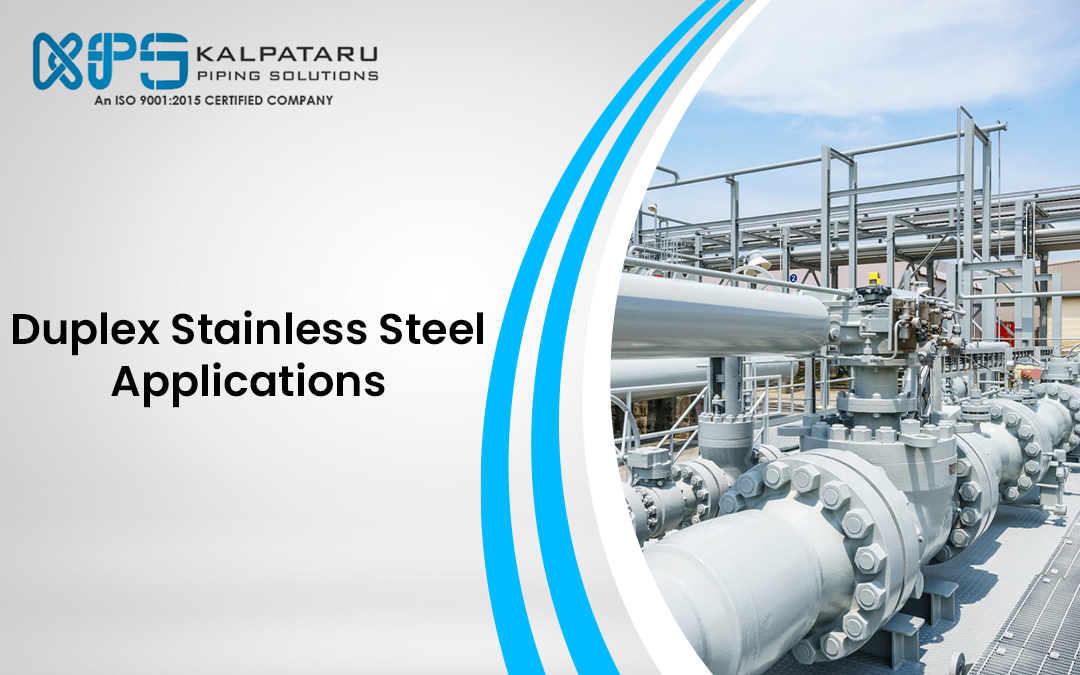
    • Duplex Stainless Steel: Valued for its high strength and lightweight properties, duplex stainless steel is ideal for applications such as pressure vessels and structural components. Its excellent resistance to stress corrosion cracking makes it suitable for processing plants, water tanks, and various chemical processing environments. Other applications include heat exchangers, power generation, pharmaceuticals, and petrochemicals.
    • Super Duplex Stainless Steel: Offering even greater strength and corrosion resistance, super duplex stainless steel is used in demanding environments like power plants, chemical industries, heat exchangers, boilers, and pressure vessels. Its superior durability makes it a reliable choice for extreme conditions where both high strength and exceptional resistance are essential.

    Applications of Duplex Steel Pipes

    Duplex steel pipes are highly versatile and find application across a range of industries due to their exceptional durability and corrosion resistance. Their robust properties make them suitable for:

    • Oil and Gas Extraction: Duplex steel pipes are commonly used in the extraction and transportation of oil and gas, where their strength and resistance to harsh environments are crucial.
    • Chemical and Petrochemical Industries: They are used in chemical production equipment and heat exchangers for petrochemical plants, where durability and resistance to corrosive substances are essential.
    • Food Processing: Duplex steel pipes are utilized in food processing systems due to their ability to withstand rigorous conditions and maintain hygiene standards.
    • Marine Applications: Their resistance to seawater corrosion makes them ideal for offshore drilling platforms and marine vessels.
    • Power Generation: They are used in turbines and other components of power generation systems where high strength and resistance to high temperatures are required.

    Conclusion

    Duplex steel pipes are a superior choice for numerous applications due to their high strength, durability, and excellent corrosion resistance. Combining the benefits of austenitic and ferritic properties, duplex steel offers a reliable solution for tubing and piping needs. Understanding the advantages of duplex steel and its various applications will help you make informed decisions for your projects. Be sure to consult with experts who can assist in selecting the appropriate duplex steel grade and provide guidance on its maintenance to ensure optimal performance and longevity.

    FAQ

    What Are the Grades of Duplex Steel Pipes?

    Common grades of duplex steel pipes include UNS S31803 and UNS S32205, known for their high strength and corrosion resistance.

    What is the pressure rating for duplex pipes?

    Duplex pipes typically have pressure ratings ranging from 3000 to 6000 psi, depending on the pipe size and schedule.

    What are the thickness options for duplex pipes?
    Duplex pipes typically range in thickness from 1/8 inch to 2 inches, depending on the pipe size and application.
    Duplex Stainless Steel vs 316 | Kalpataru Piping Solutions

    Duplex Stainless Steel vs 316 | Kalpataru Piping Solutions

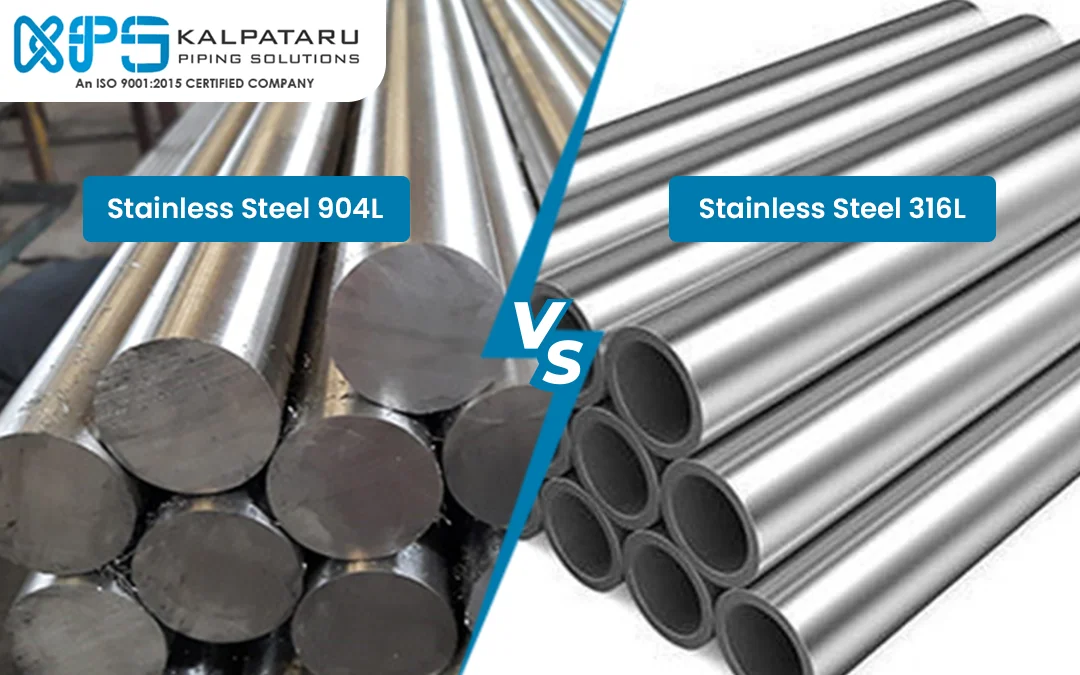
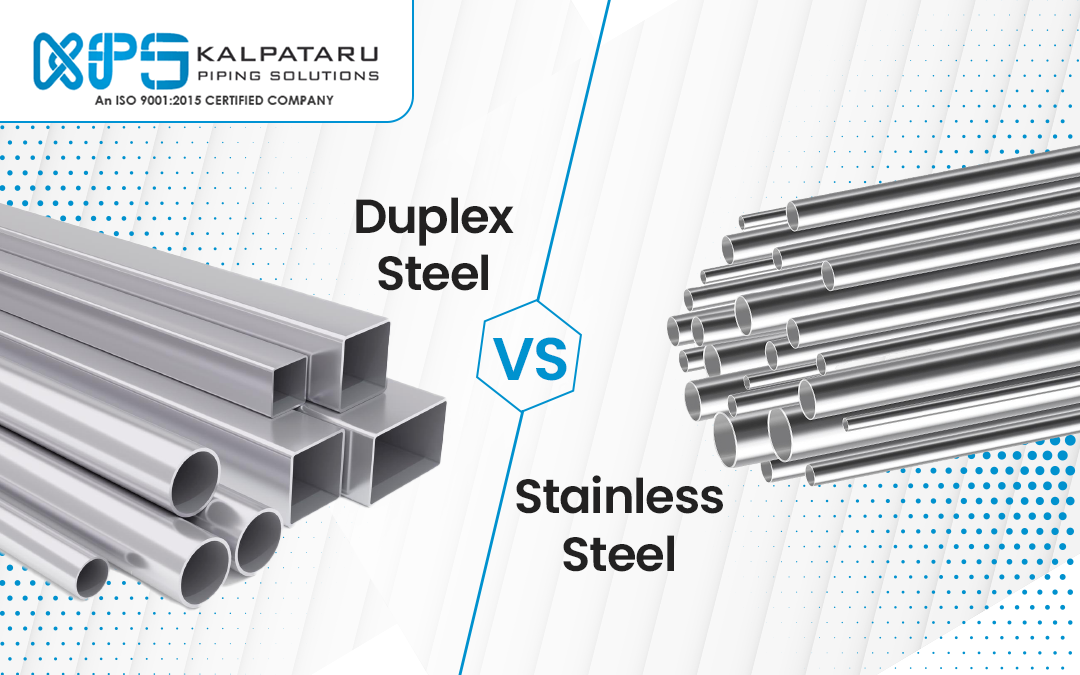
    Stainless steel is famous for resisting rust, mainly because of its chromium content. There are different types of stainless steel, including Ferritic, Martensitic, Austenitic, and Duplex. Duplex stainless steel mixes features of both ferritic and austenitic steels, giving it high strength and good resistance to stress and corrosion. It’s ideal for tough conditions and demanding applications.

    In contrast, 316 stainless steel is a type of austenitic steel known for its excellent resistance to rust, especially in salty or acidic environments. It’s often used where there’s a lot of exposure to corrosive materials.

    Here in this blog we will learn about how Duplex stainless steel and 316 stainless steel are different. Understanding these differences will help you pick the right stainless steel for your needs.

    What is Duplex Stainless Steel?

    Duplex stainless steel has a unique two-phase structure, mixing ferritic and austenitic grains. When cooled to room temperature, about half of the ferritic grains turn into austenitic grains. During melting, the steel first turns into the ferritic phase. For example, 2205 duplex stainless steel (UNS S32750) has this dual-phase structure, combining both types of stainless steel. This unique structure gives duplex stainless steel a range of advantageous properties, including:

    • High Strength: Duplex stainless steel is generally stronger than other types of stainless steel, making it suitable for applications requiring high strength and durability.
    • Corrosion Resistance: It offers excellent resistance to chloride stress corrosion cracking and pitting, making it ideal for use in aggressive environments.
    • Cost-Effectiveness: Duplex stainless steel often has lower levels of expensive alloying elements like nickel, which can make it more cost-effective compared to austenitic grades.
    • Good Toughness: Despite its high strength, duplex stainless steel maintains good toughness and ductility, making it easier to fabricate and weld.
    • Heat Resistance: It performs well in high-temperature environments, retaining strength and stability at elevated temperatures.

    Duplex stainless steel is often used in chemical processing, oil and gas industries, and marine environments because it’s strong and resistant to rust.

    Get in touch with us for more details.

      Fill the Captcha:
      [hidden post-url default:shortcode[_post_url]]

      What is 316 Stainless Steel?

      316 stainless steel is a type of austenitic stainless steel known for its excellent corrosion resistance and high strength. It is often used in environments where exposure to harsh conditions, such as seawater or acidic chemicals, is common. Here are key characteristics of 316 stainless steel:

      • Composition: 316 stainless steel typically contains 16-18% chromium, 10-14% nickel, and 2-3% molybdenum. The addition of molybdenum enhances its resistance to chloride-induced corrosion.
      • Corrosion Resistance: It offers superior resistance to corrosion and pitting compared to 304 stainless steel, especially in marine and chemical environments. Its resistance to chloride and high temperatures makes it suitable for applications in chemical processing, marine environments, and more.
      • Strength and Toughness: 316 stainless steel has good tensile strength and toughness, which makes it durable and suitable for structural applications.
      • Heat Resistance: It maintains its strength and stability at high temperatures, making it suitable for use in elevated temperature environments.
      • Fabricability: This grade of stainless steel is easy to machine, weld, and fabricate, which makes it versatile for various applications.

      Common uses for 316 stainless steel include marine equipment, chemical processing equipment, medical devices, and components that require high resistance to corrosion and high temperatures.

      Difference Between Duplex Steel & 316 Stainless Steel

      Duplex steel and 316 stainless steel are two distinct materials, each with its own set of qualities and uses. Both are commonly used across various industries, but they excel in different areas due to their unique properties.

      Duplex stainless steel is known for its high resistance to corrosion and impressive strength, making it ideal for applications where these features are crucial. It’s widely used in industries such as oil and gas, marine, and chemical processing. Compared to 316 stainless steel, duplex SS generally contains more chromium, molybdenum, and nitrogen, which contributes to its superior strength and corrosion resistance at higher temperatures. Additionally, duplex steel has higher ductility than 316 steel, making it easier to shape into complex forms without cracking.

      On the other hand, 316 stainless steel (or 316 SS) is a versatile material that handles high temperatures well and offers strong corrosion resistance. It’s commonly used in the food, medical, aerospace, and various other industries. 316 steel contains 18% chromium and 8% nickel, providing good resistance to rust and corrosion, especially in chloride environments.

      In summary, while both 316 stainless steel and duplex stainless steel are austenitic steels, duplex stainless steel is stronger and more resistant to chloride stress corrosion cracking, making it suitable for demanding applications. 316 stainless steel remains a popular choice for its flexibility and performance in a range of environments.


      Material Duplex Stainless Steel 316 Stainless Steel
      Composition Contains high levels of both austenitic and ferritic stainless steel Contains only austenitic stainless steel
      Corrosion Resistance More resistant to corrosion and cracking due to higher chromium, molybdenum, and nitrogen content Less resistant to corrosion and cracking due to lower chromium and molybdenum content
      Strength Higher yield and tensile strength compared to 316 stainless steel Lower yield and tensile strength compared to Duplex Stainless Steel
      Weldability Can be more difficult to weld due to higher alloy content Easier to weld compared to Duplex Stainless Steel
      Cost Generally more expensive than 316 stainless steel Generally less expensive compared to Duplex Stainless Steel
      Applications Used in industries requiring high strength, corrosion resistance, and toughness, such as oil and gas, chemical processing, and marine engineering Widely used in various applications, including food processing, medical equipment, and architecture, where high corrosion resistance is not critical

      Advantages Of Duplex Stainless Steel

      The key benefits of duplex stainless steel are its high strength and superior corrosion resistance. Additionally, duplex stainless steels are less prone to stress corrosion cracking compared to other stainless steel types.

      Disadvantages Of Duplex Steel

      The main drawback of duplex stainless steel is its higher cost compared to austenitic and ferritic stainless steels. It is also less commonly available, which can impact procurement and availability.

      Conclusion

      Both Duplex Stainless Steel and 316 Stainless Steel offer distinct advantages depending on the application. Duplex stainless steel provides superior strength and corrosion resistance but comes at a higher cost. 316 stainless steel, while less resistant to corrosion compared to duplex steel, is cost-effective and highly versatile. Understanding these differences can help in selecting the appropriate material for specific needs in various industries. For more information on stainless steel types and their applications, consult with Kalpataru Piping Solutions.

      FAQs

      1.Which is better: Duplex 2205 or 316 stainless steel?

      When comparing Duplex 2205 and 316 stainless steel, Duplex 2205 generally stands out as the superior choice for demanding applications. Marine-grade Duplex 2205 contains higher levels of Chromium, Nickel, Molybdenum, and Nitrogen compared to 316 stainless steel. This enhanced composition results in a product that is significantly stronger and offers nearly twice the corrosion resistance of marine-grade 316 stainless steel.

      2.What is the hardness of duplex stainless steel?

      Duplex stainless steel 2205, which features a two-phase ferritic/austenitic structure, offers high strength and exceptional corrosion resistance. In its annealed condition, it has a maximum Brinell hardness of 290, equivalent to Rockwell C31.

      3.What is the temperature limit for duplex stainless steel?

      For duplex stainless steel, the maximum temperature limit is typically around 250°C, while for super duplex stainless steel, it is generally around 150°C. However, many standards and codes do not differentiate between duplex and super duplex grades, often setting 150°C as the standard maximum temperature.

      4.What are the properties of duplex stainless steel?
      Duplex stainless steels offer exceptional corrosion resistance, including strong protection against intergranular corrosion. They are highly resistant to stress corrosion cracking, even in harsh chloride and sulfide environments. Super duplex grades provide even greater corrosion resistance, enhancing their suitability for demanding applications.

      Enquire Now
      close slider

        Enquire Now

        Fill the below form and get in touch with us, we’ll call you back.

        Fill the Captcha:
        WhatsApp chat