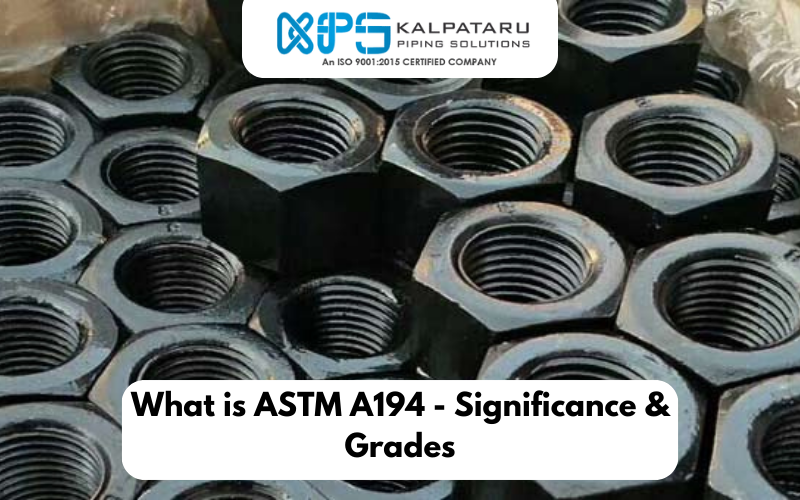
ASTM A194 is a standard specification that covers a variety of carbon, alloy, and stainless steel nuts intended for use in high-pressure and high-temperature service. These nuts are commonly used in conjunction with bolts and other externally threaded fasteners in various industrial applications. The specification includes different grades, each designed to meet specific mechanical properties and chemical compositions required for specific applications. It plays a crucial role in ensuring the quality and performance of fasteners in demanding conditions.
Significance of ASTM A194
The significance of ASTM A194 lies in its role as a standard specification for nuts made from carbon, alloy, and stainless steel. Specifically designed for use in high-pressure and high-temperature services, ASTM A194 ensures the reliability, quality, and performance of nuts used with bolts and threaded fasteners in various industrial applications. By providing guidelines for different grades with specific mechanical and chemical properties, ASTM A194 contributes to the safety and integrity of structures and equipment operating in challenging conditions. Adherence to this standard is essential for maintaining the reliability and efficiency of fasteners in critical applications.
ASTM A194 Grades and Classifications
ASTM A194 encompasses various grades and classifications, each tailored to meet specific mechanical and chemical requirements for nuts used in high-pressure and high-temperature applications. Some notable grades include A194 2H, A194 2HM, A194 4, A194 7, A194 7M, and A194 8, among others. These grades are designed to provide specific strength, ductility, and corrosion resistance characteristics, catering to diverse industrial needs. The classifications within ASTM A194 help ensure the appropriate selection of nuts based on their intended use and the specific demands of the operating environment.
ASTM A194 offers a range of classes and grades, each tailored to specific material types and mechanical properties. Key grades include:
ASTM A194 Grade 2H:
Material: Carbon steel heavy hex nuts.
Usage: Intended for use with ASTM A193 Grade B7 bolts.
Mechanical Properties: High tensile strength, suitable for high-temperature and high-pressure applications.
Application: Commonly used in industries like oil and gas, petrochemicals, and power generation.
ASTM A194 Grade 4:
Material: Carbon and alloy steel heavy hex nuts.
Usage: Used with ASTM A193 Grade B7, B16, or B8M bolts.
Mechanical Properties: Offers high strength, suitable for various high-pressure applications.
ASTM A194 Grade 7:
Material: Stainless steel nuts.
Usage: Intended for use with ASTM A193 Grade B8M bolts.
Mechanical Properties: Provides excellent corrosion resistance, ideal for applications in corrosive environments.
ASTM A194 Grade 8/8M:
Material: High-strength stainless steel nuts.
Usage: Used with ASTM A193 Grade B8 and B8M bolts.
Mechanical Properties: Excellent resistance to corrosion, suitable for corrosive environments.
ASTM A194 Grade 3:
Material: Alloy steel heavy hex nuts.
Usage: Intended for use with ASTM A193 Grade B16 bolts.
Mechanical Properties: High strength, suitable for high-temperature applications.
Chemical Composition:
The chemical composition of ASTM A194 nuts varies based on grades, ensuring specific mechanical properties for each application.
Importance of Adhering to ASTM A194 Standards:
Safety and Reliability: Compliance ensures bolts and nuts can withstand extreme conditions, ensuring safety.
Interchangeability: Standardized nuts allow easy replacement or upgrades without compromising joint integrity.
Quality Assurance: Adherence to standards ensures consistent quality, following strict manufacturing benchmarks.
Differences between ASTM A194 Gr 2H and ASTM A194 Gr 8
Here’s a tabular comparison highlighting the key differences between ASTM A194 Grade 2H and ASTM A194 Grade 8 nuts:
Property
ASTM A194 Grade 2H
ASTM A194 Grade 8
Material
Carbon steel
High-strength stainless steel
Usage
ASTM A193 Grade B7 bolts
ASTM A193 Grade B8 and B8M bolts
Mechanical Properties
High tensile strength
Excellent corrosion resistance
Application
High-temperature and high-pressure applications
Suitable for corrosive environments
Compatibility
Used with ASTM A193 Grade B7 bolts
Used with ASTM A193 Grade B8 and B8M bolts
Conclusion
In conclusion, ASTM A194 plays a vital role in ensuring the structural integrity of industrial equipment and structures. By setting specific standards for high-strength nuts used in conjunction with high-strength bolts, this specification provides a framework for manufacturers to produce reliable, safe, and efficient fastening solutions. Adhering to ASTM A194 standards is not just a matter of compliance; it is a commitment to safety, quality, and the overall well-being of the industries it serves. So, the next time you see a robust structure standing tall, remember that it is likely thanks, in part, to the often-overlooked, yet essential, ASTM A194 nuts and bolts securing its joints
Titanium alloy is known for lightweight metal material, widely acclaimed across industries like aerospace, automotive, medical, sports, and beyond. Its special features, such as impressive tensile strength, resistance to corrosion, and stability in high temperatures, make titanium alloys a top choice for cutting-edge applications. Join us in this blog post as we delve into the distinctive properties of titanium alloys and how they find use in diverse industries.
What Is Titanium Alloy?
A titanium alloy is a type of metal made by combining titanium with other elements, like aluminum, vanadium, or iron. This combination enhances the properties of titanium, making it stronger, more resistant to corrosion, and suitable for various applications. Titanium alloys are known for their light weight, high strength, and durability, making them valuable in industries such as aerospace, medicine, sports, and manufacturing.
Titanium Alloy Properties
With the use of titanium alloy, widely employed in components like turbine blades and bio-materials due to its high specific strength and corrosion resistance. Despite these benefits, titanium has drawbacks like high friction and poor wear resistance. To address this, surface modification through nitriding is common but can reduce fatigue strength due to grain-coarsening.
The research aims to enhance the tribological properties of titanium alloy by developing a low-temperature nitriding process. The previous study successfully applied this to commercially pure titanium, maintaining fine grains. This study specifically looks at low-temperature nitriding of Ti-6Al-4V alloy, characterizing the surface layer formed, and assessing its impact on the alloy’s 4-point bending fatigue properties.
Titanium Mechanical Properties
Unalloyed, commercially pure titanium has a tensile strength ranging between 275 and 590 MPa. This strength is mainly influenced by the oxygen and iron content; higher levels of these elements result in increased strength. For commercially alloyed titanium grades, the tensile strength varies from as low as 600 MPa (e.g., Ti-3A1-2.5V) to as high as 1250 MPa (e.g., Ti-15Mo-5Zr-3AI).
Pure titanium remains stable up to around 300°C, owing to its specific strength and creep resistance. More complex titanium alloys maintain high strength even at temperatures up to approximately 500°C.
The fatigue strength (after 10^7 cycles) is approximately half of the tensile strength, and welding does not significantly decrease fatigue strength. In seawater, both commercially pure titanium and titanium alloys show almost no decline in fatigue strength.
The fracture toughness of titanium alloys ranges from 28 to 108 MPa m^1/2 and is inversely correlated with tensile yield strength. The specific fracture toughness depends on microstructure, with alloys having acicular structures exhibiting higher fracture toughness.
Chemical Properties Of Titanium
Titanium alloys are known for their exceptional chemical properties, notably corrosion resistance due to a protective oxide layer. This resistance extends to harsh environments, making them durable in aerospace, chemical processing, and healthcare. Their biocompatibility suits medical applications, while inertness ensures stability. Titanium alloys’ ability to withstand high temperatures widens their usage, from jet engines to industrial processes, making them versatile and reliable across diverse applications.
Atomic number
22
Atomic mass
47.90 g.mol -1
Electronegativity according to Pauling
1.5
Density
4.51 g.cm-3 at 20°C
Melting point
1660 °C
Boiling point
3287 °C
Vanderwaals radius
0.147 nm
Ionic radius
0.09 nm (+2) ; 0.068 nm (+4)
Isotopes
8
Electronic shell
[ Ar ] 3d1 4s2
Energy of first ionisation
658 kJ.mol -1
Energy of second ionisation
1310 kJ.mol -1
Energy of third ionisation
2652 kJ.mol -1
Energy of fourth ionisation
4175 kJ.mol -1
Physical Properties of Titanium Alloys
Strength and Durability
Titanium alloys stand out for their outstanding strength and durability, boasting the highest strength-to-weight ratio among metals. This quality makes them particularly well-suited for critical aerospace applications where both strength and weight are paramount. Additionally, these alloys excel in withstanding extreme temperatures, pressures, and challenging environments, earning them a prevalent role in aircraft engines, medical implants, and power generation systems.
Corrosion Resistance
Renowned for exceptional corrosion resistance, titanium alloys can bravely confront harsh environments like seawater, acids, and chlorides. The protective oxide layer on their surface enhances this resistance, positioning titanium alloys as ideal materials for marine, chemical, and oil and gas applications.
Biocompatibility
Another distinctive feature of titanium alloys is their biocompatibility. Resistant to corrosion in various bodily fluids and low in toxicity, titanium proves suitable for medical implants. Dental implants, artificial hips and knees, cardiac pacemakers, and bone fixation devices are commonly crafted from titanium alloys, ensuring they can reside in the human body without triggering adverse reactions.
Machinability
Despite their formidable strength and durability, titanium alloys exhibit relative ease of machinability. Unlike metals like steel and aluminum, titanium alloys do not work harden during machining. This characteristic empowers manufacturers to produce intricate parts with tight tolerances and minimal scrap rates, making titanium alloys an excellent choice for the aerospace and medical industries.
Lightweight
Highlighting a previous point, titanium alloys are lightweight, presenting another significant advantage. Integration of these alloys in aerospace applications results in reduced aircraft weight, leading to lower fuel consumption and emission rates. The lighter weight of titanium implants also lessens mechanical stress on a patient’s bones.
Conclusion
In summary, titanium alloys boast unparalleled properties that render them unique and highly coveted across diverse industrial applications. From aerospace and automotive to medical implants and sports equipment, these alloys offer an exceptional combination of strength, durability, corrosion resistance, biocompatibility, and lightweight. With ongoing technological advancements and innovations, we anticipate witnessing even more exciting applications for titanium alloys in the future.
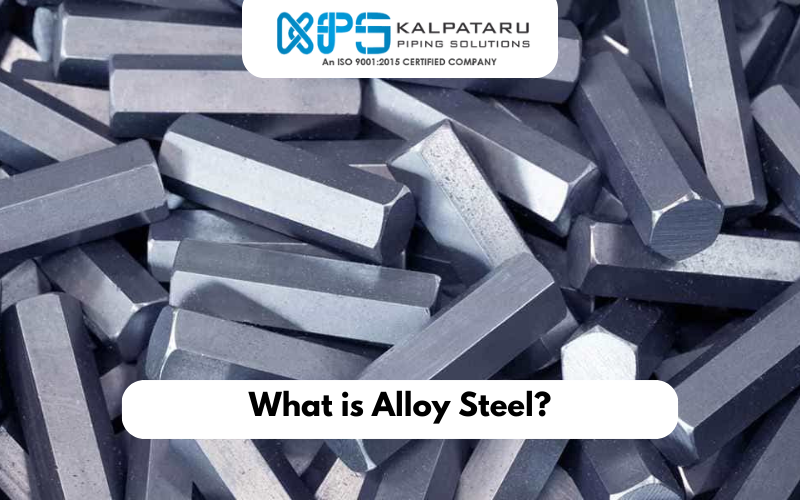
Alloy steel is a type of steel that contains elements other than carbon in varying proportions to enhance specific properties. These alloying elements may include elements such as chromium, nickel, manganese, vanadium, silicon, and others. The addition of these elements can impart characteristics such as increased strength, hardness, corrosion resistance, and improved heat resistance to the alloy steel.
Alloy steels are known for their versatility and are used in a wide range of applications, including the production of structural components, tools, machinery parts, and automotive components. The specific composition of alloy steel can be tailored to meet the requirements of particular industrial applications, making it a popular choice in various engineering and manufacturing fields.
What is the composition of an alloy steel?
The composition of alloy steel can vary widely depending on the specific alloy and its intended application. Alloy steels are made by adding different elements to iron and carbon, with the goal of achieving specific mechanical or chemical properties. Here is a general overview of some common alloying elements found in alloy steel and their roles:
Manganese (Mn): Enhances strength, hardenability, and wear resistance. Often used in conjunction with other alloying elements.
Chromium (Cr): Adds hardness, wear resistance, and corrosion resistance. Common in stainless steels.
Nickel (Ni): Improves toughness, strength, and corrosion resistance. Often found in stainless steels and some high-strength low-alloy (HSLA) steels.
Carbon (C): The primary alloying element in all steel. Carbon content affects hardness, strength, and other mechanical properties.
Vanadium (V): Contributes to hardenability, strength, and toughness. Common in high-speed tool steels.
Molybdenum (Mo): Improves strength, hardenability, and corrosion resistance. Common in HSLA steels and certain stainless steels.
Alloy steels vary in thermal conductivity but are generally less conductive than carbon steels.
Carbon steels have a higher thermal conductivity of about 45 W/(mK).
Alloy steels have higher tensile strength than carbon steels (up to 960 MPa).
Carbon steels have lower tensile strength (450 MPa).
Alloy steels are used in a variety of high-temperature applications, such as in petrochemical and power plants.
Carbon steels are used in applications without particularly high temperatures.
Types of alloy steel
Low Alloy Steel
Low-alloy steel is characterized by its composition, containing less than 5% of alloying elements such as chromium, nickel, molybdenum, vanadium, among others, by weight. Compared to standard carbon steel, low-alloy steel exhibits enhanced mechanical properties, including increased hardness, toughness, wear resistance, and corrosion resistance. An example of a common low-alloy steel is 4130 steel, which typically contains 0.30% carbon, along with 1% chromium and molybdenum.
High Strength Low Alloy (HSLA) Steel
High-strength low-alloy (HSLA) steel exhibits superior mechanical properties and enhanced resistance to atmospheric corrosion when compared to traditional carbon steel. Unlike standard alloy steels, HSLA steels are engineered to meet specific mechanical standards rather than chemical criteria.
High-alloy steel
High-alloy steels are characterized by a significant proportion of alloying elements, with stainless steel being the most widely recognized type, featuring a minimum of 12% chromium content. Stainless steel is classified into three primary types: martensitic, ferritic, and austenitic. High-alloy steels find extensive use in applications demanding both strength and corrosion resistance, such as aerospace and defense components, chemical processing machinery, and medical implants. Examples of high-grade steels include stainless steel, tool steel, and maraging steel.
Stainless steel
Stainless steel, an iron alloy renowned for its resistance to rust and corrosion, typically contains a minimum of 11% chromium. To attain specific desired properties, it may incorporate elements such as carbon, other non-metals, and additional metals. The stainless steel family encompasses various types, including austenitic, ferritic, martensitic, duplex, and precipitation-hardening steels. Among these, austenitic steels, containing up to 35% nickel and up to 26% chromium, are known for their exceptional corrosion resistance.
Microalloyed steel
Microalloyed steel incorporates small amounts of alloying elements like niobium, vanadium, titanium, molybdenum, zirconium, boron, and rare-earth metals, typically ranging from 0.05% to 0.15%. These elements are strategically included to enhance precipitation hardening and achieve a refined particle microstructure. Due to their combination of moderate strength, excellent toughness, fatigue strength, and ease of weldability, microalloyed steels produced through controlled rolling emerge as a highly attractive choice for a broad spectrum of engineering applications.
Advanced high-strength steel (AHSS)
Advanced High-Strength Steel (AHSS) is a steel category primarily employed in sheet form for constructing automotive structures. Initially characterized by multiphase microstructures with ferrite as the primary phase, recent advancements have led to grades that are predominantly martensitic or austenite-based. These new generations of steel grades ensure that steel parts and components not only adhere to crucial safety and performance standards but are also economically produced and straightforward to manufacture.
Maraging steel
Maraging steel, distinguished for its remarkable strength and toughness while retaining ductility, derives its name from the combination of “martensitic” and “ageing,” reflecting the extended heat-treatment process involved. Maraging steels are characterized by nominal tensile strengths, often denoted by numbers such as SAE steel grades 200, 250, 300, or 350. These compositions and essential properties are detailed in the US military standard MIL-S-46850D1
Maraging steels are known for their ultra-high strength, a simple ageing process that minimizes distortion, elevated levels of toughness, moderate corrosion resistance comparable to standard martensitic steels, good machinability (especially in the annealed state), and effective weldability.
Tool steel
Tool steel, a highly suitable steel variant for crafting tools and tooling, including cutting tools, dies, hand tools, knives, and more, plays a pivotal role in various manufacturing processes. Tool steels are composed of iron-based alloys with varying ratios of carbide-forming metals such as chromium, molybdenum, tungsten, and vanadium. These alloys boast relatively high carbon content, contributing to both strength and carbide formation. Additionally, for enhanced high-temperature strength, substitutional solutes like nickel and cobalt are introduced into the alloy composition. This combination of elements makes tool steels essential for applications demanding precision, durability, and resistance to wear and tear in the production of a wide range of tools and tooling equipment.
Alloy Steel Properties
Alloy steel is a distinct steel variant crafted by incorporating small quantities of specific elements or alloys into pure carbon steel. Typically, alloy steels exhibit superior properties like increased strength, hardness, and resistance to wear when compared to pure carbon steel. The addition of alloying elements serves to enhance one or more physical and/or mechanical characteristics of the steel, such as hardness, strength, toughness, performance at high temperatures, corrosion resistance, and wear resistance.
Alloy Steel Chemical Composition
Element
Content (%)
Chromium, Cr
0.80 – 1.10
Manganese, Mn
0.75 – 1.0
Carbon, C
0.380 – 0.430
Silicon, Si
0.15 – 0.30
Molybdenum, Mo
0.15 – 0.25
Sulfur, S
0.040
Phosphorous, P
0.035
Iron, Fe
Balance
Alloy Steel Physical Properties
Properties
Metric
Imperial
Density
7.85 g/cm3
0.284 lb/in³
Melting point
1416°C
2580°F
Alloy Steel Mechanical Properties
Properties
Metric
Imperial
Tensile strength
655 MPa
95000 psi
Yield strength
415 MPa
60200 psi
Bulk modulus (typical for steel)
140 GPa
20300 ksi
Shear modulus (typical for steel)
80 GPa
11600 ksi
Elastic modulus
190-210 GPa
27557-30458 ksi
Poisson’s ratio
0.27-0.30
0.27-0.30
Elongation at break (in 50 mm)
25.70%
25.70%
Hardness, Brinell
197
197
Hardness, Knoop (converted from Brinell hardness)
219
219
Hardness, Rockwell B (converted from Brinell hardness)
92
92
Hardness, Rockwell C (converted from Brinell hardness. Value below normal HRC range, for comparison purposes only)
13
13
Hardness, Vickers (converted from Brinell hardness)
207
207
Machinability (based on AISI 1212 as 100 machinability)
65
65
What is alloy steel used in?
Alloy steel is used in a wide range of applications across various industries due to its enhanced properties compared to pure carbon steel. The specific application of alloy steel depends on the desired combination of properties required for the end product, such as strength, hardness, corrosion resistance, and heat resistance.
Application of Alloy Steel
Alloy steel serves a wide range of purposes, from propelling aircraft engines to powering nuclear reactors. Its versatile applications include:
Building Structures: Alloy steel forms the sturdy frames of structures like arenas, skyscrapers, airports, and bridges.
Bridge Construction: Alloy steels, containing elements like nickel, copper, and chromium, are crucial in building durable and robust bridges.
Flat Products: Premium alloy steel is employed to produce flat slabs and strips, vital for welding in the construction industry.
Coil Products: Alloy steel sheets, whether rolled hot or cold, can be galvanized by immersion in hot water. These galvanized coils are used to create building components such as side rails, light steel frames, roof purlins, and lintels.
Automotive: Alloy steel is widely used in the automotive industry for constructing essential components like axles, gears, crankshafts, and various other auto parts
Alloy Steel Advantages
Alloy steel offers superior advantages, including heightened strength, enhanced hardness, and improved wear resistance compared to traditional carbon steel. Its versatility allows for applications in diverse industries, from constructing robust building structures and bridges to crafting crucial automotive components. The alloying elements, such as nickel, copper, and chromium, contribute to its exceptional properties, making it a preferred material for high-performance applications.
Conclusion
Alloy steel is vital in modern manufacturing, providing stronger and more durable options than regular carbon steel. Used in industries like automotive, construction, and aerospace, its resistance to corrosion, oxidation, and excellent strength-to-weight ratio make it versatile. Whether you’re an engineer or just curious, understanding alloys helps in smart material choices for various project needs
Hastelloy C22 is a widely used alloy in industries due to its excellent resistance to various chemicals. Commonly found in petrochemical, chemical processing, and pharmaceutical fields, Hastelloy C22 pipe fittings are essential for transporting gases, water, and fluids in challenging conditions like extreme temperatures and corrosive environments. This article covers the basics of Hastelloy C22 pipe fittings, including their properties, uses, and benefits.
What is Hastelloy C22 Pipe Fittings?
Hastelloy C22 pipes are components made from the alloy Hastelloy C22, known for its exceptional resistance to a wide range of chemicals. These fittings play a vital role in industrial applications, especially in petrochemical, chemical processing, and pharmaceutical industries. Their primary function is to facilitate the transport of gases, water, and various fluids, particularly in environments with extreme temperatures and corrosive conditions. The use of Hastelloy C22 pipes in these fittings ensures durability and reliability in demanding industrial settings.
Hastelloy C22 Pipe Composition
Hastelloy C22 Seamless Pipe is crafted from a blend of nickel, chromium, molybdenum, tungsten, and trace amounts of iron and cobalt. Its remarkably low carbon content ensures exceptional corrosion resistance in reducing environments. The alloy’s chromium infusion imparts resistance to oxidizing substances, while the presence of molybdenum and tungsten bolsters its capacity to withstand corrosion in solutions containing chlorides and other halides.
Hastelloy C22 Pipe Fittings Physical Properties
Hastelloy C22 pipe fittings exhibit favorable physical properties that make them well-suited for a range of industrial applications. Notably, these fittings boast a high melting point, contributing to their resilience in elevated temperature environments. The alloy’s impressive density and strength further enhance its durability, ensuring robust performance in demanding conditions. Additionally, Hastelloy C22 pipe fittings demonstrate notable corrosion resistance, making them reliable in corrosive environments commonly found in petrochemical, chemical processing, and pharmaceutical industries. These physical characteristics collectively make Hastelloy C22 pipe fittings a preferred choice for applications requiring resilience, strength, and resistance to harsh conditions.
Hastelloy C22 Pipe Fittings Mechanical Properties
Hastelloy C22 is a tough alloy that’s great for tough jobs in industries. It has a strong pull, usually ranging from [insert specific range] to [insert specific range] MPa, keeping things stable under different pressures. Plus, it can handle bending without permanent damage, thanks to its yield strength of [insert specific value] MPa. This alloy is flexible too, with excellent elongation, typically around [insert specific percentage], making it easy to shape. No matter the temperature, Hastelloy C22 keeps its strength, making it reliable for various conditions. With these features, it’s a top choice for important jobs in industries like petrochemicals, chemical processing, and pharmaceuticals.
Density
Melting Point
Yield Strength (0.2%Offset)
Tensile Strength
Elongation
8.69 g/cm3
1399 °C (2550 °F)
Psi – 45000 , MPa – 310
Psi – 1,00,000 , MPa – 690
45 %
Hastelloy Pipe C22 Pipe Equivalent
STANDARD
UNS
WERKSTOFF NR.
AFNOR
EN
JIS
BS
GOST
Hastelloy C22
N06022
2.4602
–
NiCr21Mo14W
NW 6022
–
–
Types Of Hastelloy C22 Pipe Fittings
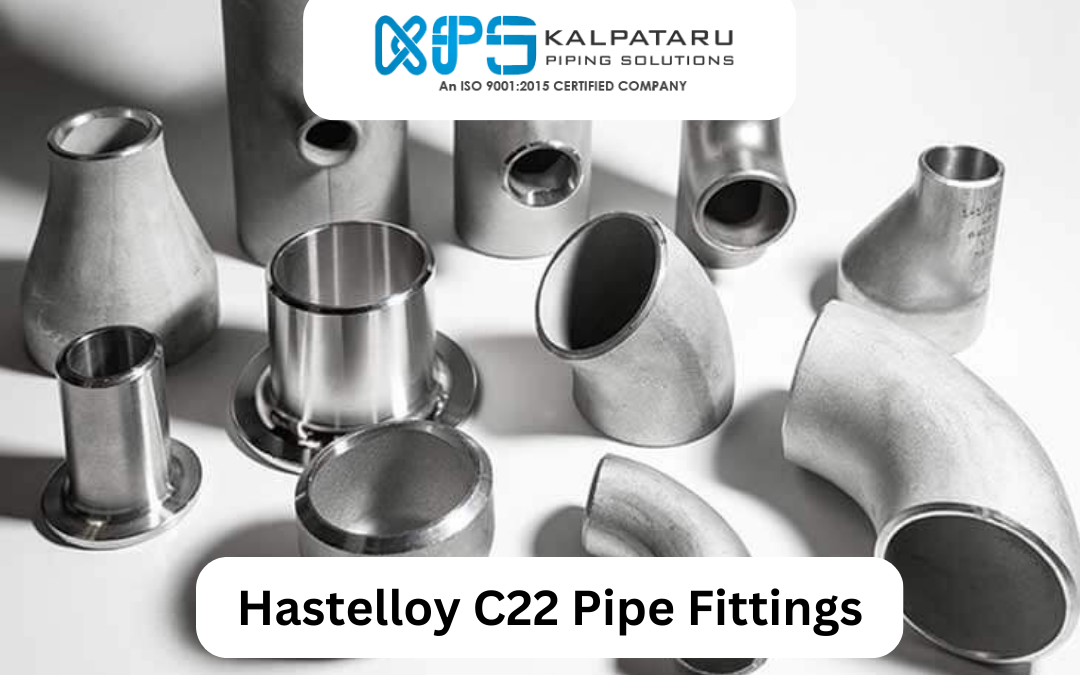
Hastelloy C22, renowned for its corrosion resistance, offers a diverse range of pipe fittings to cater to various industrial applications. Among the types available are elbows, facilitating changes in direction; tees, allowing for distribution in multiple directions; reducers, ensuring seamless transitions between pipes of different sizes; couplings, securely joining two pipes; crosses, connecting four pipes for versatile fluid flow; stub ends, used with lap joint flanges for easy system dismantling; unions, providing detachable joints for convenient maintenance; nipples, short pipe sections connecting fittings or pipes; caps, closing the end of pipes to contain fluids; and swage nipples, featuring threaded and unthreaded ends for quick installation. Each type serves a specific purpose in addressing the requirements of different piping systems, making Hastelloy C22 pipe fittings indispensable in industries demanding robust and corrosion-resistant solutions.
Applications of Hastelloy C22 Pipe
Hastelloy C22 pipes find extensive applications across diverse industrial sectors, owing to their exceptional corrosion resistance and mechanical properties. In the petrochemical industry, these pipes play a vital role in transporting corrosive fluids such as acids and reactive chemicals, ensuring the integrity of the piping system even in harsh environments. Additionally, in chemical processing plants, Hastelloy C22 pipes are favored for their resistance to a wide range of aggressive chemicals, making them suitable for conveying and processing corrosive substances. The pharmaceutical industry benefits from the reliability of Hastelloy C22 pipes in maintaining the purity of fluids and avoiding contamination during the transport of pharmaceutical ingredients. Furthermore, these pipes are employed in critical applications within the aerospace and marine industries where resistance to saltwater corrosion and harsh chemicals is crucial. Overall, the versatility and resilience of Hastelloy C22 pipes make them indispensable in safeguarding industrial processes and maintaining the integrity of fluid transport systems in challenging and corrosive environments.
Uses or Advantages of Hastelloy C22 Pipe
Hastelloy C22 pipes offer a myriad of advantages, making them highly sought after in industrial applications. One key advantage is their exceptional resistance to corrosion in harsh environments, making them ideal for conveying corrosive fluids in industries such as petrochemicals, chemical processing, and pharmaceuticals. The versatility of Hastelloy C22 pipes extends to their ability to withstand extreme temperatures, ensuring reliable performance in demanding conditions. Additionally, these pipes contribute to system durability, reducing the risk of leaks and structural degradation over time. Their adaptability to various forms of fabrication and ease of installation further enhance their usability. Hastelloy C22 pipes find utility in critical applications where maintaining the purity of fluids is paramount, such as in the pharmaceutical and food processing industries. Overall, the corrosion resistance, temperature stability, and durability of Hastelloy C22 pipes make them indispensable for ensuring the integrity and efficiency of fluid transport systems in a wide range of industrial settings.
Conclusion
Hastelloy C22 pipe fittings play a crucial role in moving fluids through tough conditions, standing up to corrosive substances and high heat. They’re strong, long-lasting, and need little upkeep, plus they’re a breeze to set up. When picking the best Hastelloy C22 pipe fittings, think about where they’ll be used, the kind of fluids they’ll handle, and the pressure and temperature they’ll face. It’s also important to check if they work well with other parts. Making the right choice ensures your system performs at its best and lasts a long time.
Copper nickel alloys are composed of copper with a significant percentage of nickel and, in some cases, other elements like copper. These alloys are known for their excellent corrosion resistance, especially in marine applications. They are commonly used in various industries, including shipbuilding, offshore oil and gas, and desalination plants.
Copper nickel pipes are mainly used for applications where resistance to seawater corrosion is crucial. They offer durability, high thermal conductivity, and resistance to biofouling. These pipes are often used in marine systems, heat exchangers, and other situations where exposure to corrosive elements is a concern.
Copper Nickel 90/10 Pipes & Tubes
As discussed previously, copper nickel alloys are highly valued for their exceptional resistance to seawater corrosion, ability to reduce macrofouling, and excellent workability. Their durability, antimicrobial properties, and attractive appearance make them suitable for a wide range of applications. Kalpataru Piping is a trusted global provider of high-quality Copper Nickel 90/10 Pipes & Tubes.
Our products are manufactured in strict accordance with international and national standards, ensuring consistent quality. We cater to diverse customer requirements by offering various specifications and competitive pricing. KPS Cu-Ni 90/10 Pipes & Tubes are widely used in seawater piping due to their immunity to barnacles and marine organisms. They are also employed in condenser tubes, heat exchangers, desalination plant evaporators, thermal power plant air cooling systems, process industry plants, seawater piping in ships, and high-pressure feedwater heaters.
Benefits of Using Cu-Ni 90/10 (Copper Nickel 90/10) Pipe
Copper-nickel (Cu-Ni) 90/10 pipes and tubes offer a range of advantages to use in various applications, particularly in marine and industrial settings. Here are some of the key benefits of using Cu-Ni 90/10 pipes and tubes:
Exceptional Corrosion Resistance
Cu-Ni 90/10 pipes and tubes of copper nickel pipe exhibit exceptional resistance to seawater corrosion, making them ideal for marine applications, such as ship hulls, piping systems, and heat exchangers. They are also resistant to corrosion from various chemicals, including acids, alkalis, and chlorides, making them suitable for chemical processing and industrial applications.
High Strength and Ductility
Copper Nickel 90/10 pipes and tubes possess high strength and good ductility, allowing them to withstand demanding conditions and be easily formed or shaped. This combination of strength and ductility makes them suitable for structural applications in marine and industrial environments.
Biofouling Resistance
Cu-Ni 90/10 pipes and tubes of copper nickel and alloy are resistant to biofouling, the accumulation of marine organisms on surfaces. This resistance is crucial for marine applications, as biofouling can impede performance and lead to corrosion.
Low Maintenance
Copper nickel alloy (Cu-ni) 90/10 pipes and tubes require minimal maintenance compared to other materials, reducing overall costs. Their resistance to corrosion and biofouling minimizes the need for frequent inspections, cleaning, or replacement.
Environmental Friendliness
Cu-Ni 90/10 pipes and tubes are considered environmentally friendly due to their long lifespan and minimal maintenance requirements. They reduce the need for frequent replacements and associated environmental impacts.
Versatility
Cu-Ni 90/10 pipes and tubes of copper nickel pipe are versatile and can be used in a wide range of applications beyond marine environments. They are commonly found in desalination plants, power generation, chemical processing, oil and gas, and HVAC systems.
Copper nickel (Cu-Ni) 90/10 pipes and tubes offer a combination of exceptional corrosion resistance, high strength, ductility, biofouling resistance, low maintenance, environmental friendliness, and versatility, making them a valuable choice for various applications.
Applications of Copper Nickel 90/10 Pipe & Tubes
Copper Nickel 90/10, also known as Cupronickel 90/10, is a copper alloy with 90% copper, 10% nickel, and small amounts of iron and manganese. This alloy is highly resistant to corrosion, especially in marine environments, making it suitable for various applications. Here are some common applications of Copper Nickel 90/10:
Shipbuilding and Marine Engineering:
Piping systems for seawater and hydraulic systems.
Heat exchangers and condensers.
Boat hulls and other marine components.
Desalination Plants:
Brine heaters and evaporator tubing.
Piping and heat exchangers in desalination equipment.
Oil and Gas Industry:
Offshore and onshore oil platforms.
Subsea pipelines and components.
Power Generation:
Condenser tubes in power plants.
Heat exchangers in thermal power stations.
Chemical Processing:
Equipment for handling corrosive chemicals.
Piping systems in chemical plants.
Cooling Systems:
Heat exchangers and condenser tubes in HVAC systems.
Cooling water systems in industrial processes.
Coinage:
Copper Nickel 90/10 is sometimes used in the minting of coins.
Firefighting Systems:
Piping and components in firefighting systems, especially in saltwater environments.
Conclusion
As discussed in the blog post, copper-nickel 90/10 pipes are primarily used in marine applications due to their exceptional resistance to seawater corrosion. If you are seeking a trusted supplier and manufacturer of copper-nickel 90/10 pipes, your search ends here. Reach out to us today for comprehensive solutions tailored to meet your specific business needs.
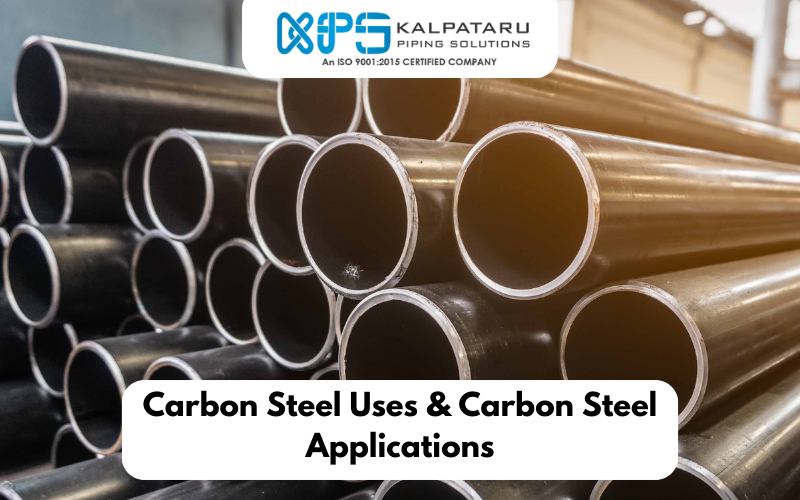
Carbon steel products are a type of steel that is primarily composed of carbon and iron, with small amounts of other elements such as manganese, silicon, sulfur, and phosphorus. The carbon content in carbon steel typically ranges from 0.05% to 2.0%. The level of carbon in the steel significantly influences its properties, such as hardness, strength, and ductility.
Carbon Steel Properties
Carbon steel products are one of the most widely used materials in various industries due to its versatility and affordability. Carbon steel & alloy steelboth are types of steel alloys. But they are different in terms of properties, types & applications. It can be classified into several categories based on the carbon content and the purpose it serves:
Carbon content (wt.%)
Microstructure
Properties
Examples
Low-carbon steel
< 0.25
Ferrite, pearlite
Low hardness and cost. High ductility, toughness, machinability and weldability
Low-carbon steel contains carbon steel products with a maximum of 0.3% carbon. It is ductile and malleable, making it suitable for applications such as construction, automotive, and machinery.
Medium Carbon Steel
Medium carbon steel consists of a moderate amount of carbon steel product (between 0.3% and 0.60%). It offers a balance of strength and ductility, making it suitable for applications like gears, axles, and springs.
High Carbon Steel
High carbon steel consists of a higher percentage of carbon (between 0.60% and 1.0%). It is known for its hardness and is often used for cutting tools, blades, and high-strength wires.
Types Of Carbon Steel & Its Uses
Low Carbon Steel Uses
Low carbon steel is the most common type of steel, accounting for about 90% of all steel produced. It is also the least expensive type of steel. Low carbon steel is made from iron ore and coal, and it contains less than 0.3% carbon. This makes it relatively soft and easy to machine. Low carbon steel is also ductile, which means that it can be easily formed into shapes without breaking.
Applications of Low Carbon Steel
Flat-rolled sheets and strips: Low carbon steel is the primary material used for the production of flat-rolled sheets and strips. These products are used in a wide variety of applications, including shipbuilding, wire manufacturing, vehicle bodies, and domestic appliances.
Wrought iron: Wrought iron is a form of low carbon steel with a minimal carbon content. It is valued for its hardness without brittleness, making it a good choice for applications such as fencing, gates, and railing.
Medium Carbon Steel Uses
Medium carbon steel is also known as mild steel. It is made from iron ore and coal, and it contains between 0.3% and 0.6% carbon. This makes it harder and stronger than low carbon steel, but it is still relatively easy to machine. Medium carbon steel is also ductile, which means that it can be easily formed into shapes without breaking. Medium carbon steel is widely used in construction, such as in buildings and bridges. It is also used in the manufacturing of cars, fridges, and washing machines.
Applications of Medium Carbon Steel
Structures: Medium carbon steel is widely used in the construction of buildings and bridges.
Axles, gears, shafts, and rails: Medium carbon steel is used in the manufacture of a wide range of machinery parts, such as axles, gears, shafts, and rails.
Pipelines and couplings: Medium carbon steel is used in the construction of pipelines and couplings.
Vehicles, refrigerators, and washing machines: Medium carbon steel is used in the manufacture of cars, refrigerators, and washing machines.
High Carbon Steel Uses
High carbon steel is made from iron ore and coal, and it contains between 0.6% and 1.0% carbon. This makes it very hard and strong, but it is also brittle. High carbon steel is not easy to machine, and it is not ductile. High carbon steel is used in the manufacturing of cutting tools, blades, punches, dies, springs, and high-strength wire.
Applications of High Carbon Steel
Cutting tools and blades: High carbon steel is the material of choice for crafting cutting tools and blades, such as knives, saws, and axes.
Punches and dies: High carbon steel is used in the manufacture of punches and dies.
Springs: High carbon steel is used in the manufacture of springs.
High-strength wire: High carbon steel is used in the manufacture of high-strength wire.
Type
AISI/ASTM name
Carbon content (wt.%)
Tensile strength (MPa)
Yield strength (MPa)
Ductility (% elongation in 50 mm)
Applications
Low
1010
0.10
325
180
28
Automobile panels, nails, wire
Low
1020
0.20
380
205
25
Pipes, structural steel, sheet steel
Low
A36
0.29
400
220
23
Structural
Low
A516 Grade 10
0.31
485
260
21
Low-temperature pressure vessels
Medium
1030
0.27 – 0.34
460
325
12
Machinery parts, gears, shifts, axles, bolts
Medium
1040
0.37 – 0.44
620
415
25
Crankshafts, couplings, cold headed parts.
High
1080
0.75 – 0.88
924
440
12
Music wire
High
1095
0.90 – 1.04
665
380
10
Springs, cutting tools
Conclusion
Carbon steel is widely used in the construction of buildings, bridges, pipelines, automotive components, machinery, and various tools. Its popularity stems from its strength, durability, and relatively low cost compared to other materials. However, it is important to note that carbon steel is susceptible to corrosion, so proper coatings or treatments are often applied to enhance its resistance to rust.
Kalpataru Piping Solutions is one of the leading manufacturers & suppliers of carbon steel products to provide various types of carbon steel needed for specific business needs. Contact us today!