Hastelloy vs Monel: What Is the Difference?

Hastelloy vs Monel: What Is the Difference?

Nickel-based alloys play a crucial role in industries that demand materials resistant to corrosion, oxidation, and extreme temperatures. Amongst these, Hastelloy and Monel stand out for their exceptional performance, yet they serve different purposes due to their unique compositions and properties. This blog answers the common question on what is the difference between Monel and Hastelloy? Kalpataru Piping Solutions, a trusted manufacturer and supplier of premium nickel-based alloys, explains the composition, key grades, mechanical and chemical properties, applications, and price comparison to help engineers and procurement professionals make informed alloy selections.

What is Hastelloy?

Hastelloy Material is a trademarked family of corrosion-resistant metal alloys primarily composed of nickel, along with significant chromium, molybdenum, and iron content. Known for exceptional durability in harsh chemical and high-temperature environments, hastelloy alloy is favored in critical process applications involving aggressive media.

Hastelloy Chemical Composition

Typical Hastelloy chemical composition includes:

Component

Nickel (Ni)

Chromium (Cr)

Molybdenum (Mo)

Iron (Fe)

Others (Co, Ti, Mn)

Typical % Range

Majority

15–20%

10–16%

Up to 7%

Trace amounts

Role

Base element, corrosion resistance, thermal stability

Oxidation resistance enhancer

Resists pitting, crevice corrosion

Increases strength and stability

Minor alloying to enhance strength, corrosion resistance

Hastelloy Properties

Key Hastelloy mechanical properties include:

  • Superior tensile strength (up to around 800 MPa)
  • High melting point (~1320–1370 °C)
  • Excellent corrosion resistance across a broad range of chemicals
  • Outstanding thermal shock resistance and compatibility with welding processes

These properties make Hastelloy alloys usable in advanced aerospace, nuclear, and chemical processing sectors.

What is Monel?

Monel Material is a trademarked nickel-copper alloy known for its excellent corrosion resistance in saltwater and acidic environments. It is primarily used where toughness and corrosion resistance to marine and acidic conditions are important.

Monel Chemical Composition

Element

Nickel (Ni)

Copper (Cu)

Iron (Fe)

Manganese (Mn)

Others (C, Si, S, etc.)

Typical %

60–70%

20–30%

≤2.5%

≤2.0%

Trace amounts

Role

Primary base, structural stability, corrosion resistance

Enhances corrosion resistance in seawater and brine

Adds strength and toughness

Contributes to overall mechanical properties

Trace elements improve specific alloy characteristics


Monel Mechanical Properties

  • Good tensile strength range (varies widely, around 550–1100 MPa based on grade)
  • Moderate melting point (~1300–1350 °C)
  • Excellent resistance to seawater corrosion and biofouling
  • High work-hardening rate, giving good strength but making machining more challenging

Monel 400 vs Hastelloy C276: Grade Comparison

Two of the most popular grades representing these alloy families are Monel 400 and Hastelloy C276.

Hastelloy C276

Hastelloy C276 material is a versatile corrosion-resistant alloy with high molybdenum and chromium content, typically used in severe chemical environments. It shows remarkable resistance to oxidizing and reducing agents and is often employed in chemical reactors, heat exchangers, and pharmaceutical equipment.

Monel 400

Monel 400 alloy is the most widely used Monel grade, especially in marine and chemical service. Its robustness in seawater, resistance to biofouling, and moderate toughness make it ideal for piping, valves, and pump components.

Hastelloy vs Monel: Which is Better?

The Hastelloy melting point & monel melting points are varies depending on the specific grade. For example, Hastelloy C276 and Monel 400 each have different melting points, which makes them suited to different high-temperature applications. For instance:

Alloy

Melting Point (°C)

Hastelloy C276

1320–1370

Monel 400

1300–1350

Tensile Strength of Monel and Hastelloy

Alloy Tensile Strength (MPa)
Hastelloy C276 ~690–783
Monel 400 ~550–1100
While Monel 400 can achieve higher tensile strength through work hardening, Hastelloy offers more consistent strength at elevated temperatures.

Machinability of Monel vs Hastelloy

  • Hastelloy machinability is generally challenging due to hardness and toughness; specialized tools and slower feed rates are often necessary.
  • Monel machinability is better, though it work hardens and requires moderate machining care.

Corrosion Resistance: Monel vs Hastelloy Alloy

  • Hastelloy corrosion resistance is superior in oxidizing and reducing acids, offering long-term durability in aggressive chemical plants.
  • Monel 400 corrosion resistance excels in marine environments, resisting chloride stress corrosion and biofouling effectively.

Thermal Conductivity: Monel vs Hastelloy Alloy

  • Monel has slightly better thermal conductivity (~21 W/m·K) compared to Hastelloy (~11 W/m·K), which matters in heat exchanger and cooling system design.

Monel vs Hastelloy Price Comparison

Alloy

Average Price (USD/kg)

Hastelloy C276

$50–$70

Monel 400

$30–$50

Hastelloy is more expensive due to its complex alloying and enhanced performance. Monel is an economical choice for corrosion resistance in less severe conditions.

Hastelloy vs Monel: Uses

  • Hastelloy applications: Chemical reactors, nuclear fuel processing, aerospace parts, heat exchangers requiring resistance to oxidizing/reducing agents.
  • Monel applications: Marine hardware, desalination plants, acid pickling equipment, piping and valves in moderate chemical environments.

Hastelloy vs Monel: Which Should You Choose?

The choice is depends on the environment and mechanical demands:

  • Use Hastelloy for harsh chemical exposure, high temperature, and where mechanical strength cannot be compromised.
  • Use Monel for cost-effective corrosion resistance, especially in seawater or mild acid conditions.

Leading manufacturer & supplier for Monel and Hastelloy

Understanding the difference between Monel and Hastelloy is key for engineers and procurement professionals aiming to maximize asset longevity while controlling costs. Hastelloy leads in strength and chemical resilience; Monel offers superior marine corrosion resistance and machinability benefits. Selecting the optimum alloy depends on application specifics, durability needs, and budget constraints.

Kalpataru Piping Solutions is a leading manufacturer & supplier offering premium Hastelloy and Monel products, including sheets, plates, pipes, and fittings for diverse global industries.

FAQ – Hastelloy vs Monel

Is Hastelloy better than Monel?
Hastelloy is stronger and more resistant to high-temperature and chemical corrosion; Monel is better for marine environments.
How to choose between Monel and Hastelloy?
Consider the operating environment, corrosion type, temperature, and budget.
Is Monel suitable for shipbuilding?
Yes, Monel’s copper content offers excellent seawater corrosion resistance, ideal for marine construction.
Does Monel rust in seawater?
Monel is highly resistant to seawater corrosion, though maintenance is required in extremely aggressive conditions.
Can you weld Monel to Hastelloy?
Welding is possible but requires specialized filler metals and controlled procedures.
What is the difference between Monel 400 and Hastelloy C276?
Monel 400 is nickel-copper based with excellent marine resistance; Hastelloy C276 is nickel-chromium-molybdenum based with superior chemical and temperature resistance.
Why is Hastelloy more expensive than Monel?
Due to its alloy complexity, higher corrosion resistance, and superior mechanical properties in demanding environments.
Monel 400 Welding Guidelines: Wires, Processes & Best Practices

Monel 400 Welding Guidelines: Wires, Processes & Best Practices

Monel 400 is a nickel copper alloy (UNS N04400) with roughly 63 % Ni and 28–34 % Cu, plus small amounts of iron, manganese, carbon & silicon. This chemistry gives it exceptional corrosion resistance, high strength across a wide temperature range and toughness even at subzero temperatures, but the alloy’s low fluidity and the slight difference between nickel and copper melting points mean welds can be prone to cracking and lack of fusion. Choosing the right consumables, following clean welding procedures and adhering to a qualified WPS are therefore essential. This guide outlines what makes Monel 400 special, explains how to select welding wire and filler metals, and offers process and technique guidance for fabricators, QC engineers and procurement specialists joining Monel 400 to itself and to dissimilar alloys (carbon steel or stainless steel) while maintaining corrosion resistance and mechanical integrity.

Overview of Monel 400

Monel 400 is engineered for demanding applications where corrosion resistance and strength are critical. Understanding its composition, physical properties & the impact of alloy chemistry on performance is essential for choosing the right welding practices. This section briefly outlines what makes this Ni Cu alloy unique and how its properties affect fabrication.

Monel Alloy 400 Chemical Composition & Physical Properties

Monel 400 is a nickel-copper (Ni–Cu) alloy known for strong corrosion resistance and stable mechanical properties. Below are quick tables showing its chemical composition, key physical and mechanical values, and common product forms and sizes. These figures help with material selection and welding setup.

Chemical Composition (wt%)

Element Ni Cu Fe Mn Si C
Limit / Range ≥ 63 28–34 ≤ 2.5 ≤ 2.0 ≤ 0.5 ≤ 0.3
Note: exact mechanicals vary by product form and condition (bar/rod vs. sheet/strip, annealed vs. cold-worked). Always use mill test certificates (MTCs) for design/welding documents.

Physical & Mechanical Properties

Property Value Notes / Units
Density ~ 8.8 g cm⁻³
Melting range 1300–1350 °C (2370–2460 °F)
Thermal conductivity ~ 21.8 W m⁻¹ K⁻¹ at 20 °C
Tensile strength ~ 80,000 psi
Elongation ~ 40 %

Monel 400: Forms, Sizes & Standards

Monel 400 is supplied as round bars with various other shapes such as hex, flat & square along with wire with diameters from 6–120 mm. Stock meets ASTM B164 / ASME SB 164 and is available hot-rolled or cold-drawn, delivered in random, fixed or cut-to-length options used for corrosion-resistant components in marine, chemical and industrial applications.

Why Alloy Chemistry Matters for Monel 400 Welding?

The nickel‑rich balance imparts excellent resistance to seawater, acids and alkalis, but nickel’s affinity for oxygen and nitrogen means welding requires inert gas shielding to avoid porosity. Slight differences between Ni and Cu melting points and the alloy’s low fluidity produce a “sticky” weld pool, so proper filler selection is crucial. Matching the filler to the base alloy preserves corrosion resistance and avoids brittle intermetallic in dissimilar metal welds.

Overview of Monel 400 Welding Consumables

Before you strike an arc on Monel 400, get the consumables right. This section explains what Monel 400 welding wire is, how to choose fillers for Monel-to-Monel and for welding Monel 400 to carbon steel or stainless steel, and which shielding gases/fluxes to use in your WPS/PQR.

What is Monel 400 Welding Wire?

Monel 400 welding wire is the filler used to weld Monel 400. It matches the alloy’s Ni–Cu makeup, so the weld keeps similar strength and corrosion resistance. For Monel-to-Monel jobs, use Monel filler metal 60 (ERNiCu-7); Monel 67 is another option, and Monel 190 is the stick electrode for SMAW. This wire or rod can be used with TIG/GTAW, MIG/GMAW, and SAW. For joining Monel 400 to carbon steel or stainless steel, use a nickel-chromium filler such as ERNiCr-3 (Inconel 82) or ERNiCrMo-3/ERNiCrFe-2 (Inconel 625/182) to bridge the metals and reduce cracking or corrosion.

Filler Selection Principles

Choose a filler that matches the corrosion and mechanical properties of Monel 400, typically a Ni–Cu filler like ERNiCu‑7. When a matching filler isn’t available, opt for a nickel‑based alloy richer in Ni, Co, Cr or Mo. For carbon steel or stainless steel joints, nickel‑chromium fillers (ERNiCr‑3 or ERNiCrMo‑3) reduce dilution and avoid brittle intermetallics. Always verify that consumables meet AWS A5.14 and consult manufacturer data or ASME Section IX when qualifying your WPS.

Shielding Gas & Flux Considerations

Arc welding Monel demands an inert atmosphere—gas‑shielded methods (TIG or MIG) are preferred to avoid porosity from oxygen or nitrogen. Use pure argon, or argon‑helium/hydrogen blends to control heat input. In submerged‑arc welding, pair the wire with a neutral flux such as INCOFLUX 5. SMAW electrodes must stay dry and be re‑baked at roughly 600 °F if they absorb moisture.

Which Welding Process is Right for Monel 400?

For Monel 400, selecting the right welding process is crucial to achieving clean, reliable joints. The following section compares GTAW/TIG, GMAW/MIG and SMAW, outlining when each is best used and how to manage heat input and dilution for high‑quality welds.

Gas‑Tungsten ARC Welding (GTAW/TIG)

Arc Machines explains that GTAW is widely regarded as the best way to weld Monel because it allows very short arc lengths, precise control of the puddle and minimal heat buildup. TIG is especially suitable for thin sections, pipe welds and applications where clean, high‑quality welds are required. DC straight polarity (electrode negative) is recommended; maintain a short arc and keep the filler wire tip within the inert gas envelope.

Gas‑Metal ARC Welding (GMAW/MIG)

Gas‑metal arc welding offers higher deposition rates. According to the Sunmach weldability guide, reverse‑polarity DC should be used and the gun held roughly perpendicular to the joint. Short‑circuit transfer (19–25 V and 100–175 A) suits thin sections, while spray transfer (26–33 V and 200–350 A) is used for thicker plates. Argon‑rich shielding gas is typical; small percentages of helium or hydrogen improve penetration.

Shielded‑Metal ARC Welding (SMAW)

SMAW is often used for field repairs and heavy‑section welds. The Arc Machines article notes that Monel welds are vulnerable to cracking and lack of fusion when using SMAW due to higher heat input and limited shielding. Electrodes must be thoroughly dried and slag removed between passe. Use high‑nickel electrodes (e.g., Monel 190) and keep the weaving motion narrow to minimise heat.

Flux‑Cored and Submerged‑ARC Processes

Flux‑cored arc welding (FCAW) and submerged‑arc welding (SAW) can be used for large fabrication or cladding. These processes require matching Monel filler wire and neutral flux; convex beads are preferred. FCAW wires for Monel are less common but may offer productivity advantages in automated cladding.

Monel 400 Welding Parameters & Technique Guidance

For reliable Monel 400 welds, precise control of welding parameters and technique is critical. This section introduces key practices like managing heat input, interpass temperatures, joint preparation and multipass methods and highlights considerations when joining Monel 400 to carbon or stainless steels.
  • General principles: Control heat input because Monel 400 has a wide freezing range and low fluidity, which raises hot-cracking risk. Favor short arc lengths for GMAW where suitable, steady travel, and modest wire feed to avoid lack of fusion. Keep interpass temperature on the low side and allow brief air cooling between passes.
  • Gun/torch angles, travel speed, root gaps, bead technique: Hold a stable torch or gun angle and keep the filler tip inside the shielding envelope to prevent porosity. Use smooth, consistent travel rather than heavy weaving, maintain a uniform root gap, and avoid pushing heat into thin edges that can undercut. Prioritize gas coverage and cleanliness over aggressive manipulation.
  • Multipass practice, peening, interpass cleaning: Use multiple narrow passes to control dilution and residual stress. If peening is permitted by procedure, keep it light because Monel work-hardens. After each pass, remove oxide or slag with stainless brushes or light grinding before depositing the next pass.

Welding Monel 400 to Carbon Steel

Joining Monel 400 to carbon steel requires careful design and execution. Because Monel (a nickel-copper alloy) and carbon steel have very different chemistries and electrochemical behaviour, uncontrolled dilution, carbon pickup or improper heat input can create brittle phases and galvanic cells that reduce joint strength and corrosion resistance. Successful joints use a nickel-based transition (buttering/overlay or compatible filler), strict control of heat input and dilution, qualified welding procedures & post-weld inspection to ensure long-term performance.

Key challenges

Welding Monel 400 to carbon steel brings metallurgical and corrosion risks, so dilution, heat input and joint chemistry must be tightly controlled.
  • Metallurgical incompatibility & dilution: Iron pickup into Monel 400 promotes hard, brittle phases and cracking; dilution must be tightly controlled.
  • Galvanic corrosion: Ni–Cu vs. steel potential difference can drive attack at the interface in conductive media.
  • Hot-cracking tendency: Monel’s wide freezing range and low fluidity increase crack sensitivity under high heat input.

Effective Strategies for Welding Monel 400 to Carbon Steel

Use a nickel-based butter layer, choose nickel-chromium dissimilar fillers and apply clean, multi-pass techniques with controlled heat to produce sound joints.
  • Butter / transition layer: Apply a nickel-based buffer to the carbon-steel side (e.g., two layers) before making the final Monel-to-buffer weld; this reduces Fe dilution and creates a compatible surface.
  • Filler choice (dissimilar): Use nickel-chromium fillers such as ERNiCr-3 (INCONEL® 82) or ENiCrFe-2/ERNiCrFe-2 (INCONEL® 182/82) for Monel 400 → carbon steel; they are specifically recommended for these dissimilar joints.
  • Joint design & technique: Prefer stepped/double-V butt designs; ensure rigorous pre-cleaning and use controlled, multi-pass GTAW/GMAW to limit heat input and manage dilution.

Post Weld Precautions

After welding, check the interface for defects and manage corrosion with isolation, coatings or cathodic protection, while keeping surfaces clean and stresses low.
  • Defects at the interface: Check for porosity, lack of fusion and hot cracking in the Monel 400 HAZ and in the butter layer on the carbon steel. Start with VT, then use PT for surface-breaking flaws and RT or UT for volumetric/subsurface issues.
  • Corrosion risks: Galvanic attack can initiate where Monel 400 meets carbon steel in conductive media. Isolate dissimilar metals where possible, seal crevices, and use non-conductive gaskets, sleeves or isolating kits on flanged joints.
  • Protection strategy: In aggressive service, add a corrosion-resistant coating or cladding on the steel side or HAZ. In immersion or splash zones, consider cathodic protection and verify potentials so you do not over-polarise adjacent components.
  • Cleanliness & finish: Remove all slag and oxide films; for stainless components adjoining the joint, consider pickling or passivation. Record final surface condition if the service medium is critical.
  • Distortion & residual stress: Measure distortion after cooling and correct as needed. Global PWHT is usually avoided for these dissimilar joints; any local thermal treatment must be qualified on the PQR.

Testing of Welding Monel 400 to Carbon Steel

Qualify the weld with a WPS and PQR, verify performance by mechanical, NDT and corrosion tests, and keep full traceability for base metals and consumables.
  • Make it a qualified procedure: Write a WPS for Monel 400-to-carbon-steel with process, joint prep, butter sequence, filler class, gas and interpass limits. Support it with a PQR using production-like parameters.
  • Mechanical tests: Perform tensile and bend tests appropriate to the product form and thickness. Add hardness mapping across weld metal, butter, and both HAZs to check for locally hard, brittle zones from iron dilution.
  • Metallography/macros: Do a macroetch on the PQR coupon to confirm fusion lines, butter layer thickness and dilution control. Micro checks can document grain structure and any interdendritic cracking.
  • NDT plan: VT and PT on all surface-critical areas. RT for butt welds where code permits; UT for thicker sections and critical joints. MT may be used on the carbon-steel side only; Monel 400 is weakly magnetic.
  • Corrosion qualification: For critical service, test welded coupons in representative media. Typical approaches include immersion testing for mass loss, galvanic couple testing for dissimilar interfaces and pitting/crevice screening if the environment is chloride-bearing.
  • Pressure/leak testing (when applicable): Hydrostatic or pneumatic tests per the governing code. For tightness-critical equipment, consider helium leak testing.
  • Records & traceability: Keep WPS, PQR, welder qualifications, NDT reports and test data. Record filler metal heat/lot numbers, shielding gas certificates and oven logs for SMAW electrodes. Use MTCs for base metals and butter consumables to tie chemistry back to the weld documentation.

Welding Monel 400 to Stainless Steel

Monel 400 can be joined successfully to austenitic stainless steels (304/316) when dilution, filler choice and cleanliness are tightly controlled to protect corrosion resistance.

Application of Welding Monel 400 to Stainless Steel

The application of welding Monel 400 to stainless steel is common across industries that demand both nickel–copper alloy performance and stainless steel durability. Typical uses include mixed-alloy piping spools, nozzles, valves & heat-exchanger attachments, where different alloys are required in a single assembly. It is also widely used for repair welds, particularly when Monel 400 components must be joined to existing 304 or 316 stainless steel parts. In marine and chemical processing environments, such transitions are critical where Ni–Cu alloy corrosion resistance is needed on one side, while the stainless side maintains structural or process compatibility.

Compatibility of Monel 400 & Austenitic Stainless Steels

When welding Monel 400 to austenitic stainless steels such as 304 and 316, compatibility is generally better than with carbon steels, but challenges remain. The galvanic potential between the two alloys can still promote localized corrosion in conductive or chloride-rich media. Additionally, excess dilution during welding may result in the formation of Ni–Fe or Ni–Cr intermetallic phases, which reduce corrosion resistance and compromise mechanical properties. To ensure reliable joints, the key objective is to preserve Monel 400’s Ni–Cu corrosion-resistant characteristics, while also avoiding sensitization or heat-tint effects on the stainless steel. This requires careful control of filler metal selection, welding parameters, and post-weld cleaning.

Best Welding Approaches

  • Direct weld (per spec): Use compatible nickel-chromium fillers such as ERNiCr-3 (Inconel 82) or ERNiCrMo-3 / ERNiCrFe-2 (Inconel 625/182). Favor GTAW for root control and gas shielding; GMAW may be used for fill/cap with controlled heat input.
  • Transition/buffer layer: Where maximum corrosion resistance is required, deposit a thin nickel-chromium buffer on the stainless steel (or on the Monel side per procedure) to control dilution before completing the joint.

WPS Considerations

  • Specify filler classification, process sequence (e.g., GTAW root with argon backing), interpass limits (kept low), and cleaning steps before/after welding
  • Define joint prep (root gap, bevel style), shielding/back-purge gas requirements, and acceptance criteria for bead shape and surface condition (remove stainless heat tint).
  • Note any buttering sequence and required surface finishing (e.g., pickling/passivation of stainless if specified).

Testing Methods

  • NDT: VT for bead profile; PT for surface cracks/porosity; RT for volumetric flaws where code allows; UT for thicker sections/critical joints.
  • Corrosion checks: Where service is aggressive, run corrosion testing on welded coupons in representative media and consider galvanic couple evaluations for the dissimilar interface.
  • Document results in the PQR and keep full traceability to consumable heats and base-metal MTCs.

Pre-weld Prep, Contamination Control & Fit-up

Proper Monel 400 welds start long before the arc—clean metal, clean tools, and precise fit-up are non-negotiable. Below we outline how to remove oil/oxides, prevent cross-contamination (especially from carbon steel), and set consistent root gaps and fixturing to control distortion.
  • Cleaning: Degrease Monel 400 and the mating alloy to remove oil, grease and shop soils (e.g., acetone or IPA), then mechanically clean with stainless-steel wire brushes or fresh flap wheels to strip oxides and any plating. Extend cleaning well beyond the joint (≈ 50 mm/2 in), and brush/grind tack welds back to bright metal before welding.
  • Avoiding contamination: Use dedicated tools and ground clamps for Monel 400 (no carbon-steel brushes, discs or files). Avoid sulfur/halogen markers and graphite pencils; use low-chloride scribe/paint pens. Keep filler wire and SMAW electrodes clean and dry; if moisture is suspected, rebake per supplier guidance. Maintain shielding/purge integrity from root to cap.
  • Fit-up & fixturing: Hold a consistent root gap and alignment to control dilution and penetration. Fixture parts to minimize distortion but allow thermal expansion; balance tacks and use a symmetrical weld sequence. For open-root joints without internal purge, consider copper/ceramic backing bars; protect clamped areas with non-contaminating pads.

Post‑Weld Treatment, Finishing & Corrosion Considerations

After welding Monel 400, careful post‑weld treatment and finishing are essential to maintain the alloy’s corrosion resistance and structural integrity. Here are the best practices for controlled cooling, thorough cleaning, protective coatings and heat‑affected zone inspection to ensure long‑term weld durability.
  • Cooling: Allow Monel weldments to cool slowly in air; rapid quenching can lead to distortion or stress. Since Monel 400 is tough at low temperatures, controlled cooling is usually sufficient.
  • Post‑weld cleaning: For SMAW and FCAW, remove all slag with a stainless‑steel wire brush. For GTAW and GMAW, wipe the weld with a clean cloth and solvent. If the component will operate in aggressive environments, consider pickling or passivation to remove oxides.
  • Coatings and protection: When Monel is welded to carbon or stainless steels in corrosive service, cathodic protection or corrosion‑resistant cladding may be required to avoid galvanic attack. Regular inspection of the weld zone is recommended.
  • Inspection of HAZ: Hot cracking and segregation are common issues in Monel welds. Inspect the heat‑affected zone (HAZ) with dye‑penetrant and, for critical joints, ultrasonics.

Inspection, Testing & Acceptance Criteria

A robust inspection programme ensures weld integrity:
  • Visual inspection: Check for uniform bead profile, absence of undercut, porosity or surface cracks. Convex beads are typical for Monel welding.
  • Non‑destructive testing (NDT): Use dye‑penetrant (PT) to reveal surface cracks and porosity; radiographic testing (RT) for volumetric defects; ultrasonic testing (UT) for subsurface flaws. Magnetic‑particle testing is not suitable because Monel 400 is only slightly magnetic.
  • Mechanical testing: Qualify procedures with tensile, bend and impact tests (as required by ASME Section IX). For dissimilar joints, evaluate hardness across the weld and HAZ to ensure there are no brittle zones.
  • Corrosion testing: In critical services (marine, chemical), perform immersion or pitting tests on welded coupons to confirm corrosion resistance. Compare results to base metal performance.
  • Documentation: Maintain WPS, PQR, welder qualifications and inspection records for traceability. Keep records of filler metal heat/lot numbers and certificates from suppliers.

Common Welding Challenges & Troubleshooting

This table highlights the most common Monel 400 welding defects like porosity, lack of fusion, undercut, hot cracking and galvanic corrosion along with their causes and preventive measures for quick troubleshooting.
Issue Causes Preventive measures
Porosity Contamination by oxygen, nitrogen or moisture; inadequate shielding gas Clean surfaces thoroughly; use inert gas backing and maintain gas coverage; dry electrodes.
Lack of fusion / lack of penetration Low fluidity of Monel 400; insufficient heat or travel speed Use GTAW or controlled GMAW; maintain short arc length; multi‑pass technique; ensure proper joint preparation.
Undercut Excessive current or travel speed; incorrect torch angle Reduce current; adjust torch angle; fill edges adequately.
Hot cracking Large liquidus–solidus temperature range; segregation of constituents; high restraint Control heat input; use appropriate nickel‑based filler; deposit buffer layers in dissimilar welds; avoid excessive dilution.
Galvanic corrosion (dissimilar joints) Contact between Monel and carbon/stainless steel in a conductive environment Use nickel‑chromium filler; deposit buffer layer; apply cathodic protection or protective coating; design joints to minimise exposure.

Contact to Monel 400 Welding Rod/Wire Supplier

Kalpataru Piping Solutions is a leading supplier and exporter of Monel 400 round bars and wires. The company supplies ASTM B164/ASME SB 164 compliant bars in round, hex, flat and square forms and also as black or bright wire. Diameters range from 6 mm to 120 mm with options for random, fixed or cut lengths. Mechanical property tables on their site list a tensile strength around 80 000 psi, yield strength ~35 000 psi and elongation ~40 %. They emphasise corrosion resistance, durability and dimensional accuracy and maintain ready inventory with customized solutions for marine, chemical, petroleum and engineering applications. When sourcing Monel 400 welding wire or rod, request:
  • Chemical analysis and mechanical test certificates (MTC). Ensure the wire conforms to ASTM B164 (N04400) chemistry and AWS A5.14 filler specifications.
  • Recommended consumables. Ask for filler wire suggestions for your application (monel‑to‑monel or dissimilar joints) and compatibility with GTAW/GMAW/SMAW.
  • Heat and lot traceability. Request lot numbers and certificates to maintain quality records.
  • Lead times and minimum order quantities (MOQ). Standard stock sizes may be available for immediate shipment, whereas made‑to‑order diameters or spool sizes may require longer lead times.
Kalpataru Piping Solution’s technical team can assist with material selection, provide test reports and coordinate export documentation. Contact them via their website for pricing and technical queries.

Conclusion

Monel 400’s nickel‑copper chemistry gives exceptional corrosion resistance and mechanical strength but presents unique welding challenges. Successful fabrication hinges on proper consumable selection, clean joint preparation, controlled heat input and qualified procedures. Use Monel 60 (ERNiCu‑7) filler wire for monel‑to‑monel welds and nickel‑chromium fillers such as Inconel 82 or 625 when welding Monel 400 to carbon or stainless steels. Choose GTAW for precision and thin sections, employ GMAW for higher productivity, and reserve SMAW or SAW for heavy sections or field repairs. Thorough cleaning, proper fit‑up, multi‑pass techniques and post‑weld inspection are non‑negotiable. Always validate a WPS through a PQR and consult supplier recommendations and applicable codes. Need high‑quality monel 400 welding wire or monel 400 welding rod for your project? Contact Kalpataru Piping Solutions for certified material, technical support and prompt delivery. Their stock of bars and wires in multiple forms and sizes, backed by mechanical and chemical test reports, makes them a reliable partner for fabricators, QC engineers and procurement teams.

Frequently Asked Questions (FAQ)

What is the best Monel 400 welding wire for corrosion service?

Use Monel filler metal 60 (ERNiCu‑7) to match Monel 400’s Ni‑Cu base. For dissimilar welds, choose nickel‑chromium fillers like ERNiCr‑3 (Inconel 82) or ERNiCrMo‑3 (Inconel 625/182) to preserve corrosion resistance.

Can you weld Monel 400 to carbon steel?

Yes. Because of thermal and galvanic differences, weld Monel 400 to carbon steel cautiously. Use a nickel‑based butter layer, ERNiCr‑3 (Inconel 82) filler and multi‑pass TIG/MIG to control dilution.

How do you weld Monel 400 to stainless steel?

Use nickel‑chromium filler such as ERNiCr‑3 (Inconel 82) or ERNiCrMo‑3 (Inconel 625) for Monel 400 to stainless steel. Thorough cleaning and low heat input are critical; a buffer layer boosts corrosion resistance. Inspect for cracking; test corrosion.

Is preheat required for Monel 400 welding?

Preheating isn’t needed for Monel 400. Weld at room temperature, keeping workpieces dry, interpass temperatures low and electrodes baked if damp.

Where can I buy Monel 400 welding wire or rod?

Kalpataru Piping Solutions offers certified Monel 400 welding wire and rod in multiple forms and sizes; contact them for material specs, recommended consumables, traceability details, lead times and minimum order quantities.
Monel 400: Properties, Applications & Benefits

Monel 400: Properties, Applications & Benefits

Monel 400 is one of the most trusted materials in industries where strong corrosion resistance and endurance are important. Monel alloy 400 is a solid solution nickel-copper alloy that works very well in marine, chemical and industrial applications. It is very resistant to seawater, acids, alkalis & high temperatures. At Kalpataru Piping Solutions, we supply & export ASTM B164 UNS N04400 and other Monel grades in different forms. This blog will provide complete information about Monel 400 products such as features, specifications, uses & factors to consider for calculating price, to make smart decision.

What is Monel 400?

Monel 400, sometimes referred to as Phyweld 400 or Nicorros LC, is a high-performance nickel-copper alloy widely recognized for its exceptional corrosion resistance across diverse environments. The alloy typically contains about 63–70% nickel and 28–34% copper, with trace amounts of iron, manganese, carbon, and silicon. Featuring a single-phase solid solution structure of nickel and copper, Monel 400 material properties include high strength, outstanding corrosion resistance, impressive ductility & reliable thermal conductivity.

Monel 400 Material Composition & Chemical Properties

The corrosion resistance of Monel alloy 400 is largely attributed to its nickel-copper chemistry, which remains stable in harsh environments such as seawater and hydrofluoric acid.

Element Percentage (%)
Nickel (Ni) 63.0 min
Copper (Cu) 28.0 – 34.0
Iron (Fe) 2.5 max
Manganese (Mn) 2.0 max
Carbon (C) 0.30 max
Silicon (Si) 0.50 max
Sulfur (S) 0.024 max

Key Chemical Characteristics

  • Excellent resistance: Monel 400 has an exceptional ability to withstand long-term exposure to seawater and salt spray without losing structural integrity. Its nickel-copper composition prevents pitting and crevice corrosion, even in turbulent or stagnant marine conditions. This makes it a preferred choice for offshore and shipbuilding applications.
  • Strong Durability: The alloy resists chemical attack from a wide range of acids, particularly in reducing conditions. Monel 400 performs well in hydrofluoric acid across all concentrations and temperatures, making it valuable in chemical processing equipment. It also shows tolerance to diluted sulfuric and hydrochloric acids in controlled environments.
  • Maintains stability: Monel 400 remains stable and retains its mechanical properties when exposed to caustic soda, ammonia, and other alkaline solutions. This ability to resist alkaline corrosion ensures long service life in chemical plants handling both acids and bases. Its performance extends to high-temperature alkaline conditions without degradation.
  • Comparison with other nickel alloys: While Inconel grades excel at high-temperature oxidation resistance, Monel 400 material offers superior resistance to seawater corrosion, making it the preferred choice for marine engineering.

Mechanical Properties of Monel 400

The Monel 400 material properties ensure exceptional strength and toughness, even in sub-zero conditions.
Property Value
Tensile Strength 517 MPa (75 ksi)
Yield Strength (0.2% offset) 172 MPa (25 ksi)
Elongation 35%
Hardness (Rockwell B) 65–80 HRB
Melting Point 1300–1350°C (2370–2460°F)

Types of Monel 400 Products

At Kalpataru Piping Solution, we offer Monel 400 which are available in a variety of forms, each engineered to meet specific performance and durability requirements. From structural components to precision parts, these products deliver excellent corrosion resistance and strength. Their versatility makes them suitable for a wide range of demanding industrial applications

  • Monel 400 Pipe &Tubes: These pipes come in both seamless and welded varieties and are commonly used in marine, chemical, and oil and gas applications because they withstand corrosion quite well. They are built to meet ASTM standards, ensuring durability in demanding conditions and reliable performance under high pressure.
  • Monel 400 Plates & Sheets: These are flat items that are very resistant to seawater, acids, and alkalis. They are great for making things and building things. In several fields, they can be cut, bent or welded to fit the needs of a certain project.
  • Monel 400 Rods & Bars – These are precision-machined for parts that need to be very strong and have precise dimensions. They come in different diameters. Used a lot in pump shafts, fasteners, and mechanical assembly.
  • Monel 400 Flanges – These are made to ASTM B564 standards and make sure that piping systems stay leak-free and safe. There are several different varieties of these, such as slip-on, weld neck, and socket weld.
  • Monel 400 Fasteners: Monel 400 fasteners offer high strength, corrosion resistance, and durability in marine, chemical, and high-temperature environments. They meet ASTM standards and perform well against acids, alkalis, and seawater.
  • Monel 400 Fittings: Monel 400 fittings provide excellent resistance to corrosion, acids, and alkalis, with strong mechanical properties for demanding industrial applications. Built to ASTM specs for reliable performance

Fabrication and Welding Properties of Monel 400

Monel 400 offers excellent fabrication flexibility, with ease of cold and hot working, good machinability, and compatibility with welding methods like GTAW, GMAW & SMAW for strong, durable joints.
  • Cold & Hot Working Capabilities: Monel 400 can be shaped through both cold working and hot working processes, allowing flexibility in manufacturing. Cold working increases strength and hardness, while hot working enhances ductility for complex forming.
  • Machinability: The alloy work-hardens quickly, so machining should be done at slower speeds with sharp, rigid tooling. Using appropriate cutting fluids helps maintain surface finish and tool life.
  • Welding Techniques: Monel 400 can be welded efficiently using gas tungsten arc welding (GTAW), gas metal arc welding (GMAW), and shielded metal arc welding (SMAW). Preheating is generally not required, and post-weld annealing is recommended for critical service.

Monel 400 Heat Treatment

Monel 400 heat treatment process is conducted between 926–1038°C (1700–1900°F) ensuring the material regains its formability after cold working. As a solid alloy, heat treatment enhances workability but does not increase strength.

  • Annealing Temperature: Annealing is carried out within this temperature range to restore ductility lost during cold working. The process also relieves internal stresses from fabrication.
  • Improves Ductility: As a solid alloy, Monel 400 cannot be strengthened by heat treatment. But it improve formability and reduce hardness for further processing.

Monel 400 Forging

Monel 400 is forged to achieve precise shapes & enhanced mechanical properties while preserving its exceptional corrosion resistance. The process requires controlled heating, careful shaping & gradual cooling to prevent structural defects.

  • Forging temperature: The alloy is heated at temperature 870–1200°C (1600–2200°F) range for forging to ensure ease of shaping without cracking. Uniform heating before forging helps maintain structural integrity.
  • Cooling: After forging, components are air-cooled to prevent oxidation and maintain the alloy’s corrosion-resistant properties. Water quenching is generally avoided to prevent thermal shock.

Monel 400 ASTM Standards and Specifications

We provide Monel 400 products that strictly adhere to globally recognized ASTM standards. These specifications ensure consistent quality, performance & compliance for a wide range of industrial applications.
  • ASTM B164 UNS N04400 – Covers rods, bars, and wire with defined chemical composition and mechanical properties.
  • ASTM B564 UNS N04400 – Specifies forgings, flanges, and fittings for high-performance applications.
  • SB 127 UNS N04400 – Standards for plates, sheets, and strips ensuring dimensional accuracy and corrosion resistance.
  • Monel 400 ASTM Standard – Encompasses guidelines for composition, mechanical properties, and dimensional tolerances to guarantee quality and reliability.

Industrial Applications of Monel 400

Monel 400 combines exceptional corrosion resistance, strength & reliability, making it a preferred choice for demanding applications in harsh and high-pressure environments
  • Marine Engineering: Monel 400 exceptional seawater resistance ensures long service life in harsh marine conditions without pitting or crevice corrosion. Offshore oil drilling components for platform equipment exposed to saline and high-pressure environments, reducing maintenance costs.
  • Chemical Processing: Withstand aggressive chemicals and high temperatures to ensure reliable performance in continuous process industries. Reactor vessels – Maintain structural integrity in acidic and alkaline processing conditions, making them suitable for chemical synthesis. Alkali and acid production equipment – Provide resistance against corrosion from strong acids and bases, extending equipment lifespan.
  • Power Generation: Condensers and feedwater heaters – Resist corrosion from high-temperature steam and condensate, maintaining operational efficiency.
  • Aerospace: Fuel tanks and exhaust systems – Handle wide temperature ranges and corrosive fuels, offering reliability in critical aerospace components.

Key Factors to Consider for Calculating Monel 400 Price

Monel 400 pricing is influenced by a combination of material costs, manufacturing processes & market demands. Understanding these factors helps buyers make informed purchasing decisions.
  • Costs of raw materials: Trends in the global copper and nickel markets changes the prices of nickel and copper on the global commodity market have a direct effect on the pricing of Monel 400. The price of Monel per kg goes up when the cost of raw materials goes up.
  • Shape and size of the product: Different types of Monel 400 pipe, plates, forgings & fittings need different kinds of processes and materials. Generally, the bigger the size or the more complicated the shape, the more it costs to make.
  • Bulk Order: Buying in bulk lowers the cost per unit. Ordering more of something lets manufacturers and Monel 400 suppliers make the most of their manufacturing runs. This lowers the price per unit compared to small or custom orders.
  • Market Demand: Changes in marketing demand may cause prices to go up and down during certain times of the year. Monel 400 prices also change because of global infrastructure or defense projects.
  • Processing and certification: Testing, machining & heat treatment. Costs go up when you add operations like Monel 400 heat treatment, machining, or NDT testing. Certifications like ASTM B164 UNS N04400 & inspections by third parties also have an effect on the final price.

Why Choose Kalpataru Piping Solutions as Your Monel 400 Supplier?

Kalpataru Piping Solutions is a trusted Monel 400 supplier with decades of industry expertise, offering a large certified inventory of ASTM B164, ASTM B564, and SB127 Monel 400 products. With a robust global supply network, we ensure quick dispatch, custom sizing, and reliable delivery for projects of all scales. Our competitive pricing covers both standard and special grades, making us a preferred choice for cost-effective procurement. Backed by a proven track record in serving the oil & gas, petrochemical, marine, and chemical sectors, we deliver high-quality materials that meet stringent international standards.

Frequently Asked Questions About Monel 400

What is the hardness of Monel 400?

Typically ranges between 65–80 HRB, depending on temper and work hardening.

How do I get a price quote for Monel 400?

Contact Kalpataru Piping Solutions with your product specifications to get the latest Monel 400 price per kg.

What is the difference between Monel 400 and Inconel?

Monel 400 is a nickel-copper alloy with superior seawater corrosion resistance, while Inconel is nickel-chromium-based, designed for high-temperature oxidation resistance.

How does Monel 400 perform in corrosive environments?

Excellent resistance in seawater, brine, acids, and alkalis makes it ideal for harsh service conditions.

Does Monel 400 require special machining techniques?

Yes, it work-hardens quickly, so low-speed machining with rigid setups is recommended.

Choosing the Right Grade of Inconel for Your Industrial Application

Choosing the Right Grade of Inconel for Your Industrial Application

Inconel products are made from nickel-chromium superalloys, designed for use in applications where ordinary steels would fail. When exposed to high temperatures, Inconel materials creates an oxide protective layer providing an increased level of resistance to corrosion, oxidation and creep. No matter the types of Inconel when they are developed, and produced correctly, Inconel parts will continue to perform in overly extreme environments: furnaces, nuclear high-energy reactants, chemical plants, marine piping, and jet engines for example. Many different types of Inconel exist, each designed to perform in a specific operating environment or condition. By understanding many types of Inconel grades & Inconel alloy grades, you can find a grade that meets your requirements for the best cost.

What Are Inconel Grades?

Inconel grades or Inconel material grades identify a distinct chemical composition and heat-treatment condition. The various alloying elements lead to solid solution and precipitation-hardened grades such as Niobium, Molybdenum, Titanium, and Iron. This allows the design engineer a multitude of options for a given application including cryogenic service, high-temperature furnaces, hot acidic process streams, or seawater applications. The properties of Inconel can be compared by Inconel alloy grades to determine the best Inconel type for the application.

Inconel Grades & Properties

Below is a brief summary on five commonly utilized Inconel types that compare the manufacturing route, properties, and typical uses. Check manufacturer material (-spec) datasheets for additional properties by grade.

Inconel 600 (UNS N06600)

Inconel 600 is melted in vacuum as well as hot or cold surroundings before a final anneal. Inconel 600 has excellent resistance to oxidation and corrosion at elevated temperatures, in many media; maintains strength at cryogenic temperatures up to about 1 100 °C (2 000 °F); and has a high nickel content which provides resistance to chloride stress and corrosion cracking. Inconel 600 is used for many items, including furnace fixtures, retorts, nitriding boxes, heat exchanger tubing, nuclear reactor water systems and general chemical processing. With its versatility, Inconel 600 is often touted as one of the best all-around grades of material for moderate-high temperature applications.

Inconel 625 (UNS N06625)

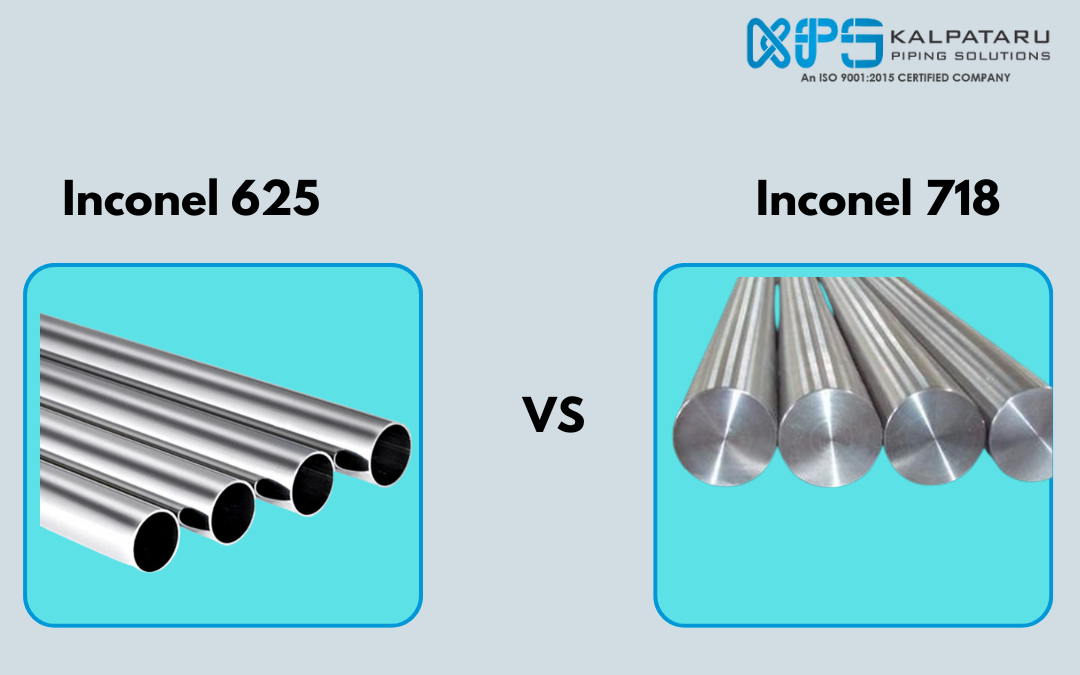
Inconel 625 is an alloy strengthened by molybdenum & niobium. It is typically produced by vacuum induction melting followed by hot working & annealing. The alloy combines high tensile strength with excellent resistance to pitting, crevice corrosion and chloride induced stress cracking. It performs well at temperatures up to roughly 980 °C (1 800 °F) and in acidic and seawater environments. Typical applications include seawater piping, marine hardware, pollution control systems, chemical processing equipment and bellows. It is also used in aerospace exhaust systems where corrosion resistance is essential.

Inconel 718 (UNS N07718)

Inconel 718 is a nickel chromium, precipitation hardenable superalloy that develops strength from a two-step age treatment in which gamma prime (γ′) and gamma double-prime (γ″) precipitate. It provides excellent tensile and yield strength from about −250 °C (−423 °F) to 705 °C (1 300 °F) and has very good weldability relative to many superalloys. These properties make it the default material of choice for gas-turbine engine disks, casings, and fasteners, rocket motor components, cryogenic tankage & high-pressure valve bodies. Among the types of Inconel, it provides the best combination of strength and corrosion resistance for high-stress applications.

Inconel 800 (UNS N08800)

It is referred to as Incoloy 800. The hot working process occurs at roughly 870–1 230 °C (1 600–2 250 °F) & annealing occurs at approximately 980 °C (1 800 °F). Iron gives the alloy structural stability at elevated temperatures while chromium gives the alloy oxidation resistance. Inconel 800 has austenitic metallurgy and has high creep-rupture strength for long periods of time at temperatures above 600 °C (1 100 °F). Furthermore, Inconel 800 also has good carburization resistance and oxidation resistance, allowing for turbine applications for petrochemical heaters, heat exchangers sheathing, nitric acid condensers & nuclear steam generator tubing.

Inconel 825 (UNS N08825)

Incoloy 825 consists with molybdenum and copper materials for improved resistance to pitting, crevice corrosion & reducing acids. It is made by conventional hot or cold working, followed by annealing, and has good weldability. It will withstand numerous oxidizing and reducing acids, but has the greatest utility in sulfuric and phosphoric acids, sustaining useful strength to about 540 °C (1 000 °F). Typical applications are sulfuric-acid evaporators, pollution control scrubbers, seawater heat exchangers & components for nuclear fuel reprocessing. Because of its utility in aggressive, oxidizing & reducing environments, Incoloy 825 is normally selected for marine and acid-processing service.
Let’s explore the key properties and applications of Inconel grades 600, 625, 718, 800, and 825 in detail.
Grade Key properties Typical applications
600 Solid‑solution alloy; resistant to oxidation; non‑magnetic; works from cryogenic to 1 100 °C Heat‑treating fixtures, nitriding containers, furnace parts, chemical‑processing equipment, nuclear reactor water systems
625 Solid‑solution; strengthened by molybdenum and niobium; resists pitting and crevice corrosion; useful to ~980 °C Seawater piping, marine hardware, “pollution‑control scrubbers, chemical plant equipment, aerospace exhaust systems
718 Age‑hardenable; very high tensile and yield strength; service range −250 °C to 705 °C; good weldability Gas‑turbine engines, rocket motors, liquid‑fuelled rockets, cryogenic tanks, high‑pressure valves, aerospace fasteners
800 Nickel–iron–chromium alloy; good structural stability and creep strength; resists carburization and oxidation Petrochemical heaters, heat exchangers, carburizing equipment, nuclear steam generator tubes
825 Contains molybdenum and copper; improved resistance to pitting and reducing acids; strong to 540 °C Acid‑production equipment, pickling hooks, seawater heat exchangers, pollution control, nuclear reprocessing

How to Choose the Right Inconel Grade?

Selecting the best grade of Inconel depends on matching material capabilities to service conditions. Consider these factors:
  • Temperature: Grades 600 and 625 handle roughly 2 000 °F and 1 800 °F; the precipitation‑hardened 718 offers strength around 1 300 °F.
  • Corrosion environment: For oxidizing or chloride media, choose 600; for seawater or acidic service, 625 resists pitting and crevice corrosion; 825 handles a wide range of oxidizing and reducing acids.
  • Mechanical load: High‑stress applications like turbine disks call for 718, whereas moderate stresses in corrosive environments suit 600, 625 or 825.
  • Fabrication and codes: Grades 718 and 825 weld readily. Check applicable codes: nuclear steam generators often specify 800 and aerospace standards commonly require 718.
By considering these factors, you can identify the optimum Inconel grade rather than simply selecting the most exotic alloy. Comparing Inconel properties by grade gives a practical basis for choosing a material that balances performance and cost.

Why choose Kalpataru Piping Solutions for Inconel Products?

Kalpataru Piping Solution is an Inconel manufacturer and inconel supplier stocking material grades 600 to 825. Its metallurgists work with clients to compare grades and choose the best material. Certified pipes, tubes, plates and forged parts can be supplied with test documentation and service offerings can include cutting, machining and threading to ensure parts are ready for installation. A combination of product variety, educated expertise and on-time delivery makes Kalpataru a good choice for complex projects.

Conclusion

Inconel superalloys allow designers to stretch their limits related to temperature, pressure and corrosion. No one alloy is perfect for every application, so it is necessary to understand the types of Inconel and compare each properties of each Inconel grade. Grades 600 and 625 provides relative corrosion resistance and high-temperature stability; 718 provides unparalleled strength; 800 and 825 expand the family with iron or copper additions for specific corrosion resistant or a specific corrosive environment. You can choose the best quality Inconel grade if you consider temperature, corrosion type, mechanical stress and demands of fabrication to avoid unnecessary expense or failure. If you need support, or a trusted source of raw material, Kalpataru Piping Solution offers the technical knowledge and the right products to help you be successful.

Frequently Asked Questions About Inconel Grades

What are the different types of Inconel?

The Inconel family includes a wide range of alloy grades, including 600, 601, 617, 625, 686, 690, 718, 725, 738, 751, X‑750 and others. Each of these Inconel alloy grades is tailored to specific combinations of temperature, strength and corrosion requirements.

Which Inconel grade is best for high temperatures?

For continuous service near 1 100 °C, Inconel 600 or its derivative 601 are excellent because they resist oxidation and carburization. Where high mechanical strength is also required, Inconel 718 retains very high tensile and yield strength up to about 705 °C.

How do Inconel 625 and 718 differ?

Inconel 625 is a solid‑solution alloy strengthened by molybdenum and niobium, giving it outstanding corrosion resistance in seawater and acidic environments but more moderate strength. Inconel 718, by contrast, is age‑hardenable; it offers much higher tensile and yield strength, making it suitable for gas turbines and rocket motors but slightly less resistant to certain acids.

Are Inconel grades suitable for marine environments?

Yes. Grades such as Inconel 625 and Incoloy 825 contain alloying elements that resist pitting, crevice corrosion and stress‑corrosion cracking in seawater. They are commonly used in seawater piping, desalination plants and marine exhaust systems.

Can Kalpataru supply custom Inconel products?

As both an Inconel manufacturer and supplier, Kalpataru offers custom‑sized pipes, plates, fittings and forged components in most Inconel grades. Technical experts can help you select the appropriate alloy and see that it meets the required specifications for your project.

Inconel Material: Grades, Properties, Composition & Applications

Inconel Material: Grades, Properties, Composition & Applications

In industrial applications where components repeatedly experience extreme heat, strong corrosion & high mechanical stress. Inconel material is arguably the most reliable & best performing alloy available. Consisting mainly of nickel & chromium, Inconel is built to handle high-temperature & high-pressure conditions better than most other metals.

One of the standout features of alloys is their ability to keep their strength & shape even when exposed to heat above 1000°F (538°C). They also offer excellent resistance to oxidation, pitting, crevice corrosion & stress corrosion cracking in harsh chloride & acidic applications. As a trusted Inconel supplier & manufacturer in India, Kalpataru Piping Solutions delivers top quality Inconel products that meet global standards like ASTM, ASME & ISO to ensure durability, safety & compliance for applications.

What is Inconel?

Inconel encompasses a family of superalloys based on nickel that are designed to withstand extreme operating conditions. These alloys maintain their mechanical strength while simultaneously subjected to extreme heat and chemical attack. The Inconel composition always involves nickel (up to 72%), with added chromium, iron, molybdenum & small amounts of cobalt, niobium & titanium. The combination of these components is different for each Inconel material grade & provides certain advantages for particular applications.

Key Inconel Material Properties

Inconel alloys are built to perform well in extreme conditions where ordinary materials lose their strength or degrade. Their unique blend of metals gives them exceptional corrosion resistance & strength at high temperatures. This powerful chemical combination of intensive substances ensures long service life in environments exposed to heat, pressure & aggressive chemical to reduce downtime & improve reliability.

High resistance to corrosion and oxidation

Inconel material has an incredible capacity for resisting corrosion and oxidation, which is tremendous benefit in industries using corrosive agents, including marine, chemical processing, and pollution control industries, where different components are normally exposed to dangerous chemicals or sea water. The alloy achieves resistance by forming a protective oxide layer when heated to a sufficient temperature. The oxide layer protects underlying base metal from further degradation, even in an aggressive environment. Resistance to corrosion and oxidation increases equipment lifespan and reduces maintenance and replacement costs.

Durable performance at elevated temperatures

Inconel alloys maintain mechanical properties at theory higher operating temperature while many other materials weaken online experience mechanical properties loss at elevated temperatures. Inconel material does not lose any significant forms of structural stability in temperatures exceeding 800°C before any loss of mechanical Integrity . Whereas stainless steel loses strength much earlier if it is exposed to elevated temperature for much too long. This allows the use of Inconel material in multiple levels of applications including turbine components, exhaust systems, and furnace linings. The return of operational capability to an extent of resurfacing even after intense thermal activities shows the safety of both the workers and the equipment involved are only a higher standard.

Excellent tensile strength & fatigue resistance

Components made of Inconel alloy are suitable for cyclic load and pressure applications. The alloy has reasonable fatigue and tensile strength and excellent resistance to both forms of failure, making Inconel choice material in the automotive and aerospace industries. Even after many hours of service, Inconel components do not exhibit cracking or permanent deformation. The mechanical durability of Inconel enhances service, contributes to lower running costs, and increases productivity through reduced downtime.

Long service life in harsh environments

Inconel material provides extended service life when subjected to seawater, acidic solutions, and high-temperature gas flow or. The impact will address multiple wear modes, such as scaling, pitting, and stress corrosion cracking, making it a more cost-effective material in the long run. All industries benefit from decreased maintenance actions and a decreased need for unscheduled replacements, resulting in lower running costs and improved reliability.

Exceptional weldability and formability

Make no mistake, Inconel is quite strong; however, it is extremely workable in fabrication for welding, forging, and forming meeting specified shapes without compromising integrity. For engineers or designers, it is very appealing to commit to a specific project using Inconel. Including tubing, flanges, and precision parts provides scope, but ultimately allows various application widths for designers and engineers.

Inconel Composition by Grade

Each grade of Inconel is engineered with a precise blend of nickel, chromium, and other elements to deliver reliable performance in extreme conditions. These variations in composition determine the inconel grade suitability for specific operating environments & industrial applications.

Grade Nickel (Ni) Chromium (Cr) Iron (Fe) Molybdenum (Mo) Other Key Elements Key Properties
Inconel 600 ≥72% 14–17% 6–10% Carbon, Manganese, Silicon Good oxidation and corrosion resistance, excellent high-temperature strength
Inconel 625 58% min 20–23% ≤5% 8–10% Niobium, Tantalum Outstanding corrosion resistance, excellent fatigue and creep strength
Inconel 718 50–55% 17–21% Balance 2.8–3.3% Niobium, Titanium, Aluminum High strength, good weldability, excellent oxidation resistance
Incoloy 800 30–35% 19–23% 39.5% min Titanium, Aluminum Good strength at high temperatures, oxidation and carburization resistance
Incoloy 825 38–46% 19.5–23.5% 22% min 2.5–3.5% Copper, Titanium Excellent resistance to acids and reducing agents, good stress corrosion resistance

Inconel Material Grades & Their Uses

Inconel grades like 600, 625, 718, 800 & 825 are engineered for extreme environments, offering high-temperature strength and corrosion resistance. Widely used in aerospace, oil & gas processing, marine, power generation & chemical industries for reliable, long-lasting performance.
  • Inconel 600: Inconel 600 is known for its excellent performance in high-temperature and corrosive environments. It is commonly used in heat exchangers, furnace parts, and gas turbine components, where resistance to chloride stress corrosion cracking and oxidation is essential.
  • Inconel 625: This grade is widely recognized for its superior corrosion resistance especially in seawater and aggressive chemical environments. Inconel 625 is extensively used in marine hardware, chemical processing plants & aerospace components due to its excellent weldability and fatigue strength.
  • Inconel 718: Inconel 718 is a precipitation-hardening alloy that provides outstanding strength, durability & creep resistance at both cryogenic and elevated temperatures. It is commonly used in aircraft engines, rocket motors, and high-performance automotive components.
  • Inconel 800: Inconel 800, also referred to as Incoloy 800, is designed for high-temperature structural applications. It exhibits excellent resistance to oxidation, carburization & prolonged exposure to elevated temperatures. It is widely used in heat exchangers, reformer tubing, and furnace components in petrochemical and power generation industries.
  • Inconel 825: Inconel 825 or Incoloy 825, is a corrosion-resistant alloy ideal for chemical processing applications. It resists sulfuric & phosphoric acids, as well as chloride-induced stress corrosion cracking. Typical uses include acid production equipment, pollution-control systems, and offshore oil and gas operations.

Inconel Melting Temperature

The typical Inconel melting temperature ranges from 1,290°C to 1,350°C (2,350°F–2,460°F), depending on the alloy grade. This high melting range makes Inconel material ideal for applications where stainless steel would fail due to thermal creep or scaling.

Standards of Inconel Alloy

Inconel materials are produced to meet strict international quality standards, ensuring reliability in critical applications. Common specifications include ASTM and ASME standards which define the alloy chemical composition, mechanical properties, and manufacturing processes.

ASTM/ASME Specifications

Inconel grades are covered under various ASTM and ASME codes such as ASTM B163, B166, B167, B168 & ASME SB 163, SB 166, SB167, SB 168. These standards guarantee consistency, corrosion resistance, and high-temperature performance.

Global Equivalents of Inconel Alloys

Inconel alloys are identified by international designations like UNS, Werkstoff, JIS & EN to ensure global standardization. These equivalents help engineers, buyers, and manufacturers match the correct grade for applications across industries and comply with worldwide material standards.
Grade UNS No. Werkstoff Nr. JIS EN
Inconel 600 N06600 2.4816 NCF 600 NiCr15Fe
Inconel 625 N06625 2.4856 NCF 625 NiCr22Mo9Nb
Inconel 718 N07718 2.4668 NC19FeNb NiCr19Fe19Nb5Mo3
Incoloy 800 N08800 1.4876 NCF 800 X8NiCrAlTi32-21
Incoloy 825 N08825 2.4858 NCF 825 NiCr21Mo

Inconel Material Price in India

In India, Inconel material prices may vary greatly depending on the Inconel grade, product size & shape (plate, sheet or bar), availability & certifications needed such as ASTM, NACE or EN standards. For Inconel 600, Inconel 625, Inconel 718 & Inconel 725, the variation in price of these Inconel grades can be due to their unique chemical characteristics, performance properties & demand across industry sectors. The price of round bars is most always greater than that of sheets largely due to the degree of machining involved in producing round bars and the isometry requirements. Certification requirements can affect pricing also based on the degree of testing or certification documentation involved. Prices can vary enough based on marketing demand & material specifications but it is a general statement that Inconel 625 and Inconel 718 are priced in the higher pricing categories because their mechanical properties and corrosion-resistance are superior to other alloys. If you are looking for pricing and bulk order quotes for Inconel products or materials, connect with kalpataru piping solutions to request the best quote as per your business requirements.

Why Choose Kalpataru Piping Solutions?

Kalpataru Piping Solutions is your global supplier of metals and Inconel material grades, including Inconel 600, Inconel 625, Inconel 718, among others. We manufacture and supply Inconel alloys in a variety of forms such as pipes, tubes, flanges, plates and tailor-made Inconel fittings to fit critical project needs in various industries.

Kalpataru’s Inconel operating defined processes and is an ISO certified Inconel manufacturer and supplier. As an ISO certified manufacturer, all of our Inconel products are manufactured to meet global specifications such as ASTM, ASME, NACE, etc. Our modern manufacturing facilities and strict QA/QC policies & procedures help to ensure the manufactured product is of consistent quality, traceability & quality assurance.

Whether you require bulk volumes of Inconel alloys for an aerospace or chemical plant project, or specialized engineered components for a critical marine or high-temperature system, Kalpataru will deliver your order on time, while offering a project solution that is flexible to your needs and requirements. We understand the importance of detail and timing for each program; we excel at delivering “On-time” with high quality.

Contact us for high-performance Inconel alloy materials that meet strict compliance standards. Kalpataru Piping Solutions – your trusted Inconel manufacturer and supplier, serving clients in India and across the globe.

Conclusion

Whether for high-stress operations or extreme temperature environments, Inconel alloys deliver exceptional performance and reliability. With diverse compositions, multiple grades, and proven properties, these superalloys are essential in modern engineering. For premium quality, custom sizing, and competitive pricing, connect with experts of Kalpataru Piping Solutions .

Frequently Asked Questions (FAQs)

What is Inconel material used for?

Inconel material is commonly used in aerospace, chemical processing, marine, and oil & gas industries for components that face extreme heat, corrosion, or pressure.

What is the melting temperature of Inconel?

The Inconel melting temperature typically ranges between 1,290°C and 1,350°C, depending on the grade.

What are the main Inconel material properties?

Inconel material properties include high tensile strength, oxidation resistance, corrosion resistance, and thermal stability.

How does Incoloy differ from Inconel?

Incoloy material properties are optimized for lower-cost, moderate corrosion resistance, while Inconel material offers superior performance in extreme environments due to higher nickel content.

Copper Nickel (CuNi): Composition, Grades, Properties & Applications

Copper Nickel (CuNi): Composition, Grades, Properties & Applications

Copper and nickel are closely related (atomic numbers 29 and 28) that are completely miscible in the solid state, as well as in the liquid state. Cu-Ni alloys are primarily copper-nickel (less than 1 per cent zinc) and are crystallized in a face centred cubic (FCC) structure.The atomic concentration between copper and nickel is in linear relationship with the lattice spacing.

And now we should get to learn more about copper nickel alloy material as we shall see in this article.

What Is a Copper Nickel Alloy (CuNi)?

Alloys predominantly made of copper and nickel, which are also referred to as cupronickel or copper-nickel (Cu-Ni) alloys, are usually composed of 2%30% nickel. These alloys are characterized by a high oxidation resistance and stress-corrosion cracking resistance. Their corrosion resistance and strength are further increased by the inclusion of such elements as manganese, iron, niobium or chromium. Due to the complete solubility of nickel in copper, the Cu-Ni alloys are a single phase, α-structure, which has high thermal stability.

The most common commercial alloy of Cu-Ni is 90/10 (approximately 90 percent copper, 10 percent nickel) and 70/30 (approximately 70 percent copper, 30 percent nickel). These alloys consist of a mixture of copper conductivity, nickel strength and corrosion resistance.Moreover, certain performance improvements may be introduced with the help of such elements as chromium and aluminum. There are two main ways through which Cu-Ni alloys are produced:

  • Wrought Cu-Ni Alloys: These are worked to semi finished products including plates, sheets, rods and pipes.
  • Cast Cu-Ni Alloys: Are applied to larger and more complicated shapes, especially in the heavy industrial sector.

Why are Copper-Nickel Alloys Important?

A unique combination of copper-nickel alloys provides a range of properties that few metals can replicate. Cu Ni alloys have great resistance to corrosion, good thermal stability, and good mechanical strength with moderate electrical conductivity and good antibacterial properties. The benefits of these characteristics mean that Cu Ni alloys will keep their mechanical behaviour as the temperature rises, which is the reason for their usage esp in heat exchangers, condenser tubing, and other high temperature applications. Durability, recyclability, and the high-rate of used/reused materials contribute to favour Cu Ni alloys for industrial uses, especially those where longevity and sustainability are beneficial.

Copper-Nickel Properties (Cupro Nickel Properties)

Copper-nickel alloys are very resistant to corrosion, strong and have good thermal properties. The following are the main copper nickel alloy properties:

1. Corrosion Resistance: Copper-nickel alloys are also considered to have an excellent corrosion resistance especially in extreme conditions such as seawater and chemical operations. Marine engineering and desalination plants are done using stress-corrosion cracking because of their resistance to pitting. The alloys establish a stable protective oxide coating when in contact with seawater that prevents further corrosion.

2. Mechanical Strength: Cupronickel alloys are strong and durable even when working in harsh conditions. The tensile strength and elongation of copper nickel alloys is high and there is an improvement in mechanical strength with increase in nickel content at room temperature. These alloys retain their strength when subjected to continuous loading and they can withstand the high temperature. When such elements as iron and manganese are introduced, the strength and the general performance are increased.

3. Thermal and Electrical Conductivity: The thermal conductivity of copper nickel alloy decreases with the increase in nickel content. Also, Cupronickel alloys have a high resistance to electricity as their electrical resistivity increases with the amount of nickel and are hence applicable in electrical resistance applications. These alloys are also thermoelectrically powerful and are therefore suitable in thermocouples employed in measurement of temperature.

4. Magnetic Properties: The cupronickel alloys are non-magnetic, which can be modified with ferromagnetic properties when iron or cobalt is added. Nickel alloys of approximately 20% and other alloys containing iron or cobalt may be made magnetic.

5. Physical Properties

Density: Density of copper nickel alloys does not vary significantly, at 8.9 kg/dm 3 with or without nickel.

Color and Appearance: With an increase in nickel content, the alloy turns to a silvery-white look, replacing the reddish-brown color of copper, and is more lustrous with an increase in nickel content. The alloy is very similar to silver at approximately 40% nickel.

Thermal Expansion: Cupronickel alloys have a low coefficient of thermal expansion and are therefore best suited in temperature sensitive applications.

6. Workability: Cupronickel alloys are simple to operate because of their high machinability. These alloys can be readily worked into bars, sheets, and wires and they do not lose their mechanical properties during cold-working or other fabrication processes.

7. Fatigue and Creep Resistance: Cupronickel alloys are of good fatigue strength and can support oscillating loads at long term without failure. In addition, such alloys have high creep resistance at high temperatures and under continuous stress, which is why they can be used in heat exchangers and boilers among others.

How to Manufacture Copper-Nickel (Cu-Ni) Alloys?

There are a number of important processes in the manufacturing of Copper-Nickel (Cu-Ni) alloys. The initial process is melting in which copper and nickel are melted, with any other element such as manganese or iron, through electric arc melting, induction melting, or blow torch melting. The melting temperature of cupronickel is normally between 1,100 o C to 1,200 o C and the higher the percentage of nickel the higher the melting point. Once the alloy melts it is alloyed to incorporate certain elements and get the required properties. The casting process is then done by pouring the molten alloy into molds that may use centrifugal, sand or die-casting techniques.

The alloy is then cast and then worked (hot worked, i.e. rolled or forged) and cold worked (i.e. extruded) to increase its strength and workability. Heat treatment is then performed, including annealing and sometimes age-hardening to eliminate stress and enhance ductility. The material is formed with hard tools and sulfur free oils, and components are joined together with such methods as welding, soldering and brazing. Finally, permanent assemblies are carried out mechanically, such as rivets and screws. These processes ensure the maintenance of high corrosion and mechanical strength of Cu-Ni alloys.

Grades of Copper Nickel Alloys

Copper Nickel alloys are available in several standardized grades, each tailored to specific performance requirements and industry applications. The following table explains the same in detail:

  • Cu Ni 90 10 (UNS C70600): About 90% Cu, 10% Ni with small additions of iron and manganese to improve strength and seawater corrosion resistance. A typical composition is 88.7% copper, 10% nickel and 1.3% iron.
  • Cu Ni 70 30 (UNS C71500): Roughly 70% Cu and 30% Ni, again with slightly higher iron and manganese contents, which gives this alloy greater strength and superior resistance to high‑velocity or polluted seawater.
Property Cu Ni 90/10 (C70600) Cu Ni 70/30 (C71500)
Composition ~88.7% Copper, 10% Nickel, 1.3% Iron ~70% Copper, 30% Nickel
Ultimate Tensile Strength 303–414 MPa ~360 MPa
Yield Strength 110–393 MPa ~130 MPa
Elongation ~42% Comparable to 90/10
Hardness ~100 HB
Thermal Conductivity ~50 W/m·K ~29 W/m·K
Electrical Resistivity ~34 µΩ·cm
Ductility High Comparable to 90/10
Weldability & Formability Excellent; hot- and cold-workable Excellent
Forging Temperature 843–954 °C
Annealing Temperature 593–816 °C
Typical Applications Seawater piping, heat exchangers, condensers, cooling loops, fish cages, desalination units, hydraulic lines Offshore oil & gas platforms, ship hull cladding, high-velocity seawater systems, desalination, condensers, power plant cooling
Standards ASTM B466, B467, B111; ASME SB111/B111 ASTM B466, B467, B111; ASME equivalents

Applications of Copper-Nickel (Cu-Ni) Alloys

  • Marine and Seawater Applications: Cu-Ni alloys including those with iron additions are not affected by corrosion and erosion in seawater.They are applied in the pipelines, valves, fittings, and heat exchangers in shipbuilding, offshore platforms and seawater desalination plants.
  • Electrical Engineering: Cu-Ni alloys with 2-10% nickel (e.g., CuNi44) are used in heating cables, low-resistance electrical resistors, and components like dynamo slip rings. CuNi44 is especially valuable for precision resistors and heating units due to its low temperature coefficient and high resistivity.
  • Heat Exchangers & Power Plants: Cu-Ni alloys like CuNi10Fe1Mn are used for heat exchangers, boiler fittings, and cryogenic vessels in power stations, oil refineries, and chemical plants, thanks to their corrosion resistance and strength at high temperatures.
  • Aerospace & Automotive: Cu-Ni alloys are used for radiators, oil coolers, and brake lines in automobiles and aircraft due to their corrosion resistance and high strength. For example, CuNi10Fe1Mn is used for automobile brake lines, providing long-lasting performance.
  • Chemical Industry: Cu-Ni alloys are utilized for valves, pump bodies, distillation equipment, and chemical reactors in industries dealing with aggressive solutions. Their wear resistance and corrosion resistance make them ideal for handling harsh chemicals.
  • Industrial Machinery: In industries such as paper mills and textile manufacturing, Cu-Ni alloys are used in corrosion-resistant vessels, pipes, and fittings, ensuring long-term durability in demanding environments.

Factors Affecting Copper Nickel Price

There are many factors that might affect the copper nickel price. These factors can be explained as:
  • Base metal prices: Prices depend on copper and nickel market rates. Higher nickel content (like in 70/30) increases cost.
  • Grade composition: 90/10 is more cost-effective for large-scale applications.
  • Market demand and supply: Demand from shipbuilding, marine and offshore sectors affects pricing.
  • Specification and quality requirements: ASTM/ASME-certified materials cost more due to testing and quality control.
  • Processing and form: Forms like seamless tubes, forged flanges or machined fittings impact final pricing.

To get accurate pricing as per your specific requirements, connect with us today to request a quote.

Why Choose Kalpataru Piping Solutions?

Kalpataru Piping Solutions is an Indian based manufacturer of copper-nickel materials, such as Cu Ni 90/10 and 70/30 alloys. We also have a complete variety of products including sheets, pipes, flanges, and customized fittings. Our supply includes C70600 and C71500, which serve such industries as marine, desalination, power and offshore. We maintain the best quality standards by ensuring that we only use certified raw materials and do extensive testing to take care of the ASTM/ASME standards. Having a solid belief in the customer-centric approach, we pay attention to learning your unique needs and offer cost-effective and efficient solutions. Kalpataru Piping Solutions is a company that is based in the world, serving the customers with the best quality and reliable copper-nickel products.

Copper-nickel alloy products such as copper-nickel pipes and tubes, flanges, round bars, wires, buttweld fittings, forged fittings, filler wire, fasteners, plates and sheets are comprised of our wide product line to address the needs of demanding applications in many industries.

Conclusion

Copper‑nickel (cupronickel) alloys combine the conductivity of copper with the strength and corrosion resistance of nickel. Grades such as 90/10 (C70600) and 70/30 (C71500) have been proven to be among the best on the market, because of their great seawater corrosion resistance, high thermal stability, and biofouling resistance. 90/10 is an economical option for standard marine systems, whereas for more aggressive new build models 70/30 will enhance performance over 90/10. Kalpataru Piping Solutions supplies certified copper-nickel products, that are high-quality and available to a multi-national industries. Contact us for more information about any product!

Frequently Asked Questions (FAQs)

What is copper nickel alloy made of?

Copper‑nickel (Cu Ni) alloys consist mainly of copper with nickel as the principal alloying element. Typical compositions range from 90/10 (C70600) to 70/30 (C71500), with added iron and manganese for strength and corrosion resistance.

What are the applications of Cu Ni 90/10 and 70/30?

90/10 is used in seawater piping, heat exchangers, condensers, cooling loops, fish cages and hydraulic lines. 70/30 is ideal for offshore platforms, desalination plants, ship hulls, and power-plant condensers.

How does C70600 differ from C71500?

C70600 has ~10% nickel, offering good corrosion resistance and higher thermal conductivity at a lower cost. C71500 contains 30% nickel with more iron and manganese, giving higher strength and better performance in aggressive environments.

How are copper‑nickel alloys processed?

They are produced by alloying copper and nickel, then cast into shapes and worked through hot/cold processes. Heat treatments like annealing or solution treatment are used to achieve final properties.

Does Cu Ni alloy rust?

No, copper‑nickel alloys resist rust and corrosion. A stable oxide film protects the surface from pitting or crevice corrosion. Maintaining seawater flow rates also helps prevent deposition issues.

What are the copper-nickel alloy strengths?

The copper-nickel (CuNi) alloys have strength that is determined by their composition and cold working. Cold working enhances the level of dislocation, which boosts the yield strength. Also, solid solution, spinodal decomposition, or precipitation (age) hardening can be used in strengthening using heat treatments.

What is the resistance of copper-nickel to corrosion?

CuNi alloys are very resistant to corrosion, especially in sea water. This is attributed to the formation of a protective layer of oxide on the surface which is a shield against hostile environments rich in chlorides.

Are copper nickel alloys costly?

Yes. Stainless steel is usually cheaper than CuNi alloys. The prices are based on alloy grade, market conditions and material form or quantity.

Are alloys made of copper and nickel safe to use?

Yes. CuNi alloys are safe in most applications and copper and nickel are naturally occurring elements. Nevertheless, the long-term exposure of dust or fumes may be dangerous to human health and, therefore, safety measures, such as ventilation and protective gear, are suggested in the industrial environment.

WhatsApp chat