Guide on Duplex Stainless Steel

Guide on Duplex Stainless Steel

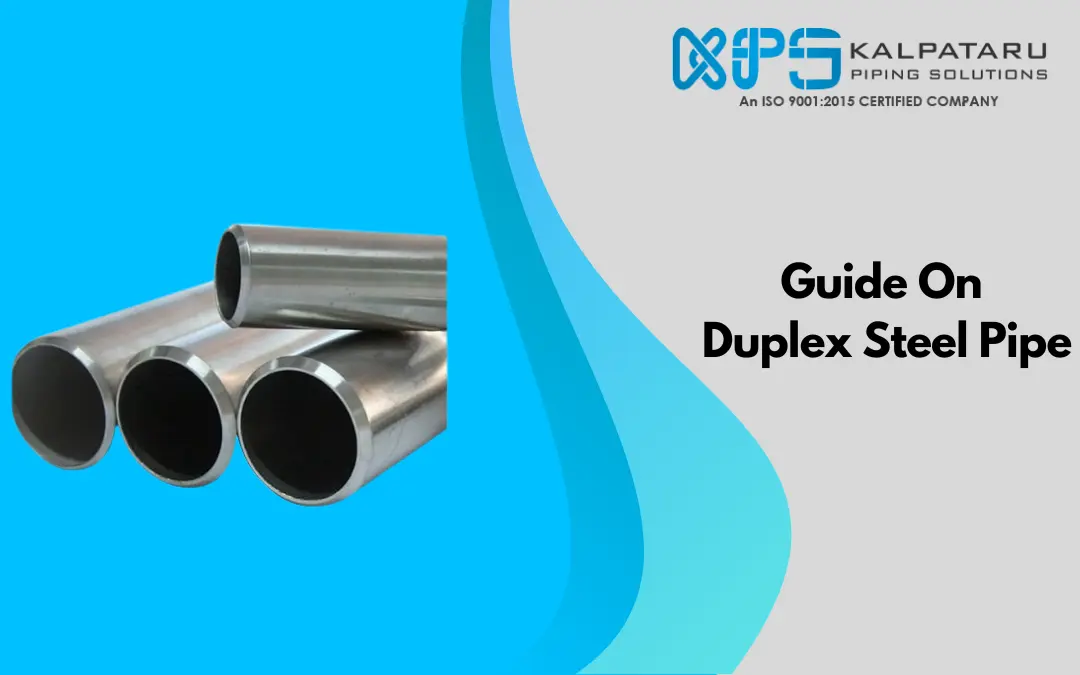
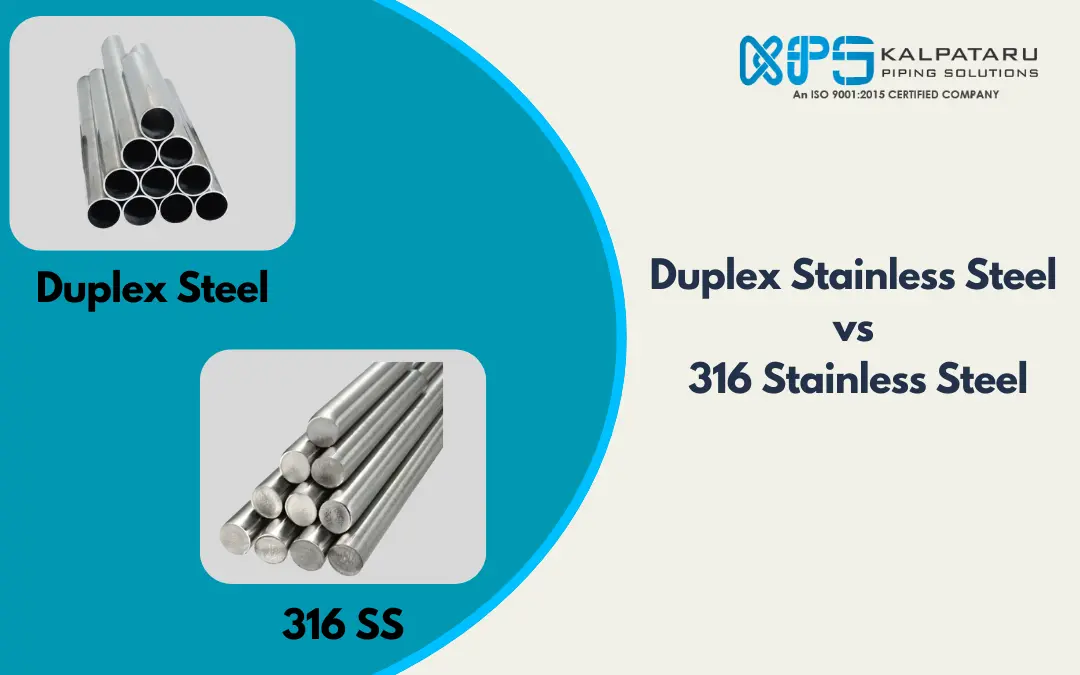
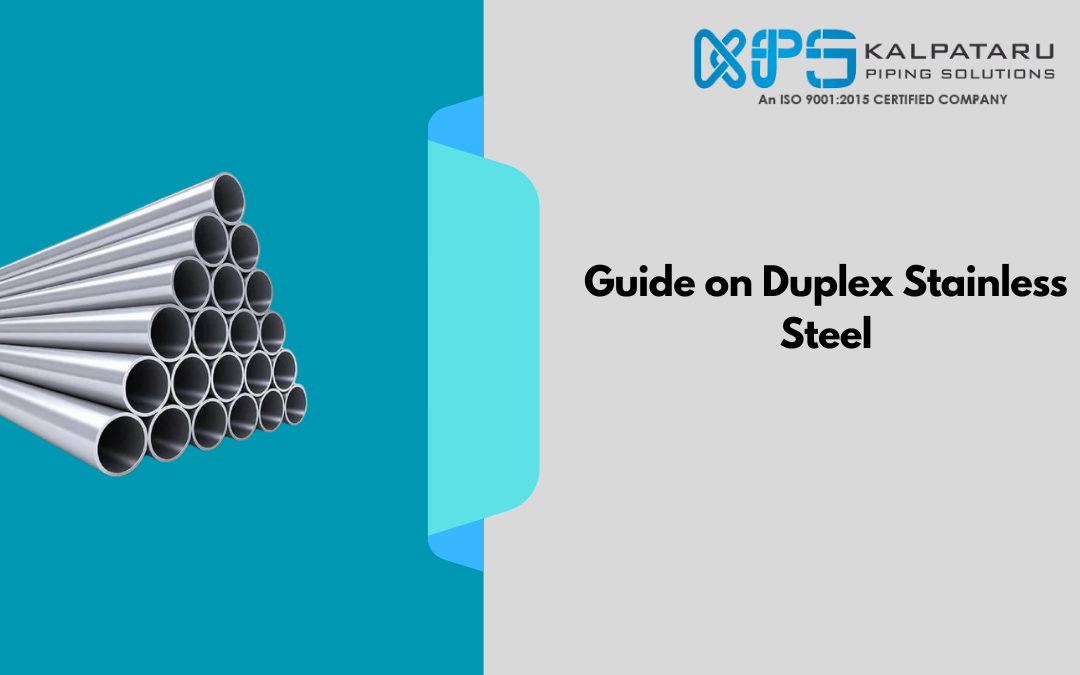
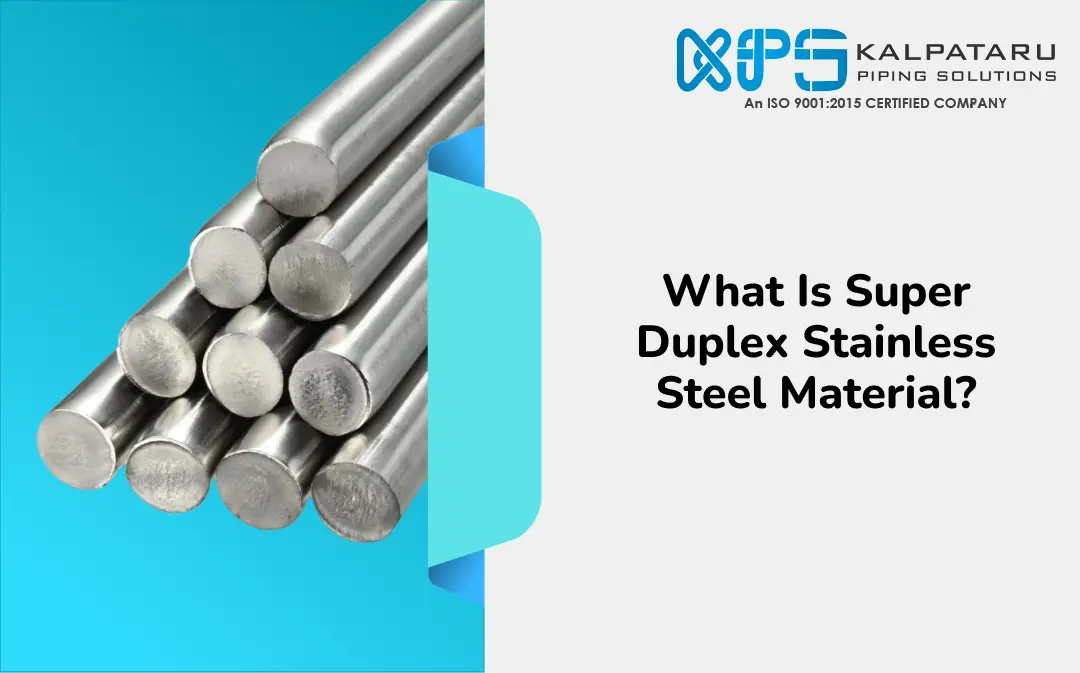
Duplex stainless steel material can contain an equal combination of both austenite and ferrite substances. This type of material has its unique microstructure offering higher strength & great corrosion resistance. In this blog, let’s explore its benefits, offering grades & applications.

Understanding Duplex Stainless Steel

Duplex stainless steel material can be designed by combining the high strength of ferritic stainless steel with the superior corrosion resistance of austenitic stainless steel. Typically these materials consist of 40 to 60% ferrite after solution annealing. Higher chromium and molybdenum content provide exceptional resistance to pitting and crevice corrosion, especially in aggressive environments.

Benefits of Duplex Stainless Steel

Stronger & Durable

Duplex stainless steel has a high yield strength that allows manufacturers to use thinner sections, reducing weight while maintaining structural integrity. It is highly durable due to its superior mechanical properties.

Great Corrosion Resistance

It is particularly resistant to chloride stress corrosion cracking, pitting, and crevice corrosion, to resolve the common issues in application to handle aggressive chemicals or salty seawater. The high content of chromium, molybdenum, and nitrogen in duplex stainless steels significantly enhances its ability to resist oxidation and corrosion.

Cost-Effective Solution

Duplex steel is more affordable as it contains less nickel chemical compounds. Since it is cost effective, offers long service life and minimal maintenance requirements.

Versatility in Use

As duplex steel materials are available in multiple forms such as sheets, plates, bars, and pipes, they can be used in a variety of industrial applications.

Chemical Composition of Duplex Steel

  • Chromium: With concentrations ranging from 18% to 28%, chromium is essential for creating a passive oxide layer on the steel’s surface. This layer protects the material from oxidation and corrosion.
  • Molybdenum: Present in amounts up to 5%, molybdenum significantly improves resistance to pitting and crevice corrosion.
  • Nickel: While present in smaller amounts (1.5% to 8%), nickel stabilizes the austenitic phase, improving toughness and ductility. 
  • Nitrogen: Nitrogen concentrations typically range from 0.08% to 0.50%. It strengthens the material by increasing yield strength and improving resistance to pitting and crevice corrosion. 
  • Carbon: Duplex stainless steel contains very low levels of carbon (less than 0.04%), which prevents the formation of chromium carbides and ensures excellent resistance to intergranular corrosion, especially in welded sections.
  • Manganese: Present in grades like LDX 2101, manganese (around 1.5%) contributes to the strength, toughness, and deoxidizing properties of duplex stainless steel, helping create a defect-free microstructure.

Why Choose Us for Duplex Steel Needs?

As a leading manufacturer, exporter & supplier of duplex stainless steel materials, we offer high quality products with most popular grades needed for various industries at affordable prices & timely delivery.

  1. Duplex 2205 or Duplex UNS S31803: Known for excellent corrosion resistance with high levels of chromium, molybdenum, and nitrogen. Not ideal for temperatures above 300°C.
  2. Duplex 2507: Super duplex stainless steel with high molybdenum and chromium content, offering excellent resistance to pitting and crevice corrosion. Suitable for harsh environments but may become brittle at high temperatures.
  3. Duplex 2101: A lean duplex stainless steel with good corrosion resistance, stronger than stainless steel 304 but not as high as 316. Cost-effective due to lower nickel and molybdenum.
  4. Duplex 2304: Lean duplex stainless steel offering similar corrosion resistance to 316L with greater strength, used in construction and pulp and paper industries. Can be prone to pitting corrosion in chloride-rich environments.
  5. Duplex 2760: Super duplex stainless steel providing excellent resistance to pitting, crevice corrosion, and sulfide stress corrosion cracking, though it can become brittle at high temperatures.

Uses of Duplex Stainless Steel

  • Duplex stainless steels are widely used across various industries due to their excellent corrosion resistance, high strength, and cost-effectiveness. Key applications include:
  • Offshore and Near-Shore Operations: Ideal for oil drilling, desalination, and water treatment.
  • Chemical and Liquid Processing: Used in equipment handling corrosive substances.
  • Naval Parts and Components: Suitable for marine environments.
  • Pollution Control Equipment: Effective in reducing environmental contaminants.
  • Pulp and Paper Production: Resists corrosion in harsh chemical environments.
  • Construction: Durable for structural applications.
  • Hot Water and Brewing Tanks: Resists corrosion and maintains structural integrity in hot, acidic environments.

FAQS

What is the tensile strength of duplex stainless steel?

The tensile strength of duplex stainless steel typically ranges from 550 to 750 MPa (80,000 to 110,000 psi), depending on the specific grade and heat treatment.

How do you weld duplex stainless steel?

Weld duplex stainless steel with suitable filler materials, preheat properly, and perform post-weld heat treatment. Use low heat input to prevent chromium carbide precipitation.

Can duplex stainless steels be used at high temperatures?

Duplex stainless steels are not ideal for temperatures above 300°C (572°F) due to embrittlement. Super duplex or high-temperature alloys are better for such conditions.

Are Duplex Stainless Steels Magnetic?

Yes, duplex stainless steels are magnetic due to their mixed microstructure of austenite and ferrite, which imparts some magnetic properties.

Guide on Socket Weld Fittings

Guide on Socket Weld Fittings

Stainless steel pipe fittings are crucial components that connect one or more pipes, facilitating in-line branching and directional changes. These fittings are typically available in three main types: butt-weld, threaded/screwed, and socket weld. In this blog, we will focus on socket weld fittings, exploring their types, advantages, disadvantages, and applications.

What Is Socket Weld Fittings?

Socket weld fittings are used to join pipes, valves, or flanges by inserting the pipe into a recessed portion of the fitting. The connection is secured with a fillet weld, creating a robust, leak-proof joint ideal for high-pressure applications. Socket weld pipe fittings follow ASTM and ASME B16.11 standards, which dictate tolerances, pressure, and temperature ratings, ensuring durability and performance.

Types of Socket Weld Fittings

Socket weld fittings are essential components in piping systems, providing robust and leak-proof connections for various industrial applications. Here, we explore different types of socket weld fittings, their functions, and where they are commonly used.

1. Full Coupling : A socket weld full coupling, also known as a socket weld coupler, is a fitting used to connect two pipes or a pipe and a nipple.

2. Half Coupling: A half coupling is a fitting inserted into the end of a run pipe, providing a female threaded end connection. These are often used in conjunction with another half-coupling.

3. Reducing Coupling : Reducing couplings are used to connect two pipes with different outer diameters, allowing for a seamless transition between varying pipe sizes.

4. Reducer Insert : Reducer inserts provide a cost-effective and efficient method for pipeline reductions, ensuring compliance with MSS SP-79 standards.

5. Socket Weld Union : A socket weld union is a screwed connection consisting of three interwoven components. It has two internal threads and a center that, when rotated, draws the ends together.

6. Socket Weld Elbow : Socket weld elbows are used in piping systems with high working pressures and temperatures, where the pipe walls are thick. The pipe is inserted into the socket, and fillet welds are made on both sides of the joint.

7. Socket Weld Tee (Straight and Reducing) : Socket weld tees are specialized fittings used to create a 90-degree branch off the main pipe. They connect to pipes of the same diameter forming the head of the tee, with openings for additional pipe connections.

8. Socket Weld Cross : A socket weld cross allows for the creation of a 90-degree branch from the main pipe run, similar to a tee but with four connections.

9. Socket Weld Cap : Socket weld caps are end caps used to seal the ends of pipes. They are cap-shaped and provide a secure closure for the pipeline.

Advantages of Socket Weld Fittings

  • Easy Alignment: The socket ensures proper alignment, eliminating the need for tack welds.
  • Leakage Reduction: Lower risk of leakage compared to threaded fittings.
  • No Bore Contamination: Weld metal does not flow into the pipe bore.
  • Cost-Effective Installation: Cheaper to install than butt weld fittings due to fewer machining and dimensional requirements.

Disadvantages of Socket Weld Fittings

  • Ensure a 1.6mm gap between the socket shoulder and the pipe for proper welding.
  • Internal crevices and expansion gaps can promote corrosion, making socket weld fittings less suitable for radioactive or corrosive applications.
  • These fittings are unsuitable for ultra-high pressure in food industries due to incomplete penetration and hard-to-clean crevices.

 Uses of Socket Weld Fittings

  • High Pressure Handling: Ideal for industrial uses due to their ability to handle high pressure.
  • Leak-Free Connections: Provides strong, leak-proof joints, crucial for pipelines transporting flammable or hazardous chemicals.
  • Performance Standards: Meets strict ASME and ASTM standards for tolerances, pressure, temperature ratings, dimensions, materials, and markings.
  • Material Variety: Available in alloy steel, carbon steel, and stainless steel, suitable for various fittings like couplings, reducers, tees, elbows, and flanges.
  • Wide Application: Versatile use across different industries due to the variety of materials and fitting types.

Butt Weld Vs Socket Weld

Socket weld (SW) fittings follow the ASME B16.11 standard, which specifies that a pipe is inserted into the recessed area of the fitting. Both the fitting and the pipe must be square cut, with no need for additional preparation or beveled ends beyond cleaning the external surfaces. This streamlined approach simplifies both installation and welding processes.

In contrast, butt weld (BW) fittings are governed by the ASME B16.9 standard. These fittings are welded directly onto the ends of the pipes, and their thickness matches that of the pipes. Unlike socket weld fittings, butt weld fittings require the ends to be beveled, which adds an extra step to the preparation process.

Understanding the difference between socket weld and butt weld is crucial for selecting the appropriate fitting type for your project.

Read more :   Difference Between Socket Weld and Buttweld

Conclusion

In conclusion, socket weld fittings are vital for creating reliable, high-pressure connections in piping systems. Their ease of use, durability, and versatility make them an excellent choice for various industrial applications. For optimal performance and longevity, choosing high-quality stainless socket weld fittings is essential.

FAQS

What are the advantages of using socket weld fittings?

Socket weld fittings are perfect for small pipes carrying flammable or toxic materials, and handle steam pressures up to 600 psi, providing strong connections, high flow, and minimal leakage.

What is the difference between socket weld and butt weld fittings?

Socket weld fittings insert a pipe into a recessed fitting and secure it with fillet welds, while butt weld fittings require beveling the pipe ends and welding them directly.

What is the maximum pipe size for socket weld fittings?

Socket weld fittings are typically used for pipes up to 4 inches in diameter.

What materials are used for socket weld fittings?

Socket weld fittings are commonly made from alloy steel, carbon steel, and stainless steel to suit various applications and ensure durability.

Lap Joint Flanges vs Slip On Flanges

Lap Joint Flanges vs Slip On Flanges

Flanges are vital components in piping systems enabling secure connections between pipes, valves & other equipment. Among the various types, the slip on flange & lap joint flange are widely used across industries for their specific applications. Choosing between a lap joint flange & a slip on flange depends on your system pressure, alignment needs & maintenance frequency. Slip on flanges are cost-effective & simple to install, while lap joint flanges offer better flexibility & reusability in complex piping systems. Understanding these differences helps in selecting the right flange for your needs. This blog will explain their features & help you to decide which one is best for you.

At Kalpataru Piping Solutions, we manufacture high-quality slip on flanges & lap joint flanges by using stainless steel, carbon steel & alloy steel material. Our products are designed to meet international standards to use in a wide range of industrial applications. Contact us today to get the right flange solution for your project.

What is Slip On Flanges?

Slip on flanges are important components in piping systems designed to slide over the pipe end & are welded both on the inside & outside for a secure connection. Their design allows for easy alignment during installation to make it the best choice for low to moderate pressure applications. These flanges can also function as lap joint flanges when used with Type B or Type C stub ends for various other industrial applications. Slip on reducing flanges are designed to connect different pipe sizes within a larger flange, enhancing compatibility across piping systems. They are manufactured by using materials such as carbon steel, stainless steel, alloy steel, duplex stainless steel & nickel alloys depending on factors like the pressure, temperature & corrosion resistance. To ensure long-term reliability & high-pressure performance , they are welded with precision by skilled professionals. Proper installation helps to prevent damage & ensures smooth, efficient system operation.

Key Advantages of Slip-On Flanges:

Discover the benefits of Slip-On Flanges for low-pressure piping systems. Ideal for diverse industrial applications.

  • Easy Installation: Simplifies pipe alignment and reduces welding time.
  • Cost-Effective: An economical option, especially for systems under moderate pressure.
  • Versatile Use: Adaptable to a variety of industries and compatible with different pipe sizes.
  • Efficient Flow: Offers minimal turbulence and pressure loss within the piping system.

What is a Lap Joint Flange?

A lap joint flange also called a lap flange. It consists of a stub end & a backing flange. The stub end looks like a short pipe section with a weld bevel on one side & a flared end that matches the gasket face of a weld neck flange. It usually measures between 1/4″ & 3/8″ thickness by attaching to the pipe with a fillet weld. The backing flange has standard dimensions but lacks a raised face, featuring instead a small shoulder or pipe hole. Due to its strong features, the lap joint flange & stub end are well suited for piping systems that need frequent maintenance, inspection or realignment. They are manufactured with materials including stainless steel, carbon steel, alloy steel, duplex stainless steel & nickel alloys. The material selection depends on factors such as operating pressure, temperature, corrosion resistance & fluid type.

Advantages of Lap Joint Flanges:

Lap Joint Flanges offer easy alignment, reduced bolt stress, and cost-effective maintenance ideal for systems requiring frequent disassembly or inspection.

  • Alignment Flexibility: The rotatable backing flange allows easy alignment of bolt holes, even in systems with slight misalignments.
  • Ease of Maintenance: Its design enables quick access for maintenance & inspection without removing the entire flange assembly.
  • Cost Effective: Used for large diameter piping systems or where frequent disassembly is required to reduce long term maintenance costs.
  • Leak Prevention: The stub end is welded to the pipe for ensuring a secure seal & minimizing the risk of leakage around the joint.
We supply high-quality lap joint flanges in a wide range of materials, including carbon steel and stainless steel lap joint flanges, engineered to meet various industrial standards and application requirements.

Lap Joint Flange vs Slip-On Flange: Key Differences

Understand the key differences in flexibility, pressure handling, welding requirements & sealing performance. Make informed decisions when selecting the right flange type for efficient, safe & cost-effective piping installations.

Feature Lap Joint Flange Slip On Flange
Flexibility and Maintenance Allows rotation of the flange around the stub end for easy bolt hole alignment and simple disassembly. Fixed in place once welded, offering limited flexibility and not ideal for frequent removal.
Pressure Rating Typically used in medium-pressure applications; not recommended for very high pressures due to design limits Suitable for low to medium pressures; welding limits may restrict use in high-pressure systems.
Size and Variety Available in larger sizes, often preferred for big-diameter pipes needing flexible installation options. Available in standard sizes, mostly used with small to medium diameter pipes.
Installation & Welding Lap joint flanges use a stub end that is welded to the pipe while the backing flange remains unwelded. It requires more precise welding on the stub end & more complex installation process. Slip-on flanges slide over the pipe and are welded on both the inside & outside for making alignment easier & allowing for quicker installation without the need for highly specialized welding.
Cost & Leak Prevention Slip-on flanges tend to be more cost effective due to fewer welds & easier fabrication. Due to their flange lip sticking out past the pipe, they don’t support leakage. Lap joint flanges are more expensive due to the welding of the stub end but offer a better seal because the flange stays flush with the pipe to prevent leaks.

Lap Joint Flange vs Slip-On Flange: Applications

Lap joint flanges are ideal for systems requiring frequent disassembly, alignment adjustments, or corrosive environments, while slip-on flanges are perfect for low-pressure applications needing easy & cost effective installation. Understand where each fits best in industrial piping setups:

Industry

Lap Joint Flange

Slip On Flange

Oil and Gas

Best for low-pressure pipeline connections (Class ≤600).

Ideal for systems handling corrosive media that need frequent cleaning or replacement.

Water Treatment

Water TreatmentCommonly used for transporting clean water in low-cost, stable setups.

Preferred in wastewater treatment where high corrosion resistance is required.

Chemical Industry

Suitable for non-corrosive fluids like cooling water systems.

Excellent choice for handling strong acids or alkalis; stub ends can be made from special alloys like Hastelloy.

Construction

Used in HVAC low-pressure pipelines and building water supply systems.

Less common, as these systems typically don’t require frequent maintenance.

Frequently Asked Questions About Lap Joint Flanges Vs Slip On

When to choose lap joint flanges vs slip on flanges?
Use lap joint flanges when your system needs frequent disassembly or maintenance, such as in chemical, food, or pharma industries.
When to choose slip on flanges vs lap joint flanges?
Choose slip-on flanges for permanent installations where maintenance is minimal—ideal for water, HVAC, and oil & gas systems.
Can extra welding make a slip-on flange stronger?
Adding more welds can distort or damage the flange. Slip-on flanges are not made for full-strength welding.
Does a lap joint stub end need to match the pipe material?
You can mix materials, like using a carbon steel pipe with a stainless steel stub end to reduce costs and resist corrosion.
Can slip-on and lap joint flanges be used together?
Their face types differ, and mixing them can cause improper sealing and leaks.
What type of weld is a slip on flange?
Slip-on flanges require fillet welds on both the inside and outside of the flange.

 SCM 415 Material Guide:Composition, Strength & Uses

 SCM 415 Material Guide:Composition, Strength & Uses

Why Companies Should Know About SCM 415 Steel

It is important to understand SCM 415 steel to fulfill the needs of high-performance materials. SCM415 steel is an alloy steel known for its excellent strength, toughness & wear resistance. It is used in automotive components, gears, shafts & other critical parts requiring reliable mechanical properties. Getting information about SCM 415 will help companies to make informed decisions about heat treatment, machining compatibility & long-term performance. SCM 415 alloy steel offers both durability & cost-efficiency for various industrial applications.

What is SCM 415 Steel Material?

SCM415 is a type of chromium-molybdenum alloy steel listed under JIS G4053 standards. This material has good strength, toughness & resistance to wear. This steel is often used to make parts like gears, shafts & automotive components especially when both hard surface & strong inner core are needed. Chromium in SCM415 helps protect against rust & molybdenum improves strength at high temperatures. It is also suitable for heat treatments like carburizing & quenching to improve its hardness & durability. If you’re making mechanical or precision parts, SCM415 steel is a reliable choice for both performance and ease of use.

SCM415 Alloy Steel: Chemical Elements

The SCM415 chemical composition classifies it as a medium carbon steel by containing carbon content usually between 0.35% & 0.45%. Chromium improves corrosion resistance & molybdenum boosts strength at high temperatures to increase hardenability. Manganese helps with deoxidation and boosts hardenability, while silicon enhances strength and flexibility. This balanced SCM415 chemical composition makes it ideal for applications requiring durability, toughness & resistance to wear in challenging environments.

Carbon ( C ) 0.38~0.43%
Manganese 0.75~1.00%
Phosphorus ≤0.035%
Sulfur ≤0.040%
Chromium 1.10%
Molybdenum 0.15~0.25%
Iron 97.25%

Understanding SCM415 Steel Equivalents

SCM415 is equivalent to AISI 4135 and 4137 alloy steels, sharing similar chemical compositions and mechanical properties. These equivalents offer comparable strength, toughness, and heat treatment capabilities for various engineering applications.

Japan China France Italy Germany England
JIS GB AFNOR UNI DIN,WNr BS
SCM415 15CrMo 15CD4.05 X30WCRV93KU 15CrMO I 1.7262 1501-620 | Cr31

Key Mechanical Properties of SCM415 Steel

SCM415 steel combines high tensile and yield strength with good toughness, making it ideal for parts exposed to heavy loads and dynamic stress. It also holds up well under high temperatures, making it suitable for demanding environments.

Typical steel Elastic modulus Bulk modulus Tensile strengtd Yield strengtd
GPa GPa Mpa Mpa
190-210 140 655 415

Understanding the Hardness of SCM415 Steel

SCM415 steel is known for its high hardness, which can be increased even more with heat treatment. The hardness of SCM415 varies depending on its condition, as outlined below:

Condition Hardness (HRC)
Annealed 15-20
Quenched & Tempered 55-60
Carburized & Hardened 60-65

Know About Physical Properties of SCM415 Steel

The density of SCM415 reflects its solid and heavy nature, contributing to its overall strength and durability. With moderate thermal conductivity, SCM415 efficiently manages heat transfer making it suitable for applications that require controlled heat dissipation. Additionally, its notable specific heat capacity influences how the material reacts to temperature changes during manufacturing and use, ensuring reliable performance under varying thermal conditions.

Specific heat J/kgK Temperature T °C/F Thermal conductivity W/mK Modulus of elasticity kN/mm2
43 44 14 321

Annealing Process of SCM415 Alloy Steel

Annealing SCM415 alloy steel involves heating the material to a specific temperature holding it there to relieve internal stresses & then cooling it slowly to improve its ductility & machinability. This process enhances the material workability & prepares it for further processing

Process Step Temperature Range Cooling Method
Heating 800-850°C Furnace cooling
Holding At temperature Hold for 1-2 hours
Cooling Slow cooling In the furnace

How SCM415 Steel Performs Against Corrosion?

SCM415 offers moderate corrosion resistance due to its chromium content, making it suitable for mildly aggressive environments. However, in areas with chlorides or acidic chemicals like sulfuric acid, protective coatings or treatments are advised, as the steel can be prone to stress corrosion cracking (SCC).

Corrosive Agent Concentration (%) Temperature (°C/°F) Resistance Rating Notes
Chlorides 3-5 25-60 °C / 77-140 °F Fair Risk of pitting
Sulfuric Acid 10-20 25-50 °C / 77-122 °F Poor Susceptible to SCC
Sea Water 25 °C / 77 °F Fair Moderate resistance
Alkaline Solutions 1-5 25-60 °C / 77-140 °F Good Generally resistant

How SCM415 Steel Performs Under High Temperatures?

SCM415 retains its strength and toughness at elevated temperatures. Its good creep resistance makes it a reliable choice for applications under constant high heat, such as in power plants or aerospace parts. However, oxidation can occur if it’s exposed to air at very high temperatures, so surface protection is recommended.

Fabrication Properties of SCM415 Steel

SCM415 offers moderate weldability with preheating recommended for thick sections. It has decent machinability using carbide or HSS tools, and good formability, especially under hot working conditions. Suitable for heat treatments like carburizing and quenching to enhance hardness and performance.

Understanding the Weldability of SCM415 Alloy Steel

While SCM415 is generally weldable, preheating is recommended—especially for thick sections—to prevent cracking. Post-weld heat treatment (PWHT) helps improve weld integrity and reduce stress in the heat-affected zones.

Welding Process Recommended Filler Metal (AWS Classification) Typical Shielding Gas/Flux Notes
MIG ER70S-6 Argon + CO2 Preheat recommended
TIG ER80S-Ni1 Argon Post-weld heat treatment may be necessary
Stick E7018 Requires careful control to avoid cracking

How Machinable Is SCM415 Alloy Steel?

SCM415 is not as easy to machine as free-cutting steels like AISI 1212, but it still performs well under proper conditions. Using high-speed steel (HSS) or carbide tools with sufficient lubrication and cooling enhances results and tool life.

Machining Parameter SCM415 AISI 1212 Notes/Tips
Relative Machinability Index 60% 100% SCM415 is more challenging to machine
Typical Cutting Speed (Turning) 40 m/min 80 m/min Use carbide tools for best results

Exploring the Formability of SCM415 Alloy Steel

SCM415 steel can be hot formed easily and can also be cold formed with caution. During cold forming, it’s important to account for work hardening and maintain an appropriate bend radius to avoid material cracking.

Heat Treatment Processes for SCM415 Alloy Steel

SCM415 responds well to heat treatment especially through quenching & tempering. Quenching transforms its microstructure into hard martensite to boost surface hardness. Tempering follows to relieve internal stresses, reduce brittleness & improve toughness making it ideal for demanding, high-stress industrial applications.

Treatment Process

Temperature Range (°C/°F)

Typical Soaking Time

Cooling Method

Primary Purpose / Expected Result

Annealing

600 – 700 °C / 1112 – 1292 °F

1 – 2 hours

Air

Softening, improved machinability

Quenching

850 – 900 °C / 1562 – 1652 °F

30 minutes

Oil or Water

Hardening, increased strength

Tempering

400 – 600 °C / 752 – 1112 °F

1 hour

Air

Reducing brittleness, improving toughness

SCM415 Steel Industrial Applications

SCM415 is widely used in heavy machinery parts, fasteners, and tooling due to its high strength and wear resistance. Its toughness makes it ideal for high-stress and abrasive industrial applications.

Industry/Sector

Specific Application Example

Key Steel Properties Utilized in this Application

Reason for Selection (Brief)

Automotive

Gears

High strength, wear resistance

Essential for durability

Aerospace

Aircraft components

Lightweight, high strength

Critical for performance

Oil & Gas

Drill bits

Toughness, resistance to wear

Required for harsh conditions

Machinery

Shafts

High tensile strength

Necessary for load-bearing

Conclusion

In conclusion, SCM415 steel is a highly versatile alloy known for its excellent strength, toughness & wear resistance for making it ideal for demanding industrial applications. At Kalpatru Piping Solutions, we provide premium SCM415 material that can be customized through advanced heat treatment & processing to meet your project specific needs. Whether you require SCM415 steel for applications, our quality products ensure reliable performance and durability. Understanding the unique benefits of SCM415 allows you to select the best material for your applications with confidence. Trust Kalpatru Piping for top-grade SCM 415 steel solutions tailored to your requirements.

Frequently Asked Question About SCM415 Steel

What is the hardness of SCM415 HRc?

After heat treatment, SCM415 typically achieves a hardness between 55 & 60 HRC.

What is the difference between S45C and SCM415?

S45C is a medium carbon steel that has good machinability & strength & is used in general engineering. SCM415, on the other hand, is a chromium-molybdenum alloy steel with higher hardenability and toughness to make it better suited for gears, shafts & wear-resistant parts.

What is SCM435 steel equivalent to?

SCM415 steel is equivalent to the AISI 4135 grade.

What is the density of SCM415 material?

The density of SCM415 is approximately 7.8 to 7.9 , which is typical for low alloy steels primarily made of iron.

EN8 Chemical Composition & EN8 Material Properties

EN8 Chemical Composition & EN8 Material Properties

Mild Steel, also known as Carbon Steel, is a low-carbon steel with a carbon content of up to 0.25% & no other alloying elements. The term “Mild” covers a wide range of steel grades & forms used across different industries. It is widely applied in mechanical engineering for parts that are not subjected to high stress.

When mild steel is processed through bright cold drawing, it gains the ability to handle higher stress, especially in smaller diameters. Bright mild steel offers several benefits such as improved dimensional accuracy, superior straightness & a smooth surface finish. Cold drawing also brings the material closer to its final machining size, reducing machining costs, while offering greater physical strength compared to hot-rolled bars of the same dimensions. EN8, a medium carbon steel (BS 970 080M40) provides higher strength than standard bright mild steel due to its characteristics of thermo-mechanical rolling. 

The EN8 chemical composition plays a key role in defining its strength, hardness, toughness & weldability all influenced by the precise ratio of elements such as carbon, manganese & silicon. These components give EN8 its distinctive balance of durability & mechanical performance to be used for engineering and manufacturing applications. To learn more about how these elements shape its properties and uses, explore our complete guide on EN8 chemical composition and material properties.

What is EN8 Carbon Steel?

EN8 carbon steel, often referred to as medium carbon and medium tensile steel, surpasses mild steel due to its reinforcement with hardened medium carbon steel. This makes EN8 steel notably robust and versatile, suitable for machining in various conditions.

EN8 carbon steel is typically used in its delivered state, requiring no additional treatment. However, it can undergo induction hardening to enhance surface hardness, boosting wear resistance. This property is particularly beneficial for components like axles, shafts, gears, nuts, and studs.The EN8 material hardness can be further increased through induction hardening, achieving a surface hardness of 50–55 HRC. This process significantly improves the wear resistance of the parts, making EN8 an ideal choice for applications demanding durability and strength due to its uniform metallurgical structure, EN8 steel offers reliable and consistent machining capabilities, even in its heat-treated form. This makes it a preferred material for various engineering and manufacturing applications, ensuring both performance and longevity.

Request a quick quote for EN8 carbon steel products today.

EN8 Material Chemical Composition

Element Percentage Range
Carbon (C) 0.36% – 0.44%
Silicon (Si) 0.10% – 0.40%
Manganese (Mn) 0.60% – 1.00%
Phosphorus (P) Maximum 0.050%
Sulfur (S) Maximum 0.050%
Chromium (Cr) Maximum 0.30%
Nickel (Ni) Maximum 0.25%

EN8 Mechanical Properties

Heat Treatment Yield Strength Rm Tensile Strength Rm Rp 0.2 Impact
Izod Ft.lb KCV J
MPa MPa MPa
N 280 550 15 16
245 510
Q 385 625/775 355 25 28
R 465 700/850 450 25 28

EN8 Carbon Steel Products by Kalpataru Piping Solutions

Kalpataru Piping Solutions is a trusted manufacturer, supplier & exporter of EN8 Carbon Steel products, offering superior quality and precision-engineered solutions for diverse industrial applications. 

We provide EN8 Carbon Steel in multiple forms, including:

For custom sizes, bulk orders or technical assistance, get in touch with us today for a competitive quote on EN8 carbon steel products.

EN8 Carbon Steel Equivalent Grades

EN8 carbon steel corresponds to several international standards. Below are its commonly recognized equivalents:

  • BS 970-1991: 080M40
  • AISI / ASTM A29: 1038, 1040, 1045
  • DIN Werkstoff No.: 1.0511, 1.1186, 1.1189
  • BS & DIN (European): C40, CK40, C45, CK45
  • JIS G4051: S40C, S45C

EN8 Carbon Steel Heat Treatment

EN8 carbon steel, also known as 080M40, undergoes specific heat treatments to achieve desired properties:

Tempering: Heat to 550°C-660°C (1022°F-1220°F) for 1 hour per inch of thickness, then cool in oil or water. This reduces brittleness while maintaining hardness.
Normalizing: Heat to 830°C-860°C (1526°F-1580°F), then cool in air. This refines the grain structure and enhances toughness.
Quenching: Heat to the normalizing temperature and quench in oil or water to increase hardness and strength for demanding applications.

EN8 vs EN9 Steel

Properties EN8 EN9
Carbon content 0.36-0.44% 0.50-0.60%
Hardness upto 207 HBW upto 255 HBW
Tensile Strength ≥540 Mpa ≥695 Mpa

Forging of EN8 Carbon Steel

EN8 carbon steel is a type of medium carbon steel known for its strength. Forging of EN8 material starts at heating it to a high temperature until it becomes soft enough to shape into the desired form. This process will enhance the mechanical properties of the steel for use in engineering applications. 

After forging, due to the high-performance mechanical properties of EN8 material is used in manufacturing components like shafts, gears & axles. The slow & uniform heating followed by proper cooling which helps in achieving the desired structural integrity and performance in the final product.

EN8 Material Weight Calculator

Calculating the weight of EN8 carbon steel components is essential for various engineering & manufacturing applications. Using a material weight calculator you can determine the weight of EN8 steel based on its dimensions & density to get accurate measurements for project needs. Below is a table illustrating the parameters involved in calculating the weight of EN8 material: Using these parameters, the weight of an EN8 component can be easily calculated, aiding in precise material management and cost estimation for various projects.

Welding EN8 Carbon Steel

Welding EN8 steel is now easier with modern EN8 bright mild steel due to its lower carbon content. MIG wire (SG2) or a 7018 low hydrogen electrode is used for material up to 18 mm thick. Preheat to about 100°C to prevent cracking during welding for thicker sections.

Thermal Conductivity of EN8 Carbon Steel

EN8 steel has good thermal conductivity, helping it transfer heat efficiently. This is useful in mechanical parts where heat dissipation is important, though it may require consideration in designs needing thermal insulation.

Manufacturing Process of EN8 Carbon Steel

EN8 carbon steel is manufactured through two primary processes—hot rolling and cold finishing—each suited to different application needs and quality requirements:

1. Hot Rolling

EN8 carbon steel is manufactured through two primary processes—hot rolling and cold finishing—each suited to different application needs and quality requirements:

Benefits: Ideal for bulk production & more cost-effective for large volumes.

Limitations: May have less accurate dimensions and a rougher surface finish compared to cold-finished products.

2. Cold Finishing

It can be cold finished through additional processes such as drawing, peeling or turning at room temperature.

Benefits: Offer superior dimensional accuracy, tighter tolerance & a smoother surface finish.

Applications: Used for precision parts where exact measurements are needed.

The choice between hot-rolled and cold finished EN8 steel depends on the required finish, dimensional precision, and end-use application.

Application of EN8 Carbon Steel

EN8 carbon steel is a preferred material across multiple industries due to its balanced combination of strength, hardness & machinability.

Shafts and Axles

EN8 is widely used in manufacturing shafts and axles which demand high tensile strength and resistance to wear. These components are critical in automotive systems, industrial equipment & mechanical assemblies.

Gears and Bearings

The material ability to be surface-hardened makes it ideal for gears and bearings. EN8 steel ensures long service life by minimizing wear and maintaining dimensional stability under load.

Fasteners and Studs

EN8 is also used to produce bolts, studs & other fasteners that require durability and strength especially in high-stress environments.

General Engineering Components

Its versatility makes EN8 suitable for a wide range of general engineering parts such as couplings, keys, spindles & connecting rods where a good balance of toughness and machinability is needed.

Frequently Asked Questions on EN8 Carbon Steel

What is EN8 material?

EN8 is a medium carbon steel known for its higher strength & wear resistance as compared to mild steel. It can be pre heated for improved surface hardness to use in manufacturing processes of parts like shafts, gear & axles.

What is the Standard Equivalent of EN8 Steel in India?

In India, EN8 steel is equivalent to IS 40C8 under the IS standard specification.

What is the Hardening Temperature for EN8 Steel?

EN8 steel can be hardened by heating it to 830°C to 860°C (1526°F to 1580°F) before quenching in oil or water.

What is the difference between EN8 and mild steel?
EN8 contains more carbon than mild steel to provide high strength and hardness. It is more ductile & easier to weld and use it in applications requiring higher tensile strength and improved wear resistance.
Enquire Now
close slider

    Enquire Now

    Fill the below form and get in touch with us, we’ll call you back.

    Fill the Captcha:
    WhatsApp chat