Hastelloy fasteners, including Hastelloy C276 fasteners, Hastelloy B2 fasteners, and Hastelloy C22 fasteners, are renowned for their exceptional performance in demanding industrial environments. These fasteners are made from Hastelloy alloys & nickel based alloy offer a unique combination of corrosion resistance, mechanical strength, and temperature stability, making them ideal for critical applications.
Hastelloy C276 fasteners are particularly known for their resistance to a wide range of corrosive substances, including acids, chlorides, and seawater. They are commonly used in chemical processing, petrochemical, and marine industries where exposure to corrosive environments is prevalent.
Hastelloy B2 fasteners are specifically designed to resist corrosion in reducing environments, making them suitable for applications involving sulfuric acid, hydrochloric acid, and other harsh chemicals. They find use in chemical processing, pharmaceutical, and pulp and paper industries. Hastelloy C22 fasteners offer excellent resistance to both oxidizing and reducing environments, making them versatile for a wide range of applications. They are used in aerospace, power generation, and automotive industries where high temperatures and corrosive conditions are common. Various types of hastelloy bolts and hastelloy screws, providing reliable fastening solutions for industrial equipment, machinery, and structures. Learn about the many advantages of Hastelloy fasteners for different industries in this blog. Discover how they stand out for their strength, resistance to rust, and performance in various working environments.
Leading Manufacturer & Exporter of Hastelloy Fasteners
Kalpatru Piping Solutions, premier manufacturer of high-quality Hastelloy fasteners. With a commitment to excellence and a focus on precision engineering, we deliver fasteners that meet the most demanding industrial standards.
Our Hastelloy fasteners are made from premium-grade materials to ensure exceptional strength, corrosion resistance, and durability. Each fastener is engineered to precise specifications, guaranteeing reliable performance and a perfect fit for your applications.
We offer a comprehensive range of Hastelloy fasteners, including hastelloy bolts, nuts, hastelloy screws, washers, and more, in various sizes, grades, and configurations to meet diverse project requirements. With years of experience and expertise in the industry, we understand the unique needs of different sectors, from oil and gas to chemical processing.
Our Hastelloy fasteners undergo quality testing and certification processes to ensure compliance with international quality standards, providing you with the best products. In addition to our standard offerings, we also provide custom fastener solutions, catering to specific design requirements and special applications with precision and efficiency.
Contact ustoday to discuss your requirements, and let our team of experts provide you with the perfect Hastelloy fastener solutions for your projects.
Advantages of Hastelloy Fasteners
1. Exceptional Corrosion Protection
Hastelloy fasteners stand out for their exceptional ability to resist corrosion. These alloys, typically made of nickel alloy products, chromium, and molybdenum, provide unmatched protection against a wide range of corrosive elements like acids, alkalis, and salts. This makes Hastelloy C22 fasteners ideal for industries dealing with chemicals, oil and gas, and marine applications, where exposure to corrosive substances is common.
2. High Temperature Compatibility
Hastelloy fasteners are great at handling high temperatures and intense heat. These alloys maintain their strength and performance even in extreme thermal conditions, making them perfect for industries like aerospace, power generation, and petrochemicals. Custom Hastelloy C276 fasteners stay strong and reliable even in exceptionally high heat.
3. Greater Strength & Durability
Hastelloy alloys are incredibly strong and durable, perfect for critical applications needing reliable and long-lasting fasteners. Custom Hastelloy fasteners handle high pressure and mechanical loads without bending or breaking, ensuring the safety and integrity of industrial equipment even in tough conditions.
4. Chemical and Corrosive Gas Resilience
Apart from being resistant to corrosion, Hastelloy fasteners also withstand a wide range of chemicals and corrosive gases. This makes them suitable for environments with exposure to volatile chemicals, acids, and gases, such as chemical plants, refineries, and pharmaceutical manufacturing facilities. Custom-made Hastelloy fasteners add an extra layer of protection against chemical corrosion and degradation, ensuring the longevity and dependability of industrial systems.
5. Versatility & Customized
Custom-made Hastelloy fasteners offer significant advantages due to their versatility and customization options. These fasteners are available in various grades and compositions, allowing for tailored solutions to meet specific application needs. Whether it’s about their length, shape, or performance enhancements, custom Hastelloy fasteners can be designed and manufactured according to precise specifications. This ensures top performance and compatibility with modern systems and structures, making them a reliable choice for various industries.
6. Cost Efficiency
Although custom-made Hastelloy fasteners are much costly as compared to standard fasteners which are made from traditional materials due to their superior performance, durability, and resistance to corrosion resulted in long-term cost savings. They reduce the need for frequent replacements, maintenance, and repairs, which in turn minimizes downtime, improves operational efficiency, and extends the lifespan of industrial equipment and systems
Nickel alloys, also known asNi alloysor nickel based alloys, are a group of materials that combine nickel with other elements to create versatile and highly useful metals. These ni alloys are known for their excellent corrosion resistance, high-temperature strength, and exceptional performance in a wide range of environments where other metals might corrode or degrade quickly. These alloys, composed primarily of nickel along with other elements like chromium, iron, copper, and molybdenum, offer a wide range of properties suitable for various applications. Nickel alloy metals, including nickel based alloys and Ni based alloys, are commonly used in aerospace, chemical processing, marine engineering, electronics, and power generation.
From Nickel 200 and Nickel 201 to other ni based alloys, these materials play a crucial role in modern engineering and technology, providing durability, reliability, and versatility across various applications. Nickel based alloys play a crucial role in core structure of various stainless steel grades, mainly in the SS 300 series. Grades like SS-304 and SS-316, containing around 8-13% nickel, are significant examples. Nickel is integral to about 75% of stainless steel products globally.
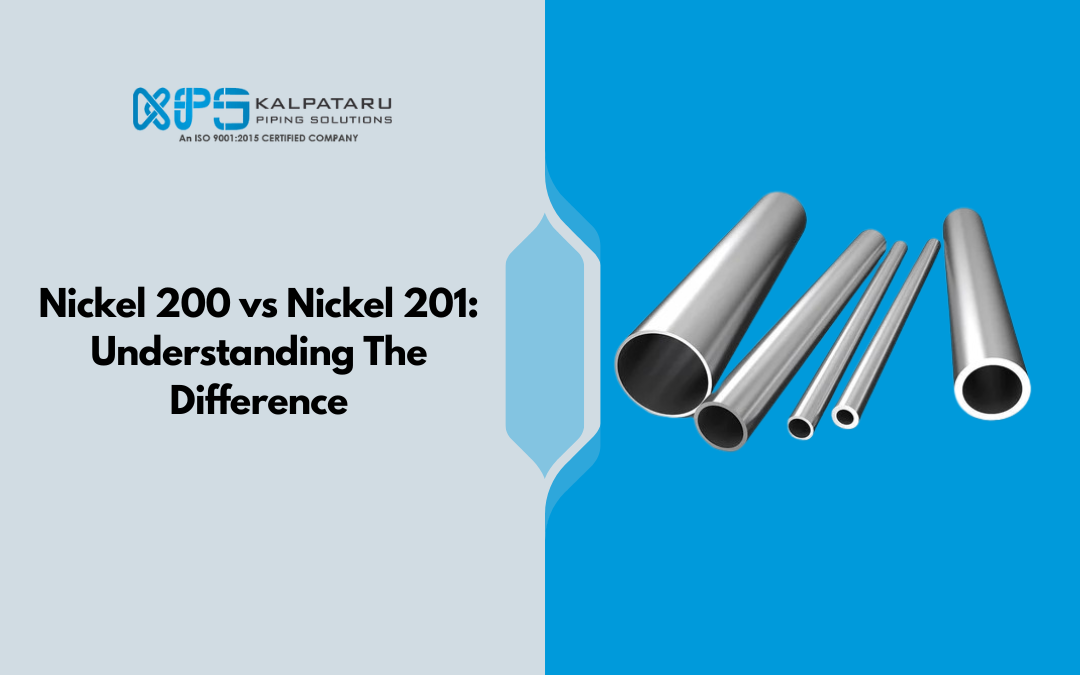
Nickel 200 and Nickel 201 represent commercially pure nickel grades with over 99% nickel content. The remaining composition includes other elements of iron, silver, manganese, copper, carbon, and sulfur. The primary difference lies in their carbon concentration, where Nickel 201 is a low-carbon variant with a maximum carbon content of 0.02% compared to Nickel 200’s 0.15%.
Nickel 200
Nickel 200, also known as Nickel 200 alloy, is a commercially pure nickel material known for its exceptional properties and wide range of applications. This Ni alloy is highly used in industries where corrosion resistance, high-temperature strength, and excellent electrical conductivity are required.One of the key advantages of Nickel 200 is its purity, with a nickel content of at least 99%. This purity level makes it highly resistant to various corrosive environments, including acids, alkalis, and neutral salts, making it a preferred choice for chemical processing equipment, food processing, and marine applications.
In terms of thermal and electrical conductivity, Nickel 200 alloy possesses expertise, making it suitable for electrical and electronic components, heat exchangers, and various industrial equipment. Its robust mechanical properties and stability at high temperatures further enhance its utility in challenging environments.
When considering the Nickel 200 price, it’s important to note that while it may have a higher initial cost compared to some other materials, its long-term durability and corrosion resistance often make it a cost-effective choice for many applications. Overall, Nickel 200 is a reliable and versatile Ni-based alloy that offers a combination of strength, corrosion resistance, and electrical conductivity, making it a valuable asset in industries requiring high-performance materials.
Nickel 201
Nickel 201, a variant of Nickel 200, is a high-purity nickel alloy renowned for its exceptional properties and diverse applications. As a nickel alloy 201, it boasts a composition of at least 99% nickel, ensuring superior corrosion resistance and thermal stability. Nickel alloy 201suppliers offer a range of products, including sheets, coils, and strips, tailored to meet specific industrial needs.
One of the key benefits of Nickel 201 is its resistance to various chemicals, making it suitable for applications in chemical processing, petrochemical, and pharmaceutical industries. Its low carbon content also enhances its resistance to intergranular corrosion, ensuring long-term reliability in challenging conditions. In summary, Nickel 201 is a premium nickel alloy known for its purity, corrosion resistance, and versatility. Whether used in sheets or other forms, this alloy delivers exceptional performance in demanding industrial environments, making it a preferred choice for critical applications.
Nickel 200 Chemical Composition
Element
Nickel 200
Nickel (Ni)
99.0 Min
Iron (Fe)
0.40 Max
Manganese (Mn)
0.35 Max
Silicon (Si)
0.35 Max
Copper (Cu)
0.25 Max
Carbon (C)
0.15 Max
Sulpur ( S)
0.010 Max
Nickel 201 Chemical Composition
Element
Nickel 201
Carbon (C)
0.02 Max
Manganese (Mn)
0.35 Max
Silicon (Si)
0.35 Max
Sulpur ( S)
0.01 Max
Copper (Cu)
0.25 Max
Iron (Fe)
0.40 Max
Nickel (Ni)
99.0 Min
Nickel 200 Mechanical Properties
Property
Value
Tensile Strength
55-105 ksi (380-724 MPa)
Yield Strength (0.2% Offset)
15-75 ksi (105-520 MPa)
Elongation
40-55%
Hardness (Rockwell B)
55-75
Modulus of Elasticity
29 x 10^6 psi (200 GPa)
Nickel 201 Mechanical Properties
Property
Value
Density
8.89 g/cm³
Melting Point
1446°C (2635°F)
Tensile Strength
380-550 MPa (55-80 ksi)
Yield Strength
130-380 MPa (19-55 ksi)
Elongation
50% (in 2 inches)
Hardness (HV)
130-180 HV
Modulus Electricity
207 GPa (30,000 ksi)
Poisson’s Ratio
0.31
Nickel 200 Equivalent Grade
Standard
WERKSTOFF NR.
UNS
JIS
BS
GOST
AFNOR
EN
Nickel 200
2.4066
N02200
NW2200
NA11
НП-2
N-100M
Ni 99.2
Nickel 201 Equivalent Grade
Standard
WERKSTOFF NR.
UNS
JIS
BS
GOST
AFNOR
EN
Nickel 200
2.4068
N02201
NW2201
NA12
НП-2
–
NLC – Ni 99
Compare Nickel 200 alloy and Nickel alloy 201
Nickel 200 and Nickel 201, both commercially pure nickel grades, exhibit subtle yet crucial differences in their applications, heat uses, machinability, and weldability.
Applications of Nickel Alloy
In terms of applications, Nickel 200 is often preferred in environments requiring high corrosion resistance, such as chemical processing equipment, food handling, and marine applications. Its purity and corrosion resistance make it a reliable choice for critical components in these industries.
On the other hand, Nickel 201, with its lower carbon content, is particularly suitable for applications where resistance to intergranular corrosion is important, such as in synthetic fibers production and certain chemical processes.
Uses of Heat
The alloy undergoes an annealing process to recover from cold work, typically carried out at temperatures between 1100°F (595°C) and 1700°F (925°C), depending on its mechanical working history. Controlled atmospheres are recommended during annealing to maintain the metal’s appearance.
It’s important to note that prolonged exposure of Nickel 200 to temperatures ranging from 800°F to 1200°F (425°C to 650°C) can lead to graphite precipitation. In such cases, Nickel 201 is recommended for applications where resistance to graphite precipitation is crucial.
Machinability
Annealed material tends to produce long, stringy chips during machining, while cold-worked material is more machinable. Tools made from high-speed steel or cast-alloy are commonly used and preferred for machining such materials.
Weldability
When it comes to weldability, both Nickel 200 and Nickel 201 exhibit good weldability. However, Nickel 201’s lower carbon content enhances its weldability and reduces the risk of weld-induced intergranular corrosion. This makes Nickel 201 a preferred option in welding applications where maintaining material integrity and corrosion resistance post-welding are critical.
Conclusion
In conclusion, the differences between Nickel 200 and Nickel 201 are crucial for selecting the right material. At Kalapratru Piping Solutions, we specialize in nickel alloys, understanding your unique needs.
Nickel 200 excels in corrosion resistance and thermal conductivity, ideal for electronics and chemical industries. Nickel 201 offers superior ductility and stability, perfect for aerospace and marine engineering.
Your choice depends on project specifics, budget, and performance expectations. Count on us for top-quality, tailored solutions that optimize durability and performance in your applications. Contact Kalapratru Piping Solutions for top quality nickel alloy products.
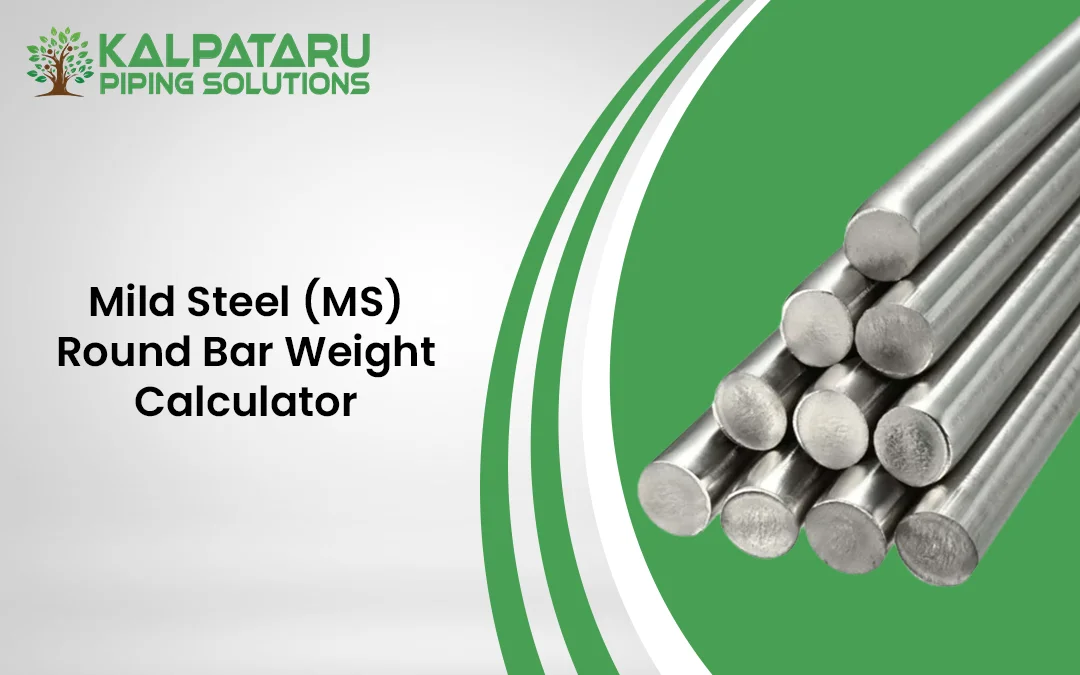
If you’re having trouble figuring out the weight of MS round bars, there’s a simple solution: an MS Round Bar Weight Calculator. It is a tool that considers the steel density, size & length to accurately determine how much metal you need for your project. It is easy to use & does all the calculations for you to buy a mild steel round bar. With the mild steel round bar weight chart, you can calculate and get the right amount of steel for your construction project without any wasted time or resources.
Mild steel (MS) weight calculation is essential across industries like construction, fabrication, and manufacturing. Knowing the accurate weight of MS materials helps in cost estimation, planning logistics, and reducing material wastage. Whether you’re buying raw materials or managing a project, precise weight calculation supports smarter decisions.
At Kalpataru Piping Solutions, we’ve created a user-friendly Steel Bar Weight Calculator to help you determine the exact weight of steel bars and allows you to take informed decision quickly.
Material
Note: Typical/average density values are used
Form
Width across flats
Thickness
Length
Advanced
Weight (kg)
0.00
Weight (lb)
0.00
Understanding Mild Steel Round Bars
Mild steel round bars are extensively used in many applications because of their versatility and good properties. They are made with a low-carbon steel that makes them piece of cake to weld, cut & shape. Generally, these MS round bars are used in construction, manufacturing, automotive, and general engineering for purposes like structural support, parts for machines, and shafts and fasteners.
A major characteristic of mild steel round bars is strength and durability, which makes them suitable for handling loads of a moderate nature and for withstanding the kinds of impacts that most of us would describe as mild to moderate. Their great ductility allows them to be formed into all kinds of shapes without breaking (and “bending” is definitely one of the shapes we form them into). Finally, MS round bars are cheap compared to most other kinds of steel, which makes them a cost-effective choice for many applications.
Mild steel round bars are recognized for the following:
Properties: Their strength, ductility, and weldability, particularly in the case of the common structural steel version, ASTM A36, which allows for low-cost production of steel components.
Applications: Everything from construction to automotive parts, tools, and a wide variety of other round-bar-based components.
Benefits: They are component materials that are strong yet easy to work with and versatile in application.
How To Calculate MS Round Bar Weight?
Calculating the weight of an MS round bar involves simple math and information from the bar itself. First, measure the length & diameter of the bar in millimeters. Use a specific formula for the type of metal to find its weight in grams for copper or steel. After calculating weight in grams, just convert it to kilograms or pounds. Knowing the weight of an MS bar is important for any project to use in applications, so ensure you have an accurate measurement before starting.
MS Round Bar Weight Calculation Formula
mm2 x 0.006165 = Weight in kilograms per meter
Mild Steel Round Bar Weight Chart
Product
Size (MM)
Length (MM)
Per Meter Weight (KG)
6 Meter Weight
MS Round Bar
6 mm
6000
0.22154
1.33
MS Round Bar
8 mm
6000
0.39385
2.36
MS Round Bar
10 mm
6000
0.61538
3.69
MS Round Bar
12 mm
6000
0.88165
5.32
MS Round Bar
14 mm
6000
1.20615
7.24
MS Round Bar
16 mm
6000
1.57538
9.45
MS Round Bar
18 mm
6000
1.99385
11.96
MS Round Bar
20 mm
6000
2.46154
14.77
MS Round Bar
25 mm
6000
3.84165
23.08
MS Round Bar
30 mm
6000
5.53846
33.23
MS Round Bar
35 mm
6000
7.53846
45.23
MS Round Bar
40 mm
6000
9.84615
59.08
MS Round Bar
45 mm
6000
12.46514
74.77
MS Round Bar
48 mm
6000
14.17846
85.07
MS Round Bar
50 mm
6000
15.38462
92.31
MS Round Bar
60 mm
6000
22..15385
132.92
MS Round Bar
65 mm
6000
26.00000
156.00
MS Round Bar
70 mm
6000
30.15385
180.92
MS Round Bar
80 mm
6000
39.38462
236.31
MS Round Bar
100 mm
6000
61.53846
369.23
MS Round Bar
120 mm
6000
88.61538
531.69
MS Round Bar
150 mm
6000
138.46154
830.77
MS Round Bar
200 mm
6000
246.15385
1476.92
MS Round Bar
250 mm
6000
384.61538
2307.69
Conclusion
MS Round Bar Weight Calculator simplifies the process of determining the weight of mild steel round bars. By providing the most accurate results based on length & diameter, it will allows users to easily convert weights into kilograms or pounds for efficient use in manufacturing and construction. To select right round bar manufacturer, it is important to consider key factors such as material grade, production quality, size availability, pricing, delivery options & customer feedback to ensure your project meets its quality and performance requirements.
Frequently Asked Questions About Mild Steel (MS) Round Bar Weight Calculator
What is the weight of MS round bar?
The weight of an MS round bar depends on its size and length. It can be calculated using the formula: Weight = (π/4) x Diameter² x Length x Density of Steel.
How to calculate MS round bar weight?
To calculate the weight of an MS round bar, use the formula: Weight = (π/4) x Diameter² x Length x Density of Steel (approximately 7.85 gm/cm³).
What is MS round bar?
An MS round bar is a cylindrical bar made from mild steel, commonly used in construction, manufacturing, and engineering due to its strength, flexibility, and cost-effectiveness.
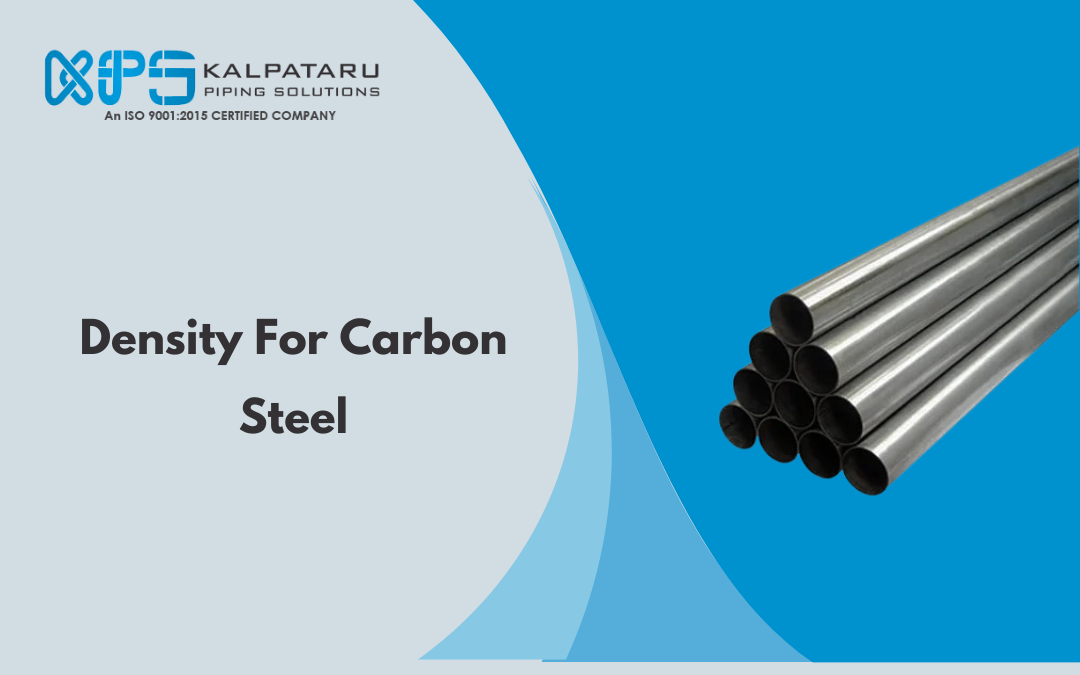
Carbon steel, an alloy of iron and carbon, is a popular choice for many industries due to its strength, durability, and affordability. The amount of carbon in the steel determines its hardness and strength—more carbon makes it harder but less workable. This product can be used in various industrial applications like construction, automobiles, mechanical components, and tools & technology.
While carbon steel is easy to weld and shape, it can rust if not protected. One key factor to consider when using carbon steel is its density, which affects its weight and behavior in different applications. Understanding carbon steel density and its impact on properties is crucial for selecting the right material for your needs. Explore more about carbon steel density and how it influences performance in our blog post.
What Is the Density of Carbon Steel In kg m3, lb in3?
Density is a crucial factor in industrial applications, representing mass per unit volume. The density of carbon steel is approximately 7850 kg/m³ (0.284 lb/in³), making it lighter than stainless steel. This density can vary with alloying elements, typically ranging from 7.75 g/cm³ (0.281 lb/in³) to 8.05 g/cm³ (0.291 lb/in³). High-carbon steel is denser than low-carbon steel. Compared to aluminum, carbon steel is heavier, but it is lighter than stainless steel and copper alloys. The main difference between carbon steel and mild steel lies in their carbon content: carbon steel contains 0.05 to 2.1% carbon, making it more robust but less ductile, while mild steel has 0.05 to 0.25% carbon. Medium carbon steel has 0.30 to 0.60% carbon.
Explore more about the density of carbon steel in kg/m³ and lb/in³ and how it impacts performance in our latest blog post!
How Density Impacts Carbon Steel Properties?
The density of carbon steel impacts various properties such as strength, malleability, ductility, electrical conductivity, heat capacity, and thermal expansion rate. Higher-density materials generally have higher strength-to-weight ratios and are more resistant to deformation, requiring more energy to deform under compressive forces. They also exhibit lower electrical conductivity due to increased resistivity and have higher heat capacities, absorbing more heat energy before temperature changes. Additionally, higher-density materials tend to have higher thermal expansion rates, expanding more when exposed to temperature or pressure increases.
Formula to Measure the Density of Carbon Steel lb/in3?
Steel density in lb/in³ is not typically calculated directly but can be determined by multiplying the density in g/cm³ by a conversion factor of 0.036127. The formula is: Density in lb/in³ = (Mass/Volume) x 0.036127. The density of steel is approximately 0.284 lb/in³ or 7.8 g/cm³.
Covert Carbon Steel Density of g cm3 in kg m3
Standard units for mass and volume are kilogram and cubic meter (m³). However, if laboratory measurements are in grams and cubic centimeters (cm³), users can convert to carbon steel density in kilograms per cubic meter (kg/m³) by multiplying by 1000. 1 kg/m³ = 0.000001 g/cm³.
Convert Density of Carbon Steel lbs/in3 to kg/m3
In the US, density is often measured in Imperial units (lb/pounds). Users can convert pounds per cubic inch (lb/in³) directly to kilograms per cubic meter (kg/m³) using the conversion factor:
1 lb/in³ = 27679.9 kg/m³
Density Low Carbon Steel Measurement
The density of low carbon steel can vary slightly based on the grade and composition, usually ranging from 7.75 g/cm³ to 8.05 g/cm³ (7.85 lb/in³ to 0.291 lb/in³).
Carbon Steel Grade
Density in kg/m3
Density in g/m3
Density in lb/in3
AISI 1005
7850
7.85
490
AISI 1006
7850
7.85
490
AISI 1008
7850
7.85
490
AISI 1010
7850
7.85
490
AISI 1011
7850
7.85
490
AISI 1012
7850
7.85
490
AISI 1013
7850
7.85
490
AISI 1015
7850
7.85
490
AISI 1016
7850
7.85
490
AISI 1017
7850
7.85
490
Density of High Carbon Steel
The density of high carbon steel can vary based on the grade and composition, typically ranging from 7.75 to 8.05 g/cm³ (0.282 to 0.291 lb/in³). This is slightly higher than the density of pure iron, which is around 7.85 g/cm³.
Carbon Steel Grade
Density in kg/m3
Density in g/m3
Density in lb/in3
AISI 1055
7810
7.81
488
AISI 1060
7810
7.81
488
AISI 1064
7810
7.81
488
AISI 1069
7810
7.81
488
AISI 1070
7810
7.81
488
AISI 1078
7810
7.81
488
AISI 1085
7810
7.81
488
AISI 1095
7810
7.81
488
AISI 1141
7810
7.81
488
AISI 1151
7810
7.81
488
Density of Medium Carbon Steel
The density of medium carbon steel varies depending on its specific grade and composition but typically falls within the range of 7.75 to 8.05 g/cm³ (0.282 to 0.291 lb/in³).
Carbon Steel Grade
Density in kg/m3
Density in g/m3
Density in lb/in3
AISI 1005
7830
7.83
489
AISI 1010
7830
7.83
489
AISI 1013
7830
7.83
489
AISI 1018
7830
7.83
489
AISI 1019
7830
7.83
489
AISI 1021
7830
7.83
489
AISI 1023
7830
7.83
489
AISI 1026
7830
7.83
489
AISI 1110
7830
7.83
489
AISI 1118
7830
7.83
489
Conclusion
In summary, the density of carbon steel has a significant impact on its properties like strength-to-weight ratio, flexibility, electrical conductivity, heat capacity, and thermal expansion rate. Engineers and designers in various fields, such as automotive and construction, use this understanding to choose the right carbon steel grade for their specific needs, considering both cost and performance requirements. With this knowledge, they can make informed decisions that balance the material’s properties with project goals, ensuring optimal performance in diverse applications.
Connect with us Kalpataru Piping Solution now for your business requirements.
FAQ
What is the density of carbon steel kg m3?
The density of carbon steel is approximately 7850 kg/m³, which is less than that of stainless steel. This density can vary slightly depending on the specific grade and alloying elements, typically ranging within this value. Additionally, the coefficient of thermal expansion for carbon steel generally ranges from 10×10−610 \times 10^{-6}10×10−6 to 17.3×10−617.3 \times 10^{-6}17.3×10⁻⁶ m/(m·°C).
What is the weight of carbon steel per m3?
The density of carbon steel is approximately 7850 kg/m³. For a carbon steel sheet with a 1 m² surface area and 1 mm thickness, the weight would be around 7.85 kg.
What is the density of high carbon steel in kg m3?
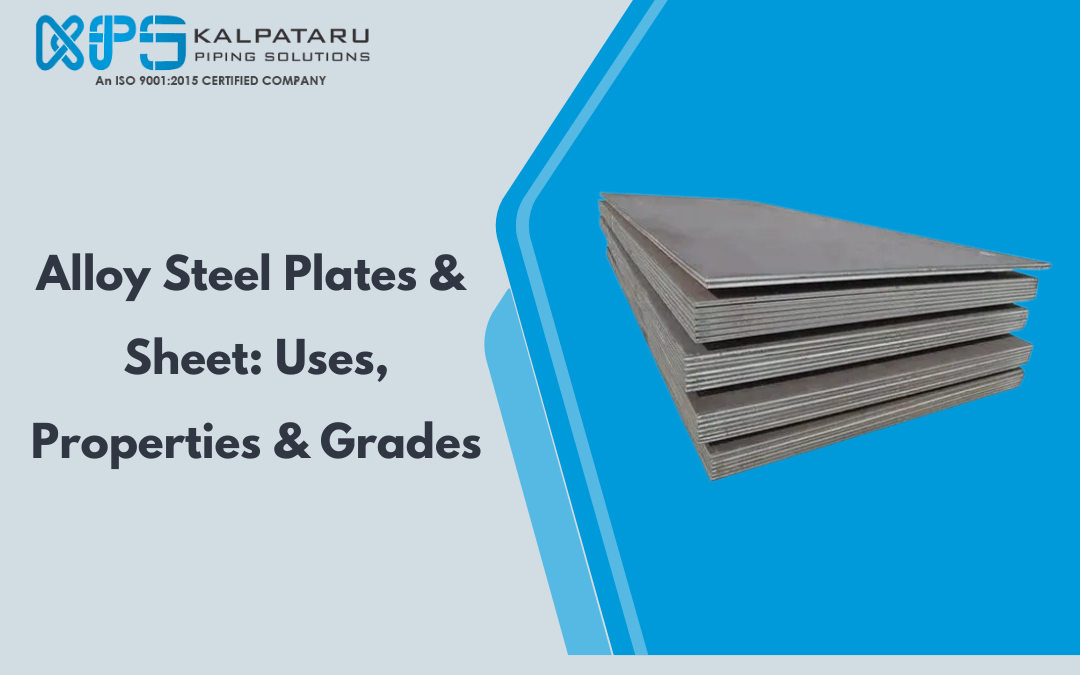
Alloy steel plates and sheets are essential in many industries like construction and aerospace. They’re special because they’re strong, durable, and come in different types. This article will explain what they are, how they’re used, and grades etc.
What is Alloy Steel Plate?
Alloy steel plate is composed of different elements such as iron, carbon, manganese, chromium, nickel, molybdenum, and vanadium. The specific combination of these elements gives the metal unique properties that make it incredibly useful in many industries. For example, some alloys have a higher resistance to corrosion than others. This makes them ideal for use in chemical and medical equipment where corrosive resistance is needed.
Why to choose Alloy Steel Plates?
Alloy steel plates, especially ASTM A204 Alloy Steel Plates, are preferred in many industries for their durability, strength, affordability, and corrosion resistance. They handle heavy loads and extreme conditions well, making them ideal for various industry applications. With excellent weldability and machinability, they are versatile and cost-effective compared to stainless steel. They also require minimal maintenance, are eco-friendly, and fully recyclable, making them sustainable choices for various applications.
Factors Affecting Alloying
Alloying for steel alloy plates and sheets is influenced by several factors, including desired properties, application requirements, and cost considerations. Manufacturers carefully select alloying elements such as manganese, chromium, nickel, and molybdenum to enhance specific characteristics such as strength, durability, corrosion resistance, and heat resistance. The proportions of alloy steel sheet metal are tailored to meet the performance demands of various industrial applications, ensuring that the resulting alloy steel exhibits optimal mechanical and physical properties. Additionally, factors like availability and market demand also play a role in determining the alloying process to strike a balance between performance and affordability, ultimately producing high-quality alloy steel plates and sheets suited for diverse applications.
How To Select the Right Alloy Steel Plate?
Selecting the right alloy steel plate and sheet involves considering several factors to ensure it meets the specific requirements of your application. Here’s a step-by-step guide to help you make the right choice:
1. Define Application Requirements: Understand the application’s demands, including mechanical properties, corrosion resistance, temperature resistance, and other environmental factors. 2. Thickness and Dimensional Requirements: Consider the thickness and dimensions of the plate or sheet needed for your project. Ensure the selected material is available in the required sizes. 3. Manufacturing Process: Consider the manufacturing processes involved, such as welding, machining, forming, and heat treatment. Choose a steel grade that is compatible with the intended fabrication methods. 4. Standards and Specifications: Check applicable industry standards and specifications to ensure compliance with quality and performance requirements. ASTM, AISI, SAE, and API standards are commonly used for alloy steel materials.
By carefully considering these factors, you can select the right alloy steel plate and sheet that best meets the requirements of your specific application.
Grades Of Alloy Steel Plate & Sheet
Alloy steel plates and sheets can be broadly categorized into two main types based on the amount of alloying elements they contain:
Low-alloy Steel Grades:
ASTM A36: Common construction steel with good strength and formability.
ASTM A572: High-strength, weldable steel for bridges and buildings.
ASTM A204: Versatile grade with good overall properties for various applications.
High-alloy Steel Grades:
Nickel Steel: High strength and toughness for demanding applications.
Chromium Steel: Excellent corrosion resistance for harsh environments.
Molybdenum Steel: Maintains strength at high temperatures, ideal for engines.
Stainless Steel: A high-alloy steel with superior corrosion resistance (contains a minimum of 10.5% chromium).
Properties of Alloy Steel Plate & Alloy Steel Sheet
Alloy steel plates and sheets are a type of metal known for their exceptional strength, durability, and versatility. Alloy steel sheet metal is made by combining steel with other elements, such as chromium, nickel, manganese, and molybdenum. This unique composition gives them several advantages over regular carbon steel, making them ideal for a wide range of demanding applications.
Here are some of the key properties of alloy steel plates and sheets:
High Strength: Alloy steel plates and sheets have a much higher strength than regular carbon steel. This is due to the presence of the additional elements, which help to strengthen the steel’s crystal structure.
Durability: Alloy steel plates and sheets are highly resistant to wear and tear. This makes them ideal for use in applications where the metal will be exposed to a lot of stress and strain, such as in bridges, buildings, and machinery.
Toughness: Alloy steel plates and sheets are also very tough. This means that they can absorb a lot of energy before breaking. This is important for applications where the metal may be subjected to impact forces, such as in vehicles and armor.
Corrosion Resistance: The addition of certain elements, such as chromium, can significantly improve the corrosion resistance of alloy steel plates and sheets. This makes them a good choice for use in applications where the metal will be exposed to moisture or chemicals, such as in ships and pipelines.
Weldability: Alloy steel plates and sheets can be welded relatively easily. This makes them a good choice for applications where the metal needs to be joined together, such as in bridges and buildings.
Machinability: The machinability of alloy steel plates and sheets varies depending on the specific alloy. However, in general, they can be machined into complex shapes.
Versatility: Alloy steel plates and sheets are available in a wide variety of grades, each with its own unique properties. This makes them a versatile material that can be used in a wide range of applications.
Overall, alloy steel plates and sheets are a valuable material for many industrial applications. Their combination of strength, durability, toughness, corrosion resistance, weldability, and machinability makes them a good choice for a wide variety of projects.
Uses of Alloy Steel Plate & Sheet
Alloy steel plates and sheets find extensive use across a wide range of industries due to their exceptional properties and versatility. Some common uses include:
Construction and Infrastructure: Alloy steel plates are utilized in the construction of bridges, buildings, and other infrastructure due to their high strength, durability, and ability to withstand heavy loads.
Automotive and Transportation: Alloy steel plates are employed in the automotive industry for manufacturing components such as chassis, axles, and engine parts, where strength and impact resistance are crucial.
Aerospace and Defense: In aerospace and defense applications, alloy steel plates are used for manufacturing aircraft structures, missile components, and armored vehicles due to their strength-to-weight ratio and ability to withstand extreme conditions.
Energy Sector: Alloy steel plates are essential in the energy sector for constructing pipelines, pressure vessels, and drilling equipment used in oil, gas, and renewable energy projects, where corrosion resistance and high-pressure tolerance are critical.
Machinery and Manufacturing: Alloy steel plates find use in machinery manufacturing for producing gears, shafts, and tooling equipment due to their machinability, weldability, and wear resistance.
Marine Industry: In the marine industry, alloy steel plates are employed for shipbuilding and offshore structures due to their corrosion resistance and ability to withstand harsh marine environments.
Mining and Heavy Equipment: Alloy steel plates are used in the mining industry for manufacturing heavy equipment and machinery components due to their toughness, durability, and resistance to abrasion and impact.
Infrastructure and Transportation: Alloy steel plates are also used in railroads and infrastructure projects for manufacturing rail tracks and structural components, where high strength and durability are required.
Overall, alloy steel plates and sheets serve a wide array of applications across various industries, contributing to the reliability, safety, and efficiency of numerous industrial processes and infrastructure projects.
Kalpataru Piping Solutions – Top Alloy Steel Plate Supplier
Kalpataru Piping Solutions stands as the leading source for alloy steel plate supplies, offering top-notch quality and a comprehensive range of products to meet diverse industrial needs. With a commitment to excellence and customer satisfaction, Kalpataru Piping Solutions provides reliable solutions for various applications across industries such as construction, automotive, aerospace, energy, and more. Leveraging extensive expertise and a robust supply chain, they ensure timely delivery and competitive pricing, making them the preferred choice for alloy steel plate sourcing. Trust Kalpataru Piping Solutions as your go-to supplier for high-quality alloy steel plates tailored to your specific requirements.
Connect with us now for your business needs & get the high quality products.