Duplex 2205 Vs 316 Stainless Steel

Duplex 2205 Vs 316 Stainless Steel

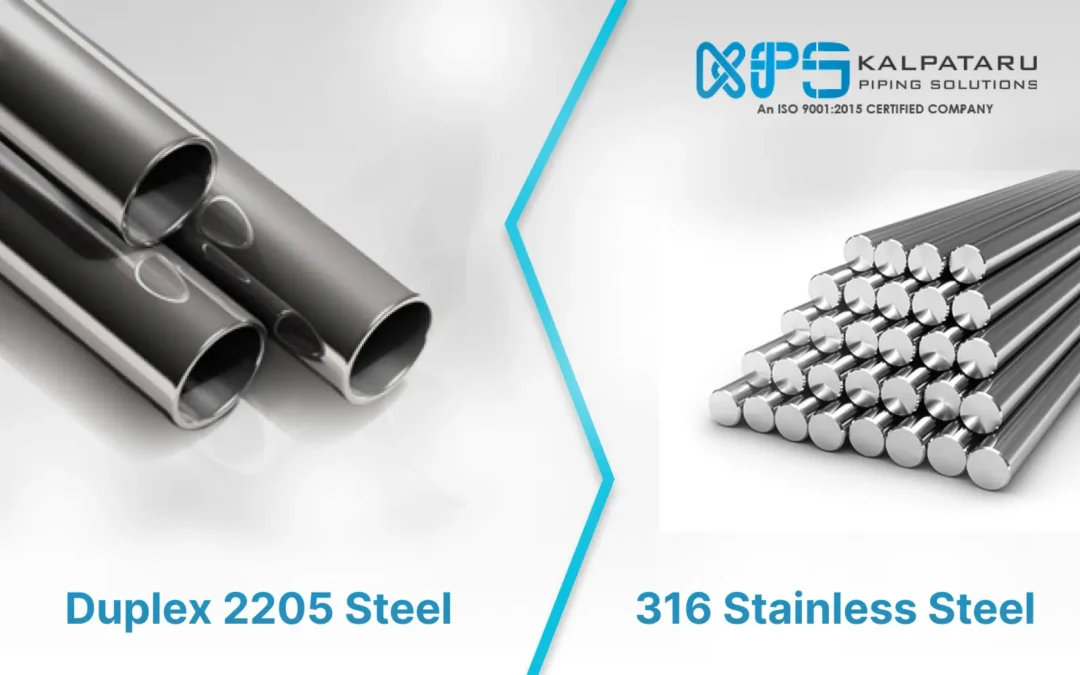
2205 duplex & 316 stainless steel are mainly referred to as marine grade of stainless steel material, making them suitable for casting components used in areas with high chloride exposure. However, 2205 duplex stainless steel contains higher levels of chromium, nickel, molybdenum, and nitrogen as compared to 316 SS to offer higher resistance to corrosion.

In this blog, giving a brief overview of the differences between duplex 2205 and 316 stainless steel for understanding their distinct properties and applications.

Overview of 2205 Duplex Stainless Steel

2205 duplex stainless steel is a type of stainless steel manufactured by a two phase microstructure containing both ferrite and austenite, offering high strength and excellent corrosion resistance. It’s highly resistant to pitting, crevice, and stress corrosion cracking, particularly in chloride-rich environments.

At Kalpataru Piping Solution, leading duplex stainless steel supplier offering high quality products designed with duplex 2205 grade by following international standards to clients at best affordable prices.

Explore Kalpataru Piping Solutions for top-grade duplex steel products. We offer durable solutions with superior corrosion resistance, combining ferritic and austenitic steels.

Comparing Key Features of Duplex 2205 & 316 Stainless Steel

  • Chemical Composition:
    2205 duplex stainless steel contains higher amounts of chromium, manganese, and nitrogen as compared to grade 316 that offer high superior strength. 316 stainless steel contains amounts of molybdenum and nickel, enhancing its corrosion resistance, particularly in high temperature applications.
  • Weldability:
    Duplex 2205 can easily be weldable than grade 316 due to its lower levels of molybdenum and nickel, which facilitate fusion welding and reduce the risk of cracking or porosity. In contrast, grade 316 requires preheating before welding to mitigate the risk of cracking, especially given its higher carbon content. Additionally, welding grade 316 may necessitate post-weld heat treatment (PWHT), adding extra cost and time to the fabrication process.

Cost Comparison of Duplex 2205 & 316 SS

2205 duplex stainless steel is generally more expensive due to its higher alloy content and enhanced properties, such as greater strength and corrosion resistance. Prices of duplex 2205 may vary on the basis of forming and size of the material. We offer duplex SS 2205 products to clients at affordable prices.

Conclusion

Both duplex 2205 stainless steel & 316 stainless steel provide excellent corrosion resistance, but they each have unique benefits suited to different applications. By understanding the difference between these materials in terms of properties & applications, you can make an informed decision that fits your needs. Connect to us for guidance in selecting the right material for your industrial applications.

What Is Super Duplex Stainless Steel Material?

What Is Super Duplex Stainless Steel Material?

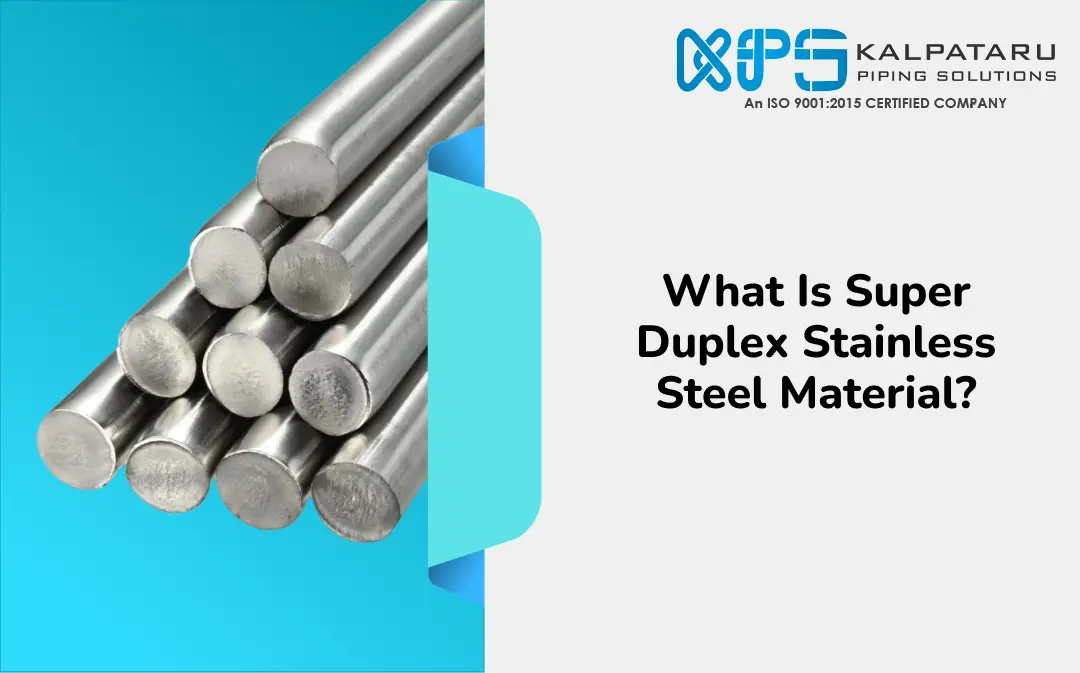
‘Super duplex’ refers to a group of high-performance stainless steels with approximately 25% chromium content. True to its name, this alloy features a microstructure composed of both austenitic and ferritic steel grains. This unique duplex structure gives Super Duplex stainless steels their distinctive physical and mechanical properties.Super duplex stainless steel is a high-performance alloy distinguished by its exceptional strength and corrosion resistance. It features a unique microstructure that combines both austenitic and ferritic stainless steel phases, providing an outstanding balance of mechanical and chemical properties. Typically containing around 25% chromium, super duplex steel excels in resisting corrosion, especially in chloride-rich environments. The addition of molybdenum and nitrogen further enhances its resistance to pitting and stress corrosion cracking. With its high tensile strength and toughness, super duplex stainless steel is ideally suited for demanding applications, including those in the oil and gas industry, chemical processing, and marine environments. Its robust properties make it a preferred choice for high-pressure and high-temperature conditions.

History of Super Duplex Materials

The journey of duplex stainless steel began in Sweden, where it was initially developed for the sulfite paper industry to address corrosion issues caused by chloride-laden cooling waters. While these early duplex alloys represented a significant advancement, they did not fully meet the industry’s demands, leading to further innovation.

The next step in this evolution was the development of super duplex stainless steel. The pioneering alloy in this category, Ferralium 255, was created by Langley Alloys in the 1960s. However, the term “super duplex” itself did not emerge until the 1980s. It was used to describe highly alloyed, high-performance duplex steel with exceptional pitting resistance, determined by a formula of Cr% + 3.3Mo% + 16N% > 40. Over time, various grades of super duplex stainless steel have been developed, including the introduction of Super Duplex F61 in 1969.

Uses of Super Duplex Stainless Steel

Super duplex stainless steel, including grades like Super Duplex 2507 and UNS S32750, is highly valued for its exceptional resistance to acids, acid chlorides, and caustic solutions, making it ideal for aggressive environments in the chemical, petrochemical, pulp, and paper industries. Its superior resistance to stress corrosion cracking and enhanced mechanical properties set it apart from more common austenitic stainless steels, such as the 3xx series, and standard duplex steels like S32205.

Super Duplex material is commonly used in demanding applications, including pumps, valves, fasteners, pipework, and connectors, particularly in the oil and gas, petrochemical, chemical, pulp, and paper industries. Langley Alloys offers an extensive range of super duplex materials, including solid bars up to 16 inches (406.4mm) in diameter, plates up to 3 inches thick, and access to pi

Super-Duplex stainless steels and their characteristics

The term “Super-Duplex” was first used in the 1980’s to denote highly alloyed, high-performance Duplex steel with a pitting resistance equivalent of >40 (based on Cr% + 3.3Mo% + 16N%). With its high level of chromium, Super-Duplex steel provides outstanding resistance to acids, acid chlorides, caustic solutions and other environments in the chemical/petrochemical, pulp and paper industries, often replacing 300 series stainless steel, high nickel super austenitic steels and nickel-based alloys. The chemical composition based on high contents of chromium, nickel and molybdenum improves intergranular and pitting corrosion resistance. Additions of nitrogen promote structural hardening by interstitial solid solution mechanism, which raises the yield strength and ultimate strength values without impairing toughness. Moreover, the two-phase microstructure guarantees higher resistance to pitting and stress corrosion cracking in comparison with conventional stainless steels. From the introduction of its first-generation, Duplex steel has seen a steady increase in popularity. Recently, the production of high strength, corrosion resistant super-duplex coil has been implemented in the marine and chemical industries, architecture and mast riggings, wire lines, lifting and pulley equipment and well service strands. In fact, development of wire processing techniques has enabled the production of steel wires down to 1mm in diameter.

Welding Super Duplex Stainless Steels

Welding duplex and super duplex stainless steels presents unique challenges compared to conventional austenitic alloys. The heat-affected zone (HAZ) of these steels can experience issues such as reduced toughness, post-weld cracking, and diminished corrosion resistance. To address these problems, skilled welders are needed to perform welding using techniques like SAW, TIG, and MIG. Additionally, proper post-welding processing is crucial to maintain the material’s integrity.

Corrosion Resistance of Super Duplex Stainless Steels

The enhanced corrosion resistance of duplex and super duplex stainless steels is due to their alloy composition, which includes chromium, nickel, molybdenum, nitrogen, and tungsten. These elements significantly improve resistance to pitting, with resistance values reaching as high as 45. These alloys are also suitable for use at elevated temperatures without suffering from oxidation corrosion and exhibit superior resistance to various alkaline, acidic, and neutral solutions.

Cutting Speed for Super Duplex Stainless Steels

Machining duplex and super duplex stainless steels requires careful consideration due to their tendency to work harden. Given their high strength and low thermal conductivity, it is essential to use robust, rigid machinery along with high-performance cutting inserts. Machining these alloys also necessitates the use of ample coolant to manage heat effectively. Employing the correct speeds and feeds will ensure efficient and effective machining of duplex and super duplex stainless steels.

Conclusion

Super duplex stainless steels offer exceptional strength, corrosion resistance, and durability, making them ideal for demanding applications in industries like oil and gas, chemical processing, and marine environments. Their unique microstructure provides superior performance compared to traditional materials, despite the challenges in welding and machining. As technology advances, super duplex steels will continue to be a top choice for high-pressure and harsh environment applications. 

Kalpataru Piping Solutions provides a comprehensive range of super duplex materials, ensuring access to high-quality products for even the most challenging needs.

FAQ

Difference Between Duplex and Super Duplex Stainless Steels

The key difference between duplex and super duplex stainless steels lies in their chromium content. Duplex stainless steels typically contain around 22% chromium, while super duplex stainless steels are alloyed with approximately 25% chromium. This increased chromium content in super duplex steels enhances their resistance to pitting corrosion, offering superior protection in harsh environments compared to standard duplex stainless steels.

What is the ASTM grade for super duplex stainless steel?

The ASTM grade for super duplex stainless steel 1.4501 is ASTM A182 F55, also known as UNS S32760. This grade offers exceptional resistance to seawater, surface corrosion, and hole and crevice corrosion. It is also suitable for use in sulfuric acid environments. ASTM A182 F55 is listed under the AISI F55 classification, reflecting its high-performance characteristics.

What is the yield strength of super duplex stainless steel?

Super duplex stainless steel typically offers a high mechanical strength with a yield strength of up to 600 MPa. It combines this strength with excellent ductility and exceptional corrosion resistance, making it suitable for challenging marine environments and diverse oil and gas production settings.

Is super duplex stainless steel better than ss316?
Yes, super duplex stainless steels offer significantly higher strength and corrosion resistance compared to SS316. While SS316 is a widely used austenitic stainless steel, super duplex stainless steels, with their mixed austenitic and ferritic microstructure, provide superior performance in demanding environments. This makes super duplex stainless steel a better choice for applications requiring enhanced strength and resistance to corrosion.
Duplex Steel Pipes: A Comprehensive Guide

Duplex Steel Pipes: A Comprehensive Guide

Duplex Steel Pipes have gained significant popularity in recent years due to their impressive durability, strength, and corrosion resistance. They are an excellent choice for various applications in the oil and gas, chemical, and petrochemical industries. If you are considering using duplex steel pipes for your project, there are some key points you should be aware of. In this blog post, we will cover everything you need to know about duplex steel pipes.

What is Duplex Steel?

Duplex steel is an alloy with approximately 50% iron content, also known as austenitic-ferritic stainless steel. It is characterized by its high strength, excellent corrosion resistance, good weldability, and outstanding formability. Additionally, duplex steel remains tough even at cryogenic temperatures and retains its mechanical properties in acidic and alkaline environments up to 700°C. These attributes make it an ideal material for industrial applications such as heat exchangers, tanks, and pipes in the chemical processing industry.

Why Use Duplex Pipes?

Duplex pipes offer numerous advantages over other types of pipes, making them a popular choice in various industries. Their high strength-to-weight ratio makes them ideal for offshore applications where weight is a concern. Additionally, their exceptional corrosion resistance makes them well-suited for corrosive environments, such as chemical plants and oil refineries.

Duplex steel pipes perform exceptionally well in salty, acidic, and caustic environments where other metals may fail. They are highly resistant to cracking and pitting while maintaining high strength levels even at cryogenic temperatures. Their excellent mechanical properties, combined with high flexibility and toughness, help reduce fatigue in dynamically loaded components like shafts and housings.

Moreover, their good weldability enhances the material’s fabrication properties, making them an ideal choice for applications such as oil and gas pipelines, water treatment systems, and process piping networks. Duplex steel pipes also have excellent fatigue resistance, enabling them to withstand repeated stress without cracking or breaking. This, combined with their corrosion resistance, makes them perfect for high-pressure applications.

Benefits of Duplex Steel Pipes

  • High Strength-to-Weight Ratio: Duplex stainless steel pipes are strong yet lightweight, which is particularly beneficial for offshore and other weight-sensitive applications.
  • Excellent Corrosion Resistance: These pipes are highly resistant to corrosion, making them ideal for harsh environments like chemical plants and oil refineries.
  • Good Mechanical Properties: They offer high flexibility and toughness, reducing fatigue in dynamically loaded components, such as shafts and housings. This makes duplex steel pipes suitable for high-stress applications.

Manufacturing Process of Duplex Pipes

Duplex steel pipes are renowned for their strength and corrosion resistance, but their manufacturing process is more complex and costly compared to other stainless steel pipes like 304 or 316 grades.

Cold Forming for Duplex Pipes

Duplex steel is challenging to work with due to its high strength. During manufacturing, cold working techniques such as cold rolling or cold drawing are commonly used. For larger pipes, hot forming may be employed. The process requires more force than shaping standard stainless steel, increasing production costs due to the additional force needed to work with this stronger, harder material.

Cold Forming for Duplex Pipes

Duplex steel is challenging to work with due to its high strength. During manufacturing, cold working techniques such as cold rolling or cold drawing are commonly used. For larger pipes, hot forming may be employed. The process requires more force than shaping standard stainless steel, increasing production costs due to the additional force needed to work with this stronger, harder material.

Duplex Pipes Physical Properties

Duplex steel pipes are made from a blend of chromium, nickel, and molybdenum. They are known for their high strength and excellent corrosion resistance. Duplex steel pipes are non-magnetic and exhibit superior mechanical properties, including formability, ductility, toughness, weldability, and machinability. They excel in handling heat, resisting impacts, and providing smooth flow. These pipes are ideal for demanding applications in construction, chemical processing, and the oil and gas industries. Their robust and versatile nature makes them a reliable choice for challenging environments.

Strengths and Weaknesses of Duplex Stainless Steel

Standard austenitic steels like ferritic 430 and austenitic 1.4301 (304) are relatively simple to manufacture, as they generally consist of a single phase—either ferrite or austenite. While these steels are widely used and effective, they have individual weaknesses:

Austenitic Steels:

    • Low Strength: Approximately 200 MPa in solution-annealed condition.
    • Low Resistance to Stress Corrosion Cracking: This can be a significant drawback in certain applications.
    • Price Fluctuations: The nickel content in austenitic steels can lead to unpredictable price changes.

Ferritic Steels:

    • Low Strength: Slightly higher than austenitic steels, around 250 MPa.
    • Weldability Issues: Difficult to weld in thick sections.
    • Poor Low-Temperature Toughness: Not suitable for very low temperatures.

In contrast, duplex steel is designed to balance austenite and ferrite phases, offering several advantages:

Higher Strength: Duplex grades typically range from 400 to 550 MPa in 0.2% PS, allowing for reduced section thickness and weight. This is particularly beneficial for:
Pressure Vessels and Storage Tanks
Structural Applications (e.g., bridges)

Improved Weldability: While not as straightforward as austenitic steels, duplex steels are easier to weld than ferritic steels, especially in thick sections.

Enhanced Toughness: Duplex steels perform better at low temperatures compared to ferritic steels, with toughness extending to as low as minus 50°C and sometimes reaching minus 80°C.

Resistance to Stress Corrosion Cracking: Duplex steels offer better resistance to stress corrosion cracking than standard austenitic steels, making them suitable for:

    • Hot Water Tanks
    • Brewing Tanks
    • Process Plants
    • Swimming Pool Structures

Duplex Stainless Steel Pipe Grades

  • Grade 2205: 2205 Grade is the most common duplex  steel grade, renowned for its excellent corrosion resistance and high strength. It is widely used in various applications due to its balanced properties.
  • Grade 2507: Often referred to as super duplex,2507 grade offers superior corrosion resistance and strength, making it ideal for extremely harsh environments and high-pressure applications.
  • Grade 2304: A lean duplex grade, 2304 provides good performance at a more economical cost. It is suitable for applications where moderate corrosion resistance and strength are required.


Duplex and Super Duplex Stainless Steel: Corrosion Resistance and Applications

Corrosion Resistance

Duplex and super duplex stainless steels are highly resistant to corrosion. However, welding these materials can be challenging. The Heat-Affected Zone (HAZ) may experience reduced toughness, increased risk of cracking, and decreased corrosion resistance due to the high temperatures involved in welding.

To achieve strong and corrosion-resistant welds, use suitable techniques such as Submerged Arc Welding (SAW), Tungsten Inert Gas (TIG) welding, or Metal Inert Gas (MIG) welding. Proper post-welding treatment is also crucial to maintain the durability and performance of these alloys.

Cutting Speed for Duplex and Super Duplex Steel Pipe 

Cutting duplex and super duplex stainless steels can be difficult due to their high strength and tendency to harden. Effective machining requires robust, rigid machines and high-performance cutting tools. Adequate coolant is necessary to manage heat and ensure smooth cutting. Using the correct cutting speeds and feeds is essential for efficient machining and maintaining the quality of the cut.

Industrial Applications

  • Duplex Stainless Steel: Valued for its high strength and lightweight properties, duplex stainless steel is ideal for applications such as pressure vessels and structural components. Its excellent resistance to stress corrosion cracking makes it suitable for processing plants, water tanks, and various chemical processing environments. Other applications include heat exchangers, power generation, pharmaceuticals, and petrochemicals.
  • Super Duplex Stainless Steel: Offering even greater strength and corrosion resistance, super duplex stainless steel is used in demanding environments like power plants, chemical industries, heat exchangers, boilers, and pressure vessels. Its superior durability makes it a reliable choice for extreme conditions where both high strength and exceptional resistance are essential.

Applications of Duplex Steel Pipes

Duplex steel pipes are highly versatile and find application across a range of industries due to their exceptional durability and corrosion resistance. Their robust properties make them suitable for:

  • Oil and Gas Extraction: Duplex steel pipes are commonly used in the extraction and transportation of oil and gas, where their strength and resistance to harsh environments are crucial.
  • Chemical and Petrochemical Industries: They are used in chemical production equipment and heat exchangers for petrochemical plants, where durability and resistance to corrosive substances are essential.
  • Food Processing: Duplex steel pipes are utilized in food processing systems due to their ability to withstand rigorous conditions and maintain hygiene standards.
  • Marine Applications: Their resistance to seawater corrosion makes them ideal for offshore drilling platforms and marine vessels.
  • Power Generation: They are used in turbines and other components of power generation systems where high strength and resistance to high temperatures are required.

Conclusion

Duplex steel pipes are a superior choice for numerous applications due to their high strength, durability, and excellent corrosion resistance. Combining the benefits of austenitic and ferritic properties, duplex steel offers a reliable solution for tubing and piping needs. Understanding the advantages of duplex steel and its various applications will help you make informed decisions for your projects. Be sure to consult with experts who can assist in selecting the appropriate duplex steel grade and provide guidance on its maintenance to ensure optimal performance and longevity.

FAQ

What Are the Grades of Duplex Steel Pipes?

Common grades of duplex steel pipes include UNS S31803 and UNS S32205, known for their high strength and corrosion resistance.

What is the pressure rating for duplex pipes?

Duplex pipes typically have pressure ratings ranging from 3000 to 6000 psi, depending on the pipe size and schedule.

What are the thickness options for duplex pipes?
Duplex pipes typically range in thickness from 1/8 inch to 2 inches, depending on the pipe size and application.
Duplex Stainless Steel vs 316 | Kalpataru Piping Solutions

Duplex Stainless Steel vs 316 | Kalpataru Piping Solutions

Stainless steel is famous for resisting rust, mainly because of its chromium content. There are different types of stainless steel, including Ferritic, Martensitic, Austenitic, and Duplex. Duplex stainless steel mixes features of both ferritic and austenitic steels, giving it high strength and good resistance to stress and corrosion. It’s ideal for tough conditions and demanding applications.

In contrast, 316 stainless steel is a type of austenitic steel known for its excellent resistance to rust, especially in salty or acidic environments. It’s often used where there’s a lot of exposure to corrosive materials.

Here in this blog we will learn about how Duplex stainless steel and 316 stainless steel are different. Understanding these differences will help you pick the right stainless steel for your needs.

What is Duplex Stainless Steel?

Duplex stainless steel has a unique two-phase structure, mixing ferritic and austenitic grains. When cooled to room temperature, about half of the ferritic grains turn into austenitic grains. During melting, the steel first turns into the ferritic phase. For example, 2205 duplex stainless steel (UNS S32750) has this dual-phase structure, combining both types of stainless steel. This unique structure gives duplex stainless steel a range of advantageous properties, including:

  • High Strength: Duplex stainless steel is generally stronger than other types of stainless steel, making it suitable for applications requiring high strength and durability.
  • Corrosion Resistance: It offers excellent resistance to chloride stress corrosion cracking and pitting, making it ideal for use in aggressive environments.
  • Cost-Effectiveness: Duplex stainless steel often has lower levels of expensive alloying elements like nickel, which can make it more cost-effective compared to austenitic grades.
  • Good Toughness: Despite its high strength, duplex stainless steel maintains good toughness and ductility, making it easier to fabricate and weld.
  • Heat Resistance: It performs well in high-temperature environments, retaining strength and stability at elevated temperatures.

Duplex stainless steel is often used in chemical processing, oil and gas industries, and marine environments because it’s strong and resistant to rust.

Get in touch with us for more details.

    Fill the Captcha:
    [hidden post-url default:shortcode[_post_url]]

    What is 316 Stainless Steel?

    316 stainless steel is a type of austenitic stainless steel known for its excellent corrosion resistance and high strength. It is often used in environments where exposure to harsh conditions, such as seawater or acidic chemicals, is common. Here are key characteristics of 316 stainless steel:

    • Composition: 316 stainless steel typically contains 16-18% chromium, 10-14% nickel, and 2-3% molybdenum. The addition of molybdenum enhances its resistance to chloride-induced corrosion.
    • Corrosion Resistance: It offers superior resistance to corrosion and pitting compared to 304 stainless steel, especially in marine and chemical environments. Its resistance to chloride and high temperatures makes it suitable for applications in chemical processing, marine environments, and more.
    • Strength and Toughness: 316 stainless steel has good tensile strength and toughness, which makes it durable and suitable for structural applications.
    • Heat Resistance: It maintains its strength and stability at high temperatures, making it suitable for use in elevated temperature environments.
    • Fabricability: This grade of stainless steel is easy to machine, weld, and fabricate, which makes it versatile for various applications.

    Common uses for 316 stainless steel include marine equipment, chemical processing equipment, medical devices, and components that require high resistance to corrosion and high temperatures.

    Difference Between Duplex Steel & 316 Stainless Steel

    Duplex steel and 316 stainless steel are two distinct materials, each with its own set of qualities and uses. Both are commonly used across various industries, but they excel in different areas due to their unique properties.

    Duplex stainless steel is known for its high resistance to corrosion and impressive strength, making it ideal for applications where these features are crucial. It’s widely used in industries such as oil and gas, marine, and chemical processing. Compared to 316 stainless steel, duplex SS generally contains more chromium, molybdenum, and nitrogen, which contributes to its superior strength and corrosion resistance at higher temperatures. Additionally, duplex steel has higher ductility than 316 steel, making it easier to shape into complex forms without cracking.

    On the other hand, 316 stainless steel (or 316 SS) is a versatile material that handles high temperatures well and offers strong corrosion resistance. It’s commonly used in the food, medical, aerospace, and various other industries. 316 steel contains 18% chromium and 8% nickel, providing good resistance to rust and corrosion, especially in chloride environments.

    In summary, while both 316 stainless steel and duplex stainless steel are austenitic steels, duplex stainless steel is stronger and more resistant to chloride stress corrosion cracking, making it suitable for demanding applications. 316 stainless steel remains a popular choice for its flexibility and performance in a range of environments.


    Material Duplex Stainless Steel 316 Stainless Steel
    Composition Contains high levels of both austenitic and ferritic stainless steel Contains only austenitic stainless steel
    Corrosion Resistance More resistant to corrosion and cracking due to higher chromium, molybdenum, and nitrogen content Less resistant to corrosion and cracking due to lower chromium and molybdenum content
    Strength Higher yield and tensile strength compared to 316 stainless steel Lower yield and tensile strength compared to Duplex Stainless Steel
    Weldability Can be more difficult to weld due to higher alloy content Easier to weld compared to Duplex Stainless Steel
    Cost Generally more expensive than 316 stainless steel Generally less expensive compared to Duplex Stainless Steel
    Applications Used in industries requiring high strength, corrosion resistance, and toughness, such as oil and gas, chemical processing, and marine engineering Widely used in various applications, including food processing, medical equipment, and architecture, where high corrosion resistance is not critical

    Advantages Of Duplex Stainless Steel

    The key benefits of duplex stainless steel are its high strength and superior corrosion resistance. Additionally, duplex stainless steels are less prone to stress corrosion cracking compared to other stainless steel types.

    Disadvantages Of Duplex Steel

    The main drawback of duplex stainless steel is its higher cost compared to austenitic and ferritic stainless steels. It is also less commonly available, which can impact procurement and availability.

    Conclusion

    Both Duplex Stainless Steel and 316 Stainless Steel offer distinct advantages depending on the application. Duplex stainless steel provides superior strength and corrosion resistance but comes at a higher cost. 316 stainless steel, while less resistant to corrosion compared to duplex steel, is cost-effective and highly versatile. Understanding these differences can help in selecting the appropriate material for specific needs in various industries. For more information on stainless steel types and their applications, consult with Kalpataru Piping Solutions.

    FAQs

    1.Which is better: Duplex 2205 or 316 stainless steel?

    When comparing Duplex 2205 and 316 stainless steel, Duplex 2205 generally stands out as the superior choice for demanding applications. Marine-grade Duplex 2205 contains higher levels of Chromium, Nickel, Molybdenum, and Nitrogen compared to 316 stainless steel. This enhanced composition results in a product that is significantly stronger and offers nearly twice the corrosion resistance of marine-grade 316 stainless steel.

    2.What is the hardness of duplex stainless steel?

    Duplex stainless steel 2205, which features a two-phase ferritic/austenitic structure, offers high strength and exceptional corrosion resistance. In its annealed condition, it has a maximum Brinell hardness of 290, equivalent to Rockwell C31.

    3.What is the temperature limit for duplex stainless steel?

    For duplex stainless steel, the maximum temperature limit is typically around 250°C, while for super duplex stainless steel, it is generally around 150°C. However, many standards and codes do not differentiate between duplex and super duplex grades, often setting 150°C as the standard maximum temperature.

    4.What are the properties of duplex stainless steel?
    Duplex stainless steels offer exceptional corrosion resistance, including strong protection against intergranular corrosion. They are highly resistant to stress corrosion cracking, even in harsh chloride and sulfide environments. Super duplex grades provide even greater corrosion resistance, enhancing their suitability for demanding applications.

    Duplex Stainless Steel Grades

    Duplex Stainless Steel Grades

    When it comes to welding projects, selecting the right material is crucial. Duplex stainless steel grades offer a unique combination of strength and corrosion resistance that surpasses both austenitic and ferritic grades. In this blog, we’ll provide a comprehensive overview of duplex steel grades, exploring their composition, properties, and selection guidelines to help you make informed decisions for your applications.

    Duplex stainless steel grades are characterized by their mixed microstructure, consisting of approximately equal parts of austenite and ferrite. This unique composition gives them enhanced strength and corrosion resistance. Compared to traditional austenitic and ferritic grades, duplex SS grades provide better performance in various challenging environments.

    What is Duplex Stainless Steel?

    Duplex stainless steel is a special type of stainless steel made up of about 50% ferrite and 50% austenite. This mix gives it the best qualities of both ferritic and austenitic stainless steels, making it perform exceptionally well in tough conditions. Duplex stainless steel is very strong, much stronger than austenitic stainless steels, which makes it perfect for heavy-duty uses. It also resists corrosion very well, especially against cracking, pitting, and crevice corrosion, so it works great in harsh environments like marine, chemical, and oil and gas industries. By combining the strengths of both ferritic and austenitic steels, duplex stainless steel stays tough and flexible while resisting corrosion effectively.

    Read more: Guide on Duplex Stainless Steel

    High Quality Duplex Steel Products at Kalpataru Piping Solutions

    At Kalpataru Piping Solutions, we provide high-quality duplex stainless steel products known for their strength, corrosion resistance, and durability. Ideal for marine, chemical, and oil and gas industries, our range includes pipes, fittings, flanges, and custom solutions. Trust our expert team to deliver reliable products that ensure your projects succeed. Explore our extensive product line today and experience the superior performance of Kalpataru Piping Solutions’ duplex stainless steel.

    Need high-quality duplex stainless steel products? Kalpataru Piping Solutions offers top grades like 2205, 2507, and S32750 etc. Contact us for a quote and enhance your projects with our strong duplex stainless steel.

      Fill the Captcha:
      [hidden post-url default:shortcode[_post_url]]

      Types of Duplex Steel Grades

      Duplex stainless steel grades are known for their balanced microstructure, combining the best properties of both ferritic and austenitic stainless steels. Here are three key types of duplex steel grades and their applications:

      • 2205 (UNS S32205/S31803) 2205 is a popular duplex stainless steel grade with excellent general corrosion resistance, surpassing 316L in most environments. Its high chromium, molybdenum, and nitrogen content protect against pitting, crevice, and general corrosion. However, it’s not suitable for applications requiring prolonged exposure to temperatures above 300°C due to the formation of brittle microstructures. Typical applications include chemical processing equipment, oil and gas industry components, desalination plants, marine structures, and pulp and paper production machinery.
      • 2507 (UNS S32750) 2507, also known as super duplex, offers very high resistance to pitting and crevice corrosion thanks to its high molybdenum and chromium content. It has excellent strength but can become brittle if exposed to high temperatures for too long. This grade is ideal for extreme environments such as desalination plants, seawater systems, and the petrochemical industry. Common uses include chemical processing equipment, oil and gas industry components, and equipment used in seawater desalination and the pulp and paper industry.
      • ZERON 100 (UNS S32760) ZERON 100 is another super duplex stainless steel with high pitting and crevice corrosion resistance. It also resists sulphide stress corrosion cracking but, like other super duplex grades, can become brittle at high temperatures. This grade is widely used in the oil and gas industry, especially in offshore production, due to its excellent corrosion resistance in seawater and sour gas environments. It’s also used in chemical processing plants, desalination equipment, and various applications in the petrochemical, paper and pulp, and marine industries.

      In summary, duplex stainless steel grades like 2205, 2507, and ZERON 100 offer a unique combination of strength and corrosion resistance, making them suitable for a wide range of demanding applications across different industries.

      Factors Influencing Duplex SS Grade Selection

      Selecting the appropriate duplex stainless steel grade depends on several factors:

      • Application Requirements: Consider the specific needs of your project, such as the environment the material will be exposed to and the mechanical stresses it will endure.
      • Cost Considerations: Balance the initial cost with the long-term benefits of using a more durable and corrosion-resistant material.
      • Availability: Ensure that the chosen grade is readily available to avoid delays in your project timeline.

      Corrosion Resistance of Duplex Stainless Steel Grades

      Duplex stainless steel grades are renowned for their exceptional corrosion resistance, outperforming standard austenitic stainless steels. They excel in tough environments due to their unique properties:

      1. SCC Resistance: The mixed microstructure of ferrite and austenite in duplex stainless steels reduces the risk of stress corrosion cracking.
      2. Acidic and Alkaline Environments: Duplex stainless steels withstand harsh chemicals, making them ideal for applications involving acids and bases.

      Kalpataru Piping Solution offers high-performance duplex stainless steel grades designed for industries needing excellent corrosion resistance and strength. Our duplex stainless steel ASTM grades ensure top-quality performance in challenging and high-durability applications.

      Mechanical Properties of Duplex Steel Grades

      Different duplex stainless steel grades offer varying mechanical properties. These properties can significantly impact the performance of your welded structures. Understanding these differences is key to selecting the best material for your needs.

      Weldability for Duplex Stainless Steel Grades

      Duplex stainless steel grades offer excellent weldability for various applications. Key methods include Shielded Metal Arc Welding (SMAW) for stick welding, Gas Tungsten Arc Welding (GTAW) for precision, Gas Metal Arc Welding (GMAW) for versatility, and Flux-Cored Arc Welding (FCAW) for outdoor work. Plasma Arc Welding (PAW) provides focused heat, Submerged Arc Welding (SAW) suits thick sections, and Laser Welding ensures high precision. Resistance and High-Frequency Welding are ideal for thin sheets. Kalpataru Piping Solution offers top-quality duplex stainless steel grades for these welding methods, ensuring excellent performance.

      Conclusion

      Duplex stainless steel grades offer a unique blend of strength and corrosion resistance, making them ideal for a wide range of demanding applications. With their superior performance in harsh environments and excellent weldability, these materials are well-suited for industries such as marine, chemical, and oil and gas. At Kalpataru Piping Solutions, we provide high-quality duplex stainless steel products, ensuring that you get reliable and durable solutions for your projects. Explore our diverse product range and experience the benefits of duplex stainless steel today.

      FAQS

      What are duplex stainless steel grades?

      Duplex stainless steel grades are materials with a mixed microstructure of ferrite and austenite, offering a balance of strength and corrosion resistance superior to traditional stainless steels.

      What are the key types of duplex stainless steel grades?

      Key types include 2205 (UNS S32205/S31803), known for general corrosion resistance; 2507 (UNS S32750), a super duplex with high resistance to pitting; and ZERON 100 (UNS S32760), which offers excellent resistance to pitting and sulphide stress corrosion cracking.

      Why should I choose duplex stainless steel for my project?

      Duplex stainless steel provides enhanced strength and corrosion resistance, making it ideal for challenging environments like marine, chemical, and oil and gas industries.

      What factors should I consider when selecting duplex stainless steel grades?

      Consider application requirements, cost, and availability when choosing the appropriate duplex stainless steel grade for your project.
      Guide on Duplex Stainless Steel

      Guide on Duplex Stainless Steel

      Duplex stainless steel material can contain an equal combination of both austenite and ferrite substances. This type of material has its unique microstructure offering higher strength & great corrosion resistance. In this blog, let’s explore its benefits, offering grades & applications.

      Understanding Duplex Stainless Steel

      Duplex stainless steel material can be designed by combining the high strength of ferritic stainless steel with the superior corrosion resistance of austenitic stainless steel. Typically these materials consist of 40 to 60% ferrite after solution annealing. Higher chromium and molybdenum content provide exceptional resistance to pitting and crevice corrosion, especially in aggressive environments.

      Benefits of Duplex Stainless Steel

      Stronger & Durable

      Duplex stainless steel has a high yield strength that allows manufacturers to use thinner sections, reducing weight while maintaining structural integrity. It is highly durable due to its superior mechanical properties.

      Great Corrosion Resistance

      It is particularly resistant to chloride stress corrosion cracking, pitting, and crevice corrosion, to resolve the common issues in application to handle aggressive chemicals or salty seawater. The high content of chromium, molybdenum, and nitrogen in duplex stainless steels significantly enhances its ability to resist oxidation and corrosion.

      Cost-Effective Solution

      Duplex steel is more affordable as it contains less nickel chemical compounds. Since it is cost effective, offers long service life and minimal maintenance requirements.

      Versatility in Use

      As duplex steel materials are available in multiple forms such as sheets, plates, bars, and pipes, they can be used in a variety of industrial applications.

      Chemical Composition of Duplex Steel

      • Chromium: With concentrations ranging from 18% to 28%, chromium is essential for creating a passive oxide layer on the steel’s surface. This layer protects the material from oxidation and corrosion.
      • Molybdenum: Present in amounts up to 5%, molybdenum significantly improves resistance to pitting and crevice corrosion.
      • Nickel: While present in smaller amounts (1.5% to 8%), nickel stabilizes the austenitic phase, improving toughness and ductility. 
      • Nitrogen: Nitrogen concentrations typically range from 0.08% to 0.50%. It strengthens the material by increasing yield strength and improving resistance to pitting and crevice corrosion. 
      • Carbon: Duplex stainless steel contains very low levels of carbon (less than 0.04%), which prevents the formation of chromium carbides and ensures excellent resistance to intergranular corrosion, especially in welded sections.
      • Manganese: Present in grades like LDX 2101, manganese (around 1.5%) contributes to the strength, toughness, and deoxidizing properties of duplex stainless steel, helping create a defect-free microstructure.

      Why Choose Us for Duplex Steel Needs?

      As a leading manufacturer, exporter & supplier of duplex stainless steel materials, we offer high quality products with most popular grades needed for various industries at affordable prices & timely delivery.

      1. Duplex 2205 or Duplex UNS S31803: Known for excellent corrosion resistance with high levels of chromium, molybdenum, and nitrogen. Not ideal for temperatures above 300°C.
      2. Duplex 2507: Super duplex stainless steel with high molybdenum and chromium content, offering excellent resistance to pitting and crevice corrosion. Suitable for harsh environments but may become brittle at high temperatures.
      3. Duplex 2101: A lean duplex stainless steel with good corrosion resistance, stronger than stainless steel 304 but not as high as 316. Cost-effective due to lower nickel and molybdenum.
      4. Duplex 2304: Lean duplex stainless steel offering similar corrosion resistance to 316L with greater strength, used in construction and pulp and paper industries. Can be prone to pitting corrosion in chloride-rich environments.
      5. Duplex 2760: Super duplex stainless steel providing excellent resistance to pitting, crevice corrosion, and sulfide stress corrosion cracking, though it can become brittle at high temperatures.

      Uses of Duplex Stainless Steel

      • Duplex stainless steels are widely used across various industries due to their excellent corrosion resistance, high strength, and cost-effectiveness. Key applications include:
      • Offshore and Near-Shore Operations: Ideal for oil drilling, desalination, and water treatment.
      • Chemical and Liquid Processing: Used in equipment handling corrosive substances.
      • Naval Parts and Components: Suitable for marine environments.
      • Pollution Control Equipment: Effective in reducing environmental contaminants.
      • Pulp and Paper Production: Resists corrosion in harsh chemical environments.
      • Construction: Durable for structural applications.
      • Hot Water and Brewing Tanks: Resists corrosion and maintains structural integrity in hot, acidic environments.

      FAQS

      What is the tensile strength of duplex stainless steel?

      The tensile strength of duplex stainless steel typically ranges from 550 to 750 MPa (80,000 to 110,000 psi), depending on the specific grade and heat treatment.

      How do you weld duplex stainless steel?

      Weld duplex stainless steel with suitable filler materials, preheat properly, and perform post-weld heat treatment. Use low heat input to prevent chromium carbide precipitation.

      Can duplex stainless steels be used at high temperatures?

      Duplex stainless steels are not ideal for temperatures above 300°C (572°F) due to embrittlement. Super duplex or high-temperature alloys are better for such conditions.

      Are Duplex Stainless Steels Magnetic?

      Yes, duplex stainless steels are magnetic due to their mixed microstructure of austenite and ferrite, which imparts some magnetic properties.

      WhatsApp chat