When building an industrial project, it is important to ensure the highest quality and reliability of all components, including stainless steel flanges. Working a robust industrial project demands uncompromising quality and reliability. Among the essential components, stainless steel flanges stand as silent sentinels, guarding your machinery against corrosion and pressure. In harsh environments, they become the unsung heroes, ensuring smooth operations. But choosing the perfect flange can be a labyrinthine journey, fraught with potential pitfalls. Fear not! This guide is your compass, illuminating the key factors to consider and guiding you towards the ideal flange for your project’s success.
What Are Stainless Steel Flanges?
A stainless steel flange is a critical component in various industrial applications, serving as a key element in piping systems. Essentially, it is a robust, circular device that connects pipes, valves, pumps, and other equipment, providing a secure and leak-resistant junction. Stainless flanges are specifically crafted from corrosion-resistant steel, ensuring durability and longevity in harsh environments. These flanges play a vital role in maintaining the integrity of piping systems, offering resistance to corrosion, high temperatures, and pressure.
The design of SS flanges involves precision engineering, with different types tailored to specific needs. Weld neck flanges, slip-on flanges, and threaded flanges are among the common variations, each serving distinct purposes in diverse industrial settings. The choice of a particular type depends on factors such as the application, pressure levels, and the nature of the fluid or gas being conveyed.
The benefits of stainless steel flanges are very clear as these indispensable components seamlessly connect various elements within industrial setups. Their corrosion-resistant properties and versatile designs play a crucial role in ensuring the reliability and longevity of piping systems across a wide range of applications.
Understanding The Flanges Types
Navigating the various types of stainless steel (SS) flanges is essential for anyone involved in industrial projects. SS flanges come in a diverse range, each designed for specific applications and operational requirements. Understanding these types is crucial to making informed decisions for your project. Here’s a brief overview of some common SS flange types.
Five Types of SS Flanges:
1. Weld Neck Flanges
This flange has a long, tapered neck that seamlessly integrates with pipes, providing immense strength and leak-proof connections. Ideal for high-pressure and high-temperature applications.
2. Slip-On Flanges
This versatile option slides effortlessly onto pipe ends, offering simple installation and cost-effectiveness. They are perfect for low-pressure applications and situations demanding quick assembly.
3. Threaded Flanges
This ss flange offers easy installation and removal, perfect for temporary connections or frequent maintenance. While not as strong as Weld Neck, they’re reliable for low-pressure systems.
4. Blind Flanges
This flange acts as a solid barrier to seal off pipes. They’re perfect for isolation, blanking off lines, or pressure testing.
5. Lap Joint Flanges
Creating a reinforced joint ideal for high-pressure and high-temperature applications. Their adaptability makes them perfect for connecting pipes of different thicknesses.
Select Right SS Flanges Material
Choosing the right stainless steel grade for your steel pipe flanges is crucial for your industrial project’s performance. Common grades are SS flanges 304, & stainless steel 904L. Pick based on factors like the medium, application, and flange type. Use 304 for low pressure and temperature, while 316 is excellent for highly corrosive conditions. Careful consideration of these grades is essential for your project’s durability and effectiveness with stainless steel pipe flanges.
SS Flanges Dimensions & Standards
When selecting the best stainless steel flanges, it’s essential to consider the dimensions of SS flanges. The dimensions play a critical role in ensuring a proper fit and functionality within your piping system. Take into account factors such as size, class, and facing type to align the SS flanges seamlessly with your project requirements. This attention to SS flange dimensions is pivotal for a successful and reliable integration into your industrial setup.
Follow Best Industry Standards
For a successful project, it’s crucial to follow industry standards and rules. Ensure that the steel flanges you pick meet the criteria set by organizations like ANSI, ASME, and others relevant to your industry. This ensures your project is on the right track and meets quality standards.
Consider SS Flanges Coating & Protection
When choosing the right stainless steel flanges, it’s crucial to factor in coating and protection options to boost their durability and performance in diverse industrial environments. Flange coatings serve as a shield against corrosion, abrasion, and other environmental factors that could impact the flanges’ longevity. One commonly used coating for stainless steel flanges is zinc plating, providing a protective layer against corrosion. Epoxy coatings are also employed to safeguard flanges from chemical exposure. It’s vital to evaluate the specific environmental conditions of your project and opt for a coating that addresses the challenges your flanges may encounter.
Conclusion
When working on a project that needs stainless steel flanges, it’s smart to talk to a knowledgeable SS flange supplier. These experts have the know-how to guide you through the many options available. A trusted supplier can help you understand your project’s needs, making sure you choose the right size, type, and grade of stainless steel flange. They can also give advice on industry standards and practices, and if any customizations are required for your unique project. Teaming up with a reliable SS flange supplier not only ensures the quality of your components but also boosts the overall efficiency and success of your industrial project.
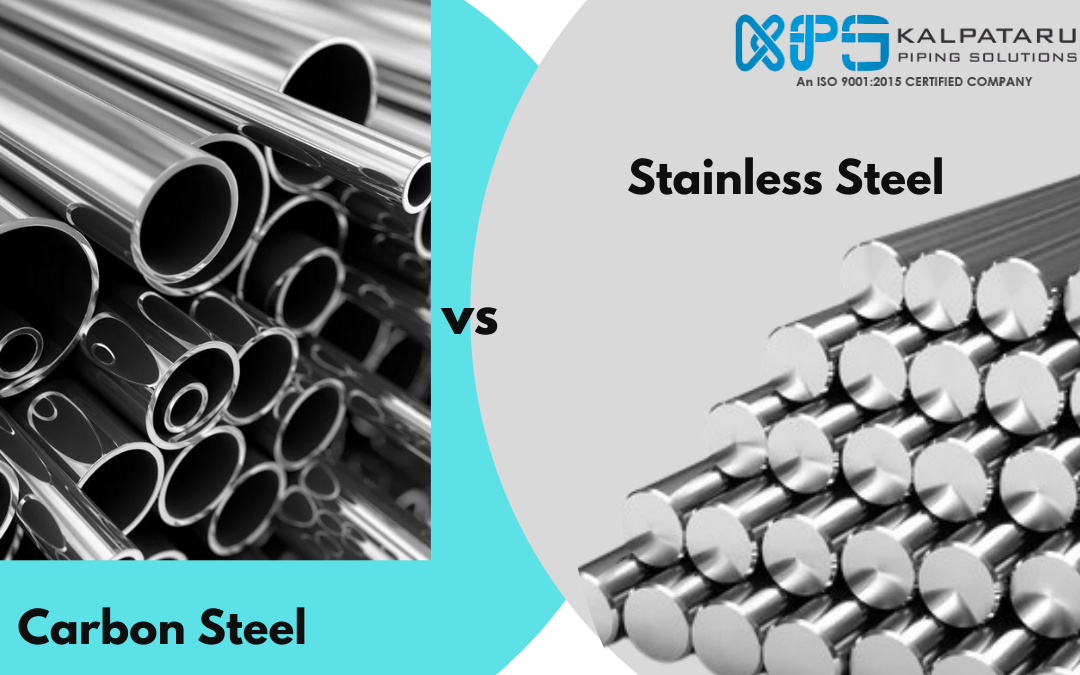
Steel, encompassing a diverse family of metal alloys, stands out as a versatile and widely-used material across numerous applications. Primarily categorized into carbon steels and stainless steels, both share a fundamental composition of iron and carbon. However, they differ in alloying elements. Carbon steel typically contains less than 10.5% chromium, while stainless steel must have at least 10.5% chromium.These differences make each type of steel unique.
This article aims to clarify the distinctions between these two steels, outlining their unique properties and guiding you to choose the most suitable metal for your needs.
What is carbon steel?
Carbon steel is a type of steel that primarily consists of iron and carbon, with trace amounts of other elements. It is one of the most widely used and versatile materials in various industries. The carbon content in carbon steel typically ranges from 0.05% to 2.0%, and it plays a crucial role in determining the steel’s hardness, strength, and other mechanical properties.
The manufacturing process involves melting iron ore along with carbon in a furnace. The carbon imparts desirable characteristics to the steel, but the final properties can be further adjusted through additional alloying elements and heat treatments. Carbon steel is known for its durability, strength, and affordability, making it suitable for a wide range of applications, including construction, automotive, pipelines, and tools.
Is carbon steel stronger than stainless steel?
In general, carbon steel is often considered stronger than stainless steel due to its higher carbon content. Carbon steel’s strength is influenced by its composition, while stainless steel, alloyed with chromium for corrosion resistance, may have slightly reduced overall strength. The choice between them depends on the intended use and specific application requirements. Carbon steel is preferred for strength, while stainless steel is valued for corrosion resistance, making it suitable for environments with corrosion concerns.
What Makes Carbon Steel So Tough?
Carbon steel’s toughness is attributed to its higher carbon content, which enhances hardness and strength. The presence of carbon molecules forms a robust crystalline structure, enabling the material to withstand stress and impact. This increased hardness makes carbon steel resilient, ideal for demanding applications like construction and manufacturing. Heat treatment further optimizes its toughness, allowing customization of mechanical properties for specific requirements. In essence, the higher carbon content and versatile property customization make carbon steel exceptionally tough.
Does Carbon Steel Rust?
Yes, carbon steel can rust when exposed to air and moisture, forming iron oxide (rust). To prevent rust, use protective coatings like paint and perform regular maintenance such as cleaning and oiling. If corrosion resistance is important, stainless steel, containing chromium, is a better choice as it is highly resistant to rust.
Carbon Steel Uses
Carbon steel is widely used across industries for its versatility and durability. In construction, it’s a top choice for beams, columns, and reinforcing bars due to its high strength and cost-effectiveness. The automotive sector utilizes carbon steel for chassis, body panels, and suspension components, benefiting from its strength and formability. In manufacturing, it’s extensively used for machinery, tools, and equipment, thanks to its toughness and machinability. In the energy sector, carbon steel is crucial for pipelines, oil rigs, and power transmission structures due to its robustness. Everyday items like household tools, cutlery, and cookware also feature carbon steel for its durability and heat conductivity. From construction to daily use, carbon steel plays a vital role in various aspects of our lives.
What is stainless steel?
Stainless steel is a type of steel alloy that contains a minimum of 10.5% chromium, which contributes to its unique properties. The chromium in stainless steel forms a protective oxide layer on the surface, giving it excellent corrosion resistance. This alloy can also include other elements such as nickel, molybdenum, and titanium, which enhance its mechanical and chemical properties.
Stainless steel is known for its resistance to rust, corrosion, and staining, making it a popular choice for various applications, particularly in environments where exposure to moisture or harsh conditions is a concern. It is widely used in the manufacturing of kitchen appliances, cutlery, jewelry, medical instruments, construction materials, and industrial equipment. There are different grades and types of stainless steel, each tailored for specific purposes based on their composition and properties.
Is Stainless Steel Stronger than Carbon Steel?
In general, carbon steel is often considered stronger than stainless steel due to its higher carbon content, which enhances hardness and strength. Stainless steel, while corrosion-resistant, may have slightly reduced overall strength compared to carbon steel. The choice between them depends on specific application requirements and the desired balance between strength and corrosion resistance.
What Makes Stainless Steel Rust-Resistant?
Stainless steel is inherently rust-resistant due to its chromium content, which forms a thin, protective oxide layer on the surface when exposed to oxygen. This passive layer acts as a barrier, preventing corrosion and rust formation. The addition of other alloying elements, such as nickel and molybdenum, further enhances the corrosion resistance of stainless steel, making it highly durable in various environments.
Uses of Stainless Steel
Stainless steel, valued for corrosion resistance and durability, is versatile across industries. In the kitchen, it’s essential for cookware and cutlery, known for hygiene and easy maintenance. Construction benefits from its use in architectural features, while the medical field relies on its biocompatibility for surgical instruments. Transportation utilizes stainless steel for corrosion-resistant exhaust systems, and the energy sector employs it in pipes and machinery for its resilience. Its versatility extends to aerospace, automotive, and art, making it a preferred choice for its combination of strength, corrosion resistance, and aesthetics.
Stainless Steel vs Carbon Steel: Which Should You Choose?
Stainless steel derives its corrosion resistance from chromium, making it well-suited for applications exposed to moisture or corrosive environments. Conversely, the high carbon content in carbon steel provides strength and hardness, making it suitable for applications requiring high stress and impact. The choice between carbon and stainless steel depends on project-specific needs, considering factors such as material properties, corrosion resistance, heat resistance, and cost.
Characteristics
Stainless Steel
Carbon Steel
Material Properties
Iron, carbon, and chromium
Iron, carbon, and trace amounts of other elements
Corrosion Resistance
High corrosion and rust resistance
No corrosion or rust resistance
Temperature Resistance
Can withstand extremely high and low temperatures for long periods
Can withstand high and low temperatures but does not perform as well as stainless steel when exposed for long periods
Weldability
Is weldable but more complex due to higher melting point
Is one of the easiest metals to weld with due to lower melting point
Lifespan
Average lifespan is approximately 20 years
Average lifespan is approximately 20 years
Recyclable
100% recyclable
100% recyclable
Hygienic
Rejects bacteria and other pathogens, easy to clean
Has non-toxic and hygienicproperties, but is prone tocorrosion unless cleaned and maintained
Cost
More expensive to make and purchase than carbon steel
Less expensive to make and purchase than stainless steel
Conclusion
Deciding between carbon steel or stainless steel for your business is a difficult or complex choice, much like selecting any steel grade. The decision will influence both the end product and the overall cost of your steel investment.
Being a leader manufacturer with over 40 years of experience as a prominent supplier of steel products, Kalpataru Piping Solutions possesses the knowledge and diverse selection to assist you in finding the optimal solution for your requirements. We can guide you in determining the most suitable steel grades and products for your needs.
Brass tubes are used in various industries for different applications, and they may find applications in sugar industries as well. However, the specific use of brass tubes for sugar industries can depend on the context and the particular requirements of the industry. It’s important to note that the choice of materials in any industry, including sugar processing, depends on the specific requirements of the application, considering factors such as temperature, pressure, and the nature of the substances being handled.
Why did we use brass tubes for sugar industries?
Brass tube manufacturers uses brass pipe & tubes in the sugar industry for a variety of reasons, including:
1. Corrosion Resistance
Sugarcane juice and its concentrated forms are slightly acidic and can be corrosive to certain metals. Brass, an alloy of copper and zinc, exhibits excellent resistance to corrosion in these environments. This property helps prevent contamination of the sugar product and extends the lifespan of equipment.
2. Heat Transfer Efficiency
Sugar production involves boiling and evaporation processes to concentrate the sugar solution. Brass has a high thermal conductivity, allowing for efficient heat transfer through the tubes. This translates to improved energy efficiency and faster processing times.
3. Strength and Durability
Brass tubes are strong and durable, able to withstand the high pressures and temperatures encountered in sugar mills. They can handle the stress of pumps, valves, and other equipment without being easily damaged.
4. Machinability and formability
Brass is easily machined and formed, allowing for the fabrication of tubes with specific shapes and sizes to meet the needs of various sugar processing equipment. This versatility makes brass a cost-effective and adaptable material for sugar mills.
5. Antibacterial properties
Brass has inherent antibacterial properties that help to reduce the growth of bacteria on its surface. This is important for maintaining hygiene and preventing contamination of the sugar product.
Here are some specific applications of brass tubes in sugar mills:
Evaporators
Brass pipe supplier uses brass pipes extensively in evaporators, where sugarcane juice is concentrated into syrup. The high thermal conductivity of brass ensures efficient heat transfer and rapid evaporation.
Condenser tubes
In vacuum pans, brass tubes condense the sugar syrup back into a concentrated liquid. Their corrosion resistance is crucial in this application.
Heat exchangers
Brass tubes are used in heat exchangers to transfer heat between different liquids in the sugar production process.
Piping systems
Brass tubes are used for piping various fluids, including sugarcane juice, syrup, and water, throughout the sugar mill.
Specifications of brass tube for sugar industries:
Specifications for brass tubes used in sugar industries can vary based on the specific requirements of the project.
Specifications
ASTM B111 / ASME B111, BS 2871 Part 2 CZ110
Outer Diameter
4mm to 150mm
Wall Thickness
0.25mm to 8mm
Length
1m, 2m, 3m, 4m, 6m and as per requirement of clients
Cut Length
Single Random, Double Random & Cut Length
Type
Seamless / Heat Exchangers / Condenser Tubes
Form
Seamless / Heat Exchangers / Condenser Tubes
Technical Specification of Brass Tubes For Sugar Industries
ISS :
KS :
JIS :
ASTM :
BS:
DIN :
Cuzn28Sn
D5301 C4430
H3300 C4430
B111 C44300
2871 CZ111
1785 CuZn28Sn
Brass Composition For Sugar Industries
The chemical composition of brass, including brass tubing used in sugar industries, typically consists of copper and zinc as the primary elements. Other alloying elements may be added in smaller amounts to enhance specific properties. The exact composition can vary depending on the specific requirements of the application. Here is a general overview of the chemical composition of brass:
Copper (Cu): Copper is the primary component in brass alloys, typically comprising the majority of the alloy. It provides the base metal with its corrosion resistance, ductility, and conductivity.
Zinc (Zn): Zinc is the second major component in brass. It is added to copper to form the alloy and contributes to the overall strength and hardness of the material. The proportion of zinc can vary to achieve different grades of brass with varying properties.
Lead (Pb): Lead may be added in small amounts to improve machinability. However, lead content in brass has environmental and health considerations, and lead-free brass is often preferred in certain applications.
Tin (Sn): Tin is sometimes added to improve the corrosion resistance of brass, particularly in marine environments. However, tin is not commonly present in standard brass formulations.
Other Elements: Depending on the specific requirements and desired properties, other elements such as aluminum, manganese, iron, nickel, or silicon may be added in trace amounts.
For using brass pipe & tubes in sugar industries, where corrosion resistance and thermal conductivity are often critical, brass alloys with higher copper content and moderate zinc content are commonly used. The specific composition may be tailored to meet the environmental conditions, temperatures, and corrosion challenges encountered in sugar processing equipment.
It’s important to note that industry standards and regulations may dictate certain requirements for the composition of materials used in specific applications. Engineers and materials specialists in the sugar industry should be consulted to ensure that the chosen brass tubing meets the necessary standards and performs well in the intended environment.
Brass Type
Copper (%)
Zinc (%)
Lead (%)
Tin (%)
Other Elements
Applications
Admiralty Brass (C26000)
70
29
1
(0.5) Optional
Heat exchangers, condensers, evaporator tubes, piping for hot sugar syrup
Choosing brass tubes for sugar industries is a smart decision, blending strength, durability, and corrosion resistance. These tubes excel in high-pressure, high-temperature processes, showcasing reliability. Whether aiding heat exchange, supporting piping systems, or enhancing overall efficiency in sugar processing, brass tubes offer versatility and top-notch performance. Their robustness against the demands of pumps and valves highlights their crucial role in sustaining smooth operations in sugar mills. In the complex world of industrial applications, brass tubes emerge as a reliable solution, combining functionality and resilience in the challenging realm of sugar production.
SS flanges serve as integral components in piping systems, linking two segments securely. They facilitate a pressure-tight connection and allow convenient access for inspection, cleaning, or modifications. Typically crafted from stainless steel, these flanges exhibit robust corrosion resistance and strength, rendering them suitable for diverse applications. Their remarkable ductility ensures reliable sealing across varying temperatures, preventing leakage or deformation. Additionally, stainless steel flanges boast excellent fatigue strength and outstanding resistance to creep, making them well-suited for challenging conditions like high temperatures and corrosive environments.
What are the standards for stainless steel flanges?
An SS flange, or stainless steel flange supplier, is crafted from stainless steel materials. Commonly adhering to material standards such as ASTM A182 Grade F304/L and F316/L, these flanges come in various Grades and pressure ratings, ranging from Class 150, 300, 600, to 2500. They find extensive use across industries due to stainless steel’s superior resistance to corrosion, offering improved performance in challenging environments. Additionally, stainless steel flanges present an aesthetically pleasing appearance, distinguishing them from carbon steel alternatives.
Various standards outline the essential chemical composition, dimensions, pressure ratings, and other criteria for materials used in piping system flanges and fittings. Notable standards for stainless steel encompass:
AWWA C228 – which establishes the minimum material requirements and dimensions for stainless steel flanges in stainless steel piping systems.
ASTM A182 – which covers forged or rolled components for piping systems designed for high-temperature service.
ASME B16.5 – a dimensional standard applicable to pipe flanges and flange fittings, including those made of stainless steel.
ASME B16.34 – a pressure/temperature rating applied to threaded and welded valves connecting flanges.
ASME B16.47- specifically addressing large-diameter steel and stainless steel flanges.
Advantages of stainless steel flanges
Explore the benefits of stainless steel flanges in industrial applications. With exceptional corrosion resistance from chromium, they ensure longevity in challenging environments. Their resistance to chemical corrosion and oxidation makes them versatile. The polished finish adds aesthetic appeal and minimizes corrosion risk. The strength and resilience of stainless steel surpass basic carbon steel and outperform alternatives like aluminum, making them reliable in various conditions. Whether handling stress, temperature fluctuations, or ensuring a secure seal, stainless steel flanges consistently deliver outstanding performance, making them essential in industrial systems.
Application of SS Flanges
SS flanges supplier, with their impressive strength, corrosion resistance, and versatility, find application in a wide range of industries and settings. Here’s a glimpse into their diverse world:
1. Chemical Processing
Stainless steel’s ability to withstand aggressive chemicals makes it the go-to choice for pipes in chemical plants, refineries, and pharmaceutical manufacturing. Flanges ensure secure connections and prevent leaks, safeguarding both personnel and the environment.
2. Oil and Gas Industry
From drilling rigs to pipelines, high-pressure and high-temperature environments demand robust connections. Stainless steel flanges, with their exceptional strength and fatigue resistance, excel in oil and gas exploration, production, and transportation.
3. Food and Beverage Processing
Maintaining hygiene and product purity is paramount in the food and beverage industry. Stainless steel flanges, with their corrosion resistance and easy cleaning properties, ensure safe and hygienic transfer of liquids and ingredients.
4. Power Generation
In the pulsating heart of power plants, where heat and pressure reign supreme, stainless steel flanges stand strong. Their resistance to extreme temperatures and creep makes them vital for reliable operation of boilers, turbines, and other critical equipment.
5. Shipbuilding and Marine Applications
From salty seawater to harsh weather conditions, marine environments pose unique challenges. Stainless steel flanges, with their corrosion resistance and strength, ensure the smooth flow of fluids and secure connections onboard ships, oil rigs, and offshore platforms.
6. Water Treatment and Supply
Clean water is a precious resource, and stainless steel flanges play a crucial role in its distribution. Their corrosion resistance and durability make them ideal for water treatment plants, pipelines, and municipal water systems, ensuring safe and reliable delivery of clean water to homes and businesses.
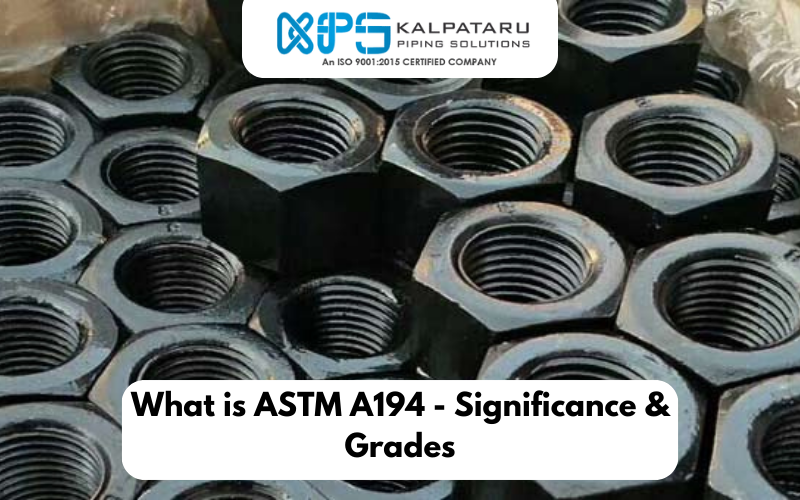
ASTM A194 is a standard specification that covers a variety of carbon, alloy, and stainless steel nuts intended for use in high-pressure and high-temperature service. These nuts are commonly used in conjunction with bolts and other externally threaded fasteners in various industrial applications. The specification includes different grades, each designed to meet specific mechanical properties and chemical compositions required for specific applications. It plays a crucial role in ensuring the quality and performance of fasteners in demanding conditions.
Significance of ASTM A194
The significance of ASTM A194 lies in its role as a standard specification for nuts made from carbon, alloy, and stainless steel. Specifically designed for use in high-pressure and high-temperature services, ASTM A194 ensures the reliability, quality, and performance of nuts used with bolts and threaded fasteners in various industrial applications. By providing guidelines for different grades with specific mechanical and chemical properties, ASTM A194 contributes to the safety and integrity of structures and equipment operating in challenging conditions. Adherence to this standard is essential for maintaining the reliability and efficiency of fasteners in critical applications.
ASTM A194 Grades and Classifications
ASTM A194 encompasses various grades and classifications, each tailored to meet specific mechanical and chemical requirements for nuts used in high-pressure and high-temperature applications. Some notable grades include A194 2H, A194 2HM, A194 4, A194 7, A194 7M, and A194 8, among others. These grades are designed to provide specific strength, ductility, and corrosion resistance characteristics, catering to diverse industrial needs. The classifications within ASTM A194 help ensure the appropriate selection of nuts based on their intended use and the specific demands of the operating environment.
ASTM A194 offers a range of classes and grades, each tailored to specific material types and mechanical properties. Key grades include:
ASTM A194 Grade 2H:
Material: Carbon steel heavy hex nuts.
Usage: Intended for use with ASTM A193 Grade B7 bolts.
Mechanical Properties: High tensile strength, suitable for high-temperature and high-pressure applications.
Application: Commonly used in industries like oil and gas, petrochemicals, and power generation.
ASTM A194 Grade 4:
Material: Carbon and alloy steel heavy hex nuts.
Usage: Used with ASTM A193 Grade B7, B16, or B8M bolts.
Mechanical Properties: Offers high strength, suitable for various high-pressure applications.
ASTM A194 Grade 7:
Material: Stainless steel nuts.
Usage: Intended for use with ASTM A193 Grade B8M bolts.
Mechanical Properties: Provides excellent corrosion resistance, ideal for applications in corrosive environments.
ASTM A194 Grade 8/8M:
Material: High-strength stainless steel nuts.
Usage: Used with ASTM A193 Grade B8 and B8M bolts.
Mechanical Properties: Excellent resistance to corrosion, suitable for corrosive environments.
ASTM A194 Grade 3:
Material: Alloy steel heavy hex nuts.
Usage: Intended for use with ASTM A193 Grade B16 bolts.
Mechanical Properties: High strength, suitable for high-temperature applications.
Chemical Composition:
The chemical composition of ASTM A194 nuts varies based on grades, ensuring specific mechanical properties for each application.
Importance of Adhering to ASTM A194 Standards:
Safety and Reliability: Compliance ensures bolts and nuts can withstand extreme conditions, ensuring safety.
Interchangeability: Standardized nuts allow easy replacement or upgrades without compromising joint integrity.
Quality Assurance: Adherence to standards ensures consistent quality, following strict manufacturing benchmarks.
Differences between ASTM A194 Gr 2H and ASTM A194 Gr 8
Here’s a tabular comparison highlighting the key differences between ASTM A194 Grade 2H and ASTM A194 Grade 8 nuts:
Property
ASTM A194 Grade 2H
ASTM A194 Grade 8
Material
Carbon steel
High-strength stainless steel
Usage
ASTM A193 Grade B7 bolts
ASTM A193 Grade B8 and B8M bolts
Mechanical Properties
High tensile strength
Excellent corrosion resistance
Application
High-temperature and high-pressure applications
Suitable for corrosive environments
Compatibility
Used with ASTM A193 Grade B7 bolts
Used with ASTM A193 Grade B8 and B8M bolts
Conclusion
In conclusion, ASTM A194 plays a vital role in ensuring the structural integrity of industrial equipment and structures. By setting specific standards for high-strength nuts used in conjunction with high-strength bolts, this specification provides a framework for manufacturers to produce reliable, safe, and efficient fastening solutions. Adhering to ASTM A194 standards is not just a matter of compliance; it is a commitment to safety, quality, and the overall well-being of the industries it serves. So, the next time you see a robust structure standing tall, remember that it is likely thanks, in part, to the often-overlooked, yet essential, ASTM A194 nuts and bolts securing its joints
Titanium alloy is known for lightweight metal material, widely acclaimed across industries like aerospace, automotive, medical, sports, and beyond. Its special features, such as impressive tensile strength, resistance to corrosion, and stability in high temperatures, make titanium alloys a top choice for cutting-edge applications. Join us in this blog post as we delve into the distinctive properties of titanium alloys and how they find use in diverse industries.
What Is Titanium Alloy?
A titanium alloy is a type of metal made by combining titanium with other elements, like aluminum, vanadium, or iron. This combination enhances the properties of titanium, making it stronger, more resistant to corrosion, and suitable for various applications. Titanium alloys are known for their light weight, high strength, and durability, making them valuable in industries such as aerospace, medicine, sports, and manufacturing.
Titanium Alloy Properties
With the use of titanium alloy, widely employed in components like turbine blades and bio-materials due to its high specific strength and corrosion resistance. Despite these benefits, titanium has drawbacks like high friction and poor wear resistance. To address this, surface modification through nitriding is common but can reduce fatigue strength due to grain-coarsening.
The research aims to enhance the tribological properties of titanium alloy by developing a low-temperature nitriding process. The previous study successfully applied this to commercially pure titanium, maintaining fine grains. This study specifically looks at low-temperature nitriding of Ti-6Al-4V alloy, characterizing the surface layer formed, and assessing its impact on the alloy’s 4-point bending fatigue properties.
Titanium Mechanical Properties
Unalloyed, commercially pure titanium has a tensile strength ranging between 275 and 590 MPa. This strength is mainly influenced by the oxygen and iron content; higher levels of these elements result in increased strength. For commercially alloyed titanium grades, the tensile strength varies from as low as 600 MPa (e.g., Ti-3A1-2.5V) to as high as 1250 MPa (e.g., Ti-15Mo-5Zr-3AI).
Pure titanium remains stable up to around 300°C, owing to its specific strength and creep resistance. More complex titanium alloys maintain high strength even at temperatures up to approximately 500°C.
The fatigue strength (after 10^7 cycles) is approximately half of the tensile strength, and welding does not significantly decrease fatigue strength. In seawater, both commercially pure titanium and titanium alloys show almost no decline in fatigue strength.
The fracture toughness of titanium alloys ranges from 28 to 108 MPa m^1/2 and is inversely correlated with tensile yield strength. The specific fracture toughness depends on microstructure, with alloys having acicular structures exhibiting higher fracture toughness.
Chemical Properties Of Titanium
Titanium alloys are known for their exceptional chemical properties, notably corrosion resistance due to a protective oxide layer. This resistance extends to harsh environments, making them durable in aerospace, chemical processing, and healthcare. Their biocompatibility suits medical applications, while inertness ensures stability. Titanium alloys’ ability to withstand high temperatures widens their usage, from jet engines to industrial processes, making them versatile and reliable across diverse applications.
Atomic number
22
Atomic mass
47.90 g.mol -1
Electronegativity according to Pauling
1.5
Density
4.51 g.cm-3 at 20°C
Melting point
1660 °C
Boiling point
3287 °C
Vanderwaals radius
0.147 nm
Ionic radius
0.09 nm (+2) ; 0.068 nm (+4)
Isotopes
8
Electronic shell
[ Ar ] 3d1 4s2
Energy of first ionisation
658 kJ.mol -1
Energy of second ionisation
1310 kJ.mol -1
Energy of third ionisation
2652 kJ.mol -1
Energy of fourth ionisation
4175 kJ.mol -1
Physical Properties of Titanium Alloys
Strength and Durability
Titanium alloys stand out for their outstanding strength and durability, boasting the highest strength-to-weight ratio among metals. This quality makes them particularly well-suited for critical aerospace applications where both strength and weight are paramount. Additionally, these alloys excel in withstanding extreme temperatures, pressures, and challenging environments, earning them a prevalent role in aircraft engines, medical implants, and power generation systems.
Corrosion Resistance
Renowned for exceptional corrosion resistance, titanium alloys can bravely confront harsh environments like seawater, acids, and chlorides. The protective oxide layer on their surface enhances this resistance, positioning titanium alloys as ideal materials for marine, chemical, and oil and gas applications.
Biocompatibility
Another distinctive feature of titanium alloys is their biocompatibility. Resistant to corrosion in various bodily fluids and low in toxicity, titanium proves suitable for medical implants. Dental implants, artificial hips and knees, cardiac pacemakers, and bone fixation devices are commonly crafted from titanium alloys, ensuring they can reside in the human body without triggering adverse reactions.
Machinability
Despite their formidable strength and durability, titanium alloys exhibit relative ease of machinability. Unlike metals like steel and aluminum, titanium alloys do not work harden during machining. This characteristic empowers manufacturers to produce intricate parts with tight tolerances and minimal scrap rates, making titanium alloys an excellent choice for the aerospace and medical industries.
Lightweight
Highlighting a previous point, titanium alloys are lightweight, presenting another significant advantage. Integration of these alloys in aerospace applications results in reduced aircraft weight, leading to lower fuel consumption and emission rates. The lighter weight of titanium implants also lessens mechanical stress on a patient’s bones.
Conclusion
In summary, titanium alloys boast unparalleled properties that render them unique and highly coveted across diverse industrial applications. From aerospace and automotive to medical implants and sports equipment, these alloys offer an exceptional combination of strength, durability, corrosion resistance, biocompatibility, and lightweight. With ongoing technological advancements and innovations, we anticipate witnessing even more exciting applications for titanium alloys in the future.