by kalpataru | Feb 2, 2023 | Blog
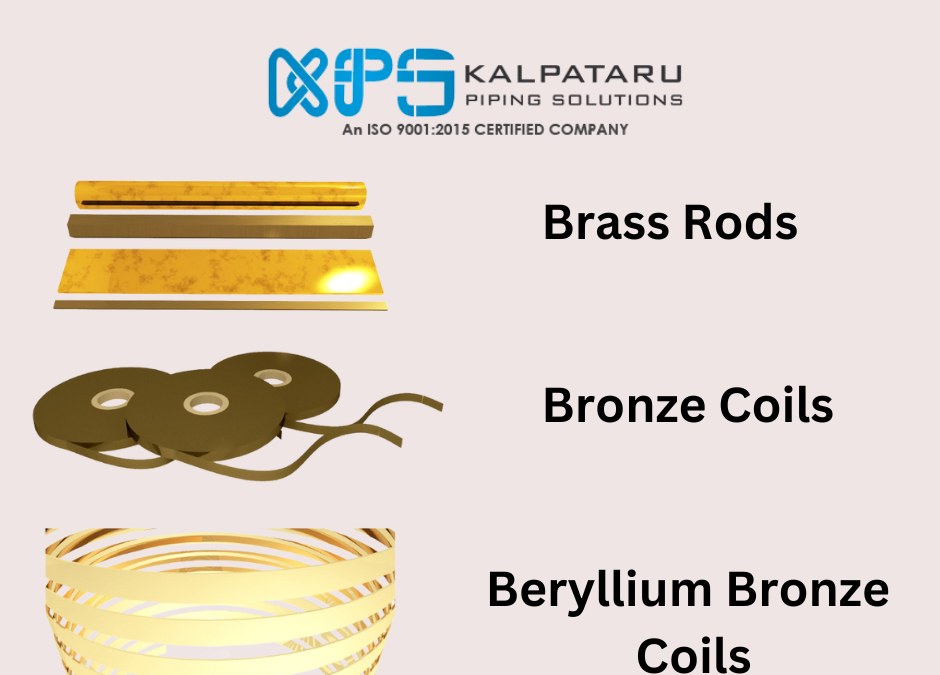
Alloys are made by mixing metal with other metal or non-metallic elements to improve their properties. Copper is used to making brass, bronze, and beryllium copper. Copper is the “solvent” or main element that makes these mixtures work together. Copper has properties like resistance to corrosion, biofouling, and heat and electricity conductivity.
Brass – Zinc and copper are mixed together to make brass. Zinc’s properties make it a metal that is both strong and easy to shape. It can be shaped better than bronze. It has been used since prehistoric times, but it wasn’t found until about 1,400 BCE. In the past, it was called “yellow copper.” Depending on how much zinc is mixed into it, its color ranges from dull yellowish to reddish. Brass is used to making musical instruments, plumbing supplies, and parts for guns. Gold-colored jewelry is sometimes made out of brass that has been dyed to look like gold.
Bronze – This alloy is made of copper and other metals like tin, manganese, and phosphorus. Tin is the main metal added to this alloy. It was found before brass, around 3,500 B.C.E., and dates back to that time. It has a higher melting point than brass and is hard and brittle. It stands out because its color is reddish gold. Bronze is used to make statues, musical instruments, electrical connectors and springs, fittings, and many other things.
Beryllium Copper – This alloy is made of beryllium, copper, and a small number of elements that help them stick together. There are 30 types of minerals that contain beryllium. It’s a steel-gray metal that is soft and not very dense. When it is mixed with copper, it gets stronger, harder, and better at conducting electricity and heat. In the next chapters, we’ll talk about more of beryllium copper’s properties and how it can be used.
Read More :
Types of Beryllium Copper Alloys: Beryllium-copper alloys are split into two groups based on what they are made of and what physical properties they have. Pieces of beryllium copper can be forged or cast, and they can be sold as plates, rods, strips, and wires, among other things.
Common Uses For Beryllium Copper: Beryllium Copper is used in a lot of different fields and industries. This is mostly because it is strong, can conduct electricity and heat, and doesn’t spark or attract magnets. Today, I’ll talk about the unique things about Beryllium Copper that make it such a popular choice.
by kalpataru | Feb 2, 2023 | Blog
Pieces of beryllium copper can be forged or cast, and they can be sold as plates, rods, strips, and wires, among other things. Most of the time, metals like beryllium and copper are shaped by hot or cold working. Melted beryllium copper is poured or injected into a mould to make cast beryllium copper pieces. After the forming process, the material gets harder over time so that the mechanical properties can be changed and controlled better.
Beryllium-copper alloys are split into two groups based on what they are made of and what physical properties they have. Most of the physical beryllium properties depend on how much beryllium is in the alloy, how it is mixed with other elements, and how it is heated and treated by the manufacturer.
High Strength Beryllium Copper Alloys
High-strength beryllium copper alloys have between 1.6% and 2.05% beryllium in them and are used for things that need to be stronger. Age hardening or precipitation hardening are two ways that beryllium alloys get their very high strength. When beryllium and copper are precipitation-hardened, the results are made when beryllium falls out of a solid solution that is mostly pure copper and is already very dense.
When the alloys cool down very slowly, pure copper starts to form because beryllium is less able to dissolve in copper as it cools. After annealing, the alloys are usually cooled quickly so that the beryllium stays solidly mixed with the copper. The alloy stays at 392°F to 860°F (200°C to 460°C) for at least an hour during a precipitation or age-hardening treatment. During tempering, the beryllium-containing phase, called beryllides, comes out of the solution.
During precipitation, beryllium-copper alloys change their properties and get stronger. The beryllium-copper alloy is stronger because of the coherency strains that form where the matrix and precipitates meet. The best thing about beryllium copper alloys is how well they respond to treatment for precipitation hardening and how well they resist stress relaxation.
Some high-strength beryllium copper alloys are:
C17200 or Alloy 25
C17200 is the hardest and strongest of the beryllium copper alloys. It is about as hard and strong as steel. It has 2% beryllium and a Rockwell hardness of C45. Its tensile strength can be more than 200 ksi. The electrical conductivity of C17200 is at least 22% IACS, and at high temperatures, it has a very high resistance to stress relaxation. It is used a lot in the oil and gas industry and for springs that don’t have to be magnetic, conduct electricity (springs that carry current), or rust.
When C17200 is put into a plastic mould, it lowers the temperature of the mould. This means that water is no longer needed to cool the mould. C17200 is four times better at moving heat than the steel used to make the mould. This part of C17200 can make sure that plastic products cool quickly and evenly, reduce product deformation, and help get rid of defects. Using C17200 to cool plastic moulds makes them work better and speeds up the production process.
C17300 or Alloy M25
The amount of lead in C17300 is between 0.2 and 0.6%. The addition of lead makes it less likely that cutting tools will chip edges. This reduces tool wear and makes C17300 a good choice for making parts for electronics, cars, and aeroplanes. C17300 is easier to work with than other high-strength, high-fatigue-resistance alloys.
C17300 is like C17200 in that it has the same properties. It is called “leaded beryllium copper” because it has a small amount of lead in it, which makes it easy to work with. Because it has lead in it, its cutting coefficient goes from 20% to 50%, which makes it better for making precise parts. Some of the performance properties of the C17300 process are high thermal conductivity, the ability to be welded, resistance to corrosion, polishability, resistance to wear and adhesion, and the ability to be forged. C17300 is used to make fuse fasteners, springs, connectors, spot welding heads, seam welding rollers, die casting heads, and plastic moulding dies.
C17000 or Alloy 165
C17000 has less beryllium in it and is a little bit weaker. It doesn’t cost as much as C17200 and is used for lighter tasks. Even when it is very cold, C17000 keeps its strength. It is also used to make tools, fasteners, bearings, and bushings for business. C17000 is often used in equipment for resistance welding.
C17000 is mostly used for things that need to be strong and have good conductivity. It can be softened by heat and made harder by running it through a mill. Soldering, brazing, arc welding, spot welding, and butt welding can all be used to join C17000, but Oxy-Acetylene welding is not recommended. C17000 threaded joints are resistant to galling, whether they are joined to each other or to stainless steel.
High Conductive Beryllium Copper Alloys:
Beryllium copper alloys with high conductivity have a small amount of beryllium in them, between 0.2% and 0.7%, along with small amounts of cobalt and nickel. As the name suggests, these alloys conduct electricity and heat well. The copper alloying element makes the copper better at both heat and electricity. But as the amount of beryllium goes up, these properties go down. This makes the material stronger. The same is true for other systems that mix metals (e.g., brass and bronze). Some of the beryllium copper alloys that are highly conductive are:
C17510 or Alloy 3
C17510 has between 0.2% and 0.6% beryllium and between 1.4% and 2.2% nickel. It is used in places where moderate strength and resistance to thermal fatigue are needed. In the form of wire, it is used for power and signal cables in oil and gas operations that take place far from land. Because it is a good conductor of electricity, its stripped form is used in switches and relays.
Most of the time, C17510 is used to spot weld and seam weld high-resistance alloys like stainless steel. It is suggested for welder structural current members that are stressed and electrode holders that are set at an angle. C17510 has a tensile strength of 140 ksi, a Rockwell hardness of B100, and a conductivity of 45% to 60% of regular copper.
C17500 or Alloy 10
C17500 has between 0.4% and 0.27% beryllium and between 2.4% and 2.7% cobalt. Its mechanical properties are similar to those of C17510. By adding cobalt, the melting point and thermal conductivity of C17500 are slightly lowered. C17500 works well both hot and cold because it has a high thermal resistance. It is a great material for making tools that are cast or moulded.
With a tensile strength of 140 ksi and a Rockwell hardness of B100, C17500 has 45% to 60% of the conductivity of regular copper. All C175 grades of beryllium copper have a cobalt alloy added, but C17510 is different because it also has nickel added. The performance of C17500 and C17510 is the same, no matter how much nickel is in C17510.
Alloy 10X
Alloy 10x is made of copper, cobalt, beryllium, and zirconium. It was made to make beryllium copper stronger and more flexible at high temperatures. It is very strong and flexible, even at temperatures of 806°F (430°C), and it doesn’t crack when heated. Due to its high thermal conductivity and resistance to thermal cracking, one of the main places Alloy 10x is used is in automotive powertrains, such as exhaust valve seats and pre-ignition chambers.
Alloy 310
Copper, beryllium, nickel, and cobalt are mixed together to make alloy 310. It has the same good qualities as C17500 and C17510, like their high electrical and thermal conductivity, strength, and hardness. Also, Alloy 310 has a high resistance to thermal fatigue. Alloy 310 is very popular because it costs less than the other beryllium copper alloys.
Alloy 310 is a good choice for welding electrodes and parts, non-ferrous casting dies, nozzles, and plungers because of its unique properties.
Contact Us – Check the Price of Beryllium Copper Products
Read More
Common Uses For Beryllium Copper: Beryllium Copper is used in a lot of different fields and industries. This is mostly because it is strong, can conduct electricity and heat, and doesn’t spark or attract magnets.
Types of Beryllium Copper Alloys: Beryllium-copper alloys are split into two groups based on what they are made of and what physical properties they have. Pieces of beryllium copper can be forged or cast, and they can be sold as plates, rods, strips, and wires, among other things.
by kalpataru | Jan 9, 2023 | Blog
Beryllium Copper, a metal with multiple aliases like BeCu, Copper Beryllium, Beryllium Bronze, Alloy 172, and Spring Copper, has gained popularity across various industries, thanks to its exceptional attributes. Its strength, electrical and thermal conductivity, non-sparking, and non-magnetic properties make it a favoured choice in numerous applications.
COMMON BERYLLIUM COPPER PRODUCTS
The versatility of Beryllium Copper finds its way into electronic connectors, telecommunications equipment, computer components, and small springs. Its outstanding qualities include high electrical and thermal conductivity, ductility allowing complex shapes, excellent corrosion resistance, and superb metalworking and machining abilities.
BERYLLIUM COPPER AND DANGEROUS ENVIRONMENTS
In hazardous settings like oil rigs and coal mines, where a single spark could spell disaster, Beryllium Copper becomes a life-saving option. Its non-sparking and non-magnetic nature makes tools like wrenches, screwdrivers, and hammers made from BeCu a reliable choice for use in such environments.
BERYLLIUM COPPER AND SPECIALIZED TOOLS
Copper Beryllium also lends its charm to the world of music, being a preferred material for crafting professional percussion instruments like tambourines and triangles. The consistent tone and resonance of these instruments make Copper Beryllium a sought-after material for high-end musical productions.
BERYLLIUM COPPER AND VARIOUS TEMPERATURES
Beryllium Copper maintains its strength and thermal conductivity even at low temperatures, making it ideal for cryogenic equipment. On the other hand, in high-performance four-stroke engines with coated titanium valves, BeCu is used in valve seats and guides due to its ability to dissipate heat faster than powdered steel or iron.
CHOOSE KALPATARU PIPING SOLUTIONS FOR YOUR BERYLLIUM COPPER NEEDS
As you can see, the properties of Beryllium Copper make it a great choice for a wide range of industries and uses. Kalpataru Piping Solutions sells Beryllium Copper in three different hardnesses, from 0.003 to 0.060: annealed, quarter hard, and half hard. Only a small number of full hard and mill-hardened tempers are kept in stock.
We offer a lot of extra services to make the production process easier for our customers. For our Beryllium Copper products, we also offer precision slitting from.250″ to 12,000″, edge rolling, cut-to-length, and de-burring services.
Read More :
5 UNIQUE PROPERTIES OF BERYLLIUM COPPER: Beryllium copper, sometimes referred to as spring copper or beryllium bronze, is one of the greatest-strength copper-based alloys now on the market. Commercial grades of beryllium copper range in beryllium content from 0.4 to 2.0 percent.
Differences Between Regular Copper and Beryllium Copper: Beryllium copper is a copper alloy containing less than 3% beryllium and occasionally additional elements. Beryllium copper combines great strength with non-magnetic characteristics and no sparking.
by kalpataru | Dec 3, 2022 | Blog
Introduction
There is no other reason to doubt the claim that rising market demand will lead to significant industry growth in the steel sector. Present circumstances make it abundantly clear that steel is necessary for higher-quality products in all market segments. The presence of steel is one of the most crucial metrics for determining the efficacy and lifetime of a product.
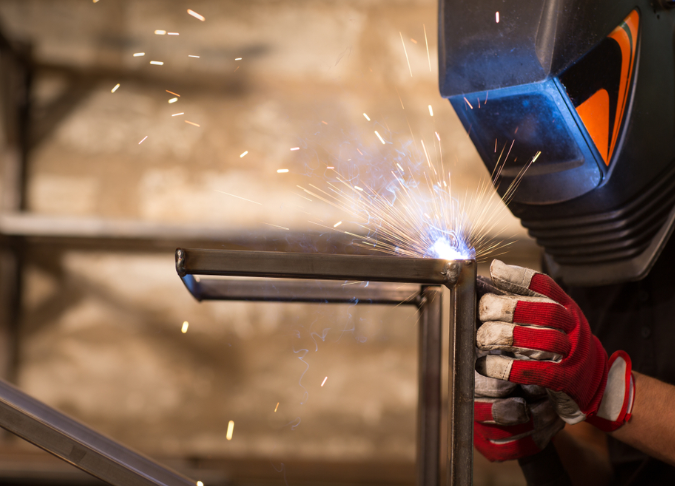
Steel is essential to several industries, including the furniture industry. Many products utilized in the furniture industry are made of steel. Steel offers the possibility to ensure that the finished product is of the highest caliber due to its stronger tensile strength and longer lifespan. We may therefore claim that steel provides a stable foundation for the production of several steel sector items. Furniture goods made with the aid of steel are appealing to both small and large businesses that deal with the provision of furniture.
Various products made up of steel that is used in the Furniture industry
Multiple steel components are used in the construction of many furniture industry products. The finished items benefit from the strength, shape, credibility, and durability provided by these steel materials. The following is a list of the various products:
Table Frame
Table frames are frequently constructed with as much steel as is practical. This is done to give the tables the illusion of being more sturdy by including steel components. The manufacturer can construct a variety of table designs thanks to a robust table structure.
Chair Frame
Similar to table frames, chair frames are made with a lot of steel. The weight and tension must be supported by a strong enough chair frame. This is made possible by the presence of steel components in it. Many different decorative chair frame designs may contain a significant amount of steel. It gives the chair frames a strong, durable appearance.
Curtain rods
There are many different types of rods available, each having a different shape, size, and measurement. If you look closely, you might see that steel also contributes to the production of these rods. The steel components help to increase the tensile strength and durability of the rods.
Decorative Tube Frames
Additionally, steel is used to create a variety of decorative tube frames. It is polished and attractive without compromising the integrity of the tubes thanks to the use of steel. There are numerous varieties of steel parts available on the market that offer both great appearances and performance.
Other products
In addition to the previously stated furniture-related products, steel is also widely employed in many other products. Bedside lights, table lamps, and lamps are all made of steel.
To conclude
There are many benefits to steel’s contribution to the furniture industry. There is no denying that the furniture industry has an increasing need for steel producers. This has encouraged numerous businesses to successfully enter the steel manufacturing industry for the furniture sector.
Read More :
All you need to know about Grade 304 Stainless Steel: 304 Stainless Steel, also called 304, is a type of steel that is used to make a wide range of appliances and long-lasting items. It is an all-purpose steel alloy that can be used for many different things.
Benefits of Stainless Steel 310 Sheets: Austenitic stainless steel in Grade 310 is easy to weld and bend, and it has great properties at high temperatures. Type 310 stainless steel tubing is often used in situations with high temperatures.