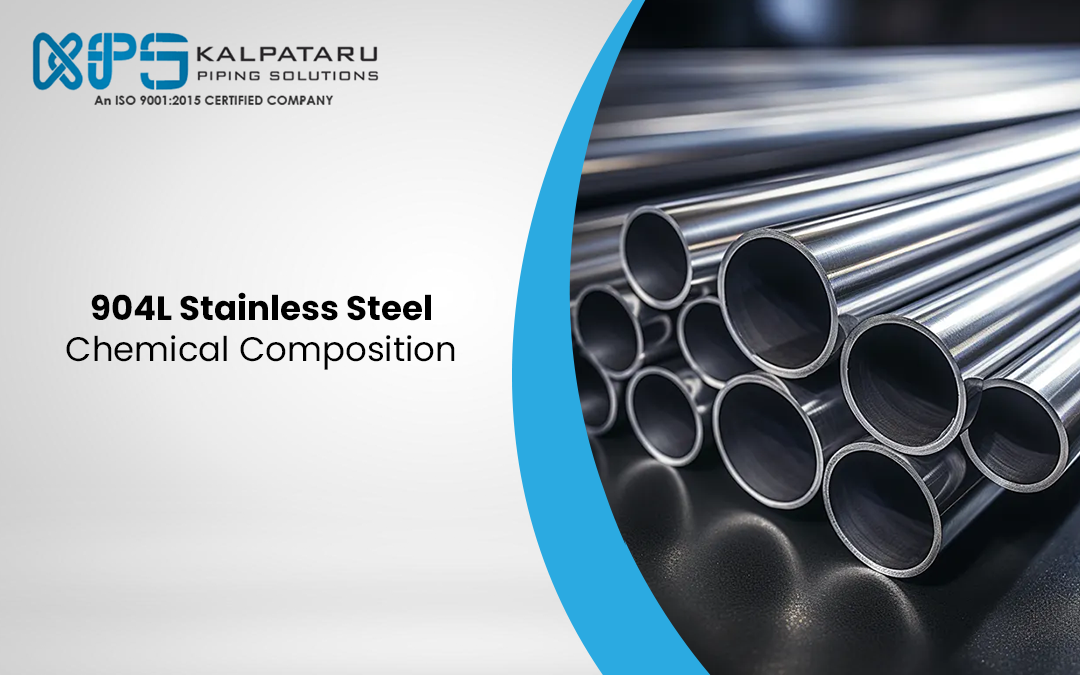
904L Stainless Steel Chemical Composition

904L Stainless Steel Chemical Composition

904L Stainless Steel: Composition, Properties

904L stainless steel is a superaustenitic stainless steel grade, alloy 904L (UNS N08904) and contains high levels of chromium and nickel with additions of molybdenum and copper to provide superior corrosion resistance. The combination of high chromium and nickel content, coupled with additions of molybdenum and copper, assures good to excellent corrosion resistance, and moderate to high corrosion resistance in a wide range of process environments, containing dilute sulfuric acid. It also offers good resistance to other inorganic acids such as hot phosphoric acid as well as most organic acids.

With high-level alloys of 25% nickel and 4.5% molybdenum, 904L stainless steel provides good chloride stress corrosion cracking resistance, pitting and general corrosion resistance superior to 316L and 317L molybdenum enhanced stainless steels, The copper addition provides resistance to hot phosphoric acid and dilute sulfuric acid. 904L stainless steel is non-magnetic and offers excellent formability, toughness, and weldability.

904L Stainless Steel Chemical Composition

The chemical composition of stainless steel 904L contains roughly 19 to 23% chromium, 23 to 28% nickel, 4 to 5% molybdenum, and 1.0-2.0% Cu, which gives the alloy greater corrosion resistance than 316L.

Alloy 904L
Ni 23 – 28
Mo 4 – 5
Cr 19 – 23
Cu 1 – 2
C 0.02 max
Mn 2.0 max
Si 1.0 max
P 0.045 max
S 0.035 max

SS 904L Material Properties

Grade Tensile Strength (MPa) min Yield Strength 0.2% Proof (MPa) min Elongation (% in 50mm) min Hardness
Rockwell B (HR B) Brinell (HB)
904L 490 220 36 70-90 typical 150

904L Stainless Steel Physical Properties

Grade Density
(Kg/M 3 )
Elastic Modulus
(GPa)
Mean Co-Eff Of
Thermal Expansion
(Μm/M/°C) 0-100°C
Thermal Conductivity
(W/M.K) At 20°C
Specific Heat 0-100°C
(J/Kg.K)
Elec Resistivity
(NΩ.M)
904L 7900 190 15 11.5 500 952

904L Stainless Steel Specification

Standard 904L
UNS N08904
Werkstoff Nr. 1.4539

904L Stainless Steel Price

904L stainless steel price varies depending on thickness, size, and supplier, reflecting its high resistance to corrosion and acids. Known for its durability in harsh environments, 904L stainless steel is commonly used in chemical and marine applications. Its price is generally higher than other stainless steels due to its superior alloy composition. For more information about the 904L stainless steel price, please contact us—we are here to help with any questions or provide a custom quote based on your specific requirements.

904L Stainless Steel Corrosion Resistance

Stainless steel type 904L is primarily fabricated to offer resistance to the sulfuric acid and it also possesses superior resistance to the various conditions. It has outstanding resistance to the hot sea water and chloride conditions. The significant content of nickel offers outstanding resistance to stress corrosion cracking as compared to the other stainless steel alloys. The copper content enhances the resistance to sulfuric acid and other reducing acids especially in the rigorous conditions. In the various atmospheres, stainless steel 904L grade offers moderate corrosion resistance between the standard austenitic 316L alloy and highly alloyed 6% molybdenum and equivalent to super austenitic alloy types. In the presence of rigorous nitric acid, the lower resistance as compared to molybdenum-free alloys like 304L and 310L are used. To get the highest stress corrosion cracking resistance in the crucial conditions, the steel is recommended to solution treating subsequent to cold processing.

904L Cold Forming

904L is quite ductile and forms easily. The addition of molybdenum and nitrogen implies more powerful processing equipment may be necessary when compared with the standard 304/304L grades.

904L Hot Forming

Working temperatures of 1562 – 2102°F (850 –1150°C) are recommended for hot working processes. Normally hot working should be followed by a solution anneal and quench, but for 904L, if hot forming is discontinued at a temperature above 2012°F (1100°C) and the material is quenched directly thereafter, the material may be used without subsequent heat treatment. The entire workpiece must be quenched from temperatures above 2012°F (1100°C). In the event of partial heating or cooling below 2012°F (1100°C), or if the cooling has been too slow, hot working should always be followed by a solution anneal and quenching. 904L should be solution annealed at 1940 – 2084°F (1060 –1140°C).

904L Heat Resistance

Grade 904L stainless steels offer good oxidation resistance. However, the structural stability of this grade collapses at high temperatures, particularly above 400°C.

904L Fabrication

Grade 904L stainless steels are high-purity steels with low sulfur content. They can be machined using any standard methods. These grades can be readily bent to a small radius under cold conditions. Although subsequent annealing is not required in most cases, it should be carried out when the fabrication is performed under severe stress corrosion cracking conditions.

904L Heat Treatment

Grade 904L stainless steels can be solution heat-treated at 1090 to 1175°C, followed by rapid cooling. Thermal treatment is suitable for hardening these grades.

904L Welding

Alloy 904L can be readily welded by most standard processes. Solidification after welding causes the redistribution of certain elements such as molybdenum, chromium and nickel. These segregations remain in the cast structure of the weld and can impair the corrosion resistance in certain environments. Segregation is less evident in 904L, and this material is normally welded using a filler metal of the same composition as the base metal and can even be welded without filler metal.

Welding of grade 904L stainless steels can be performed using all conventional methods. This grade does not require pre-heat and post-weld heat treatments. Grade 904L can be subjected to hot cracking in constrained weldment.

Conclusion

In conclusion, 904L Stainless Steel is an excellent choice for industries requiring high-performance materials, especially in chemical processing. It provides outstanding corrosion resistance, handles high temperatures, and is easily weldable, making it suitable for applications where cleanliness and durability are essential. As industries evolve and demand resilient materials, 904L stainless steel stands out as a reliable, long-lasting solution that will support growth and efficiency well into the future.

FAQs

Which is better, 904L or 316L?

Both 904L and 316L stainless steels offer good corrosion resistance, but 904L is better for highly corrosive environments due to its higher chromium, nickel, and copper content. While 316L is more affordable for general use, 904L is ideal for demanding applications in chemical, petrochemical, and marine industries.

What is the difference between 304 and 904L?

The main difference between 304 and 904L stainless steels is their corrosion resistance. 304 is cost-effective and suitable for mild environments, while 904L offers superior resistance to harsh conditions like acids and chlorides, making it ideal for chemical and marine industries.

Contact us today to discuss your 904L stainless steel needs. Get a custom quote now!

Related Posts

904L Stainless Steel

904L Stainless Steel – Benefits and Applications

Stainless Steel 904L vs 316L

Stainless Steel 904L vs 316L

Stainless Steel 304 Density

Stainless Steel 304 Density

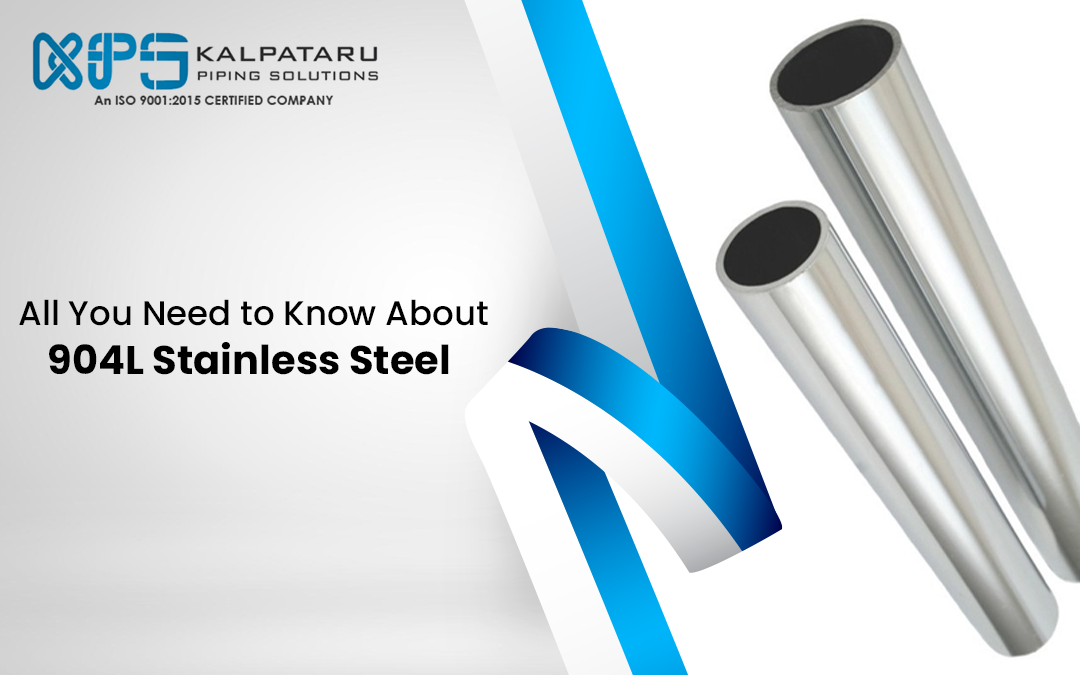
All You Need to Know About 904L Stainless Steel

All You Need to Know About 904L Stainless Steel

Steel is an essential part of our daily lives, and it has been for centuries. It’s used to construct buildings, bridges, cars, etc. One type of steel that has been gaining attention recently is 904L Stainless Steel. This highly corrosion-resistant metal has become popular in various industries, including construction, marine, and even fashion. This blog post will discuss all you need to know about 904L Stainless Steel.

What is 904L Stainless Steel?

904L Stainless Steel is a high-end austenitic stainless steel with low carbon content, which means it is incredibly corrosion-resistant. This steel is well-suited for environments with a higher risk of corrosion, such as industrial environments, marine environments, and chemical manufacturing.

904L stainless steel is a high-alloy austenitic stainless steel containing nickel, copper and molybdenum. It offers superior corrosion resistance when compared to conventional chromium-nickel steels such as 316L and 304L. This alloy resists chloride crevice corrosion, general pitting corrosion and stress cracking due to its high molybdenum content and low carbon content. Because of these features, 904L has become popular in applications that require maximum corrosion resistance, such as food processing, chemical processing equipment, laboratory equipment, marine exhaust systems and pollution control devices. Moreover, it maintains good weldability by adding nitrogen stabilizers like titanium or niobium alloys, making the final product highly resistant to intergranular attack in critical environments where welding may be required.

What Are the Advantages of 904L Stainless Steel?

One of the most significant advantages of 904L Stainless Steel is its remarkable corrosion resistance. 904L is more resistant to corrosion than other types of stainless steel. This metal is highly resistant to pitting and crevice corrosion, making it ideal for use in harsh environments. 904L is more expensive than other types of stainless steel, but it is worth the extra cost for its superior corrosion resistance. 904L is a high-alloy stainless steel with high chromium, nickel, and molybdenum levels.

Additionally, 904L Stainless Steel has excellent weldability, making joining easier and quicker. It also has excellent formability and machinability, which means it can be shaped and worked into various forms and shapes. 904L stainless steel is an excellent choice for applications requiring durability and long-term performance.

What Are the Applications of 904L Stainless Steel?

904L Stainless Steel is being used in numerous applications, including marine and offshore structures, chemical processing, and process industries. It is also being used to construct bridges, tanks, heat exchangers, and other equipment. In the fashion industry, it is being used in watchmaking, as it is highly resistant to wear and tear. 904L is more resistant to general and localized corrosion than conventional chromium-nickel austenitic stainless steels such as SS 304 and SS 316L. 904L is highly resistant to chloride pitting and crevice corrosion. It is highly resistant to chloride pitting and crevice corrosion.

How Does 904L Stainless Steel Compare to Other Grades of Stainless Steel?

904L Stainless Steel is known for its exceptional corrosion resistance, which sets it apart from most grades of stainless steel. However, it does come at a higher cost than other types of stainless steel. Still, the benefits justify the price, especially in harsh environments where other types of steel would fail.

How Can You Care for 904L Stainless Steel?

Caring for 904L Stainless Steel is easy! Clean any dirt or dust using warm water and a mild, non-abrasive cleanser. Dry it thoroughly afterwards to remove any moisture which can cause corrosion. Finally, check the surface frequently for signs of rust and apply a thin layer of protective wax if needed to help prevent future wear and tear. Even though 904L Stainless Steel requires minimal maintenance and care, it is still essential to take care of it to ensure its longevity. It’s recommended to avoid exposing it to harsh chemicals and to clean it regularly with mild soap and water. Additionally, it’s crucial to avoid scratching or denting the metal, as this could impact its corrosion resistance.

Conclusion

In summary, 904L Stainless Steel is a highly sought-after type of steel due to its fantastic corrosion resistance properties. Its applications are widespread, from marine and industrial environments to fashion and watchmaking. Despite its higher cost, it is well worth the investment for anyone needing a corrosion-resistant metal. With minimal care and maintenance, 904L Stainless Steel can last for years to come.

For more information about the 904L Stainless Steel Price, please contact us. We are here to help with any questions or provide a custom quote based on your specific requirements.

FAQs

What is the difference between Stainless Steel 904l vs 316l?

904L stainless steel offers better corrosion resistance and strength, making it ideal for harsh environments, but is more expensive. 316L is more affordable and works well in less aggressive conditions, like food processing and medical applications. In short, 904L is best for extreme environments, while 316L is a cost-effective option for general use.

What is 904L stainless steel made of?

904L stainless steel, also known as UNS N08904, is a super austenitic alloy designed for superior corrosion resistance in a wide range of aggressive environments. Its composition includes a high percentage of chromium and nickel, along with significant amounts of molybdenum and copper. These elements work together to deliver excellent resistance to corrosion, particularly in acidic and chloride-rich environments, making it ideal for industries like chemical processing, marine, and petrochemical applications.

What is 904L stainless steel equivalent to?

The corrosion resistance of 904L stainless steel is comparable to that of many super duplex stainless steels (SDSS) in a variety of applications, making it an excellent alternative for environments requiring high resistance to corrosion, particularly in acidic and chloride-rich conditions.


How to weld 904L stainless steel?

To weld 904L stainless steel, use TIG, MIG, SMAW, PAW, or SAW methods with nickel-based filler metals. Opt for basic electrodes and fluxes for better weld quality and corrosion resistance. Proper heat control is important to prevent defects.


Contact us today to discuss your 904L stainless steel needs. Get a custom quote now!

Related Posts

904L Stainless Steel

904L Stainless Steel – Benefits and Applications

Stainless Steel 904L vs 316L

Stainless Steel 904L vs 316L

Stainless Steel 304 Density

Stainless Steel 304 Density

Stainless Steel 904L Plates: Applications in the Chemical Processing Industry

Stainless Steel 904L Plates: Applications in the Chemical Processing Industry

Stainless Steel 904L Plates are widely used in the chemical processing industry. Their superior corrosion resistance, weldability, and formability make them ideal for various chemical processes. These plates also feature a high strength-to-weight ratio and good impact resistance at low temperatures, which makes them perfect for petrochemical applications. Additionally, their higher nickel content improves their resistance to corrosive media such as sulphuric acid, which is common in the chemical processing industry. Therefore, Stainless Steel 904L Plates offer better performance in many areas of process plant construction and related equipment production, including heat exchangers, vessels, tanks, reactor components and various pressure vessels, including column stills, digesters etc.

What are Stainless Steel 904L Plates?

Stainless Steel 904L Plates are austenitic stainless steel plates that provide exceptional corrosion resistance caused by a high amount of chromium, molybdenum and nickel content. This alloy is also known for its excellent grade weldability, formability, strength and toughness at cryogenic temperatures. Due to this, SS 904L Plates are used in many industries, including chemical processing, petrochemical equipment and oil & gas processing. Further, these stainless steel plates offer good fabricability with aging properties making them efficient for manufacturing.

Benefits of Stainless Steel 904L Plates

  1. Corrosive environments: Stainless Steel 904L plates are highly resistant to corrosion in various corrosive environments. In the presence of sulfuric acid and chlorine ion solutions, this grade of stainless steel offers superior resistance to other grades like 304 or 316. It is also known for its excellent fabricability characteristics, such as weldability and formability, which make it an ideal choice for fabrication in industrial applications. Its combination of low carbon, high nickel, molybdenum, and chromium content helps it resist pitting corrosion and crevice attack, thus providing long-term protection against oxidation.
  2. High-temperature service: Stainless Steel 904L Plates are known for their high-temperature service capabilities, allowing them to be used in extreme temperatures. This grade of steel has a higher chromium content and is designed with special alloying elements that provide resistance against various types of corrosion, even at elevated temperatures. It also offers excellent formability and weldability. Stainless steel 904L plates are a great choice when working with applications that require long-lasting components capable of withstanding constant high-temperature exposure.
  3. Weldability: Stainless Steel 904L Plates are highly weldable. It has excellent cold- and hot-working properties, good corrosion resistance, and high formability. This type of steel can also be easily joined with the help of conventional welding methods such as oxyacetylene welding (OAW), shielded metal arc welding (SMAW), gas tungsten arc welding (GTAW), and fusion welding techniques like electro slag remelting (ESR). Additionally, it offers excellent post-weld cleaning qualities for making high-quality welded products.
  4. Hygienic applications: Stainless Steel grade 904L is often considered superior for its hygienic applications. This alloy offers excellent corrosion resistance, particularly in environments rich in chlorine and other chlorides. Additionally, it has excellent formability, weldability, and high strength when cold-rolled or worked at low temperatures. Its properties make it ideal for sanitary and medical equipment production, pharmaceutical manufacturing, food processing and marine/offshore industries where hygienic conditions are essential.
  5. Longevity: Finally, 904L stainless steel plates are known for their exceptional durability and longevity. Equipment and components made from 904L plates require minimal maintenance and can last decades without replacement. Industries can reduce maintenance costs and downtime by opting for 904L, a reliable and sustainable material.

Conclusion

In conclusion, Stainless Steel 904L plates are highly versatile for the chemical processing industry. They offer excellent resistance to corrosion, withstand high temperatures, are easy to weld, and are suitable for clean, hygienic applications. Their durability makes them a smart choice as industries grow and demand more from their materials. 904L stainless steel is an accurate, long-lasting option that will benefit companies well into the future.

For more information about the SS 904L Price in India, please contact us. We are here to help with any questions or provide a custom quote based on your specific requirements.

FAQs

Which is better, 904L or 316L?

Both 904L and 316L stainless steels offer good corrosion resistance, but 904L is better for highly corrosive environments due to its higher chromium, nickel, and copper content. While 316L is more affordable for general use, 904L is ideal for demanding applications in chemical, petrochemical, and marine industries.

What is the difference between 304 and 904L?

The main difference between 304 and 904L stainless steels is their corrosion resistance. 304 is cost-effective and suitable for mild environments, while 904L offers superior resistance to harsh conditions like acids and chlorides, making it ideal for chemical and marine industries.

Contact us today to discuss your stainless steel 904L plates needs. Get a custom quote now!

Related Posts

904L Stainless Steel

904L Stainless Steel – Benefits and Applications

Stainless Steel 904L vs 316L

Stainless Steel 904L vs 316L

Stainless Steel 304 Density

Stainless Steel 304 Density

The Benefits of 904L Stainless Steel Pipe in Marine Environments

The Benefits of 904L Stainless Steel Pipe in Marine Environments

In this blog, we’ll explore the benefits of 904L Stainless Steel Pipe and discuss why it’s an excellent choice for various applications. The marine environment is one of the most challenging settings for the use of metals due to the high levels of saline, moisture, and corrosiveness. Therefore, selecting the right material for pipes used in marine environments is crucial. When it comes to seawater pipelines requiring higher levels of durability and corrosion resistance, using an SS 904L pipe is highly recommended.

But what makes 904L stainless steel so special for these types of applications? This blog post explores the unique benefits of using 904L stainless steel pipes in marine environments and why it is a preferred choice for many marine operations.

What are 904L Stainless Steel Pipes?

904L stainless steel pipes are manufactured from high-quality austenitic stainless steel alloy containing the highest chromium and nickel content. Adding molybdenum further enhances corrosion resistance, especially in environments with acid chlorides, making them ideal for use in industrial applications such as oil & gas, petrochemical processing, and marine environments. stainless steel 904L pipes have superior durability compared to other types of stainless steel due to their higher toughness and strength and enhanced resistance to localized corrosion, including pitting, crevice, and stress corrosion cracking. Additionally, they offer excellent weldability while being highly resistant to intergranular corrosion and sulfide stress-corrosion cracking. This allows for easy installation in various industries ranging from chemical plants to food & beverage production facilities.

Benefits of 904L Stainless Steel Pipes

  1. Resistance to Corrosion: One of the most significant advantages of using 904L stainless steel pipes in marine environments is their high corrosion resistance. 904L stainless steel pipe is more resistant to pitting and corrosion than other types of stainless steel pipe. 904L stainless steel is a low carbon, high alloy austenitic stainless steel resistant to crevice, stress corrosion cracking, and pitting. The high levels of molybdenum and nickel in the steel increase its resistance to chloride attack, making it ideal for use in seawater applications. Also, the addition of copper makes the steel even more resilient to harsh marine environments.
  2. Weldable: Another benefit of a 904L stainless steel pipe is that it is more weldable than other types of stainless steel. This is due to the alloy’s lower carbon content, making it less susceptible to carbide precipitation during welding. This makes 904L stainless steel pipe an ideal choice for use in welding applications.
  3. High Strength and Durability: The high strength and toughness of 904L stainless steel make it an ideal material for use in marine pipelines. This type of steel is known for its excellent fatigue strength, high tensile strength, and low thermal expansion coefficient, making it resistant to deformation under high loads. It can withstand high-pressure conditions, high temperatures, and the harsh marine environment without losing its mechanical properties.
  4. Recyclability: 904L stainless steel is a sustainable material that is 100% recyclable and made of environmentally friendly materials. Its recyclability benefits the environment by reducing waste and minimizing damage to natural resources. Therefore, it is an eco-friendly alternative to using other less sustainable metals in marine environments.
  5. Cost-Effective: One final advantage of a 904L stainless steel pipe is its lower cost per pound than other types of stainless steel. This makes it an economical choice for use in marine environments where budget is a concern. Despite its high-grade quality, 904L stainless steel is cost-effective in the long run. The high corrosion resistance of 904L stainless steel ensures pipelines last longer, resulting in lower maintenance costs over time. Additionally, its ability to withstand harsh marine environments and high temperatures makes it a reliable and cost-effective choice for marine infrastructure.
  6. Compatibility with Existing Systems: Finally, 904L stainless steel pipes are easy to integrate with existing systems. They are compatible with most existing stainless steel systems, making them an easy and cost-effective replacement. The pipes’ flexibility, durability, and resistance to corrosion make them a reliable and versatile material for marine pipelines.

Learn more about 904L stainless steel pipe, offering excellent corrosion resistance and strength for marine and industrial use

Why choose a 904L stainless steel pipe for your marine project?

When it comes to marine projects, choosing the right materials is critical. Using the correct piping materials for your vessel can prevent leaks, reduce maintenance costs, and ensure the safety of the crew and passengers onboard. 904l stainless steel pipes are an excellent choice as they are corrosion-resistant, durable, and easy to maintain.

Conclusion

In conclusion, using 904L stainless steel pipe in marine environments offers numerous benefits, including exceptional resistance to corrosion, high strength, and durability. This material is also highly recyclable, cost-effective, and compatible with existing systems, making it a valuable investment for any marine operation requiring long-lasting and reliable infrastructure. If you’re looking for 904L pipe suppliers, 904L stainless steel pipe price, or 904L pipe, feel free to contact us for more details.

FAQs

Which is better: 904L vs 316L?

When comparing 904L and 316L stainless steel, 904L offers above corrosion resistance, especially in harsh environments like seawater and acidic solutions. Its higher nickel and molybdenum content provide enhanced resistance to pitting and crevice corrosion, making it ideal for chemical processing and marine applications. On the other hand, 316L is more cost-effective and performs well in general industrial applications, offering solid corrosion resistance in mild environments. While 904L is better for extreme conditions, 316L is a reliable and budget-friendly choice for less aggressive environments.

What are the mechanical properties of 904L stainless steel pipes?

904L stainless steel pipes have an approximate yield strength of 350 MPa/ksi and an ultimate tensile strength of 690 MPa/ksi.

What makes 904L stainless steel pipes resistant to corrosion?

904L stainless steel pipes have a low carbon content, high nickel and molybdenum contents, and other chemical components that help resist corrosion. The chromium in the alloy acts as a skin to the base iron to help resist oxidation and other corrosion.


Contact us today to discuss your 904L stainless steel pipe needs. Get a custom quote now!

Related Posts

904L Stainless Steel

904L Stainless Steel – Benefits and Applications

Stainless Steel 904L vs 316L

Stainless Steel 904L vs 316L

Stainless Steel 304 Density

Stainless Steel 304 Density

Low vs Medium vs High carbon steel

Low vs Medium vs High carbon steel

Steel comes in various forms, and in this guide, we’re focusing on low, medium, and high-carbon steel. The amount of carbon in the steel influences its characteristics. Low-carbon steel is softer and easier to weld, making it suitable for many projects. Medium-carbon steel offers a good blend of strength and flexibility, often used in machinery and vehicle parts. High-carbon steel, with its high hardness, is perfect for cutting tools and heavy-duty applications.

Keep reading as we look at the main features of each type and how they are used in different industries.

What is Low Carbon Steel?

Low-carbon steel has a small amount of carbon mixed with iron, usually less than 0.30%. It’s also called mild steel and is cheaper than medium or high-carbon steel. Because it is softer and more flexible, it works well for some uses but might not be as good for others where more strength is needed. Low-carbon steel usually contains between 0.05% and 0.32% carbon by weight. This gives it moderate strength and makes it more flexible and easier to shape compared to high-carbon steel.

Low-carbon steel with very low carbon content is not very hard and is difficult to machine, but its machinability can be improved with quenching treatment. It is typically made into products like angle steel, channel steel, I-beams, steel pipes, and steel plates, which are used for building structures, containers, boxes, furnace parts, and farm equipment.

Properties of Low Carbon Steel

Although the melting point of low-carbon steel is generally stable, each grade has slightly different properties. Still, we can provide a range of values to give a basic idea of the overall characteristics of this material.

Property Value
Density 0.103 – 0.292 lb/in³ 
Tensile Strength, Yield 20300 – 347000 psi 
Fracture Toughness 30.0 – 105 ksi-in½ 
Shear Modulus 10200 – 11600 ksi
Melting Point 2600°F
Thermal Conductivity 176 – 645 BTU-in/hr-ft²-°F

Grades of Low Carbon Steel

In the U.S., there are three main standards for carbon steels:

  1. ASTM International: Develops global technical standards.
  2. AISI: Promotes new steel technologies.
  3. SAE: Focuses on automotive engineering standards.

ASTM is the most common. For example, ASTM A307 specifies carbon steel bolts and rods with a tensile strength of 60,000 psi, which includes:

  • Grade A: For general use with low strength requirements.
  • Grade B: For applications needing higher strength, like piping joints.

Standards ensure materials perform well, while grades define their specific properties. The chart below lists common grades of low-carbon steel:

Standard Grade Application
SAE J403 1006 Wire products and fasteners
SAE J403 1008 Sheet metal work, automotive components, and wire products
SAE J403 1010 Cold heading, automotive components, and sheet metal work
ASTM A36/A36M A36 Structural steel grade used in buildings, bridges, construction equipment
ASTM A53/A53M B Structural and pressure applications, such as water and gas transmission
ASTM A516/A516M 70 Boilers and pressure vessels
ASTM A1011/A1011M 33 Sheet metal work, automotive components, and construction materials
ASTM A513/A513M 1010 Automotive parts, machinery components

Uses of Low Carbon Steel

Low-carbon steel is useful in structural applications, even though it’s not as strong as other steel types. It’s also used in machinery parts, helping to lower machining costs. Its ability to be easily shaped allows for quicker production and lower machining expenses compared to materials like aluminum.

What is Medium-Carbon Steel?

Medium-carbon steel usually contains about 0.3 to 0.6% carbon. It includes many types of high-quality carbon structural steel as well as some regular carbon structural steel. This steel is mainly used to make various mechanical parts, with some applications in engineering structures.

Medium-carbon steel has good thermal processing and cutting abilities, but its welding performance is not as strong, so preheating is required before welding. It is stronger and harder than low-carbon steel but has lower plasticity and toughness compared to mild steel. Cold-rolled or cold-drawn medium-carbon steel can be used without heat treatment, although it can also be heat-treated. When quenching and tempering are applied, it shows excellent overall mechanical properties.

Properties of Medium Carbon Stee

Each grade of medium-carbon steel has unique properties that differentiate it from other grades in this category. The table below summarizes a range of values for various properties related to medium-carbon steel.

Property Value
Property
Yield Strength
Value
420 Mpa
Property
Hardness
Value
200 MPa
Property
Density
Value
7.75–7.89 g/cm³
Property
Magnetism
Value
It is typically magnetic

Medium Carbon Steel Grades

Medium-carbon steel products adhere to specific standards, which classify them into various grades. Below are examples of commonly used grades of medium-carbon steel along with their corresponding standards:

Chemical Element Percentage composition
Chemical Element
Carbon (C)
Percentage composition
0.3%–0.6%
Chemical Element
Manganese (Mn)
Percentage composition
0.6%–1.65%
Chemical Element
Sulfur (S)
Percentage composition
0.05
Chemical Element
Phosphorus (P)
Percentage composition
0.04
Chemical Element
Chromium (Cr)
Percentage composition
0.80–1.10
Chemical Element
Copper (Cu)
Percentage composition
0.08
Chemical Element
Vanadium (V)
Percentage composition
0.51
Chemical Element
Nickel (Ni)
Percentage composition
0.15
Chemical Element
Molybdenum (Mo)
Percentage composition
1.61
Chemical Element
Iron
Percentage composition
Balance

Uses of Medium Carbon Steel

Medium-carbon steel is often used to make high-strength moving parts, such as pump pistons, steam turbine impellers, heavy machinery shafts, worms, air compressors, and gears. It’s also used for surface wear parts, crankshafts, machine tool spindles, rollers, bench tools, and other similar items.

What is High Carbon Steel?

High-carbon steel has a carbon content that ranges from 0.60% to 1.5%. This high level of carbon gives it exceptional hardness, tensile strength, and wear resistance, making it suitable for applications that need strong and durable materials.

While high-carbon steel is known for its wear resistance, it also has higher brittleness and lower ductility, which can make it prone to cracking in certain situations. Welding high-carbon steel can be challenging because of the risk of brittleness and cracking in the heat-affected area, requiring special techniques to avoid these issues.

Properties of High Carbon Steel

Because there are different standards and grades, there isn’t one specific value that defines the properties of high-carbon steel. However, the following gives a general range of what to expect regarding its properties.

Property Value
Density 0.0163 – 0.298 lb/in³ 
Tensile Strength, Yield 39900 – 484000 psi
Fracture Toughness 12.0 – 150 ksi-in½ 
Shear Modulus 11300 – 12000 ksi 
Melting Point 2,800-2,900°F
Thermal Conductivity 1132 – 361 BTU-in/hr-ft²-°F

Grades of High Carbon Steel

High-carbon steel grades are classified according to specific standards. Below are some commonly used grades of high-carbon steel:

Standard Grade Application
ASTM A29/A29M AISI/SAE 1060 Springs, gears, axles, heavy-duty machinery components
ASTM A29/A29M AISI/SAE 1065 Springs, cutting tools, industrial knives, and blades
ASTM A29/A29M AISI/SAE 1070 Springs, automotive suspension components, agricultural machinery parts
ASTM A29/A29M AISI/SAE 1080 Heavy-duty springs, automotive components, heavy machinery parts
ASTM A295 AISI/SAE 52100 Bearing steel used in the manufacture of ball and roller bearings
ASTM A600 AISI/SAE M2 High-speed tool steel used for cutting tools, drills and taps
ASTM A686 AISI/SAE W2 Water-hardening tool steel used for cutting tools, dies, punches, and woodworking tools

Uses of High Carbon Steel

High-carbon steel is primarily used in applications that require excellent durability and wear resistance. This includes making knife and saw blades, where toughness is less critical since these items don’t face heavy impacts that could cause breakage. In contrast, structural components like I-beams, which are made from medium or low-carbon steel, need different properties to handle the loads and impacts they encounter.

For More Details Check Out Our Blog onProperty of High Carbon Steel

The differences between Low, Medium, and High Carbon Steel

Low-carbon steel Medium-carbon steel High-carbon steel
Carbon Content 0.05% to 0.32% 0.30% to 0.60% 0.60% to 1.5%
Characteristics Ductile
Malleable
Tough
Easily joined and welded
Poor corrosion resistance
Stronger
Harder
Less ductile
Less malleability
Good corrosion resistance
Very strong
Very hard
Poor ductility
Poor malleability
Better corrosion resistance

Contact us today to discuss your Carbon Steel needs. Get a custom quote now!

FAQ

What is the difference between low, medium, and high carbon steel?

Carbon steel is classified into three categories based on carbon content. Low-carbon steel contains less than 0.25% carbon, medium-carbon steel has a carbon content ranging from 0.25% to 0.6%, and high-carbon steel contains more than 0.6% carbon. Each type offers distinct properties and applications.

What are the three types of carbon steel?

Carbon steel is generally classified into three main types based on the amount of carbon it contains low (or mild) carbon steel, medium carbon steel, and high carbon steel. Each category has distinct properties and applications, determined by its carbon content.

Which is stronger, high or low carbon steel?

High-carbon steel is stronger than low-carbon steel due to its higher carbon content, which enhances its strength and hardness. However, low-carbon steel is softer and easier to machine and weld. While high carbon steel offers greater strength, it is also more challenging to work with.


Related Posts

Types of Carbon Steel

Types of Carbon Steel

Carbon Steel Pipes Complete Guide

Carbon Steel Pipes Complete Guide

corbon steel

What is carbon steel?

Medium Carbon Steel Properties

Medium Carbon Steel Properties

Chemistry helps us change materials by mixing different elements, strengthening some features while weakening others. Medium-carbon steel is often seen as the middle ground among carbon steels, offering a balance between high-carbon steel’s toughness and low-carbon steel’s flexibility.

This alloy is commonly used in industries where machinery, tools, and parts experience heavy wear, such as axles, gears, train wheels, etc. It’s a popular choice for items that need to handle tough conditions. This blog will explore what makes medium-carbon steel stand out from other materials and its common uses.

What is Medium Carbon Steel?

Medium-carbon steel is a type of steel with a carbon content ranging from 0.3% to 0.6% by weight. This gives it a harder structure than low-carbon steel, while still being easier to shape than high-carbon steel. Often referred to as mild or plain carbon steel, it has a lower tensile strength than metals like stainless steel and aluminum alloys.

Properties of Medium Carbon Steel

Medium-carbon steels offer several useful properties due to their composition, such as good hardness, strength, ductility, shock resistance, and wear resistance. These qualities make them suitable for machining and welding in many applications. They also have good thermal conductivity and can be heat-treated to boost surface hardness, fatigue life, and wear resistance.

Containing between 0.30% to 0.60% carbon, medium-carbon steels are harder than low-carbon steels but not as strong as high-carbon steels. They are flexible enough to be formed using methods like hot forming, cold forming, and machining. Heat treatment can further enhance their strength and hardness.

Medium-carbon steels are commonly used in applications like automotive parts, machinery components, tools, and construction materials. The addition of other elements like manganese, chromium, vanadium, or molybdenum can modify their properties for specific needs.

The following tables provide information on the physical and thermal properties of medium-carbon steel.

Property Value
Property
Yield Strength
Value
420 Mpa
Property
Hardness
Value
200 MPa
Property
Density
Value
7.75–7.89 g/cm³
Property
Magnetism
Value
It is typically magnetic

Medium-Carbon Steel Chemical Composition

Iron is the main part of medium-carbon steel, and it has a carbon content between 0.30% and 0.60%. Some types of medium-carbon steel may also contain other elements like silicon, phosphorus, sulfur, chromium, and nickel.

The table below shows the usual percentage of different chemical elements in medium-carbon steel.

Chemical Element Percentage composition
Chemical Element
Carbon (C)
Percentage composition
0.3%–0.6%
Chemical Element
Manganese (Mn)
Percentage composition
0.6%–1.65%
Chemical Element
Sulfur (S)
Percentage composition
0.05
Chemical Element
Phosphorus (P)
Percentage composition
0.04
Chemical Element
Chromium (Cr)
Percentage composition
0.80–1.10
Chemical Element
Copper (Cu)
Percentage composition
0.08
Chemical Element
Vanadium (V)
Percentage composition
0.51
Chemical Element
Nickel (Ni)
Percentage composition
0.15
Chemical Element
Molybdenum (Mo)
Percentage composition
1.61
Chemical Element
Iron
Percentage composition
Balance

Additionally, Kalpataru Piping Solution offers different finishing options, like black oxide or powder coating, to protect or improve the surface of this steel.

Common Forms of Medium-Carbon-Steel

You can find medium-carbon steel in several different shapes:

  • Bars
    Medium-carbon steel bars come in both round and rectangular shapes. They are very strong and are great for making heavy-duty shafts, axles, and gears. These bars often have pearlite and ferrite, which help make them more durable. Bar stock is commonly used for parts made with CNC machines.
  • Sheets
    Medium-carbon steel sheets are often used for things like car panels and other structures that need to be shaped, formed, machined, or welded. Like the bars, these sheets also contain different amounts of pearlite and ferrite.
  • Wire
    Medium-carbon steel wire is made for creating springs, cables, and other items that need to be strong but still easy to work with. This wire can be bent, twisted, and shaped without losing its strength.

How Kalpataru Piping Solution Can Help?

Kalpataru Piping Solution is a top carbon steel supplier in India, ready to meet your needs for medium-carbon steel. We offer a wide variety of high-quality products, including bars, sheets, and wires, suitable for different uses. You can trust our materials to handle heavy loads and tough conditions.

Our team is dedicated to providing excellent customer service and support. We will help you choose the right medium-carbon steel for your specific needs. Whether you need standard products or custom solutions, Kalpataru Piping Solution is here to support your projects.

Contact us today to explore your Medium Carbon Steel solutions. Request your custom quote now!

FAQ

What is the density of medium carbon steel?

Medium carbon steel has a density ranging from 7.75 to 7.89 g/cc, with an average of 7.85 g/cc based on 917 grades. Its particle size typically varies from 6.70 to 12.0 µm, averaging 9.27 µm across 12 grades. The hardness, measured on the Brinell scale, ranges from 126 to 578, with an average of 247 from 831 grades.

Does medium carbon steel rust?

Yes, medium carbon steel can rust, as all carbon steel is prone to corrosion. This makes them unsuitable for certain applications unless protective coatings are used.

Can medium carbon steel be hardened?

Yes, medium carbon steel can be hardened through quenching. Adding small amounts of manganese improves its hardenability. It can also be case-hardened for applications that require wear resistance, such as crankshafts.


What is the melting point of medium carbon steel?

The melting point of medium carbon steel is approximately 1500 °C. In comparison, cast iron, which contains more than 1.7 wt% carbon, melts at around 1160 °C.


Related Posts

Types of Carbon Steel

Types of Carbon Steel

Carbon Steel Pipes Complete Guide

Carbon Steel Pipes Complete Guide

corbon steel

What is carbon steel?

WhatsApp chat