by kalpataru | Mar 31, 2020 | Blog
What is Monel?
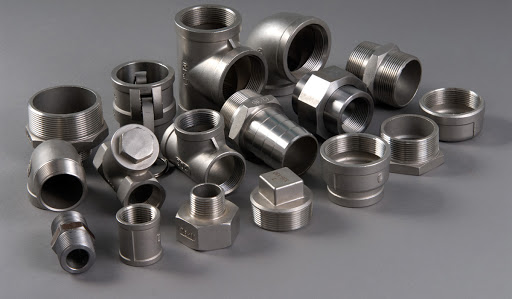
Monel is an alloy ( mix of at least two components of which in any event one is a metal, and where the resultant material has metallic properties). It depends on nickel and copper and furthermore contains iron and manganese (5%) and different compounds.
Monel is resistant to corrosion by numerous specialists, including quickly streaming seawater. They can be fabricated promptly by hot-and cold-working, machining, and welding.
There are different types of Monel such as Alloy 400, Alloy 401, Alloy 450, Alloy K-500, Monel 404 Copper-Nickel Alloy. Standard product forms are round forging stock, pipe, tube, plate, sheet, strip, and wire.
Monel is used for marine engineering, chemical and hydrocarbon processing equipment, valves, pumps, shafts, fittings, fasteners, heat exchanger, metal instruments and frames of eyeglasses. It is also used in the aerospace industry.
Characteristics of Monel :
- Highly resistant to alkalis
- Attractive appearance and finishes
- Easy to shape and form ( good ductility )
- Stronger than steel ( high mechanical strength )
- Relatively cost-effective ( low cost
Key Monel Alloys –
Kalpataru Piping Solutions supplies two key MONEL alloys: MONEL 400 & MONEL K500
Monel 400 – MONEL Alloy 400 has at least 63% nickel and 28-34% copper, with the huge expansion of iron. It offers high quality and strength over a wide scope of temperature ranges. It is viewed as best for the airplane business where the working temperature is high.
Monel K500 – MONEL Alloy K-500 is a precipitation-reinforced form of MONEL Alloy 400, with titanium and aluminum included during the softening of the essential compound blend. It gives sturdiness and quality over MONEL Alloy 400, making it appropriate for high-pressure circumstances. It even holds a similar erosion opposition as Monel 400.
Use of Monel in Aerospace Industry
MONEL alloys have been around since the 1900s and throughout the decades they have become a standard material of utilization for configuration designs over a scope of uses. They are frequently used in the aerospace industry. The aerospace industry depends on superior materials that can withstand exceptional situations of both warmth and weight/pressure. The Monel scope of nickel combinations is capable, just as being a practical cost-effective choice. They have a couple of fundamental advantages that make them appropriate for use in the aerospace industry. To start with, they display great protection from various kinds of corrosion. Monel, which has a normal copper consideration of 30%, is more impervious to assault by oxidizing media than alloys with a higher measure of copper present. The compounds are likewise impervious to lessening media and stress consumption breaking. The corrosion safe properties make money compounds especially fit ventilation systems and carburetors in aerospace ventures.
Another valuable part of the Monel nickel compound range is its strength. The strong arrangement alloy can be solidified by cold working. They can likewise hold their shape and quality in high temperatures, which makes them ideal for airplane outline structures, for instance. Average applications in the aerospace industry include components for the arrival gear, for example, apparatuses and chains, just as different tubes and pipes. Monel can likewise be utilized in ignition chambers, because of their capacity to act in high temperatures and under pressure. Monel alloys can also be utilized for bolts in the motor and fumes frameworks, just as for solid safety wiring. Monel 400 which is very well-known for its resistivity towards physical and chemical strength. It is likely one of the hardest and most non-destructive materials referred to in the research field. These properties have upgraded their applications in aerospace industries.
by kalpataru | Mar 26, 2020 | Blog
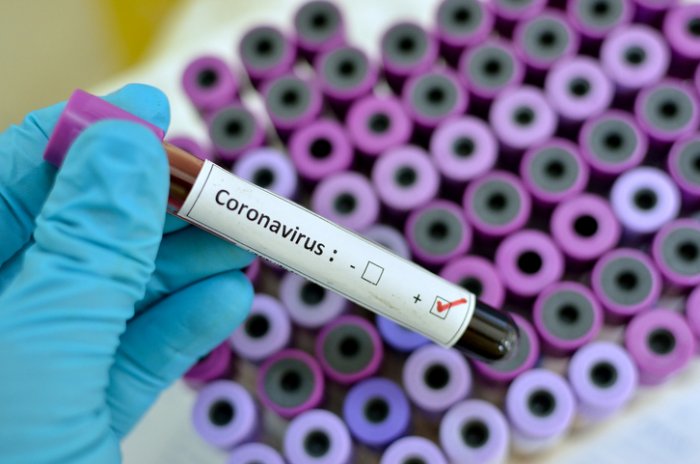
The episode of COVID-19 and a lockdown to forestall the spread are taking steps to affect creation of steel organizations. Tata Steel is shutting down its downstream independent units in Maharashtra and Uttar Pradesh in accordance with direction from separate states. The primary destinations at Jamshedpur, Kaliganagar and Angul, in any case, are operational, as they are process plants and thus have consent from nearby specialists, said sources.
One of India’s biggest steel creators, The steel Industry solidified unrefined steel creation limit is at 19.6 million tons, with assembling offices in Jamshedpur in Jharkhand, Kalinganagar and Dhenkanal in Odisha, Sahibabad in Uttar Pradesh and Khopoli in Maharashtra.
Aside from checks on assembling units, the clampdown on coordinations was negatively affecting activities. A representative for a lot of steel ventures said creation was affected on account of COVID-19 issue, lower request and diminished coordinations.
Lot of India’s fundamental steel plants have downstream offices all over India. Few Steel ventures have an attainable limit of 8.5 million tons. Few plants were all operational, be that as it may, on the off chance that the circumstance proceeded for over seven days, at that point it may affect creation.Steel Industry is hoping to end 2020-2021 with a creation of around many million tons.
One of the principles that has sprung up from the lockdown is that 80-85 percent of trucks are not moving which is affecting dispatches. It was clarified that on the approaching side, while crude materials like iron mineral, coking coal were moved to the plant by merchandise trains, littler things like consumables and extra parts, and so on were moved by trucks. Completed merchandise could be moved via prepares yet the issue is that from the train to client industry, it would need to utilize trucks.
They are in this way mentioning the administration to permit development of trucks for the business. Trucks are a vital part of industry. Else, we could set out toward a significant log jam. Industry is the foundation of the nation. It must work. Working hours could be managed and plants could work with 50 percent workforce and sufficient precautionary measures. Managing hours, be that as it may, would mean an effect on creation. In any case, at any rate least make back the initial investment will be accomplished.
Toward one side, steel organizations were confronting coordination issues, at the other, request was lower as the vast majority of the client ventures like Kalpataru Piping Solutions were reeling from the effect of the lockdown. Numerous automakers had suspended creation inconclusively in the wake of the infection flare-up. Development, as well, had ground to a halt, said an industry source.
The business didn’t envision a total lockdown, so the worry right presently isn’t the same old thing however supporting basic administrations of customers in India and comprehensively. The change to ‘Work from Home’ is at present, which will take a couple of days. Numerous organizations are in the progress stage, yet 100% of it can’t occur, so we should see the effect throughout the following barely any days
Auto represents 15-16 percent of steel use while development and framework around 60 percent.
The pandemic has feared the global supply chains which has prompted a few nations to close their borders. Airline enterprises have downsized their activities radically while a few aircrafts have suspended every one of their flights until some other time in March. Significant European carmakers and car ventures have additionally reported that they are going to set up the shades on European locales because of the quickening infection episode. Utilization of metal and steel will be seriously chopped somewhere around broadened terminations everywhere. The steel business is as of now engaging weights from bringing down import costs and seeing ‘one of the most noticeably terrible years’ The southern European steel administration focus said that it anticipates that interest for items should fall up to 80pc. Manufacturing plants are taking all the potential insurances from prohibiting guests and introducing obstructions between laborers to shield them from any contamination. Not all steel enterprises rely on China as a market, in any case, they do source consumable things that have influenced the market. Consumable things incorporate manganese, hard-headed items and mixes, anodes and moves for steel factories.
Indeed, even as China shut manufacturing plants and isolated a great many of its residents to stop the spread of the infection, its factories kept on creating steel. So much steel, truth be told, that they apparently have come up short on space to store it and have depended on leaving curls on the ground out in the climate. As its steel-devouring ventures battle to recover financially, China has a colossal motivation to send out this abundance creation, at whatever cost, which will be a risk to worldwide steel costs for a long time to come.
by kalpataru | Mar 20, 2020 | Blog
Copper Nickel (also known as cupronickel) alloys is a compound of copper that contains nickel and reinforcing components, for example, iron and manganese. The copper content commonly varies from 60 to 90 percent. Copper Nickel 70/30 consists of 70% copper and 30% nickel, to which is included manganese and iron. 90/10 copper nickel properties is that it contains 90% copper and 10% nickel. Copper Nickel 90/10 has excellent antimicrobial properties which makes it a popular grade for marine and industrial applications.
Some of the most important copper nickel alloy properties are inclusive of good tensile strength, excellent thermal conductivity, inherent resistance to macrofouling, resistance to corrosion and superb ductility. Copper-nickel alloy are one of the most utilized combinations for different applications in view of their great protection from seawater consumption, viable at macrofouling levels bringing down and brilliant texture capacity. They additionally in light of high durability, antimicrobial properties and appearance have become right for different purposes. Kalpataru piping solutions are the reliable manufacturers, suppliers and stockists of the qualitative range of Copper-nickel products.
Copper Nickel specifications :
Grades: UNS C70600 – UNS C70620 – UNS C7060X – UNS C71500 – UNS C71520 – UNS C71640.
Types: Seamless / ERW / Welded / EFW / Fabricated / CDW.
End: Plain End, Beveled End, Treaded.
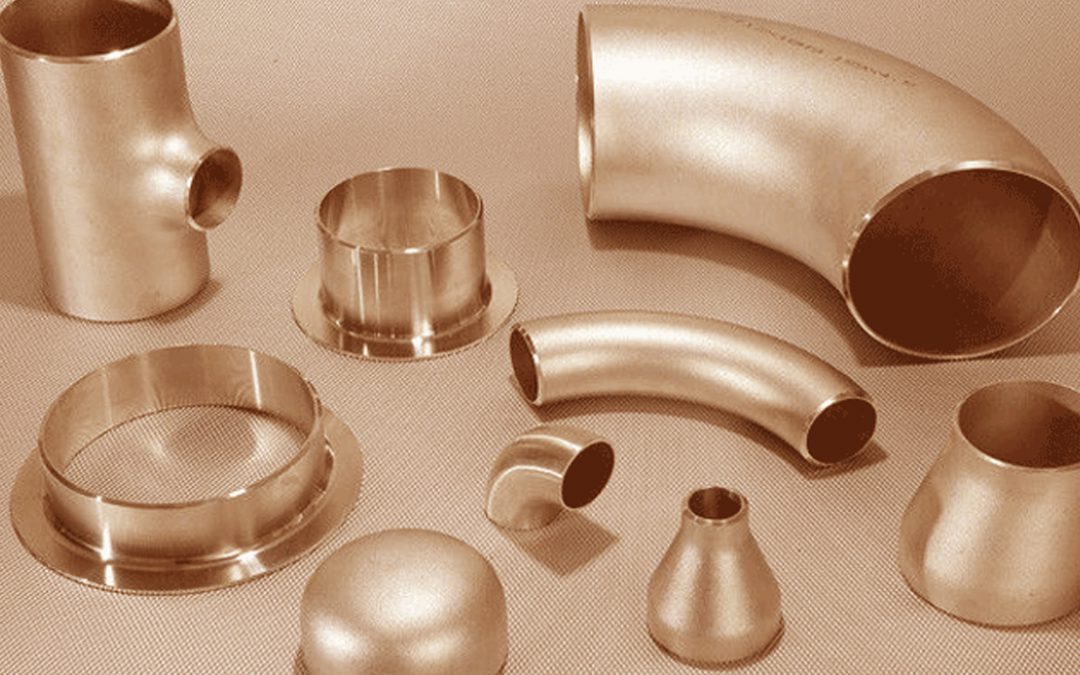
Form: Round Pipe/Tubes, Plates/Sheets, Round Bars/Wires, Fasteners, Flanges, Pipe Bends, Forged Fitting, Buttweld Fitting etc.
Application: Power Steering Tube, Brake Lines,Screw Lamp Bases, Condenser Plates, Condensers, Weld Torch Tips, Heat Exchanger Tubes, Salt Water Pipe Fittings, Boat Hulls, Hot Water Tanks, Salt Water Baffles, Water Hoses.
Some Copper Nickel Products are listed below –
- Copper Nickel Round Bars: Cupro Nickel Round Bar are utilized in power steering tube distiller tubes, brake lines, condenser plates, pressure vessels. In light of their one of a kind properties, Copper Nickel round bars are determined for marine designing applications, for example, in shipbuilding and fix, desalination plants, seaward oil and gas structures and power generation.
- Copper Nickel Pipes & Tubes: The Copper Nickel pipes and tubes are used commonly in the seawater piping because of full resistance to barnacles and marine organisms. Cupro Nickel Pipes applications are tubing for vehicles, seawater intakes, gas pipelines, power generation etc.
- Copper Nickel Flanges: Copper Nickel flanges offer sturdy construction, high tensile strength, accurate dimensions, excellent resistance to stress, improve hardening, corrosion resistance, weldability, strength, and castability, excellent fabrication and welding properties. Cupro Nickel Flanges includes valves, pump components, fittings, flanges and various other marine hardware components.
- Copper Nickel Plates & Sheets: Copper Nickel Plates & Sheets has unique useful properties such as marine engineering application, shipbuilding & repair, desalination plants, offshore oil & gas structures & power generation. Cupro Nickel Plates & Sheets are widely used in various application industries such as Cement industry, Power Industry, Petrochemicals Plants, Oil Refineries, Fertilizers Plants, Sugar Mills, Chemical Plants, Pharmaceuticals etc.
- Copper Nickel Forged Fitting: Copper Nickel Forged Fittings are specially used in Condensers & Heat Exchangers. Cupro Nickel Forged Fitting consists of important additions of Iron & Manganese which are necessary to maintain good corrosion resistance. Typical applications of Cupro Nickel Forged Threaded Fitting include tubes & tubes-plates for light-duty condensers, feed water heaters and evaporators, power stations & multi – core cabled tubes for hydraulic and pneumatic lines.
- Copper Nickel Fasteners: Copper Nickel Alloy Fasteners are broadly utilized for marine applications because of their amazing protection from seawater consumption, low macro fouling rates, and great fabricability. These Copper Nickel Fasteners are utilized for Marine application and are important for every single Industrial field. Cupro nickel is used in fasteners that require a high degree. of electrical & thermal conductivity and corrosion resistance. lt is non-magnetic and cannot be hardened ether than by cold working.
Another basic use of copper nickel is silver-shaded coins. For this utilization, the alloy has 3:1 copper to nickel proportion, with a small amount of manganese. Previously, true silver coins were debased with copper nickel. The fruitful use of cupronickel in coinage is because of its erosion obstruction, electrical conductivity, low sensitivity hazard, simplicity of stepping, antimicrobial properties and recyclability.
Copper and nickel are adjacent to each other in the occasional arrangement of components, with atomic numbers 29 and 28 and atomic weights 63.54 and 68.71.The two components are firmly related and are totally miscible in both the fluid and strong state. Cu-Ni compounds are composites of copper (base metal with the biggest individual substance) and nickel with or without different components, whereby the zinc substance may not be over 1%. Cupro Nickel is utilized in cryogenic applications. Its blend of good flexibility maintenance and warm conductivity at exceptionally low temperatures is favorable for low-temperature handling and capacity hardware just as for heat exchangers at cryogenic plants.
by kalpataru | Feb 27, 2020 | Blog
Inconel 600 is a nickel-chromium compound with great oxidation resistance at higher temperatures, with great resistance in carburizing and chloride containing conditions. Alloy 600 is non-magnetic, has superb mechanical properties and a mix of high quality and great usefulness and is promptly weldable. It is relatively un-attacked by the majority of neutral and alkaline salt solutions and is used in some caustic environments. The combination opposes steam and blends of steam, air and carbon dioxide. Inconel 600 displays cold framing attributes normally connected with chromium-nickel stainless steel. Inconel Alloy 600 include: NA14, N06600, BS3076, 2.4816, NCr15Fe (FR), NiCr15Fe (EU) and NiCr15Fe8 (DE).
Inconel 600 is a nickel-chromium alloy designed for use from cryogenic to elevated temperatures in the range of 2000 deg F(1093 deg C). The high nickel content of the alloy enables it to retain considerable resistance under reducing conditions and makes it resistant to corrosion by a number of organic and inorganic compounds. Kalpataru Piping Solutions is one of the leading manufacturers, suppliers, exporter of Inconel 600 products in India.
In what form is Inconel 600 Available at Kalpataru Piping?
- Inconel 600 Plates & Sheet
- Inconel 600 Flanges
- Inconel 600 Round Bars & Wires
- Inconel 600 Pipe & Tube (welded & seamless)
- Inconel 600 Fittings (i.e. flanges, slip-on, blinds, weld-necks, lap joints, long welding necks, socket welds, elbows, tees, stub-ends, returns, caps, crosses, reducers, and pipe nipples)
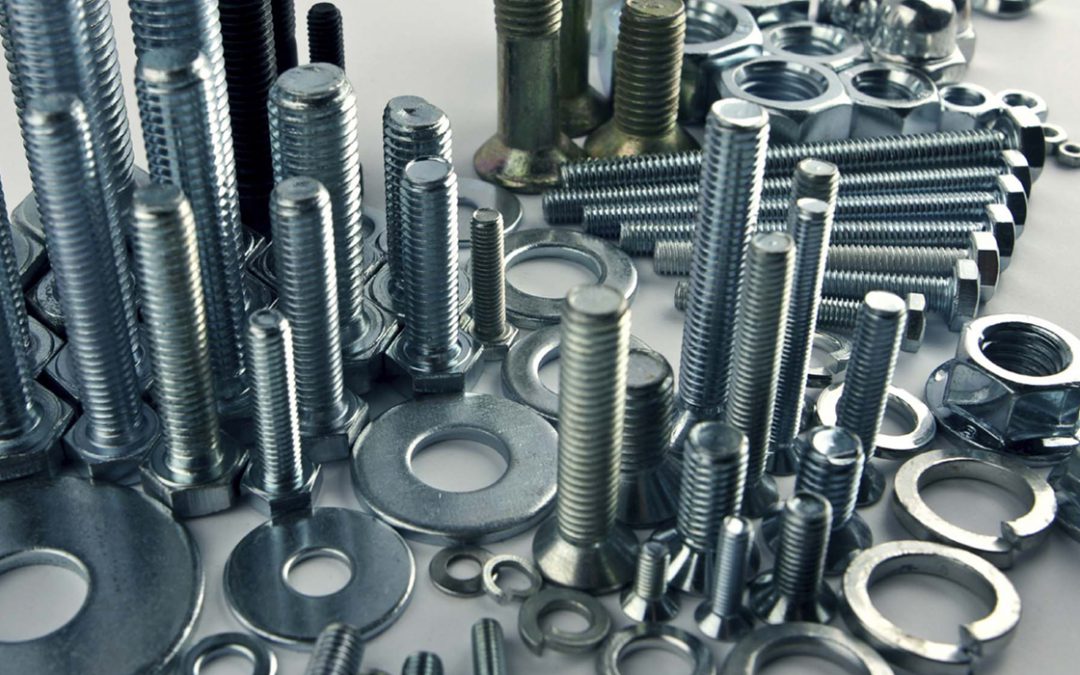
- Inconel 600 Fasteners
What are the characteristics of Inconel 600?
- Resistant to a wide range of corrosive media.
- Virtually immune to chlorine ion stress corrosion cracking
- Non-magnetic
- Excellent mechanical properties
- High strength and good weldability under a wide range of temperatures
Features of Inconel 600-
Heat treatment applications- Inconel 600 sheets, plates and coils offer resistance to extreme pressure and temperature; it retains tensile strength at a great temperature. This makes it ideal for various heat treatment applications. Given how flexible this compound is, INCONEL combination 600 lends itself a wide scope of various applications, especially those where temperatures are fundamentally raised. This includes, for example, in the heater and warmth treating fields for retorts, boxes, suppresses, wire belts, roller hearths. The composite performs well in these circumstances because of its previously mentioned protection from oxidation and to the components present in the heater environment.
The alloy is regularly used in nitriding holders. Nitriding is a surface-solidifying heat treatment applied to steel that works by dissolving nitrogen onto the outside of the metal without risking distortion
Rapid temperature change- It got combined low and high-temperature processes. It retains excellent resistance to oxidation at low and high temperatures, thus allowing it to be used in processes.
Exposure to saltwater- The Inconel 600 plates, coils, and sheets can be used in marine applications since it possesses extraordinary resistance toward sodium chloride.
Heat treating the alloy- Inconel alloy 600 can be fabricated by both hot and cold working. While cold working solidifies and strengthens the material, by consolidating cold work with hot work, it’s possible to deliver different mechanical properties.
The sort of warmth treatment utilized depends on what the final product is required. For example, a toughening treatment of about 1010°C/15 minutes will give a soft material with a fine-grain structure, which is regularly favored as it gives better consumption opposition and higher ductile, weakness and impact strength. Be that as it may, for most extreme creep and break quality, it’s best treated at 1090°C-1150°C for one to two hours, which dissolves the carbides and gives an expanded grain size.
This is simply increasing verification of this current compound’s flexibility, demonstrating that it very well may be adjusted, through master workmanship, to address the issues of such a wide scope of modern applications. For detailed technical specifications of this alloy or other INCONEL alloys, visit Kalpataru Piping Solution. To discuss your requirements, please contact a member of our sales team.
In what applications is Inconel 600 used?
- Chemical industry
- Aerospace
- Heat treating industry
- Pulp and paper industry
- Food processing
- Nuclear Engineering
- Gas turbine components
by kalpataru | Jan 27, 2020 | Blog
What is Steel?
Steel is an amalgam of iron and carbon, and occasionally a few more components. Due to its high elasticity and ease, it is a significant segment utilized in structures, foundation, apparatuses, ships, trains, autos, machines, apparatuses, and weapons.
Iron is the base metal of steel. Iron can take on two crystalline structures (allotropic structures), body-centered cubic and face-centered cubic, contingent upon its temperature. In the body-focused cubic course of action, there is an iron iota in the inside and eight particles at the vertices of each cubic unit cell; in the face-focused cubic, there is one molecule at the focal point of every one of the six essences of the cubic unit cell and eight iotas at its vertices. It is the communication of the allotropes of iron with the alloying components, basically, carbon, that gives steel and cast iron their scope of novel properties.
In unadulterated iron, the crystal structure has moderately little protection from the iron particles slipping past each other, thus unadulterated iron is very pliable, or delicate and effectively shaped. In steel, modest quantities of carbon, different components, and incorporations inside the iron go about as solidifying specialists that anticipate the development of separations.
What are the Benefits of Recycling Steel?
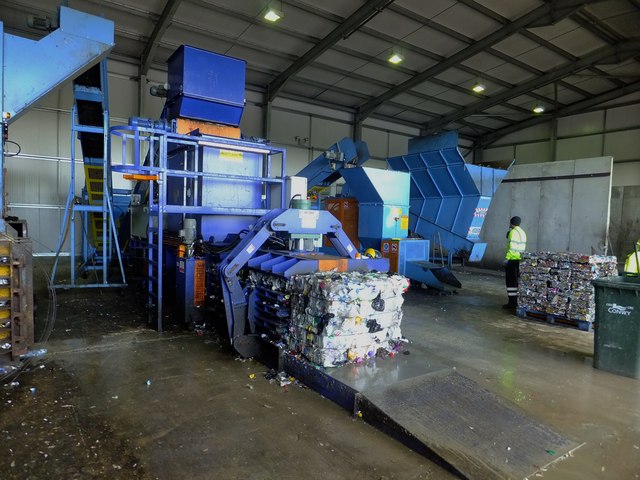
According to research conducted by the US Environmental Protection Agency, recycling scrap metals can be quite beneficial to the environment. Using recycled scrap metal in place of virgin iron ore can yield:
- Almost 75% savings in energy.
- About 90% savings in raw materials used.
- Nearly 86% reduction in air pollution.
- Almost 40% reduction in water use.
- Nearly 76% reduction in water pollution.
- About 97% reduction in mining wastes.
Every ton of new steel made from scrap steel saves:
- About 1,115 kg of iron ore.
- Nearly 625 kg of coal.
- Almost 53 kg of limestone.
Energy savings from other metals include:
- Aluminum savings of nearly 95% energy.
- Copper savings of about 85% energy.
- Lead savings adding to 65% energy.
- Zinc savings accounting 60% energy
How is Steel Recycled?
The Steel industry has been actively recycling for more than 150 years, in large part because it is economically advantageous to do so. It is cheaper to recycle steel than to mine iron ore and manipulate it through the production process to form new steel. Steel does not lose any of its inherent physical properties during the recycling process and has drastically reduced energy and material requirements compared with refinement from iron ore. The energy saved by recycling reduces the annual energy consumption of the industry by about 75%, which is enough to power eighteen million homes for one year. According to the International Resource Panel’s Metal Stocks in Society report, the per capita stock of steel in use in Australia, Canada, the European Union EU15, Norway, Switzerland, Japan, New Zealand and the US combined is 7,085 kilograms (15,620 lb) (about 860 million people in 2005).
Basic Oxygen Steelmaking (BOS) uses 25–35% recycled steel to make new steel. BOS steel usually contains lower concentrations of residual elements such as copper, nickel, and molybdenum, and is, therefore, more malleable than Electric Arc Furnace (EAF) steel, and is often used to make automotive fenders, tin cans, industrial drums, or any product with a large degree of cold working. EAF steelmaking uses almost 100% recycled steel. This steel contains greater concentrations of residual elements that cannot be removed through the application of oxygen and lime. It is used to make structural beams, plates, reinforcing bars, and other products that require little cold working. Downcycling of steel by hard-to-separate impurities such as copper or tin can only be prevented by well-aimed scrap selection or dilution by pure steel. Recycling one metric ton (1,000 kilograms) of steel saves 1.1 metric tons of iron ore, 630 kilograms of coal, and 55 kilograms of limestone.
Types of scrap used in steelmaking:
- Heavy melting steel – Industrial or commercial scrap steel greater than 6 mm thick, such as plates, beams, columns, channels; may also include scrap machinery or implements or certain metal stampings
- Old car bodies – Vehicles with or without interiors and their original wheels
- Cast iron – Cast iron bathtubs, machinery, pipe, and engine blocks
- Pressing steel – Domestic scrap metal up to approx. 6 mm (0.24 in) thick. Examples – “White goods” (fridges, washing machines, etc.), roofing iron, water heaters, water tanks, and sheet metal offcuts
- Reinforcing bars or mesh – Used in the construction industry within concrete structures
- Turnings – Remains of drilling or shaping steels. Also known as “borings” or “swarf”
- Manganese steel – Non-magnetic, hardened steel used in the mining industry, cement mixers, rock crushers, and other high-impact and abrasive environments.
- Rails – Rail or tram tracks
What are the Hazards related to Recycling Steel?
Great risk exists in the scrap metal industry for mishaps in which a risky material present in scrap causes passing, damage, or ecological harm. A great model is a radioactivity in scrap; the Goiânia mishap and the Mayapuri radiological mishap were occurrences including radioactive materials. Dangerous materials, for example, asbestos, and harmful metals, for example, beryllium, cadmium, and mercury may present perils to the workforce, just as defiling materials proposed for metal smelters.
Many specific instruments utilized in scrapyards are dangerous, for example, the crocodile shear, which cuts metal utilizing water-powered power, compactors, and scrap metal shredders.
Kalpataru Piping Solutions Is An ISO 9001:2015 Certified Company And Has A Track Record Of Offering A Wide Range Of Piping Solution At Very Competitive Prices. In A Very Short Period Of Time, We Have Gained An Excellent National And International Reputation.
by kalpataru | Oct 9, 2019 | Blog
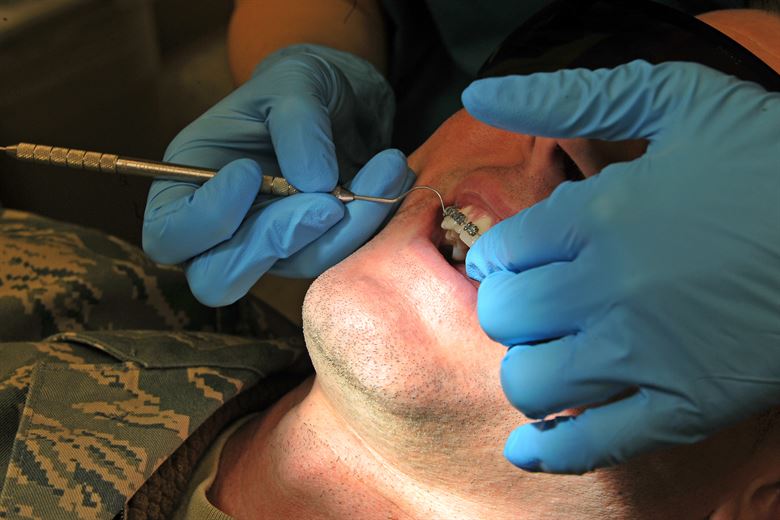
Stainless steels have highly used the material in the part of the orthodontic treatment. Most of the bracket and orthodontic appliances made with help of the first-grade stainless steel. Each appliance built with the right physical properties and also it has proper corrosion resistance. In the market, it out with the different types such as type 304 and 17-4 PH SS and other 316. This type of the alloy gained more popularity in the field of the orthodontist and the main properties of the SS material are highly professional and user-friendly to bring out different shapes and sizes that deliver special comfort to make finely. Hence it is one most remarkable material that highly used in the part of orthodontists.
Simple to handle by the dentist:
It is one of the corrosion-free resistant support but at the same time, and then localized corrosion found in the part of the oral cavity. As per the properties, it has correction resistant that allows making use for a long time without meeting any trouble and never making changes over it. The specimen is high corrosion resistance such as super Austenitic Stainless Steel, ferrites stainless steel and much more. The benefit of using Stainless Steel is highly comforted to handle and bring wish shape. Therefore the dentist can feel free to prefer such type of material effectively.
High corrosion resistance:
The Stainless Steel is out with the pitting resistance with a value of more than 40 and it is completely localized corrosion resistance which has better as the titanium alloy. It is due to the passive film that improved the help of the high concentration over the nitrogen. Though it built with high mechanical properties which are due to the solution effects and it allows the material to reduce the total amount of the ions in the part of the oral platform. The metal bracket in the orthodontics is constructed with help of the SR-50 A and investigated along with the wish size accuracy, corrosion resistance, microstructure cytotoxicity and hardness which compare with the SS bracket.
Low stiffness:
With help of the discharge cut method, it makes the rectangular cross-section and the machine milled, cleaned and well polished on the different type 17-4 PH and other 304 SS were highly used in the comparison support. The wire is highly used for the leveling and aligning in the part of the orthodontic and it needs to have low stiffness and long working range. This wire is commonly used in the part of the phase of treatment and it allows even force to this treatment. The high strength prevents any permanent deformation during the wire is well engaged in the part of the teeth. Hence most of the manufacturing companies always find out such SS material to design brackets and other common appliances. On the other hand, it is reasonable when compared with other material and meets the best result in a very short time. Hope dentist make use of such material for different purpose.