Complete Guide on UNS S31803 Duplex Steel

Complete Guide on UNS S31803 Duplex Steel

Stainless steel plays a crucial role in various industries applications, offering exceptional strength, durability, and corrosion resistance. With availability of various grades, UNS S31803 Duplex Stainless Steel is known for its superior performance in demanding applications.

Here, in this blog we will discuss UNS S31803 material, highlighting its key properties, applications.

Understanding UNS S31803 Material

UNS S31803 Duplex Stainless Steel also known as Duplex 2205, is a high-performance alloy widely used across industries for its exceptional strength, durability, and corrosion resistance. With a balanced microstructure of austenite and ferrite, it provides superior mechanical properties, making it a preferred choice for chemicals, seawater, and extreme temperatures applications.

UNS S31803 Duplex Steel Supplier – Kalpataru Piping Solutions

Kalpataru Piping Solutions is a trusted supplier of UNS S31803 Duplex Steel, a chromium-nickel-molybdenum austenitic-ferritic grade known for its high strength, corrosion resistance, and durability. This type of duplex stainless steel offers superior resistance to stress corrosion cracking, pitting, and crevice corrosion.

Buy High-Quality UNS S31803 Duplex Steel. Contact us today for the best prices and fast delivery!

Key Features of UNS S31803

Corrosion Resistance of Duplex UNS S31803

Duplex stainless steel UNS S31803 offers excellent corrosion resistance, compared with austenitic stainless steel grades like 316. The duplex S31803 material resists intergranular corrosion, stress corrosion cracking, and pitting corrosion better than 304 and 316 stainless steels. Its superior corrosion resistance makes duplex steel UNS S31803 ideal for marine, chemical, and oil & gas applications.

Welding of Duplex S31803 Material

Duplex UNS S31803 material has good weldability. The low thermal expansion reduces residual stresses after welding. Using duplex welding electrodes that match the duplex SS UNS S31803 base metal ensures strong and durable welds. Electric arc welding methods are recommended, but oxyacetylene welding should be avoided to prevent carbon contamination. While post-weld annealing is not always necessary, it enhances the corrosion resistance of duplex stainless steel S31803 in extreme conditions.

Heat Treatment of Duplex Stainless Steel UNS S31803

Duplex UNS S31803/F51 undergoes solution annealing to enhance corrosion resistance and mechanical properties. The typical annealing temperature for duplex stainless steel UNS S31803 is between 1025°C and 1125°C, followed by rapid cooling. The temperature ranges from 150°C to 300°C, with a holding time of 30 minutes to 1 hour. Proper heat treatment ensures that duplex steel UNS S31803 retains its strength and durability in demanding applications.

Composition of Duplex Steel UNS S31803

The duplex S31803 material consists of 22% chromium, 5% nickel, 3% molybdenum, and 0.15% nitrogen. This unique composition enhances pitting and crevice corrosion resistance, making duplex SS UNS S31803 an excellent choice for offshore and aggressive environments.

Mechanical Properties of Duplex Stainless Steel S31803

The duplex UNS S31803 material has exceptional mechanical properties, with a yield strength of 450 MPa and a tensile strength of 620 MPa. The high strength-to-weight ratio makes duplex UNS S31803 a preferred choice for structural applications. While the elongation and formability of duplex stainless steel UNS S31803 are lower than austenitic grades, its high durability and corrosion resistance make it ideal for demanding industrial uses.

FAQs

What is the difference between UNS S31803 and SS316?
Compared to SS316, duplex UNS S31803 has twice the yield strength and a higher Pitting Resistance Equivalent Number (PREN) (34 vs. 25), making it more resistant to pitting corrosion.
What is the difference between S32750 and S31803?
Duplex S32750 is 3.2 times stronger, while duplex S31803 is 2.6 times stronger in yield strength. Stronger grades allow for thinner walls, reducing material costs.
What is the equivalent of UNS S31803?
Duplex S31803 equivalent grades include ASTM A182 F51, ASTM A240, ASTM A789, ASTM A790, and DIN 1.4462.
What is UNS S31803 material?
UNS S31803 material is a duplex stainless steel with a 50:50 austenite-ferrite microstructure, offering high strength and corrosion resistance.
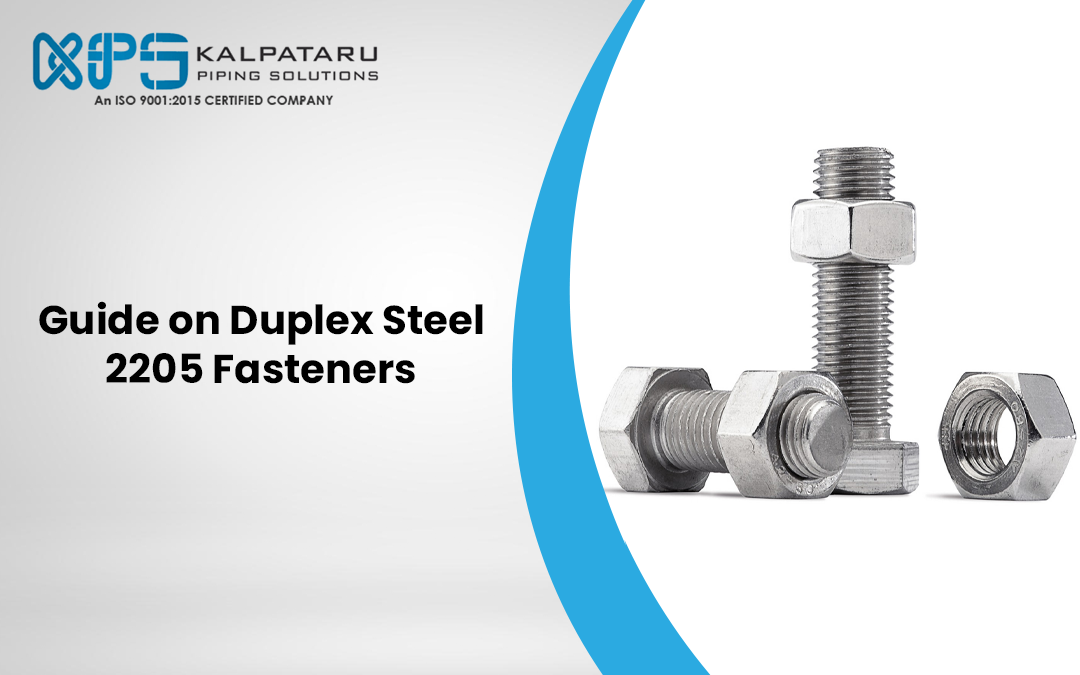
Duplex 2205 Fasteners Complete Guide

Duplex 2205 Fasteners Complete Guide

If you work in the industrial or engineering sector, you’ve likely encountered Duplex 2205. Selecting the right fasteners is crucial for securing structures, machinery, and equipment in high-pressure and high-temperature environments. Duplex Stainless Steel offers excellent strength, corrosion resistance, and durability, making it a preferred choice for various demanding applications.

One of the key advantages of Duplex 2205 Fasteners is their superior weldability, increased tensile strength, and impact resistance. These properties make them ideal for chemical processing, marine, and other industrial sectors where long service life is essential. To get a detailed price list and find the best fasteners for your project, contact Kalpataru Piping Solution today!

What is 2205 Duplex Stainless Steel?

2205 Duplex Stainless Steel is a high-performance alloy that combines the mechanical properties of both austenitic and ferritic stainless steels. This unique best composition makes duplex 2205 more stronger and corrosion resistant to be used in high temperature  applications. Duplex SS 2205 consists of 22% chromium, 3% molybdenum, and 5-6% nickel offers outstanding resistance to pitting and chloride stress corrosion cracking. Its high mechanical strength allows it to reduce material thickness, making it a cost-effective solution. Due to its exceptional weldability and durability, Duplex 2205 is widely used in heat exchangers, acid tanks, pipelines, and other applications rather than traditional stainless steel material.

Contact us for your high quality fasteners needs?

Duplex 2205 Fasteners Overview

Kalpataru Piping Solution as a trusted 2205 duplex stainless steel supplier, we offer premium quality duplex 2205 fasteners, including bolts, screws, nuts, washers, and threaded rods.  Duplex 2205 fasteners are manufactured to industry standards such as ASTM A479, ASME SA479, IS, BS, ASTM, and ASME, are available in sizes ranging from 3/6″ to 2″ (M3 – M56) with custom size options and lengths from 3mm to 200mm. With a high yield strength of up to 690MPa, duplex 2205 fasteners ensure reliable performance even in extreme conditions, including offshore platforms, marine engineering, and chemical processing plants.

Types of Duplex 2205 Fasteners

  • Nuts: Paired with bolts for strong fastening.
  • Washers: Distribute loads evenly and enhance stability.
  • Screws: Ideal for precision fastening in corrosive environments.
  • Threaded Rods: Essential for construction and heavy-duty applications.
  • Bolts: Used in high-stress environments for secure connections.

Benefits of Duplex 2205 Fasteners

2205 duplex stainless steel fasteners offer many benefits making them a preferred choice for demanding industrial applications. Here are the key features:

  1. Longevity
    The superior strength and corrosion resistance of 2205 duplex stainless steel ensure a long service life, minimizing the need for frequent replacements and reducing overall maintenance costs.
  2. High Temperature Tolerance
    Duplex SS 2205 fasteners perform well in both high and low-temperature environments, maintaining their structural integrity and resistance to corrosion, even under extreme conditions.
  3. Cost-Effectiveness
    Although Duplex 2205 fasteners may have a higher initial cost than standard stainless steel fasteners, their long lifespan and reduced maintenance needs make them a cost-effective solution. 
  4. Easy Installation
    These fasteners can be easily bolted or welded, simplifying installation and reducing labor costs. Their high strength ensures secure fastening, minimizing the risk of installation failure.

Conclusion

For maximum efficiency and long service life, selecting the right 2205 duplex stainless steel fasteners for your project is crucial. Proper installation and maintenance further enhance their performance, ensuring high durability. By understanding the advantages and applications of duplex 2205 fasteners, you can make informed choices that improve safety, efficiency, and cost savings in your industrial applications.

FAQs

What are the differences between Duplex 2205 and Super Duplex 2507?

Super Duplex 2507 has higher chromium (25%), molybdenum (4%), and nickel (7%) than Duplex 2205, offering superior corrosion resistance and strength. 

How does the corrosion resistance of Duplex 2205 compare to other stainless steel grades?

Duplex 2205 offers better corrosion resistance than 316L stainless steel, especially against chlorides and acids to use in high temperature applications.

What are the applications of Duplex 2205 fasteners?

Used in chemical, petrochemical, marine, offshore, oil & gas, food processing, and structural applications, Duplex 2205 fasteners provide high strength and corrosion resistance in harsh conditions.

What is the difference between Duplex 2205 and 316 SS?

Duplex 2205 contains higher chromium, nickel, molybdenum, and nitrogen than 316 SS, making it twice as strong and more corrosion-resistant, especially in marine and acidic environments.

What is the ASTM for Duplex 2205?

Duplex 2205 pipes follow ASTM A790, covering both seamless and welded constructions. No filler metal is required during welding.

Duplex Pipe Vs Carbon Steel Pipe

Duplex Pipe Vs Carbon Steel Pipe

When selecting the right piping material for industrial applications, duplex steel pipes and carbon steel pipes are two of the most commonly used options. Duplex pipe offers distinct advantages, making them suitable for different industrial applications and operational conditions. This blog will help you understand the key differences between duplex stainless steel pipe and carbon steel pipes, their benefits, and how to choose the right one for your business needs.

Why Choose Kalpataru Piping Solutions?

Kalpataru Piping Solutions is a leading manufacturer of duplex stainless steel offering high quality duplex steel pipes as per industrial needs. Our products are manufactured to international standards, ensuring durability and performance. We offer a wide range of duplex pipes available in various sizes and specifications with customized solutions as per project requirements. With competitive pricing and reliable on-time delivery, we provide cost-effective solutions.

Contact us for your high quality piping needs?

What is a Duplex Steel Pipe?

Duplex pipes are made from a mix of austenitic and ferritic stainless steel, offering high strength, excellent corrosion resistance, and improved durability. These duplex stainless pipes are widely used in high temperature applications, such as offshore platforms, plants, and chemical industries, where resistance to chloride induced corrosion.

Benefits of Duplex Steel Pipes

  • High Strength: More stronger than stainless steel & carbon steel.
  • Corrosion Resistance: Resistant to pitting, crevice corrosion, and stress corrosion cracking, ideal for high temperature applications.

What is Carbon Steel Pipe?

Carbon steel pipes are made primarily from iron and carbon, offering excellent strength, ductility, and affordability. These pipes are widely used in industries such as power plants, oil refineries, and water transportation due to their ability to withstand high pressures and mechanical stress.

Benefits of Duplex Steel Pipes

  • High Durability: Strong and impact-resistant, making it ideal for structural and industrial applications.
  • Cost-Effective: More affordable compared to duplex and stainless steel pipes.

Key Differences: Duplex Pipe vs. Carbon Steel Pipes

Feature Duplex Steel Pipes Carbon Steel Pipes
Composition Combination of austenitic & ferritic steel Iron with carbon content up to 1.7%
Strength Higher strength, thinner pipe walls Strong but requires thicker walls for strength
Corrosion Resistance Excellent, resists pitting & crevice corrosion Needs coatings or galvanization for protection
Weldability Good weldability with minimal loss in strength Easy to weld but requires post-weld treatments
Weight Lighter due to high strength-to-weight ratio Heavier due to higher density
Applications Chemical plants, offshore platforms, marine, desalination, pipelines Oil & gas, water pipelines, construction, power plants
Lifespan Longer service life with minimal maintenance Shorter lifespan due to potential corrosion

How to Select the Right Pipe for Application?

Consider below several factors while selecting duplex steel pipe & carbon steel pipe.

  • For high corrosion resistance: Choose duplex steel pipes for applications involving saltwater, chemicals, and extreme environments.
  • For cost-effectiveness & durability: Carbon steel pipes are ideal for general industrial use where corrosion is not a major concern.
  • For high-pressure systems: Both materials are suitable, but duplex stainless steel pipes offer better long-term performance with thinner walls.

Conclusion

Both piping products play a crucial role in industrial applications. While duplex pipes offer superior strength and corrosion resistance, carbon steel pipes remain a cost-effective solution for many industries.

FAQs

What is a duplex pipe?

A duplex pipe is a Fe-Ni-Cr alloy with a two-phase ferritic-austenitic stainless steel microstructure, offering high strength and corrosion resistance.

What is the density of a duplex pipe?

The density of 22Cr duplex pipe is 7.8 g/cm³, with an elongation of 15% in various applications.

What is a duplex pipe used for?

Duplex pipes are used in oil & gas, petrochemical, chemical, food processing, and marine industries, including offshore drilling and ships.

Why use carbon steel pipes?

Carbon steel pipes offer high strength, wide availability, and multiple connection options like screwed, socket-welded, and butt-welded joints.

Duplex Round Bar Complete Guide

Duplex Round Bar Complete Guide

Leading Manufacturer & Supplier of Duplex Steel Round Bars

Kalpataru Piping Solutions is a trusted manufacturer and supplier of high-quality duplex round bars & super duplex round bars, catering to various industries worldwide. Our product range includes Duplex Steel UNS S31803, UNS S32205 Round Bars, Duplex Steel Wires, Cold Rolled Duplex Round Bars, SS Rods, Duplex SS Hot Rolled Round Bars, Forged Bars, and more. We provide these round bars in various grades and specifications to meet the diverse needs of our clients.

Our Duplex Steel products are known for their excellent strength, corrosion resistance, and superior performance in harsh environments. Manufactured using top-grade raw materials, these products are highly durable and reliable, ensuring long-term use across various applications. At Kalpataru Piping Solutions, we prioritize quality and precision, with our expert team overseeing every step of the manufacturing process.

For inquiries or to request a quote, please contact us today.

Overview of Duplex Round Bars

Duplex Round Bars are designed for enhanced performance in environments prone to chloride stress corrosion and chloride pitting corrosion, offering higher strength compared to standard austenitic stainless steels like Type 304 or 316. A 22%Cr duplex steel round bar offers a minimum 0.2% proof strength of approximately 450N/mm², while super duplex steel bars provide a minimum of 550N/mm².

Duplex Steel Round Bars are divided into three main types: lean duplex round bars, 22%Cr duplex steel hex bars, and 25%Cr super duplex round bars. Even higher alloyed, hyper duplex grades have been developed, with their classification primarily based on the alloy’s alloying level, especially in terms of the Pitting Resistance Equivalent Number (PREN). This number measures the alloy’s resistance to pitting corrosion, which is crucial for ensuring long-lasting performance in aggressive environments.

The PREN value for Duplex Steel Bars is calculated using the formula:
PREN = %Cr + 3.3%Mo + 16%N

An allowance for tungsten (W) can also be made, with a factor of 1.65. A Duplex Stainless Steel Round Bar has a PREN of less than 40, while a Super Duplex Hex Bar typically falls between 40 and 45. Hyper Duplex Round Bars have a PREN value above 45, offering superior corrosion resistance. Lean grades typically have lower nickel content, which makes them a more cost-effective option.

Duplex Steel Round Bars Benefits

  • High strength and excellent corrosion resistance
  • Superior weldability and formability
  • Available in various grades and finishes
  • Customized solutions to meet specific client requirements
  • Good weldability for easier fabrication
  • Excellent resistance to stress corrosion cracking in chloride environments
  • Superior resistance to pitting and crevice corrosion

Duplex Round Bars Uses

Duplex Steel Round Bars offer exceptional corrosion resistance, strength, and durability, making them ideal for a wide range of industries. Here are some key applications:

  1. Pipeline Engineering: Used extensively for high-pressure pipelines due to their strength and resistance to corrosion.
  2. Mechanical Engineering: Used in various mechanical components requiring high strength and fatigue resistance.
  3. Marine Industry: Perfect for marine environments, offering protection against seawater corrosion.
  4. Wastewater Management: Ensures durability and resistance to corrosive effects of wastewater treatment processes.
  5. Chemical Industry: Ideal for chemical processing, providing resistance to aggressive chemicals and high temperatures.
  6. Power Industry: Duplex Steel Round Bars are used in power plants for structural applications, ensuring long-term reliability.

FAQs

Is duplex stainless steel better than stainless steel?

Yes, duplex stainless steels offer superior strength, toughness, and corrosion resistance compared to traditional stainless steel grades like 304 and 316.

Is duplex stainless steel expensive?

Yes, duplex stainless steels can be more expensive due to their high alloy content, though some grades like 904L are more costly.

What is duplex steel?

Duplex stainless steel is a Fe-Ni-Cr alloy with a ferritic-austenitic microstructure, combining the benefits of both phases for enhanced strength and corrosion resistance.

Can duplex stainless steel be hardened?

Yes, duplex stainless steel can be hardened through processes like low-temperature carburizing, especially when in a solution-annealed condition.

Duplex Steel  Vs 304 Stainless Steel

Duplex Steel  Vs 304 Stainless Steel

At Kalpataru Piping Solutions, we offer a diverse range of high-quality stainless steel products, including duplex stainless steel and 304 stainless steel. These materials are used in various industrial applications, but each is suited to unique needs depending on their composition and properties. In this guide, we will compare duplex stainless steel with 304 stainless steel to help you choose the right material for your specific requirements.

What is Duplex Stainless Steel?

Duplex stainless steel is a combination of austenitic and ferritic stainless steels, providing enhanced strength, toughness, and superior corrosion resistance, especially in highly corrosive environments. With higher levels of chromium and molybdenum, duplex steel is highly resistant to pitting, crevice corrosion, and stress corrosion cracking. Kalpataru Piping Solutions is a trusted duplex Stainless Steel Supplier, offering products to industries requiring exceptional mechanical properties and resistance to harsh conditions. Common applications include the oil and gas industry, marine environments, chemical processing plants, and power plants.

What is 304 Stainless Steel?

304 stainless steel, also known as SS 304, is an austenitic stainless steel containing approximately 18% chromium and 8% nickel. This material is known for its excellent corrosion resistance, making it suitable for mild to moderate conditions. 304 Stainless Steel Suppliers often used in food processing, automotive, and chemical processing. While SS 304 performs well in standard conditions, it is less suited for highly corrosive environments when compared to duplex stainless steel, making it more cost-effective for applications where moderate corrosion resistance is sufficient.

Differences Between Duplex Stainless Steel and 304 Stainless Steel

Corrosion Resistance

  • Duplex stainless steel excels in high pressure applications, such as exposure to seawater or chemicals, offering superior resistance to stress corrosion cracking, pitting, and crevice corrosion.
  • 304 stainless steel offers good corrosion resistance in milder environments but may not withstand highly acidic or salty conditions.

Strength and Durability

  • Duplex stainless steel has higher mechanical strength and toughness than 304 stainless steel, making it more durable and resistant to high mechanical stresses.
  • 304 Stainless Steel performs well in moderate stress conditions but lacks the strength and toughness of Duplex Steel.

Cost

  • 304 stainless steel is more affordable and widely available, making it an excellent choice for applications with less mechanical requirements.
  • Duplex stainless steel is more expensive due to its complex manufacturing process and higher raw material costs.

Why Choose Duplex Stainless Steel from Kalpataru Piping Solutions?

  • Superior Corrosion Resistance: Duplex Stainless Steel is ideal for industries facing corrosive conditions, ensuring extended performance and minimal maintenance.
  • High Strength and Durability: With its dual-phase structure, Duplex Steel provides exceptional strength, toughness, and resistance to deformation.
  • Industrial Applications: Whether it’s chemical processing, marine environments, or oil and gas, Duplex Stainless Steel ensures reliable performance in demanding industries.

For more information on Duplex Stainless Steel, 304 Stainless Steel, and to request a quote for your next project, contact Kalpataru Piping Solutions today! We specialize in providing stainless steel solutions as per your unique needs.

    FAQs

    Does 304 stainless steel rust?

    304 stainless steel is resistant to rust in normal atmospheric conditions but can corrode under certain circumstances, such as exposure to chloride environments.

    What are the disadvantages of 304 stainless steel?

    304 stainless steel can experience pitting and crevice corrosion in warm chloride environments and stress corrosion cracking above 60°C (140°F).

    Is duplex stainless steel expensive?

    Yes, duplex stainless steel is generally more costly than regular stainless steels, with grades like 904L being particularly expensive.

    Duplex Pipe Manufacturing Process

    Duplex Pipe Manufacturing Process

    In today’s demanding industrial landscape, the need for robust and reliable piping systems is paramount. Duplex pipes – a class of stainless steel piping that is rapidly gaining traction due to its exceptional performance characteristics. Duplex pipes represent a significant advancement in piping technology. Their exceptional strength, corrosion resistance, and versatility make them a preferred choice for numerous industrial applications. By understanding the manufacturing process and properties of these advanced materials, engineers and designers can leverage their benefits to create more efficient, durable, and cost-effective piping systems.

    What is a Duplex Pipe?

    Duplex pipes are a specialized type of stainless steel pipe known for their exceptional strength and corrosion resistance. They derive their name from their unique microstructure, which consists of two distinct types of stainless steel: ferritic and austenitic.

    • Ferritic Layer: This inner layer is rich in chromium, providing excellent resistance to corrosion, particularly in harsh environments like those containing chloride ions.
    • Austenitic Layer: The outer layer, with its finer grain structure and higher carbon content, contributes to the pipe’s exceptional strength and durability.

    Duplex Pipe Manufacturing Process

    Duplex pipes are manufactured through a multi-stage process involving steelmaking, forming, and heat treatment. The process typically begins with the melting of scrap steel and alloying elements in an electric arc furnace. The molten steel is then transferred to an argon-oxygen decarburization (AOD) converter, where impurities are removed and the desired chemical composition is achieved. The duplex pipe price is higher due to the complexities of their manufacturing process, particularly cold forming and heat treatment.

    Cold Forming Challenges:

    • High Forming Forces: Duplex stainless steels exhibit significantly higher strength than austenitic grades, necessitating significantly greater forming forces. This translates to:
      • Increased equipment demands: More powerful machinery is required for bending, drawing, and other forming operations.
      • Higher energy consumption: Increased force translates to higher energy consumption during the manufacturing process.
    • Work Hardening: Duplex steels exhibit pronounced work hardening during deformation, leading to a rapid increase in strength. This necessitates careful consideration of forming limits to prevent equipment overload and ensure consistent product quality.
    • Lower Ductility: Compared to austenitic stainless steels, duplex grades have lower ductility. This necessitates:
      • Larger bending radii: To avoid cracking and ensure successful forming.
      • Intermediate annealing: Frequent heat treatments are required during complex forming operations to prevent work hardening and maintain formability.

    Heat Treatment Considerations:

    • Solution Annealing: After each cold forming operation, a complete solution annealing treatment is crucial to:
      • Restore the optimum microstructure.
      • Ensure optimal mechanical properties and corrosion resistance.
    • Temperature and Time: Solution annealing requires precise temperature control and sufficient holding times to fully dissolve intermetallic phases.
    • Rapid Quenching: Rapid water quenching is essential after solution annealing to stabilize the desired microstructure.

    Applications of Duplex Pipes

    • Oil and Gas Industry: Duplex pipes are extensively used in offshore and onshore oil and gas pipelines, particularly in corrosive environments.
    • Chemical Processing: The excellent corrosion resistance makes them suitable for handling various chemicals and acids in process plants.
    • Desalination Plants: Duplex pipes are used in seawater desalination plants due to their resistance to chloride-induced corrosion.
    • Marine Applications: The combination of strength and corrosion resistance makes them ideal for shipbuilding and marine structures.
    • Pulp and Paper Industry: Duplex pipes are used in the pulp and paper industry to handle corrosive chemicals and slurries.

    Conclusion

    Duplex SS pipes have emerged as a game-changer in various industries, offering great features of strength, corrosion resistance, and cost-effectiveness. Duplex stainless steel boasts a unique microstructure, combining austenitic and ferritic phases. This synergistic interplay provides exceptional resistance to a wide range of corrosive environments. 

    Kalpataru Piping Solutions is a leading manufacturer of high-quality duplex steel pipes in India and South Africa. We offer a diverse range of duplex steel products in various grades and sizes, catering to diverse industry needs. Our expertise extends to custom manufacturing, ensuring we can deliver best solutions to meet your specific requirements. Contact us today to explore our product range and discuss your project needs.

    FAQs

    What is a Duplex Pipe?

    A duplex pipe is a type of stainless steel pipe that possesses a unique microstructure. It is composed of two distinct phases: austenite and ferrite, existing in roughly equal proportions within the metal.

    How thick is a duplex pipe?

    The thickness of a duplex pipe can vary significantly depending on the specific application and required strength. Round duplex pipes can have outer diameters ranging from 6 mm to 630 mm, with wall thicknesses ranging from 0.5 mm to 30 mm.

    What is the pressure rating of a duplex pipe?

    The pressure rating of a duplex pipe is influenced by several factors, including pipe diameter, wall thickness, the specific grade of duplex steel, and the operating temperature. To determine the precise pressure rating should consult relevant industry standards with these factors.

    WhatsApp chat