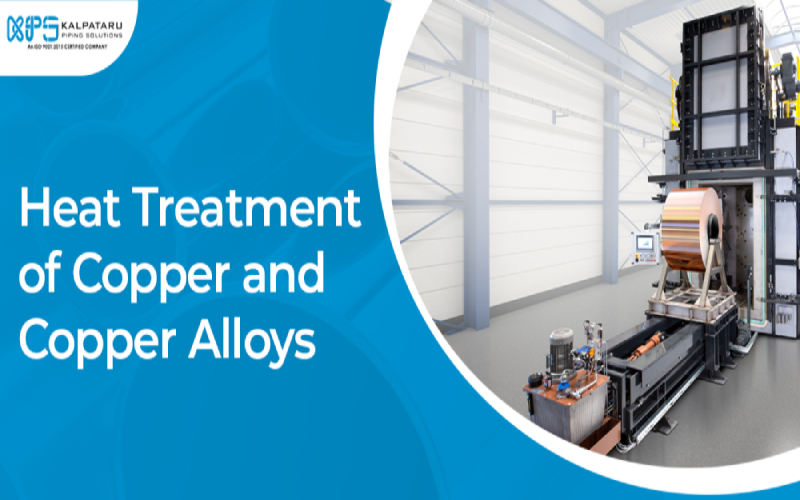
Heat treatment of copper alloys is performed to enhance the mechanical & physical properties of copper alloys. These materials are good at conducting electricity, resist corrosion and easy to shape to use in many industrial applications. The strength, hardness & durability of copper alloys can be improved by heating copper.
Here in this blog, we will discuss the heat treatment of copper alloys with essential techniques like homogenizing, annealing, stress relieving, & precipitation hardening. Each process involves controlled temperatures to suit different copper grades for high-performance alloys.
Properly heating copper allows manufacturers to alter its internal structure, boosting performance without losing its core properties. The guide also explains how various heat treatment methods influence copper behavior for use in applications.
Types of Copper Alloys
Copper alloys are made by mixing components to copper in order to improve its characteristics for different applications. Here are some common types:
Brass is made from copper mixed with zinc. It offers good strength with corrosion resistance & is used in plumbing parts & musical instruments.
Bronze is a combination of copper & tin. It is stronger with excellent resistance to wear. You will find bronze in things like bearings, sculptures & parts used in marine environments.
Cupronickel is designed by combining copper with nickel. This alloy acts as a strong resistance against seawater making it ideal for ship hulls, underwater piping and heat transfer units.
Heat Treatment Techniques for Copper and Copper Alloys
To use properties of copper alloys just right for various industrial applications often comes from heat treatment. By carefully heating these materials, manufacturing companies can boost their strength, make them more flexible – or ductile, as engineers say – and improve corrosion resistance. This applies to copper in all sorts of shapes, from wires and sheets to rods, forgings, and castings. Each specific heat treatment method has its own recipe, if you will, with precise temperatures and steps tailored to what the alloy is made of and what you need it to do.
Copper Annealing
Copper annealing is a really common heat treatment. What’s included is heating the copper up generally to somewhere between 300°C and 500°C, and then letting it cool down properly and slowly. This whole process helps to get rid of internal stresses, brings back its ductility which is its ability to bend and stretch and makes the copper a lot easier to work with, especially if it’s been through some cold working. You’ll find annealed copper in everyday things like electrical wiring, plumbing pipes, and various decorative bits and pieces.
Stress Relief Annealing
Then there’s stress relief annealing, which is also a big deal. This one’s done at lower temperatures, making sure to stay below the point where the copper’s internal structure starts to change its recrystallization point. The main aim here is to dial back those built up internal problems caused due to welding, machining or bending the copper into shape when it’s cold. Doing this helps to prevent problems caused on the road like cracking, warping or a part just giving up when it’s being used. For this process the copper annealing temperature usually sits between 200°C and 400°C though the specific alloy can tweak that range. It’s a really smart shortcut for materials like brasses, aluminum bronzes and silicon bronzes.
Homogenizing
Homogenizing is all about getting a nice, even chemical mix throughout cast or hot-worked copper alloys, especially if they’ve got tin or nickel in them. For alloys like tin bronze or copper-nickel, where some of the added elements can be a bit stubborn about spreading out evenly (that’s diffusion), this step is really important. By heating the material up to around 760°C, it gives those elements a chance to spread out more uniformly. And the upshot is, the alloy becomes easier to shape and more flexible for whatever you need to do with it next.
Solution Annealing
Solution annealing is a technique used for copper alloys that have other elements added to them – elements that are designed to completely dissolve into the main copper structure. The basic idea is you heat the alloy up hot enough so these elements fully dissolve, mixing right into the copper. Then, you quench it, which means cooling it down super fast, to trap those elements where they are, all nicely dissolved. This whole thing gives a good boost to the alloy’s strength and how well it fights off corrosion, and it’s especially key for types of copper that can be precipitation-hardened.
Hardening Copper
To make copper harder, manufacturers use some techniques. One of the main ways is called precipitation hardening – you might also hear it called aging or age hardening. It generally kicks off with that solution treatment we just talked about, followed by a quick quench. After that, there’s an ‘aging’ step where the copper is held at lower temperatures for a while. It’s during this aging time that tiny particles, called precipitates, actually form inside the metal. And it’s these little guys that really crank up the copper’s strength and hardness.
Another way to harden copper is through quenching itself. For this, you heat the alloy up to a really specific, critical temperature and then cool it down in a hurry – often by dunking it in water or oil, or sometimes just with fast-moving air. This rapid cool down makes a big difference remarkably improving its ability to resist wear and tear, along with its overall strength and toughness. That’s why it’s a top choice for really demanding jobs you’ll find in places like aerospace, the car industry, and lots of other industrial fields.
Hardening Mechanisms for Copper Alloys
Low-Temperature Hardening – Cold Working
At low temperatures, copper & its alloys are generally reinforced through cold working. It is also known as strain hardening or work hardening. This method involves plastically distorting the metal below its crystal refinement temperature. The process creates dislocations within the crystal structure which obstruct the movement of other dislocations. As a result the strength & hardness of the material increase significantly. Cold working is largely used to produce high strength copper elements such as wires, tubes & sheets.
High Temperature Hardening – Precipitation Hardening
At high temperature, precipitation hardening or age hardening becomes the preferred method for enhancing copper alloys. The process begins with solution heat treatment, where the material is heated to dissolve alloying elements uniformly into the copper matrix. It is then rapidly quenched to retain a supersaturated solution. At a specific temperature, fine precipitates form which obstruct dislocation movement and significantly increase the alloy strength & hardness. This technique is commonly used in aerospace and high-performance applications due to its ability to deliver excellent strength and thermal stability.
Key Precipitation-Hardening Copper Alloys
Beryllium Copper Alloys
Beryllium Copper BeCu is a high efficient copper alloy consisting between 0.5% & 2.7% beryllium substances. This alloy is popular for its strength, heat conductivity, rust resistance & non sparking properties. Due to these unique features this type of alloy is used in operations like precision springs, electrical connectors, switches & tools.
Special Application – Shape Memory Alloys (SMAs)
Shape Memory Alloys SMAs are a class of copper-based materials known for their ability to return to a pre-defined shape after distortion when exposed to heat. The best example is copper-aluminum-nickel & Nitinol Nickel Titanium. These alloys are used in advanced operations like medical implants, actuators, robotics & flexible eyeglass frames. Their shape memory effect opens new frontiers in precision engineering and smart materials.
Factors Influencing Heat Treatment of Copper Alloys
The success of heat treatment of copper alloys depends on several key variables:
Temperature: The selected temperature must be high enough to enable the desired metallurgical changes but controlled to prevent over-aging or melting.
Time: Holding time at the target temperature affects grain growth, diffusion rates, and precipitation behavior. Overheating or underheating may lead to undesired microstructures.
Cooling Rate: It is the rate at which the material is cooled by using methods like air cooling, water quenching , ductility and internal stresses.
Each copper alloy reacts differently to heat treatment due to its unique composition. So precise control & alloy-specific parameters are essential to achieve optimal results.
Heating Copper Alloys Challenges
Heat treatment may not be effective for all copper alloys. Some alloys have limited response to thermal processes & others may face distortion, grain growth or unwanted softening. To avoid these limitations, techniques like alloy modification or surface treatments may be used to enhance material performance.
Future Trends in Heating Copper Alloys
Innovations in heating copper alloys including methods like precision temperature control, advanced quenching methods and computer-aided process designs. These trends promise better property control, energy efficiency, and broader application potential.
Real World Examples of Copper Heat Treatment
Automotive Industry: In the automotive industry, precipitation hardening of beryllium copper connectors led to a 50% increase in tensile strength & enhanced fatigue resistance, extending the durability of electrical systems.
Aerospace Components: Copper-nickel alloys after solution annealing and aging, showed enhanced corrosion resistance and high-temperature strength—essential for use in fuel systems and hydraulic lines.
Electronics and PCB Manufacturing: In PCB connectors, annealing of oxygen-free copper improved ductility and reduced cracking during stamping, enabling higher production yields and reliable signal transmission.
Conclusion: Heating Copper Alloys
The heat treatment of copper alloys follows the process of copper hardening or copper annealing—plays to optimize the material properties of copper-based alloys for demanding industrial applications. These processes will help copper alloys to perform efficiently in various industries from electrical systems to high-temperature applications.
By using the correct heating method, manufacturers can shape copper materials to meet industry standards & performance needs. Whether it’s the high strength gained from C17200 beryllium copper heat treatment or the increased flexibility from annealing using the right heat treatment is key to getting the best results for copper alloys.
Frequently Asked Questions About Heat Treatment for Copper Alloys
What is the heat treatment for copper alloys?
Heat treatment for copper and its alloys includes various processes designed to improve their mechanical properties. Common techniques are:
Homogenization: A process to reduce segregation in the alloy.
Soft Annealing: Increases ductility and softens the material.
Stress-Relief Annealing: Reduces internal stresses without changing the material microstructure.
Precipitation Hardening: Includes solution annealing, quenching & tempering to increase strength.
What is annealing of copper alloys?
Copper alloy annealing involves heating the material to a high temperature & cool it slowly. It will help to improve ductility, reduce hardness & relief internal stresses. Copper typically undergoes annealing at temperatures above 400°C but not exceeding its melting point of 1357k.
What is the maximum temperature for copper alloy?
Copper alloys, such as GRCop-84, maintain good strength at temperatures above 700°C (1292°F), which is higher than most copper-based alloys, which lose strength between 300°C (572°F) and 450°C (842°F). GRCop-84’s high-temperature performance makes it suitable for aerospace applications.
What happens when copper is heated?
If copper is heated then it reacts with oxygen in the air to form copper oxide (CuO) which is a black substance. Hydrogen gas will mix with the copper oxide to form copper metal.
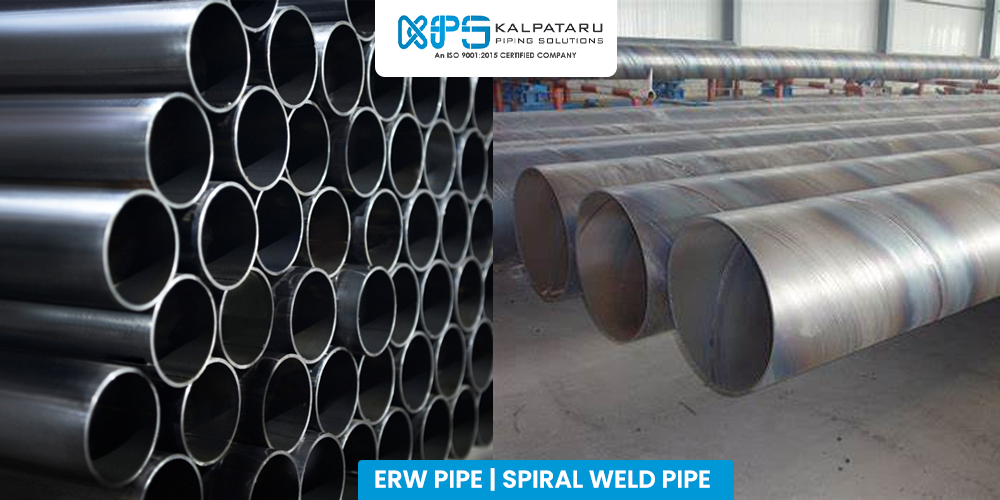
Pipes are a fundamental component in various structures, serving critical roles in plumbing, HVAC systems, and fluid exchange applications. In industries like oil & gas and petrochemicals, pipes play a crucial role in transferring crude oil products. When it comes to pipeline networks and selecting the right pipes for the job, the debate between ERW pipes and spiral pipes emerges due to their unique characteristics, including pressure resistance and performance.
Let’s delve into the essential differences between these two pipe types, from their manufacturing processes to their pressure resistance and overall performance.
Manufacturing Process:
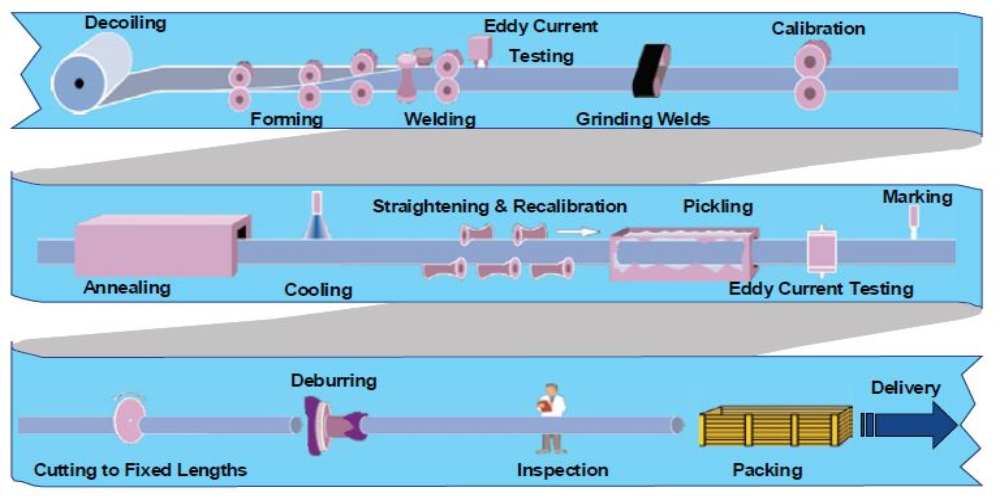
The production methods for ERW pipes and spiral pipes differ significantly. ERW pipes start with a strip or coil of steel, which is hot-rolled through a roller machine to create a gauged metal with visible ends. Electric Resistance Welding then joins these ends using electric current, both inside and outside the pipe, without the need for flux or weld filler. After joining, the pipe undergoes primary ultrasonic inspection and post-processing techniques like annealing and cooling to enhance its microstructure and ductility. Finally, the ERW pipe is cut to size and straightened for uniformity.
Conversely, spiral pipes begin with an unrolled steel coil unwound using a roller machine. Spiral pipes require a welding wire or filler to fuse the metals together while forming a helix-like structure. The ends of the strips are joined using a submerged arc welding technique, and each welded portion is inspected to ensure there are no defects. Similar to ERW pipes, spiral pipes undergo ultrasonic testing and other non-destructive tests to examine their physical properties, weld quality, and chemical composition.
Pressure Resistance:
During production and end-use, both ERW pipes and spiral pipes experience residual stress, which refers to stress present on the pipes even in the absence of external forces. ERW pipes tend to have lower residual stress due to the longitudinal and straight seam electric welding, as well as the post-processing methods applied. This is critical for storage and use since the single seam does not compromise the pipe’s quality.
In contrast, the spiral rotation in spiral pipes may lead to higher residual stress, potentially pushing the pipe beyond its yield limit. The presence of multiple seams can significantly impact the pipe’s load-bearing capabilities, especially when subjected to tensile, circumferential stresses, and other forces. Additionally, the use of fillers and welding rods in spiral pipes may introduce weld defects and physical deformations.
Performance:
Considering the above factors, ERW pipes tend to outperform spiral pipes in various applications. The single seam in ERW pipes allows for a consistent flow of different fluids, reducing the likelihood of leaks and bursts. In contrast, the multiple seams in spiral pipes can lead to inconsistent pressure changes, affecting specific portions or the entire pipe.
Furthermore, the multiple welded seams in spiral pipes may cause issues with calcium build-ups and chemical deposits, compromising the pipe’s corrosion resistance and longevity. ERW pipes, lacking weld filler raw materials and flux, offer more consistent weld quality, better surface finish, and improved corrosion resistance.
Key Takeaway:
The choice between ERW pipes and spiral pipes comes down to their manufacturing process, pressure resistance, quality, and overall performance. ERW pipes, produced through electric resistance welding from rolled steel coils or strips, offer enhanced performance and consistency compared to spiral pipes with submerged arc welding on multiple weld seams.
Looking for high-quality Spiral pipes, ERW pipes and Seamless Pipe? Kalpataru Piping Solutions selection can meet your industry’s pipeline supply and requirements. Click here to learn more!
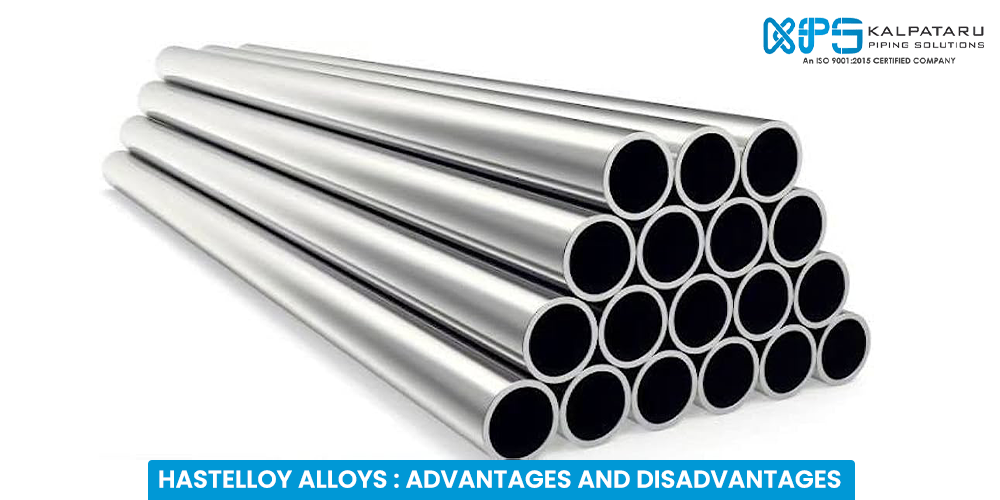
Hastelloy alloys, particularly Hastelloy C276, stand at the forefront of the market as some of the most robust and reliable materials available today. However, like any material, they come with their own set of advantages and disadvantages. In this comprehensive analysis, we will delve into the pros and cons of utilizing hastelloy alloys, including Hastelloy C276 and hastelloy c276 sheets, providing a deeper understanding of why they have gained immense popularity in various industries.
Top 5 Advantages of Hastelloy Alloys
1. Exceptional Corrosion Resistance and Durability:
Hastelloy alloys boast outstanding corrosion resistance and unparalleled durability. These two paramount advantages render them an appealing choice across numerous sectors. Additionally, they exhibit resistance to oxidation, making them indispensable in high-temperature environments. Moreover, hastelloy alloys excel in withstanding stress corrosion cracking, chloride pitting, and crevice corrosion. Consequently, these alloys find extensive applications in chemical processing plants, power plants, marine industries, and other industrial settings where corrosion or extreme temperatures pose significant risks. Furthermore, the ease of machining hastelloy alloys into intricate shapes without compromising their strength or integrity is an added advantage.
2. The Nickel-based Marvel:
Hastelloy alloys primarily consist of nickel, along with chromium, molybdenum, iron, and cobalt. This meticulously balanced composition of metals endows Hastelloy with superior strength and enhanced resistance to corrosion compared to other alloys.
3. The Impenetrable Shield against Corrosion:
Of paramount significance, Hastelloy’s resistance to corrosion is one of its most prominent properties. This alloy effectively withstands both acidic and basic solutions, as well as saltwater, making it an ideal choice for diverse environments. Remarkably, Hastelloy remains unscathed even in the presence of chlorine and other halides.
4. Unyielding Strength and Durability:
Another remarkable advantage of Hastelloy is its robustness and durability. Capable of enduring high temperatures without sacrificing its strength or turning brittle, Hastelloy exhibits negligible expansion or contraction when exposed to extreme thermal conditions. This remarkable attribute makes it a favored material for high-pressure applications.
5. Non-magnetic Excellence:
Hastelloy’s non-magnetic nature is particularly valuable in applications that demand materials devoid of magnetic properties. This characteristic further enhances Hastelloy’s resistance to electromagnetic interference.
6. Ease of Workability:
Compared to its counterparts, Hastelloy is relatively straightforward to work with. It can be welded, machined, and formed using conventional methods and equipment. Additionally, Hastelloy can undergo cold work without becoming brittle.
Disadvantages of Hastelloy Alloys:
1. The Cost Factor:
Hastelloy’s remarkable attributes come at a price. The material proves to be relatively expensive, and locating suppliers who stock it can pose a challenge. This cost consideration makes Hastelloy less appealing for certain applications, particularly in cost-sensitive industries like the chemical sector.
2. Difficult Workability:
The hardness and brittleness of Hastelloy can present challenges during cutting and welding processes, making it unsuitable for certain applications where ease of workability is crucial.
3. Susceptibility to Stress Cracking:
Alloy C276 is susceptible to stress cracking, particularly when subjected to high stress levels during welding or machining operations. Adequate control measures are vital to prevent hastelloy components from failing due to stress cracking.
4. Limited Compatibility with Other Materials:
Not all materials are compatible with hastelloy. In particular, it should not come into contact with lead or zinc.
Conclusion
Hastelloy C276, a remarkable variant among hastelloy alloys, adds to the array of benefits that make them an attractive choice for many industries across the globe. These include unparalleled corrosion resistance, exceptional durability even in extreme temperatures, and ease of machining into complex shapes without compromising strength or integrity. However, it is essential to consider potential drawbacks before investing in this material. Challenges like difficulty in welding due to its high nickel content, costliness, and limited applications due to its innate strength should be taken into account. Despite these considerations, if you seek a strong yet versatile material with outstanding corrosion resistance properties, hastelloy alloys, particularly Hastelloy C276, may indeed prove to be the perfect fit for your requirements.
Not every single metal provider will be in possession of a valid ISO 9001 certification. A metal supplier may decide to opt out of ISO depending on the particulars of their company since obtaining and maintaining ISO certification takes time and resources. Here are some details on how to determine whether a metal supplier is ISO certified and why it counts.
Metal Suppliers and ISO Certification
How can you determine if your metal provider has an ISO certification? You query. It is best to mention this requirement at the time of the quote if your project or procedure calls for materials that adhere to ISO standards. Your current provider ought to be able to tell you right away if they can fulfill those demands.
Why ISO Matters
For Customers
It’s possible that your project or procedure calls for you to use only metal suppliers who adhere to ISO’s quality management standards, but that’s not always the case. ISO-compliant materials can be a sign of how seriously they take quality even if they aren’t needed. Working with an unknown seller is less risky if they have an ISO certification, for instance, if you need a material that your regular supply doesn’t carry.
For Metal Suppliers
ISO 9001 isn’t just another certification to earn, so keep that in mind. It’s also a promise to always do better. Both requirements and recommendations are included in ISO’s standards for quality control. Customers may be more interested in doing business with you if you follow ISO’s guidelines and standards.
Read More :
ISO CERTIFIED: ISO 9000 VS. ISO 9001: Around the globe, industries and procedures are governed by ISO standards. Discover the meaning of ISO certification and the distinctions between ISO 9001 and ISO 9000.
The International Organization for Standardization (ISO) is a private, non-governmental group that sets international standards for quality, safety, and other processes in many industries.
An ISO certification shows that a company’s management systems, production processes, services, or documentation procedures meet global standards for quality assurance in the metal service industry.
Read on to find out what it means to be ISO approved and how ISO 9000 and ISO 9001 are different.
What Does it Mean to be ISO Certified?
As you just learned, the ISO sets rules for how things should be done in almost every area or industry. What does that mean, though?
By making sure businesses and organizations meet regulatory requirements for their goods and services, ISO guidelines help them better serve their customers and other important people. ISO norms help businesses figure out if they are doing things right.
The ISO’s only job is to make and set standards, and to stay fair, they hire third parties to test or grade those who want to get certified. In other words, the ISO sets the standards, and third-party groups check to see if companies have met the ISO’s requirements for ISO licenses.
ISO 31000: Risk management principles and guidelines
What is ISO 9000?
ISO 9000 is a set of quality management standards that are used in businesses like manufacturing and construction. It gives its subgroups a general structure by laying out the basics of quality management systems and the language used to talk about them. ISO 9000 standards are based on seven ideas about how to handle quality:
Customer focus
Leadership
Engagement of people
Process approach
Improvement
Evidence-based decision making
Relationship management
WHAT IS ISO 9001?
ISO is the biggest subgroup of the ISO 9000 family, and it is the only one that offers a certification. It says what needs to be done to meet quality management standards for management functions, manufacturing processes, services, and documentation methods. To meet those standards, a group must do the following:
Show that you can consistently offer goods and services that meet customer, legal, and regulatory requirements
Improve customer happiness by always making processes better and meeting ongoing customer, legal, and regulatory requirements.
ISO 9001 VS. ISO 9000: Differences
Following is a summary of the variations between ISO 9000 and ISO 9001:
A general framework for quality management standards is provided by the ISO 9000 series of standards.
A subgroup of the ISO 9000 family called ISO 9001 specifies what must be done to adhere to quality management guidelines.
Therefore, in order to obtain ISO certification, a company or organization must adhere to ISO 9001 requirements and undergo evaluation by an outside party who verifies that the standards are fulfilled.
Kalpataru Piping Solutions: An ISO 9001 Certified Metal Service Centre and Supplier
Metal service centers and suppliers can demonstrate their dedication to quality and progress with or without ISO 9001 accreditation. If you need metal for an ISO-approved process or endeavor, your search is over.
ISO has approved Kalpataru Piping Solutions, and we’re committed to keeping up with these standards as long as we’re in business. We have the most recent ISO 9001:2015 approval as of right now.
We can meet the needs of almost any size job, from small quantities for engineering samples to large quantities for full production runs. We also have a number of services that will save you time and money. Contact us right away to get what you need quickly.