The work quality of metal component manufacturers who supply the medical device industry has recently improved significantly. The product quality of these alloys has never been better since the implementation of statistical process control, ISO 9000 certifications, and other initiatives.
Manufacturers of medical equipment and implanted devices have access to a wide variety of metals today. Manufacturers have a variety of options when determining which grade or alloy is best for a given application, as a result of their understanding of the differences between these materials and the options that each one provides. High strength and formability may be combined with surfaces that are sterile-friendly, bright, and clean.
Given the extreme difficulty of many modern surgical procedures and the ongoing concerns regarding patient comfort and safety, device manufacturers want assurances that the components and materials they purchase are the best available for the task at hand. As a result of the advent of minimally invasive and noninvasive procedures, which allow surgeons to operate without making direct eye contact with the operative field, more emphasis than ever before is being placed on technology that operates flawlessly the first time, every time.
Metal components purchased from stamping houses and fabricators, as well as the raw materials from which they are manufactured, are subject to heightened scrutiny due to consumers’ ongoing search for less expensive and more efficient alternatives. Metals are still required for many vital medical applications, despite the fact that plastics continue to make significant strides in the medical industry, including the replacement of metals in certain equipment. To assist the medical equipment industry in achieving its goals of higher quality levels and enhanced device performance, designers now have access to an expanding variety of metal materials and shapes.
How does metal selection play a role?
Metals are selected for parts that require exceptional strength and rigidity, particularly in small cross sections. In addition, they are ideal for components that must be formed or machined into complex shapes, such as blades, points, and probes; for mechanical components that must work with other metal components, such as gears, triggers, slides, and levers; for components that must be sterilized in high-temperature conditions; and for any other parts requiring mechanical or physical properties superior to those of polymer-based materials.
Stainless Steel
When a metal component is required to construct a medical device, 300-series stainless steel is the most popular option. These alloys have excellent mechanical and physical properties, and a variety of surface finishes, including reflective and matte, and are relatively straightforward to cold form or fabricate into specialized components. Additionally, they are essentially non-corrosive.
Stainless steel alloys are composed of 17 to 25% chromium and 8 to 25% nickel. By producing a strong, vicious, and invisible chromium oxide coating on the surface of the alloy, chromium aids in the corrosion resistance of stainless steel. If this film sustains mechanical or chemical damage, it is capable of self-repair. Occasionally, additions of up to 7 percent molybdenum are used to increase corrosion resistance.
The stainless steel grades 301, 304, 304L, and 305 are the most frequently used for medical products. The alloy composition of these variants differs slightly, and the choice of grade depends on factors such as formability, corrosion requirements, or the thickness and temper availability desired. Surface strength and condition are two additional crucial design elements.
Stainless steel alloys can be cold-treated to achieve high tensile and yield strengths while maintaining their ductility and toughness. Depending on the composition and amount of cold work, their yield strengths at a room temperature range between 30 and 200 ksi. The terms “austenitic” and “martensitic” are used to describe the metallurgical structure of stainless steel grades. This occurs when metals are rapidly cooled after being heated above their critical temperature. Temperature and heat treatment duration determine the alloy composition, time and temperature of heat treatment, and final structure. Austenitic stainless steels are stronger and more formable than martensitic grades.
Austenitic Stainless Steel
The majority of components for medical devices are made from austenitic stainless steel, which contains between 16 and 20 percent chromium and 6 to 14 percent nickel. On the surface of the alloy, chromium creates a durable, undetectable, and adhering chromium oxide coating that provides the necessary corrosion resistance. If this film sustains mechanical or chemical damage, it is capable of self-repair. To further enhance corrosion resistance, certain grades contain up to 7% molybdenum additives.
Surgical stapler frames, springs, anvils, cartridge slides, and jaws are a virtual showcase of 300-series stainless steel components used in contemporary medicine. Different grades of stainless steel wire are used to create the staples. Catheters, diagnostic equipment, and other items are made from stainless steel of the 300 series. Due to its high creep strength at elevated temperatures, stainless grade 316 is occasionally specified for braces. When welding is anticipated, grades 304L and 316L of the corresponding low-carbon alloys are recommended.
Hardenable Alloys
The 400 series of stainless steels, which are commonly used for surgical instruments, are less resistant to corrosion than the 300 series but can be heat treated to achieve higher levels of strength and hardness. Unlike the two most common grades, 410 and 420, these materials contain no nickel and a negligible amount of chromium. 410 is the general-purpose grade, whereas 420 is harder and contains more carbon.
Surgical instruments are also fabricated from martensitic stainless steel of type 410. Even though it has a lower corrosion resistance than the grades in the 300 series, it can still be heat-treated to improve its strength and hardness. Type 410 contains no nickel and between 11.5% and 13.5% chromium.
Precipitation-hardening stainless steel, such as 17-7 PH or 17-4 PH, may be used by the designer when a component requires increased strength and stiffness, such as in equipment housing.
Trace amounts of copper, aluminum, phosphorous, or titanium are the only difference between these metallurgical hybrids and stainless type 301.
A component is given an age-hardening treatment following its final moulding, which causes the phase transformation caused by the additional components.
Creating intermetallic compounds. Consequently, they are frequently increasing the part’s hardness and strength by up to 40 percent.
Titanium
Pure titanium, the most expensive and inert of the commonly used metals, is used to create ultra-high dependability components or those that remain inside a patient following surgery. Metal implants include artificial joints, pacemaker casings, and various others. Titanium alloys are also used in the medical industry, primarily for components when stainless steel cannot meet the necessary standards for strength, hardness, corrosion resistance, or other factors.
Titanium is an excellent biomaterial because it has the same tensile strength as steel but weighs only one-third as much. Due to its extraordinary ability to form a protective oxide film that adheres tightly to the surface when exposed to air or other oxidizing agents, it possesses exceptional corrosion resistance. This passive layer regenerates after metal surface damage and is resistant to all types of corrosion.
One of the most demanding applications in the medical industry, in terms of fabrication and use of available alloys, is also one of the most unusual. Since the popular hip-joint replacement is intended to last a lifetime, it requires materials with high strength, excellent wear resistance, and superior corrosion resistance. Different manufacturers’ designs vary slightly, but a typical hip implant consists of a cobalt-chromium stem that fits into the femur and a titanium-alloy cup that fits into the hip socket. The cup’s cobalt-chromium head is attached.
Manufacturers of titanium hip stem joints favor Ti-6AL-4V titanium alloys, particularly the low oxygen ELI grade, for implantable bar and plate applications. When a product is forged, the most common starting material is a bar with a diameter of up to seven inches.
Why are certain products preferred?
Stainless steels, hardenable alloys, and titanium alloys can be fabricated in a number of forms required by the medical industry, including foil, strip, sheet, wire, rod, bar, and plate. Because components of medical devices are typically small and intricate, automatic stamping presses are typically used to create the shapes. The best starting materials for this type of processing are strips and wire, which are the most commonly used materials. These mill forms are available in numerous sizes. Flat wire is available in thicknesses of 0.010 in. to 0.100 in. and widths of 0.150 in. to 0.750 in. Strip, for example, is available in thicknesses ranging from ultrathin foil to 0.125 in.
Which metal is suitable for the medical device?
Despite the fact that stainless steel, titanium, and nickel-based alloys are considerably more sophisticated than conventional materials, they offer a vastly expanded range of applications. Heating, cooling, and quenching can alter the mechanical properties of these “metallurgical animals.” They can be modified further during processing, if necessary. For example, rolling out metals with narrower gauges can harden them, whereas annealing can restore their precise temper for economical shaping.
Once designers are comfortable with the complexity of the materials, these unique metals offer a number of exceptional advantages in a variety of medical products, including unmatched corrosion resistance, high mechanical capabilities, a vast array of surface treatments, and excellent production versatility.
Read More :
Benefits of Stainless Steel 310 Sheets: Austenitic stainless steel in Grade 310 is easy to weld and bend, and it has great properties at high temperatures. Type 310 stainless steel tubing is often used in situations with high temperatures. Because they have a lot of chromium and nickel, 310-grade steel pipes are very resistant to corrosion and rust, and they are also very strong, even at temperatures as high as 2100°F.
All About Mild Steel: Mild steel is a type of carbon steel that has very little carbon in it. It is also called “low carbon steel.” Depending on the source, the amount of carbon in mild steel ranges from 0.05% to 0.25% by weight. On the other hand, higher carbon steels usually have a carbon content of between 0.30% and 2.0%. If more than that amount of carbon is added, the steel becomes cast iron.
Austenitic stainless steel in Grade 310 is easy to weld and bend, and it has great properties at high temperatures. Type 310 stainless steel tubing is often used in situations with high temperatures. Because they have a lot of chromium and nickel, 310-grade steel pipes are very resistant to corrosion and rust, and they are also very strong, even at temperatures as high as 2100°F.
These grades have 20% nickel and 25% chromium. Because of this, it is very resistant to rust and corrosion. Grades 310, 310S, and 310H stainless steel pipes have less resistance to becoming brittle because they have less carbon in them. It also means making people aware of the service. Because it has a high level of chromium and a medium level of nickel, stainless steel can reduce H2S levels in sulfuric environments.
They often work in environments that are a little bit stifling, like those found in factories. Heat-resistant alloys are used for a wider range of tasks. Stainless steel grade 310/310S/310H pipes should not be used for quenching processes that involve using common liquids to protect against thermal shocks. This grade type is often used in cryogenic applications because it is tough and doesn’t let much magnetic energy through.
These grades are like austenitic stainless steel because they are not treated with heat. Even though it is rarely used, cold work can make it stronger.
Stainless Steel 310 Sheets Advantages
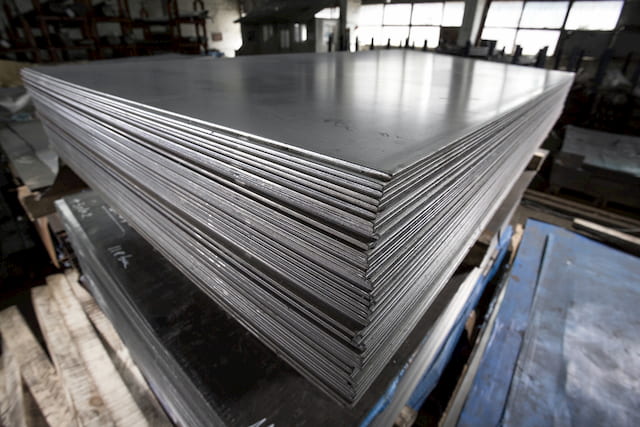
Sheets and plates made of stainless steel have a lot of benefits and meet or exceed the needs of the application. The main benefit of these stainless steel sheets and plates is that they are very strong and can be used in tough situations. The bright and easy-to-clean surface of SS sheets and plates makes them both attractive and hard to work with. 310 stainless steel sheets are put through a number of tests to make sure they will last.
Type SS 310 Pipes are made of austenitic low-carbon stainless steel. Type 310, which has less carbon than Type 310, is known for being able to handle high-temperature applications and gives customers a number of benefits, such as:
Very good resistance to corrosion.
Excellent resistance to corrosion in water.
Aqueous corrosion resistance may be decreased by continuous usage in the temperature range of 425-860 °C due to carbide precipitation.
Irrespective of thermal fatigue or cycle heating.
In most circumstances, Forms 304 and 309 are preferable.
Resistance to high temperatures up to 2100 degrees Fahrenheit
Cost-efficient
The stainless steel 310 sheets can be used to make cryogenic parts and to use cryogenic parts in furnaces, especially in the construction of burners, reclamations, doors, ventilators, and pipes. Because they can handle very high temperatures, these types of stainless steel are used a lot in the food processing industry as well as in the chemical and pharmaceutical industries. They are also used in the wind boxes, grids, pipes, and coal combustors of fluid bed furnaces.
The unique qualities of this stainless steel plate are also used in equipment for continuous casting, steel melting, and smelting in ore and steel processing plants. These grades are also used a lot in the oil refining industry, especially in catalytic recovery systems, flares, recoveries, and tube hangers. It is used in pulverized ad tube hangers for coal burners and internal coal gasifiers, which are both used to make electricity. It is also used in other ways.
Read More :
All you need to know about Grade 304 Stainless Steel : 304 Stainless Steel, also called 304, is a type of steel that is used to make a wide range of appliances and long-lasting items. It is an all-purpose steel alloy that can be used for many different things.
All About Mild Steel : Mild steel is one of the most popular types of steel because it can be used to make things in many different industries. Mild steel is used for building structures, signs, cars, furniture, fencing, and a lot more.
Mild steel is a type of carbon steel that has very little carbon in it. It is also called “low carbon steel.” Depending on the source, the amount of carbon in mild steel ranges from 0.05% to 0.25% by weight. On the other hand, higher carbon steels usually have a carbon content of between 0.30% and 2.0%. If more than that amount of carbon is added, the steel becomes cast iron.
Mild steel is not Alloy steel, so it doesn’t have a lot of other elements in it besides iron. It doesn’t have a lot of chromium, molybdenum, or other elements that make steel stronger. Since it has a low amount of carbon and alloying elements, it has a few properties that set it apart from steels with more carbon and alloying elements.
Mild steel is usually easier to bend, cut, and weld than high carbon steel and other steel because it has less carbon. On the other hand, this also makes it nearly impossible to harden and strengthen by heating and quenching. The low carbon content also means that it has very little carbon and other alloying elements to block dislocations in its crystal structure. As a result, it usually has less tensile strength than high carbon and alloy steels. Mild steel has a lot of iron and ferrite in it, which makes it magnetic.
Since mild steel doesn’t have alloying elements like those in stainless steel, the iron in it can rust if it isn’t properly coated. But the small amount of alloying elements in mild steel also makes it relatively cheap compared to other types of steel. Because it is cheap, easy to weld, and easy to work with, it is a popular steel choice for consumers.
Technical Specifications of Mild Steel
Technical Specifications
MILD STEEL CHANNELS
Designation
Depth of Section
Width of Flange
Thickness of Web
Weight/Mtr
Sectional Area
Moduli of Section
h
b
t
w
a
Zxx
Zyy
(mm)
(mm)
(mm)
(kg)
(cm2)
(cm2)
(cm2)
ISMC 75 weight
75
40
4.8
7.1
9.1
20.3
4.7
ISMC 100 weight
100
50
5
9.6
12.2
37.3
7.5
ISMC 125 weight
125
65
5.3
13.1
16.7
68
13.4
ISMC 150 weight
150
75
5.7
16.8
21.3
105
19.4
ISMC 175 weight
175
75
6
19.6
24.4
139.8
22.8
ISMC 200 weight
200
75
6.2
22.3
28.5
181
26.4
ISMC 250 weight
250
82
7.2
34.2
39
307
38.4
ISMC 300 weight
300
90
7.8
36.3
46.3
428
47.1
ISMC 400 weight
400
100
8.8
50.1
63.8
760
67
What is Mild Steel used for?
Mild steel is one of the most popular types of steel because it can be used to make things in many different industries. Mild steel is used for building structures, signs, cars, furniture, fencing, and a lot more. Check out the list below to learn more about the different kinds of projects where low carbon steel can be a great choice of material:
Steel Frame Buildings – Mild steel beams are often used for building frames because they are strong.
Gates and Fencing – Mild steel gates and fences offer both security and a nice look, which are both important for these two products. Low-carbon steel is hard to break and can be painted, primed, or galvanized to keep it from rusting and give it a nice finish.
Machinery Parts – One of the best things about low-carbon steel is that it can be shaped into different shapes. This makes it perfect for making steel sheets for car body kits and other machinery parts.
Pipelines – When people need steel pipes for different projects, they often choose mild steel tubes. This is because the pipes are very ductile, which makes them easy to weld and flexible enough to not break under pressure. These pipes can also be insulated to keep working even when it’s cold outside. This helps to improve the pipes’ long-term quality.
Structural Steel – Low-carbon steel can be used when structural steel fabrication is needed because it has a consistent yield strength and is easier to shape. Mild steel can be better than structural steel for smaller building projects because it is easier to work with and costs less.
The Grades of Mild Steel
EN 1.0301 – This grade of steel has 0.1% carbon, 0.4% manganese, and 0.4% silicon, along with a few other elements that all make it easy to weld. Because of these qualities, EN 1.0301 is often used to make furniture, appliances, and car parts.
EN 1.1121 – This low-carbon steel grade has about 0.1% carbon and an average of 0.45% manganese. This gives EN 1.1121 a very high level of ductility, which is used in a wide range of projects.
What is Scheduled 40 Steel Pipe? : The most common pipe schedule is Schedule 40 steel pipe. It can be galvanized but isn’t required, and it’s commonly used in water and gas lines. It can also show up in spots that require decoration or support.
Process monitoring instrumentation is used in the majority of main sectors, including those that produce aerospace, defense, power, petrochemicals, alternative fuels, shipbuilding, and medical equipment.
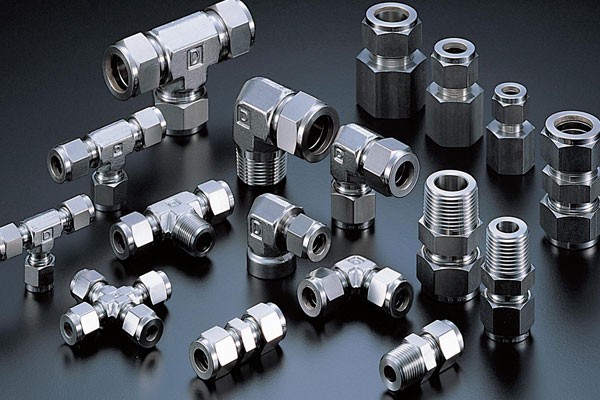
PM&C instrumentation fittings include pressure gauges, fittings, and tubing in addition to flow meters, strain gauges, and level gauges. They are used to calibrate the system to transmit, monitor, and control flow, pressure, and temperature.
The proper operation of the plant or product group depends on the instrumentation fitting components. Fittings, valves, and tubing serve as the veins and arteries of the instrumentation system.
Four types of instrumentation tube fitting
Fittings for compression
The most organized and convenient fittings to use are compression fittings. This design employs a series of holds on the tube. The ferrule secures itself to the surface of the tube by coining (compressing) it. Not just over-buttweld fittings, but all fittings, perform better than compression fittings in terms of resistance to vibration. This form of fitting does not demand the use of any specific equipment. Slide the tube into the stop relation with caution, then tighten it by giving it a boxer twist to the desired torque. Due to their ease of use, compression fittings are frequently the least valuable overall convention.
Fittings for cones and threads
Though they are occasionally used in high-pressure installations, cone and thread connectors are most frequently used at pressures up to 15,000 PSI. The connection between the tube and fitting is secure and tight since the tube has a hard edge and is screwless. To ensure a tight seal, the tubing must be attached snugly against the junction after the tube sides have been precisely formed with a smooth polished shine. Everything is often completed on the job, which significantly increases the assembly time and cost of C&T fittings. C&T fittings can be removed and rebuilt for maintenance just like compression fittings.
Fittings for Butt Weld
The convention that offers the best oscillation safety is a butt weld fitting. Since the metals are firmly fused together, a well-formed butt weld has the maximum tolerance to noise and wear. On the other side, a butt weld fitting connection has substantial disadvantages, such as cost. Due to the cost of welding supplies, the need for a skilled welder, and the added labor hours, a butt weld connection is the most expensive of the three main types of instrumentation fitting components.
Pneumatic Fittings with a Push-To-Connect System
Push-to-connect fittings join tubing by using an outside push switch and an interior collet. Polymer, nickel-plated metal, two layers of plastic, and composite materials can all be found in the construction of these fittings. For all compressor applications, leak-free and secure couplings are guaranteed with push-to-connect air connectors for elastomeric or nylon tubing. By repeatedly pressing the tube into the fitting, push-to-connect pneumatic fittings allow for rapid connections without the need for tools, and disconnections are just as easy.
People often choose stainless steel for kitchen appliances and other products. This metal is inexpensive, long-lasting, and comes in both sheet and plate forms. But this stainless steel has both pros and cons. This blog post talks about the pros of 304-grade stainless steel, like how it doesn’t rust and can handle high temperatures.
What is 304 Stainless Steel
304 Stainless Steel, also called 304, is a type of steel that is used to make a wide range of appliances and long-lasting items. It is an all-purpose steel alloy that can be used for many different things. A very popular type of stainless steel is 304 stainless steel, which is also known as “Inconel.” It is a high-quality metal that doesn’t rust and is often used in the automotive and aerospace industries.
Still, it is also used in other fields, such as shipping, oil exploration, and making electricity. 304 stainless steel is also called “Grade 304” or “A4 Stainless Steel.” This is the most common type of stainless steel used in industry that doesn’t rust.
304-grade stainless steel has more carbon than 430-grade stainless steel. With an A330-O1R 3/32′′ x 3/8′′ electrode, you can weld 304-grade steel.
Types of Stainless Steel
304 is the stainless steel that is used the most around the world. It has a lot of different qualities that make it useful in many different fields. There are different kinds of stainless steel that have different parts, which is why they have different names.
Some of them are the 300 series, the 304 series, the 316 series, and the 317 series. Even though they are all made of different things, they are usually more expensive than other metals used in food service equipment because they don’t have any impurities or elements that are easy to oxidise. A type of stainless steel called 304 Grade steel is used to make metal and non-metal parts. It has at least 18% chromium and 12% nickel, which gives it special qualities like resistance to rust, magnetic properties, and high temperatures.
Stainless Steel 304 Benefits
The grade of stainless steel that is used the most in the metal industry is 304 Grade. It’s the most popular grade because it’s strong, lasts a long time, and doesn’t rust. This grade of stainless steel is perfect for kitchen tools, cutlery, scientific equipment, building materials, tools, pipes, electrical conduits, and fittings. Iron, chromium, nickel, molybdenum, and carbon are mixed together to make 304 stainless steel.
It can stand up to corrosion and wear very well. After aluminium, it is the second most used metal in the world. This metal is also great for saving weight. Grade 304 stainless steel is a very useful material that can be used for a wide range of things. Because it lasts so long, engineers often use it in their work. Grade 304 Stainless Steel can be used in a wide range of industries because it is resistant to corrosion, is not magnetic and can withstand high temperatures.
Advantages and Disadvantages of Grade 304 Stainless Steel
Many different industries use stainless steel of grade 304. Due to its high chromium content, it rusts less and is less resistant to corrosion. Because of this, it is not a good choice for marine environments. But grade 304 stainless steel has many benefits that make it a popular choice in the marine industry. When compared to grades 201 and 202, grade 304 stainless steel is more durable, stronger, and better at stopping vibrations.
This makes it great for things like ship propellers and engines. Grade 304 stainless steel is a type of stainless steel that is more resistant to corrosion and oxidation than other types of stainless steel. It is often used to make things like surgical instruments, food processing equipment, oil and gas pipelines, parts for airplanes and spacecraft, and equipment for the sea. Grade 304 is used in a lot of different fields, but it’s also a great choice for kitchen appliances. This steel is very strong for how light it is, which makes it the perfect material for cooking tools. It is as resistant to corrosion as carbon steel and copper, but it is harder than nickel alloys. Only one thing is bad about grade 304 stainless steel, and that is how much it costs.
Conclusion
In the end, we can say that 304 stainless steel is a great material for making everyday items. It is strong, lasts a long time, and doesn’t rust. It doesn’t break down when put in hot places. 304 Stainless Steel can be used more than once because its surface does not need to be re-coated or covered up with a coating after it is used to make a final product. Grade 304 stainless steel is very resistant to corrosion, abrasion, and cracking from stress corrosion. It is also chemically inert, which means it won’t react with anything else in the environment.
Kalpataru Piping Solutions sells stainless steel items and makes sure that they are pure and of high quality by putting them through a series of tests. Read our other blogs on our website to find out about new things and learn more about our products for your next business needs.
Different Types of Steel Reinforcement Bars: A number of steel bar types are used in concrete buildings. The endurance of the concrete construction is ensured by the use of reinforced steel bars.
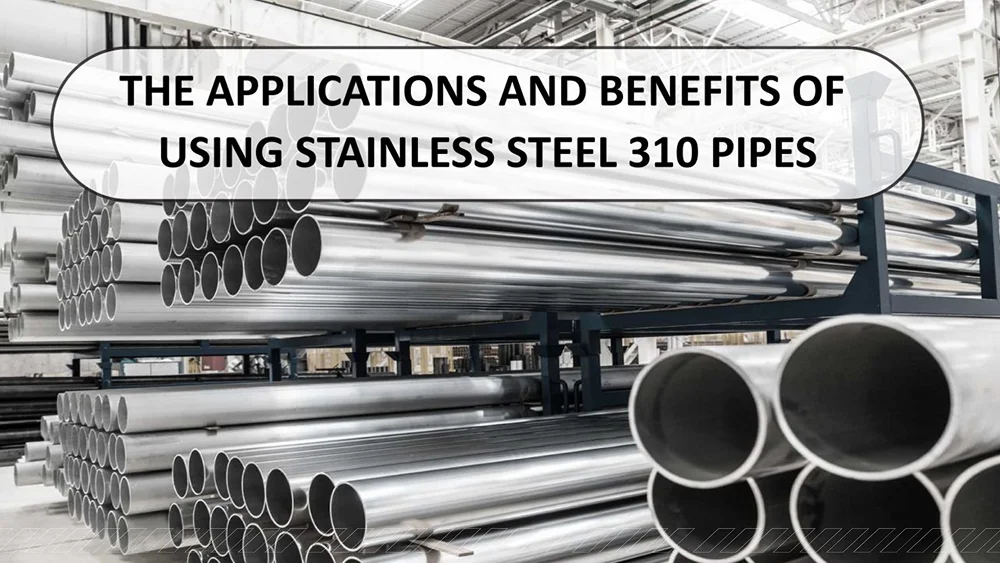
Austenitic stainless steel in Grade 310 has outstanding high-temperature characteristics in addition to having strong ductility and weldability. The Type 310 stainless steel pipe is frequently employed in high-temperature applications. The high chromium and nickel content of 310-grade steel pipes offers exceptional strength at temperatures up to 2100 °F as well as good corrosion and oxidation resistance.
The benefits of using stainless steel 310 pipes
A low-carbon austenitic stainless steel is Type SS 310 Pipes. Type 310, a variation of Type 310 with less carbon, is well recognized for its capacity to endure high-temperature applications and also provides customers with a number of advantages, such as:
Excellent corrosion resistance.
Aqueous corrosion resistance is excellent.
Continuous use in the 425-860 °C temperature range can reduce aqueous corrosion resistance due to carbide precipitation.
not prone to cyclic heating or thermal fatigue.
Form 304 and 309 are superior in most environments.
High-temperature resistance up to 2100 degrees F
Cost-efficient
Applications of the stainless steel grade 310/310S
Applications for 310/310S include burners and combustion chambers, fluidized bed combustors, kilns, radiant tubes, petroleum refining tube hangers, steam boilers, internal parts of coal gasifiers, lead pots, thermowells, refractory anchor bolts, annealing covers, saggers, food processing devices, and cryogenic structures.
The advantages of stainless steel sheets and plates are numerous and meet or surpass the requirements for the application. The fundamental benefit of using these stainless steel sheets and plates in hostile situations is their excellent resilience. Because of their dazzling and simple-to-maintain surface, stainless steel sheets and plates are both alluring and difficult. The strength of sheets made of 310 stainless steel is confirmed through a number of tests.
The properties of stainless steel 310 pipes
These grades have 20% nickel and 25% chromium. Its strong corrosion and oxidation resistance are a result of this. Pipes made of the stainless steel grades 310, 310S, and 310H have a lower resistance to embrittlement than other low-carbon varieties. Furthermore, it implies service sensitization. Stainless steel has high and medium nickel and chromium levels, respectively, which allows it to reduce H2S-containing sulfuric atmospheres.
They are frequently utilized in conditions that gently carburize, like those found in industrial facilities. There are many applications for heat-resistant alloys. Steel is stainless The use of Stainless Steel Grade 310/310S/310H Pipes for quenching processes involving common liquids from thermal shocks is not advised. This grade type’s low magnetic permeability and hardness make it a popular choice for cryogenic applications.
These grades, like austenitic stainless steel, are not heated to harden them. Although it can be cold worked to harden, it is rarely employed.
Physical Properties of Grade 310/310S
The following list summarises the physical characteristics of stainless steel 310/310S: density, electrical resistivity, shear modulus, Poisson ratio, electrical conductivity, and melting point at room temperature. Thermal conductivity, coefficient of expansion, and relative magnetic permeability are some further extraordinary physical characteristics.
Mechanical properties of Grade 310/310S
The grades 205, 520, 40, and 225, which have 0.2 percent proof stress, tensile strength, elongation, and hardness, respectively, summarise the mechanical characteristics of grades 310 and 310S.
Read More :
Different Types of Steel Reinforcement Bars: A number of steel bar types are used in concrete buildings. The endurance of the concrete construction is ensured by the use of reinforced steel bars.
What is Scheduled 40 Steel Pipe ? : The most common pipe schedule is Schedule 40 steel pipe. It can be galvanized but isn’t required, and it’s commonly used in water and gas lines. It can also show up in spots that require decoration or support.