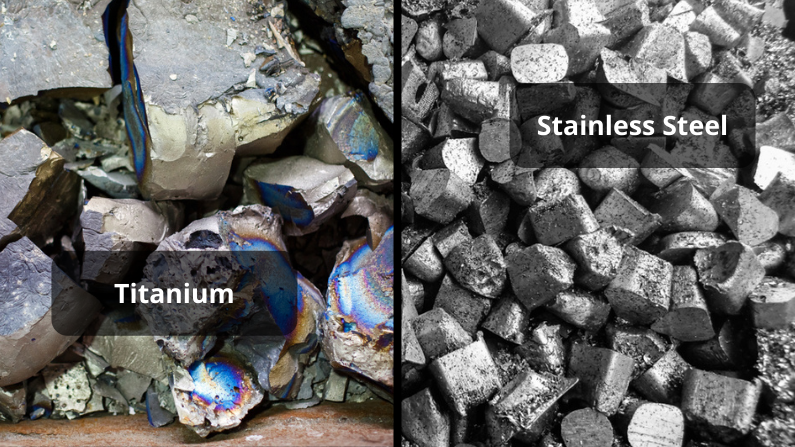
Steel and titanium are the first materials that spring to mind when designers need strong, durable materials for their ideas. These metals are available in a variety of alloys, which are base metals impregnated with additional metallic elements to generate a total larger than its parts. There are dozens of titanium alloys and hundreds of more steel alloys, so deciding where to start when evaluating these two metals may be difficult. This article may assist designers in determining which material is best for their project by examining the physical, mechanical, and operating qualities of steel and titanium. Each metal will be briefly discussed, followed by a comparison of their differences to indicate when one should be specified over the other.
The main distinction between these two materials is that titanium is a metal, while stainless steel is a metal alloy. Continue reading to get a greater grasp of the ramifications of this distinction, as well as a clearer image of the other distinctions between titanium and stainless steel.
Basics of Titanium and Steel:-
Titaniumis a metallic element with a silver-to-grey tint. It has a high strength-to-weight ratio, resulting in a very powerful material. Titanium is also very resistant to corrosion and has a high heat transfer effectiveness. As a consequence, it is particularly desired for usage in some sectors, such as buildings, where temperature fluctuations and weather conditions might have a negative impact on structural parts.
Titanium is exceptionally robust due to its great mechanical resistance. Its low density makes it lightweight, which adds to its appeal in some sectors. It has a broad range of corrosion resistance, making it very resistant to corrosion caused by a wide range of alkalis, acids, industrial chemicals, and natural waterways.
Stainless steel is alloy steel, which implies that it is steel that has been mixed with one or more components to modify its properties. Alloying is the process of combining more than one metal. In the case of stainless steel, it is often produced with ten to thirty percent chromium and seventy percent iron to provide corrosion resistance as well as the capacity to withstand temperature variations.
Other elements are generally brought into play to improve the steel’s resistance to corrosion or oxidation. In certain circumstances, a specific element is introduced to promote a distinct feature in a specific variety of stainless steel. Although not usually present in alloy steel, one or more of the following elements may be present: titanium, copper, aluminum, sulfur, nickel, selenium, niobium, nitrogen, phosphorus, or molybdenum. Alloying elements are the particular metals that have been added to steel to generate stainless steel.
Steel vs. Titanium Comparison
Choosing one of these metals over the other is determined by the application. This section will examine various mechanical qualities shared by steel and titanium in order to demonstrate where each metal should be specified. It is important to note that the figures in the table for both steel and titanium are from generic tables since the properties of each metal vary greatly depending on alloy type, heat treatment procedure, and composition.
Material properties
Steel
Titanium
Units
Metric
English
Metric
English
Density
7.8-8 g/cm3
0.282-0.289 lb/in3
4.51 g/cm3
0.163lb/ in3
Modulus of Elasticity
200 GPa
29000 ksi
116 GPa
16800 ksi
Tensile Yield strength
350 MPa*
50800 psi*
140 MPa*
20300 psi*
Elongation at Break
15%*
54%
Hardness (Brinell)
121*
70
Table 1.
The first noticeable difference between titanium and steel is their densities; as previously stated, titanium is roughly half as dense as steel, rendering it much lighter. This lends titanium to applications that need the strength of steel in a lighter packaging, such as airplane components and other weight-dependent applications. Steel’s density may be advantageous in some applications, such as a car chassis, although weight reduction is generally a problem.
The modulus of elasticity, often known as Young’s modulus, is an indicator of a material’s elasticity. It defines how easily a material may be bent or warped without plastic deformation and is frequently a strong indicator of a material’s overall elastic response. Titanium has a low elastic modulus, implying that it bends and deforms quickly. This is one of the reasons titanium is difficult to manufacture because it clogs mills and tends to revert to its original form. Steel, on the other hand, has a far greater elastic modulus, allowing it to be easily welded and employed in applications such as knife blades since it will shatter rather than bend under pressure.
When the tensile yield strengths of titanium and steel are compared, an intriguing phenomenon emerges: steel is generally stronger than titanium. This contradicts the widely held belief that titanium is stronger than most other metals and demonstrates the superiority of steel over titanium. While titanium’s strength is only on par with steel’s, it does it at half the weight, making it one of the strongest metals per unit mass. Steel, on the other hand, is the go-to material when it comes to overall strength since some of its alloys outperform all other metals in terms of yield strengths. Steel is the best choice for designers who are just concerned with strength, whereas titanium is the best choice for designers who are concerned with strength per unit mass.
In a tensile test, elongation at break is the percentage of a test specimen’s original length divided by its length just before fracturing, multiplied by 100. A considerable elongation at break indicates that the material “stretches” more before fracturing; in other words, it is more prone to greater ductile behavior before fracture. Titanium is one such substance, stretching over half its length before shattering. Another reason titanium is hard to fabricate is that it pulls and deforms rather than chipping off. Steel is available in a variety of alloys, although it usually has a low elongation at break, making it harder and more prone to brittle fracture under stress.
Hardness is a comparable measure that represents the sensitivity of a material to scratching, etching, denting or deformation along its surface. It is measured using indenter machines, which come in a variety of shapes and sizes depending on the material. The Brinell hardness test is often required for high-strength metals, and that is what is presented in Table 1. Steel’s Brinell hardness varies widely depending on heat treatment and alloy composition, though it is almost always harder than titanium. This is not to mean that when scratched or indented, titanium deforms readily; on the contrary, the titanium dioxide layer that develops on the surface is very robust and resists most penetrating forces. They are both tough materials that perform well in harsh settings, barring any added chemical impacts.
Other comparable factors are:-
Titanium is highly biocompatible, which means it is harmless to the human body. As a result, it is often employed in the medical sector as a reliable source for replacement components such as hip implants, knee replacements, pacemaker casings, and craniofacial plates for the human body. It is also used in the dental sector for dental implants, which is a rising area of dentistry. Titanium is often used to produce jewelry due to its biocompatibility, corrosion resistance, and lightweight nature in comparison to stainless steel.
Titanium, on the other hand, is more costly than stainless steel, making it prohibitively expensive for certain sectors, such as construction, which needs vast amounts. As a result, when the cost is a consideration, stainless steel is occasionally preferred over titanium if both materials are regarded as appropriate.
Stainless steel is weldable and formable, enabling it to be readily formed, which contributes to its appeal in a variety of sectors. Because of its gleaming look, stainless steel is often used in the production of home goods like cooking pots and pans, as well as healthcare equipment such as sinks, worktops, portable carts, storage, and tables.
Stainless steel is prone to fatigue and fracturing, but titanium is very resistant to fatigue induced by temperature fluctuations. As a result, titanium is a preferable option when temperature changes cause severe highs or lows.
Summary:-
The purpose of this article was to provide a quick comparison of the qualities, strength, and uses of steel and titanium. For more information on other items, examine our further guides or go toKalpataru Piping Systemsto see product specifics.
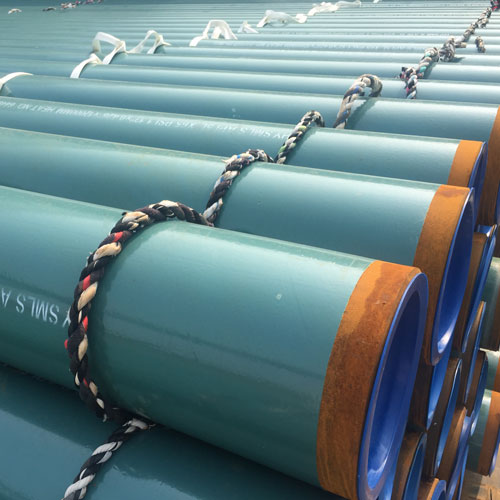
Adding an inside coating to pipes can help protect them from corrosion, improve flow, and decrease the accumulation of deposits. FBE Coating and Glass flake Coatings are amongst the two popular examples of internal pipe coatings.
Internal Coatings Have a Specific Purpose:-
Internal corrosion mitigation in pipes
Flow enhancement
To reduce the production of deposits
Pipe Varieties Linings / Internal Coatings:-
Epoxy Fusion Bonded (FBE) Coating
Coatings using Glassflake (Chemflake, Belzona, etc)
Lining (Polyethylene) | ROTO Lining
Epoxy Coating Bonded by Fusion Welding
FBE is a sort of high-performance coating manufactured from anti-corrosion powder that can withstand temperatures of up to 350 degrees Celsius. This coating can withstand temperatures up to 80 degrees Celsius.
Instructions for Using FBE Coatings
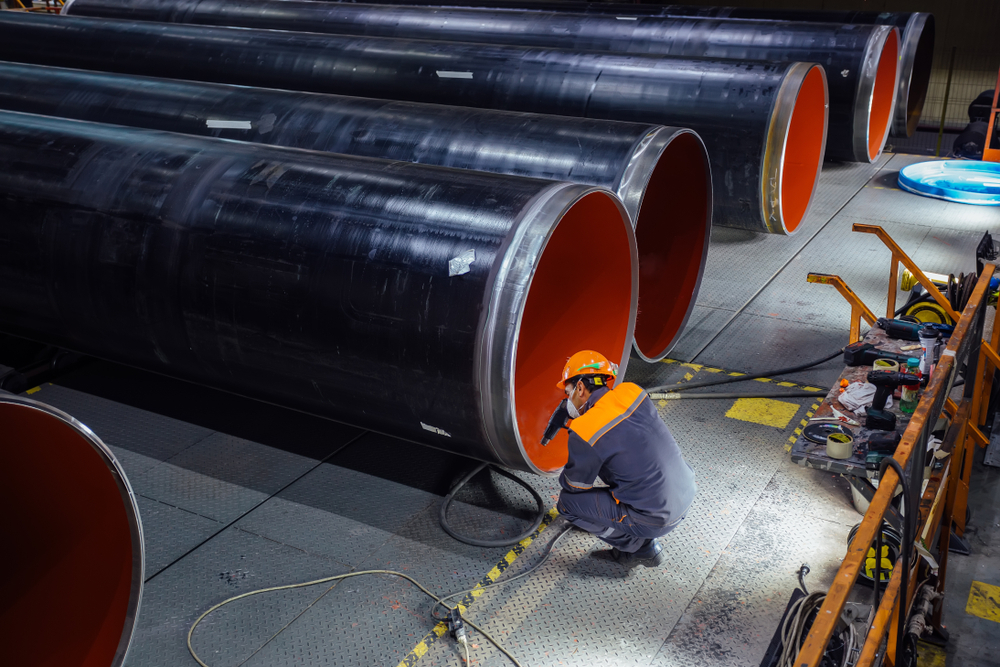
Before blast cleaning, a visual inspection is necessary to ensure that the surface is free of oil and grease. To remove rust, scale, and any other foreign matter from the pipe’s surface, it must be blast cleaned. This gives the surface a tough appearance. This sort of coating requires a roughness value of between 50 and 100 microns. Spray guns are used to paint pipe interiors after they have been cleaned with a blast of compressed air. This aids in the even distribution of the coating on the heated pipe. The pipe rotates along its longitudinal axis on a regular basis. When it comes into contact with the hot surface, the powder melts and becomes a liquid. The liquid FBE coating adheres to the pipe’s surface and hardens into a solid layer in a matter of seconds. Fusion Bonding is a technique that uses this method.
FBE Coatings provide many advantages:-
Higher temperatures are no problem for this finish.
This coating is resistant to corrosion.
It can be used on pipes ranging in diameter from 2 inches to 48 inches.
A wide range of thicknesses can be accommodated by this product.
Under soil circumstances, it offers chemical resistance as well as strong impact resistance.
FBE Coatings’ limitations:-
Pipes coated with FBE have a maximum life of 12 years, and plants are designed to last for 25 years. Once in a while, the pipe needs to be replaced.
It’s got a lot of detail to it.
Applicators are difficult to come by.
Coating with internal glass flakes:-
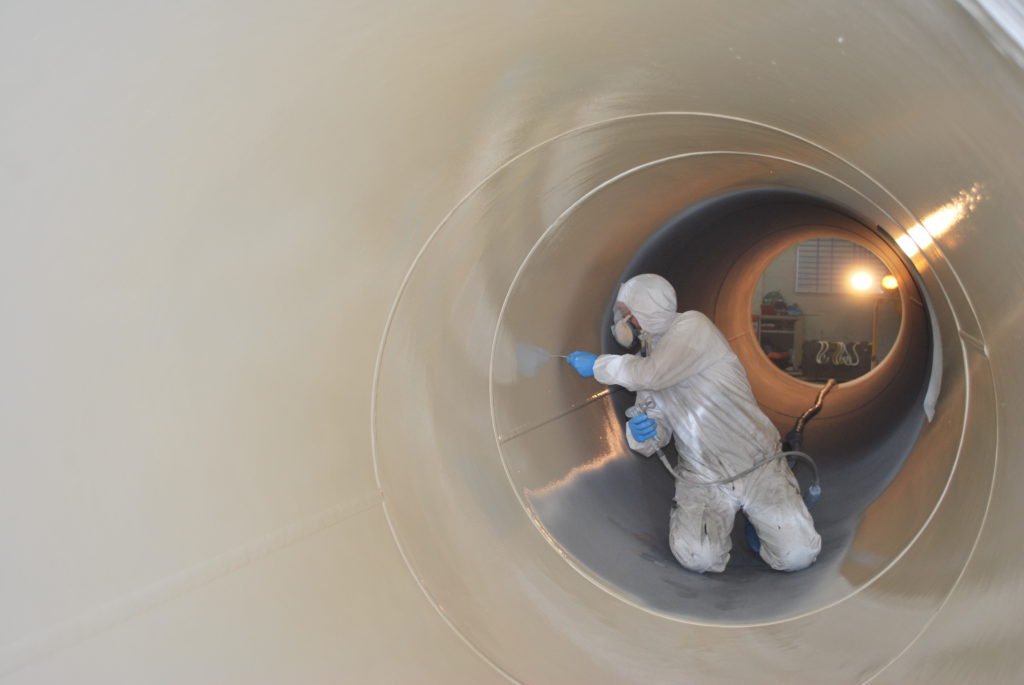
PCS-8 of SP-1246 refers to it as Chemflake/Belzona coating. Generally speaking, this type of coating can withstand temperatures up to 93 °C. Pipes with larger diameters can benefit from an inside coating of glass flakes. The flanged pipe spool is usually used to connect non-flanged pipe spools.
Application of an Internal Glass Flake Coating
Internal glass flake coatings can be applied or used in the following manners:-
The blast cleaning process is used to achieve a roughness value between 75 and 130 microns.
Airless spray apparatus is used for spraying.
Brush: It’s best to use a brush to apply stripe coating and to apply small sections of coating. To ensure that the desired dry film thickness is achieved, care must be taken.
The drying time for a single application is approximately 24 hours.
Benefits of Glass Flake Coating Internally:-
It has great chemical and solvent resistance.
Accurate bonding and weathering characteristics
It has a low permeability to the outside environment.
The finish retention of this coating is exceptional.
Limitations of Glass Flake Coating on the Internal Surface:-
Only 10 bar of pressure can be applied to this coating, which is temperature and pressure-dependent.
Use with caustic fluids or slurries is not recommended.
Soreness of the skin may result.
To keep this coat in good condition, it must be reapplied at regular intervals, and the process of chalking takes a long time.
Only three to four years is the maximum useful life expectancy of a design.
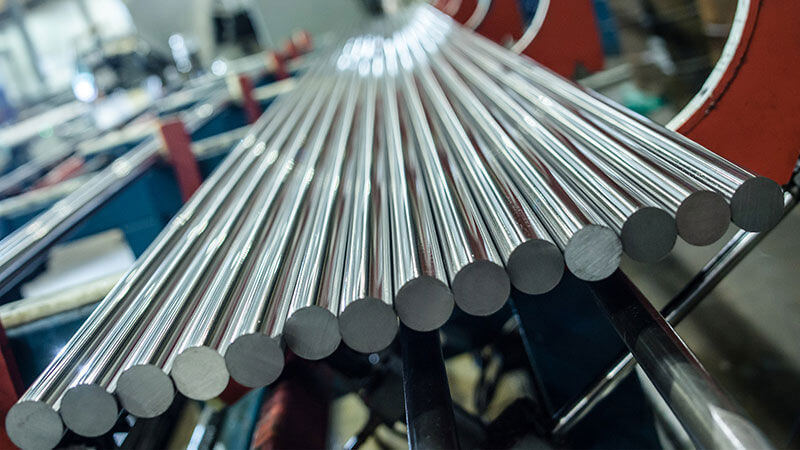
The corrosion-resistant Hastelloy C276 Round Bars are wrought. The fact that these UNS N10276 Round Bars do not require solution heat treatment after welding is a major benefit. These are utilized in a variety of applications, including chemical process equipment and flue gas desulfurization equipment. It’s also machinable, however, the alloy work hardens like most nickel-base alloys. These are available to our valued customers in a variety of diameters, wall thicknesses, and sizes, all at very reasonable prices.
Characteristics
The qualities of the nickel alloy have been linked to Hastelloy Alloy Round Bars being employed in harsh environments. It’s a nickel-chromium superalloy with a high molybdenum content (15-17 percent ). There are also controlled amounts of tungsten and iron, as well as a carbon content that is kept to a minimum. Carbide deposition is minimized during heat treatment and welding when the carbon content is low.
This means that the metal retains excellent pitting and crevice corrosion resistance even when employed in welded systems. Welded portions in other materials may grow weaker after being exposed to heat during welding, making them more corrosion resistant. One of the major features is the material’s corrosion resistance. This material is extremely resistant to general corrosion, including stress corrosion cracking, pitting, and crevice corrosion, even in tough circumstances.
Sulphuric, hydrochloric, and phosphoric acids; severely oxidizing, acidic, and acid chlorides; and solvents, conventional and acetic acids, acetic anhydride, liquid chlorine gas, hypochlorites, and chlorine solutions are all exceedingly resistant to this. Hastelloy C276 Round Bars are well-known in the chemical processing industry because of this. It also has a high resistance to corrosion caused by seawater.
Applications
These are utilized in a variety of applications, including chemical process equipment and flue gas desulfurization equipment. It’s also machinable, however, the alloy work hardens like most nickel-base alloys. These are available to our valued customers in a variety of diameters, wall thicknesses, and sizes, all at very reasonable prices.
HASTELLOY C-276 is a nickel-chromium-molybdenum alloy with unsurpassed global corrosion resistance. It is resistant to a wide range of chemical process conditions, including ferric and cupric chlorides, hot contaminated mineral acids, solvents, chlorine, and chlorine contaminated environments (both organic and inorganic), Hypochlorite and chlorine dioxide solutions, dry chlorine, formic and acetic acids, acetic anhydride, seawater and brine solutions, and hypochlorite and chlorine dioxide solutions In the as-welded condition, Alloy C276 resists the production of grain boundary precipitates in the weld heat-affected zone, making it suitable for most chemical operations. It has good pitting and stress corrosion cracking resistance.
Fabrication and heat treatment
Hastelloy C276 can be machined using the same techniques as are used for iron-based alloys. Commercial coolants are used in machining operations. Water-based coolants are used in high-speed activities like grinding, milling, and turning. Gas-tungsten arc welding, shielded metal-arc welding, gas metal-arc welding, and submerged-arc welding are all used to weld Hastelloy C276.
Conclusion
Finding an alloy that can work in such a demanding environment is not easy. Because of its outstanding corrosion resistance to a wide range of hostile media, Hastelloy C276 Round Bars are a product worth considering. It’s employed in a wide range of manufacturing applications and is regarded as one of the most adaptable alternatives for severe conditions.
Hastelloy C276 Round Bars have a high molybdenum content, which aids in pitting and crevice corrosion resistance. It’s used in waste fluid treatment systems’ more extreme locations when other materials might not be able to handle the harsh conditions.
Chemical processing requires Hastelloy C276 Round bars as well. Ferric and cupric chloride ions, chlorine, hypochlorite, chlorine dioxide, organic acids, acetic anhydride, seawater, brine, and sour oil and gas fields are among the applications for which it has been chosen.
Monel is an alloy (i.e. combination of two or more elements of which at least one is a metal, and where the resultant material has metallic properties). It is based on nickel (65-70%) and copper (20-29%) and also contains iron and manganese (5%) and other compounds. The compound monel is used primarily in applications where characteristics such as ductility, strength, and resistance to corrosion are required. It is suitable for applications where the properties are easily achieved at a low cost. Used as an alloy, monel can be used in place of cast iron, steel, and tungsten alloys in molds or at temperatures higher than those required for cast iron or steel.
Advantages of Monel Fittings
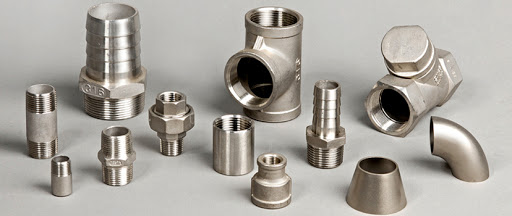
The cold working method quickly hardens Monel 400 Forged Fitting. These pipe fittings have outstanding welding and forming characteristics, allowing them to be molded into a wide variety of forms and types. Monel 400 Forged Fitting is designed to be leak-proof and durable. This pipe fitting is more durable and has a longer service life.
This pipe fitting is simple to install and handle, making it ideal for use in a variety of industrial settings. These pipe fittings are extremely affordable and in high demand in the global industrial sector. Standard welding processes such as metal arc, gas arc, submerged arc, and gas metal arc welding can readily be used to weld these pipe fittings.
This pipe fitting is extremely resistant to sulphuric and hydrofluoric acid in a variety of acidic situations. Aside from that, Monel 400 Forged Fitting has better mechanical strength and malleability, allowing them to perform well in higher pressure and temperature environments.
Characteristics of Monel Alloy
Monel Alloy 400 has several appealing properties and features:
Resistance to alkalis
Mechanical qualities that are good at low temperatures
Resistance to sulfuric acid and hydrochloric acid
Resistance to chloride
Freshwater stress corrosion cracking resistance
Seawater resistant
Resistance to alkaline salts
Applications of Monel Fittings
Because of their high strength and resistance, Monel Tube Fittings are frequently utilized in pneumatic, hydraulic, and other applications. In marine applications, these tube fittings provide corrosion protection. In piping systems, Monel Tube Fittings are utilized in valves, shafts, pumps, and other fittings. The hydrocarbon and chemical processing industries rely on these tube fittings.
Monel Tube Fittings are also ideal for industrial sectors such as oil and gas processing, heat exchangers, seawater equipment, power generation, petrochemical, and other sectors, in addition to these uses.
Monel Fittings are all the same, except that the models and coatings may be different. They are used in almost every industry that requires stainless steel or alloy steel and/or plastic materials for some part or all of its components.
Monel can be used in conjunction with virtually any type of industrial equipment that manufactures products such as metals (e.g. stainless steel), plastic heat-shrink packaging (e.g. thermosets), ceramics, molding products (e.g. foams), thermic sealants, and similar items. These products are typically made for very high-temperature applications (e.g. soldered joints) where other stainless steel alternatives would become brittle or fail at low temperatures where the coating would peel off.
Conclusion
In Conclusion. Monel Alloy and Monel Alloy 400 is a great alloy that can be used in a multitude of industries and applications. Because the MONEL 400 is salt water-resistant, it’s commonly used in marine fixtures, fittings, pumps, valves, and even pipe systems.
We at Kalpataru Piping Solutions offer the best and a wide range of high-quality products made out of Monel alloy. We manufacture and supply valves and fittings made of exotic alloys.
There are in excess of 1,382,569 million miles of flammable gas and fluid petrol pipelines. These kinds of funneling frameworks can rust or erode when their iron-rich metals oxidize from openness to normal components — like downpour, snow, wind, warmth, and cold. Harm from consumption costs the oil and gas industry a great many dollars every year. There are a few different ways to help forestall exorbitant erosion.
Past the cosmic expense, consumption can stop creation, cause wounds, and put a laborer’s life in harm’s way. The worldwide expense of consumption has been assessed at $2.5 trillion.
On top of all that, it’s subtle and difficult to spot with the unaided eye.
All things considered, consumption doesn’t need to be terrifying. Relax, You can retaliate against this troublesome metal punisher, keep pipes entire, and set aside some cash simultaneously.
As a matter of first importance, there are a few distinct sorts of erosion that can prompt pipeline spills, spills, breaks, or even total funneling frameworks disappointment.
Stress erosion or broken pipes in oil and gas channeling frameworks happen when there is a high pressing factor inside the pipe. This causes issues with the oil and gas stream when destructive specialists (like water and soil) show up outside of the pipe. The blend causes apparent branch-like breaks to show up on the outside and inside of the pipe.
We’ve nailed down exactly what pipe corrosion is and how to stop it.
What Is Pipe Corrosion?
Besides being the worst thing about numerous pipe installer presences, pipe consumption is essentially when channeling material separates on account of its current circumstance.
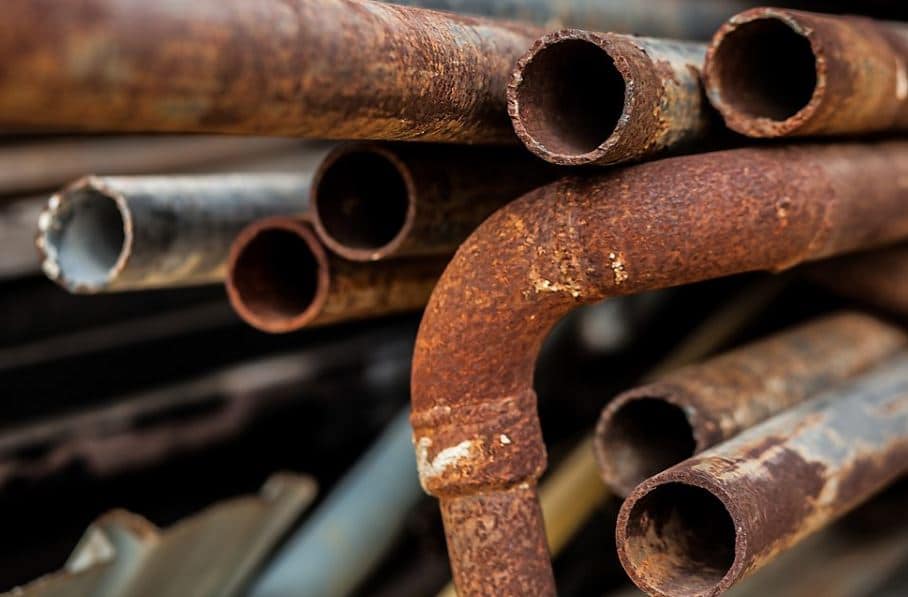
You’ve likely run into corroded segments of pipe or other metal pieces. These spots generally look destroyed or worn out. That is an indication of underlying or pipe erosion.
What’s the significance here for pipe or bars? Time after time, it makes unsturdy bits of metal that could give path all of a sudden.
The most straightforward reason for erosion is contact. That can be the point at which the metal interacts with a wide range of things, including water, oxygen, grime, or other metal. Any of these components can set off the issue, yet each launches consumption for various reasons.
Erosion is a substance response that diseases metals. The issue begins when a piece of metal loses electrons and is debilitated. Those electrons are urged to leave when the metal is in touch with an electrolyte, similar to water, and electron-insatiable materials.
Out of nowhere, the metal is helpless against other damaging substance responses. The outcome can be things like rust, breaks, and openings.
Sadly, there’s all the more terrible news for pipes. Pipe consumption is likewise self-propagating, which implies erosion deteriorates once it begins. Be that as it may, there are approaches to hold erosion back from crawling into funneling or non-channeling surfaces.
Here are five ways to fight off corrosion:
1. For Pipes, Watch Your Water
Water is a major corrosion causer. Especially in copper piping, too low of a pH level can hurt the pipe’s lining. The EPA recommends you make sure your water’s pH hovers between 6.5 and 8.5.
You’ll also want to monitor the oxygen levels in your water. Oxygen leads to rust, and it can cause buildups and blockages.
Another good idea is to keep water temperatures low when possible. Hotter water tends to be more corrosive.
2. Keep Pipes Clean
Microbiologically induced corrosion (MIC) happens when metals are exposed to corrosive bacteria. It’s smart to clean pipes to prevent MIC, especially when pipes regularly contact sulfides.
You can use inhibitors or biocides to keep fluids clean. Another option is to consider chemical treatment for water or other liquids.
3. Add Protection to All Metals
Protective linings or special coatings can prevent corrosion in pipes as well as other surfaces. That includes things such as beams, joints, and bolts.
For instance, galvanization works by adding a layer of zinc to metallic surfaces such as steel or iron.
It’s also wise to use a sealant to keep corrosive bacteria from settling into joints or crevices in the first place.
4. Keep Structures Stable
Friction, jiggling, and bouncing wear on metal. When openings start to form, corrosive material sets in, and it can lead to crevice corrosion.
A good way to prevent crevice corrosion is to use restraint. Things such as U-bolts, straps, and clamps cut down vibrations that can lead to corrosion.
5. Protect Against Metal-to-Metal Contact
Not all metals get along. Galvanic corrosion happens when one metal pulls electrons from another metal. The result is a weakened section and a compromised structure.
The most ideal approach to secure against metal-to-metal consumption is to protect the metal. For channeling, think about introducing encasings, for example, wear cushions or line shoes. Separators add a cushion between metals, so the metal stays tough longer.
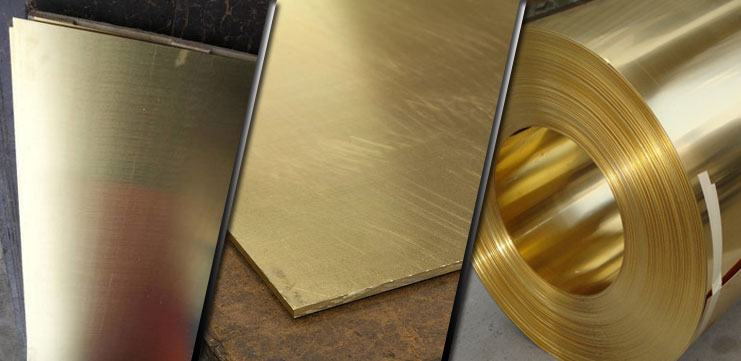
A shim is a thin, wedge-shaped piece of metal that is used to fill gaps between objects. Shims are commonly used to adjust for a better fit, provide support, or create a level surface. Shims made of brass and brass alloys are also used as spacers to fill gaps between wear-prone parts. Every kind of brass shim sheet has excellent resistance to water corrosion and is corrosion resistant in environments containing oil, fuel, gasoline, kerosene, and alcohol. Brass is extremely popular in the appliance and electric industries due to its excellent electrical conductivity. Brass & Brass Alloys shims range in thickness from 0.05 mm to 3 mm in thickness. There are numerous Brass shim sheet sizes that are available to meet your needs.
How to choose which brass shim would work for you?
When deciding what type of shim you’ll need for your project, there are three things to consider: the shape, thickness, and material type. Being a brass shim manufacturer ourselves we at Kalpataru Piping Solutions can help you figure out all three. The thickness of the shim will usually be determined by the size of the space the shim will fill, while the shape will be determined by the function of the shim and the size of the pieces it will be against. The type of material you’ll need is determined by the material used for nearby pieces, the level of durability required, and the environment in which the shim will be used.
What are the benefits of using a brass shim?
They can be highly malleable
Shims are commonly used across a wide range of industries, the machinery industry, in particular, is very well versed with the uses of a brass shim. Filling gaps or creating a level surface, creating more accurate alignment, or wear compensation to help reduce the frequency of replacement for more expensive pieces are all common uses of this material.
The shim will usually need to be made to a specific size and thickness in order to act as a space filler or to improve alignment. Brass shim sheets are made of soft metal and have a low melting point that works well in this application. It’s a lot more malleable than bronze and zinc, and it’s also a lot easier to work with.
They cause low friction
Brass shim sheets have a low friction rate because it is a softer metal. This makes it an excellent choice for areas where sparking is a concern, such as around explosive gases. It’s also a fantastic heat and electricity conductor. Despite its softness, it is a stronger and harder metal than copper. The strength of the metal, on the other hand, is determined by the copper and zinc content of the brass.
They are corrosion resistant
You may have frequently noticed brass being used for piping and tubing in fact it is also used in marine environments. This is due to its high corrosion resistance. Brass is resistant to corrosion not only in water, but also in environments containing fuel, oil, kerosene, gasoline, or alcohol. This metal also has a high tarnishing resistance.
They are good for the environment and are recyclable
Did you know that about 90% of the brass in existence has been recycled? The fact that brass is not ferromagnetic is one of the characteristics that make it a highly recyclable metal. Because of the lack of magnetism, brass can usually be isolated from other metals by removing the magnetic metals using magnets.
They possess antimicrobial properties
Brass, like a lot of copper alloys, has antimicrobial properties. Brass contains copper, which helps to kill bacteria and fungi. The speed at which bacteria are killed is determined by the form of bacteria and the medium in which they are found. Brass shim sheets are also an excellent option for shims in environments where sterilization is critical, such as the food industry or the medical field.